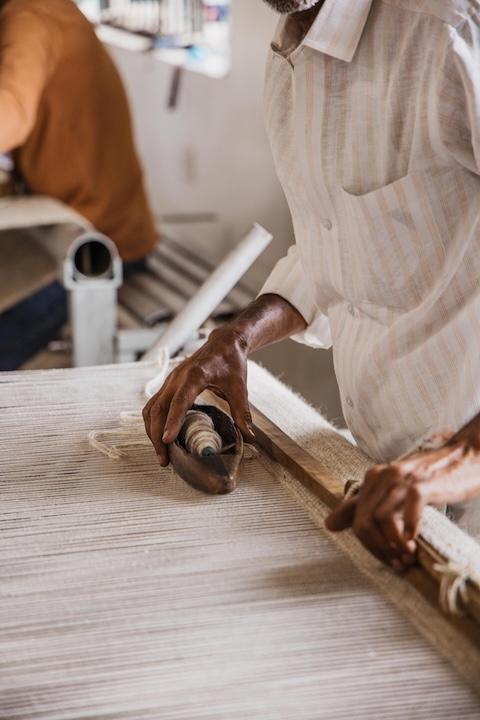
Kelim rugs have long been a cornerstone of nomadic and village life across the Middle East and Central Asia. Historically, these flat-woven textiles were crafted by tribal groups for practical use as floor coverings, wall hangings, and storage bags. The tradition of weaving them is deeply embedded in the cultural fabric of Afghanistan, where families have passed down specific weaving techniques and pattern vocabularies through generations.
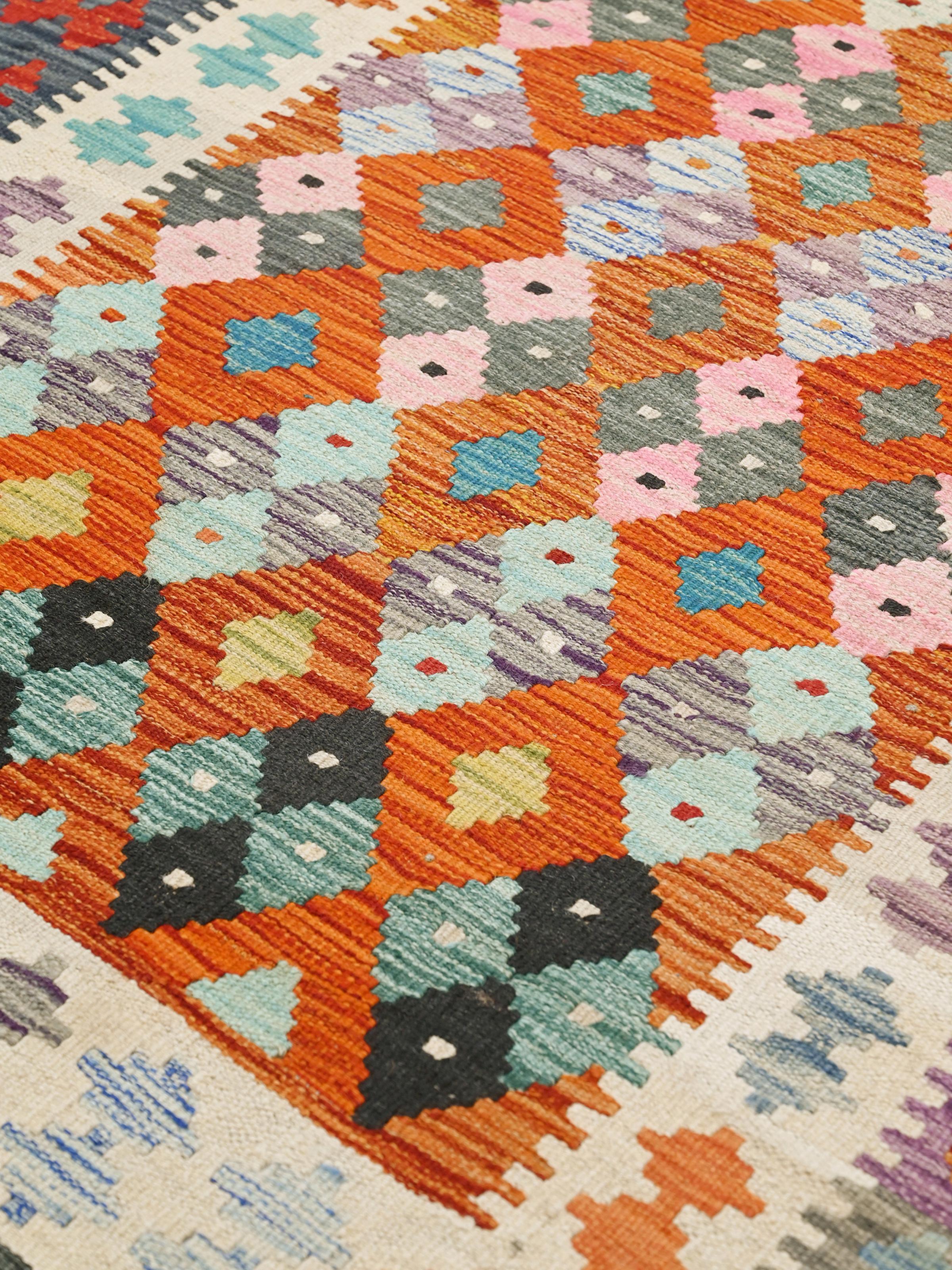
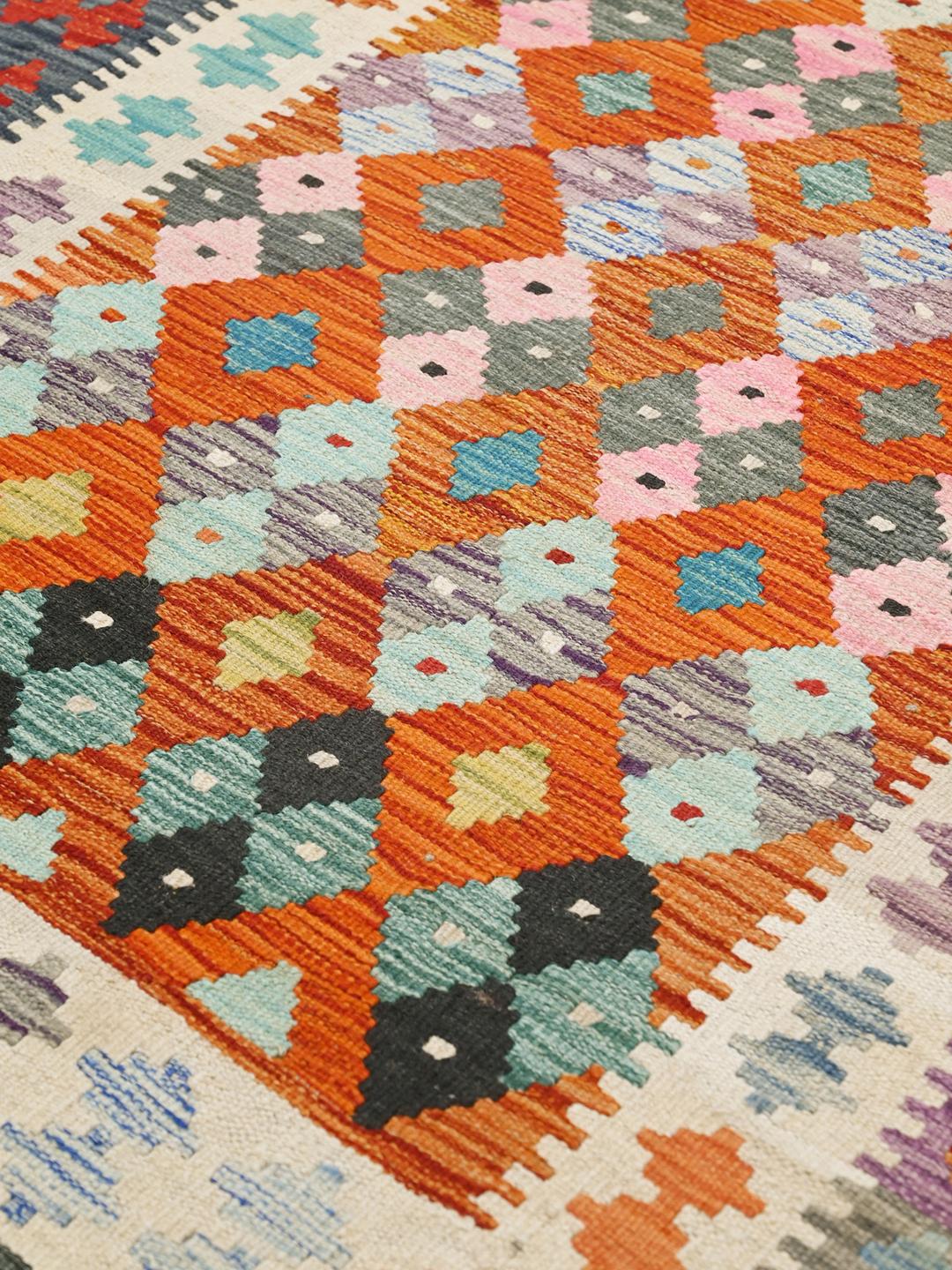
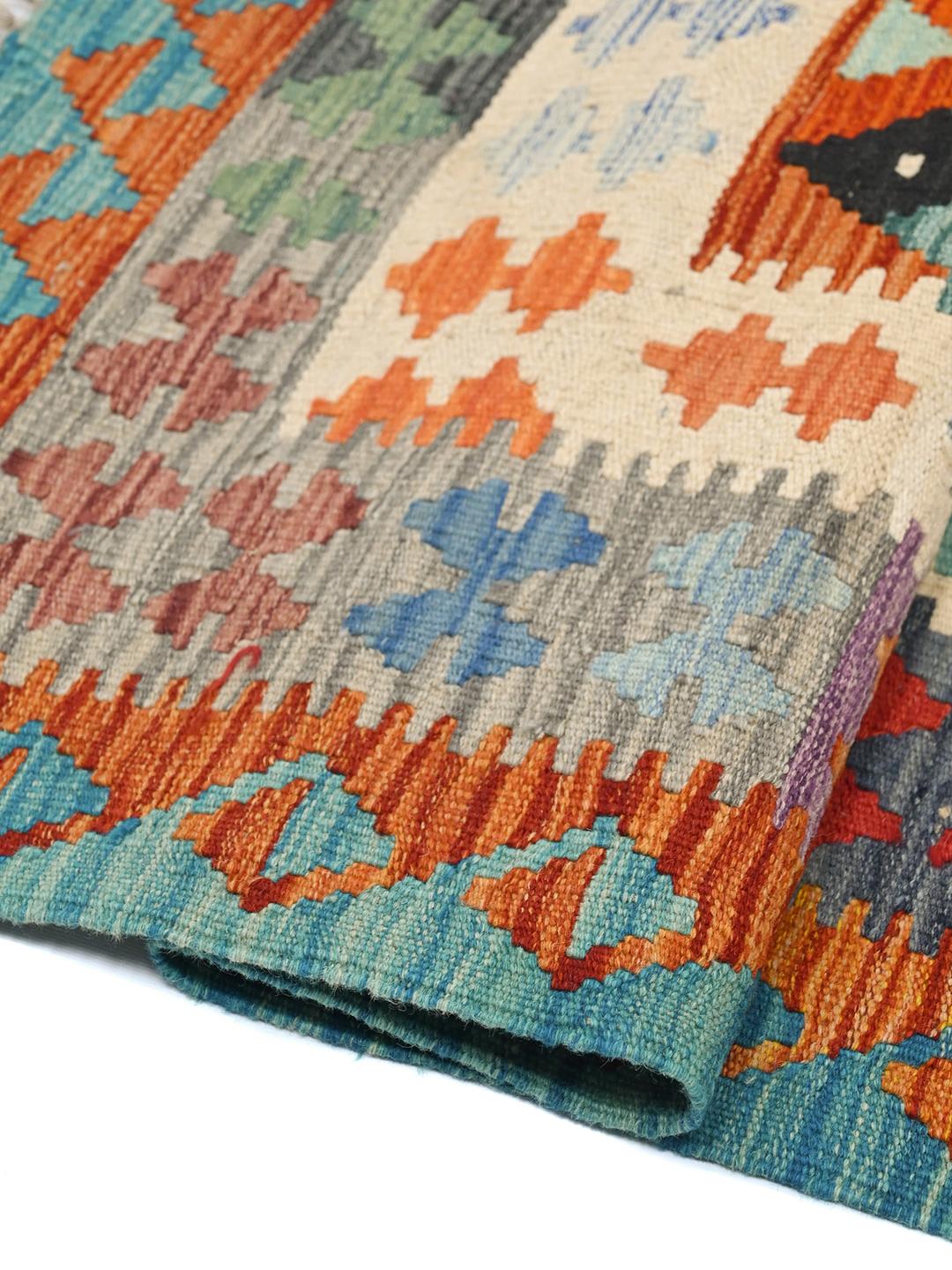
The term 'Kelim' refers to the specific technique of tapestry-style weaving, where the weft threads are pulled tightly over the warp to create a smooth, pileless surface. This method is highly valued for its ability to produce intricate, sharp-edged geometric designs that are visible from both sides of the rug. The resulting fabric is lightweight yet remarkably strong, making it a functional choice for both nomadic travel and permanent homes.
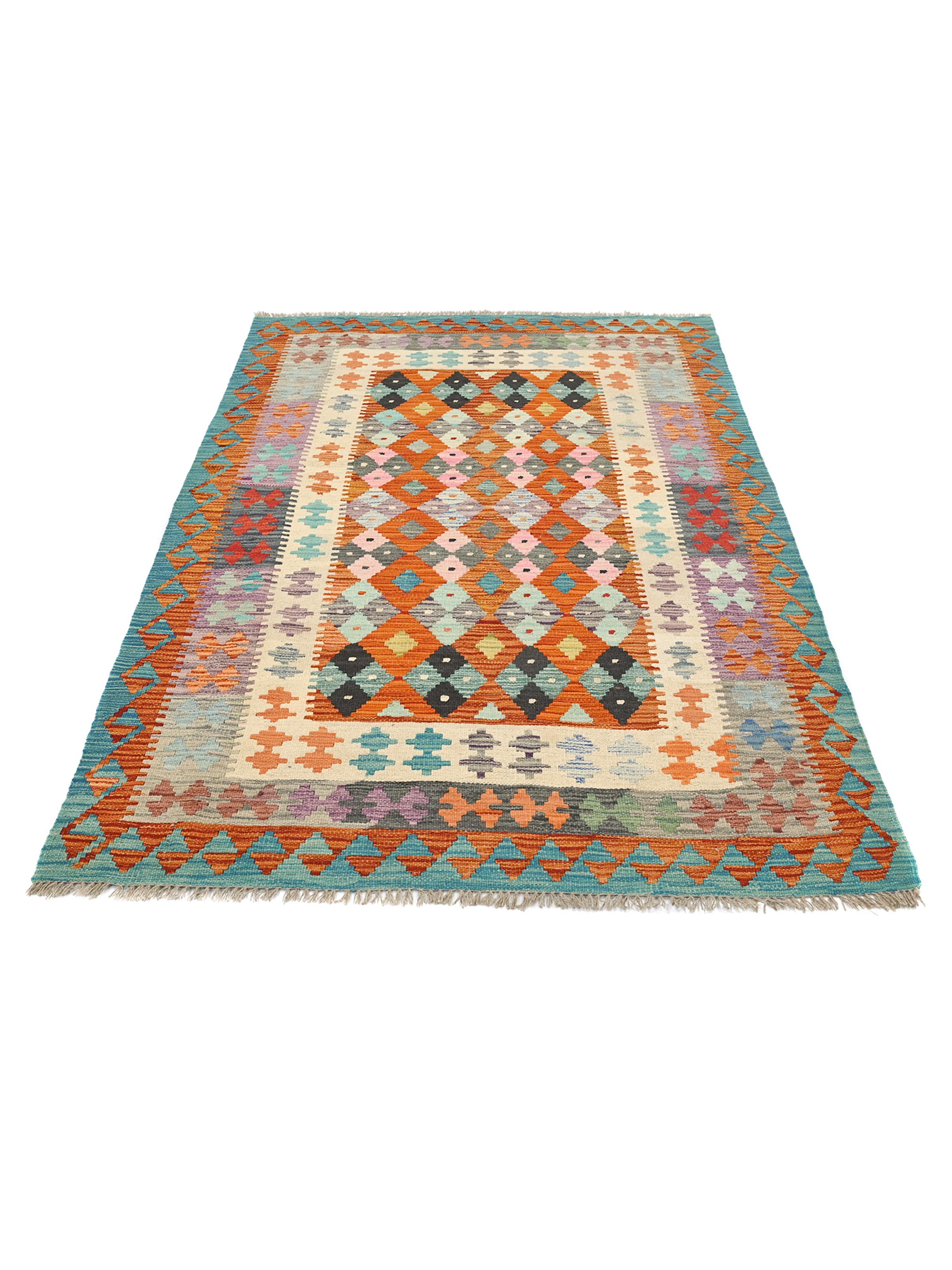
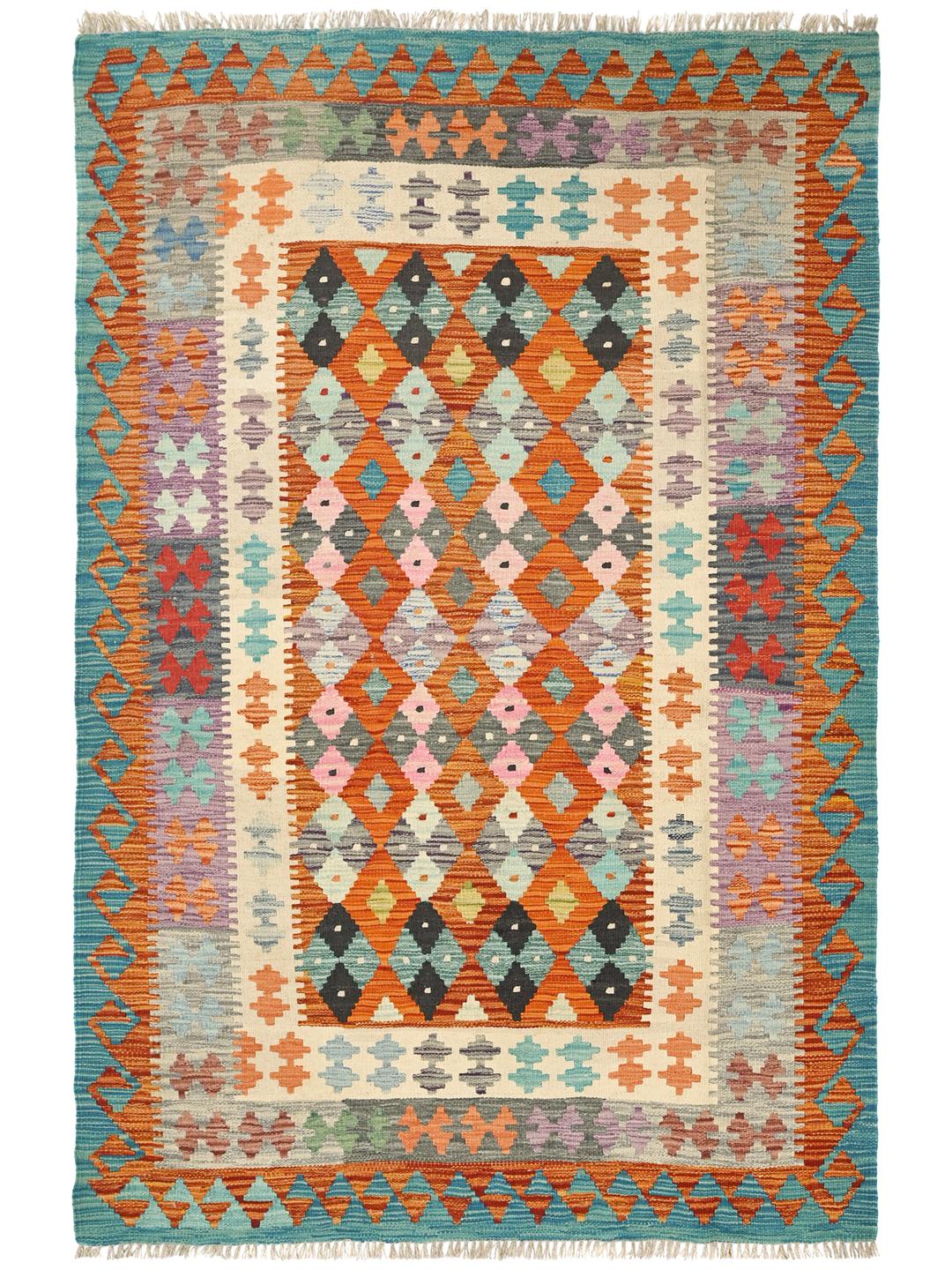
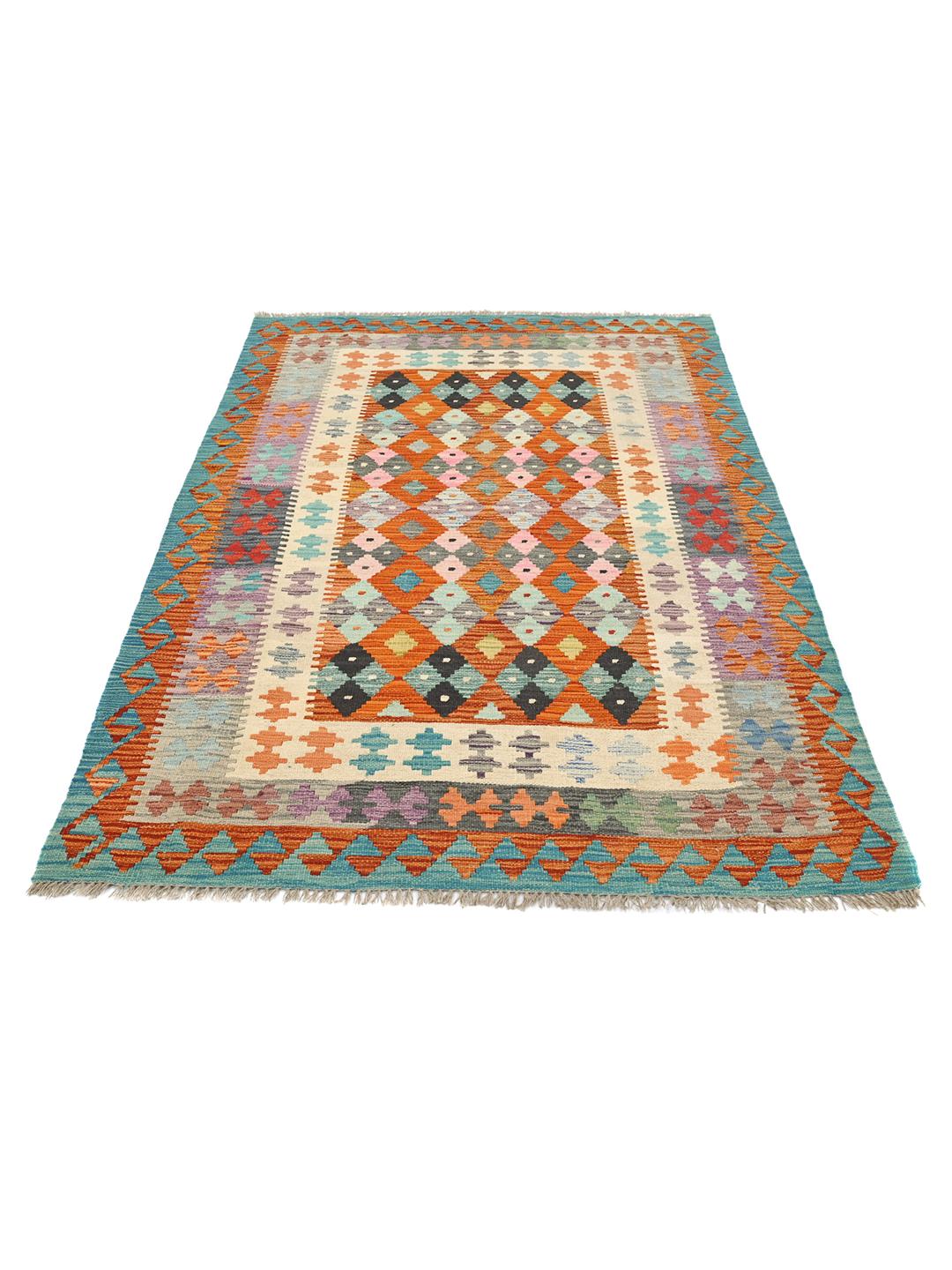
Visually, these rugs are defined by their bold geometric motifs, including diamonds, triangles, and stylized floral elements. The colour palettes are traditionally drawn from natural dyes, reflecting the landscape and resources of the region. This particular piece showcases the classic Afghan preference for vibrant, contrasting hues that breathe life into the geometric composition, creating a balanced and harmonious look that is both striking and sophisticated.
Today, these rugs are cherished by collectors and homeowners alike for their authenticity and the skill they represent. Owning a Kelim is a way to celebrate a living tradition that values patience, artistry, and the beauty of natural materials. They serve as a tangible link to a rich history of craft, bringing a storied presence to contemporary homes that value depth, character, and the enduring nature of handmade goods.