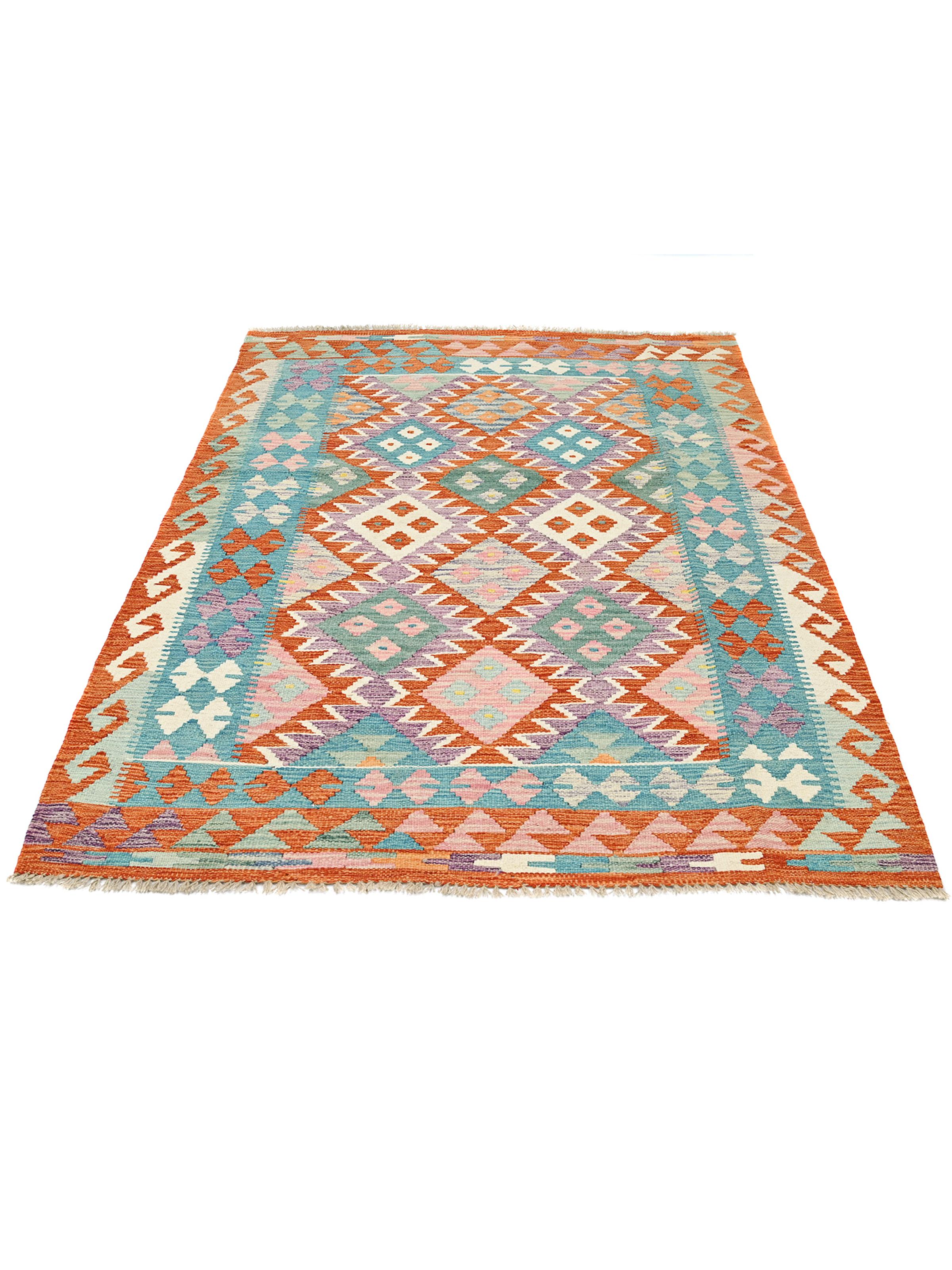
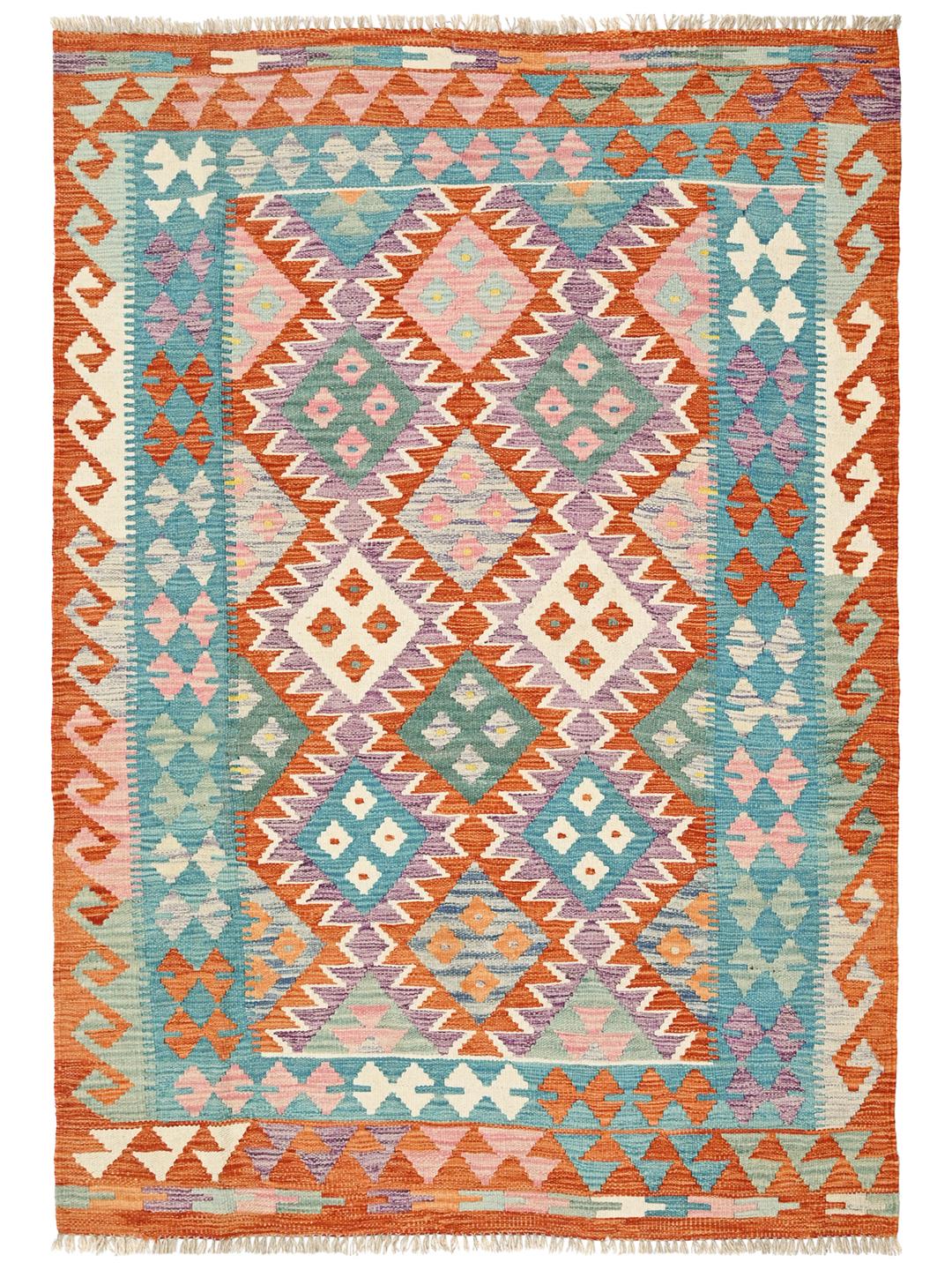
Kelim rugs have long been a cornerstone of nomadic life across the Middle East and Central Asia. The tradition of weaving these flat-tapestry rugs is deeply rooted in the necessity for portable, durable, and functional household items. Afghan weavers, in particular, have refined this craft over centuries, passing down specific techniques and design vocabularies through generations of families.
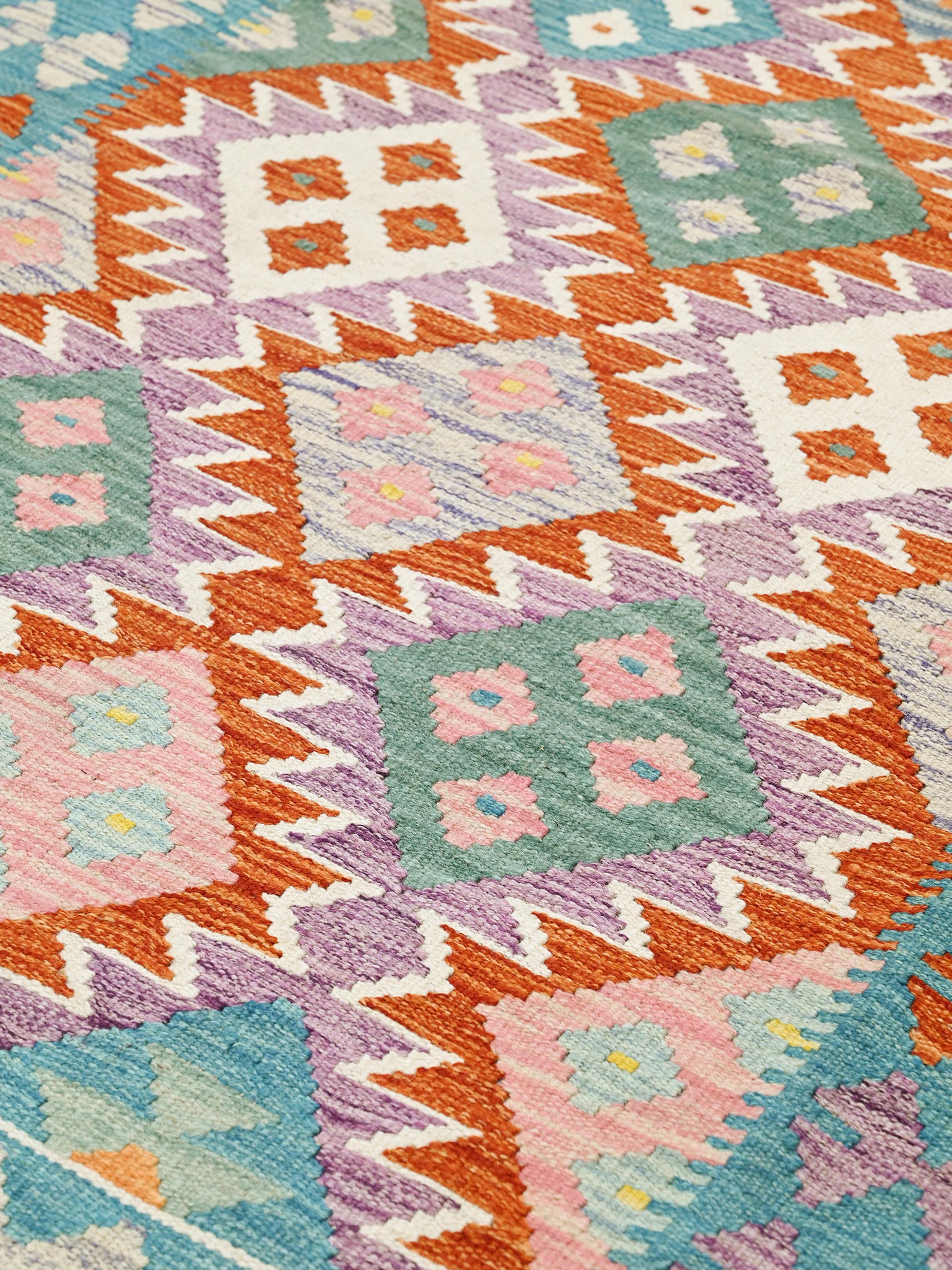
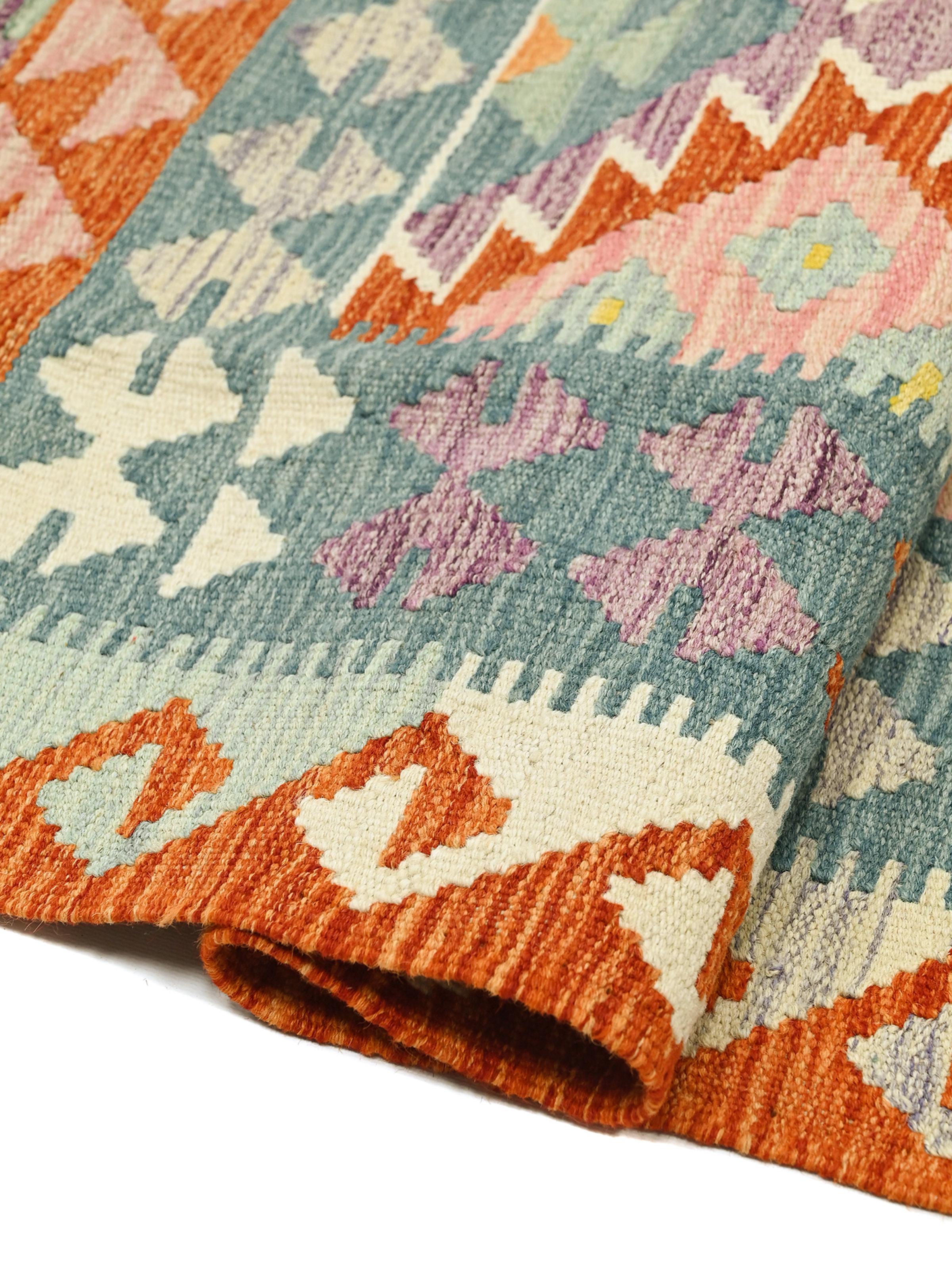
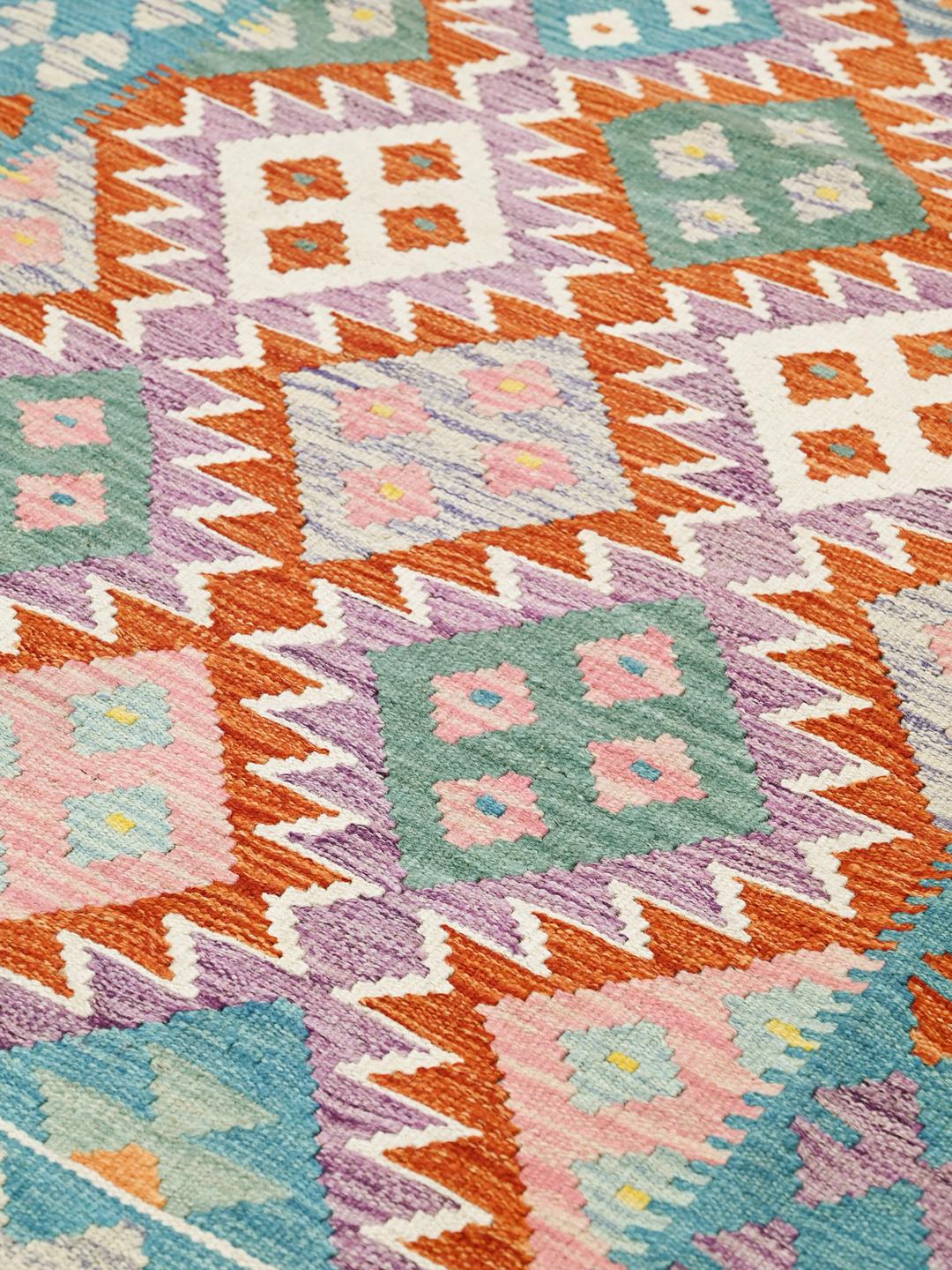
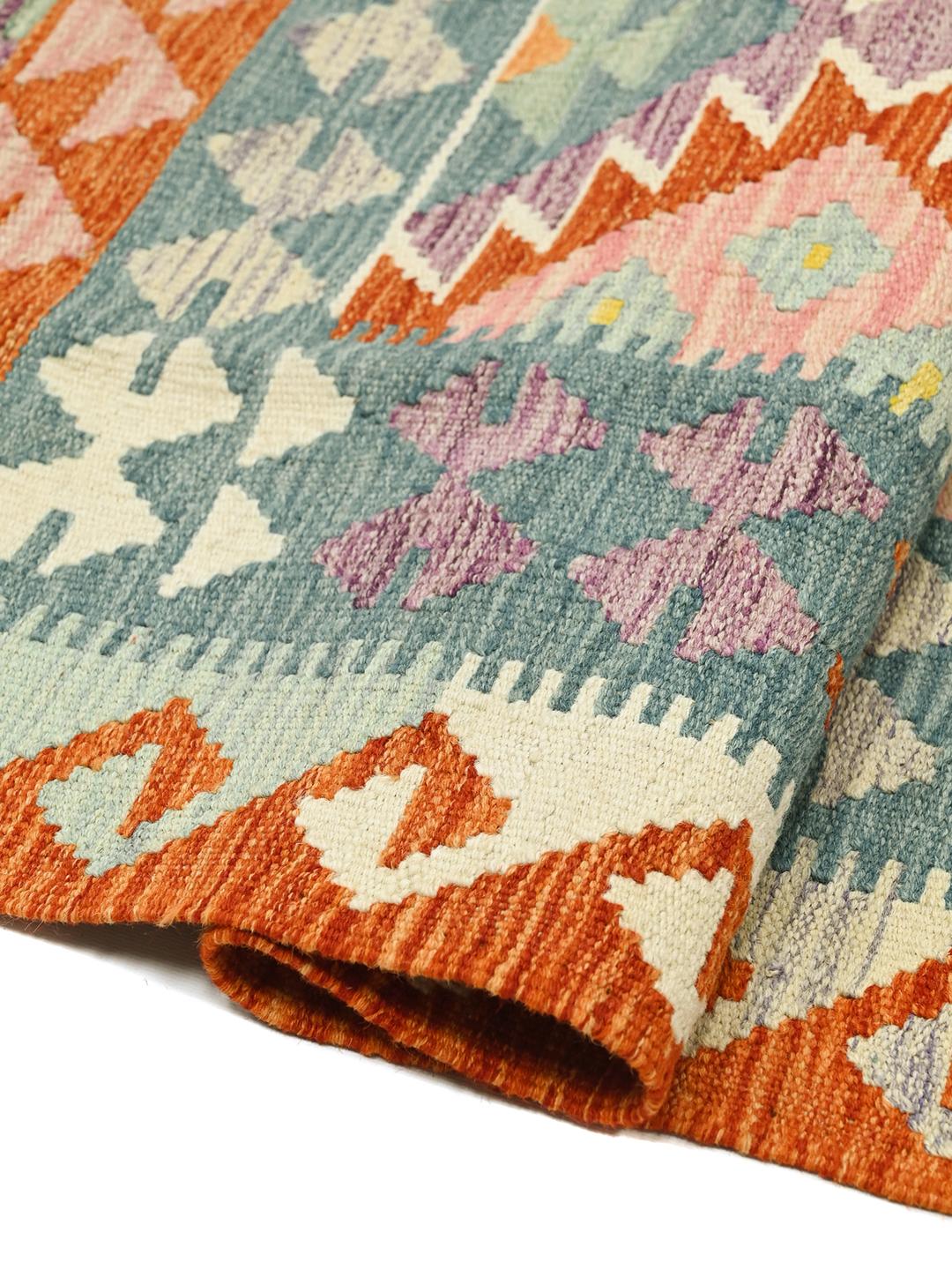
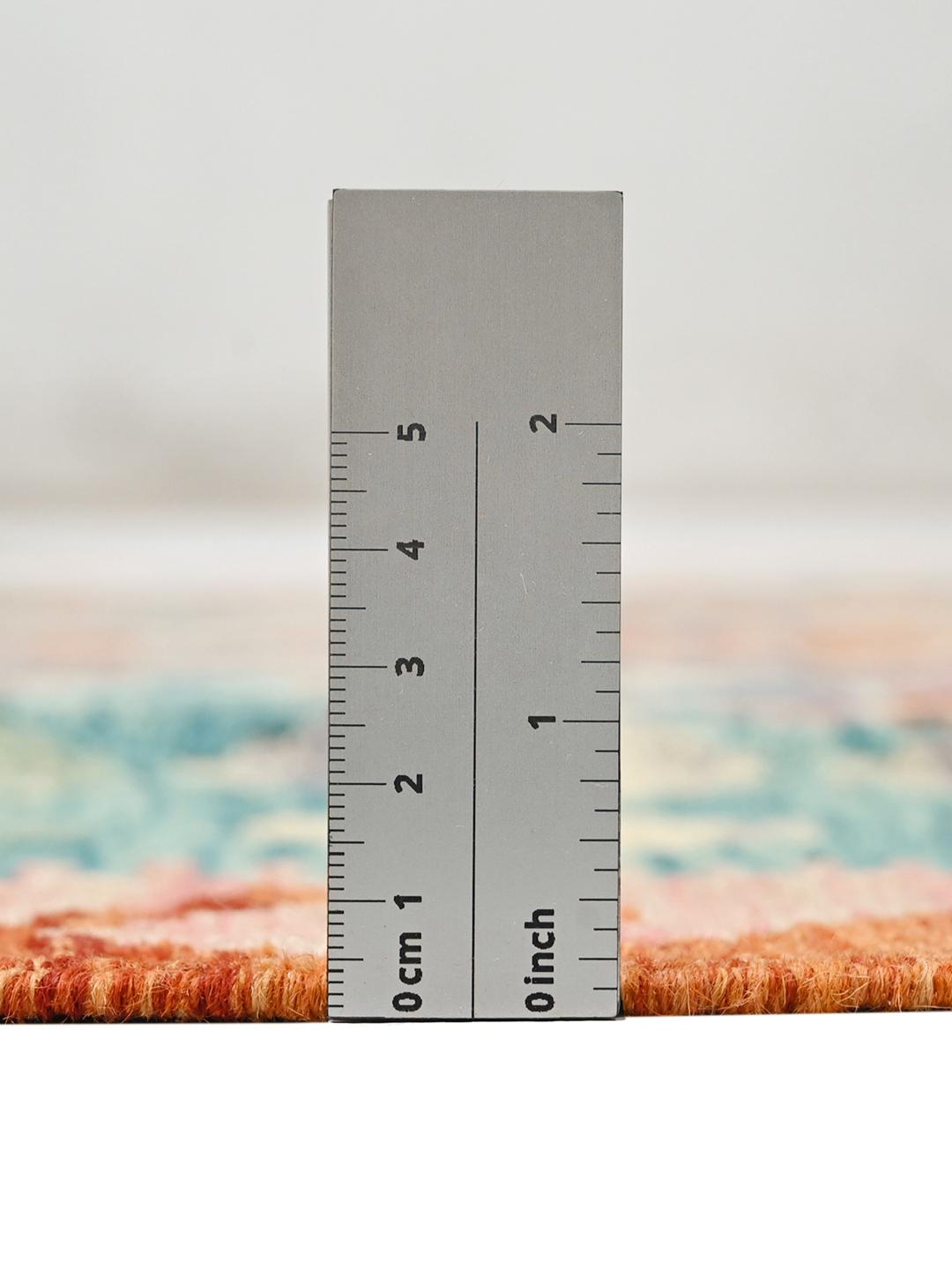
The term 'Kelim' refers specifically to the slit-weave technique used to create the rug, where the weaver creates sharp, vertical lines and geometric shapes by turning back the weft threads at the edge of each colour block. This method is what gives these rugs their signature crisp, clean patterns. The lack of a pile makes these pieces incredibly resilient and versatile, as they were originally designed to serve as floor coverings, wall hangings, and even storage bags for nomadic tribes.
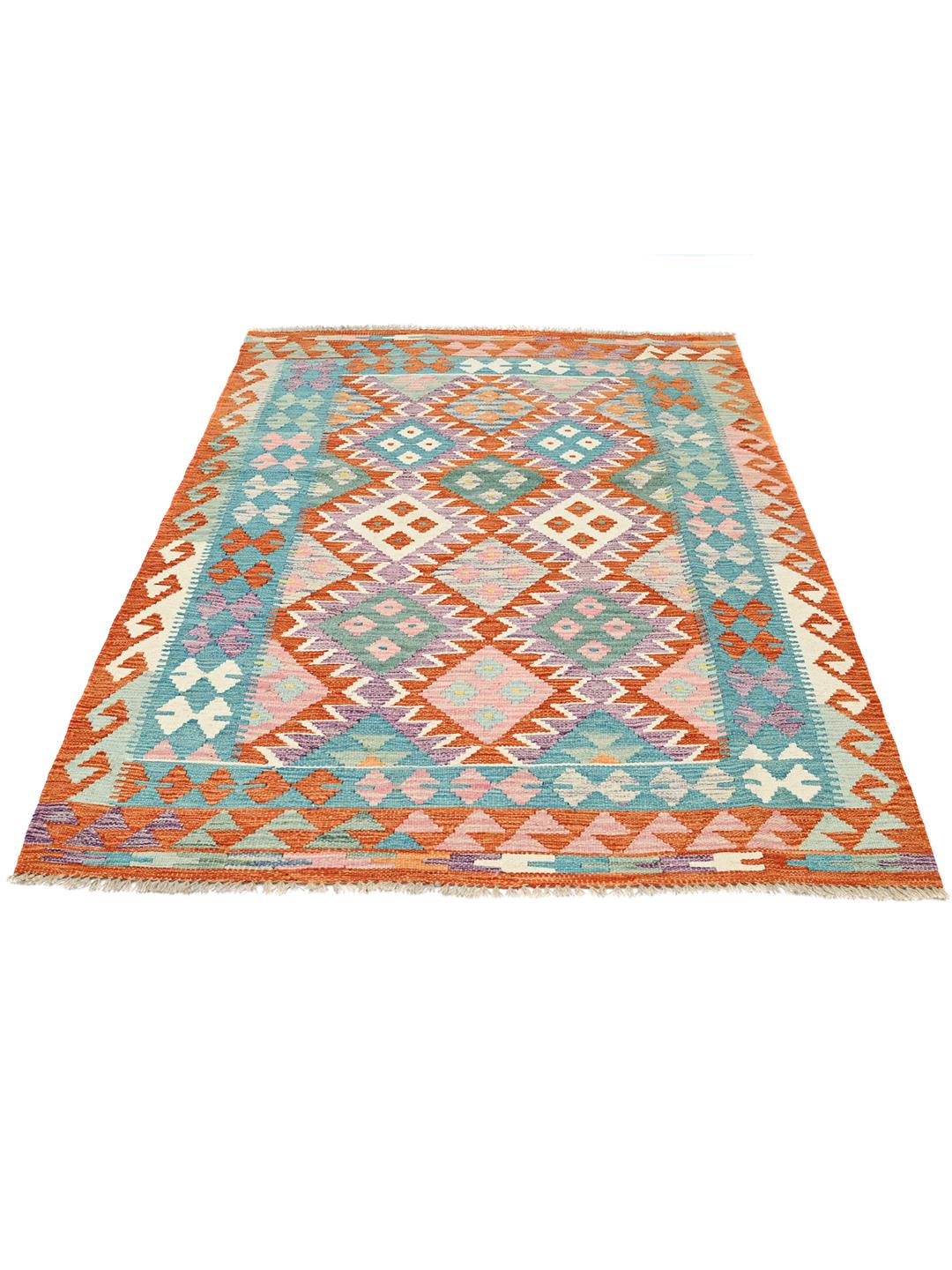
Visually, these rugs are defined by their bold geometric language. You will typically find repeating diamond motifs, triangles, and intricate border patterns that hold symbolic meaning related to protection, fertility, or the natural landscape. The use of vibrant, contrasting colours is a hallmark of the Afghan style, often achieved through the careful application of dyes that age beautifully over time.
Collectors value these rugs not only for their aesthetic appeal but for the cultural narrative they represent. Owning a Kelim is a way to connect with a legacy of human skill that predates modern manufacturing. Each rug is a testament to the weaver's expertise and the enduring cultural importance of textile arts in the history of the region.