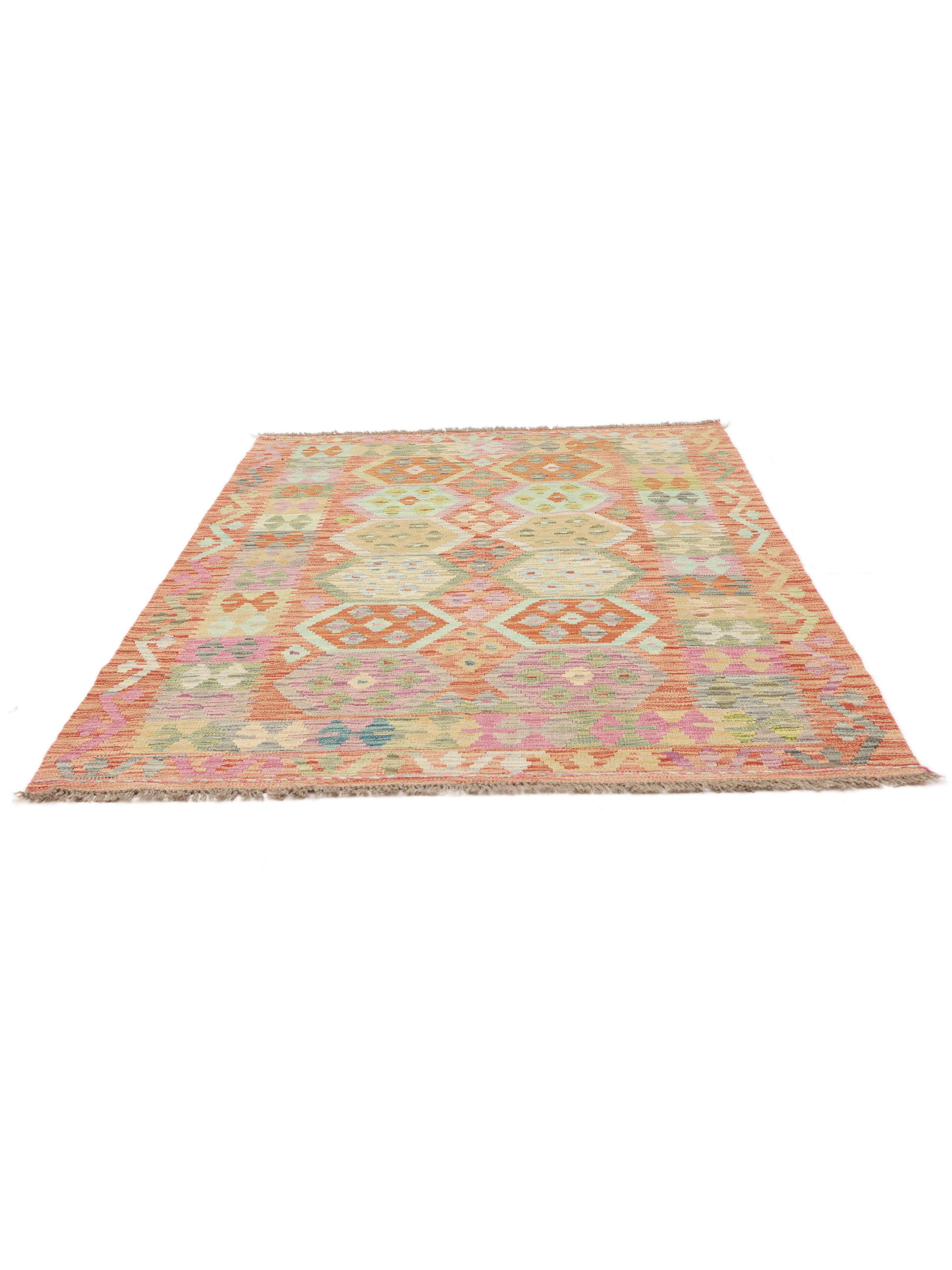
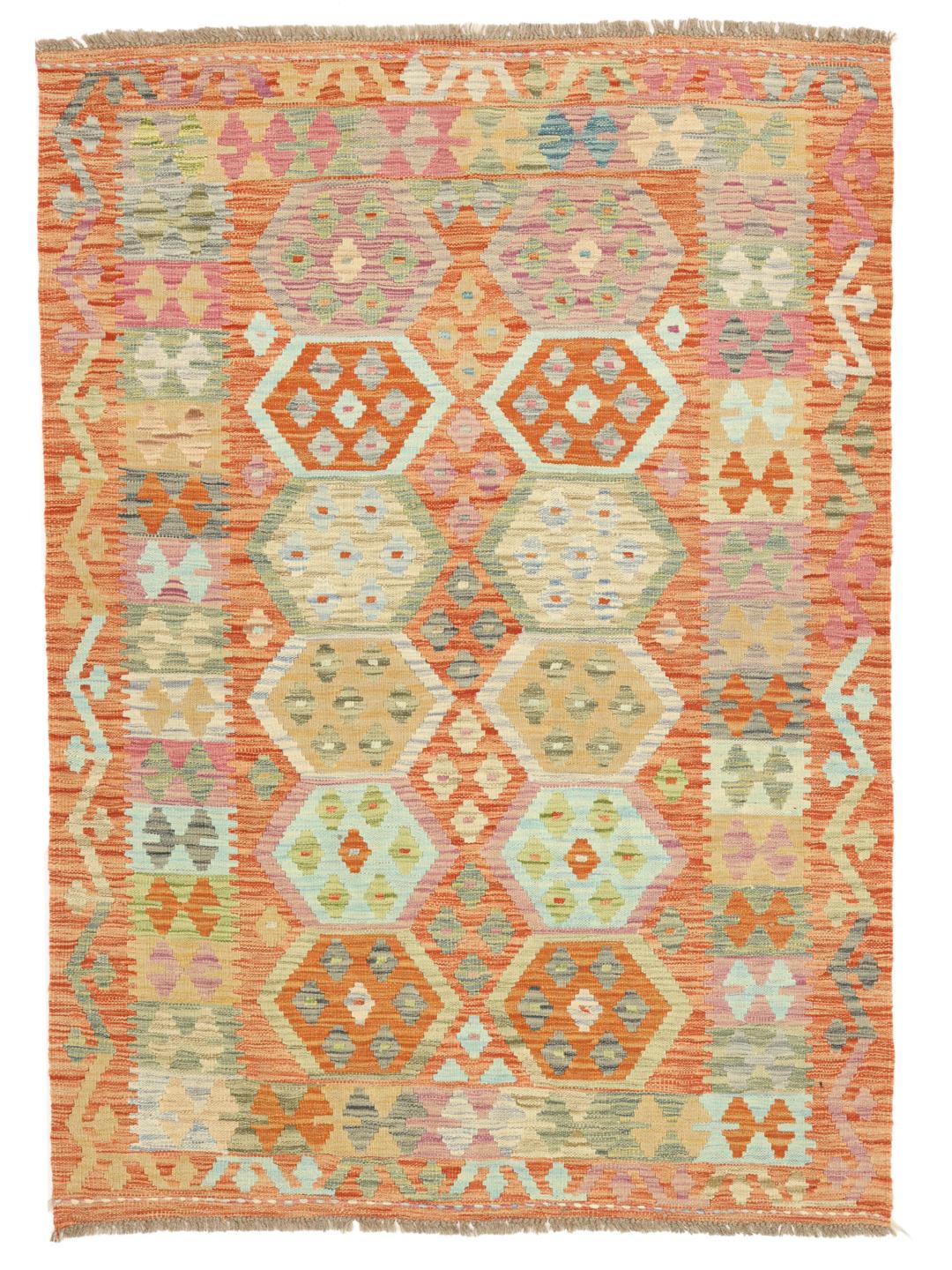
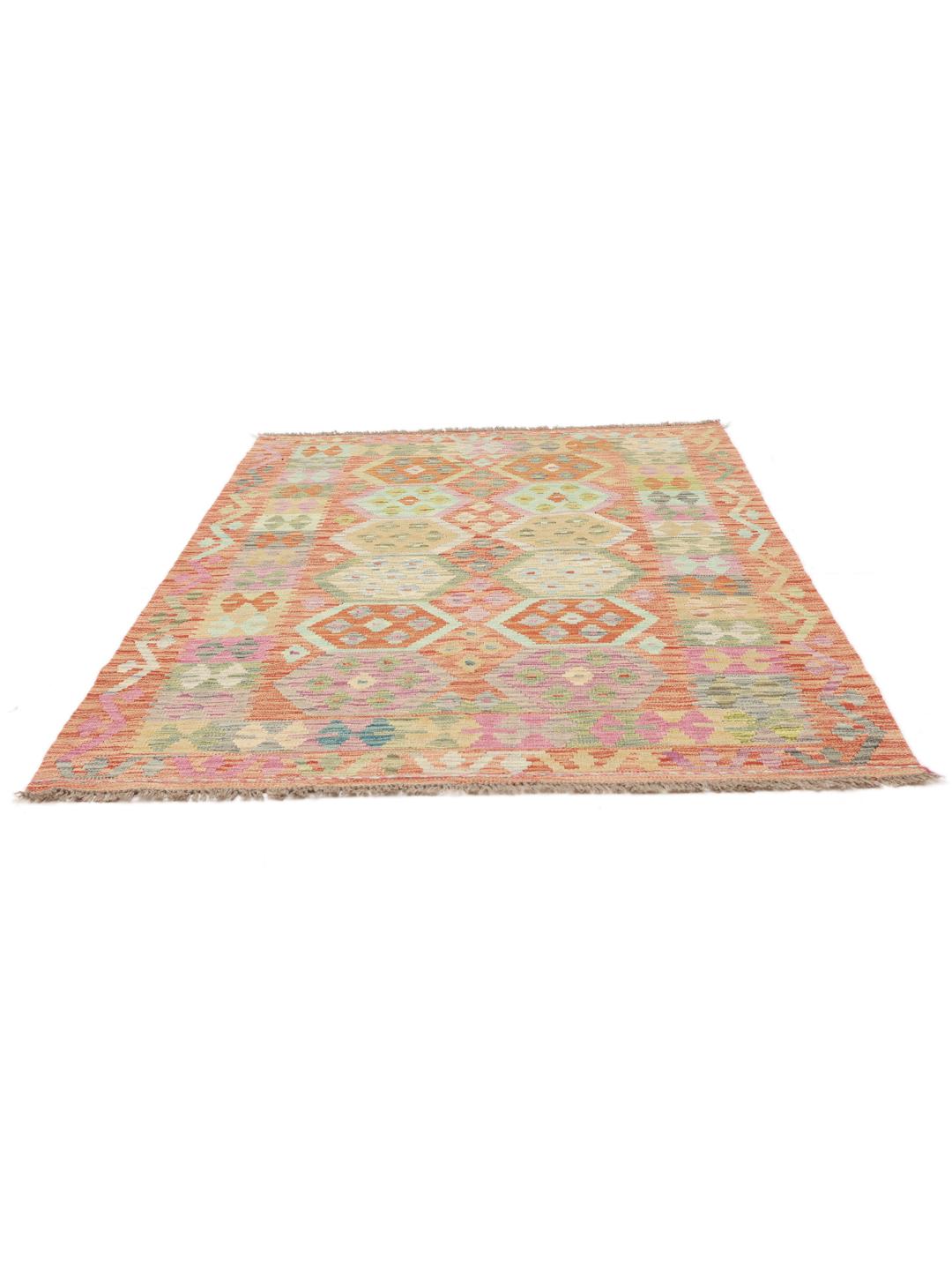
Kelim rugs have been a cornerstone of nomadic and village life across the Middle East and Central Asia for centuries. These flat-woven textiles were historically used for everything from floor coverings and wall hangings to saddlebags and storage sacks. The tradition of weaving these pieces is deeply intertwined with the daily lives of the people, with designs often passed down through generations of families.
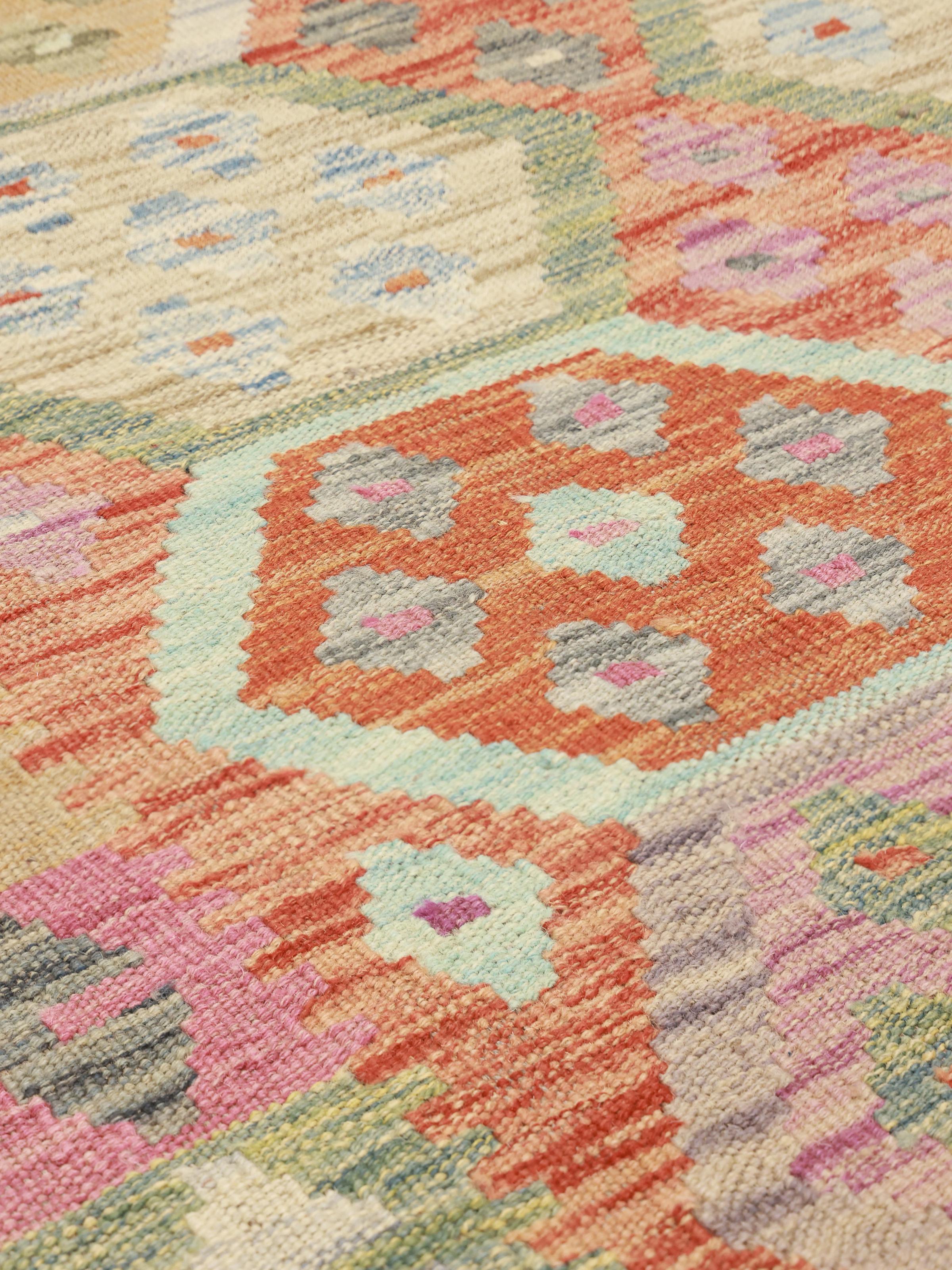
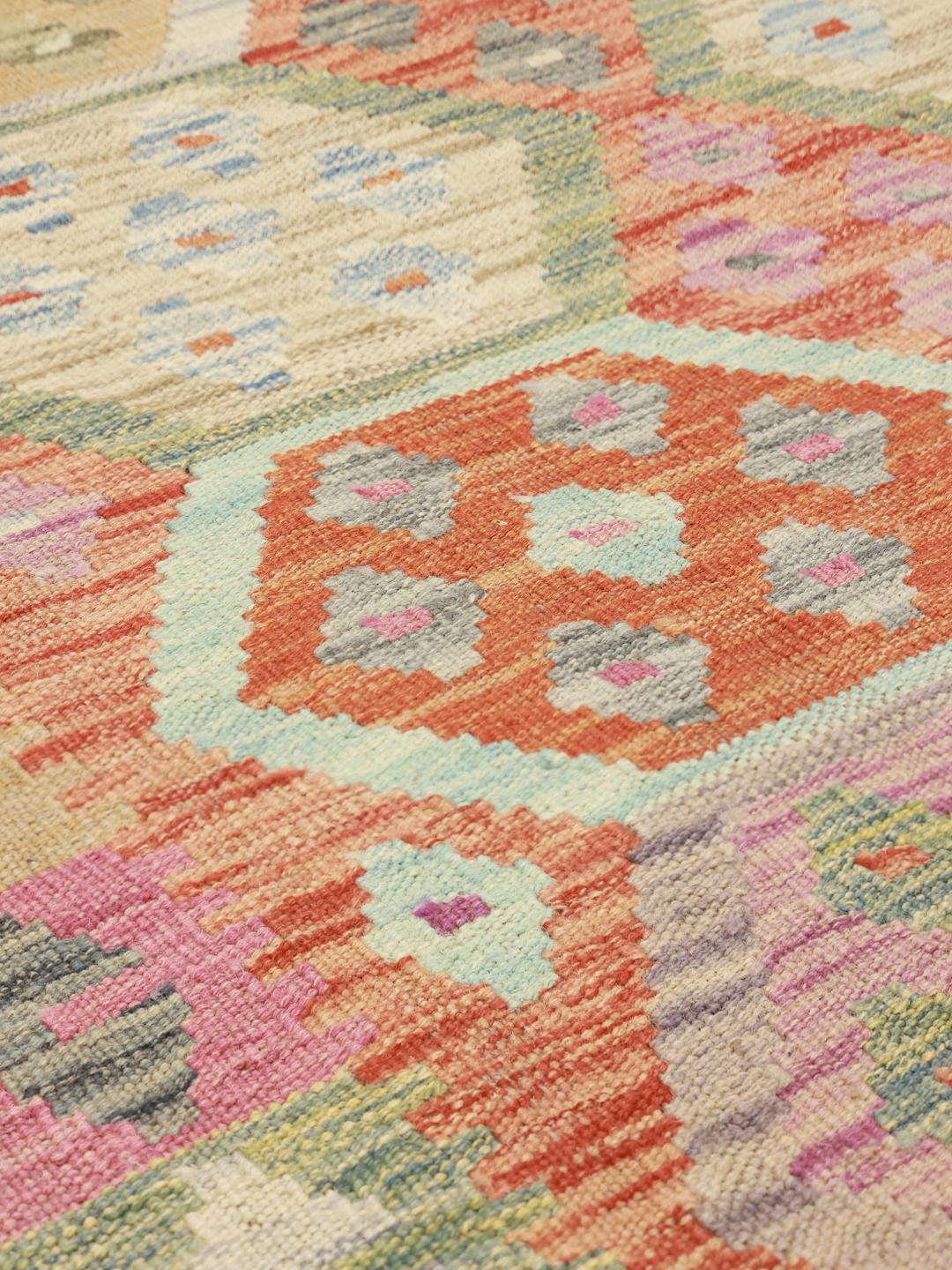
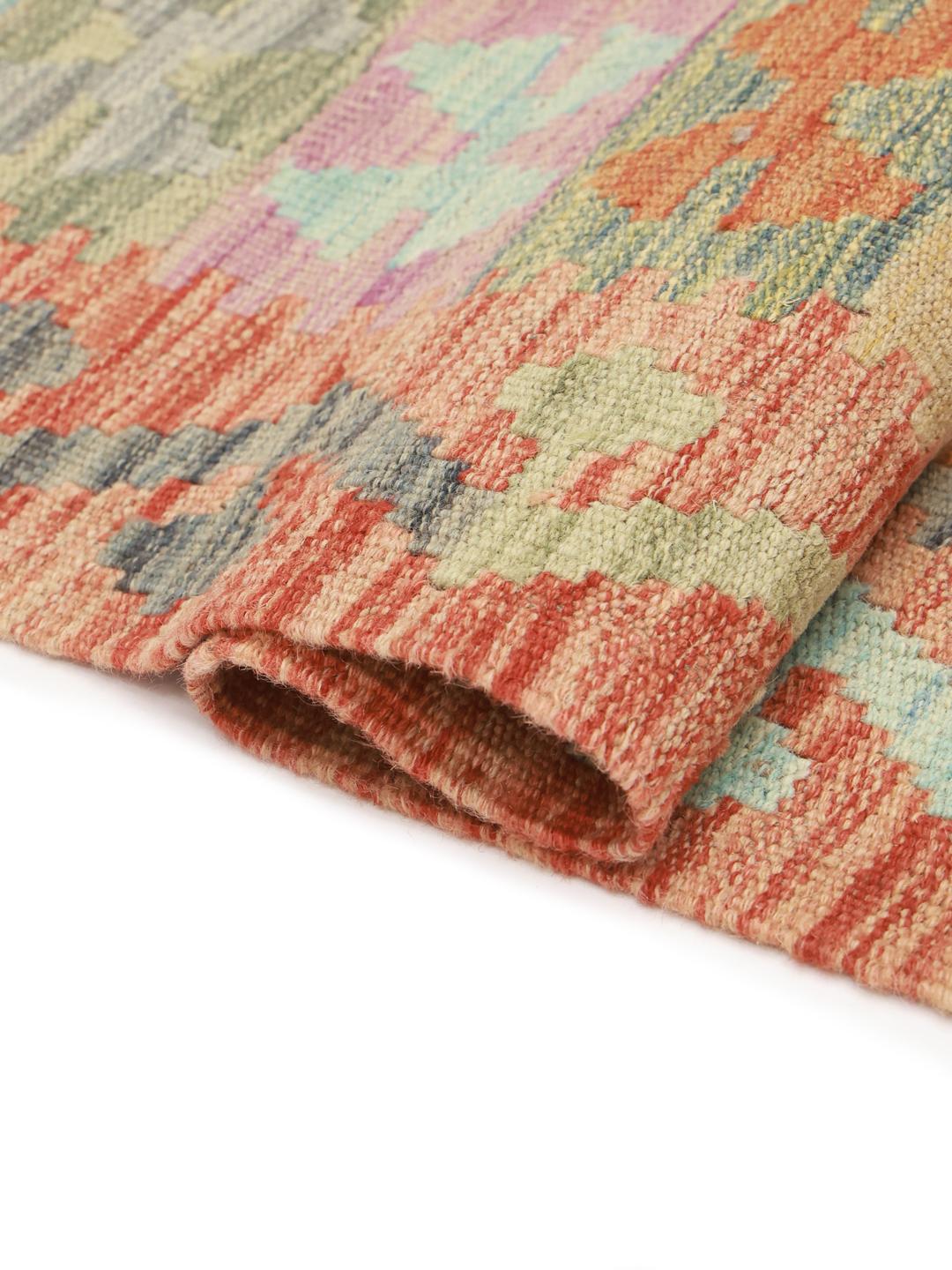
The term 'Kelim' refers to the specific slit-weave technique used to create the rug. In this method, the weft threads are woven back and forth around the warp threads, creating distinct shapes and patterns. This technique is what gives the rug its characteristic reversible, flat surface. It is a highly skilled craft that requires the weaver to manage complex colour changes and tension to maintain a smooth, uniform appearance.
Visually, Afghan Kelims are celebrated for their bold geometric language. You will often find medallions, diamonds, and tribal symbols that hold symbolic meaning, representing elements of nature, protection, or tribal identity. The colour palette typically relies on natural dyes derived from plants, roots, and minerals, which age beautifully over time and develop a soft, mellow patina that is highly prized by collectors.
Owning an Afghan Kelim is an opportunity to connect with a storied tradition of craftsmanship. These rugs are valued not only for their aesthetic beauty but also for their versatility and durability. As a collector’s item, each rug represents a unique chapter in the history of textile art, offering a genuine sense of heritage and cultural depth that mass-produced alternatives simply cannot match.