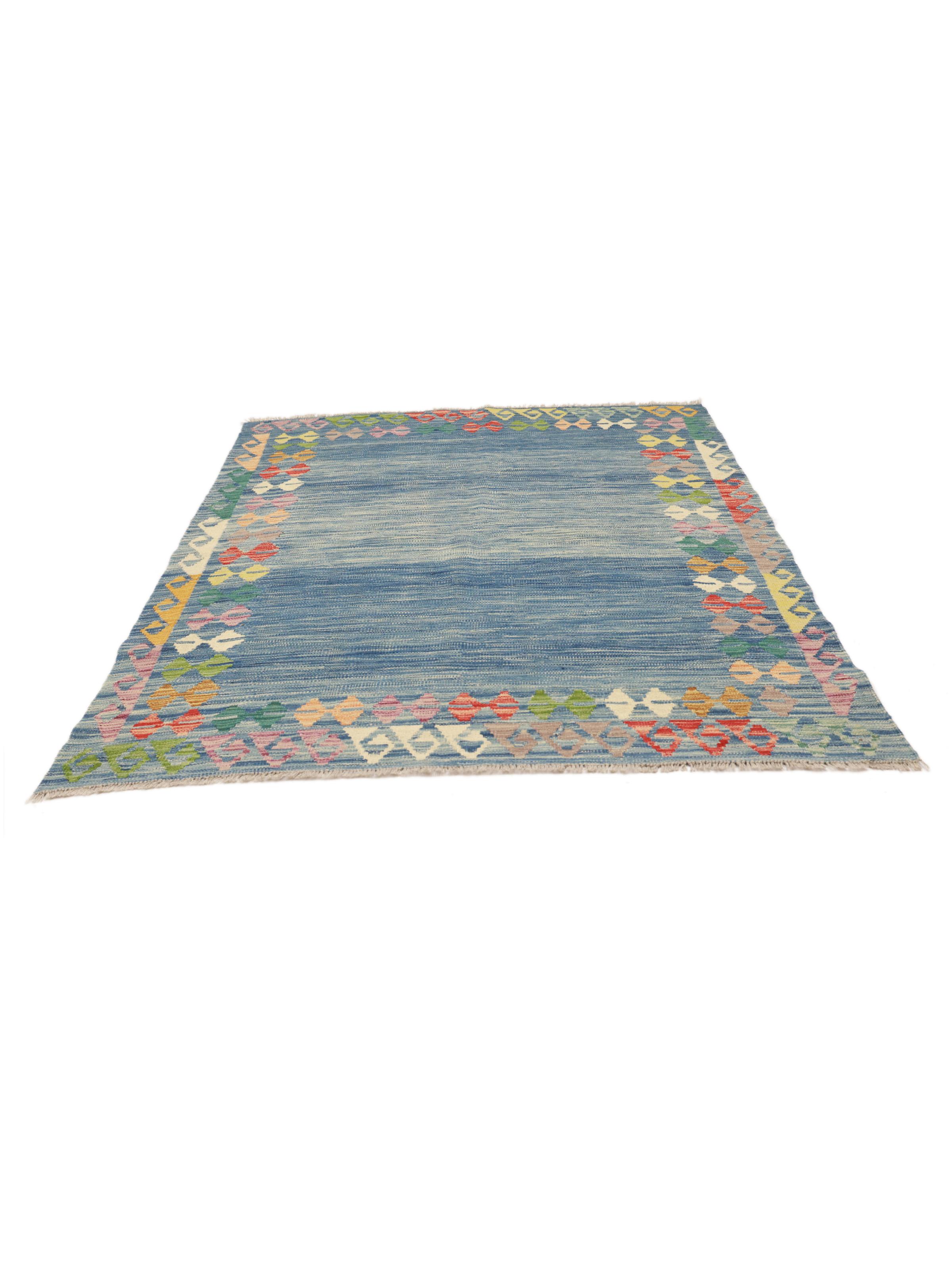
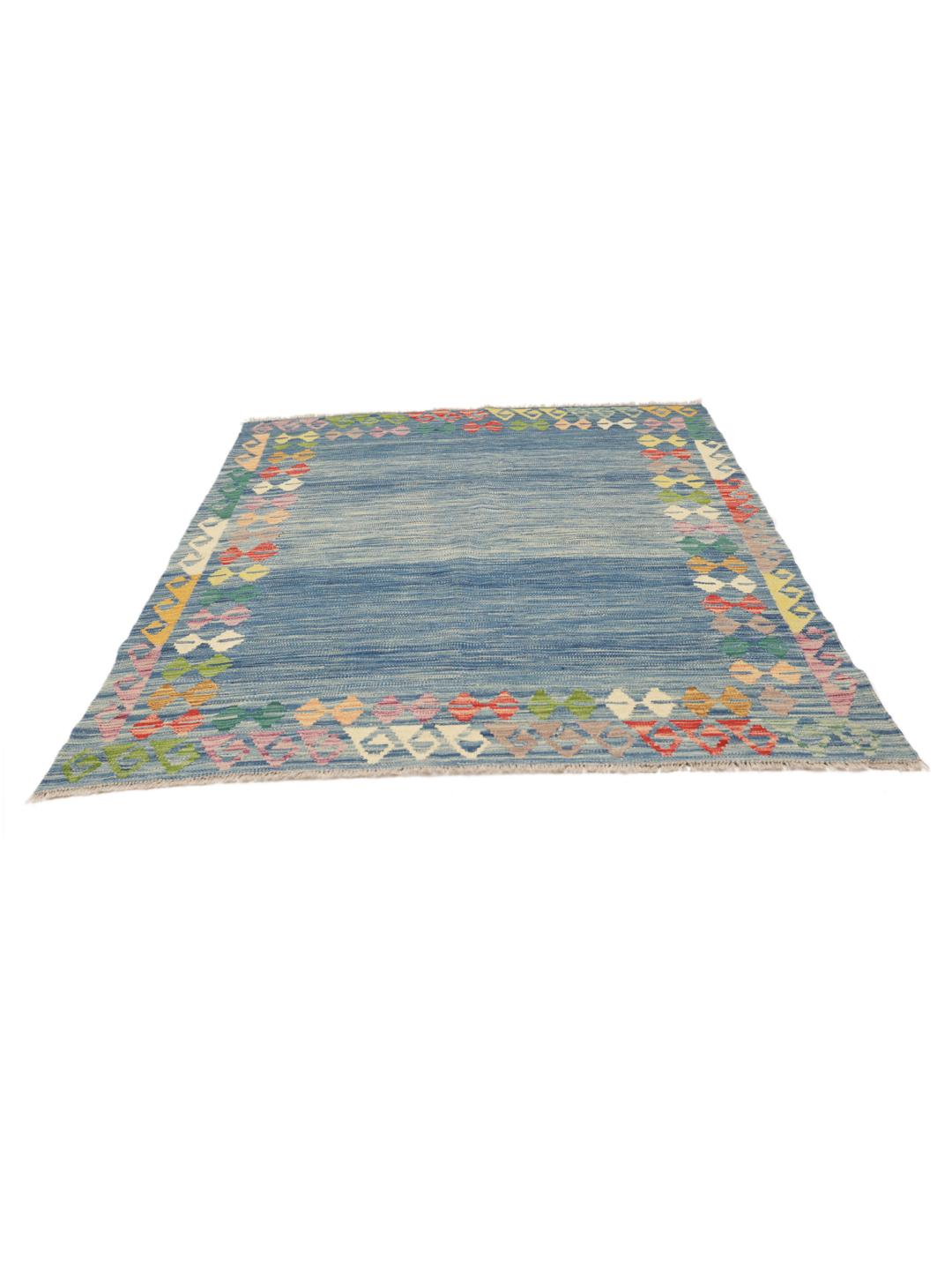
The Kelim Afghan tradition is deeply rooted in the nomadic history of the region, where flat-woven textiles were essential for both utility and artistic expression. These rugs were traditionally created by tribal communities in Afghanistan, serving as functional items that could be easily transported, used as floor coverings, or hung as wall decorations to insulate tents against the harsh mountain climate.
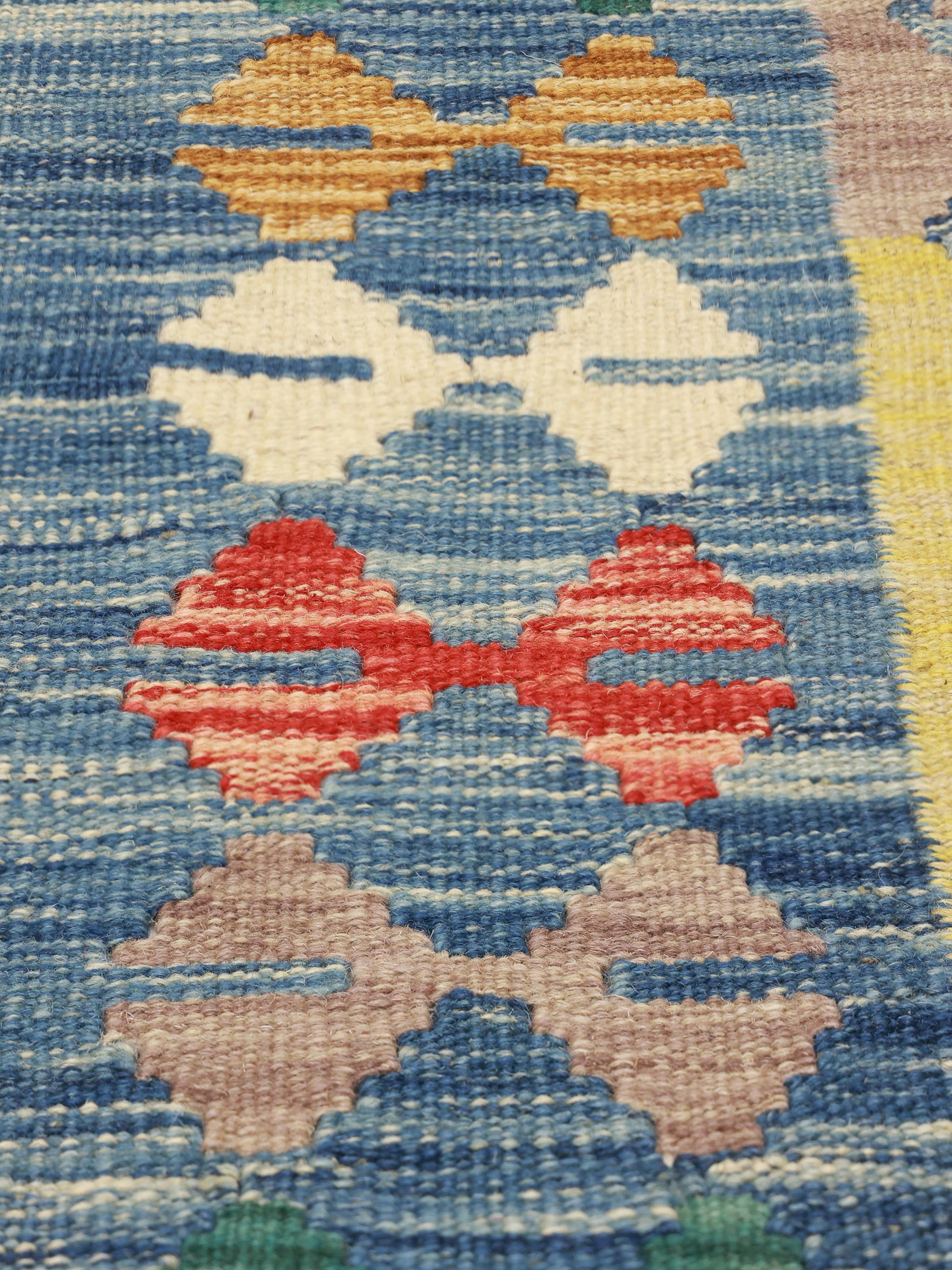
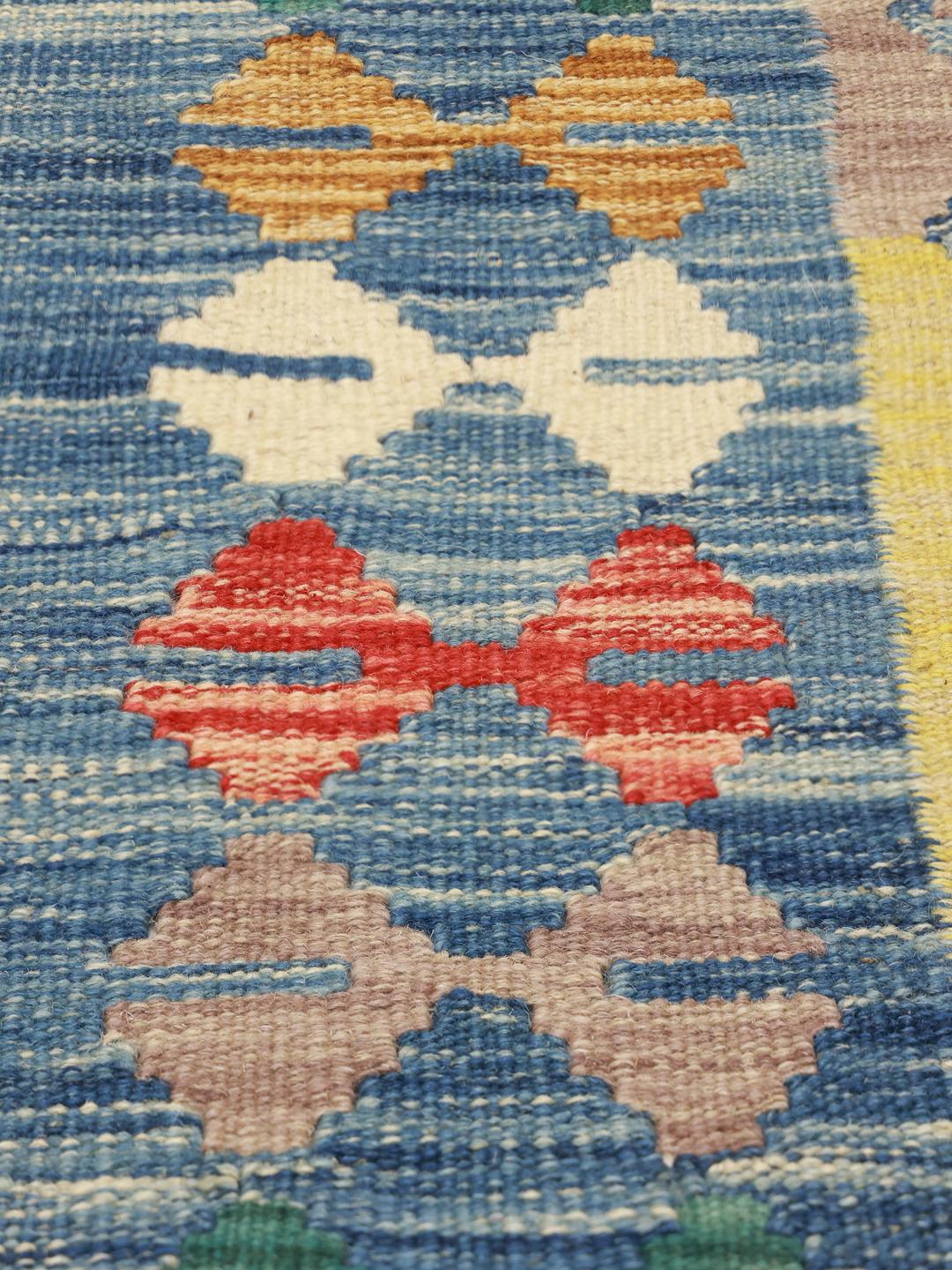
The term 'Kelim' refers to the specific flat-weave technique where the warp and weft are interlaced tightly to create a durable, reversible fabric without a pile. This method is highly valued for its simplicity and strength, as it relies on the natural properties of the wool to create a sturdy, long-lasting surface. The absence of pile means that the patterns are integrated directly into the structure of the rug, resulting in a cleaner, more graphic aesthetic.
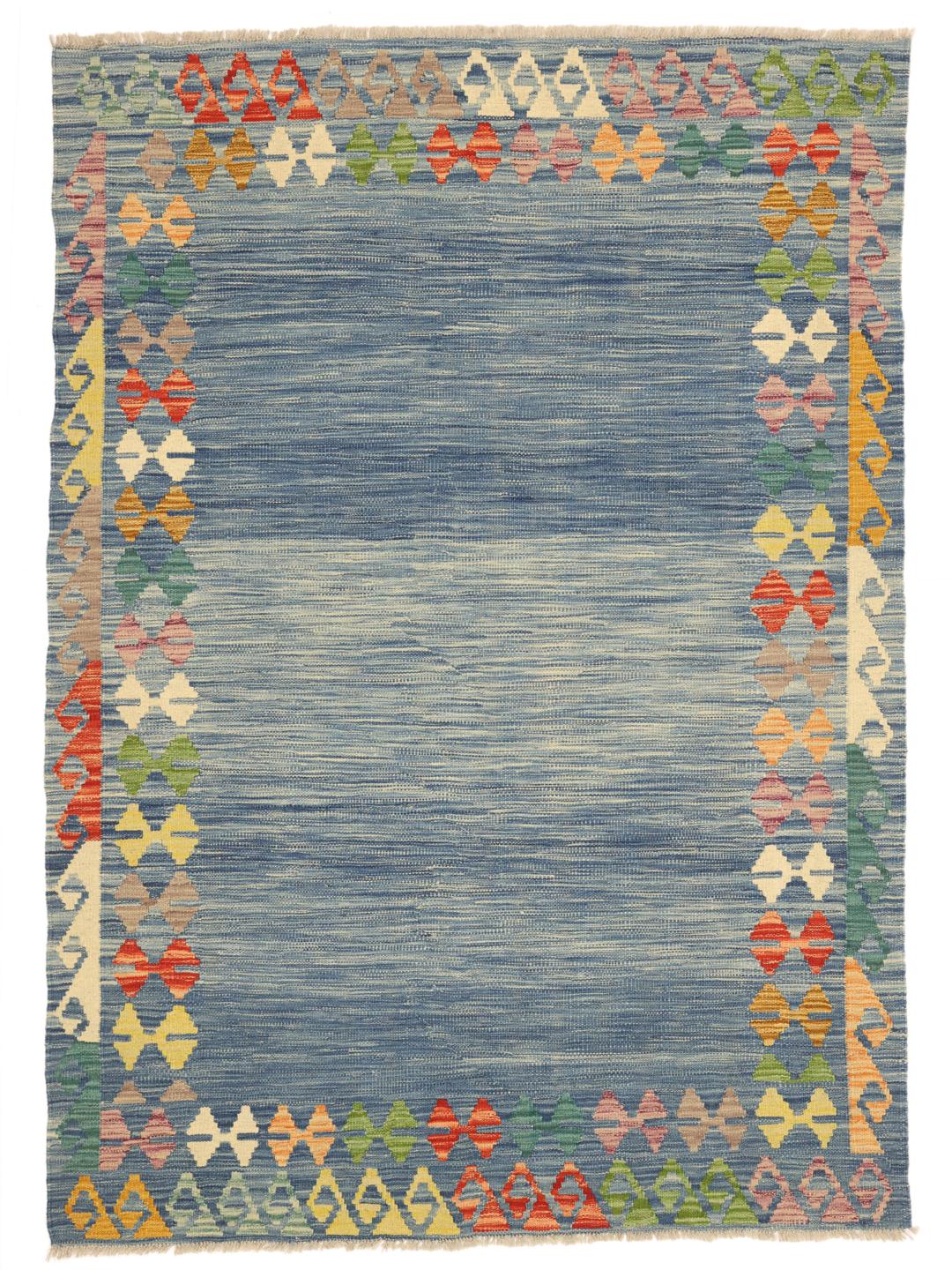
Visually, these rugs are defined by their geometric language, often featuring bold motifs that have been passed down through generations. While deep blue is a classic choice for the field, the inclusion of multicoloured accents in the borders is a signature of the Afghan style, often representing local flora, tribal symbols, or protective talismans. This specific rug showcases a balanced composition that remains faithful to these historical design principles.
Collecting Afghan Kelims is an appreciation of the enduring skill of the artisans who keep these ancient techniques alive. Each rug serves as a cultural artifact, documenting the aesthetic values and the technical mastery of its region. Owning such a piece is a way to connect with a long-standing heritage of craftsmanship, bringing a sense of timeless authenticity into a modern home environment.