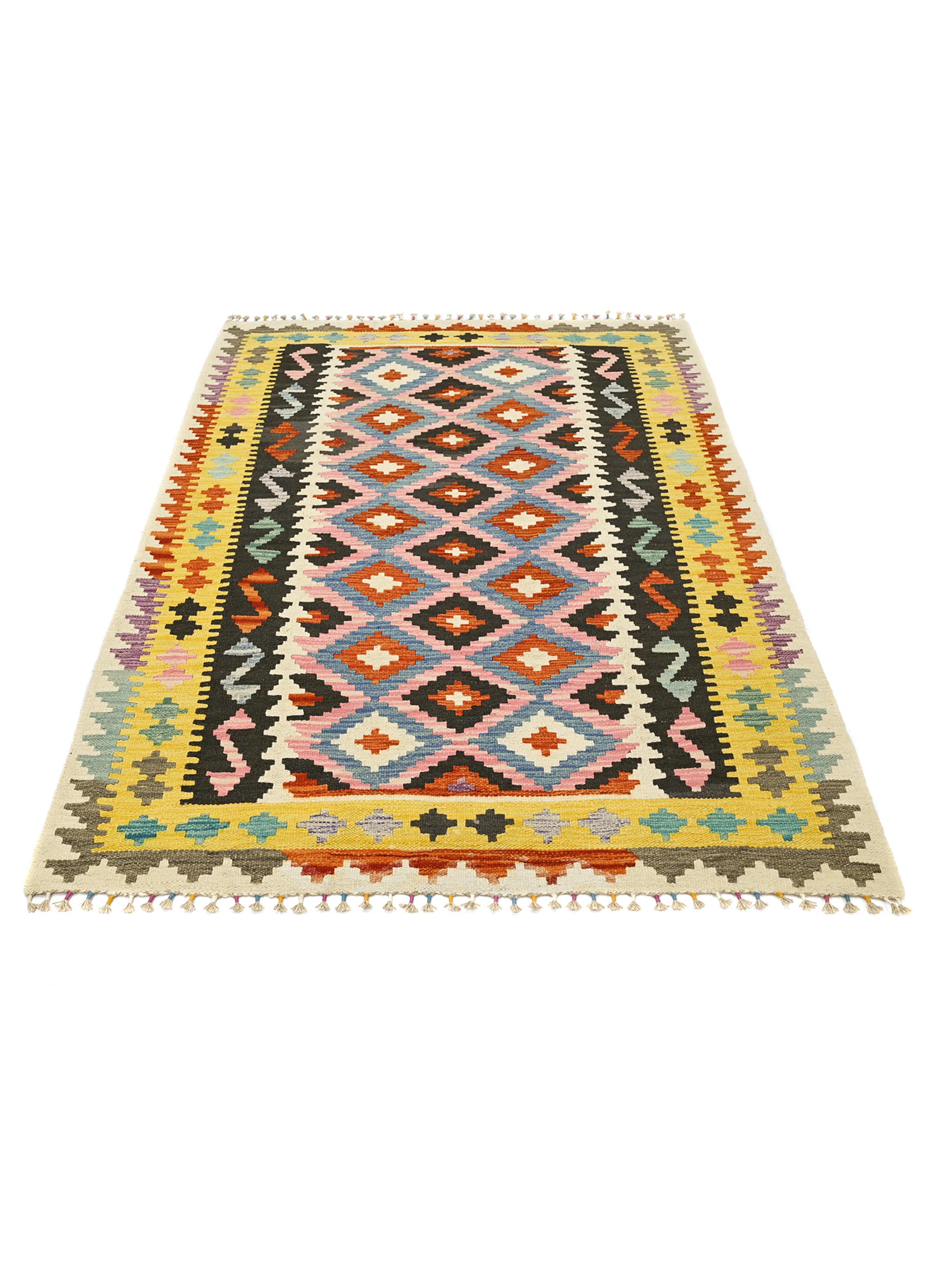
The Afghan Kelim is a celebrated staple of the Middle Eastern textile tradition, rooted in the nomadic history of the region. These flat-woven rugs were historically crafted by tribal weavers for practical use, serving as floor coverings, tent dividers, and storage bags. Over time, they have evolved from purely functional items into highly prized pieces of folk art that bridge the gap between ancient heritage and contemporary home design.
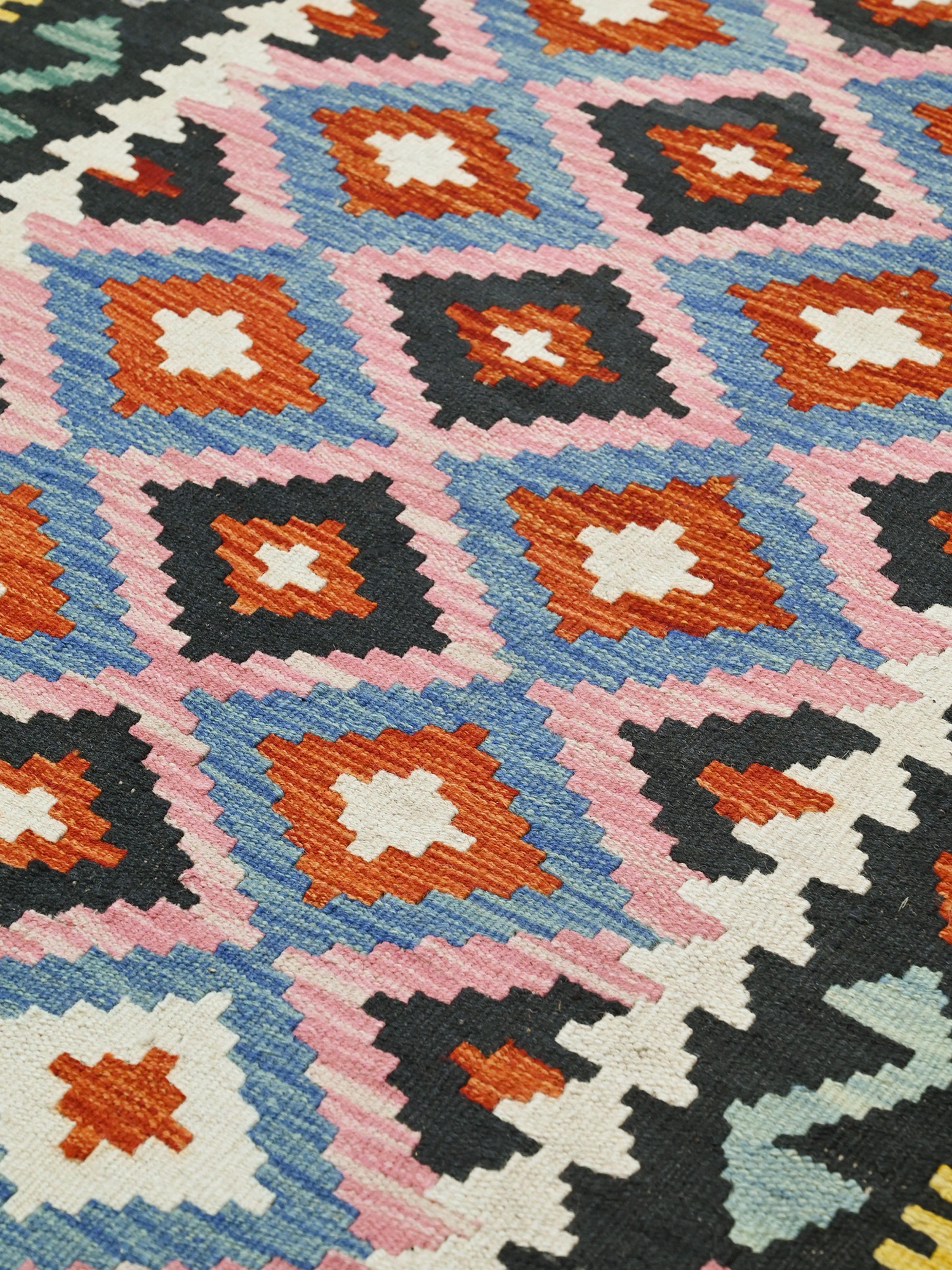
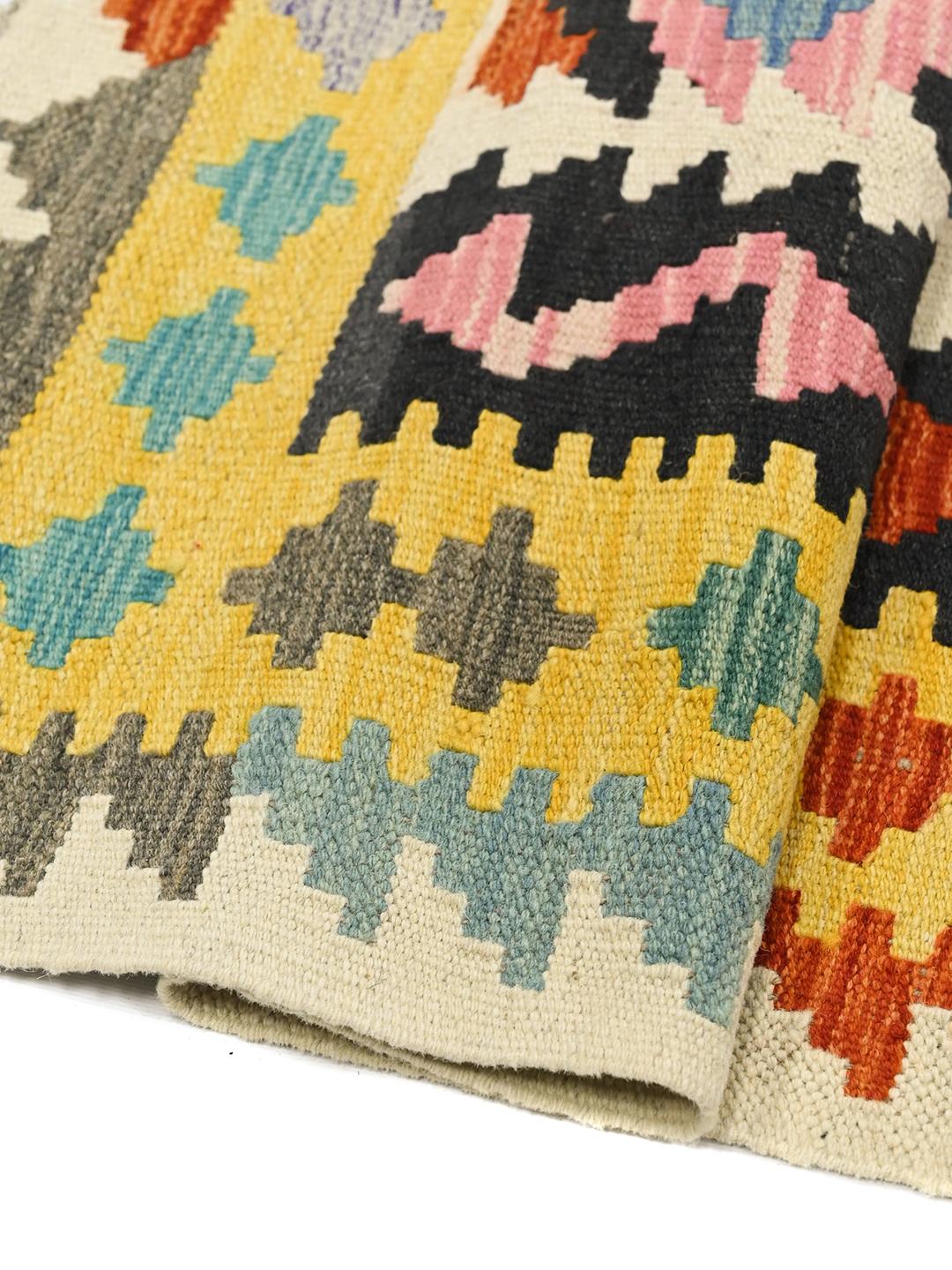
The term 'Kelim' refers specifically to the slit-weave technique, where the weft threads are passed through the warp to create a reversible, pileless surface. This method is fundamental to the rug's durability and its sharp, graphic aesthetic. By avoiding a knotted pile, the weaver can create crisp, clean lines and complex geometric shapes that are signature to the tradition, making these rugs both lightweight and incredibly resilient.
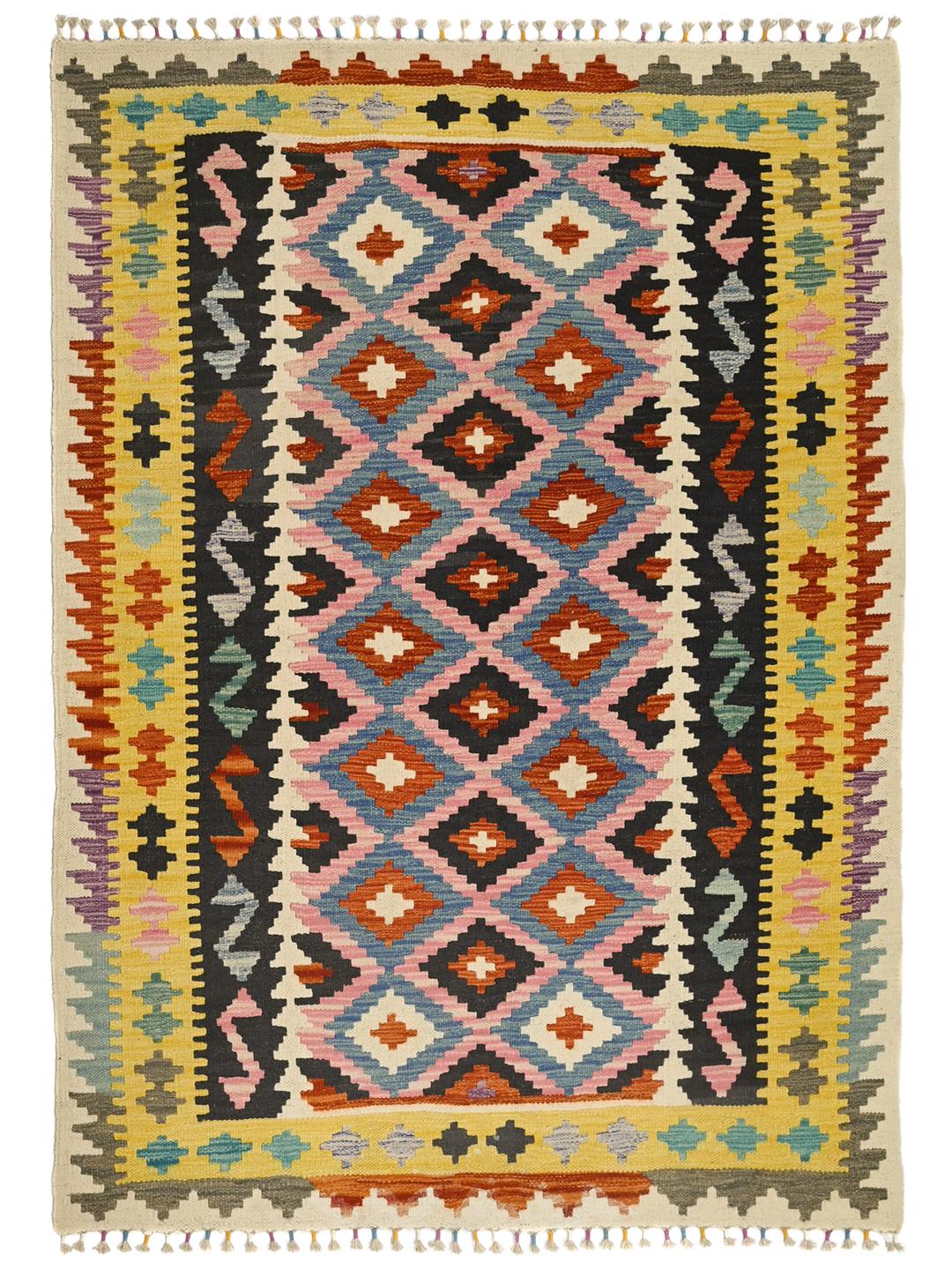
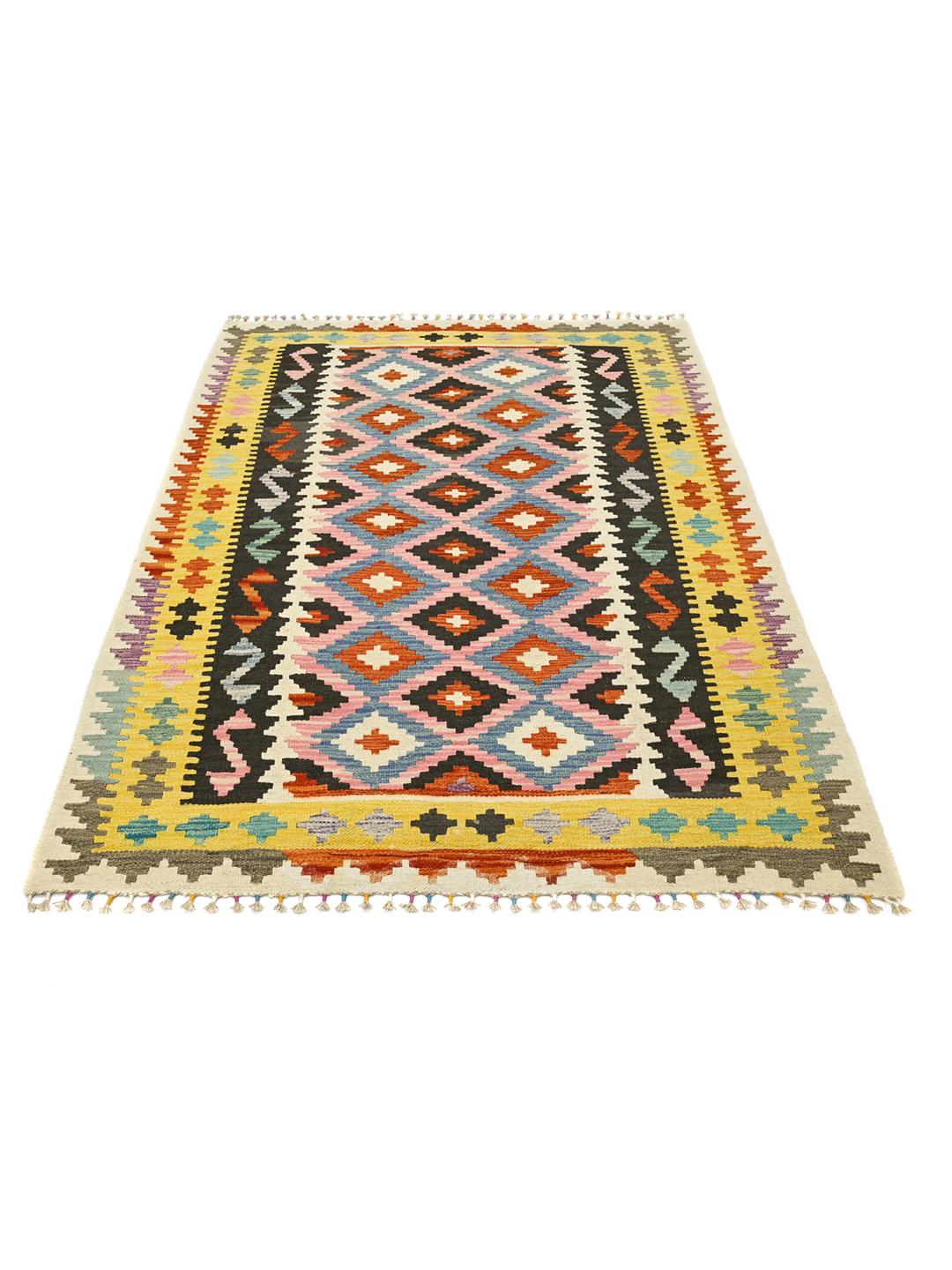
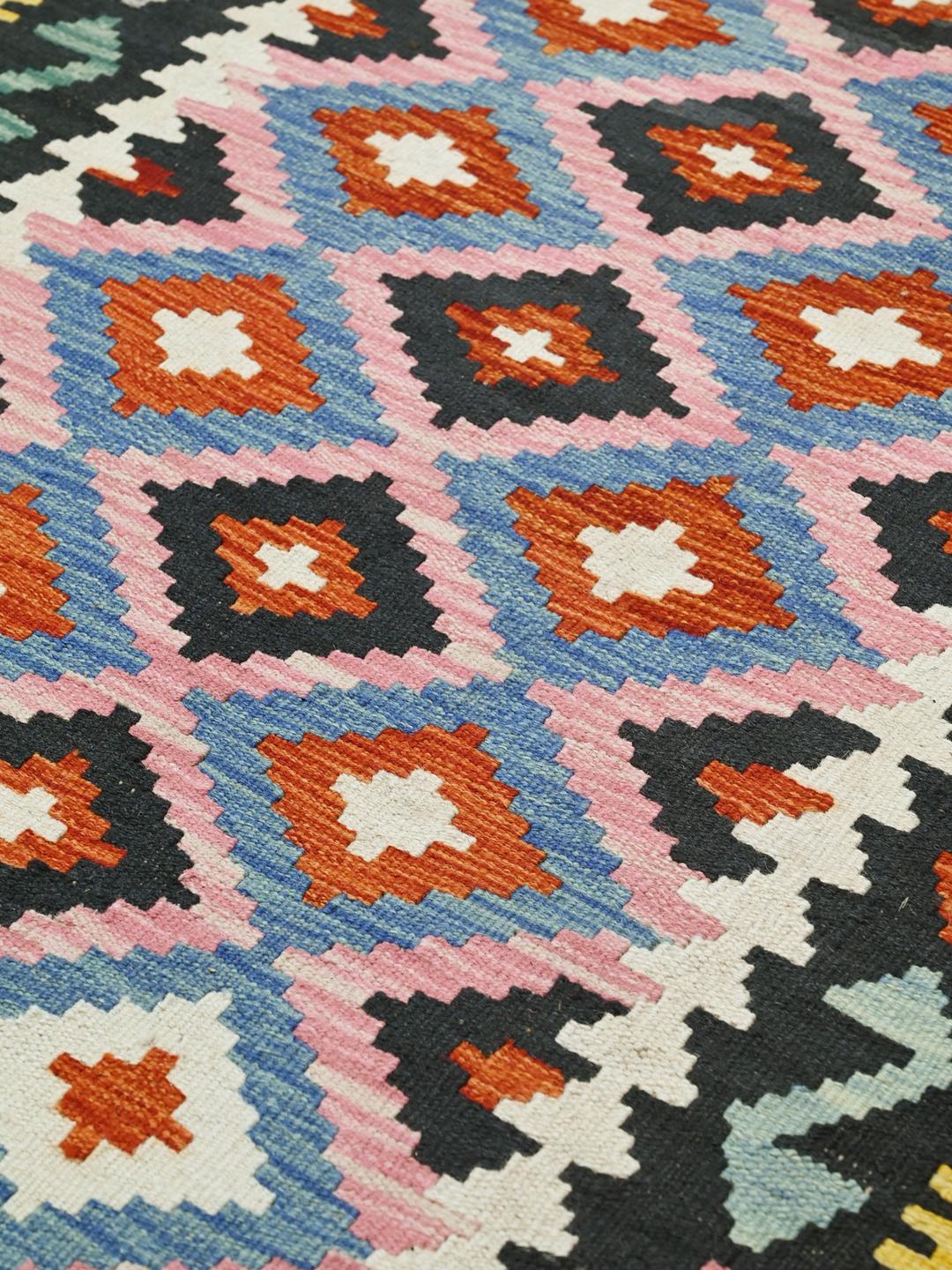
Signature design elements often include bold, repeating geometric motifs such as diamonds, triangles, and stylized floral or tribal symbols. The colour palette is traditionally derived from natural dyes, resulting in a rich, earthy spectrum that gains character as the rug ages. This particular piece features a striking arrangement of diamonds, showcasing the precise mathematical harmony that skilled weavers have perfected over centuries.
Collecting these rugs is an appreciation of a vanishing art form where every piece tells a story of the region and the weaver. They are valued for their cultural weight and the undeniable skill required to maintain consistency in pattern without a modern template. Owning a Kelim is an invitation to display a piece of history that continues to influence interior design through its timeless, vibrant, and deeply human appeal.