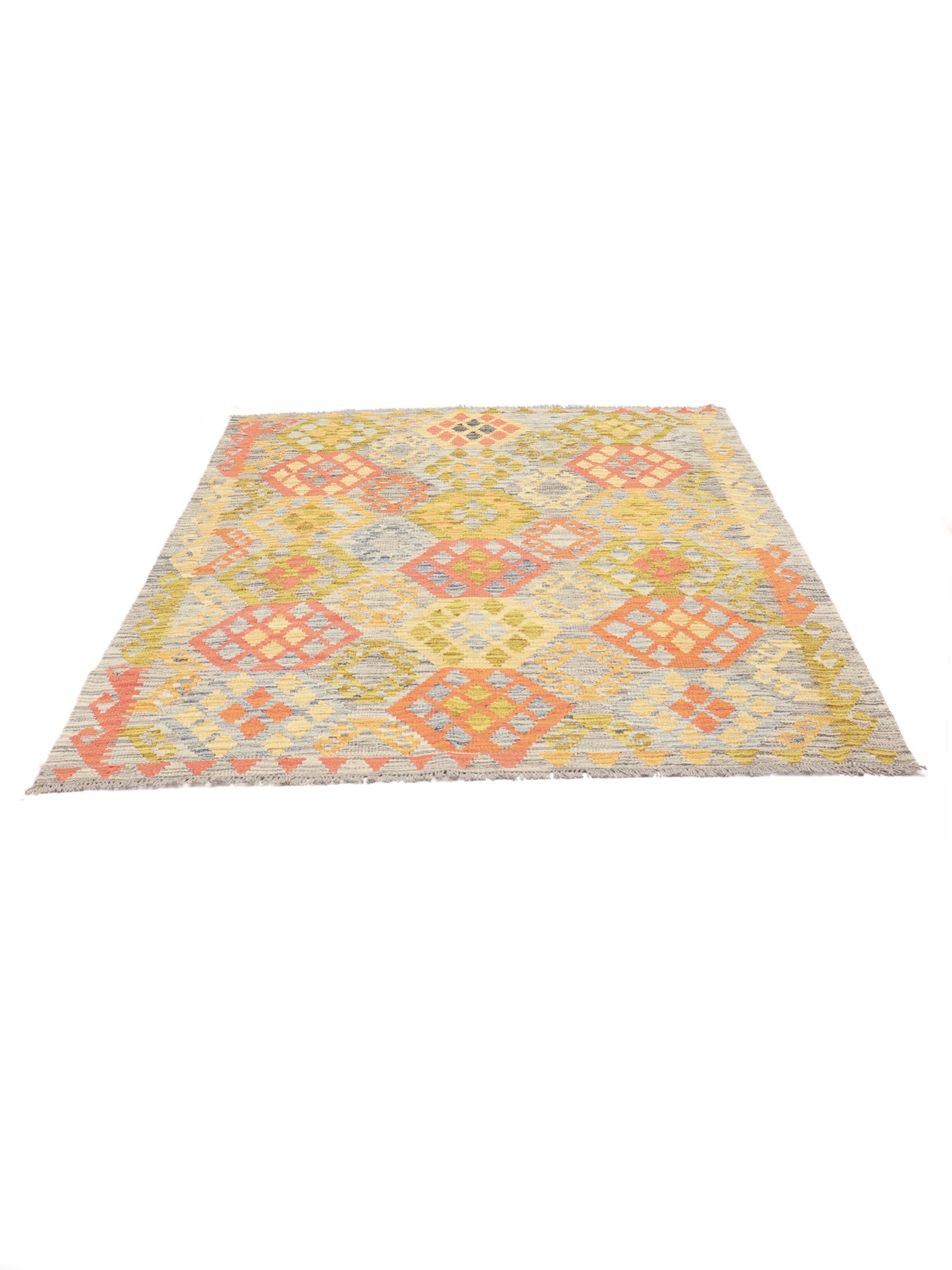
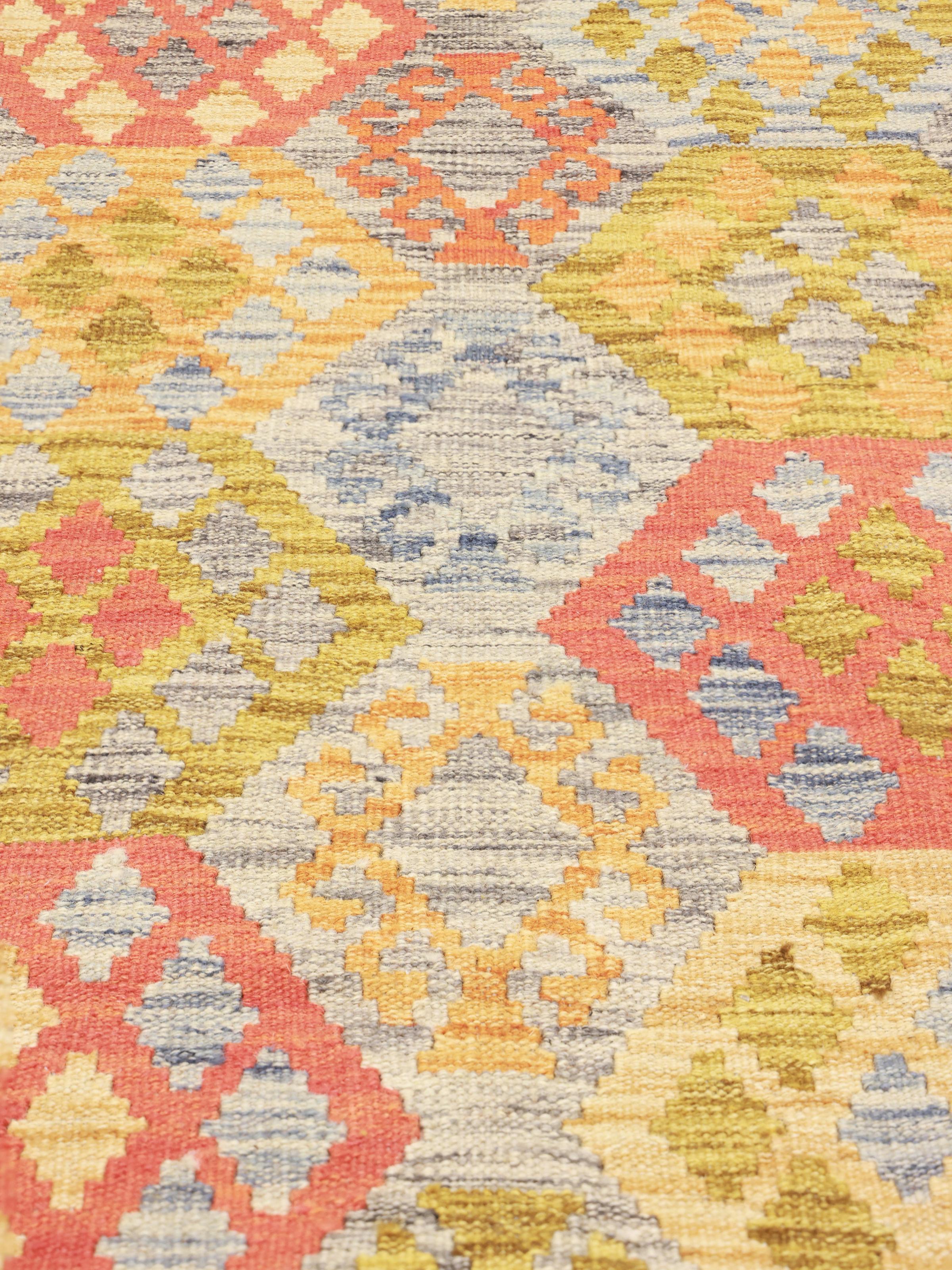
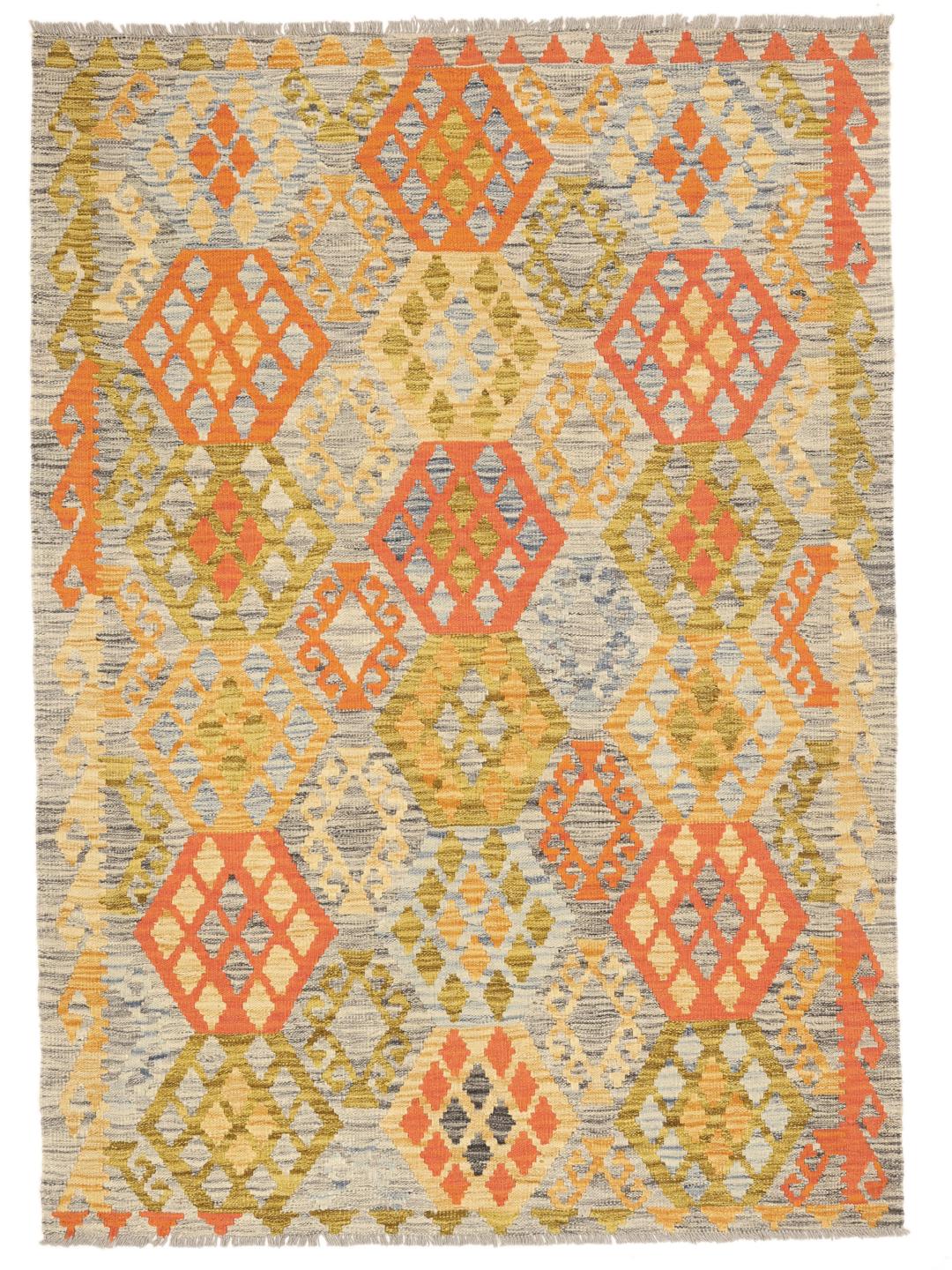
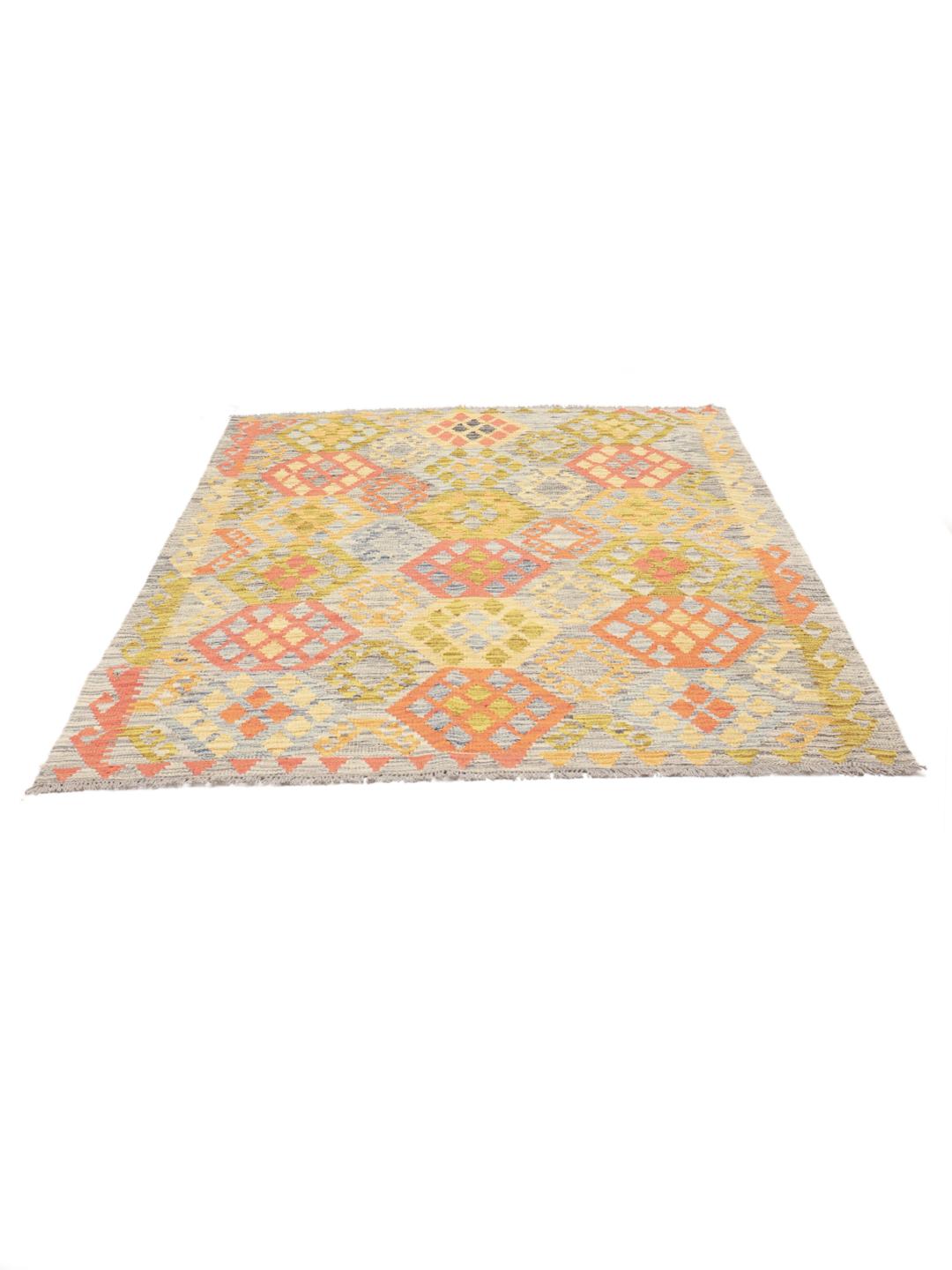
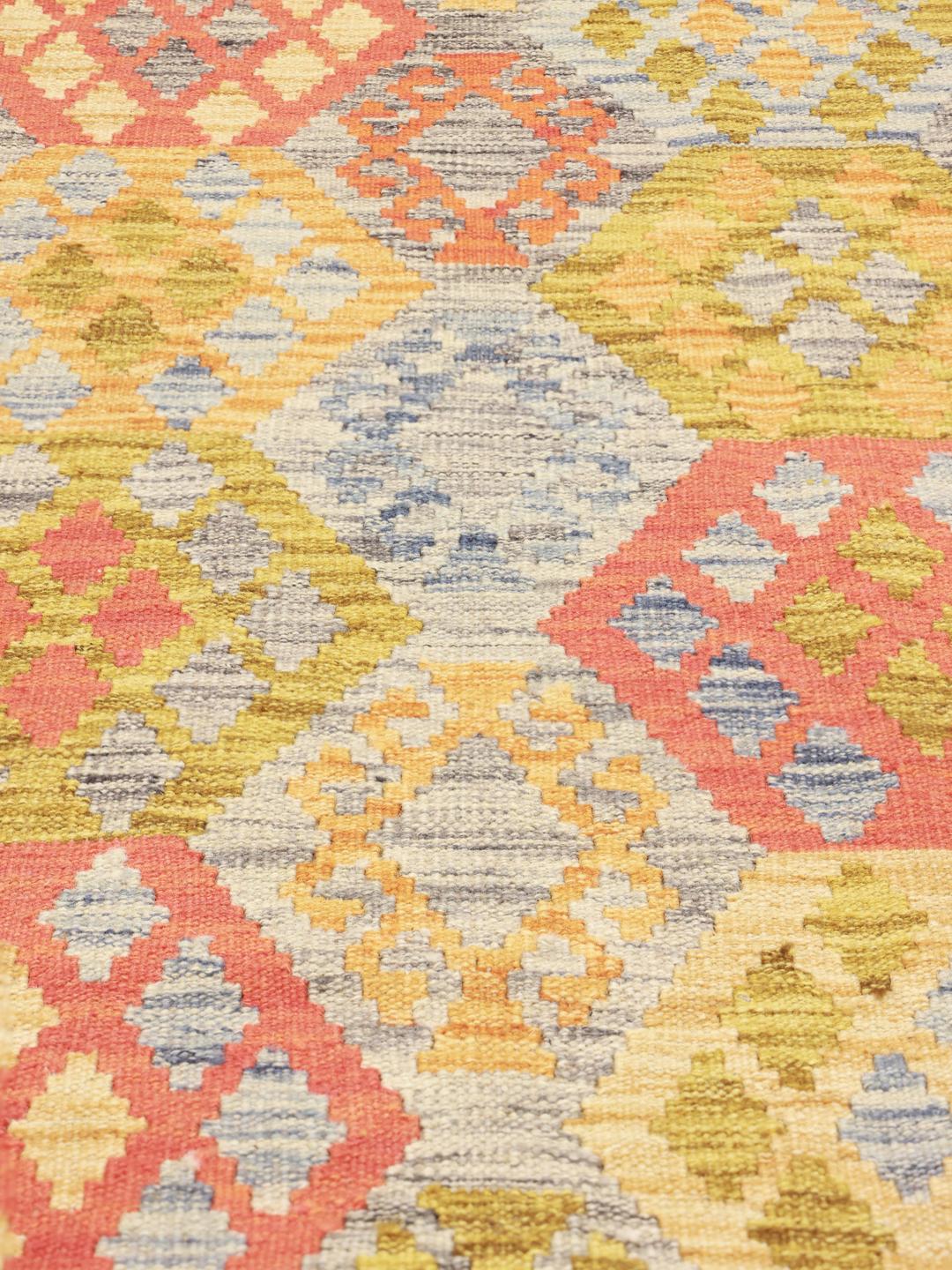
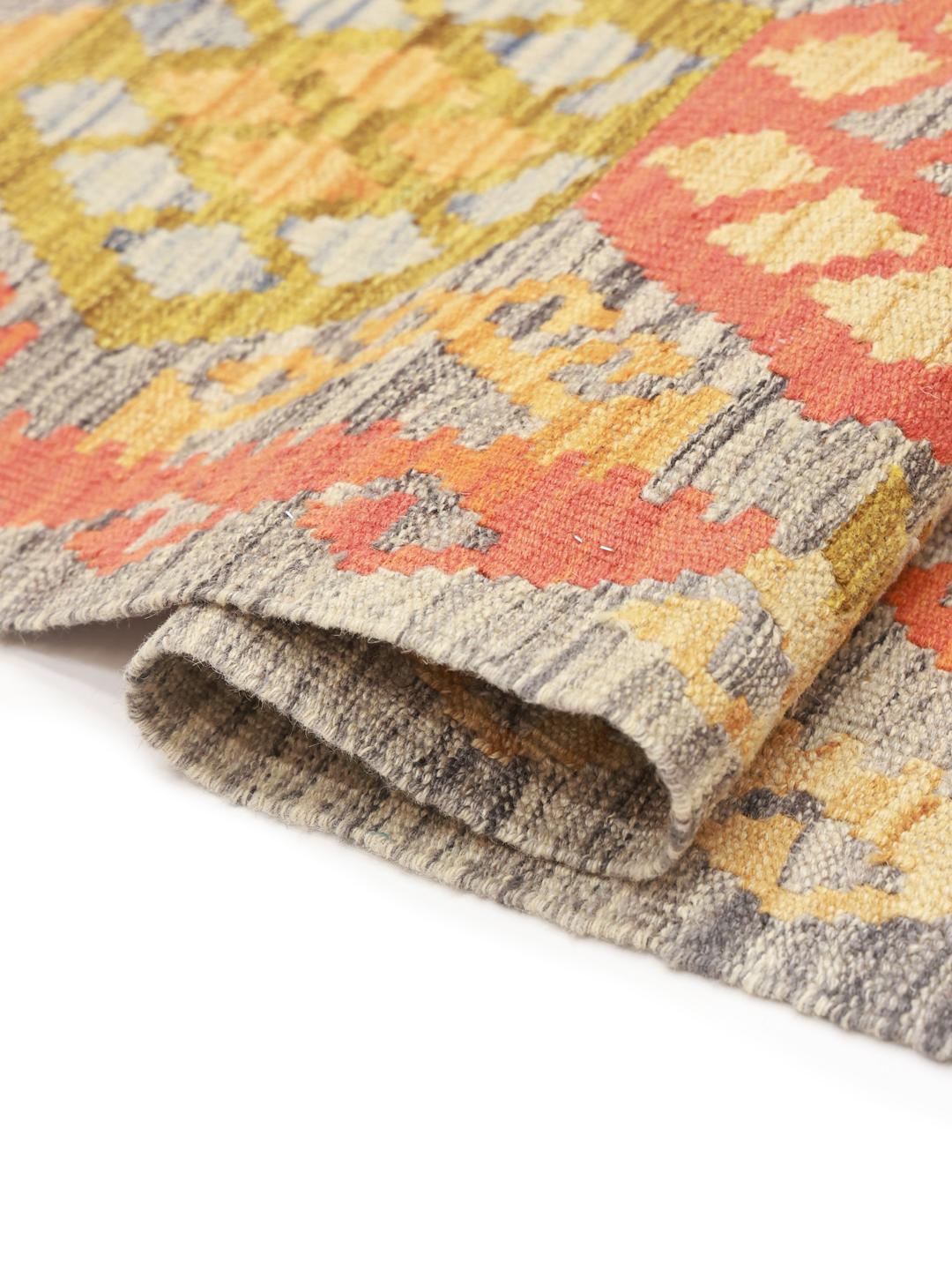
The Kelim tradition in Afghanistan is deeply rooted in the nomadic lifestyle of the region, where these flat-woven textiles have historically served as versatile, essential household items. Unlike pile rugs, Kelims are woven by interlocking warp and weft threads, a technique that produces a lightweight yet exceptionally strong fabric that was traditionally used for floor coverings, wall hangings, and even as saddlebags for travelling tribes.
The term 'Kelim' refers to this specific flat-weaving technique, which is prized for its clean, graphic lines and reversible nature. In the context of Afghan craftsmanship, this method allows for a high degree of precision in pattern work, enabling the creation of complex geometric motifs that are embedded directly into the structure of the rug rather than sitting on top of a foundation.
The design language of these rugs is steeped in symbolism, with geometric shapes, diamonds, and repeating motifs often reflecting the weaver's environment and cultural heritage. The vibrant colours are traditionally derived from natural dyes, and while modern methods have evolved, the aesthetic remains faithful to the bold, rhythmic patterns that have characterised Afghan textile arts for centuries.
Collecting an Afghan Kelim is an investment in a living tradition. These rugs are highly valued for their ability to bridge the gap between ancient nomadic utility and contemporary interior design. By bringing one into your home, you are preserving the legacy of the artisans who crafted it and celebrating a form of textile art that is as culturally significant as it is visually captivating.