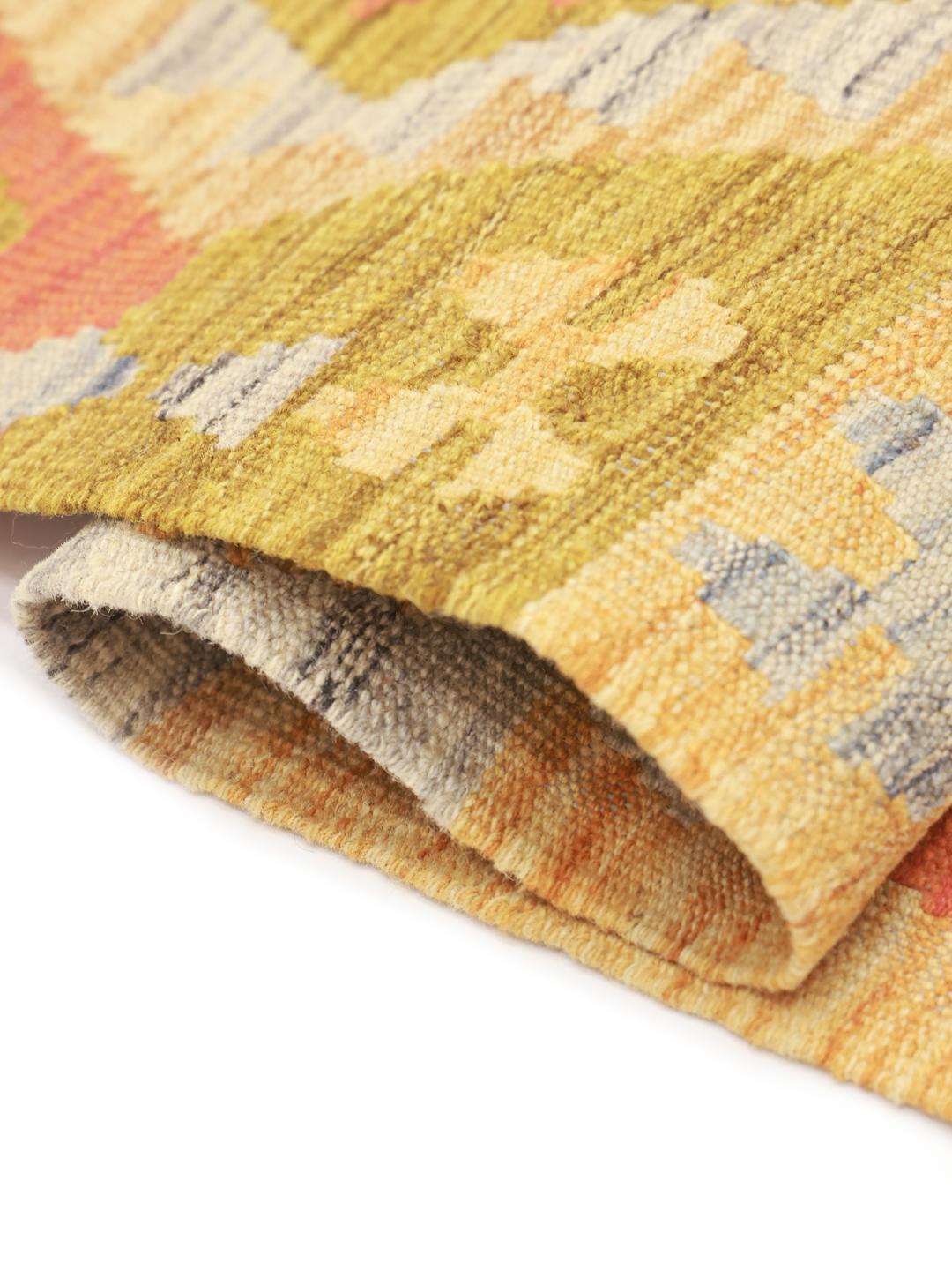
Kelim rugs have long been a cornerstone of nomadic and village life across the Middle East and Central Asia. Traditionally, these flat-woven textiles were crafted by tribal weavers as functional items for daily use, serving as everything from floor coverings and room dividers to saddlebags and storage sacks. Their portability and durability made them essential for communities on the move, reflecting a culture that valued both utility and beauty.
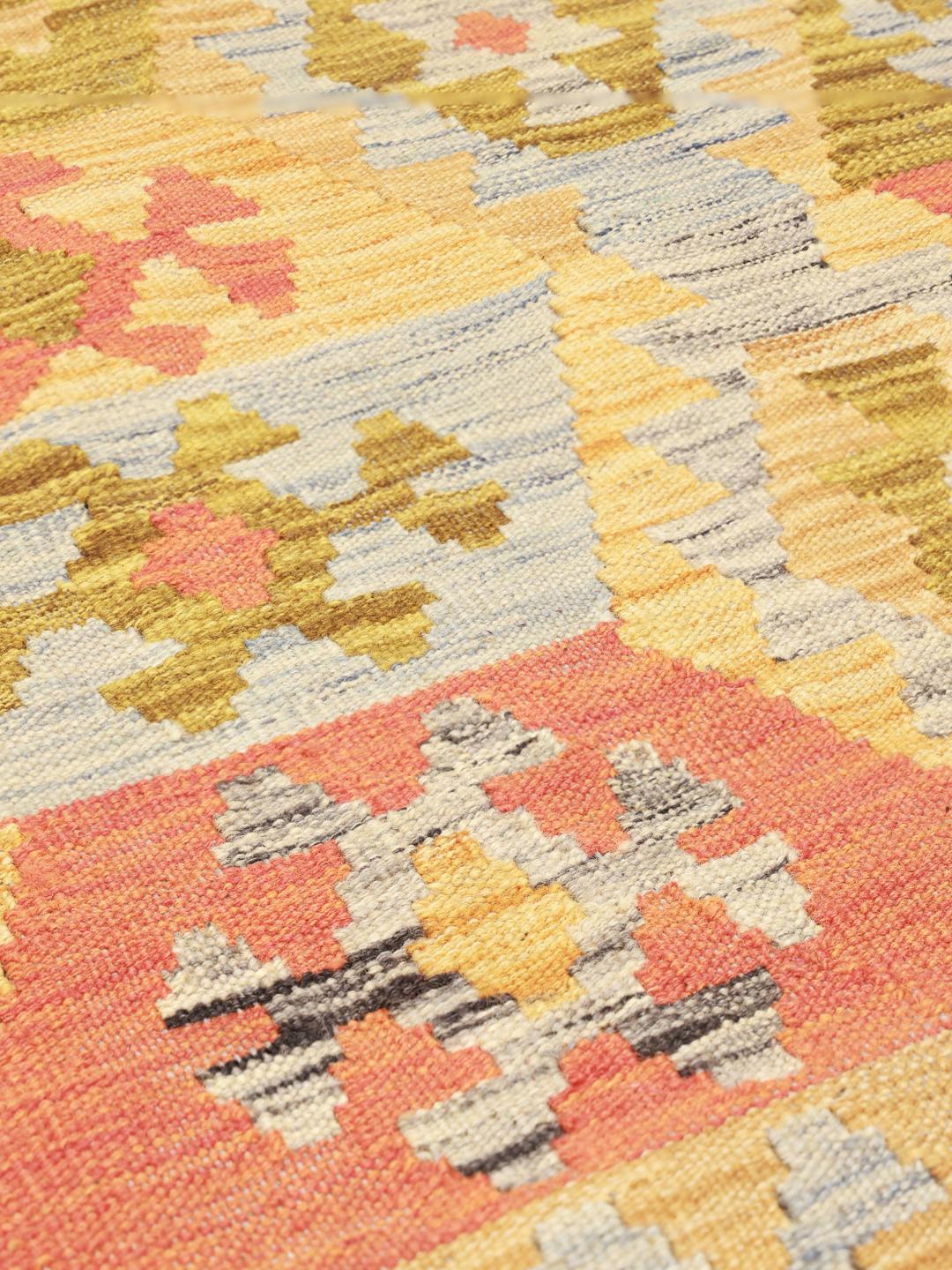
The term Kelim refers to the specific slit-weave technique used to create these rugs. By wrapping the horizontal weft threads tightly around the vertical warp threads, weavers create a flat, pileless surface with clean, sharp lines. This method is what allows for the bold, geometric designs and intricate interlocking shapes that define the genre, as the weaver must finish one colour area before moving to the next.
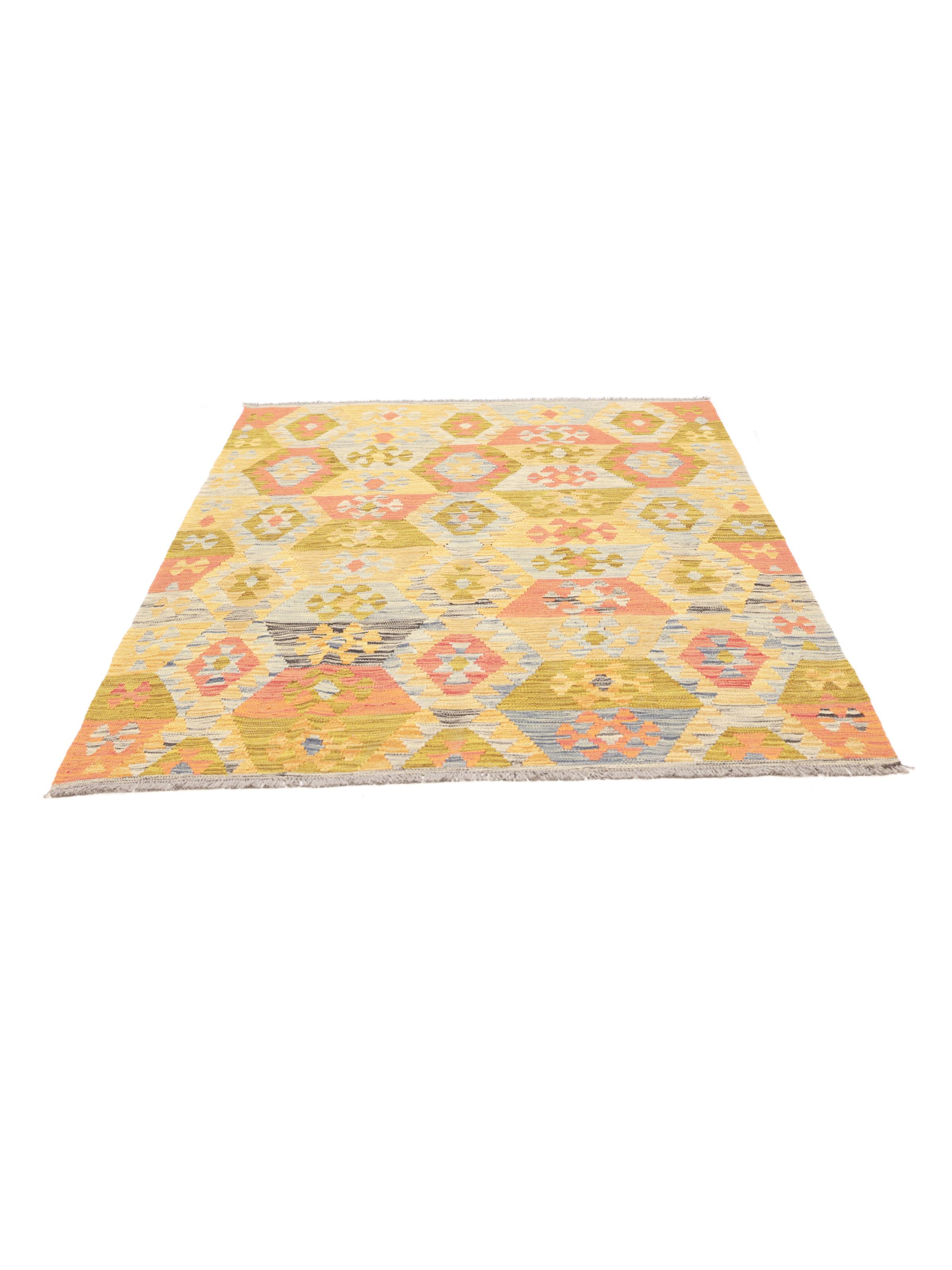
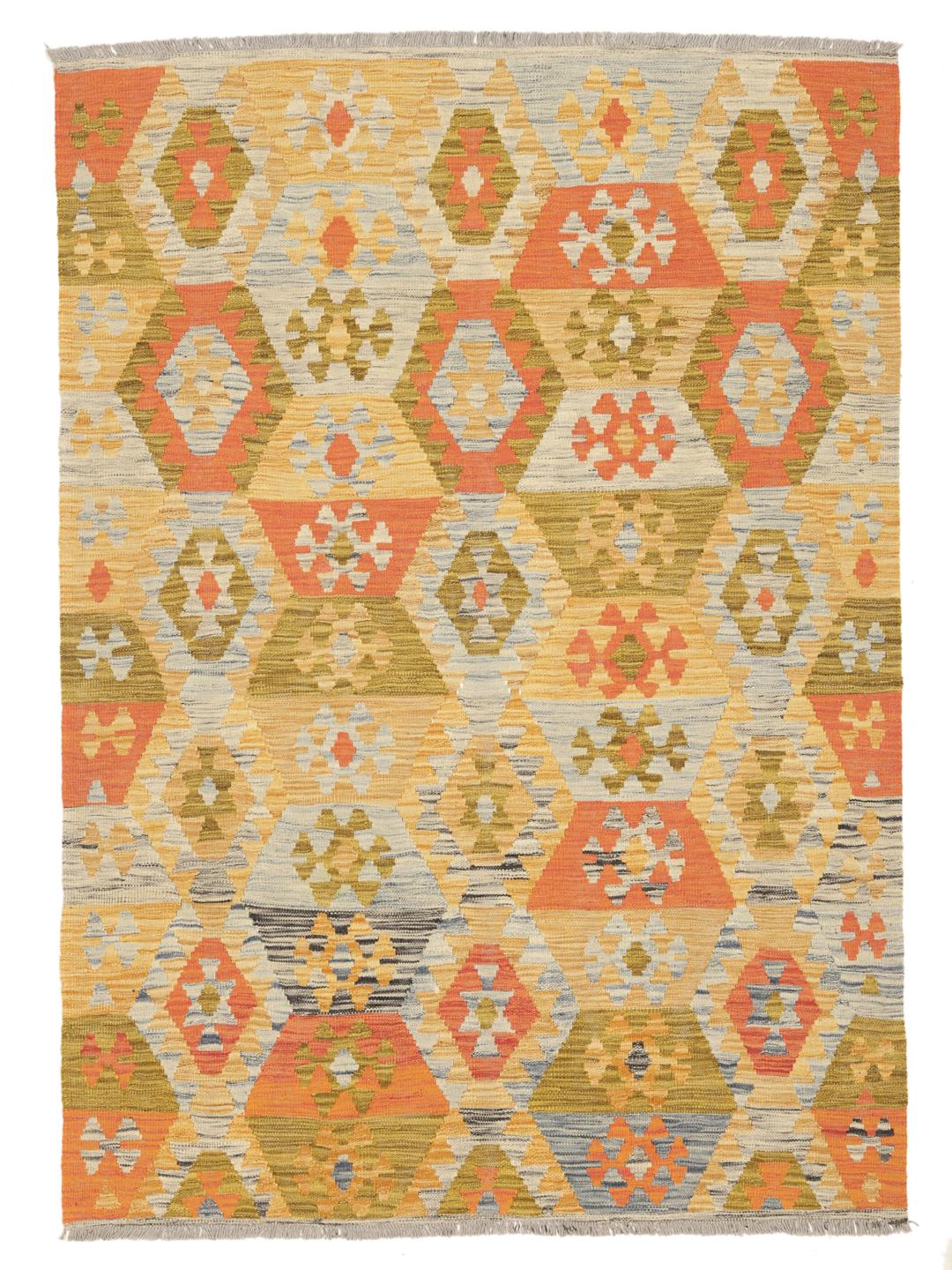
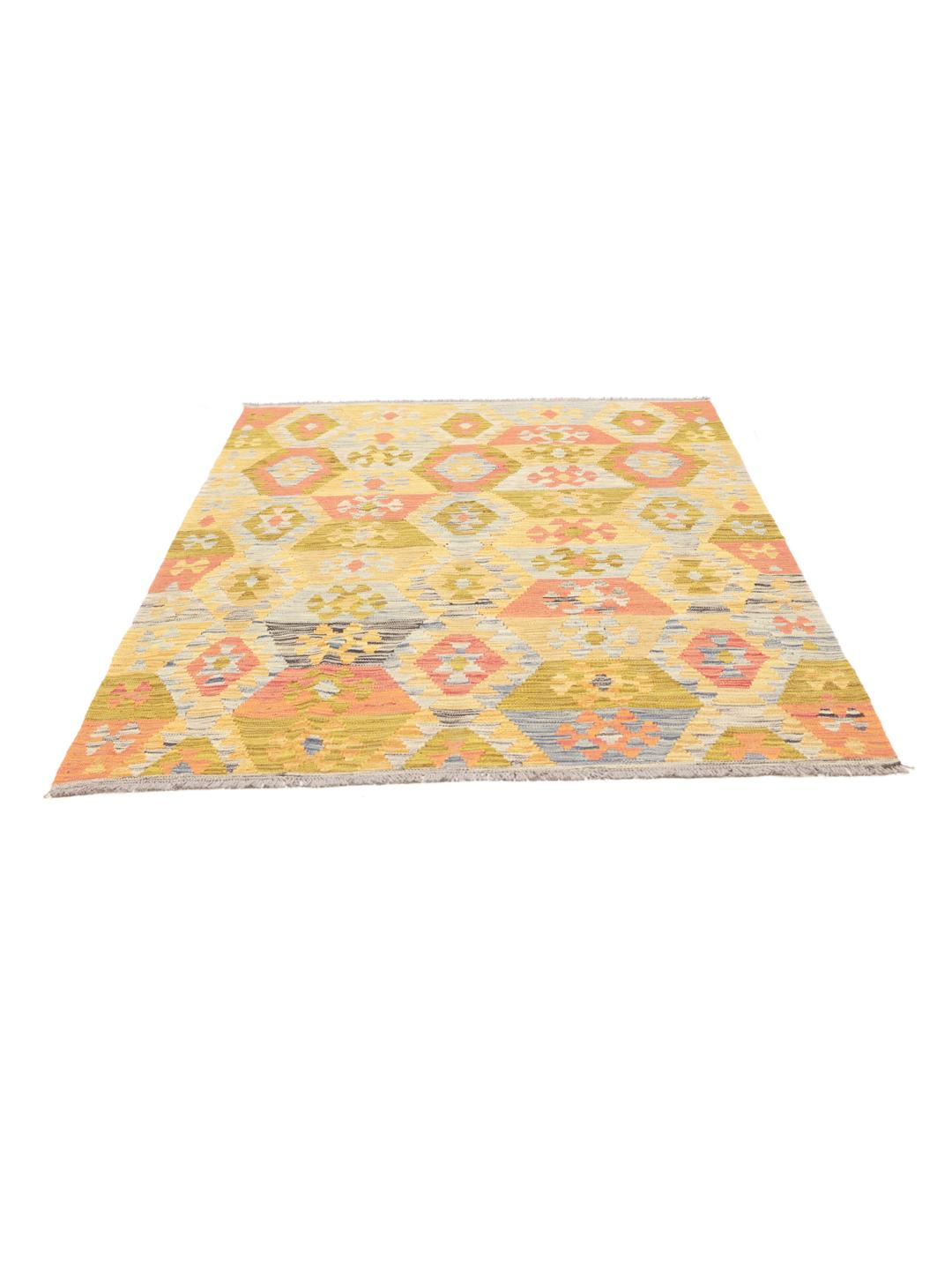
The design language of this Afghan piece is rooted in ancient geometric traditions. You will often see diamonds, triangles, and stylised floral motifs arranged in repetitive patterns that tell stories of tribal identity and regional heritage. While traditional colours were often derived from natural dyes like madder root, pomegranate, or walnut shells, the vibrant, warm tones seen here represent the evolution of the style, blending historic motifs with a more contemporary colour sensibility.
Collecting a Kelim is more than just purchasing a floor covering; it is an investment in a storied craft tradition. These rugs are highly valued for their authenticity and the skill required to maintain the precision of the pattern without the aid of a pile. Owning an Afghan Kelim means connecting your home to a lineage of makers who have perfected this art form over centuries, preserving a unique piece of cultural history that continues to remain relevant in modern homes.