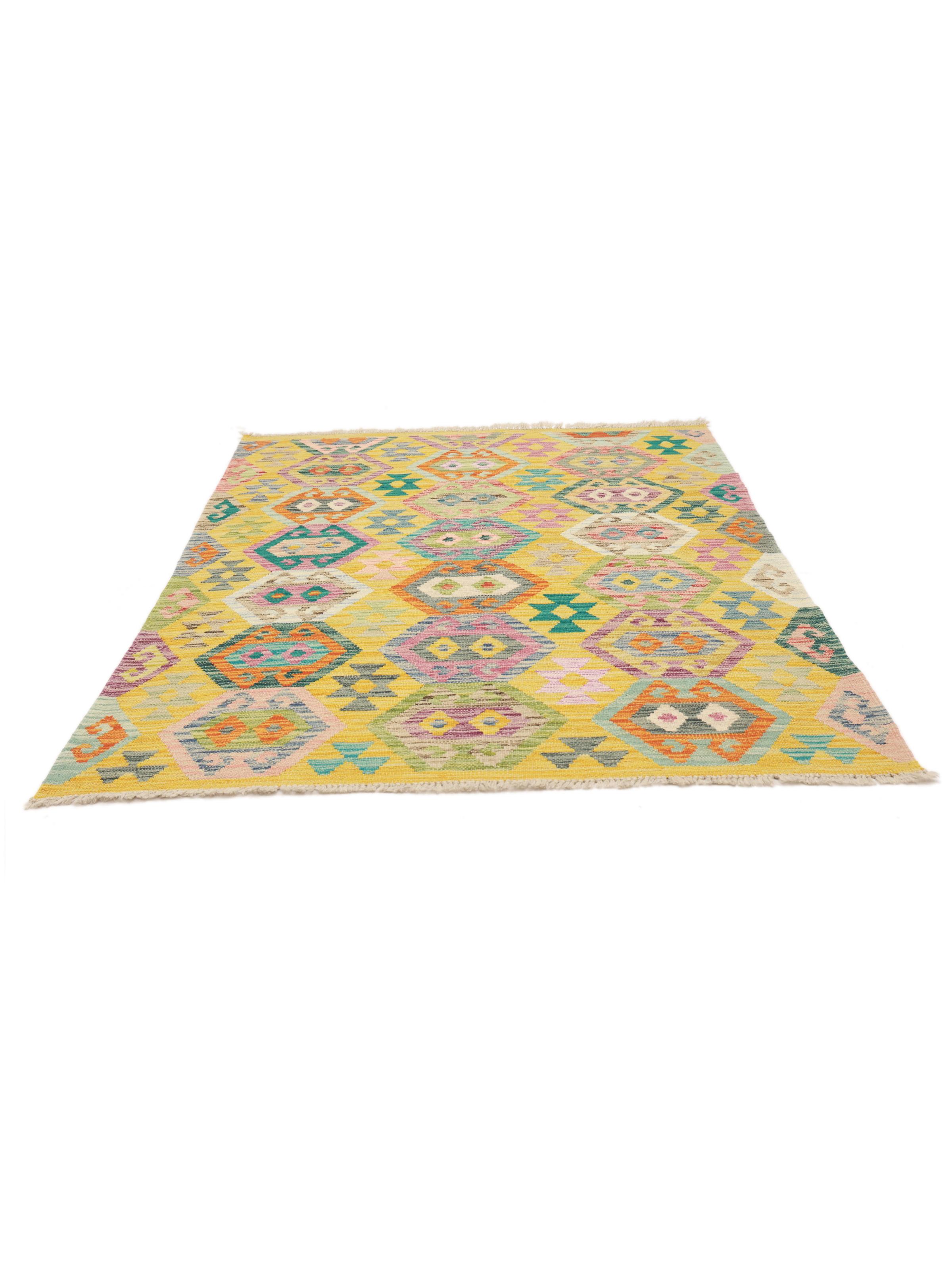
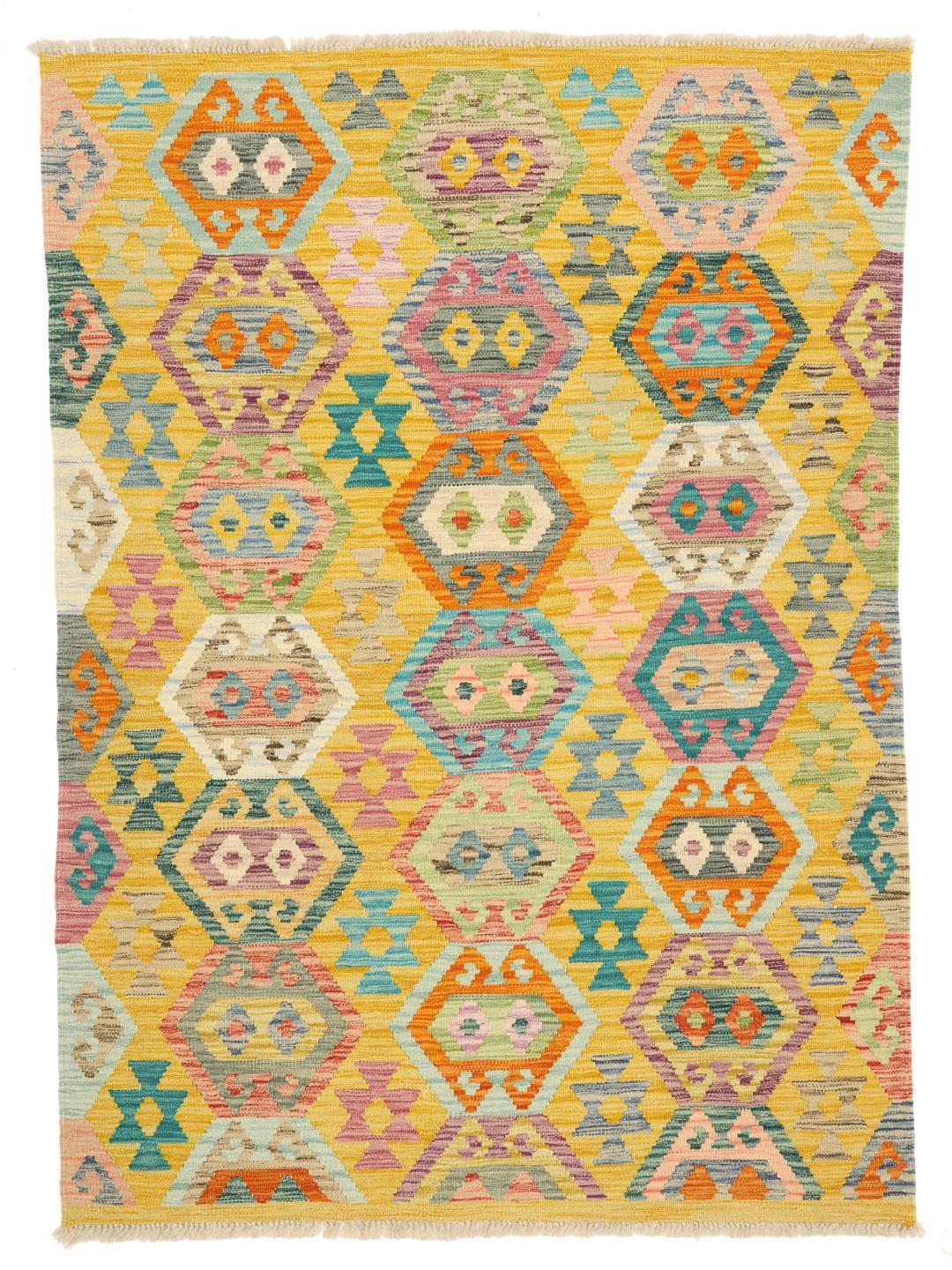
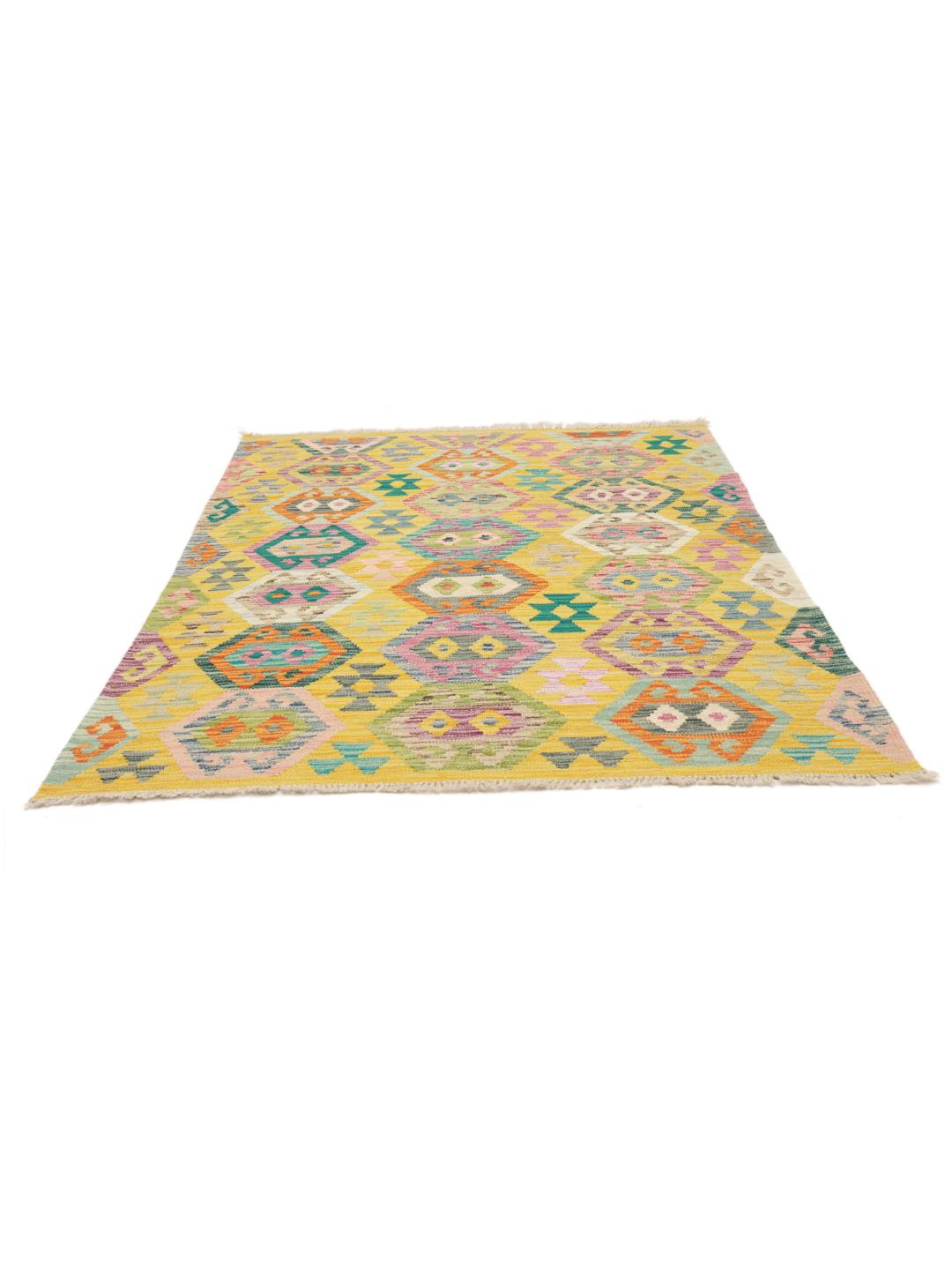
The Kelim Afghan Old Style rug finds its roots in the nomadic traditions of Afghanistan and the broader Middle Eastern region. These flat-woven textiles have been a staple of life for centuries, serving as everything from floor coverings and room dividers to saddlebags and storage sacks. The evolution of these rugs is deeply tied to the migration patterns of tribal groups who carried their looms and design traditions across the landscape, constantly refining their craft as they moved.
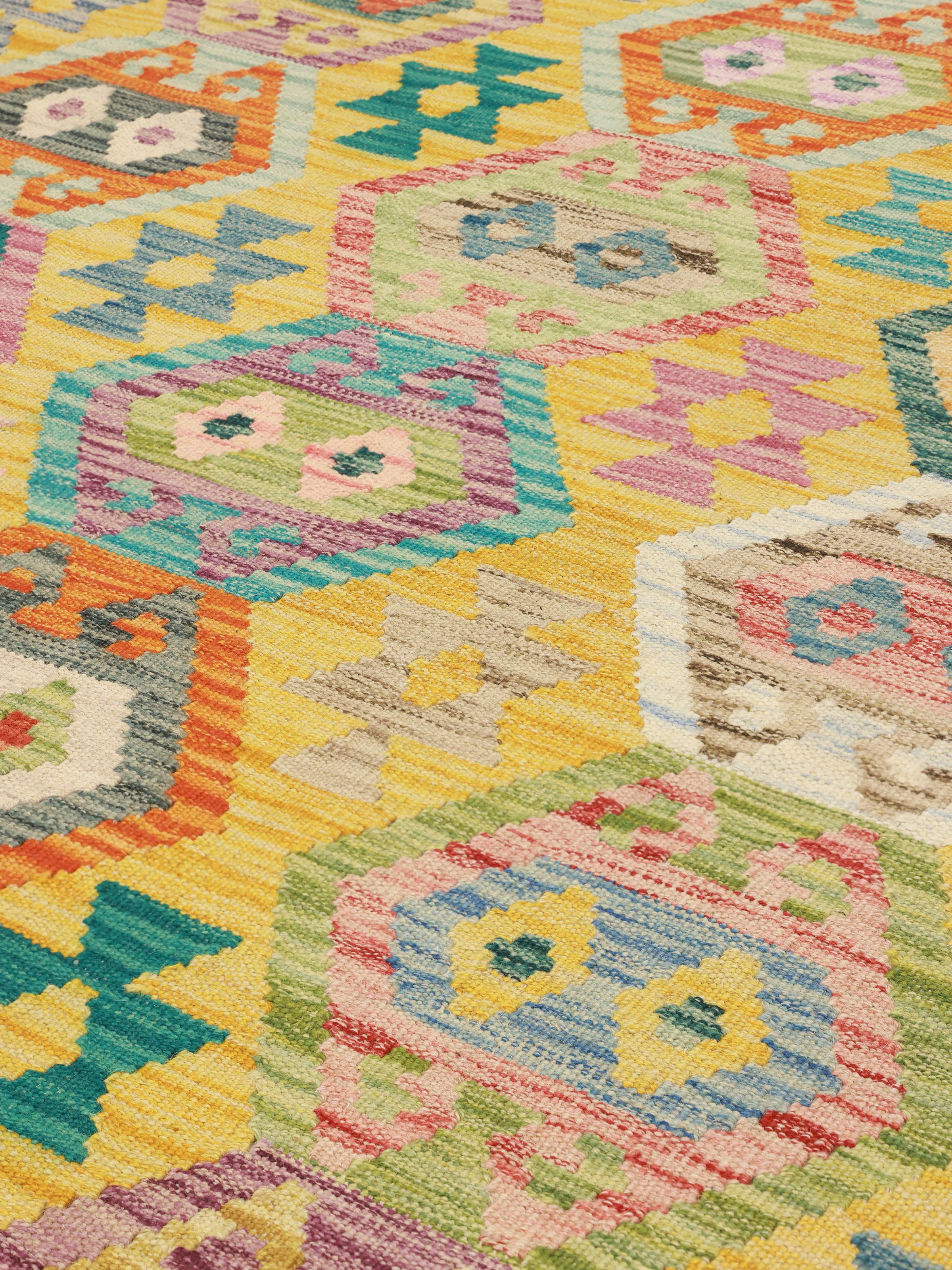
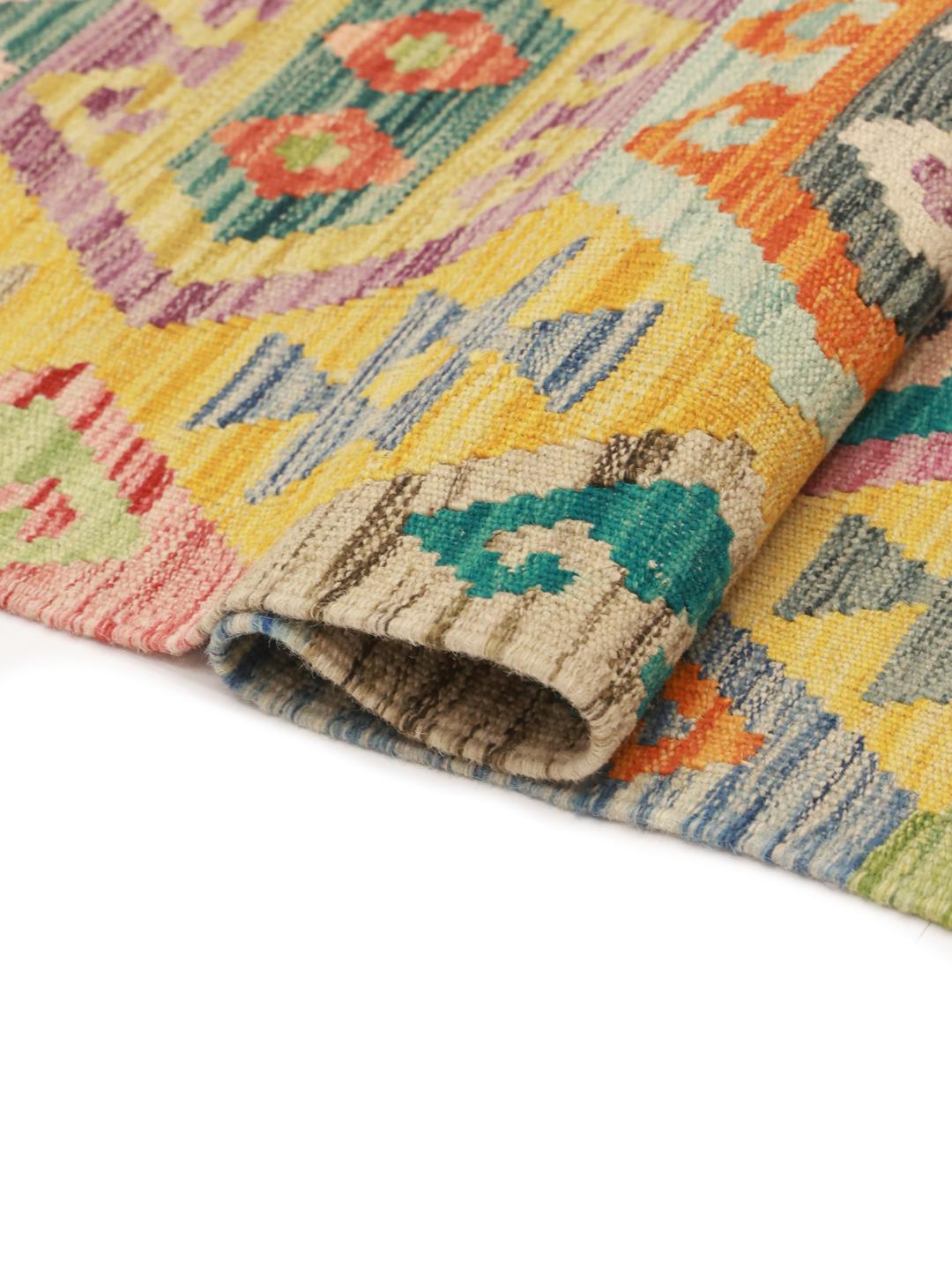
Technically, the term Kelim refers to a tapestry-weave, a method where the weft strands are pulled tightly to conceal the warp entirely. This results in a rug that is thin, reversible, and incredibly durable. The absence of a pile means that the pattern is created through the clever interlacing of coloured Wool, requiring immense precision and foresight from the weaver. This technical discipline is why these rugs remain so highly regarded by collectors who value the skill required to maintain pattern clarity over a large surface.
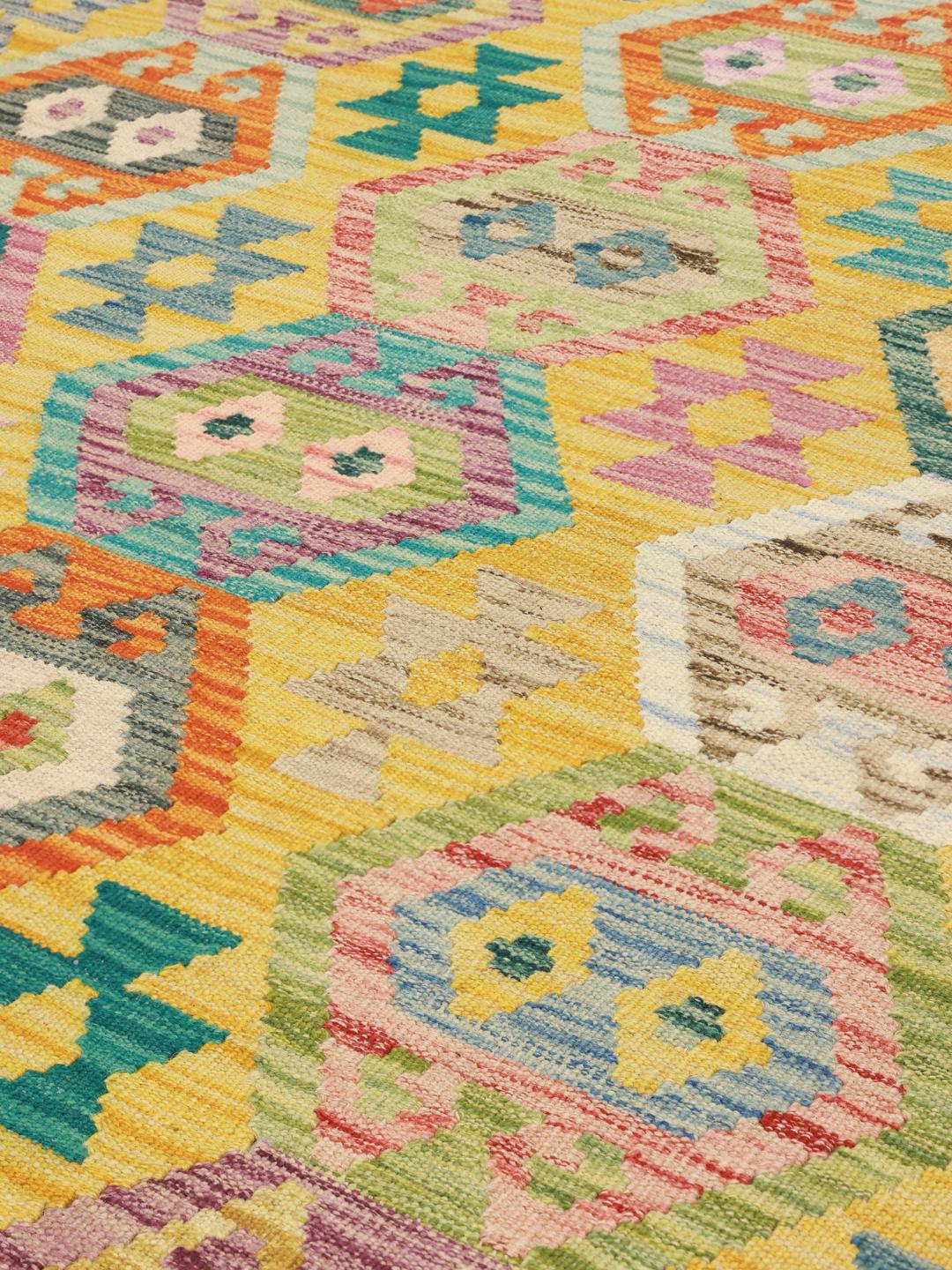
Visually, these rugs are defined by their bold, geometric language. Traditional Afghan motifs often draw inspiration from the natural world, featuring stylized floral elements, tribal symbols, and complex medallions that represent protection and prosperity. The colour palette in this old-style tradition is typically drawn from natural, earthy tones, though the inclusion of vibrant, saturated colours reflects the weaver's personal expression and the specific dyes available to them at the time of creation.
Today, these rugs are prized for their historical weight and the narrative they bring into a modern home. Collecting a Kelim is an investment in cultural preservation, as the specific motifs and weaving styles are passed down through generations. Owning this piece connects you to a lineage of artisans whose work has remained relevant for centuries, proving that true quality is never dictated by trends, but by the enduring beauty of traditional craft.