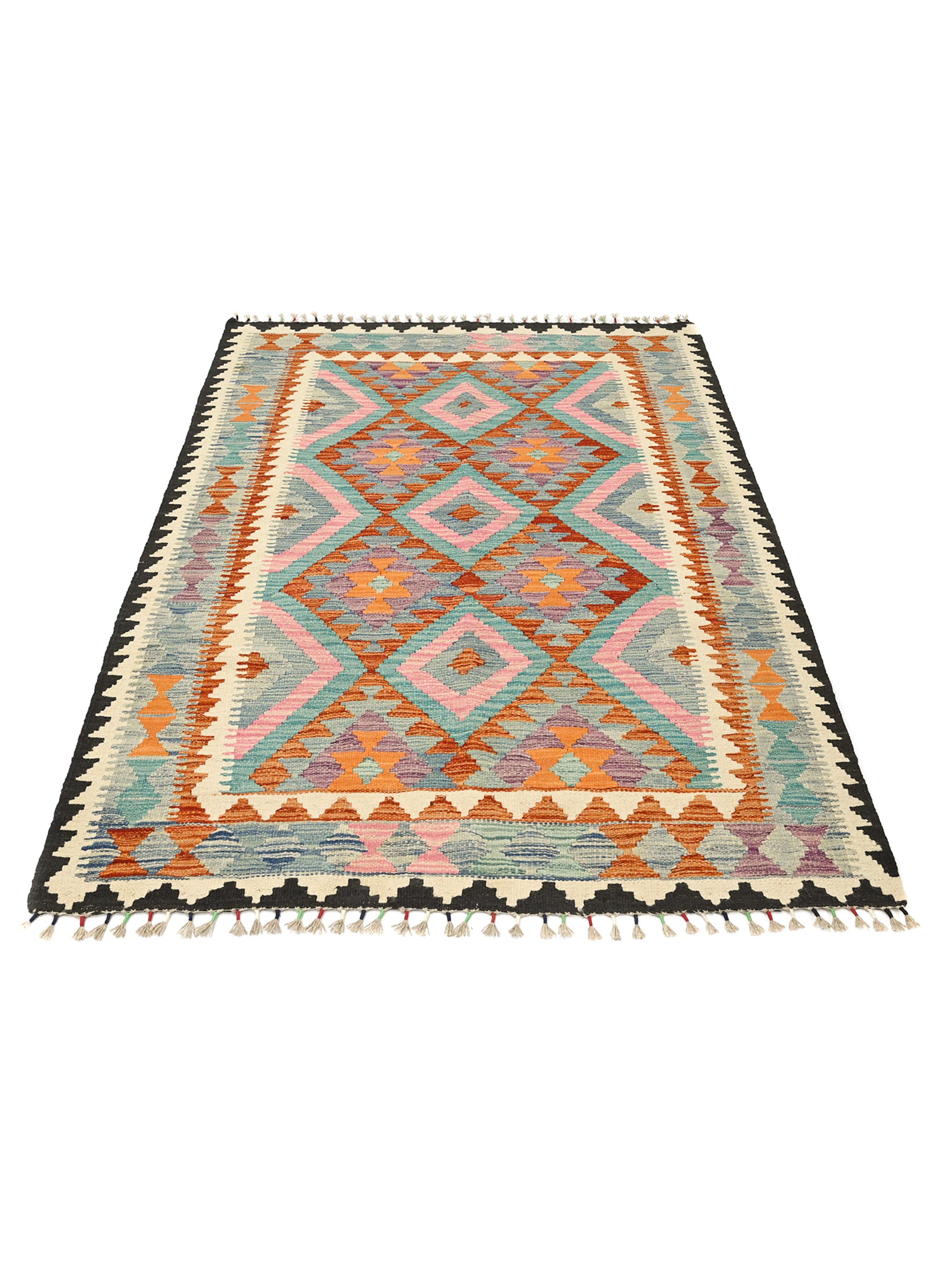
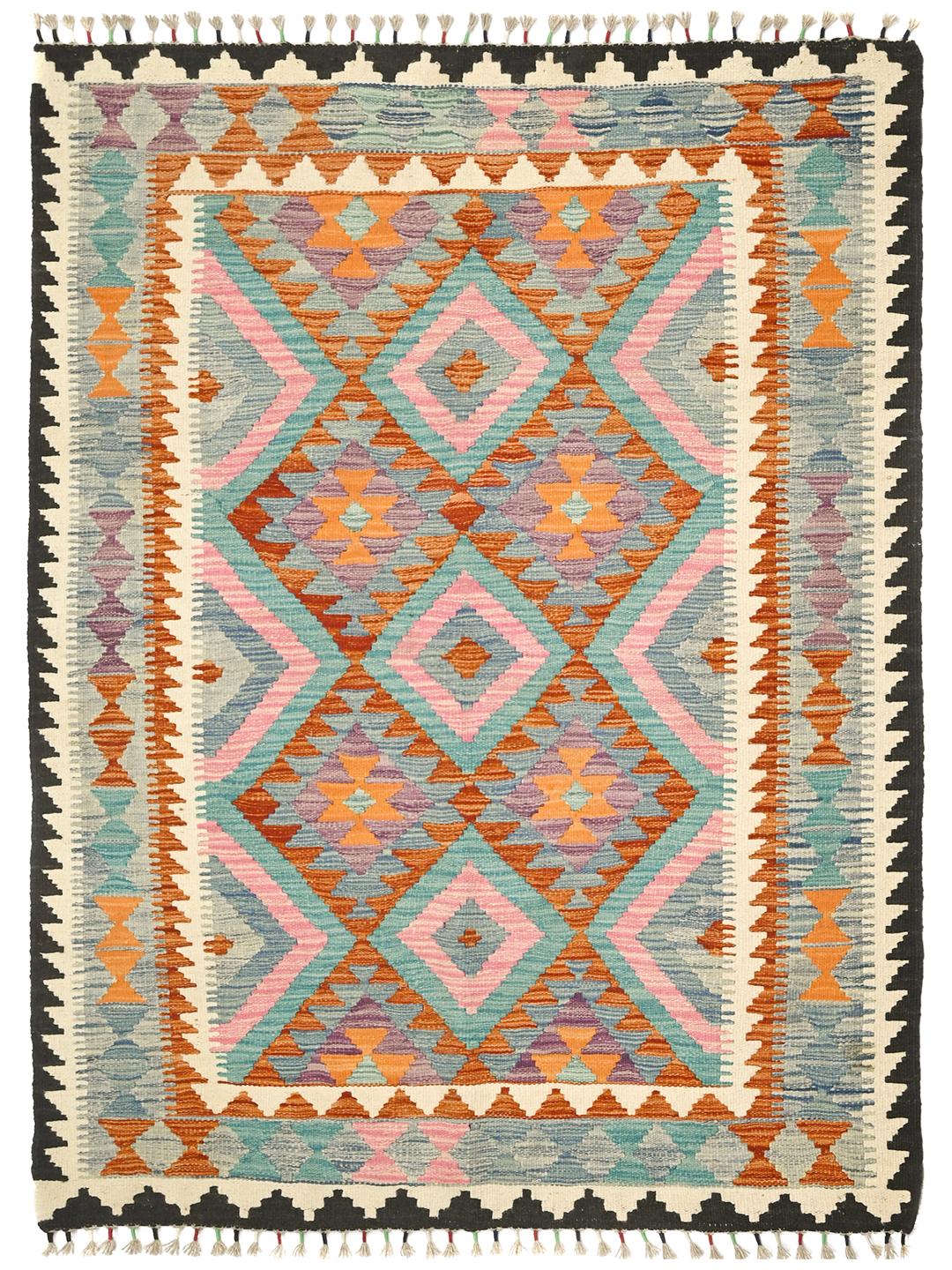
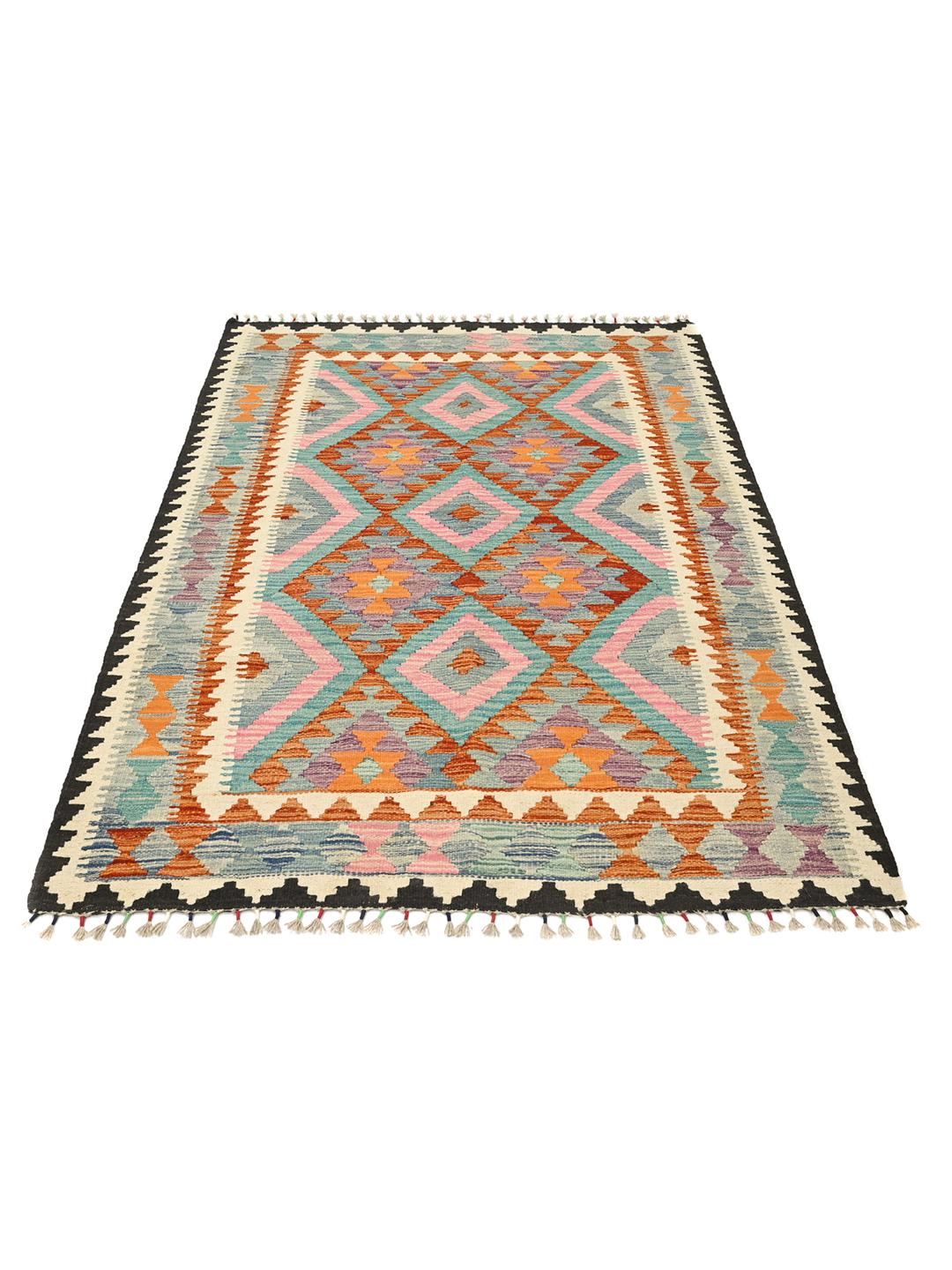
Kelim rugs have a rich heritage that spans centuries across Central Asia, particularly in the regions of Afghanistan. Historically, these flat-woven textiles were crafted by nomadic tribes as functional items for daily use, serving as everything from floor coverings to saddlebags and tent dividers. Their portability and durability made them essential for life on the move along the ancient trade routes.
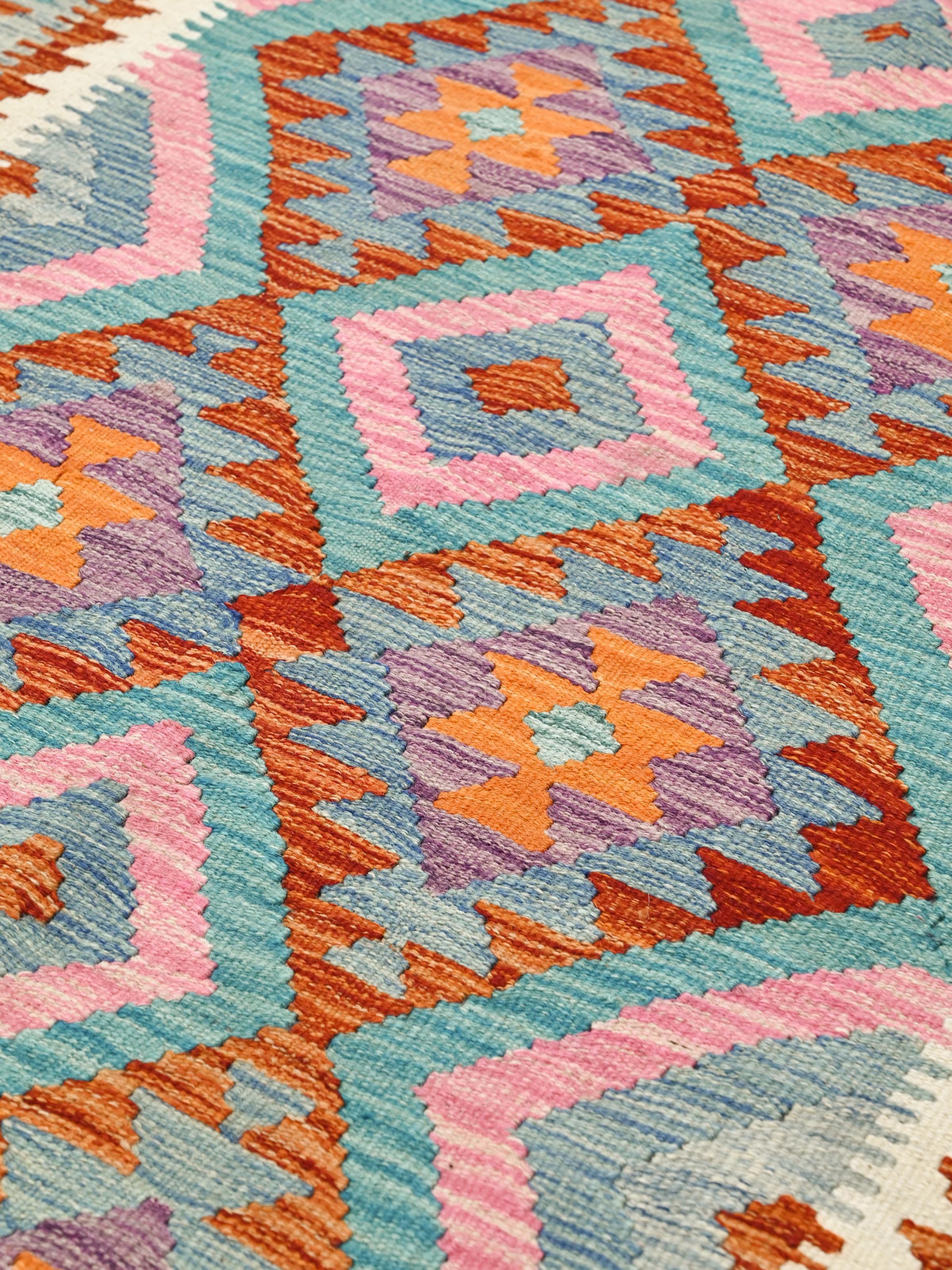
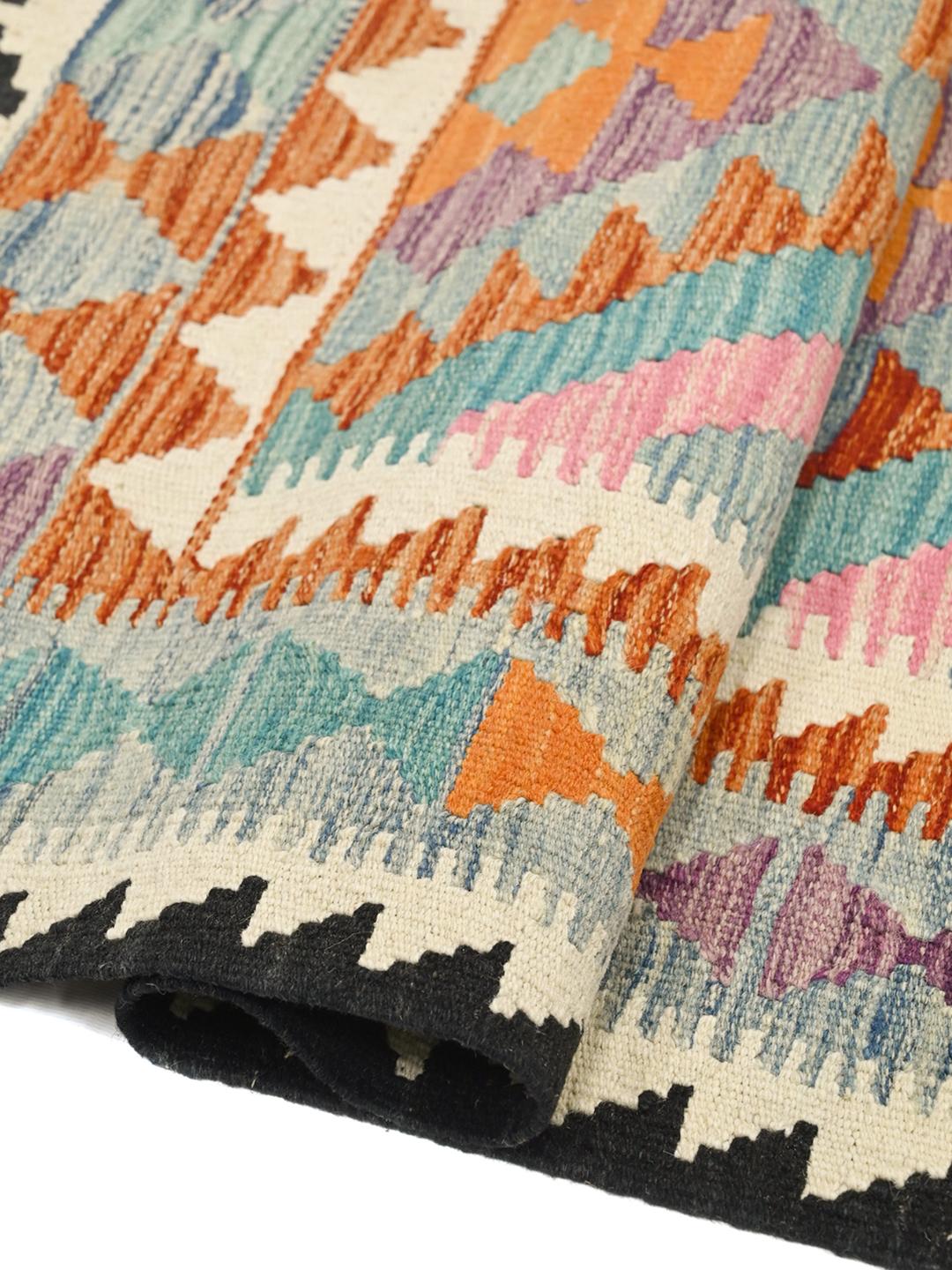
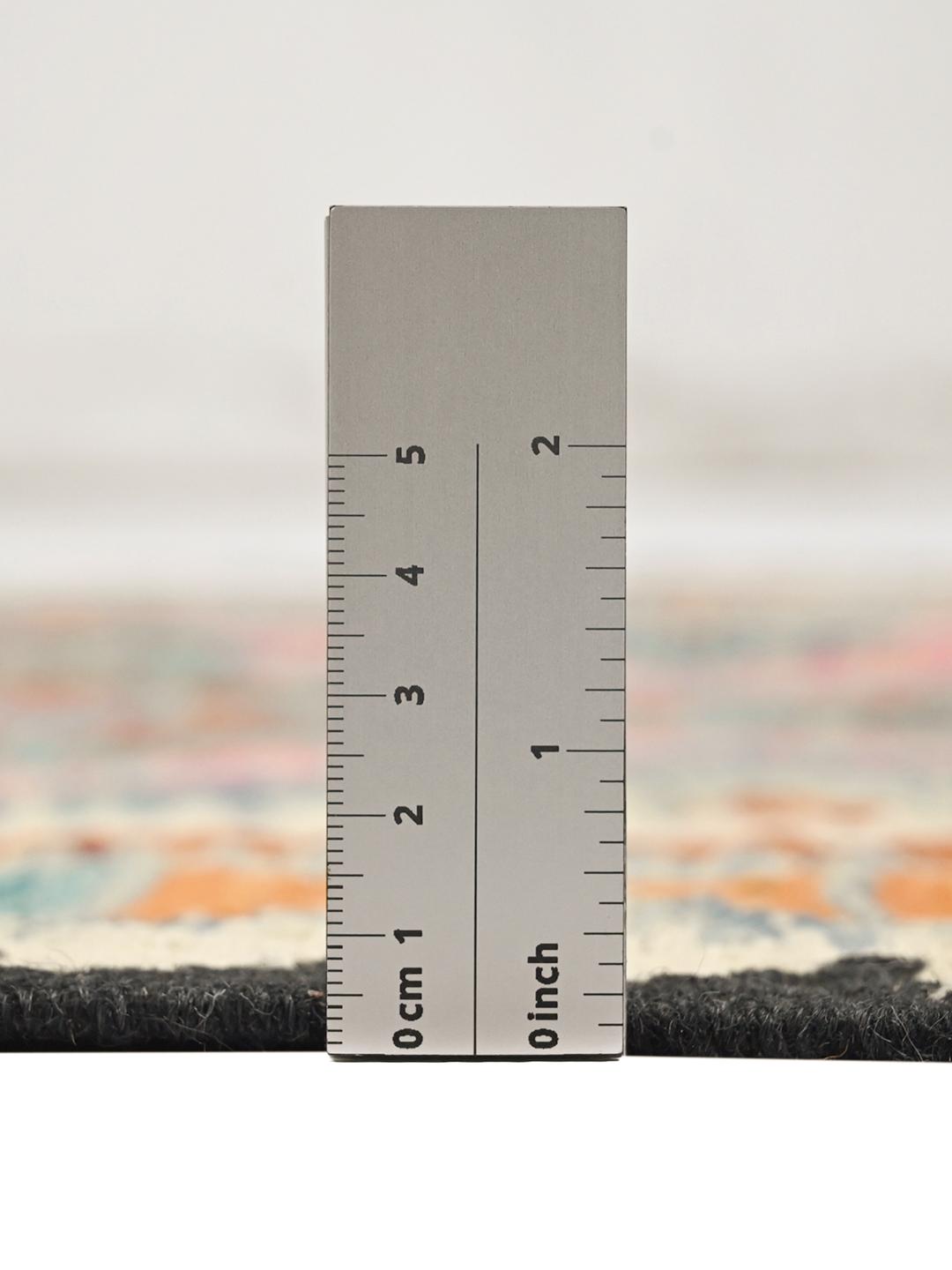
The term 'Kelim' refers specifically to the tapestry-weave technique, where the design is created entirely by the interweaving of the coloured weft threads. This method results in a reversible, flat-woven rug that lacks a pile, which is a hallmark of this tradition. This technique requires significant skill, as the weaver must maintain consistent tension to ensure the geometric patterns remain sharp and perfectly aligned across the entire surface.
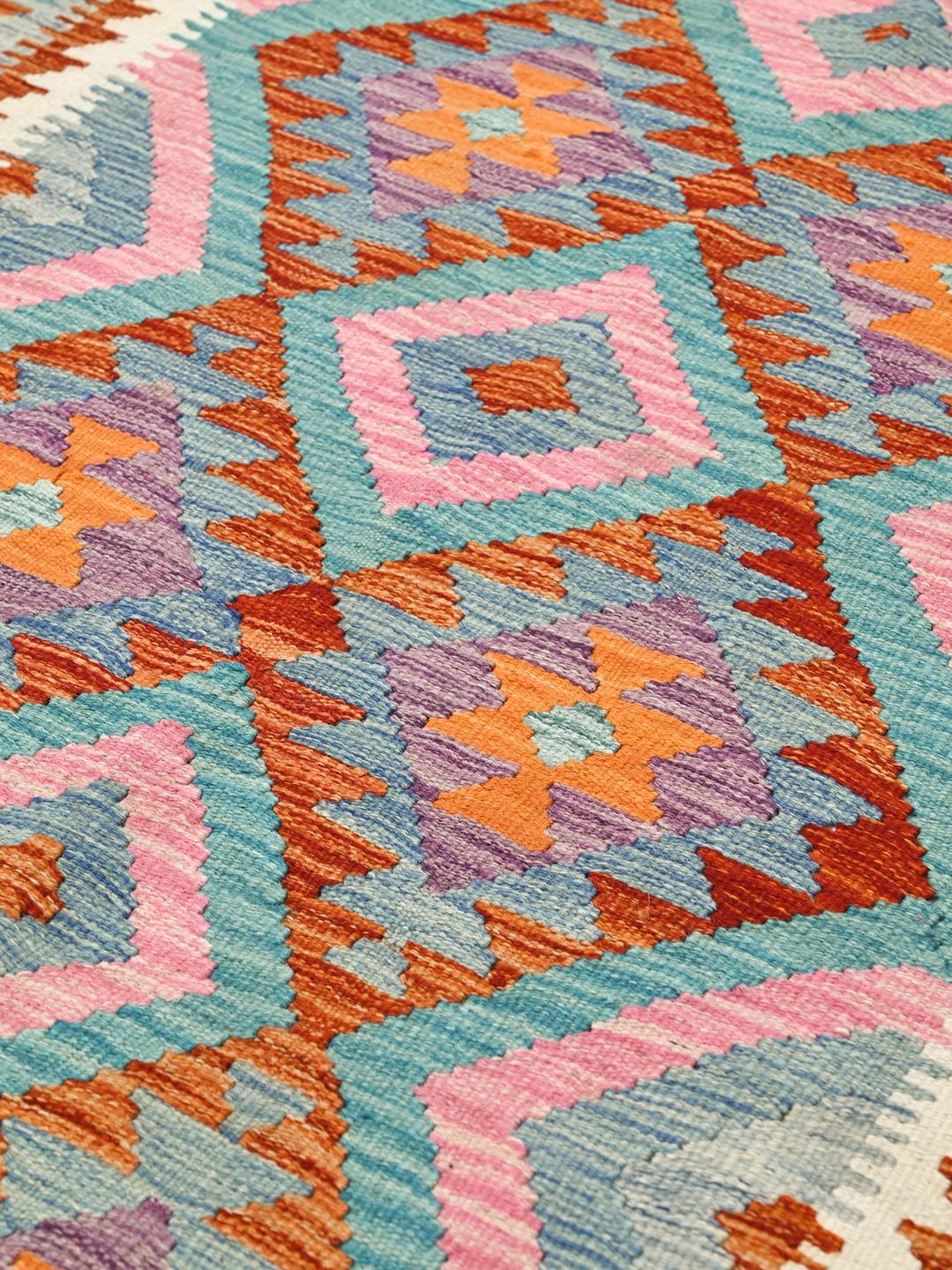
Signature design elements in Afghan Kelims often include bold, geometric motifs such as diamonds, triangles, and stylized floral or tribal symbols. These patterns are frequently arranged in repeating grids or central medallions, framed by intricate, decorative borders. The colour palette typically draws from natural dyes, though contemporary interpretations may incorporate a wider, more vibrant spectrum of hues to emphasise the complexity of the motifs.
Today, these rugs are highly valued by collectors and homeowners alike for their cultural significance and the tangible connection they provide to a nomadic past. Owning an Afghan Kelim is more than just a decorative choice; it is an investment in a living tradition. Each piece carries the history of its region, preserving techniques that have been passed down through generations of skilled artisans.