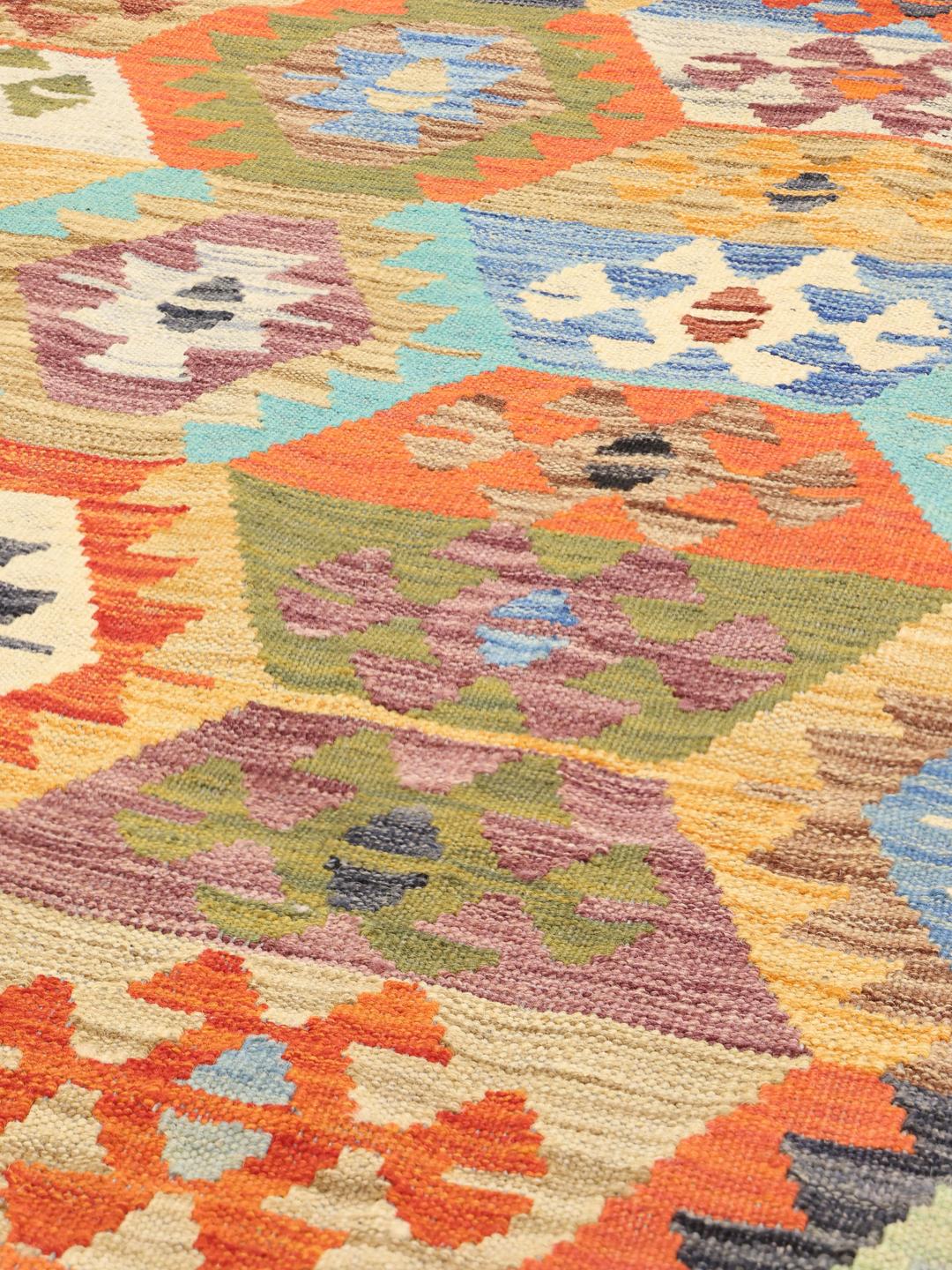
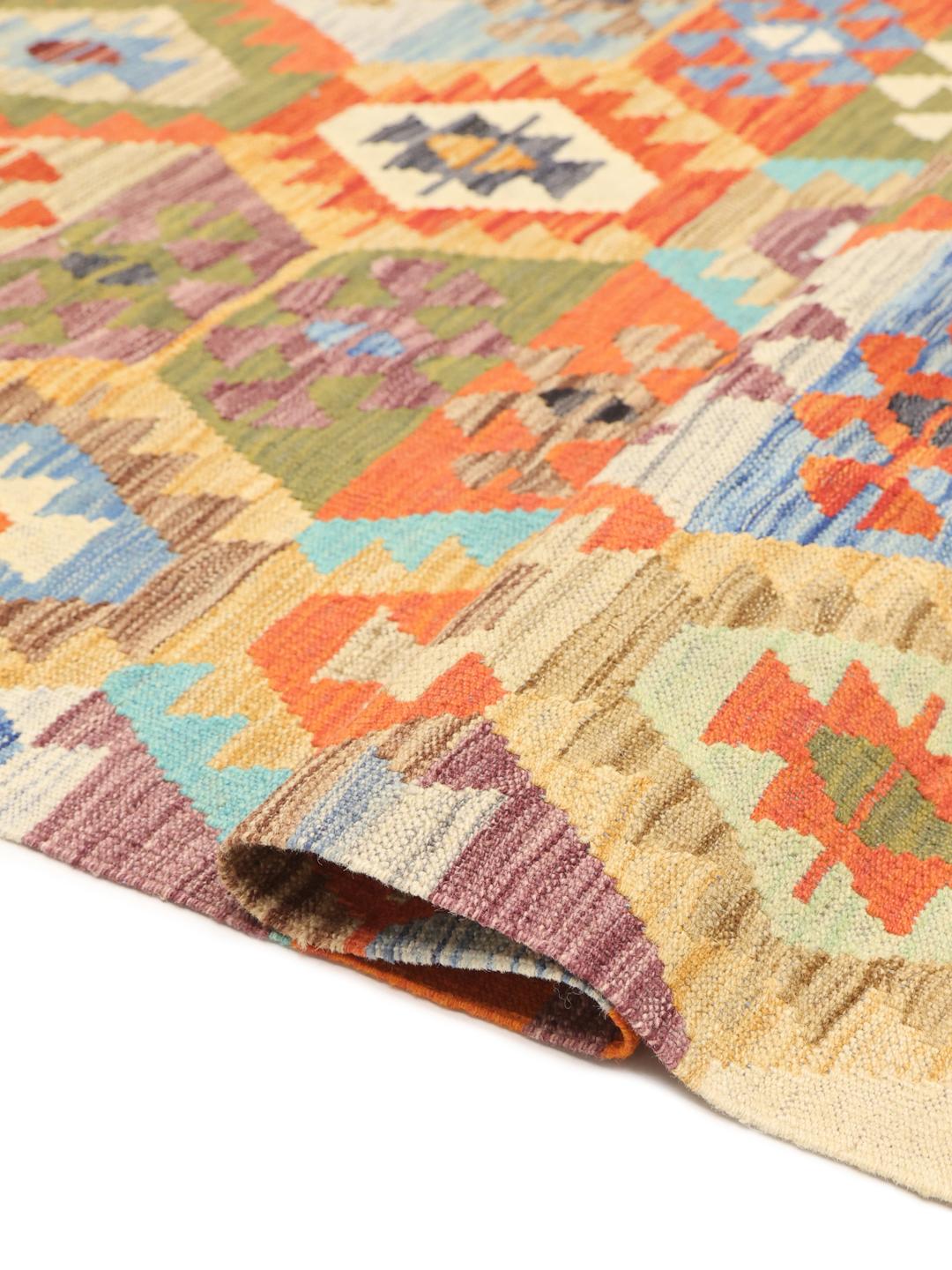
Kelim rugs have long been a cornerstone of nomadic and village life across the Middle East and Central Asia. Historically, these flat-woven textiles served multiple functional purposes, acting as floor coverings, tent dividers, and even storage sacks for travelling tribes. Over centuries, these traditions evolved into the sophisticated craft we see today, with Afghan weavers refining the techniques to produce pieces that are as durable as they are visually striking.
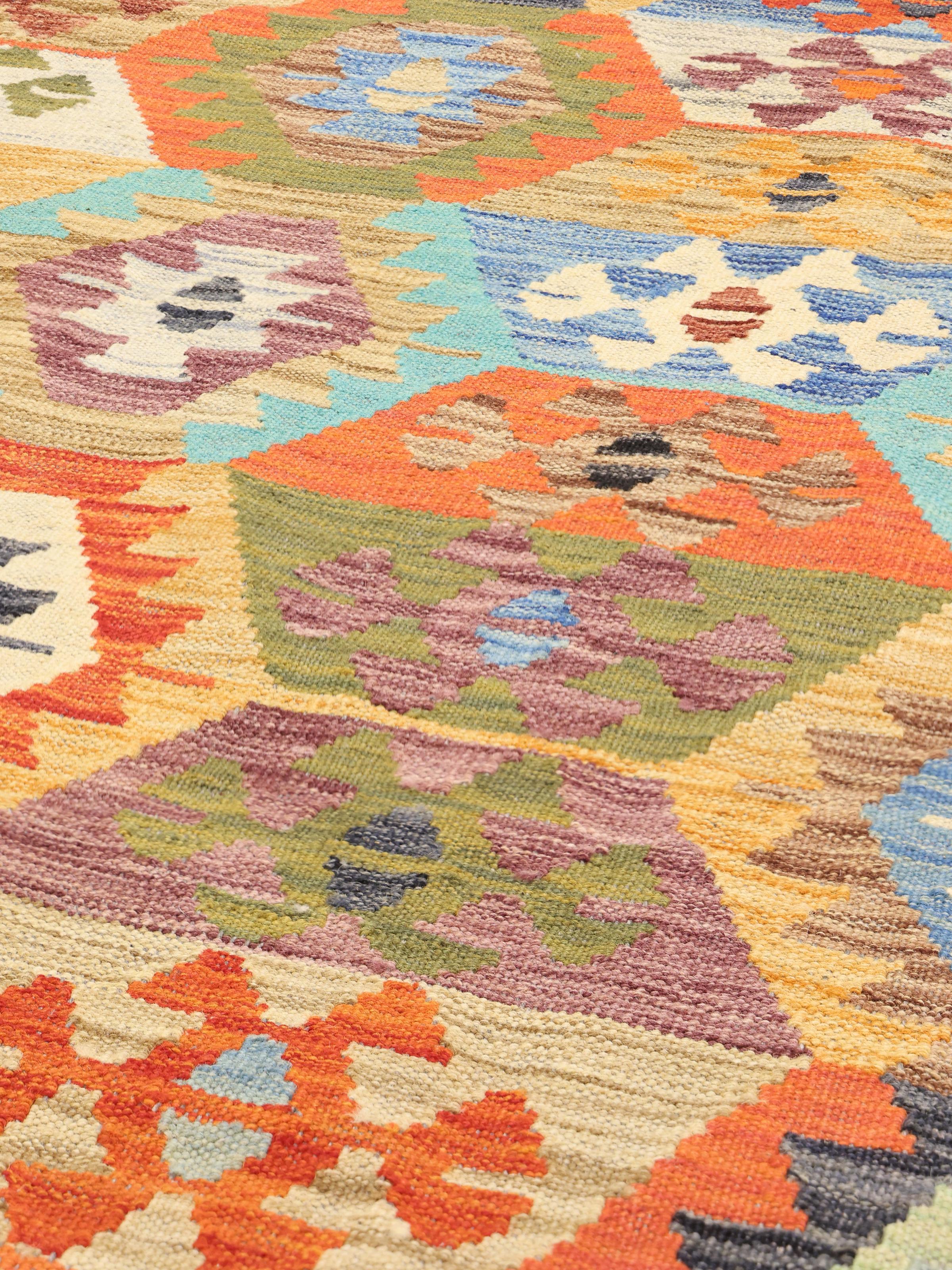
The term Kelim refers to the specific slit-weave technique used to construct the rug. In this method, the weaver creates vertical slits between different colour blocks by wrapping the weft threads around the warp threads, resulting in a clean, sharp pattern that is identical on both sides. This creates a remarkably strong and lightweight textile that remains a testament to the ingenuity of traditional weavers.
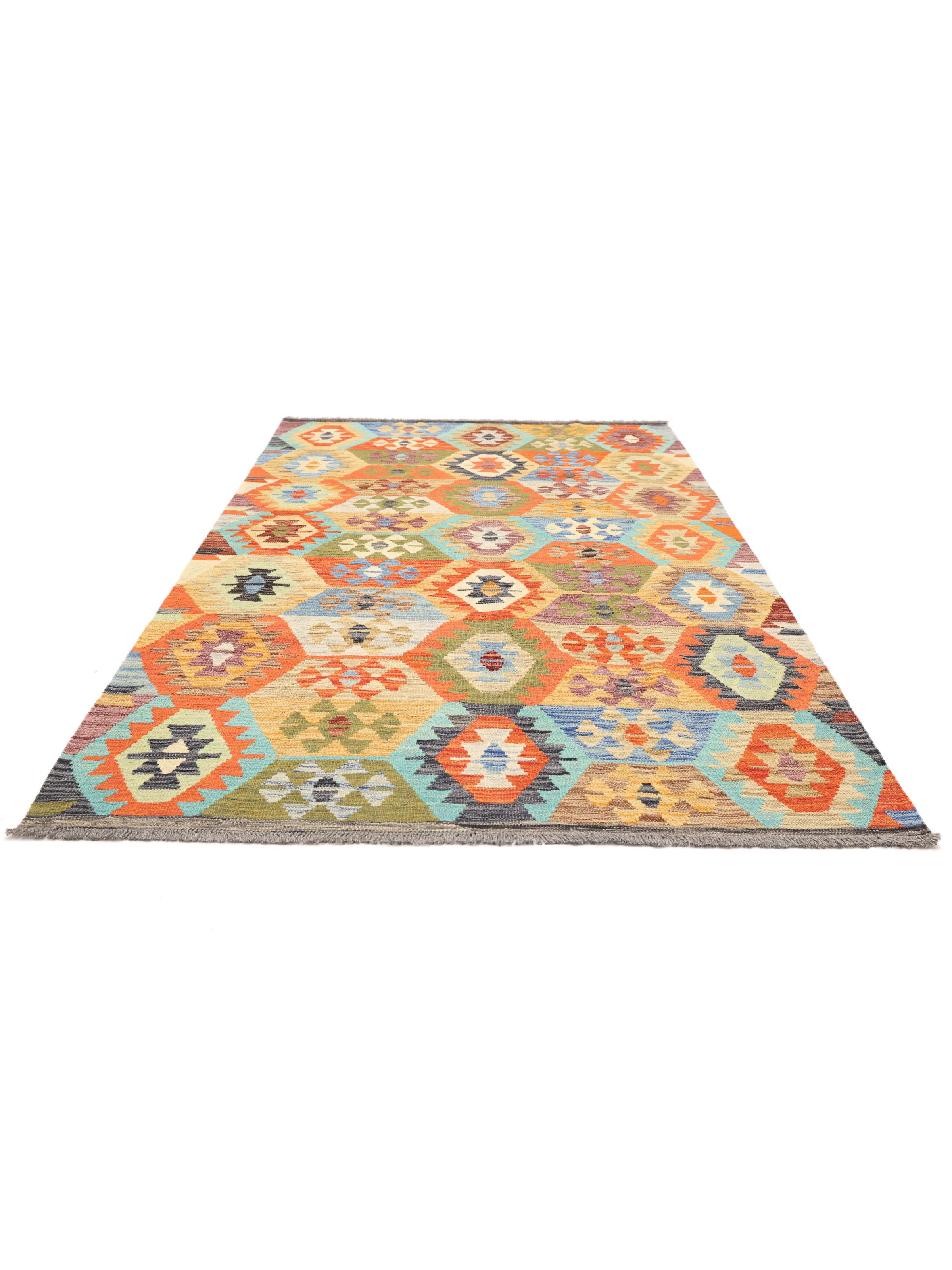
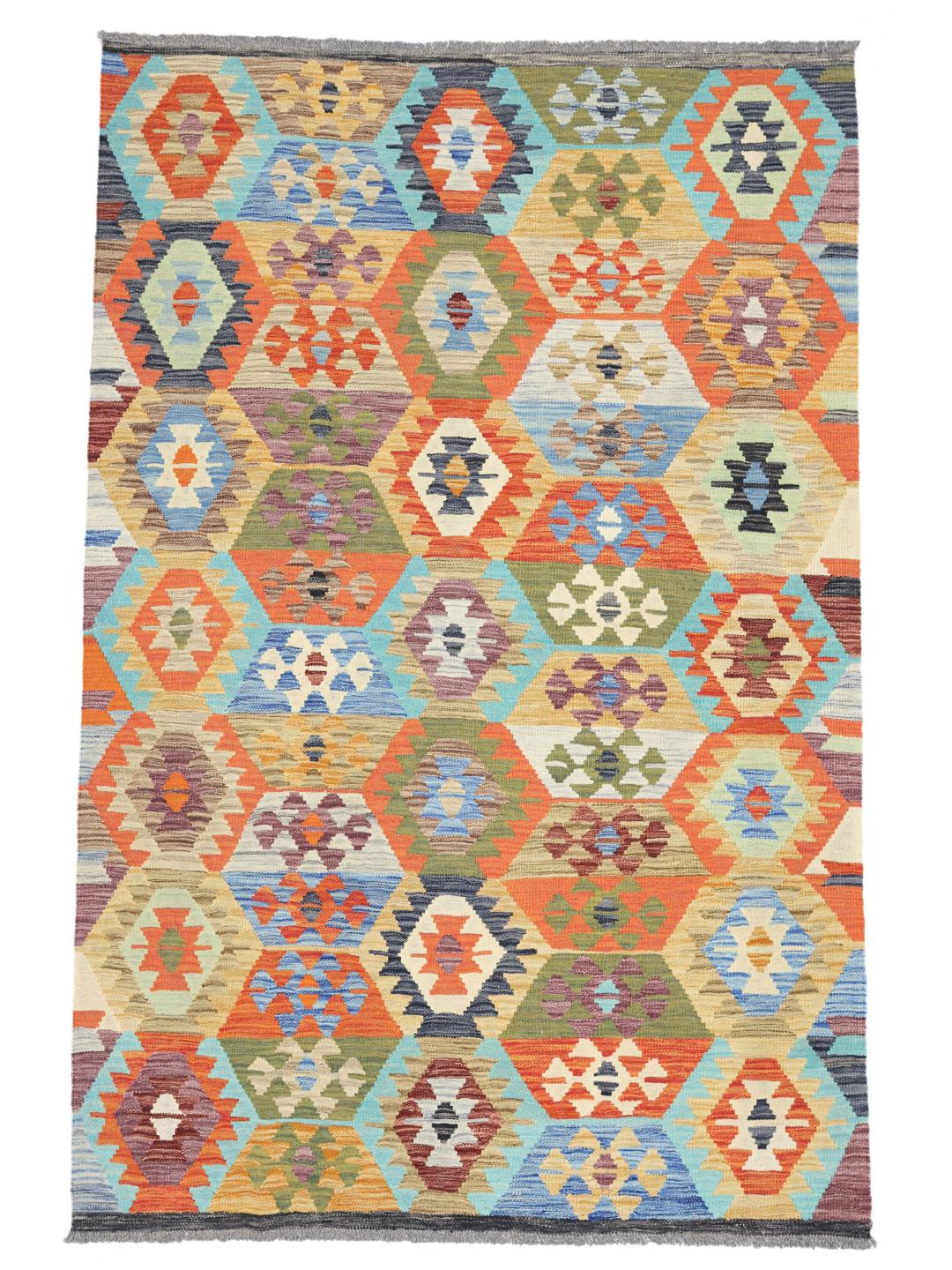
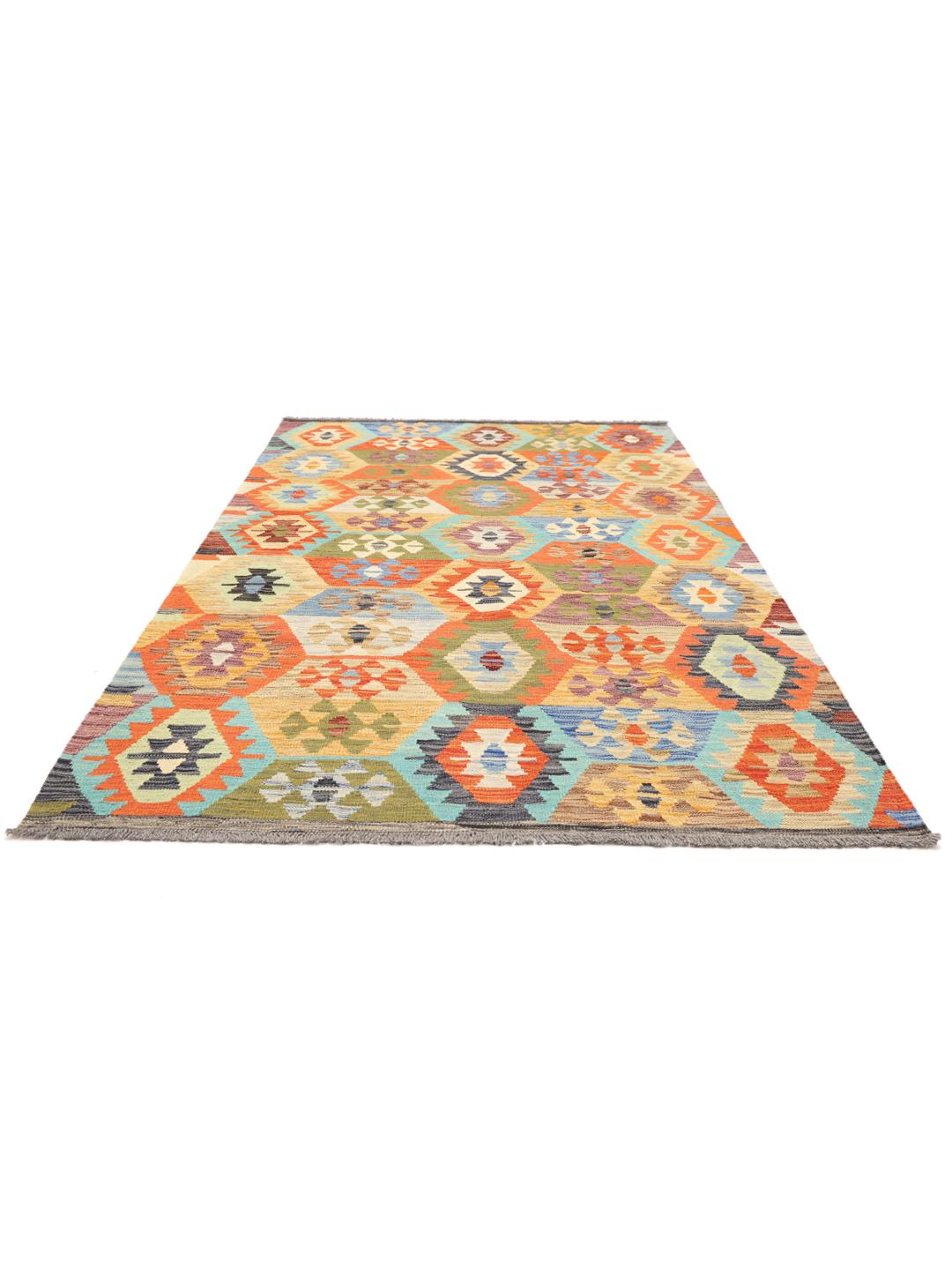
Visually, this rug is defined by its bold, repeating geometric motifs. These patterns often draw inspiration from the natural landscape and tribal symbols, serving as a visual language passed down through generations. The use of vibrant, contrasting colours is a hallmark of this style, designed to bring life and energy into the home while maintaining a formal, balanced aesthetic.
Owning an Afghan Kelim is more than just acquiring a floor covering; it is a connection to a rich cultural lineage. These rugs are highly valued by collectors for their authenticity and the human story woven into every thread. By bringing this piece into your home, you are preserving a craft tradition that honours the skill of the artisan and the enduring appeal of handmade textiles.