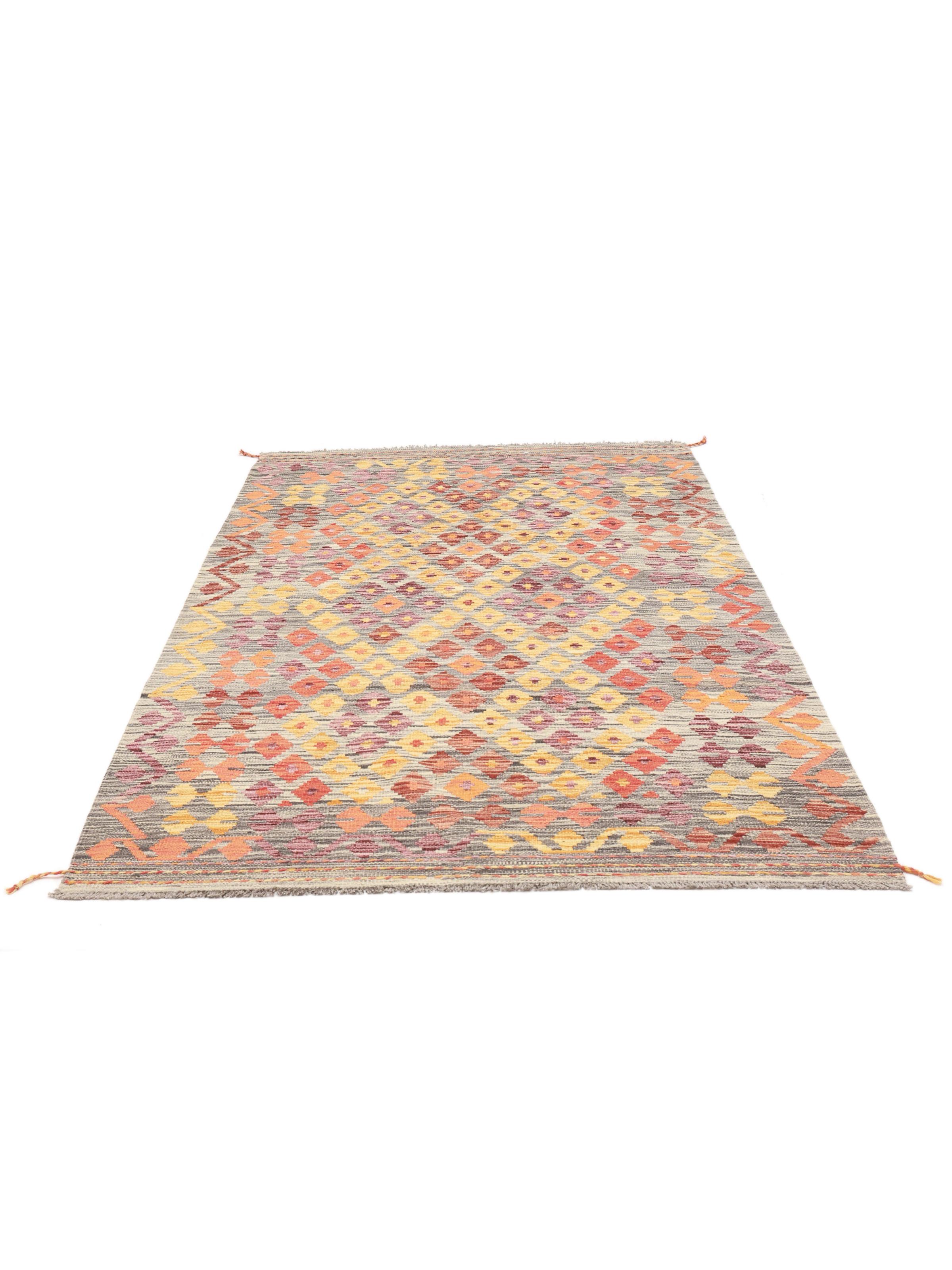
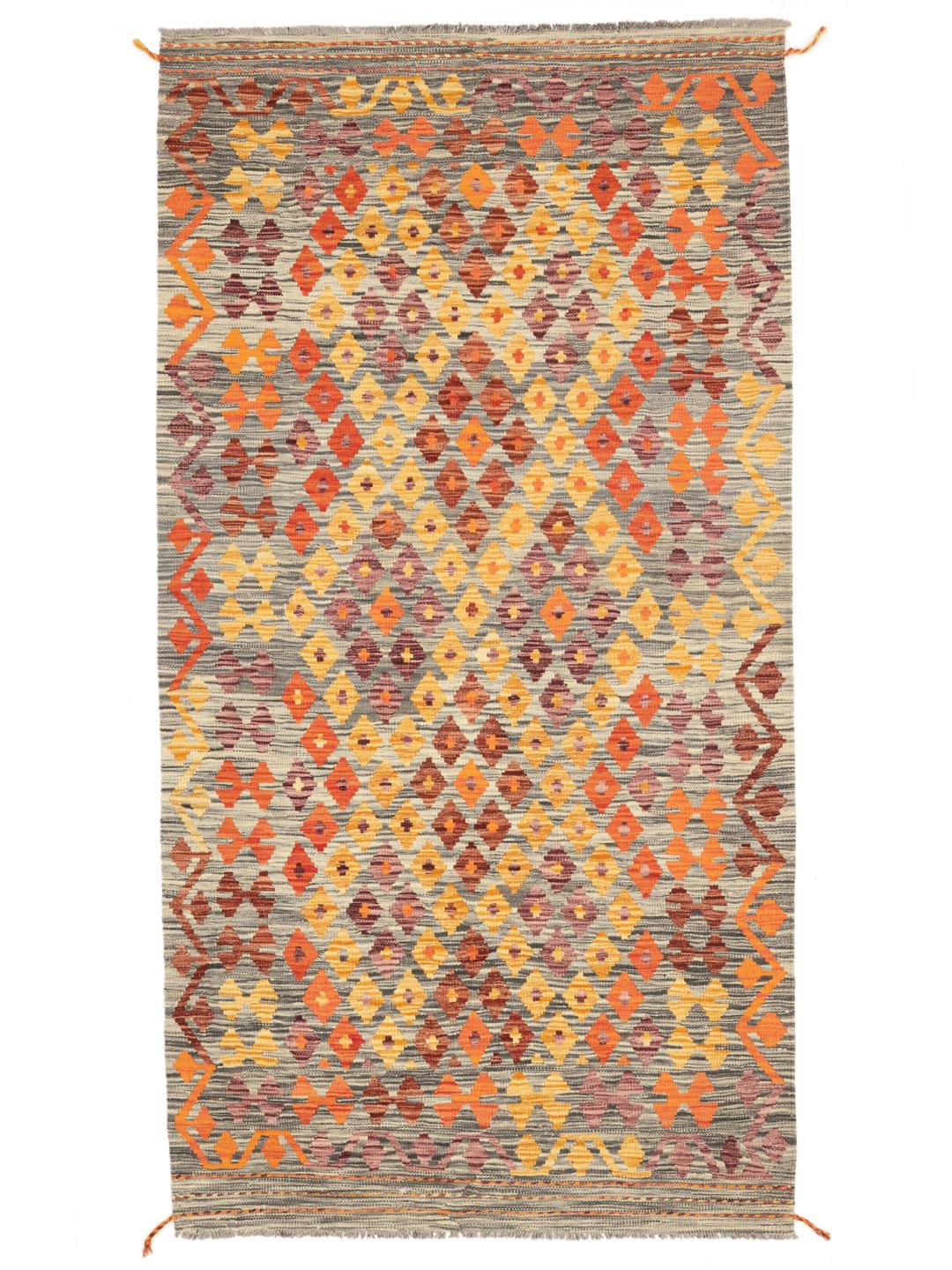
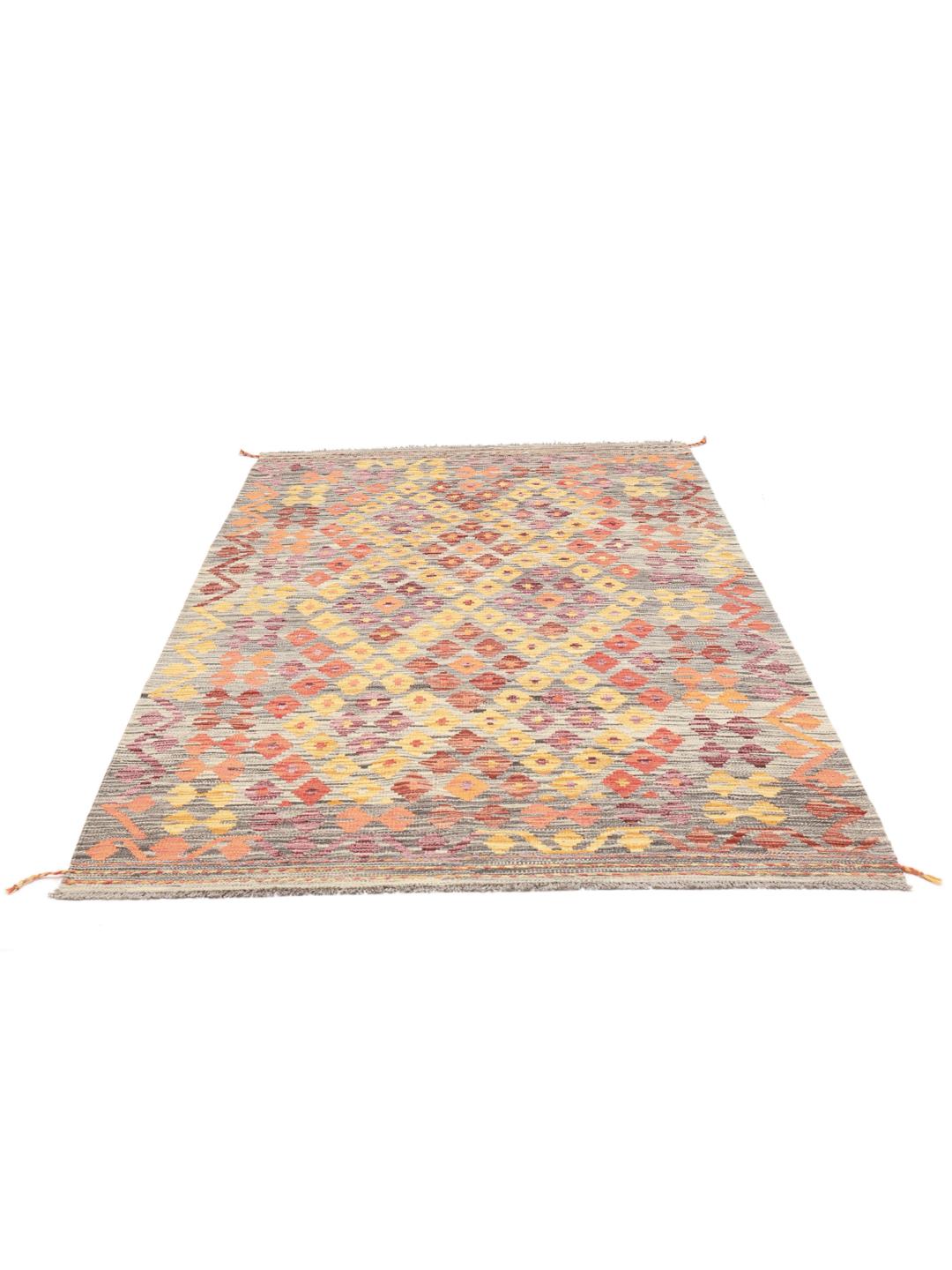
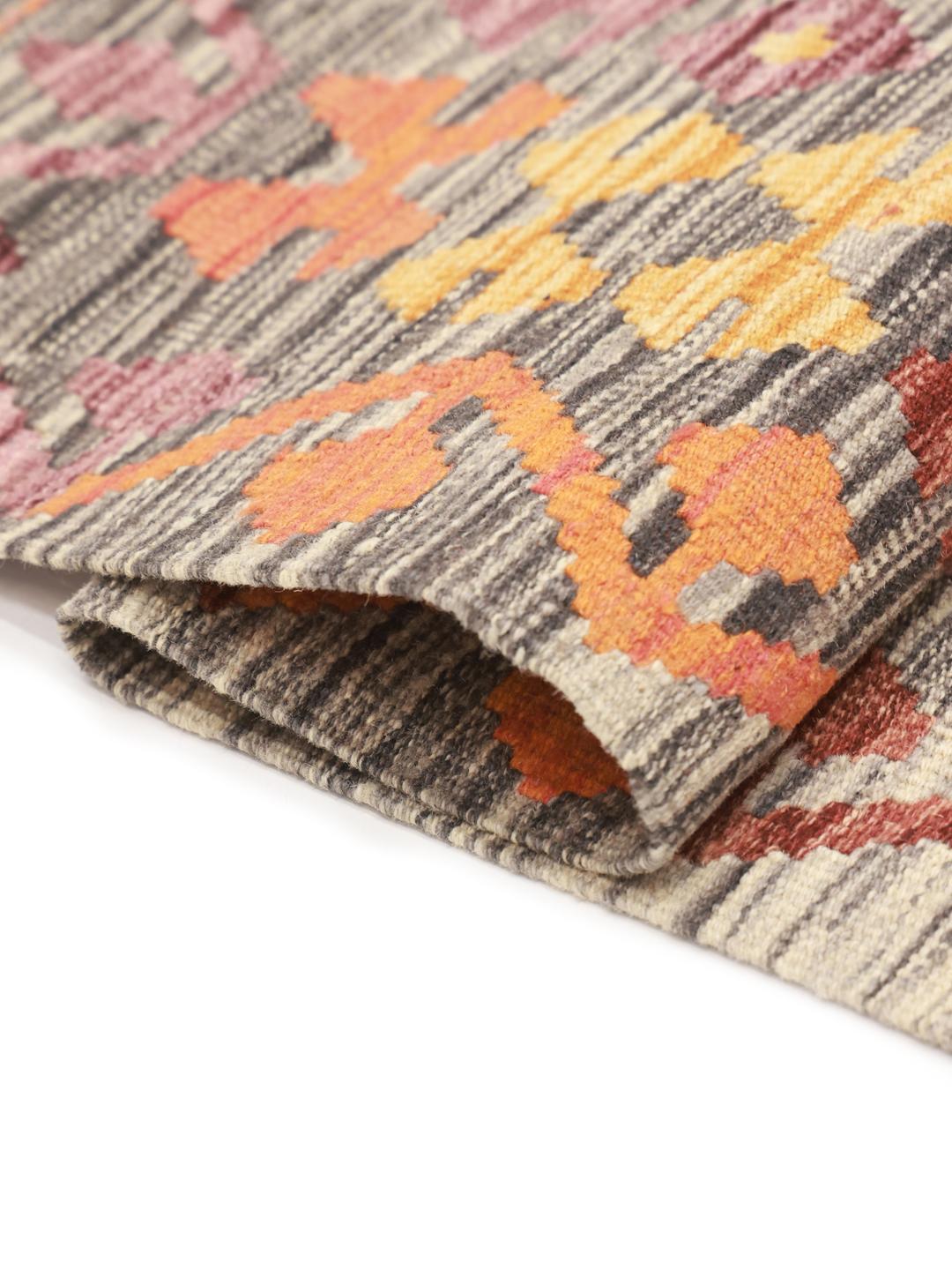
The Kelim tradition is one of the most enduring weaving practices in the Middle East, with roots that stretch back across the high plateaus of Afghanistan. These rugs are traditionally created as flat-weaves, meaning they lack a pile and are instead constructed by interlacing warp and weft threads. This technique has been perfected over centuries by nomadic and village communities, who used these textiles for everything from floor coverings to tent partitions and storage bags.
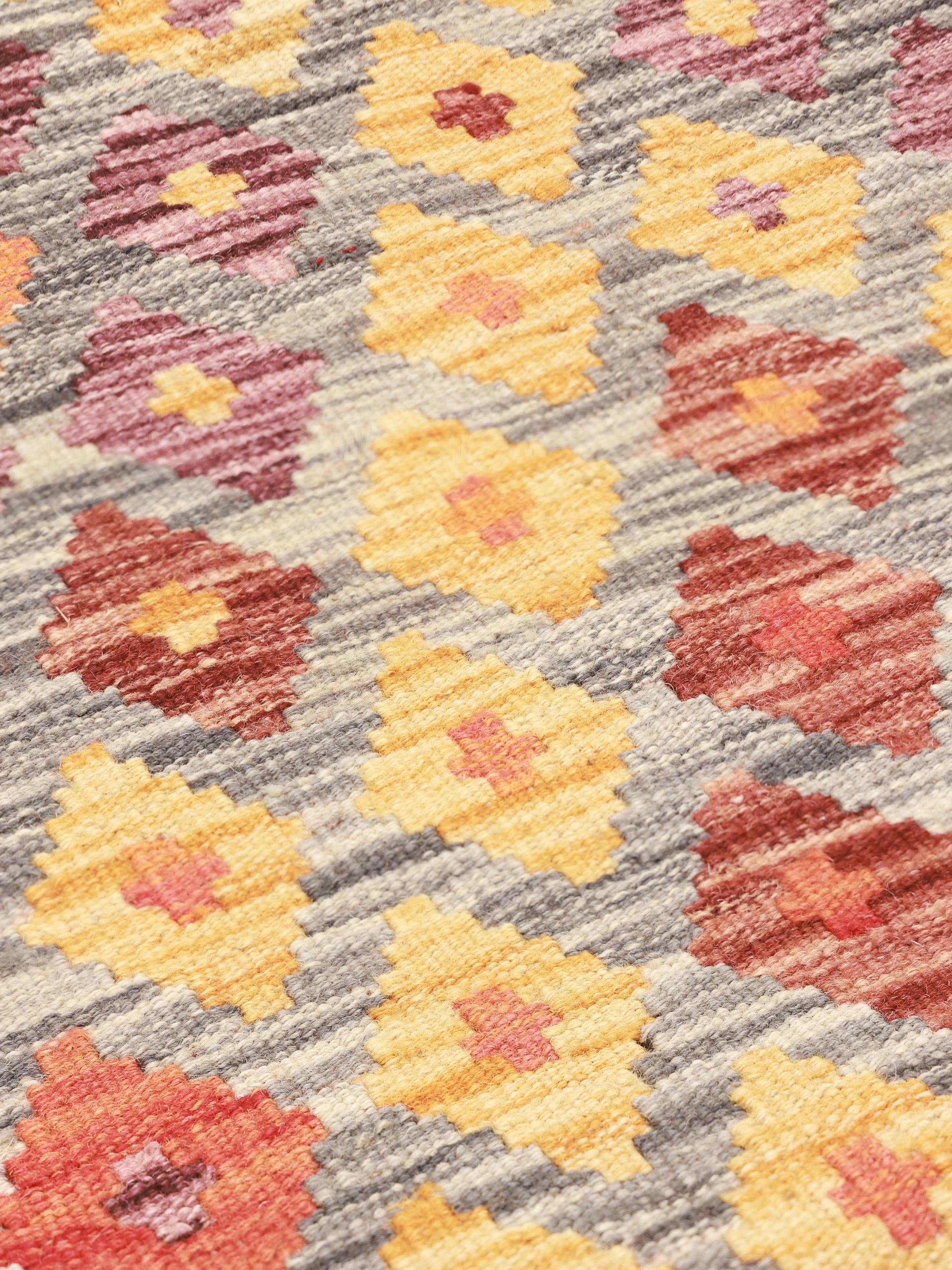
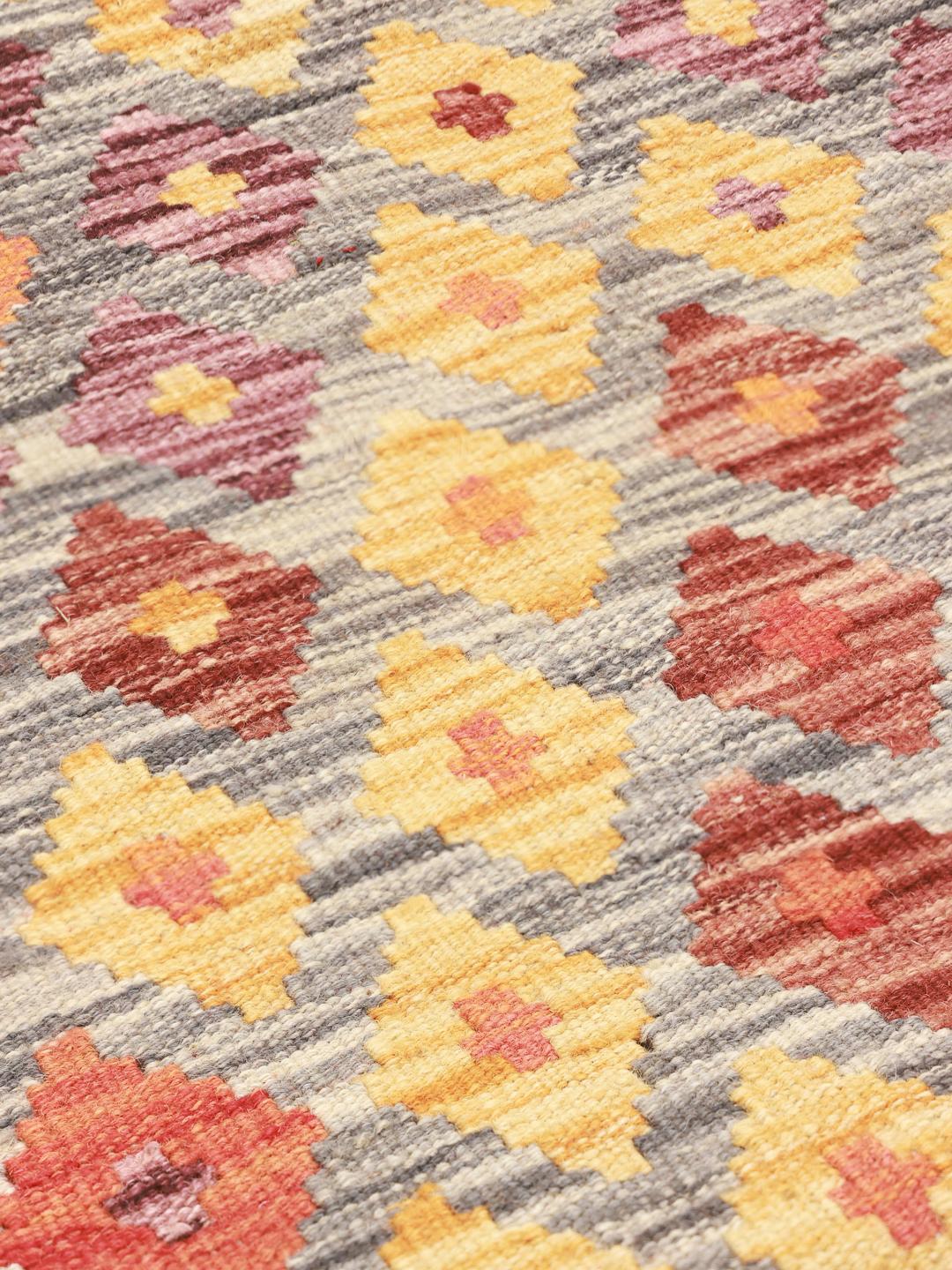
The term 'Kelim' refers specifically to this flat-weave technique, which is prized for its versatility and strength. Because there is no pile to wear down, these rugs are incredibly durable and practical. The flat construction also allows for exceptionally crisp, graphic designs, as the weaver can manipulate the threads to create sharp geometric shapes and clear lines that are distinct from the softer, more blended look of knotted pile rugs.
Signature design elements in Afghan Kelims often include bold geometric motifs such as diamonds, zig-zags, and stylized tribal symbols. These patterns are not just decorative; they often carry deep cultural meaning, representing protection, fertility, or the natural landscape of the region. The use of vibrant, earthy dyes gives these rugs their iconic look, with deep reds, oranges, and yellows reflecting the natural pigments historically available to weavers.
Collecting a Kelim is an investment in a living heritage. These rugs are valued not only for their aesthetic beauty but also for the skill required to produce them. Owning one serves as a connection to a long-standing tradition of craftsmanship where every rug tells the story of its maker and the region from which it originates. It is a piece that brings cultural weight and a sense of timelessness into any home.