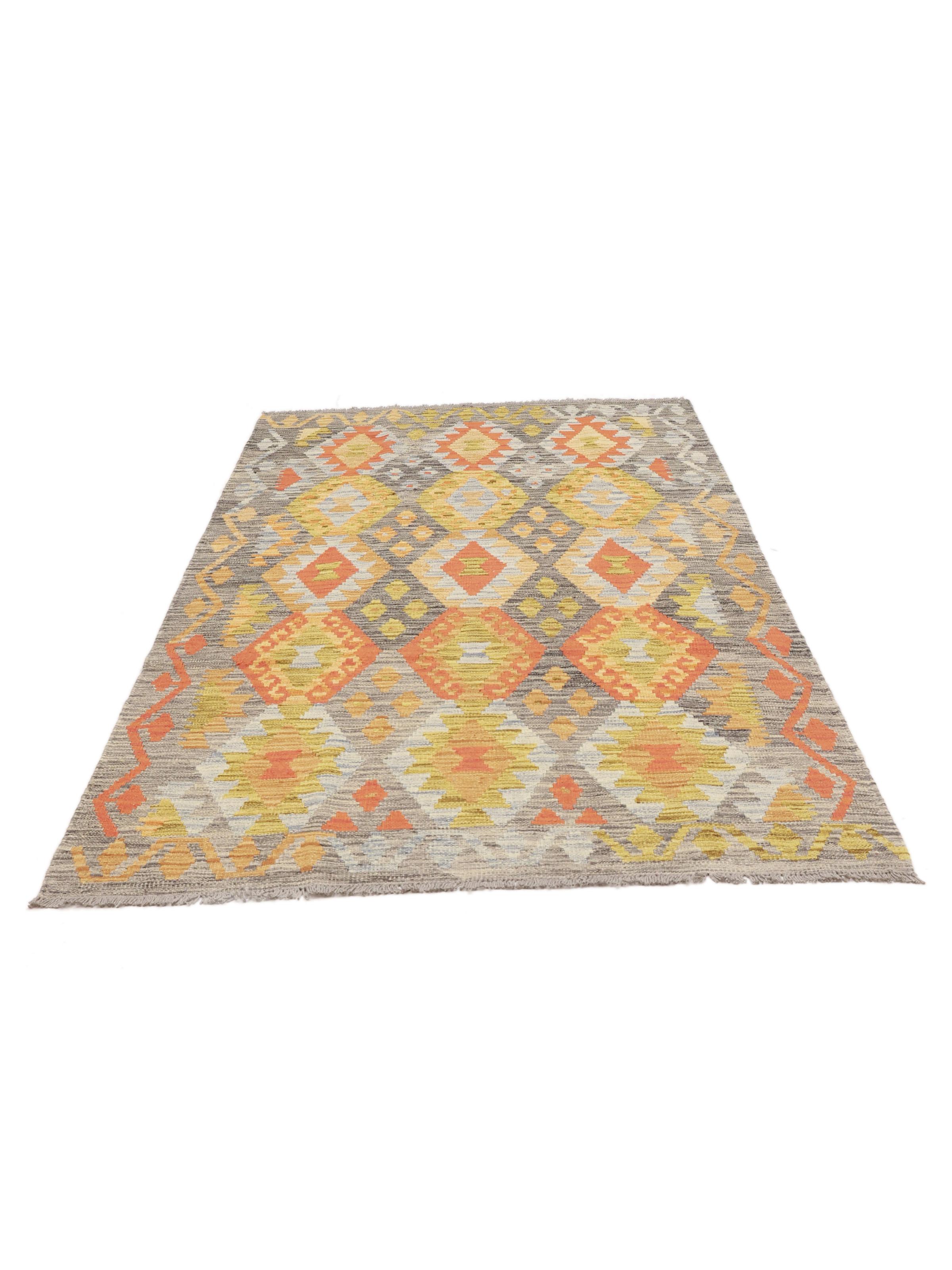
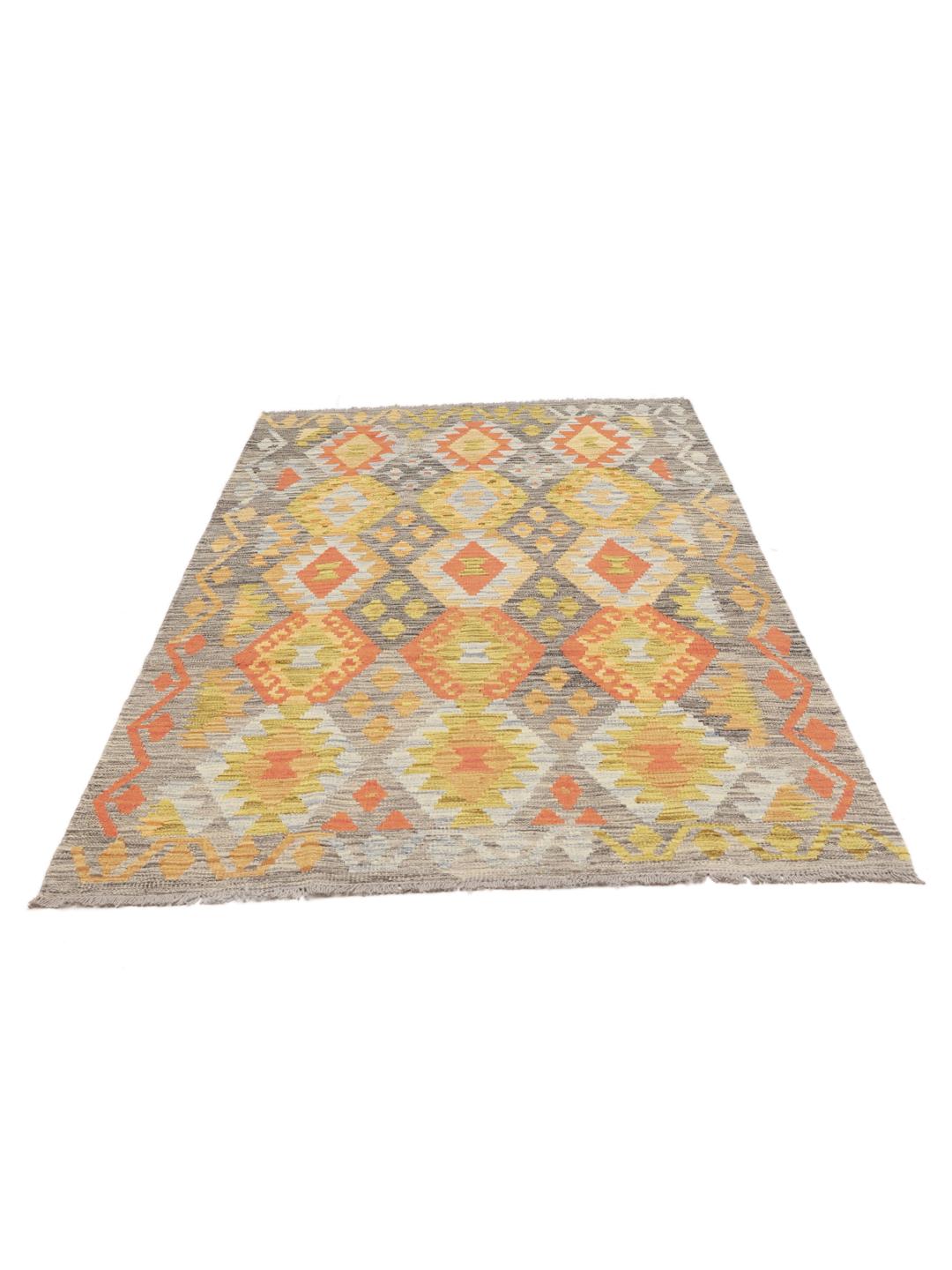
The Kelim tradition in Afghanistan is deeply rooted in the nomadic and semi-nomadic cultures of the region, where flat-woven rugs served as essential, portable furnishings. These textiles were designed not only for their beauty but for their utility, serving as floor coverings, blankets, and storage bags for families on the move. Over centuries, this craft has been refined, with local weavers passing down intricate patterns and dyeing techniques from one generation to the next.
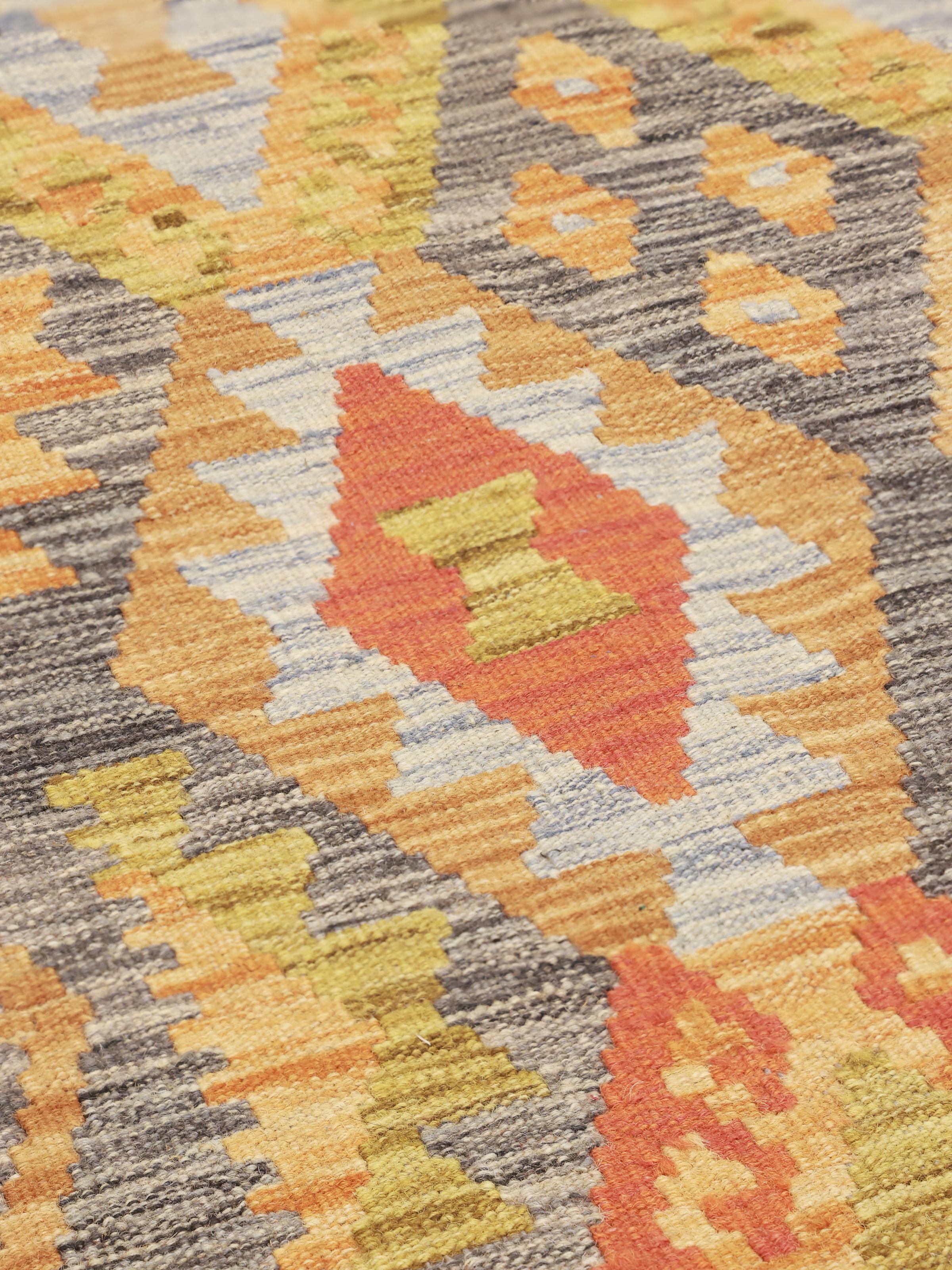
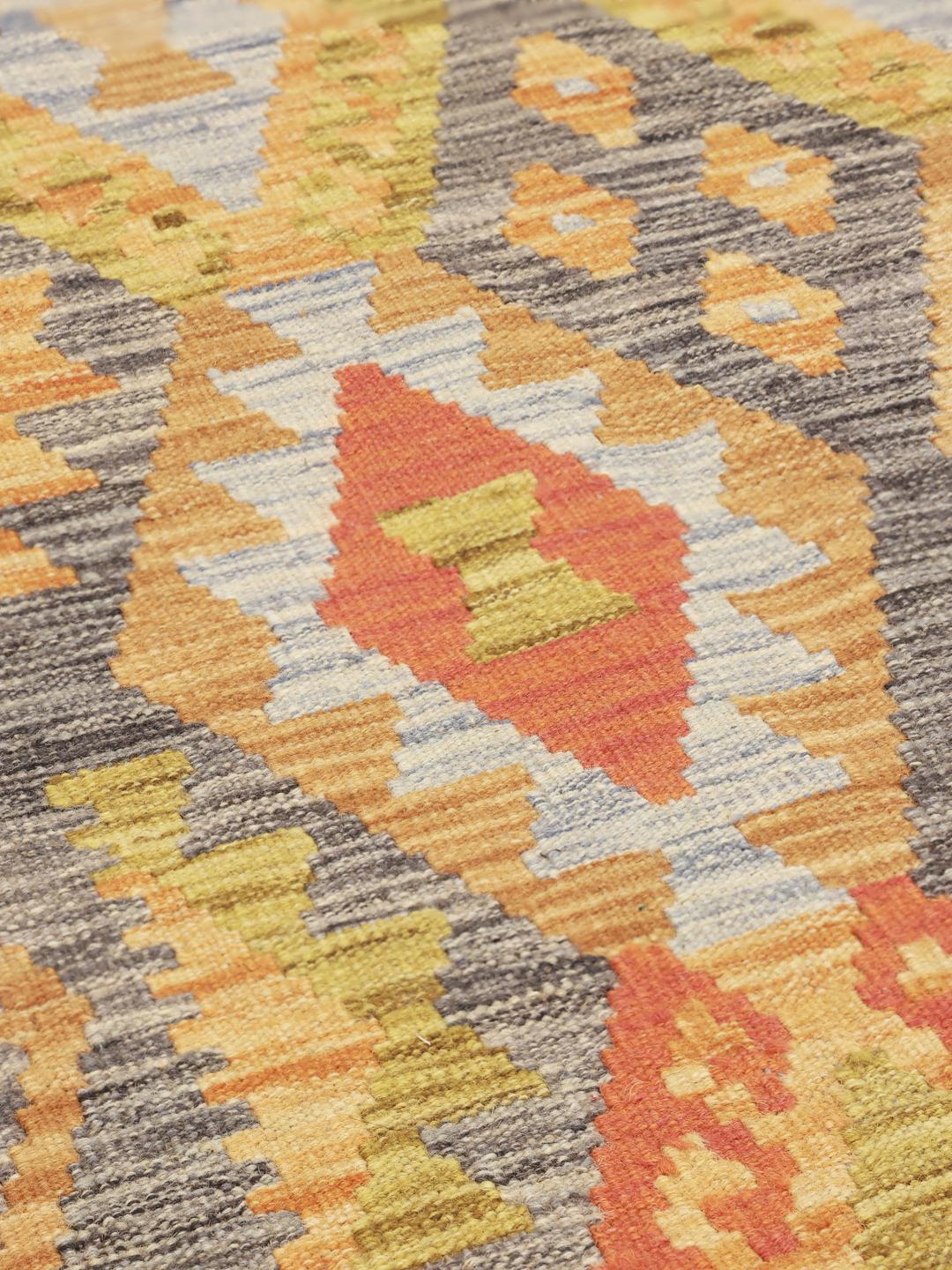
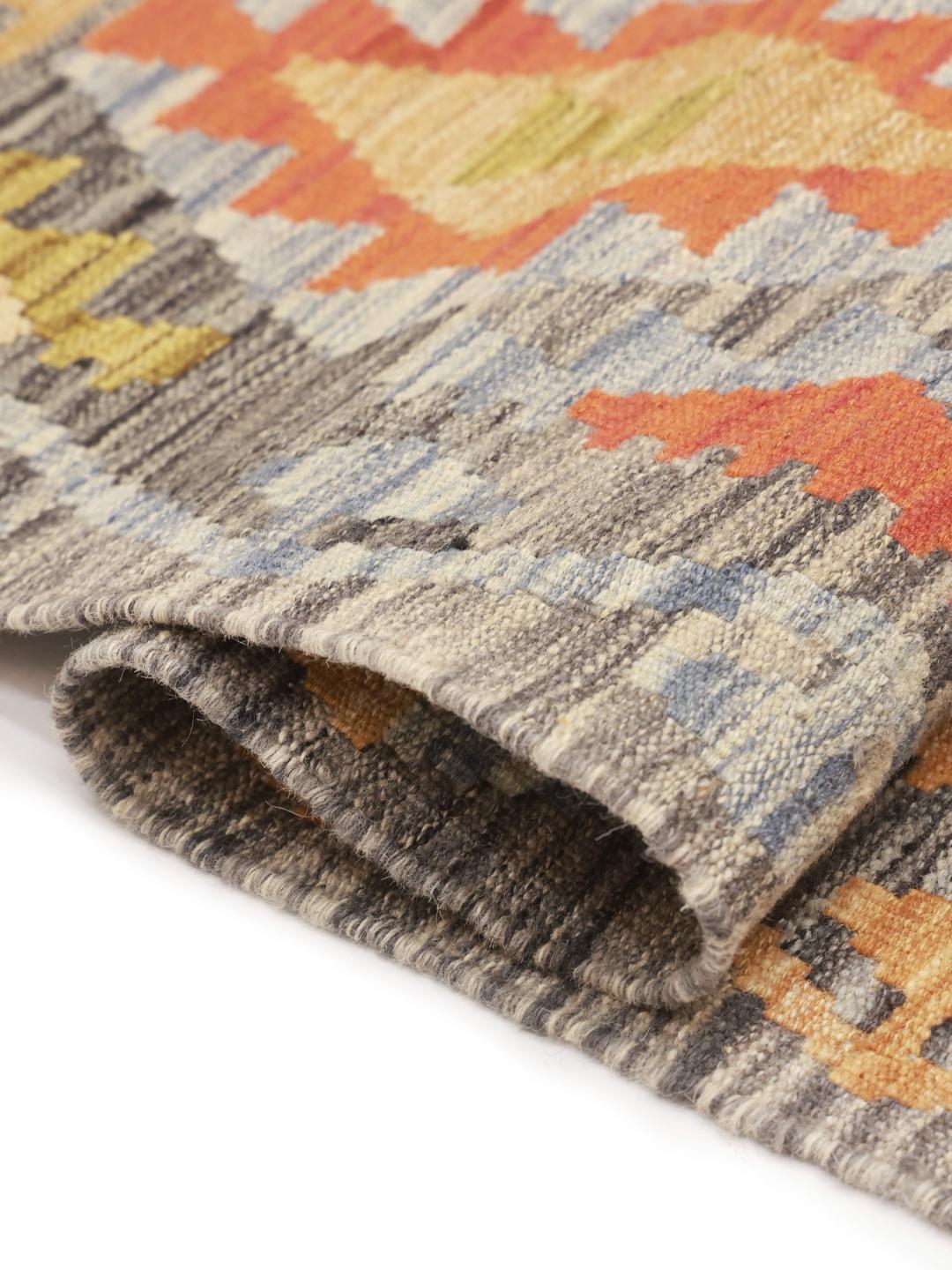
A Kelim is defined by its flat-woven construction, which sets it apart from pile-knotted rugs. The absence of a pile means the design is created directly by the interlacing of the warp and weft threads, resulting in a lighter and reversible rug. This technique demands exceptional skill, as the weaver must maintain consistent tension to ensure the geometric motifs are sharp and the edges stay straight, reflecting the high standards of Afghan craftsmanship.
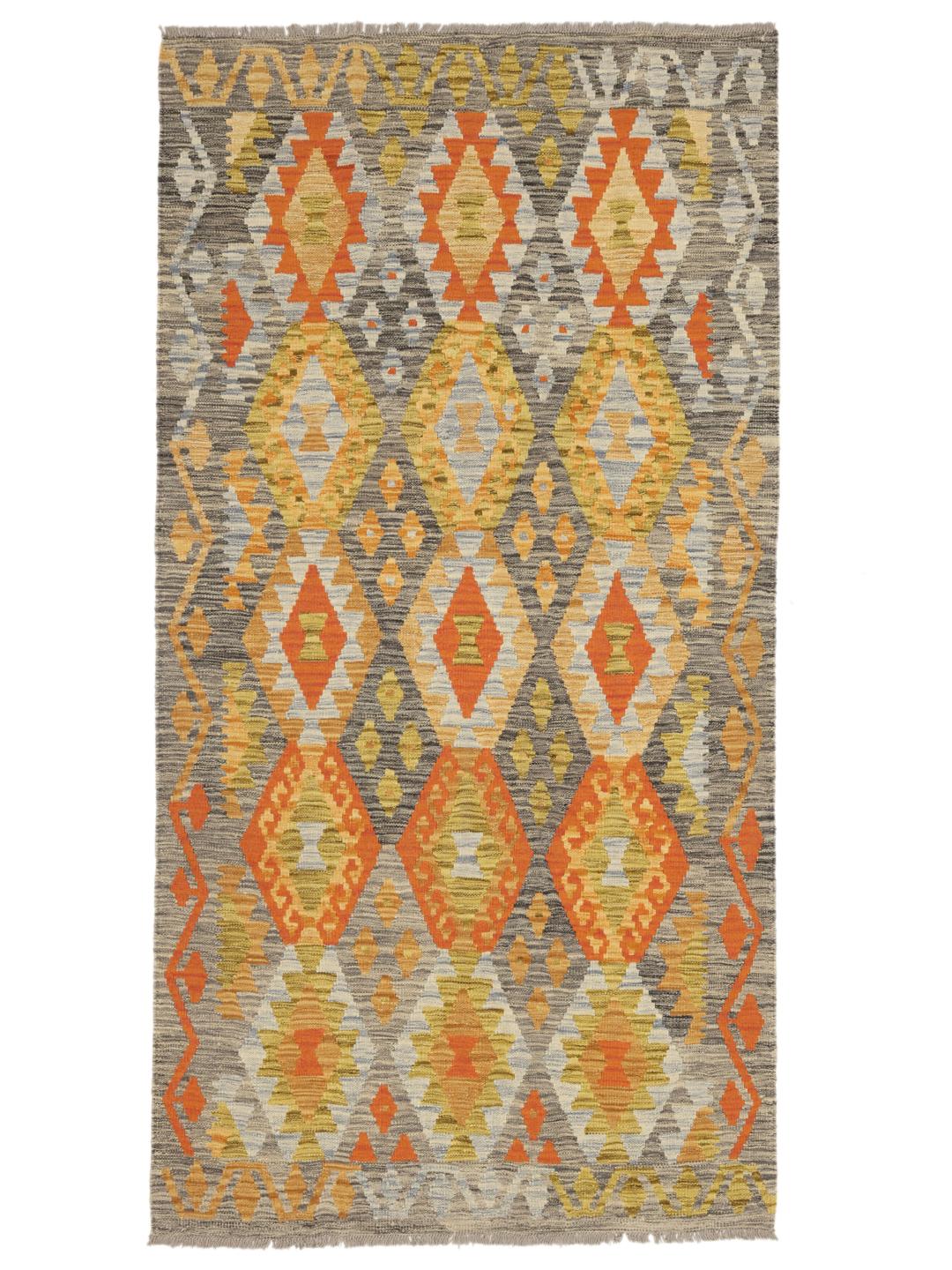
Signature design elements of these rugs include bold geometric shapes, particularly diamonds and triangles, which often carry symbolic meanings related to protection and prosperity. The colour palettes are traditionally sourced from natural dyes found in the local environment, creating rich, earthy tones that age gracefully over time. The use of repeating motifs arranged in structured rows is a hallmark of this tradition, lending a rhythmic and balanced quality to the overall design.
Collecting Afghan Kelims is an appreciation of a craft that has survived through changing political and social landscapes. These rugs are valued not only for their aesthetic appeal but for their historical significance as pieces of cultural heritage. By owning such a rug, you are preserving a tradition of meticulous hand-weaving and supporting the continuation of a timeless artisanal practice that remains a vital part of the identity of the region.