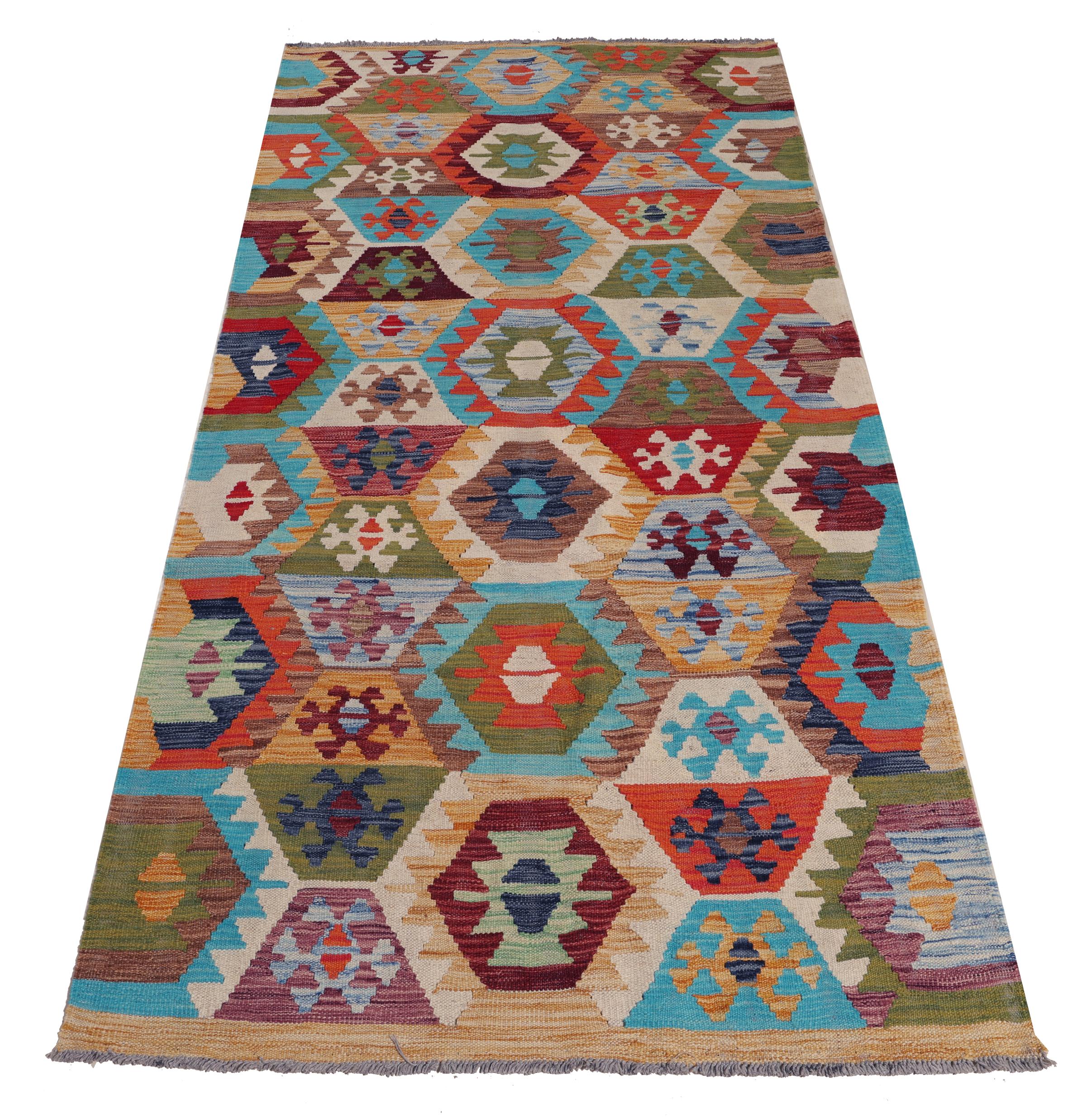
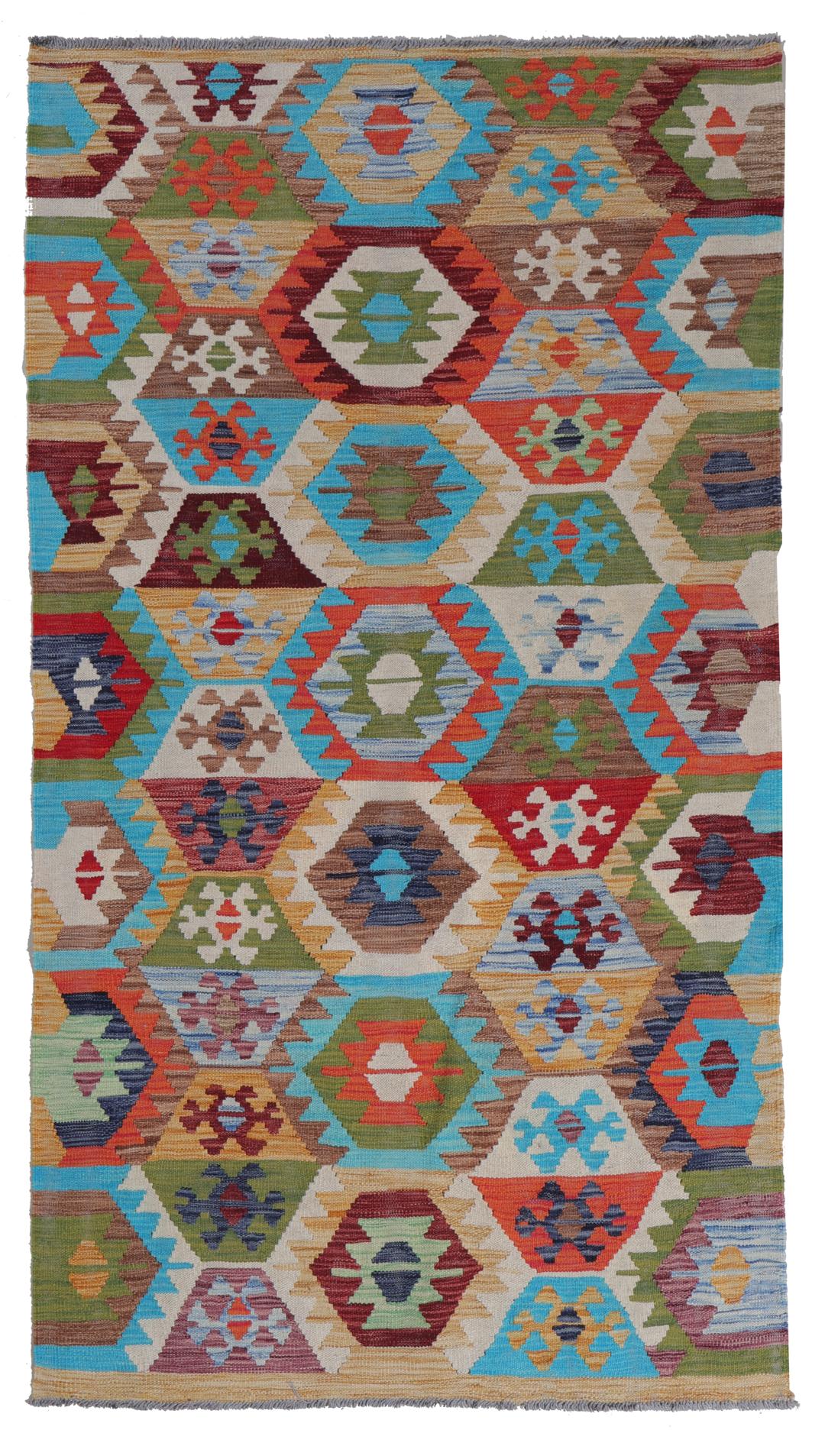
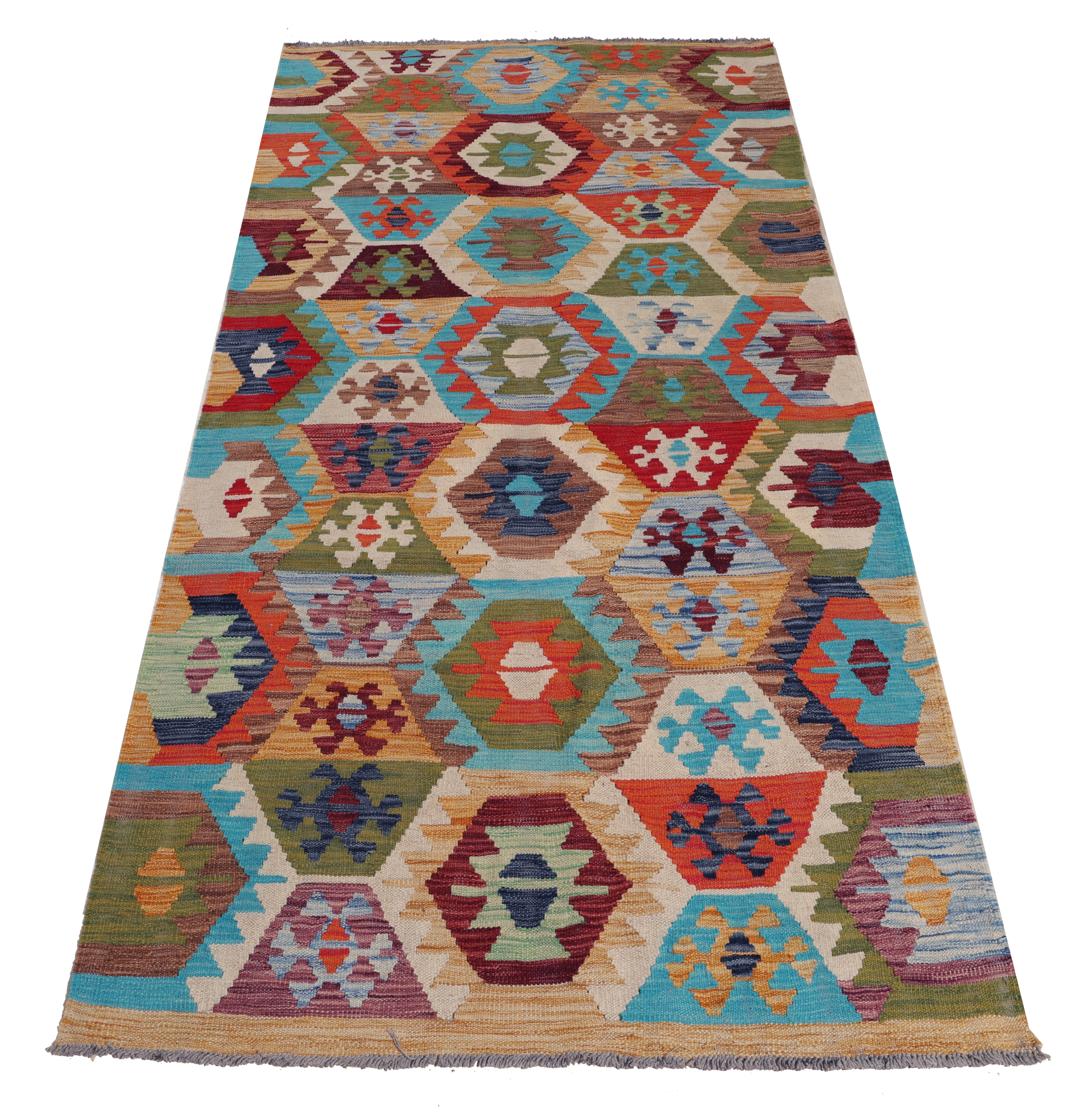
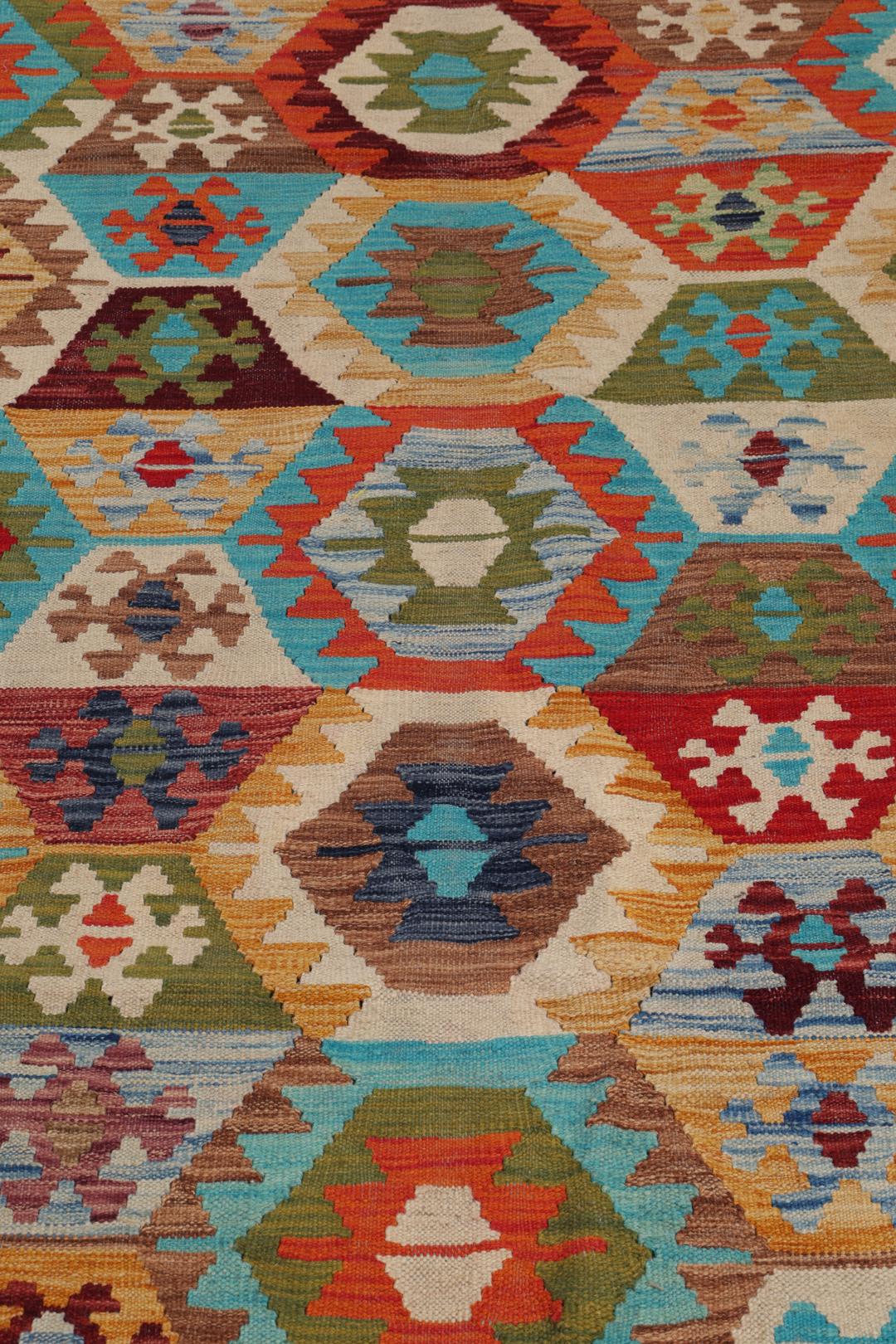
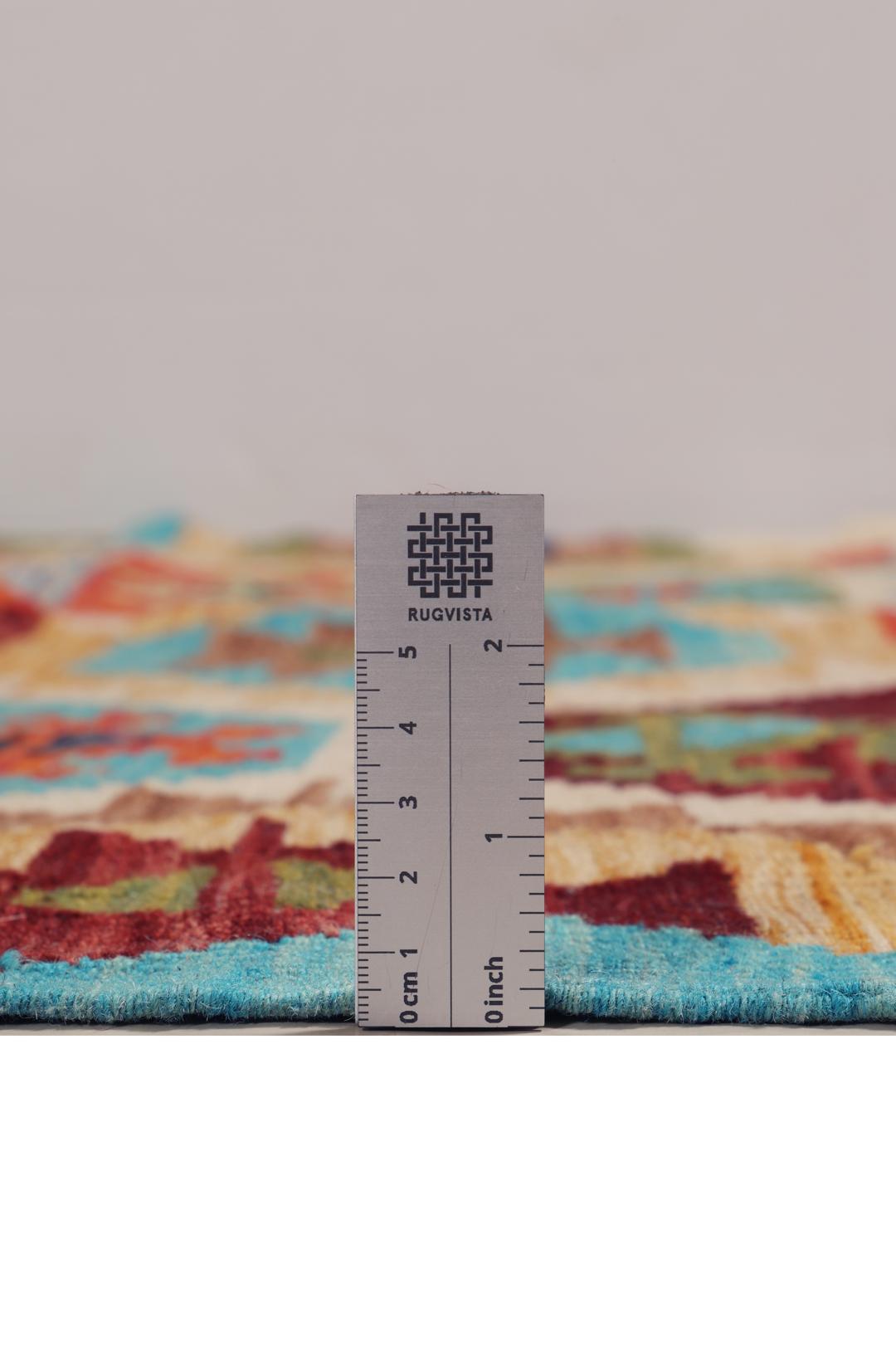
The Kelim tradition is deeply rooted in the nomadic and village cultures of the Middle East and Central Asia. These rugs are traditionally flat-woven, meaning they lack a pile, which historically made them highly portable for families on the move. Over centuries, these textiles evolved from essential household items—used as floor coverings, blankets, and storage bags—into highly sought-after decorative pieces.
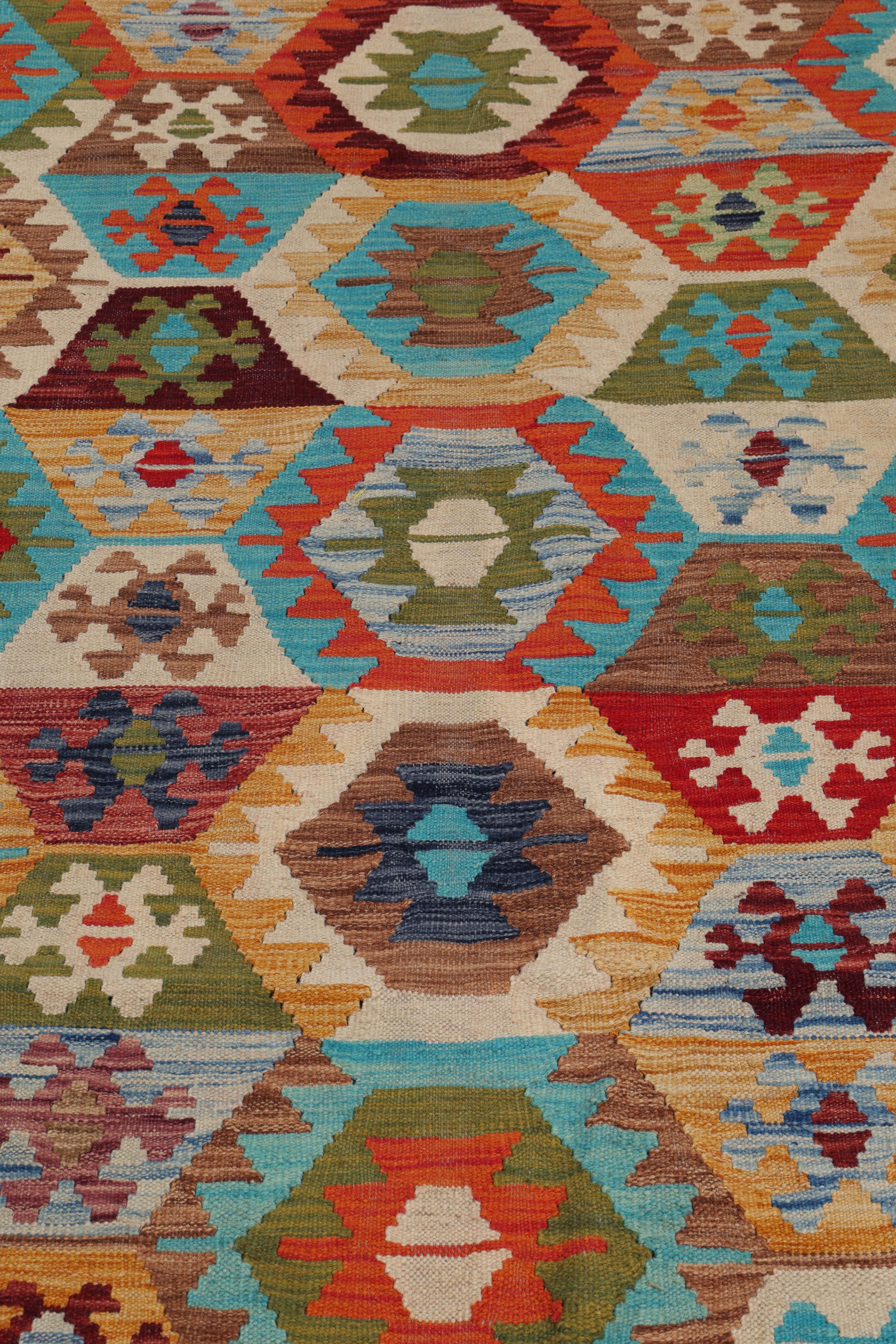
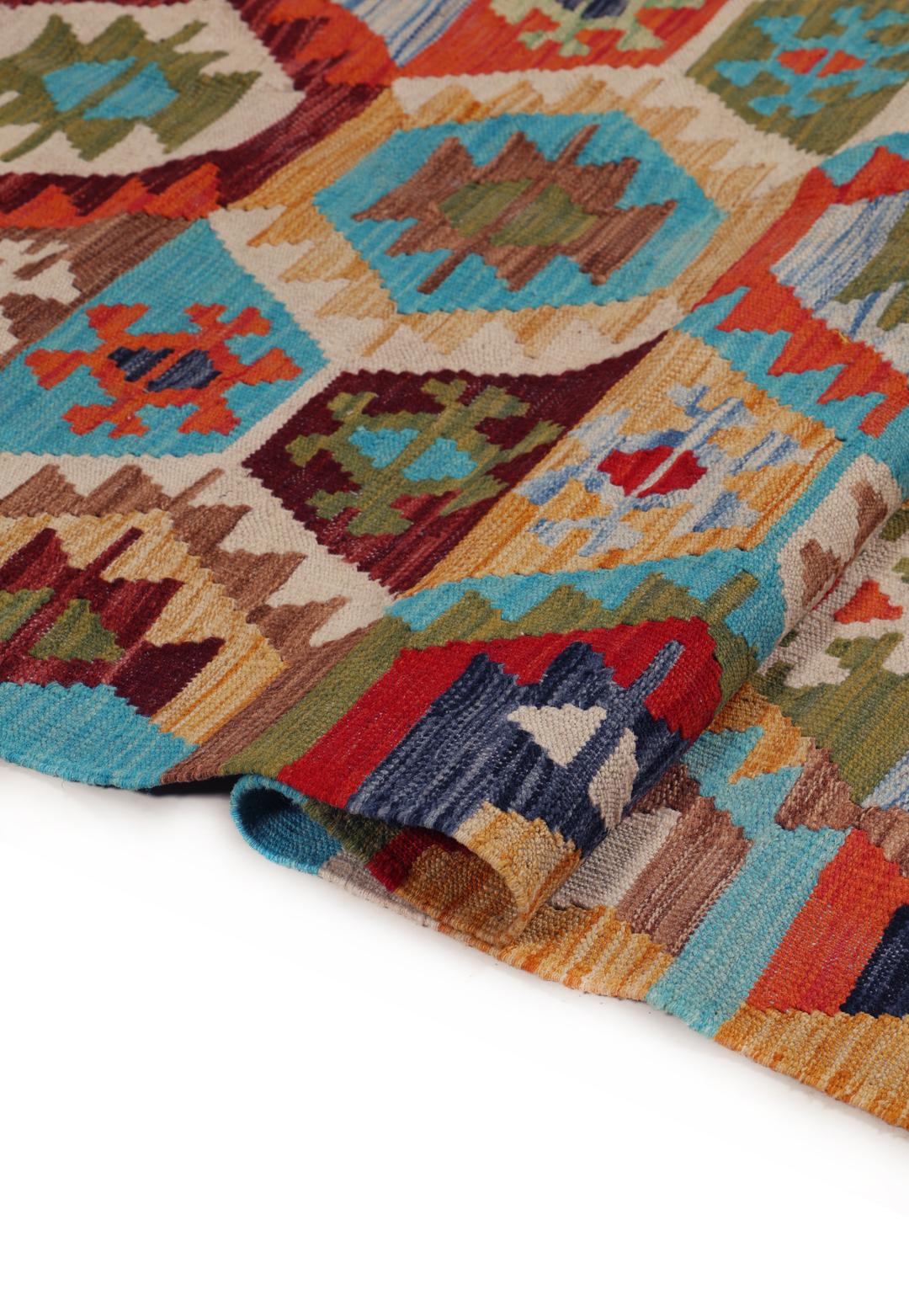
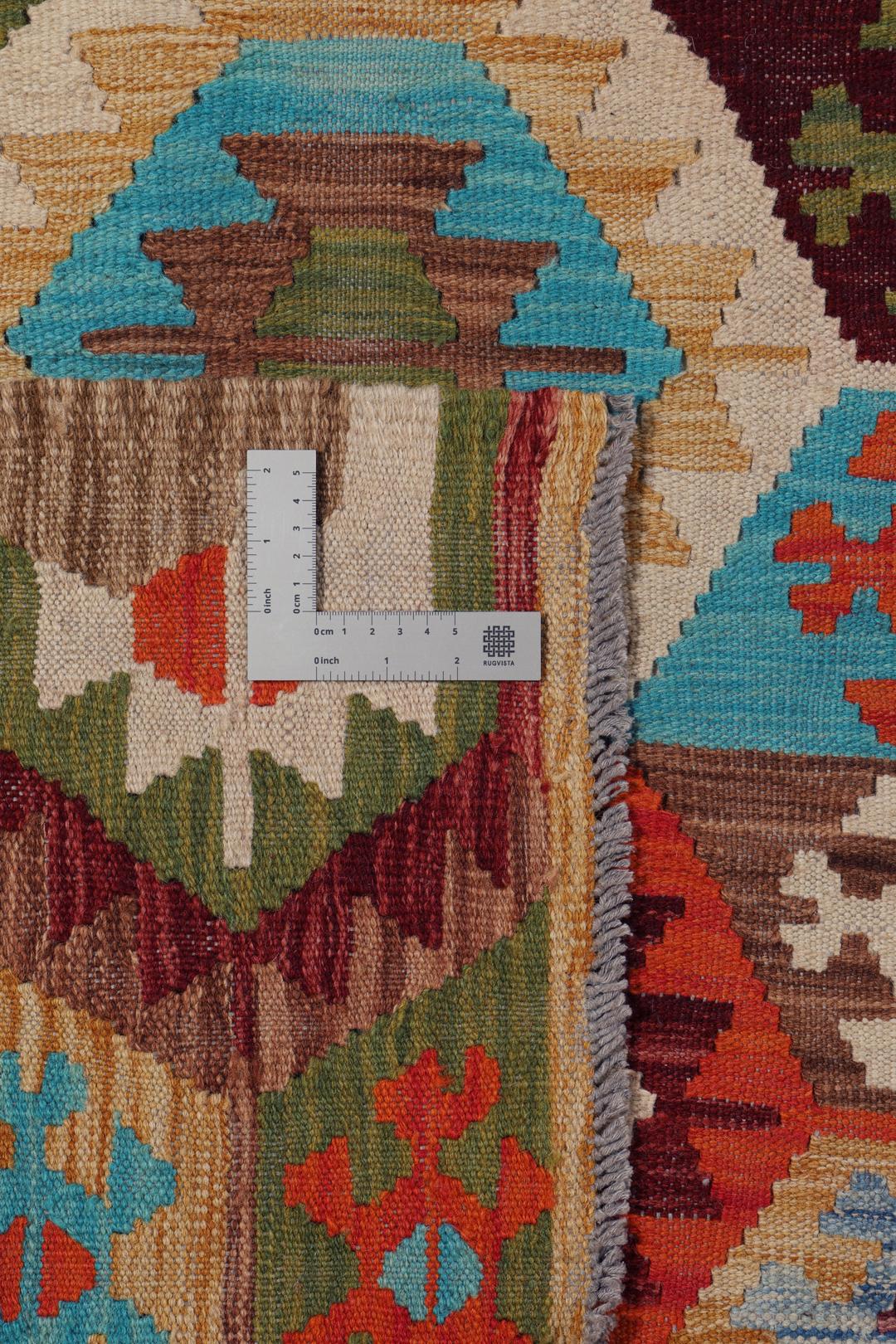
The term 'Kelim' refers to the specific slit-weave technique used to create the patterns. By interlocking the weft threads tightly around the warp, weavers create crisp, clean lines that define the geometric shapes. This technical precision is what gives these rugs their sharp, iconic appearance and their remarkable structural resilience, allowing them to remain flat and taut throughout their long lifespan.
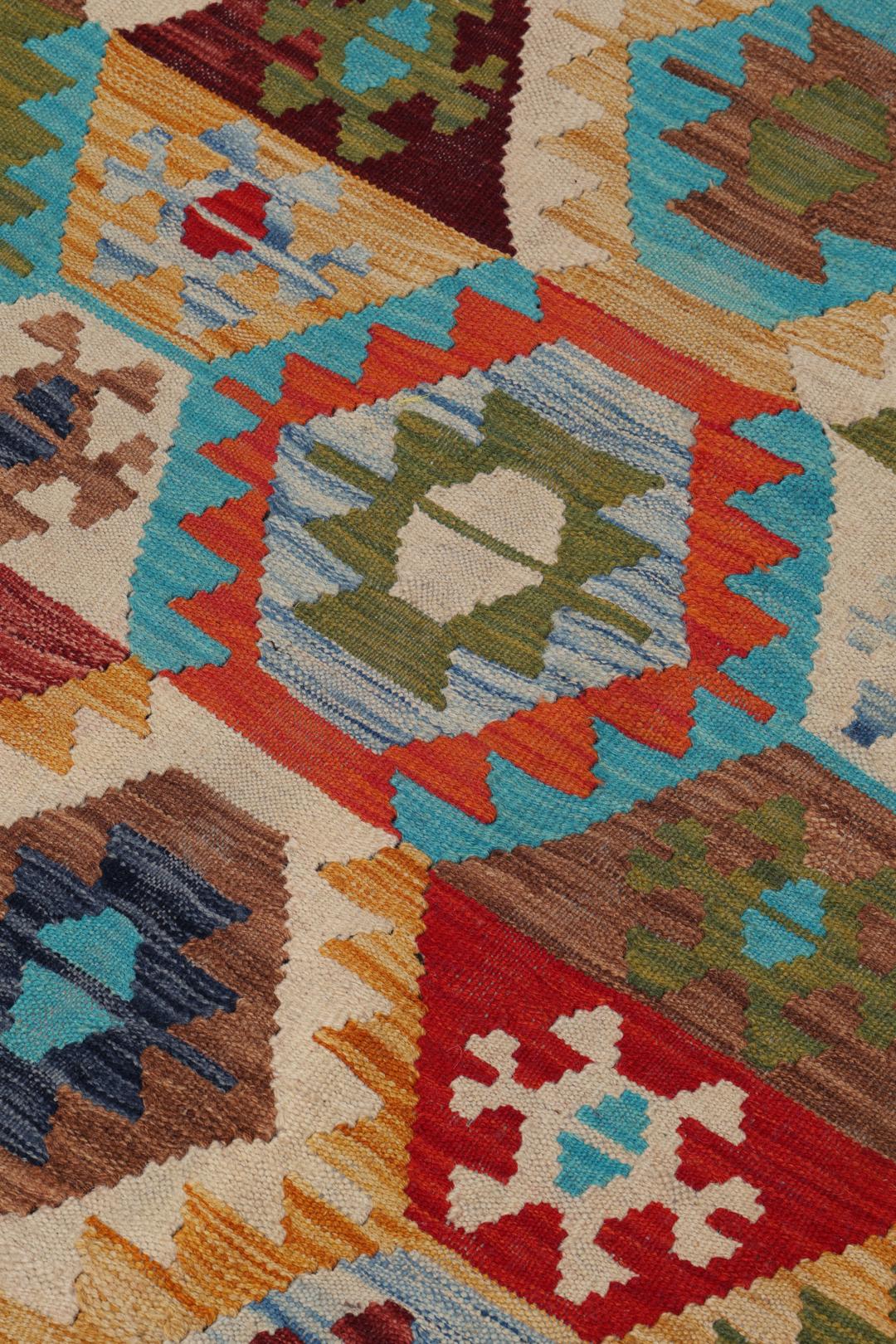
Visually, these rugs are defined by a sophisticated language of geometric motifs, often featuring diamonds, triangles, and complex medallions. In the Afghan tradition, these patterns are frequently inspired by tribal ancestry and regional symbols, each carrying its own meaning. The bold use of colour, derived from traditional dyes, transforms these simple shapes into an intricate puzzle of symmetry and contrast.
Today, these rugs are cherished by collectors and homeowners alike for their authenticity and cultural weight. Owning a Kelim is more than just a decor choice; it is an appreciation of a timeless craft that has survived for generations. They are valued for their ability to bridge the gap between traditional history and modern living, standing as a permanent record of the artisan's vision and heritage.