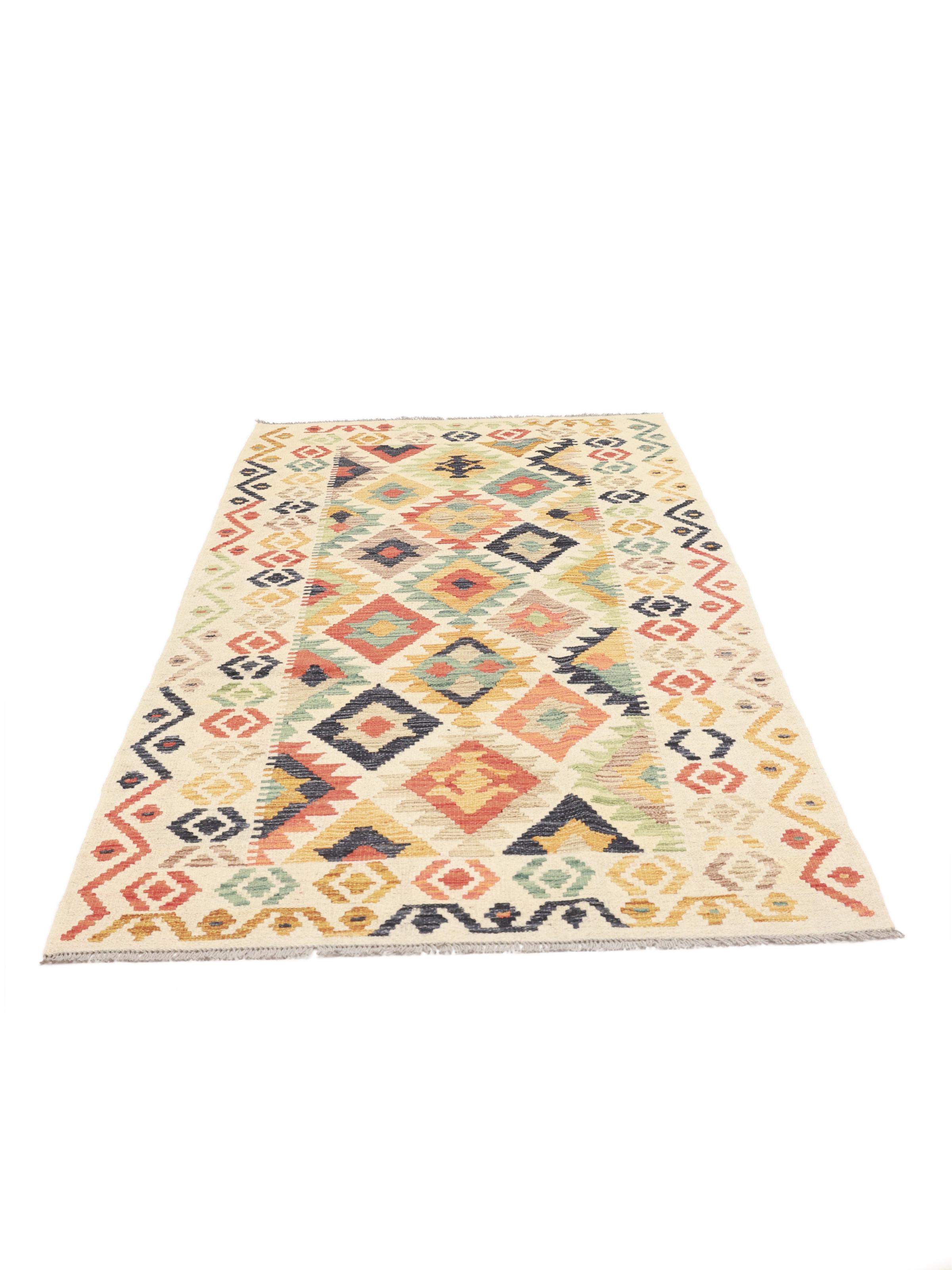
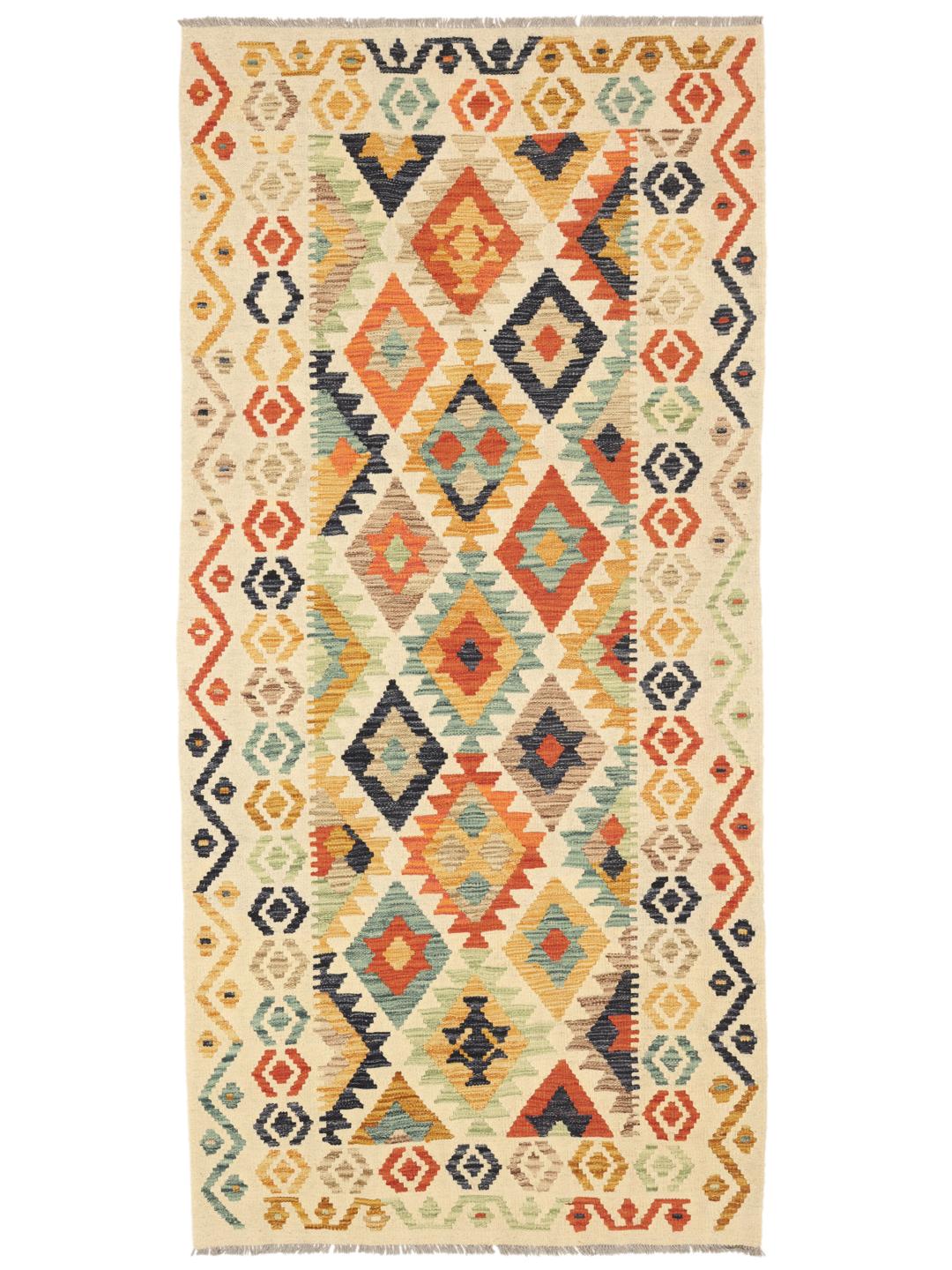
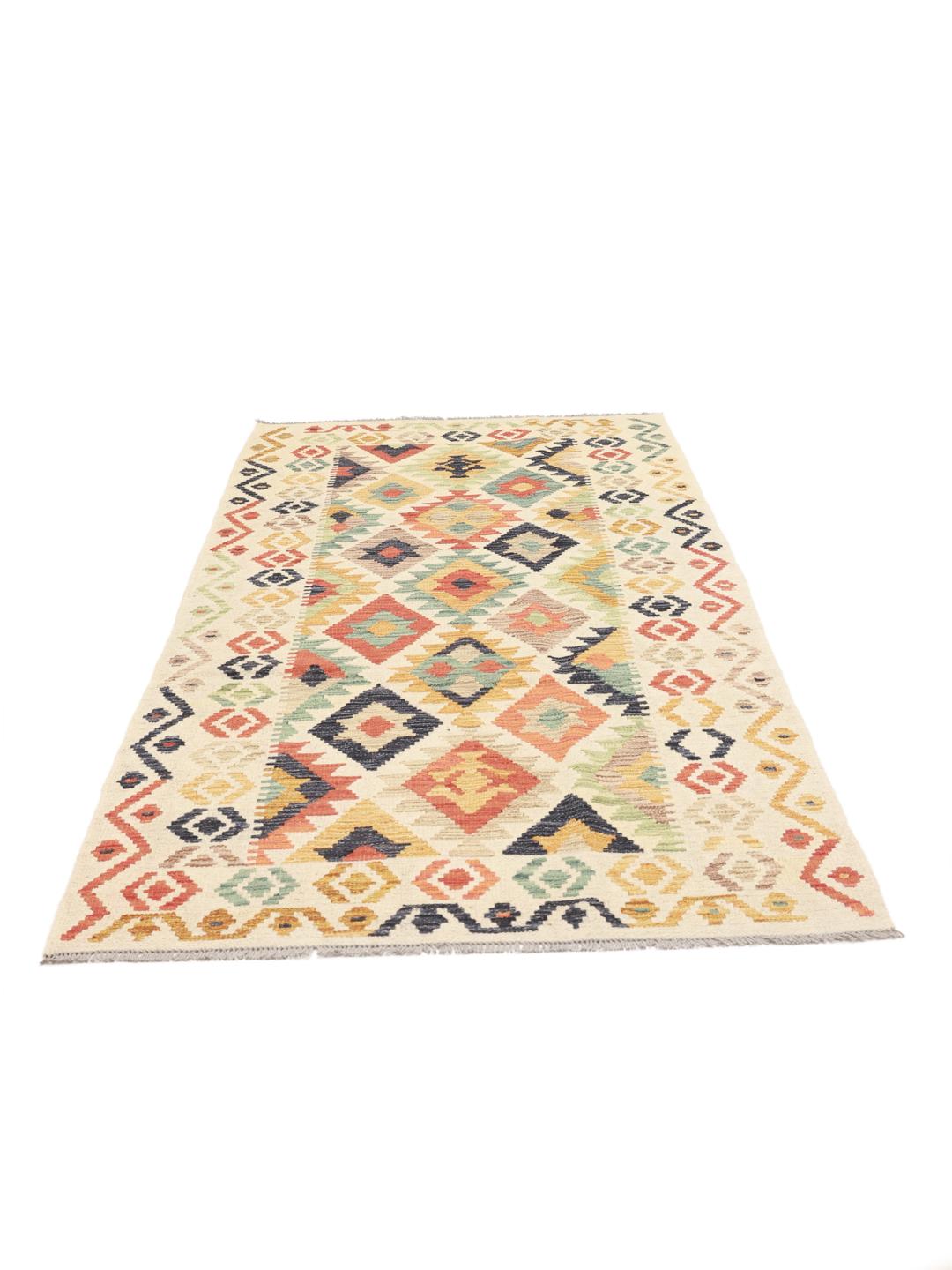
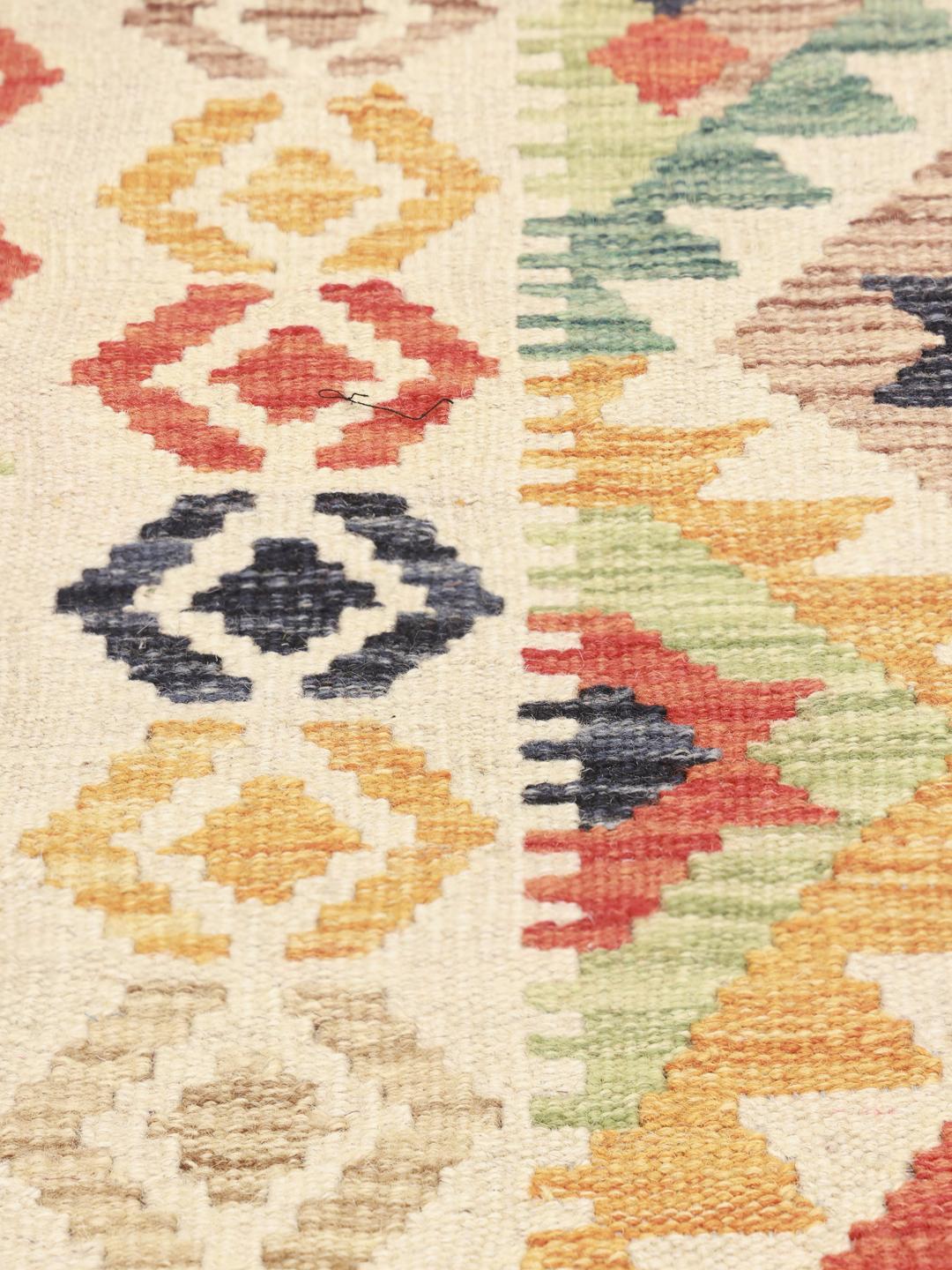
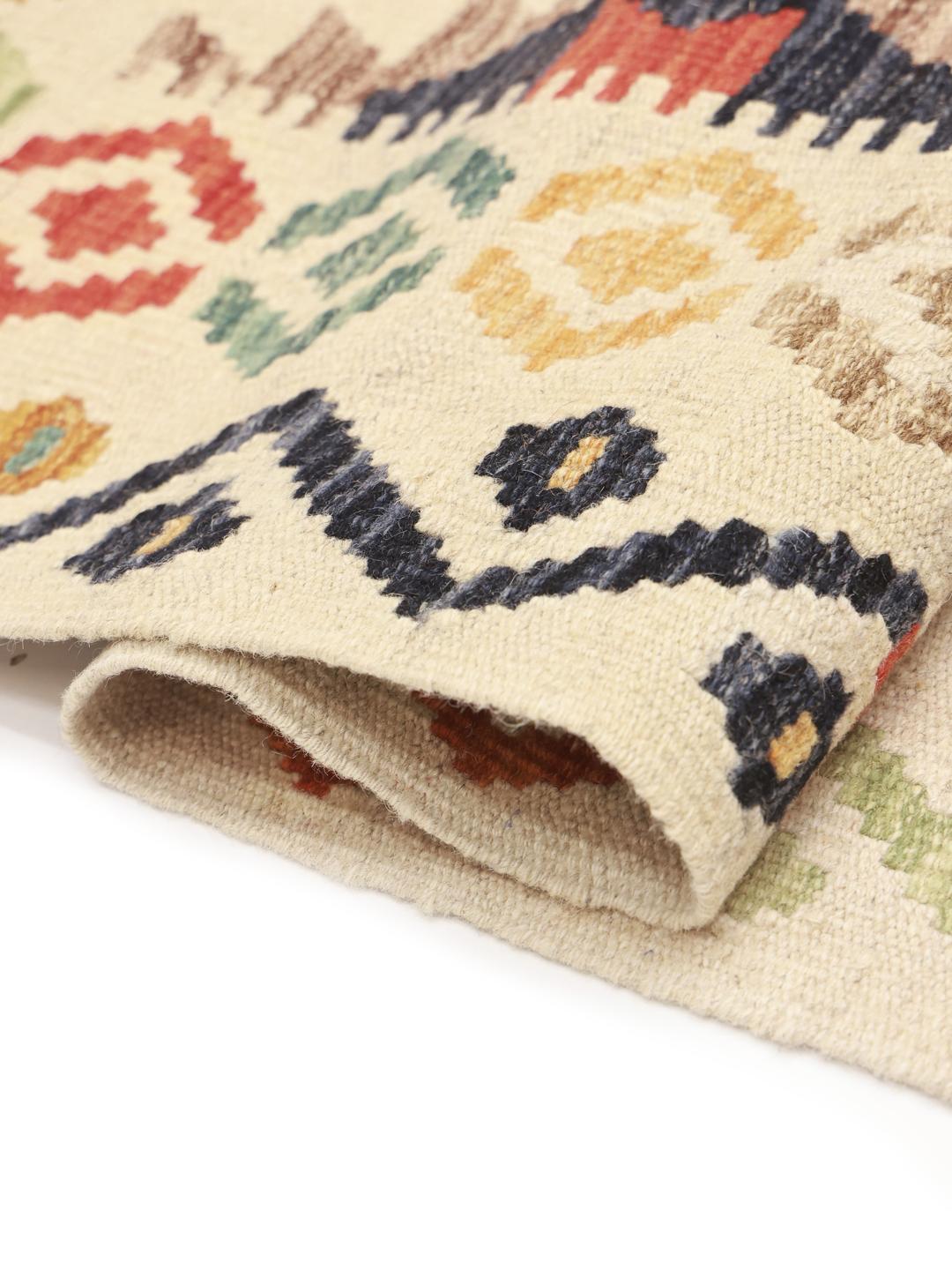
Kelim rugs have long served as a vital part of the nomadic and village life across the Middle East and Central Asia. Historically, these flat-woven textiles were crafted for their versatility, used as floor coverings, wall hangings, and even as functional bags for storage and transport. The Afghan Kelim tradition, in particular, is celebrated for its earthy tones and bold, geometric aesthetics that reflect the rugged landscape of its origin.
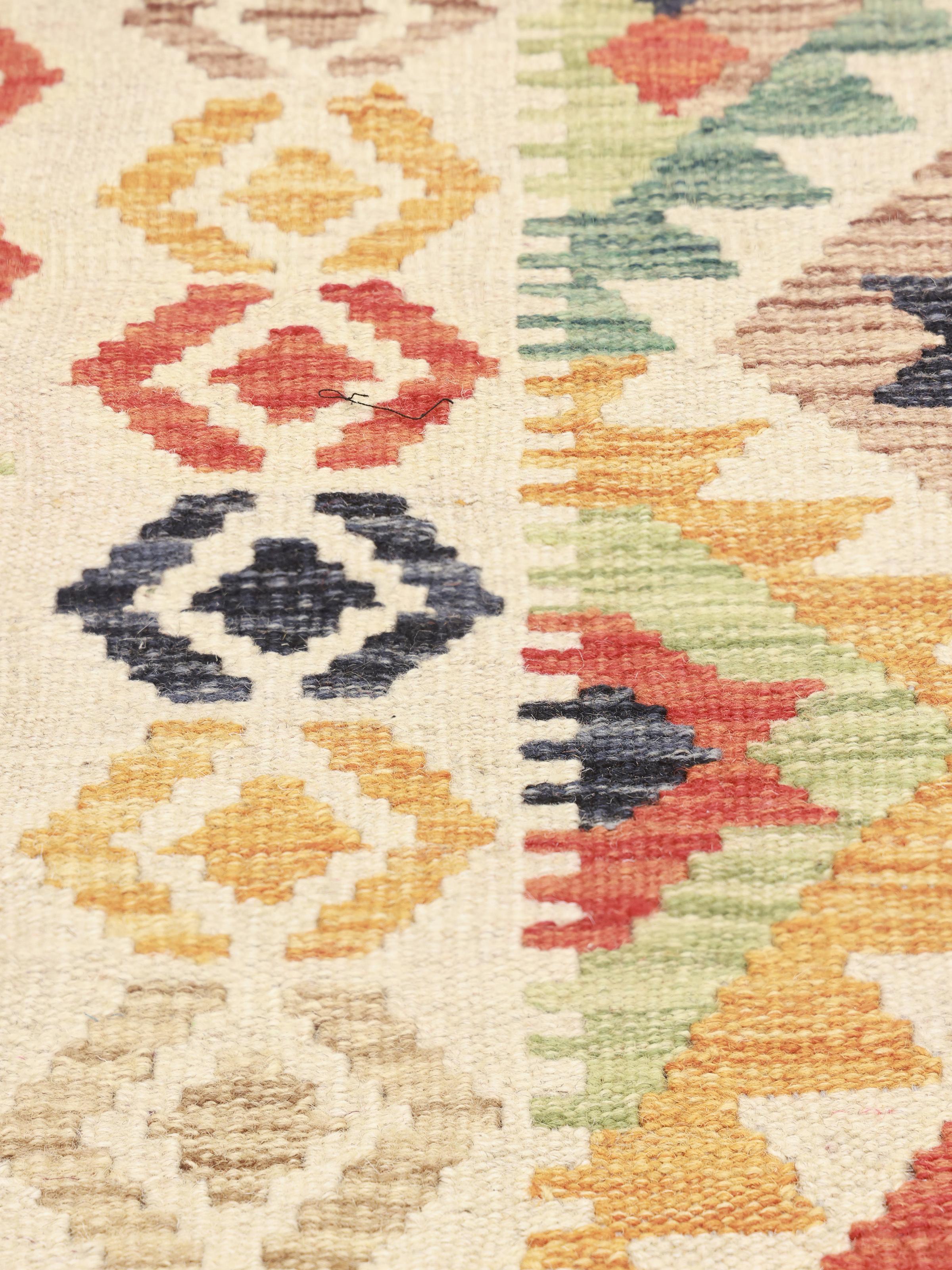
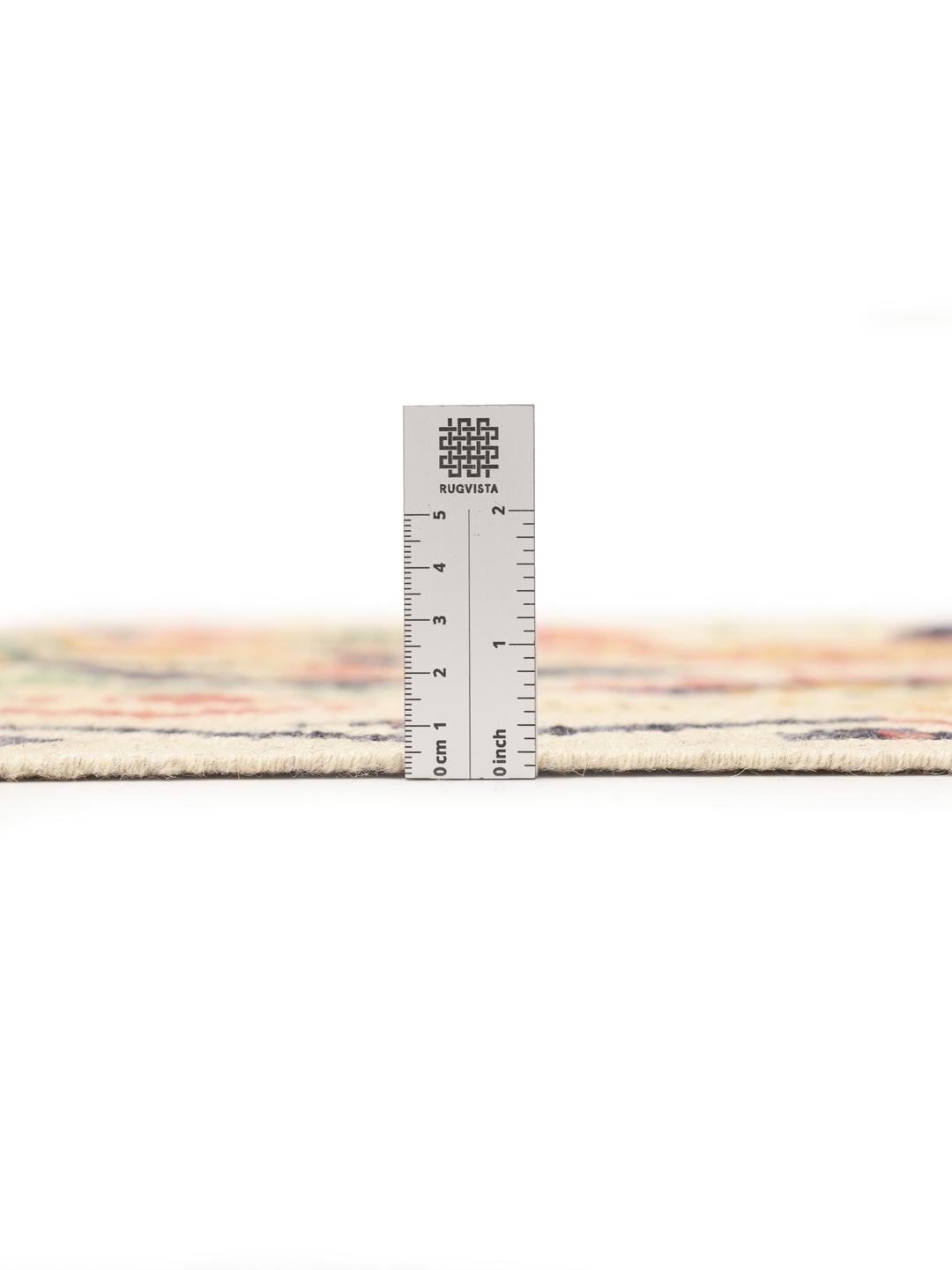
The term 'Kelim' refers to the specific slit-weave technique used to create these rugs. Unlike knotted piles, a Kelim is created by interweaving the warp and weft strands, resulting in a thin, lightweight, and reversible textile. This technique requires an expert eye for tension, as the weaver must manage the transition between colours to create the sharp, clean lines that define the pattern.
The design language of this tradition is rooted in symbolic motifs, with diamonds, triangles, and stylized floral elements representing protection, fertility, and the natural world. These patterns are not merely decorative but serve as a visual narrative of the weaver's heritage. The vibrant colours are traditionally derived from natural dyes, giving them a depth and complexity that synthetic alternatives simply cannot match.
Today, these rugs are highly sought after by collectors and enthusiasts who value the human element behind every thread. Owning a Kelim is more than just a decor choice; it is an investment in a living tradition. Each piece acts as a bridge to the past, preserving the stories and techniques of the artisans who crafted them and ensuring that this ancient art form continues to thrive in modern homes.