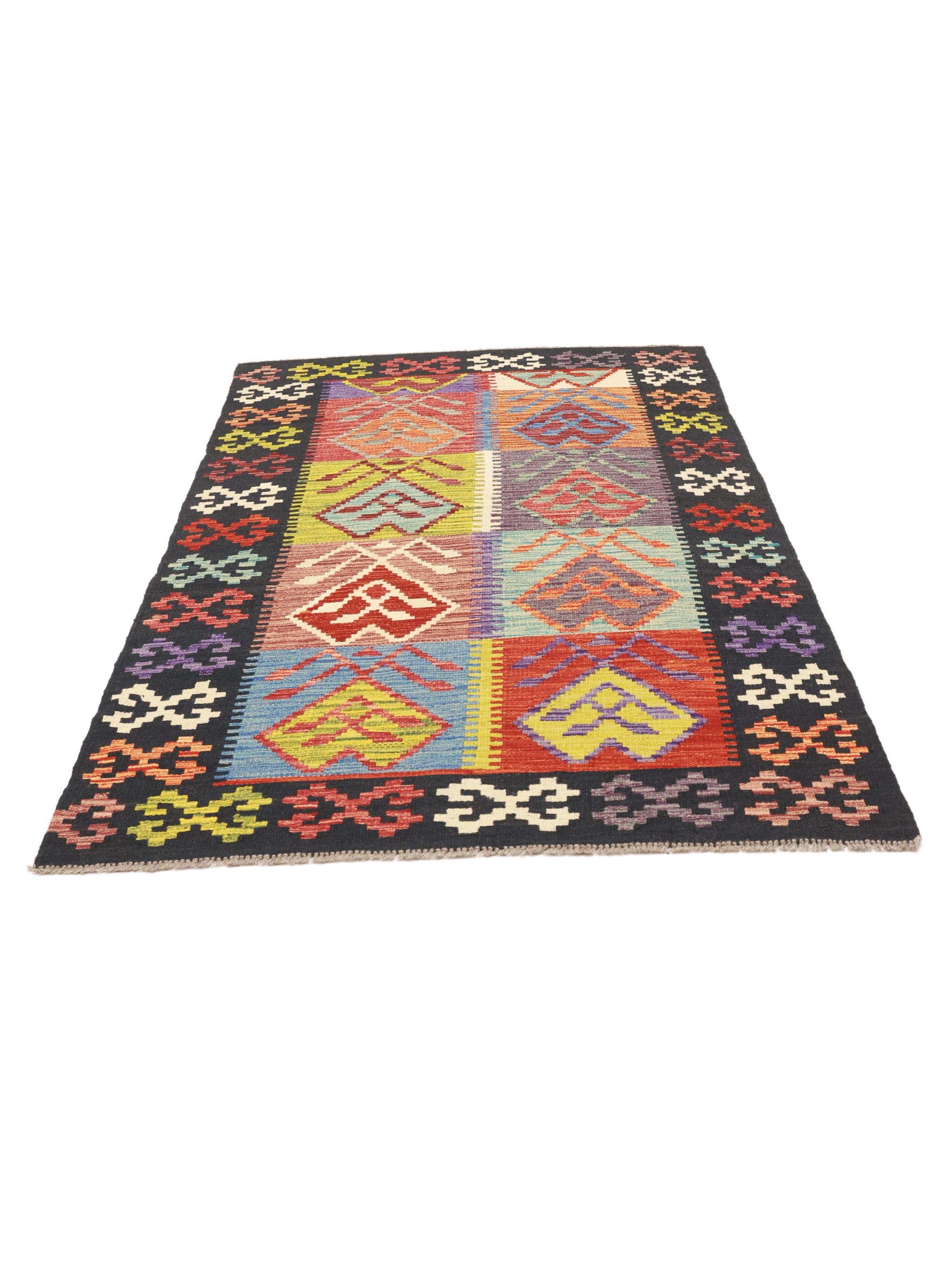
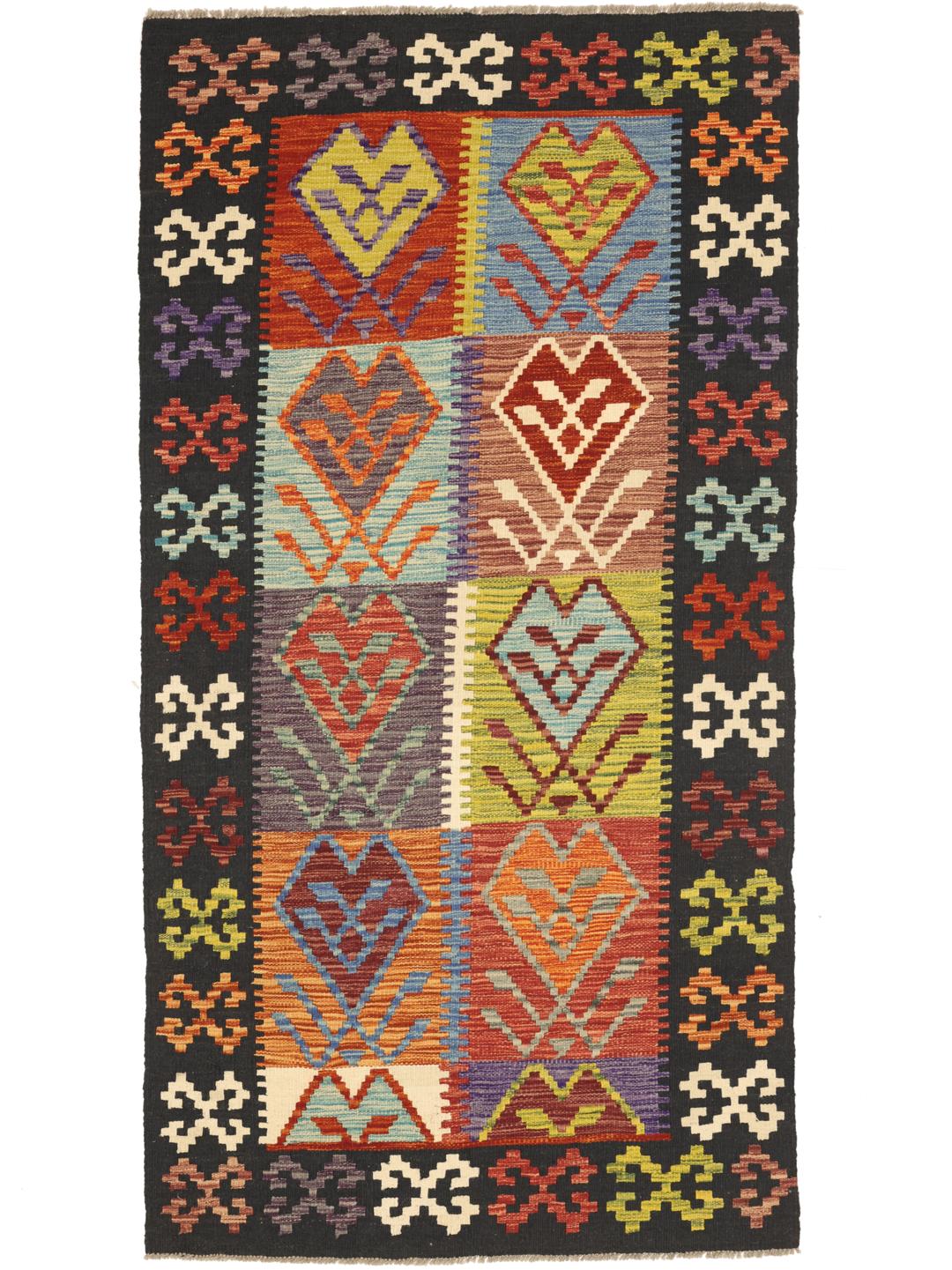
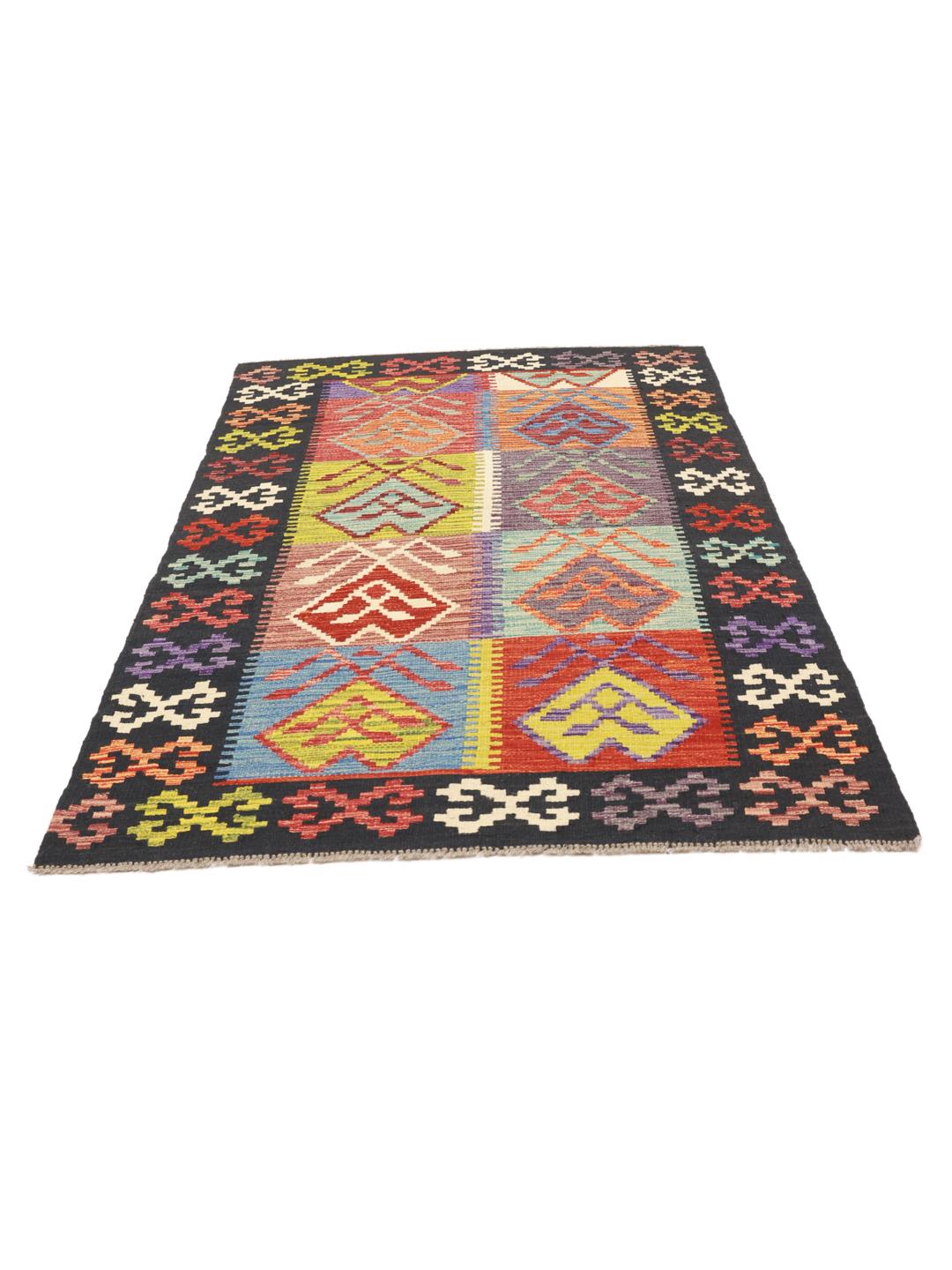
Kelim rugs have long been a cornerstone of nomadic and village life across the Middle East and Central Asia. Originally created as functional textiles for floor coverings, wall hangings, or storage sacks, these rugs reflect the migration patterns and cultural exchanges that have shaped the region for centuries. The Afghan Kelim, in particular, draws from a deep heritage of tribal weaving that prioritises durability and expressive symbolism.
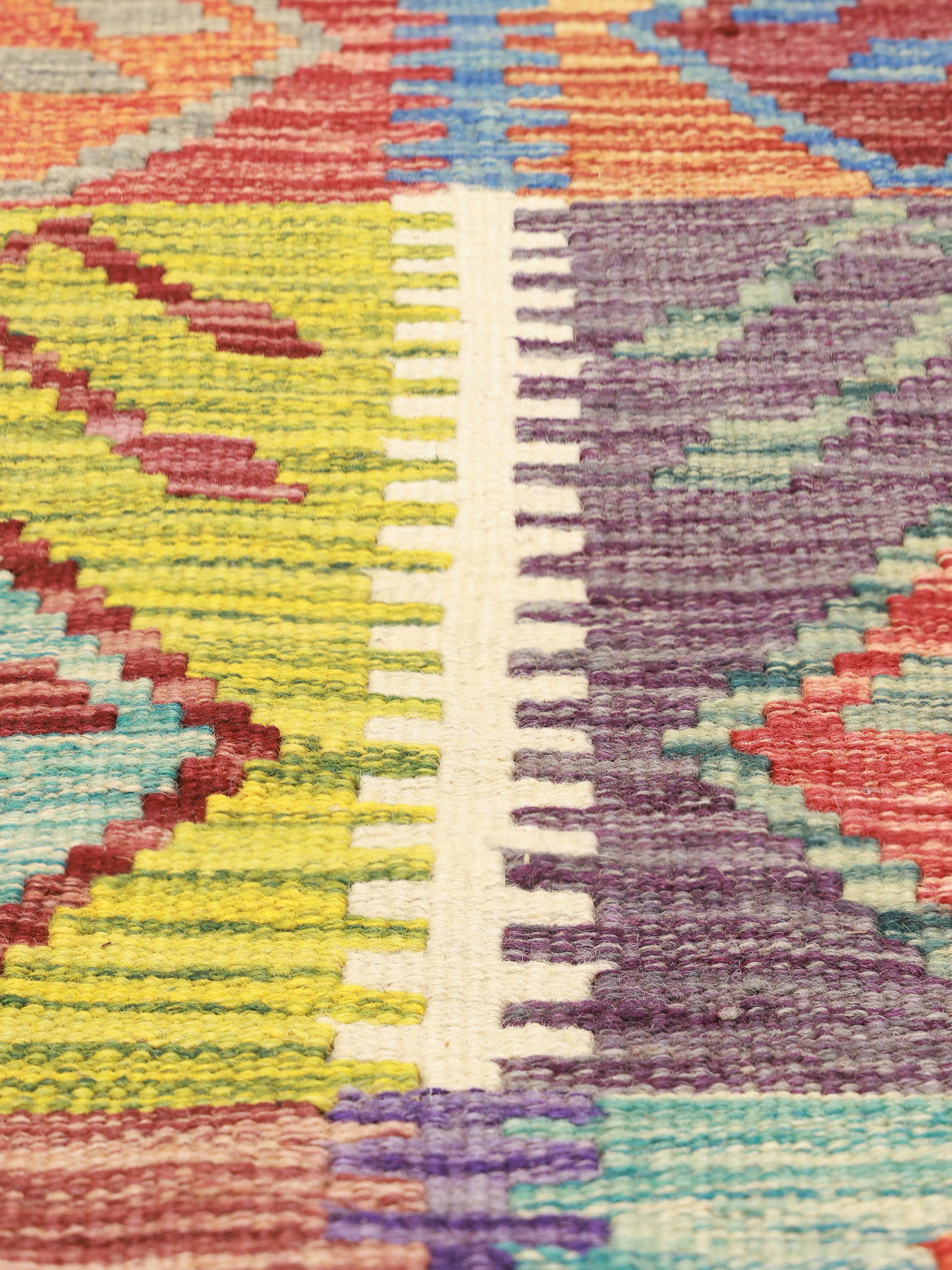
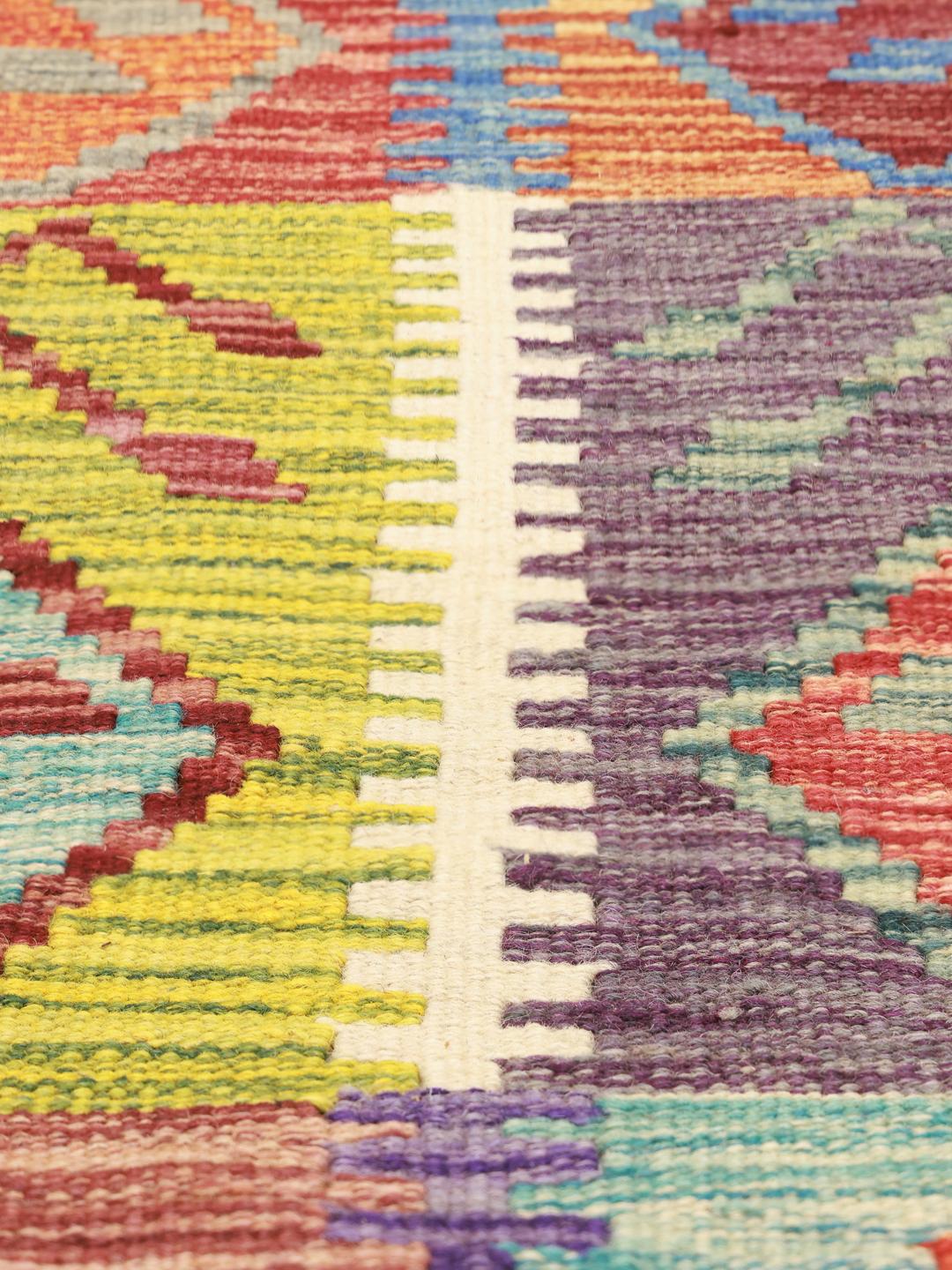
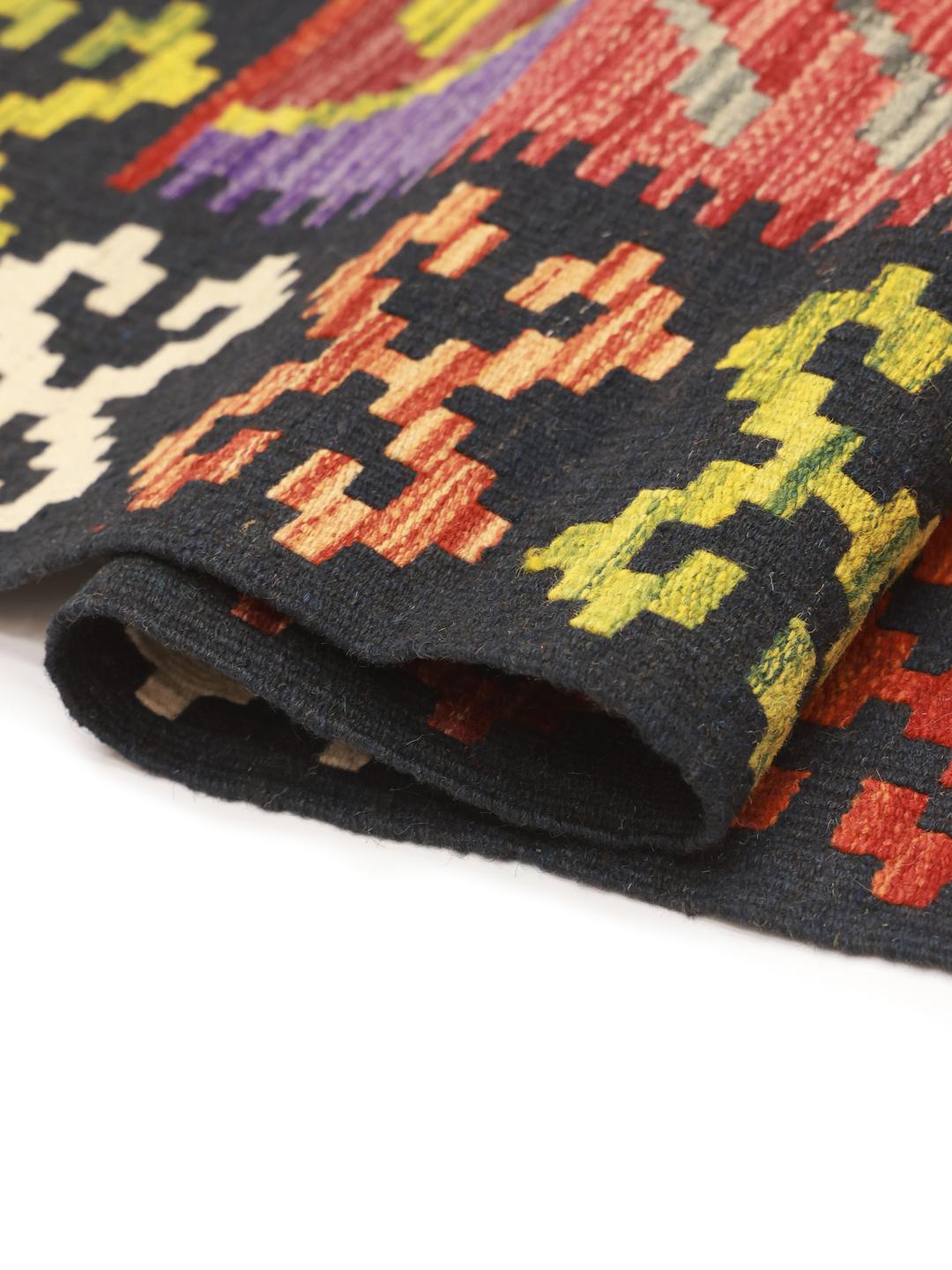
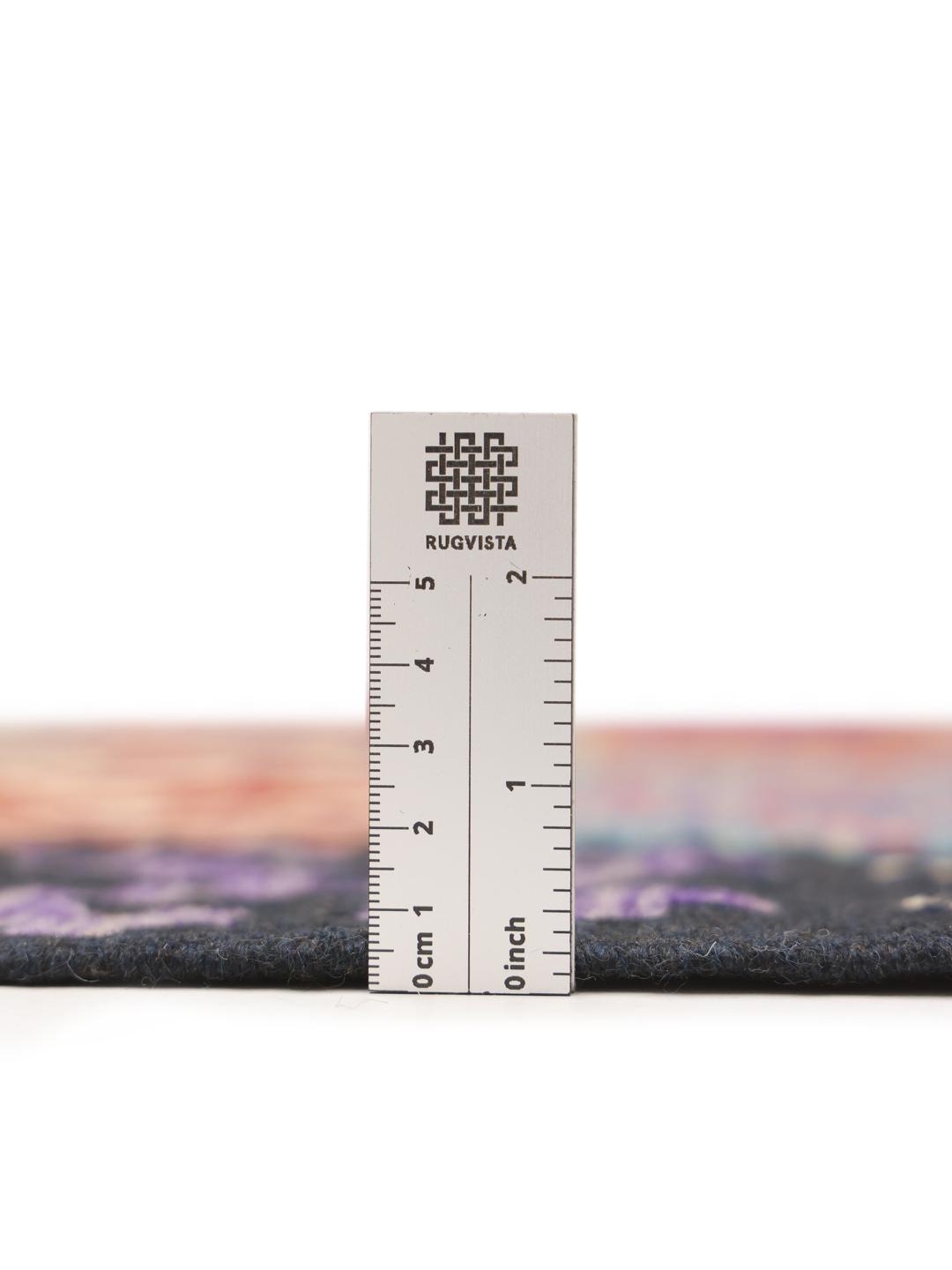
The term 'Kelim' refers to the flat-weave technique where no pile is created, resulting in a lightweight and reversible textile. This construction method is highly valued for its versatility and the clarity it brings to geometric designs. By avoiding the knotted pile of traditional rugs, weavers can achieve sharp, clean lines in their patterns, allowing the intricate motifs to stand out with striking precision.
The design language of this rug is characterised by repeating geometric medallions, often interpreted as tribal symbols or protective motifs passed down through generations. The bold use of colour, typical of Afghan weaving, is achieved through traditional dyeing techniques that create deep, lasting hues. Each motif tells a story, representing the weaver's environment and the cultural identity of their specific community.
Collecting these rugs is an opportunity to own a piece of living history. They are celebrated for their raw beauty and the skill required to produce them, bridging the gap between ancient nomadic utility and contemporary interior design. By bringing one into your home, you are preserving a legacy of craft that values human touch and regional tradition over mass production.