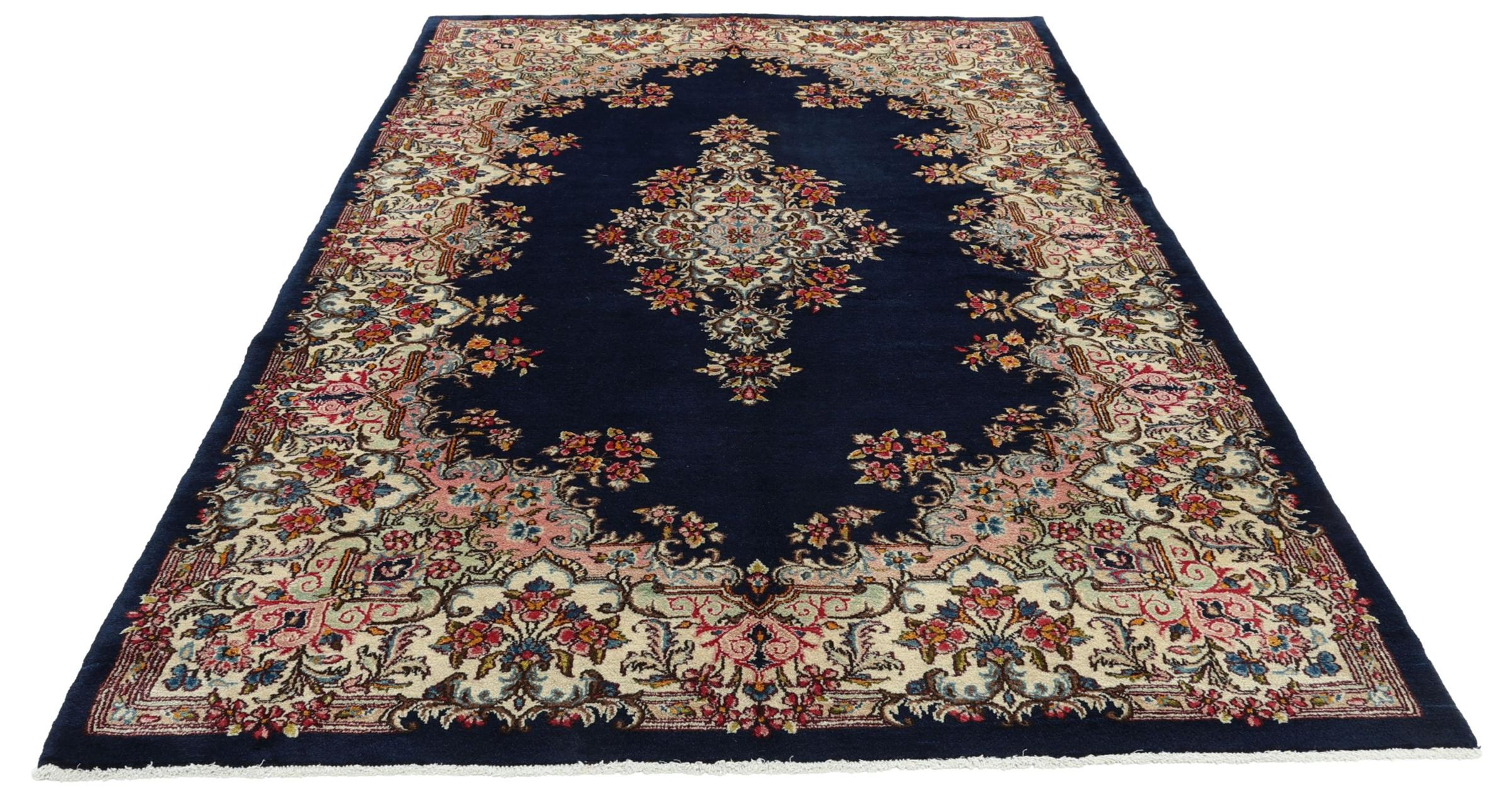
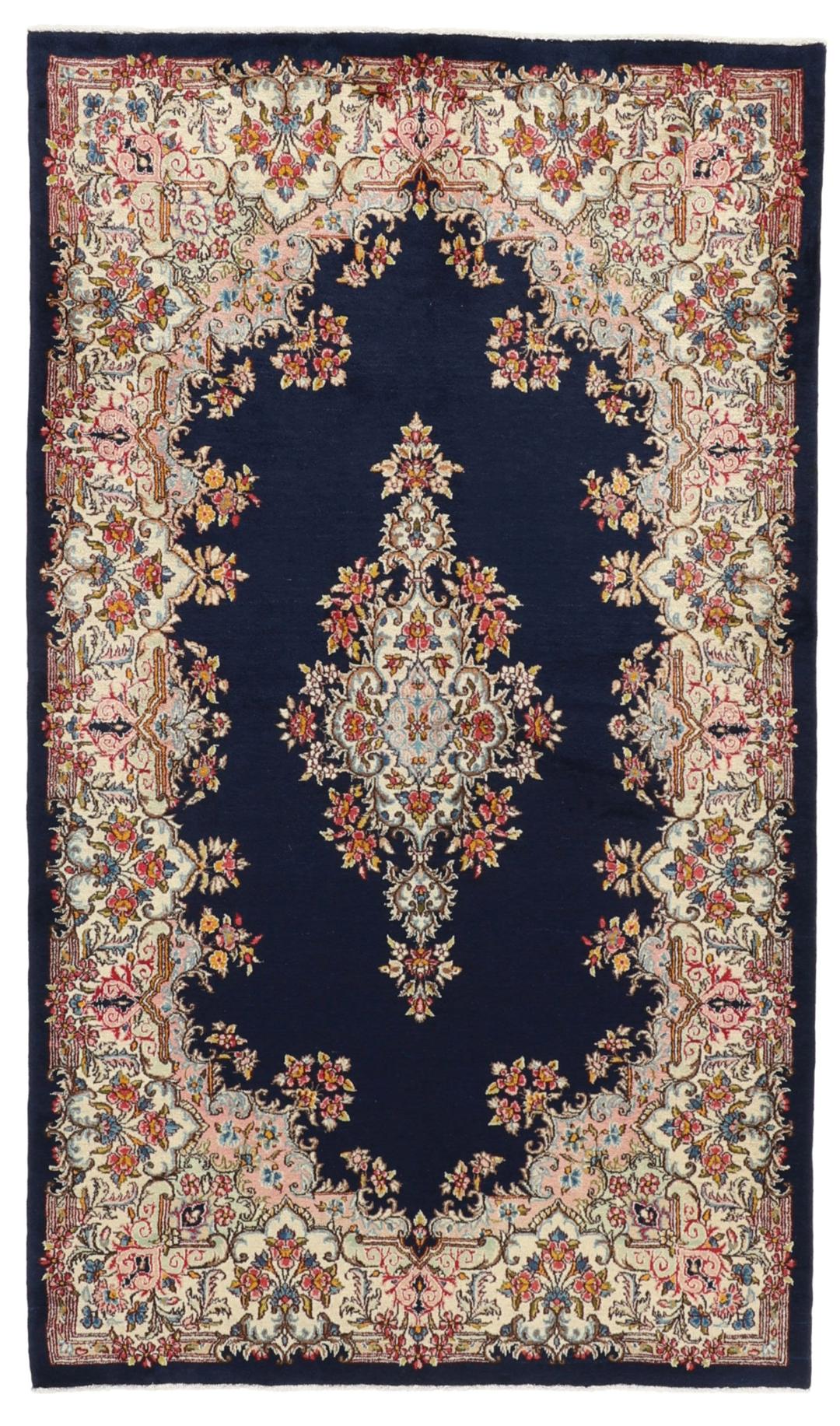
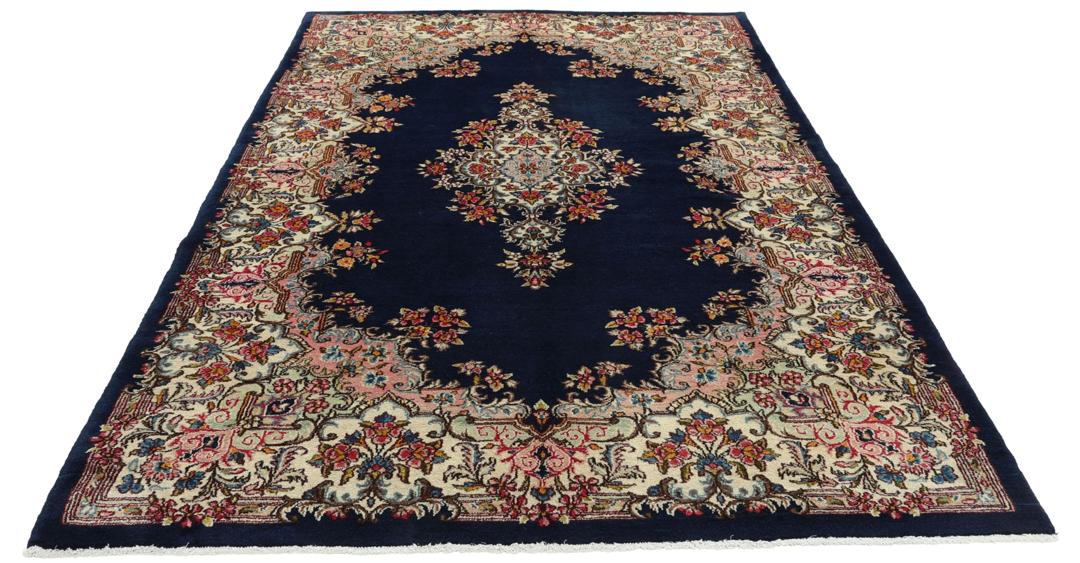
Kerman rugs originate from the desert city of Kerman, located in the southeastern part of the Middle East. Historically, this region has been a vital hub for rug production since the Safavid period, known for producing some of the most sophisticated and artistic floor coverings in the world. The city's unique geographical isolation fostered a distinct school of design that emphasises elegance, fine detail, and a wide, nuanced colour palette.
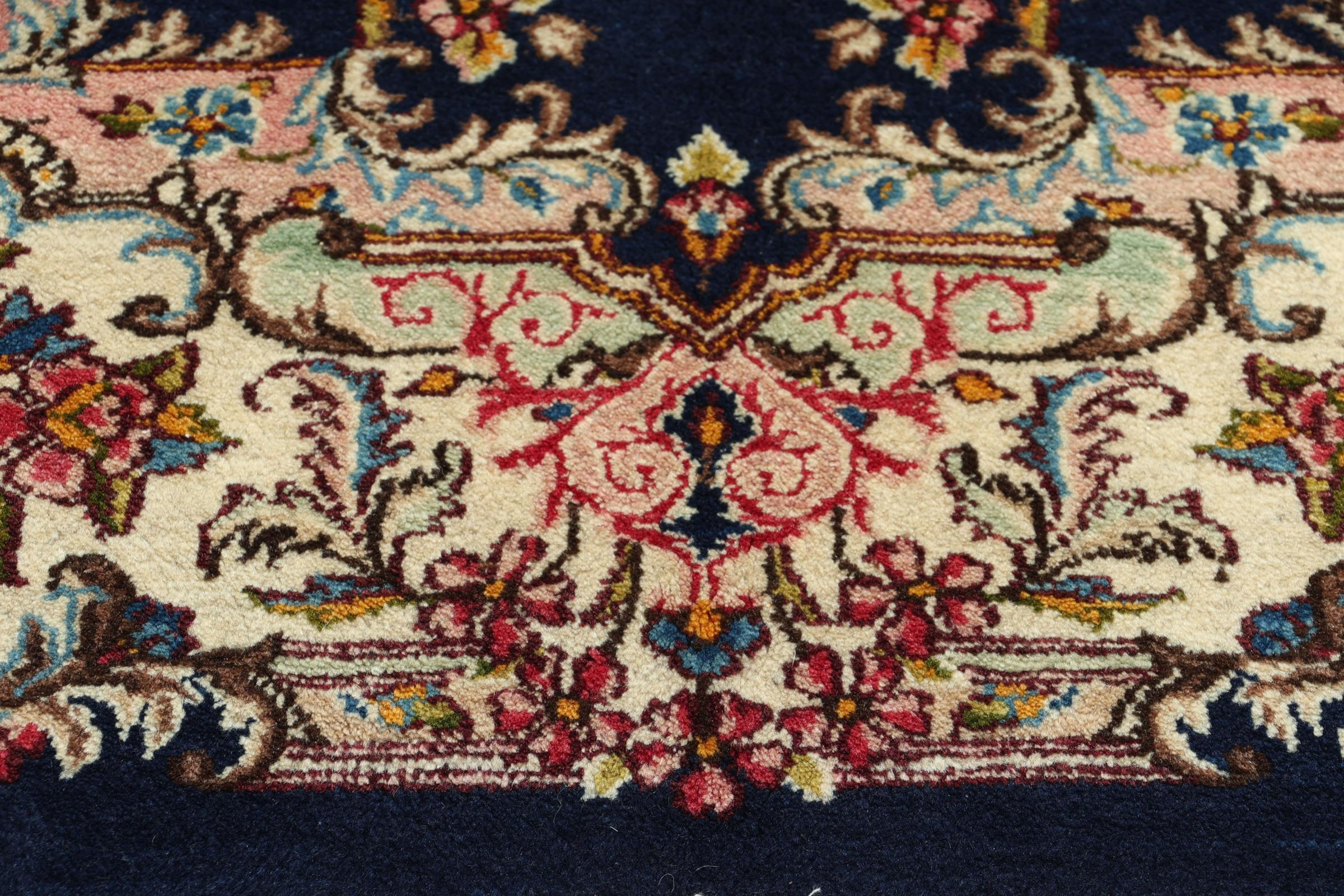
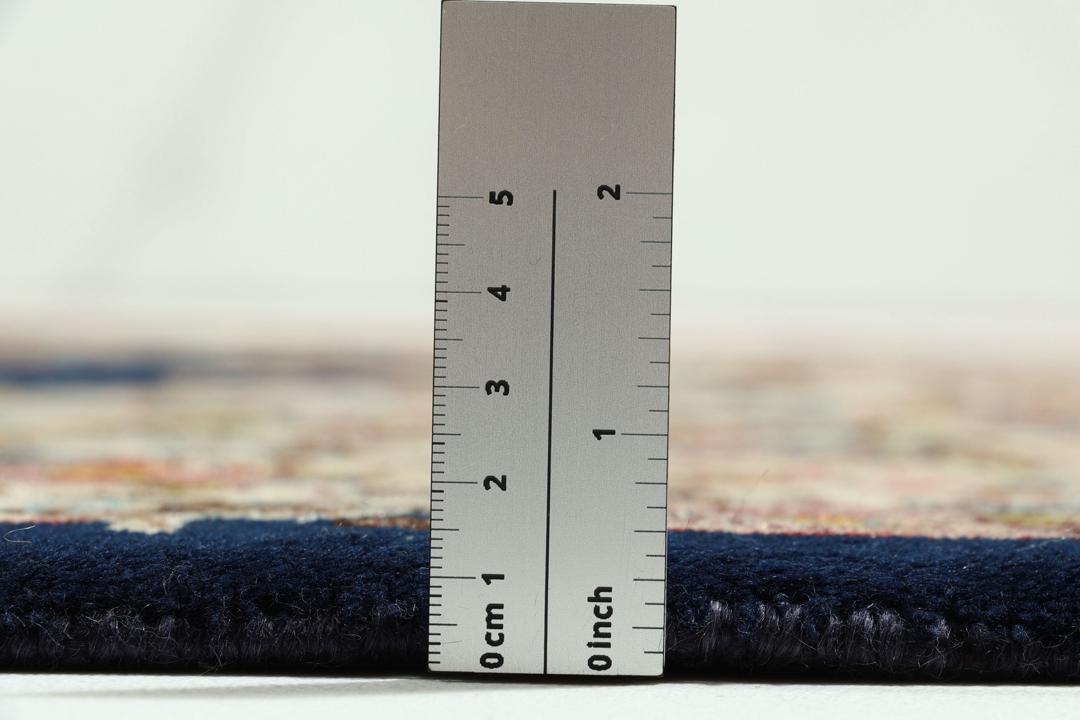
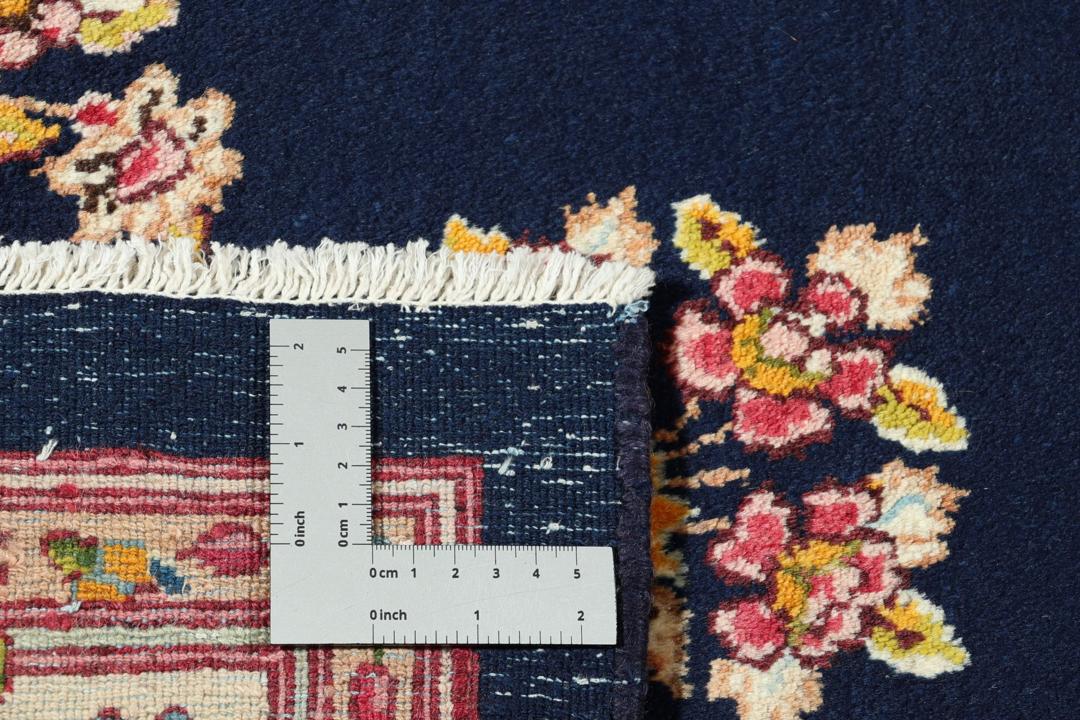
The term Kerman refers to a specific tradition of weaving that often utilises a high density of knots to achieve complex, curvilinear patterns. This technical excellence allows for the fine rendering of floral motifs, vases, and intricate borders. The quality of these rugs is defined by the precision of the knotting, which creates a durable yet supple pile, ensuring that the intricate designs remain vivid and well-defined over decades of use.
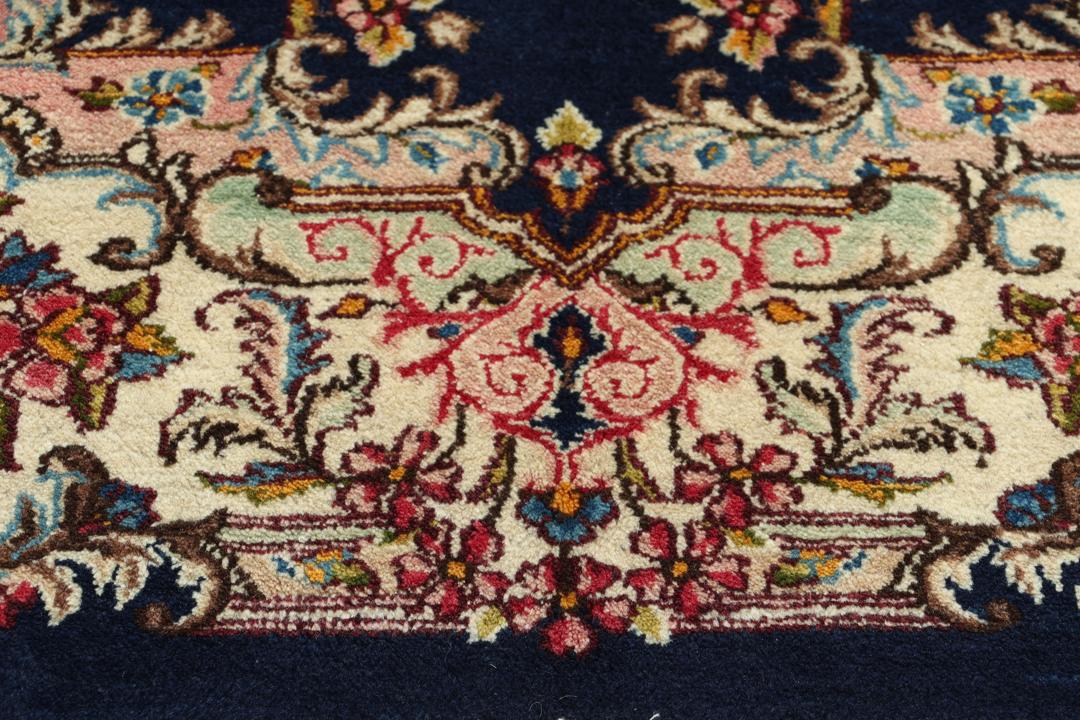
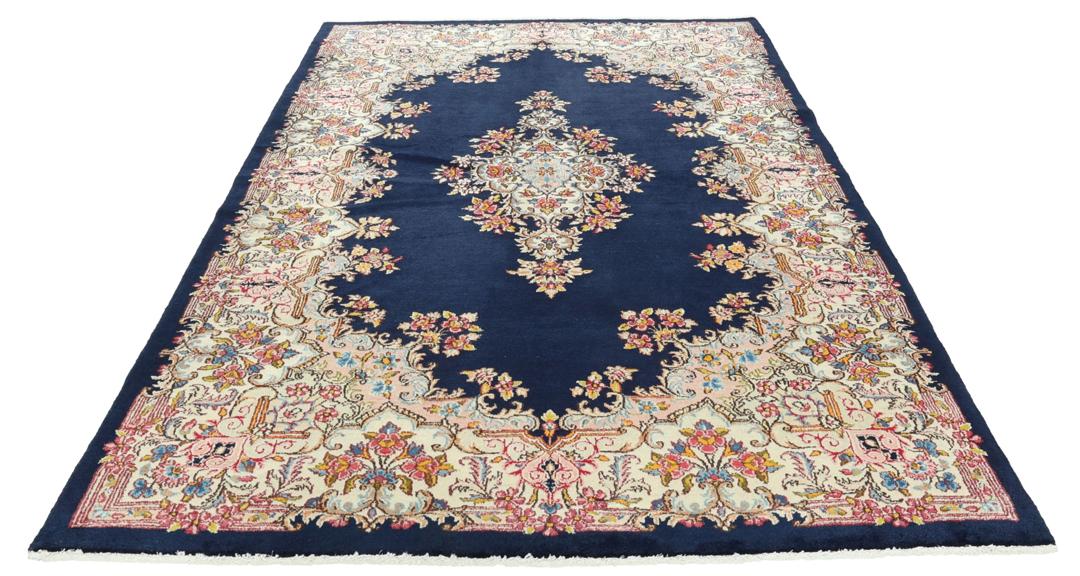
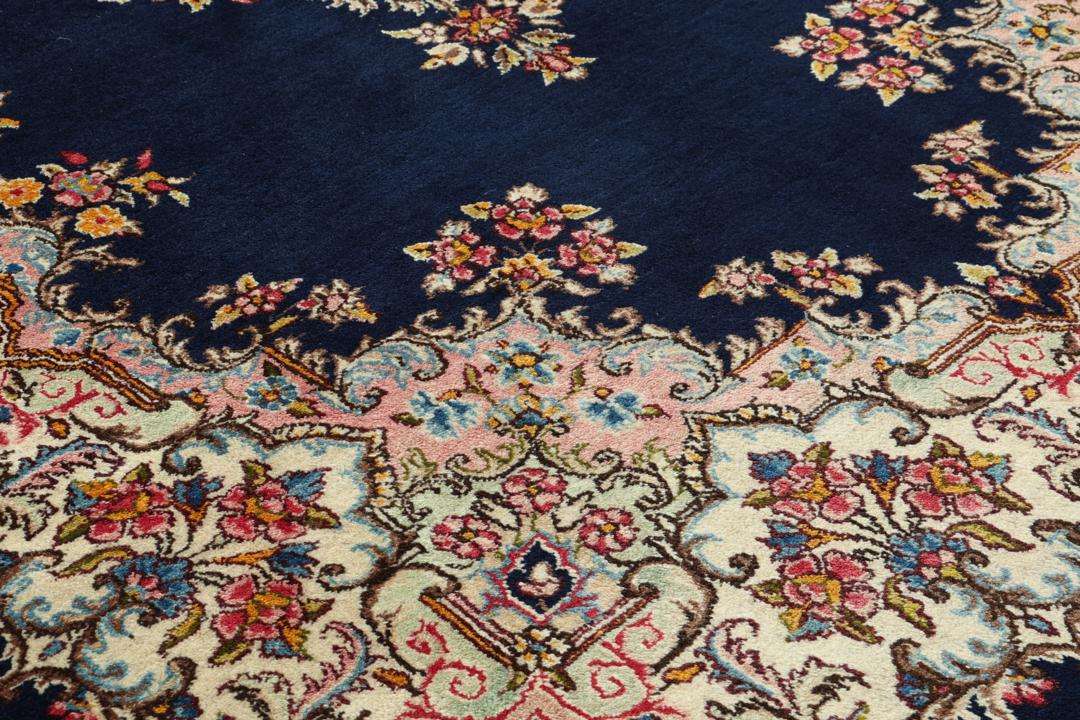
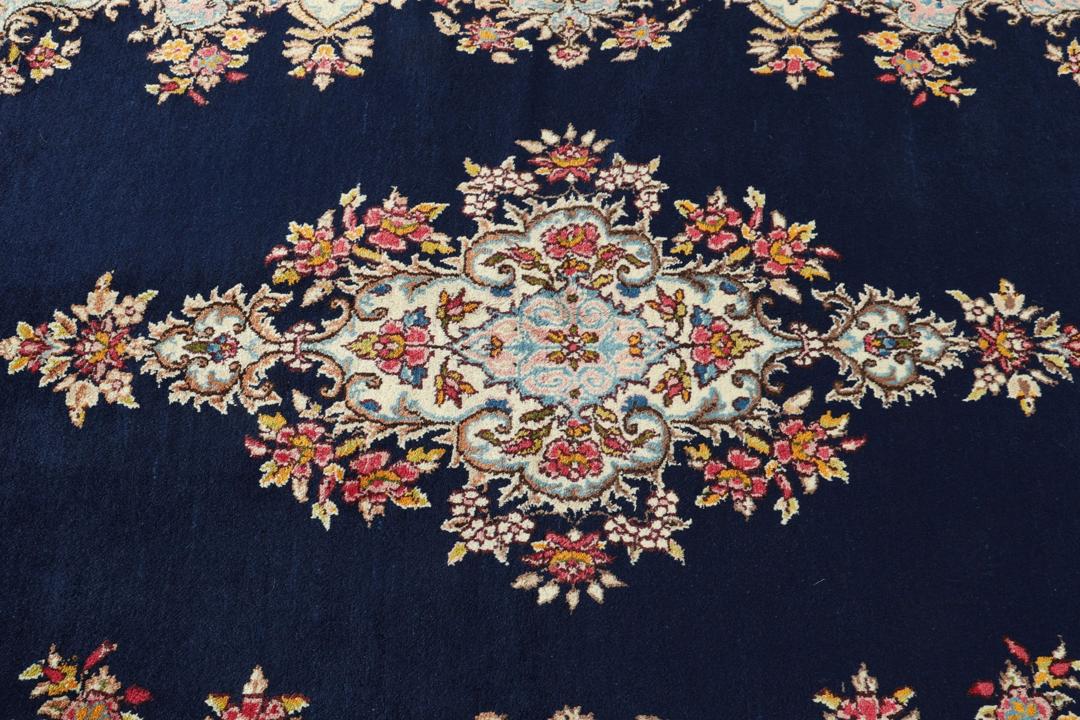
Signature design elements of Kerman rugs often include the classic medallion, usually surrounded by elaborate floral sprays and blooming vines. While many rugs from this tradition favour soft, pastel backgrounds, pieces featuring dark, dramatic fields—like this one—are highly prized for their ability to provide a bold, sophisticated contrast. The use of vibrant, natural-looking floral motifs against a dark canvas is a hallmark of the Kerman style’s depth and romantic character.
Owning a Kerman rug is a way of connecting with a profound cultural heritage. These pieces are highly sought after by collectors and enthusiasts who value the immense skill and cultural history embedded in every fibre. To own such a piece is to possess a testament to human ingenuity and the endurance of traditional craft, making it a meaningful addition to any home that values history and beauty.