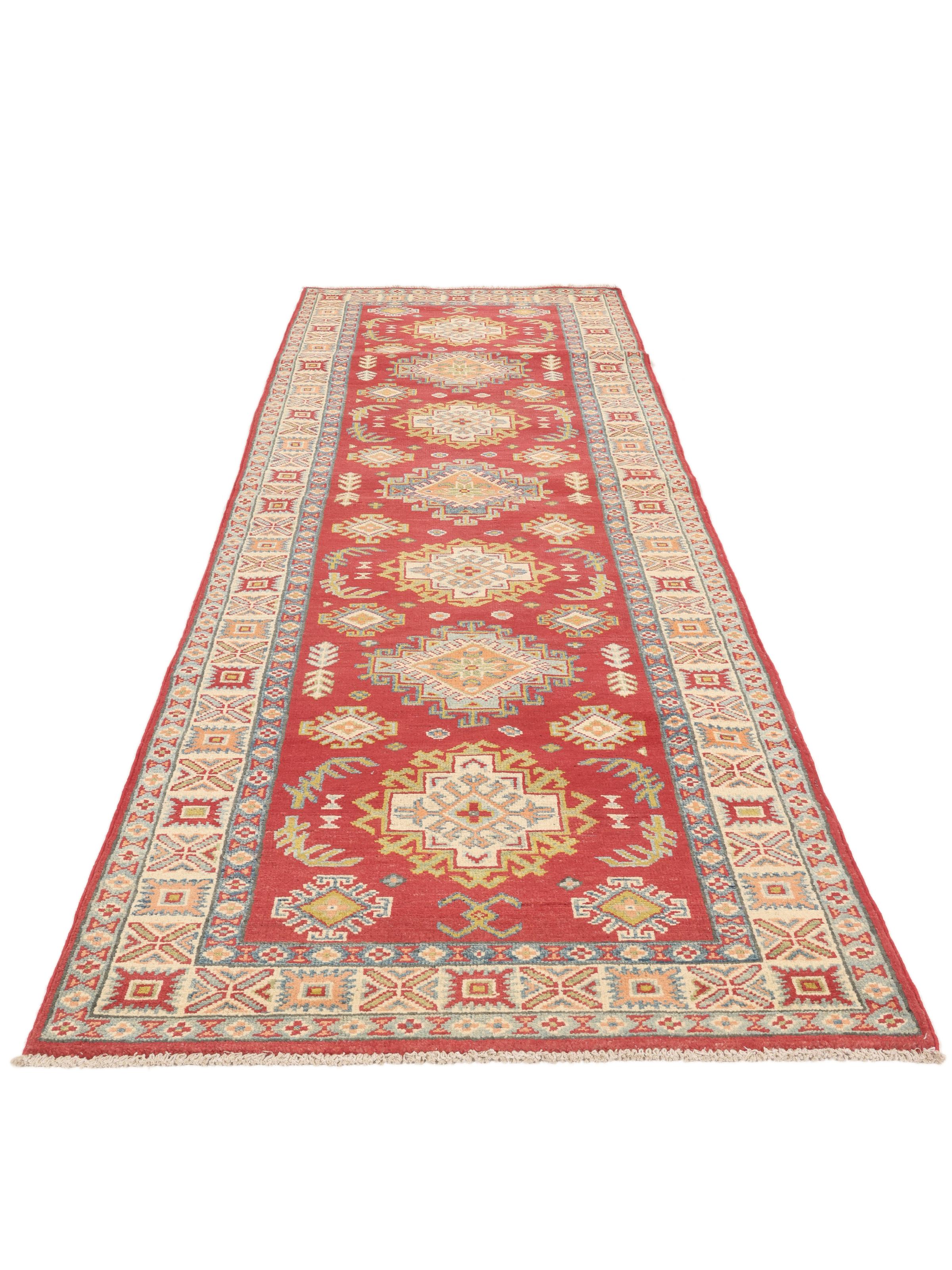
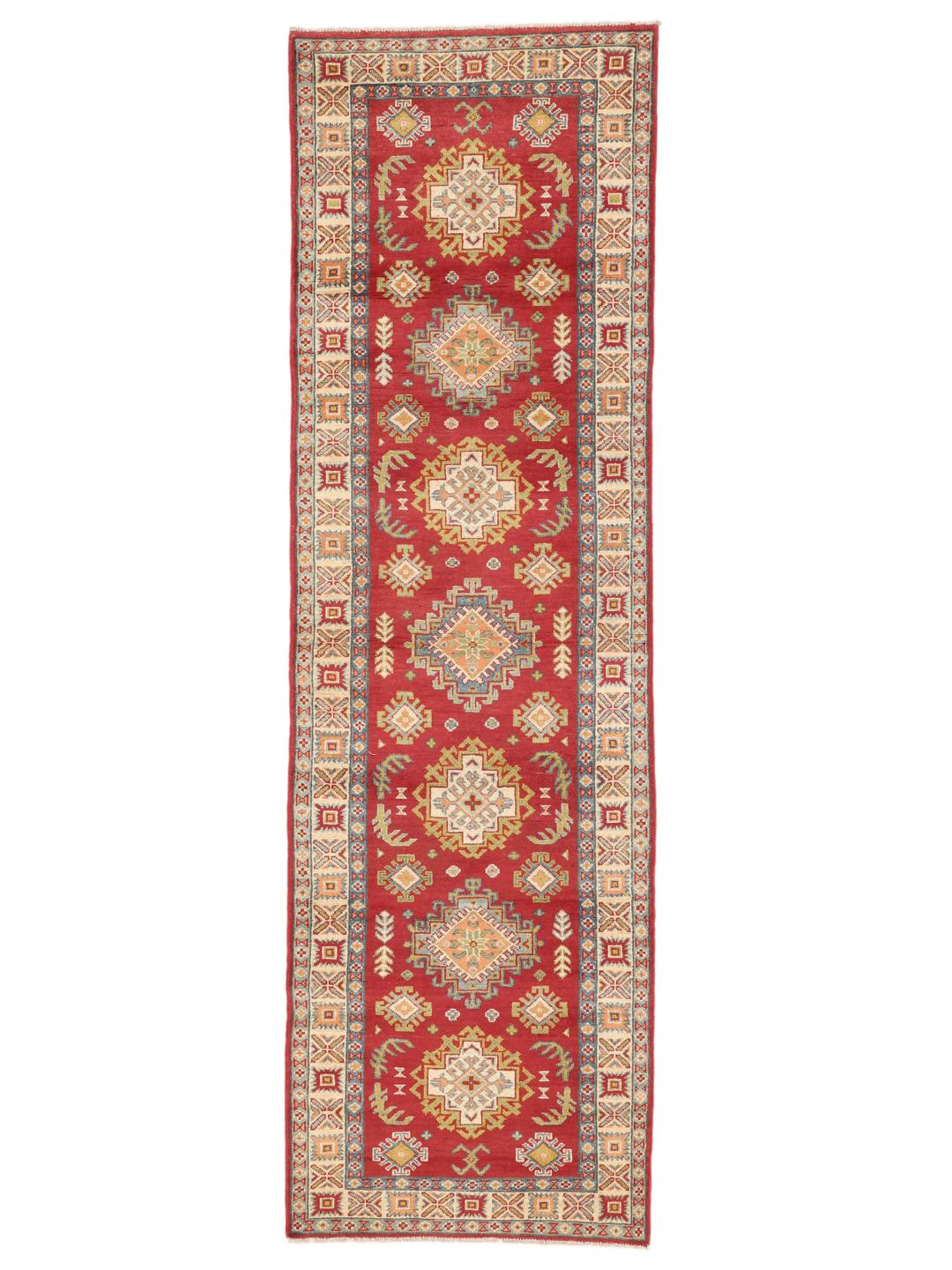
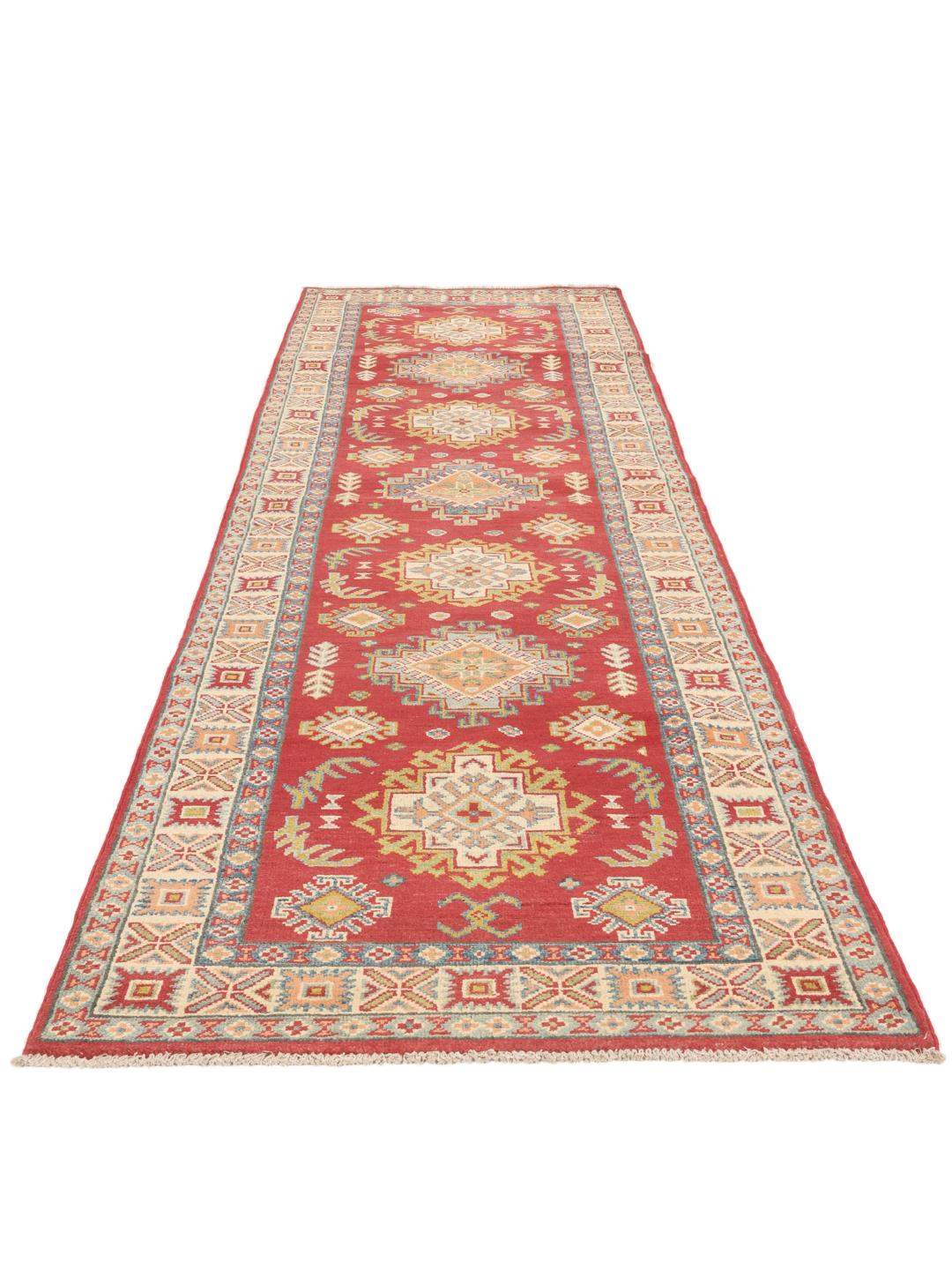
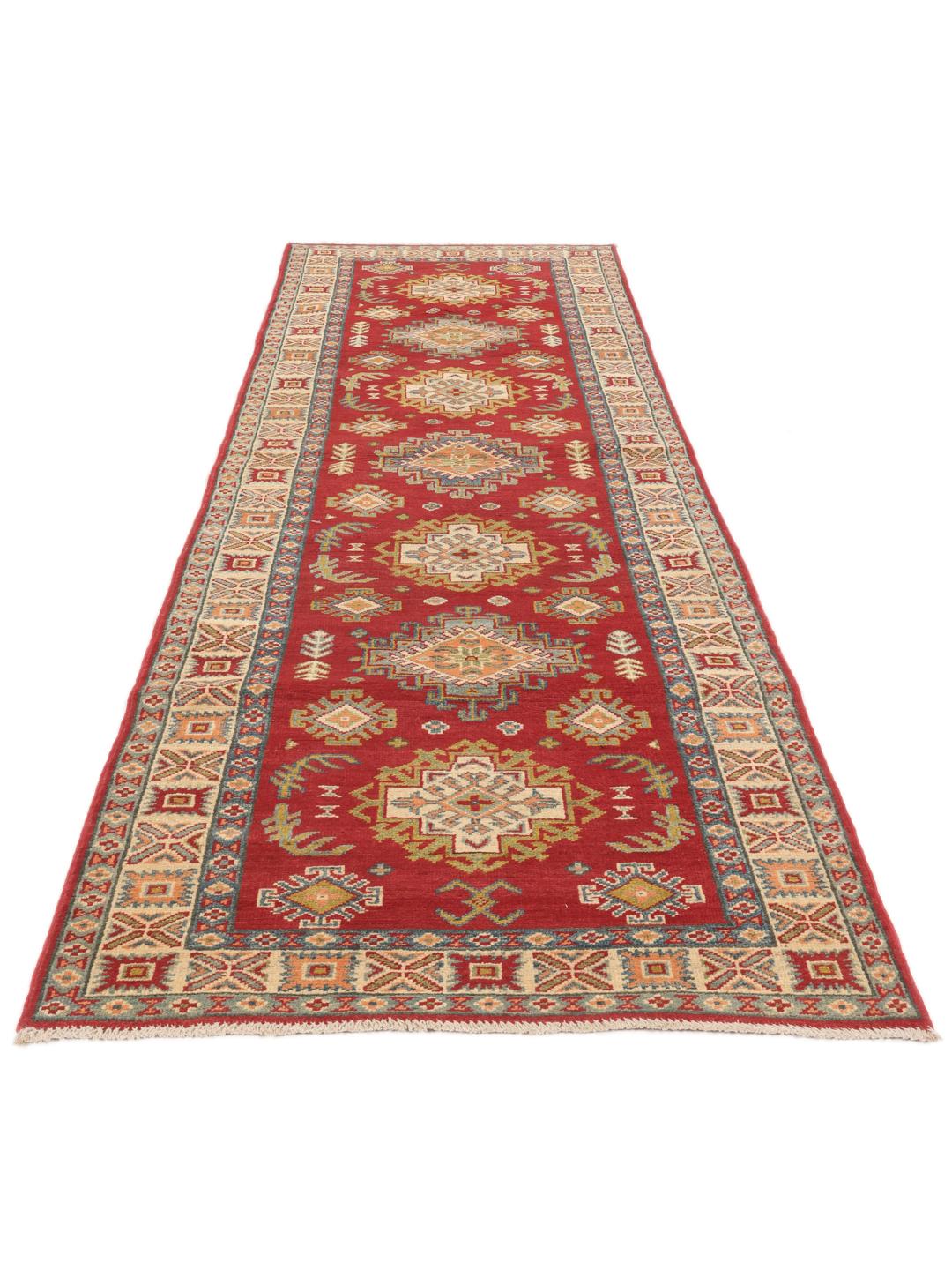
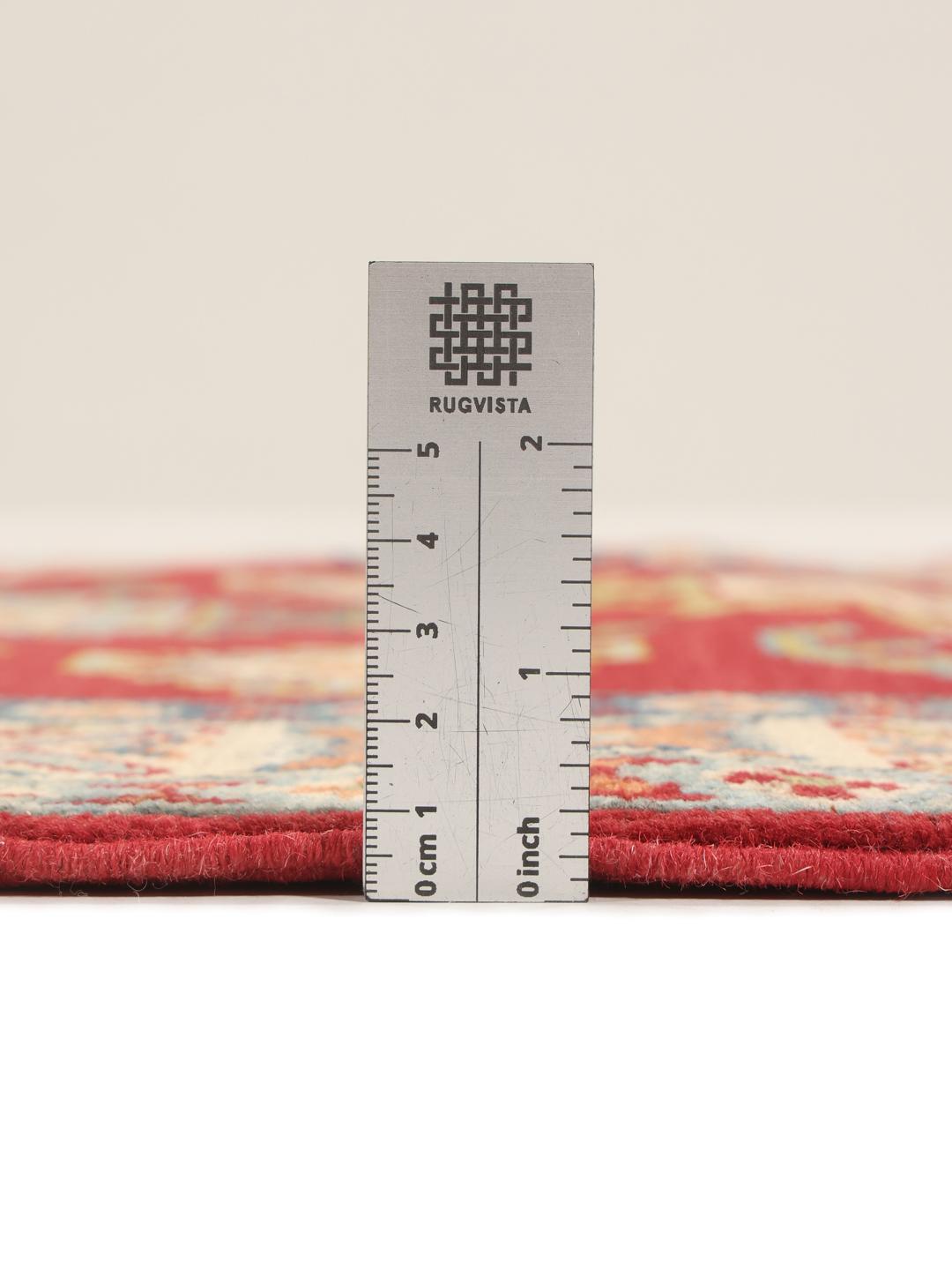
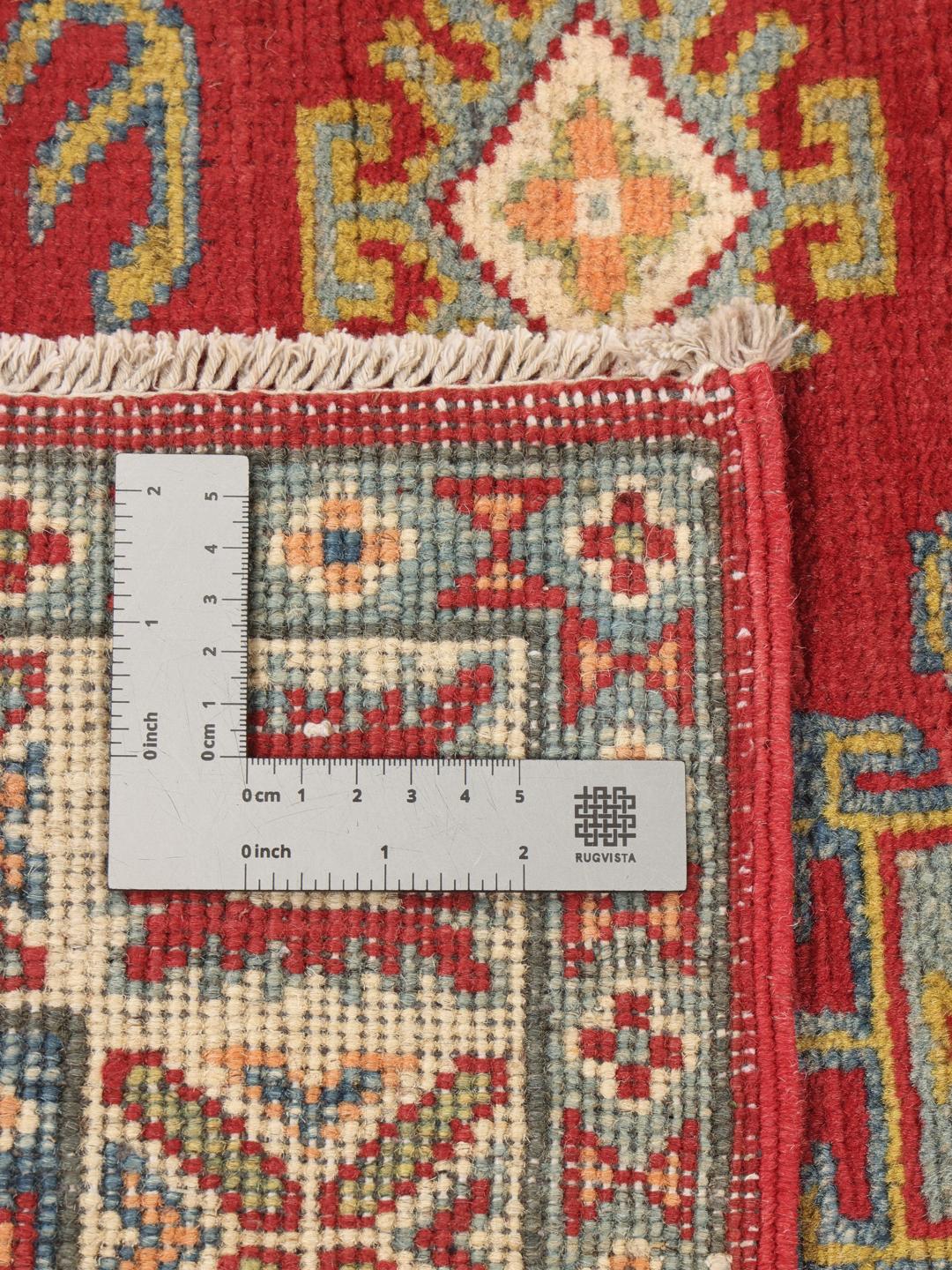
The Kazak rug tradition is rooted in the mountainous regions of the Caucasus, though today, some of the finest examples are woven by artisans in Afghanistan. These rugs are celebrated for their bold, graphic aesthetics and their connection to nomadic weaving history. The migration of these techniques to Afghan looms has allowed the tradition to thrive, blending ancestral knowledge with contemporary material quality.
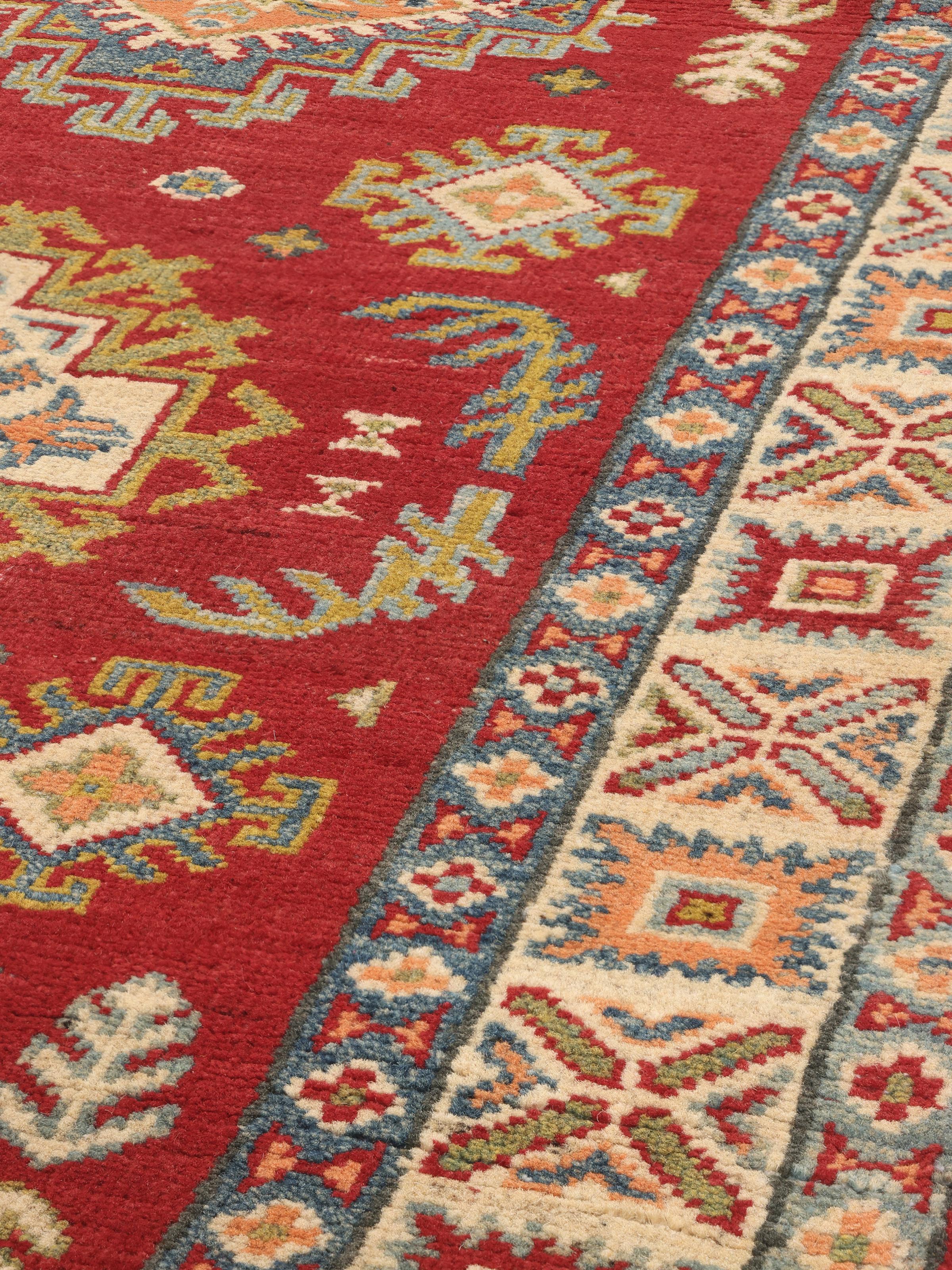
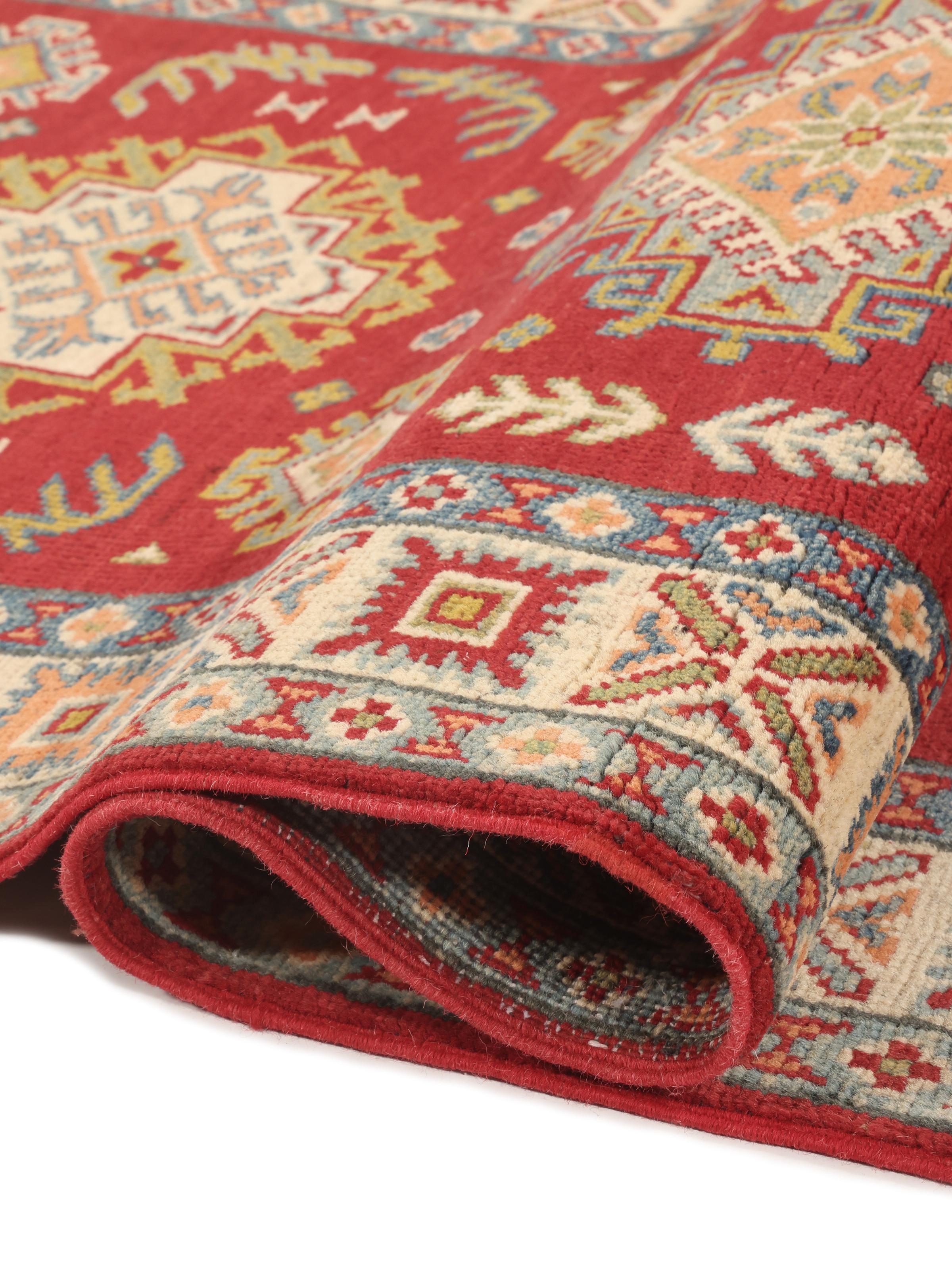
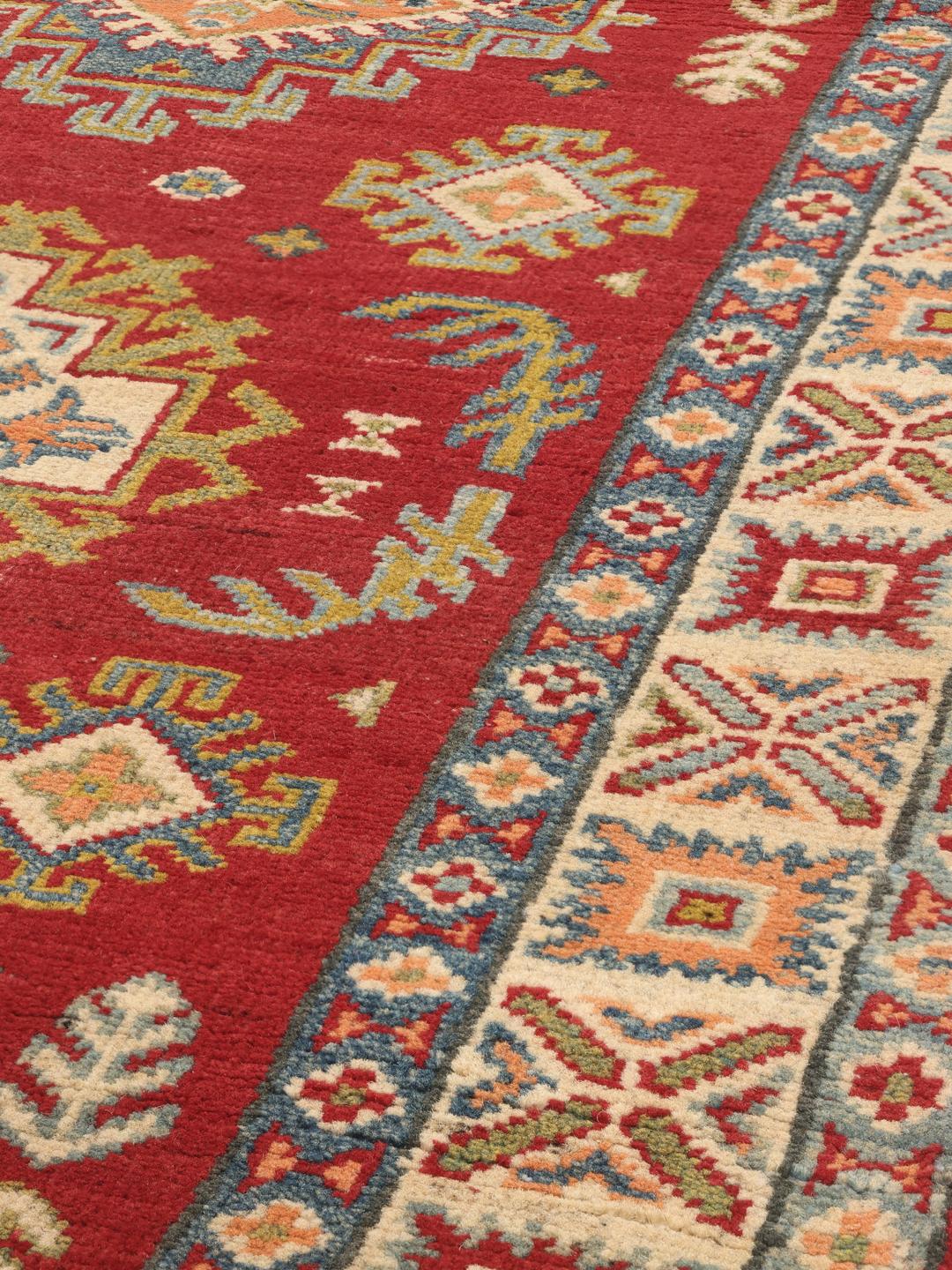
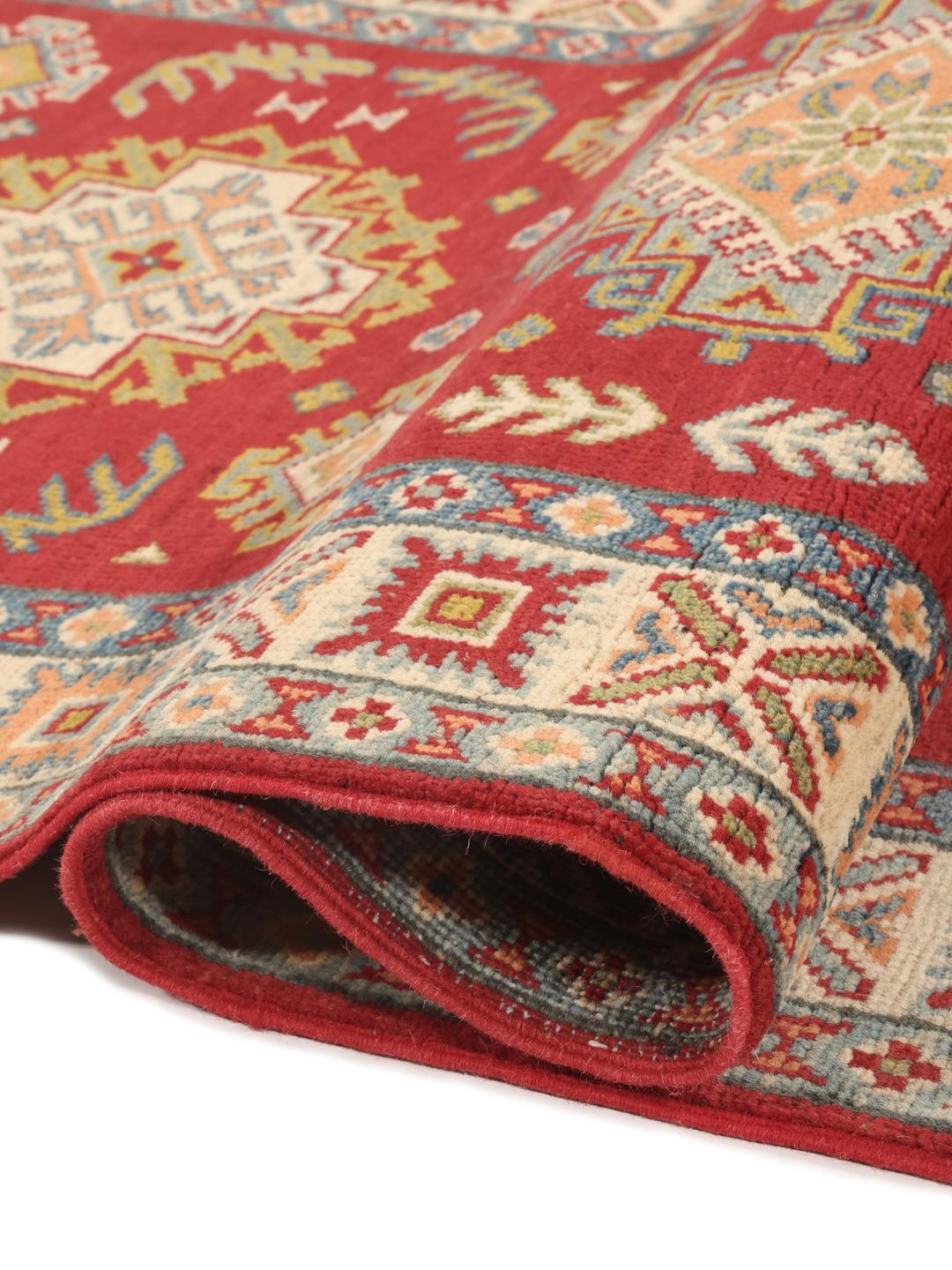
When we refer to a rug as hand-knotted, we are describing a complex technique where individual lengths of Wool are tied around the foundation threads. This creates a durable, dense pile that is far more resilient than machine-made alternatives. The resulting texture is not only pleasing to the eye but also structurally sound, providing a robust surface that can handle foot traffic while retaining its vibrant colour and form.
Visually, Kazak rugs are known for their geometric language, often featuring stylised medallions, latch-hook motifs, and decorative borders that frame the composition. The motifs are often deeply symbolic, reflecting the cultural identity and environmental surroundings of the weavers. The use of a rich, saturated red as a base is a hallmark of this style, providing a dramatic backdrop that makes the lighter geometric details pop with energy.
Collecting a piece from this tradition is about more than just floor covering; it is about honouring a craft that has survived for centuries. These rugs are highly valued for their ability to bring a sense of place and history into a modern home. Owning one means participating in a long lineage of artistry, where every knot represents a human choice and every pattern tells a story of creative persistence.