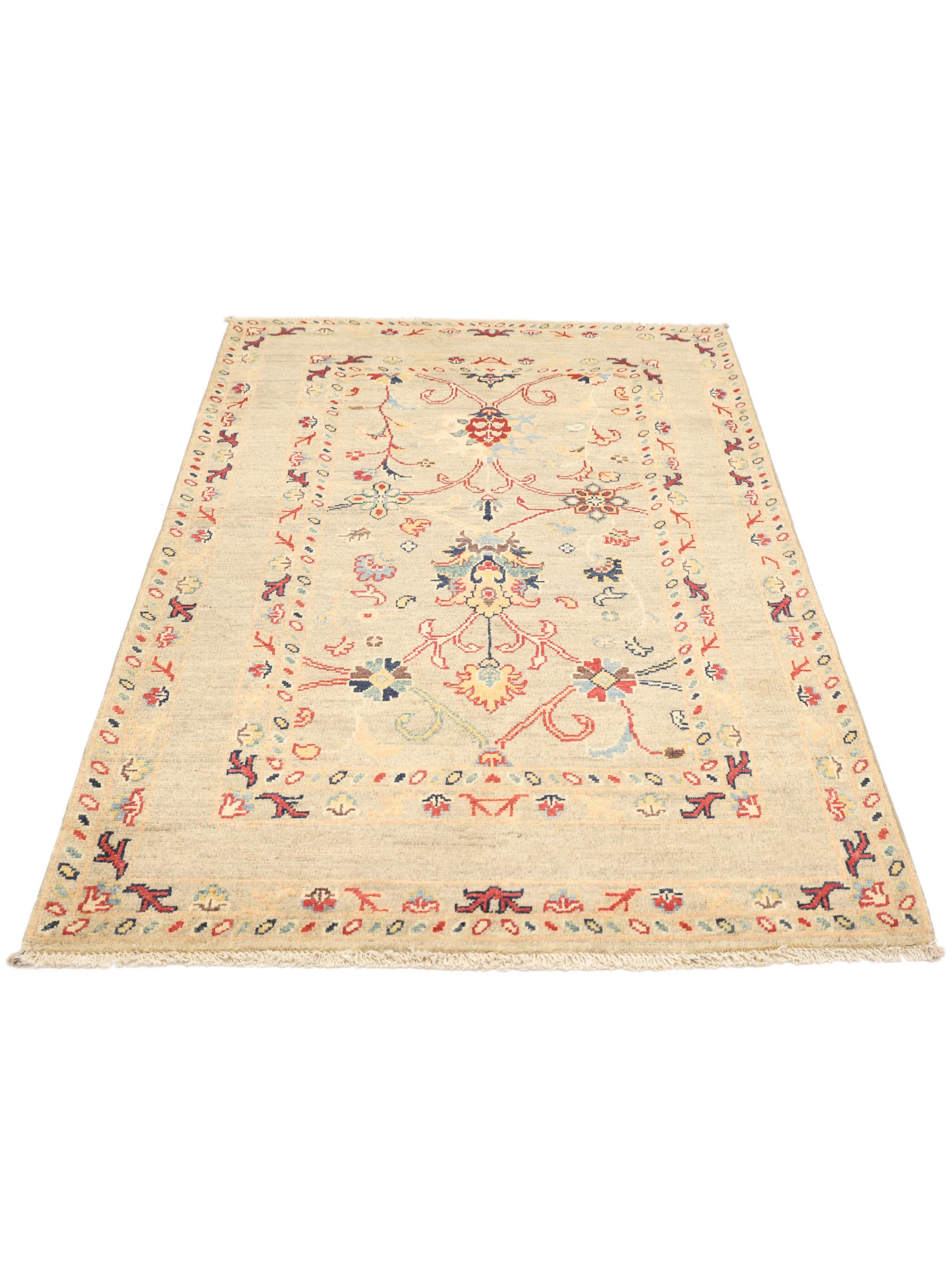
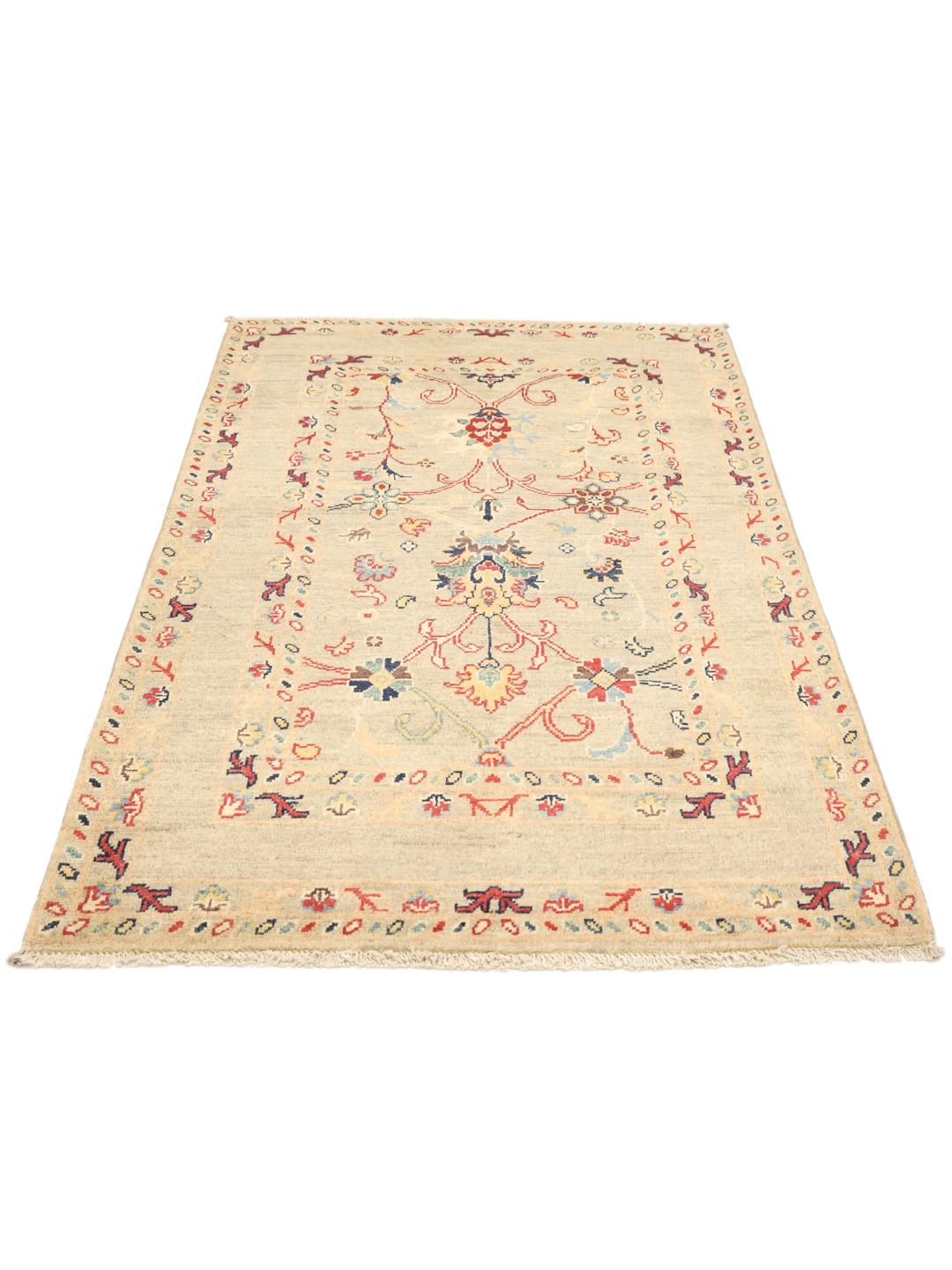
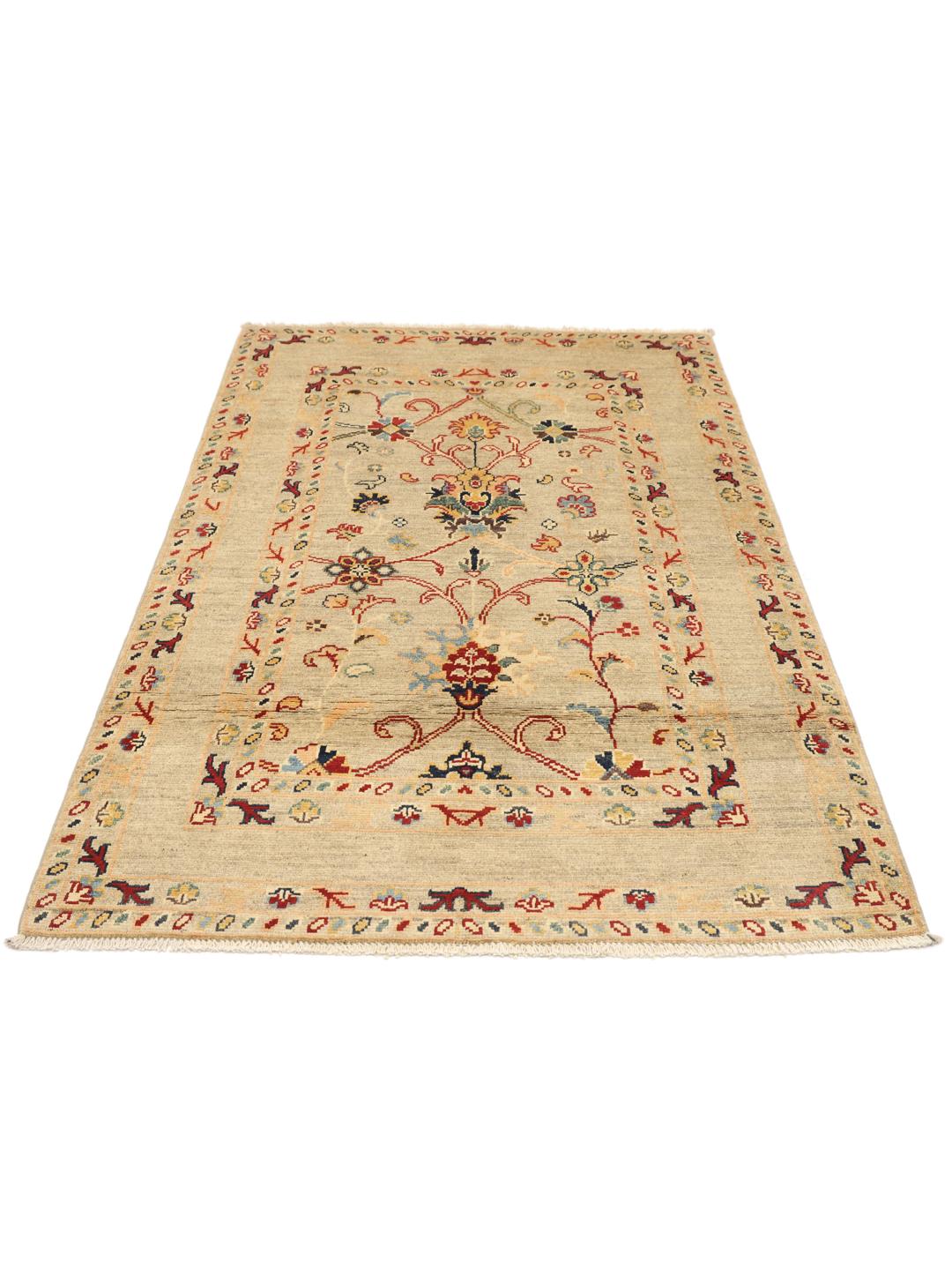
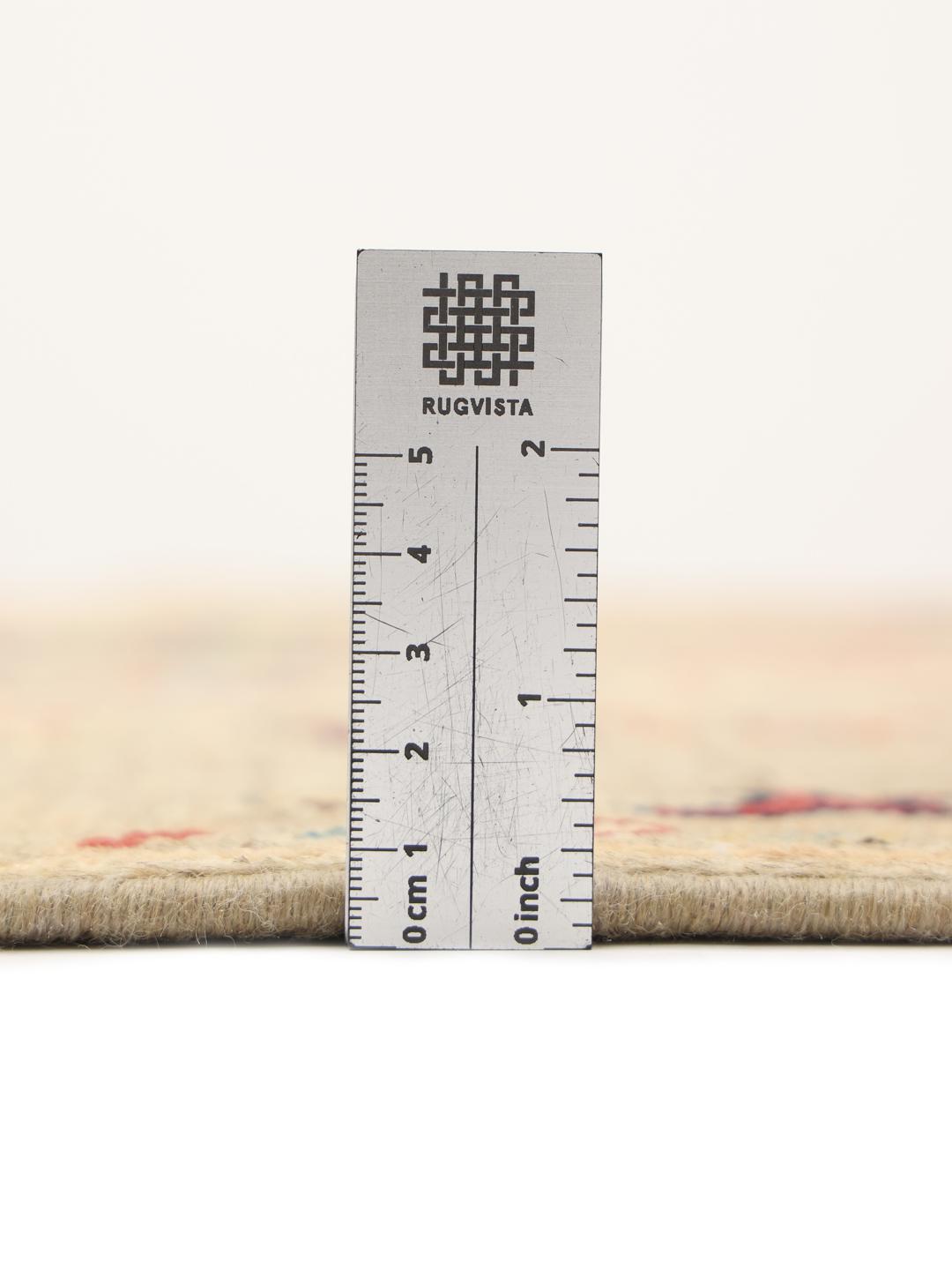
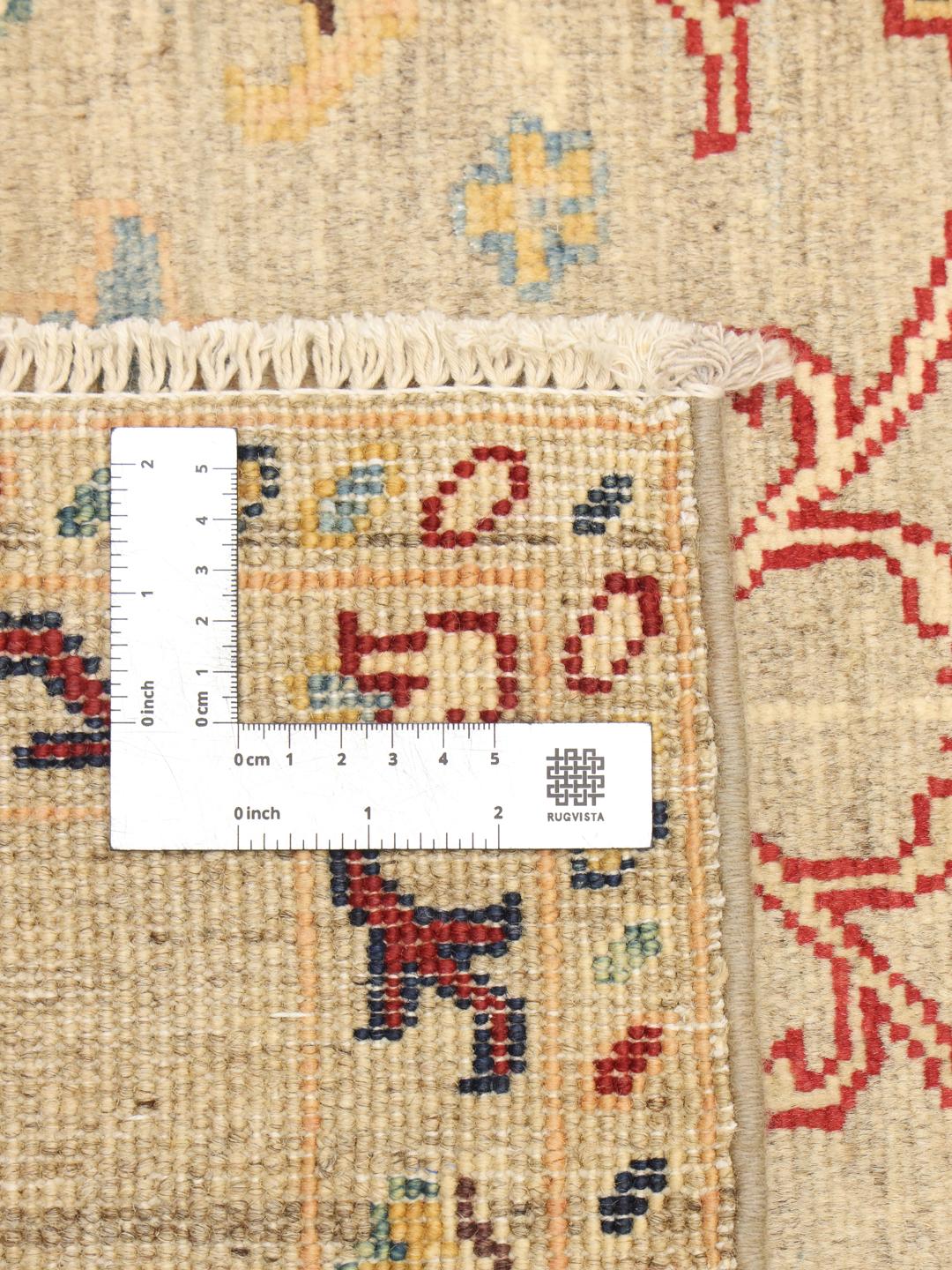
Kazak rugs originate from the Caucasus region, a mountainous area known for its rich weaving traditions. While the style takes its name from the Kazakh people, these rugs were historically crafted by various tribal groups in the Southern Caucasus. Today, the tradition of weaving these rugs has evolved, with many of the finest modern examples being produced in Afghanistan, where weavers have mastered the bold, geometric, and floral aesthetic that defines this category.
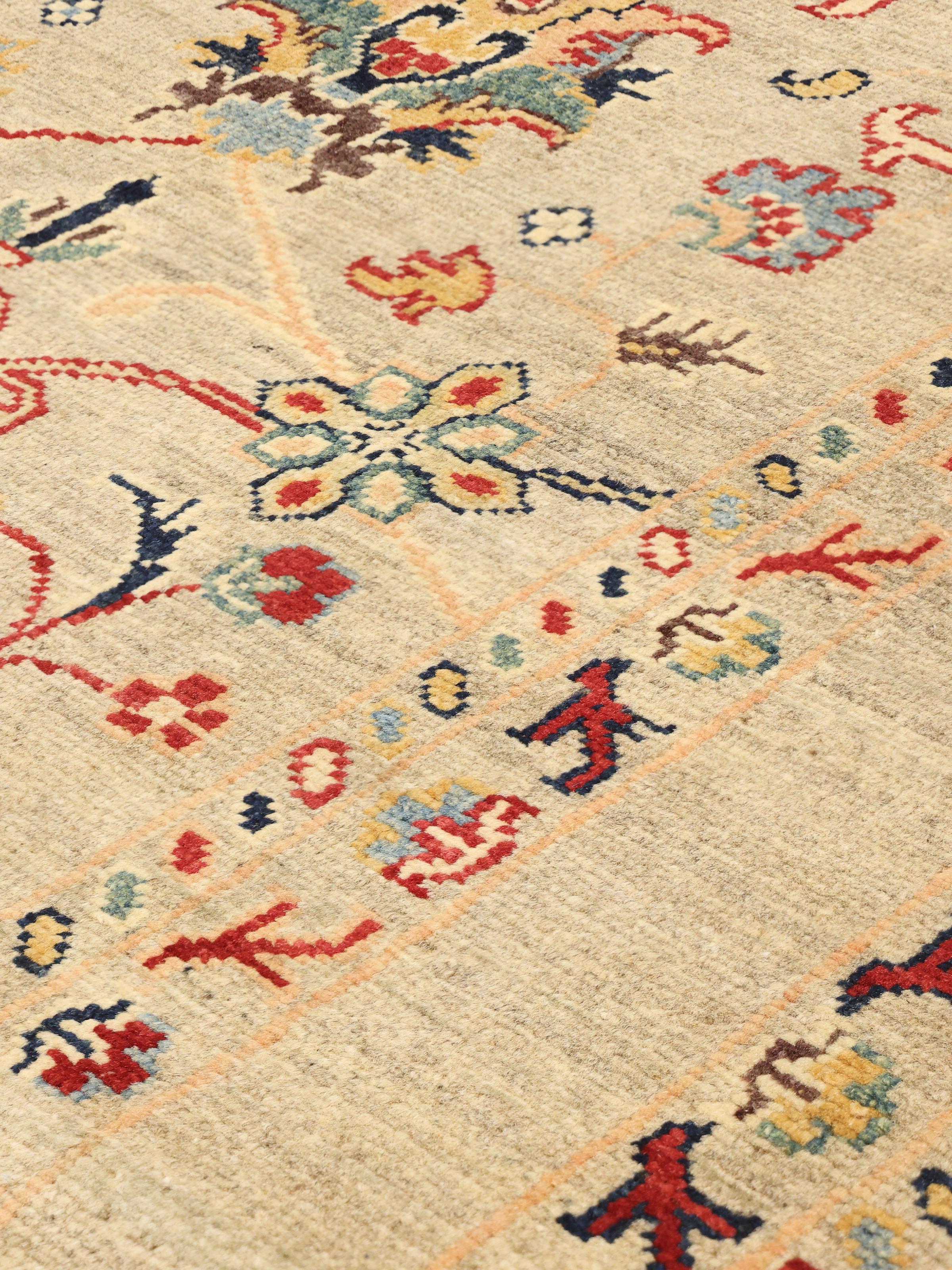
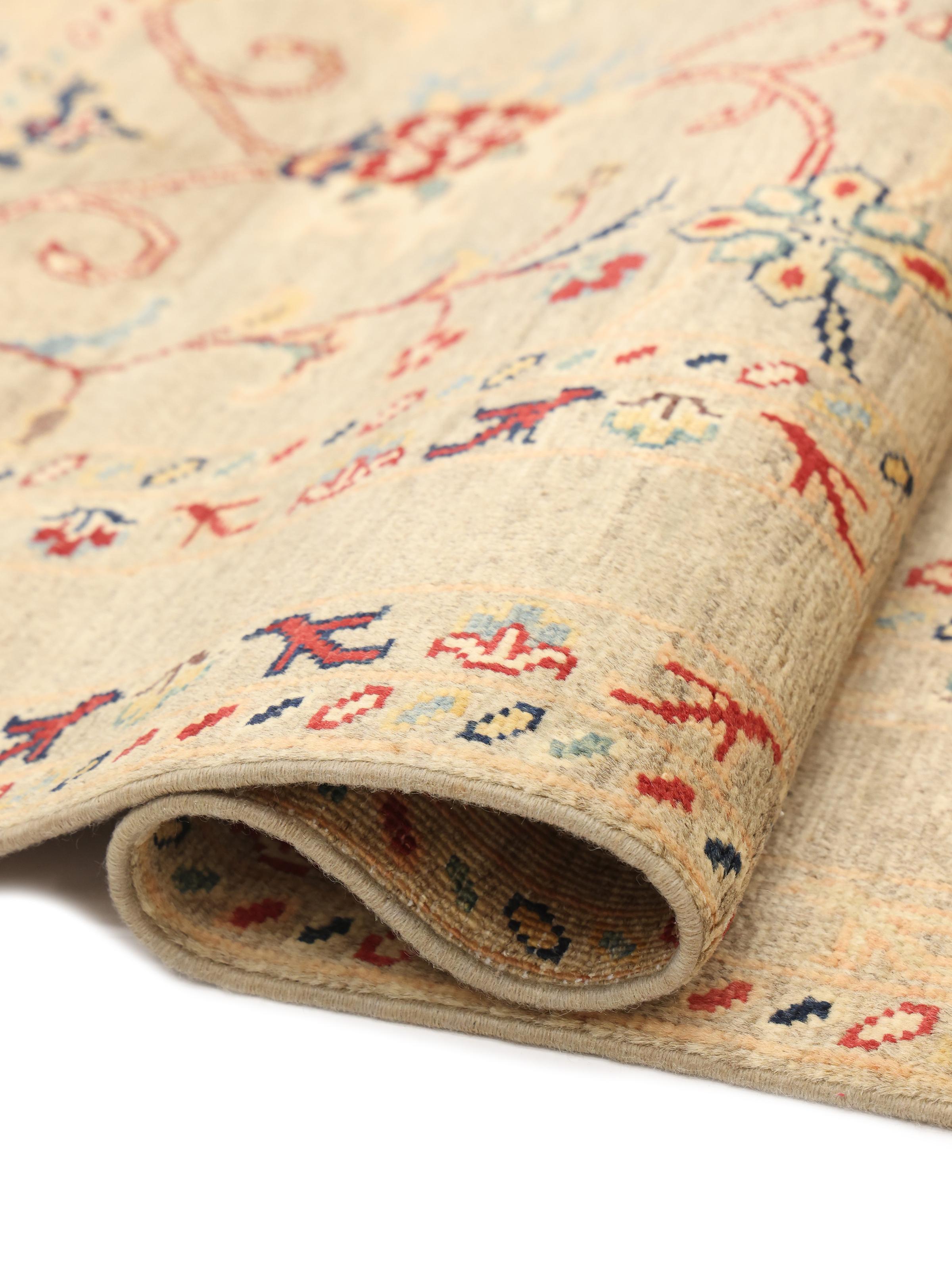
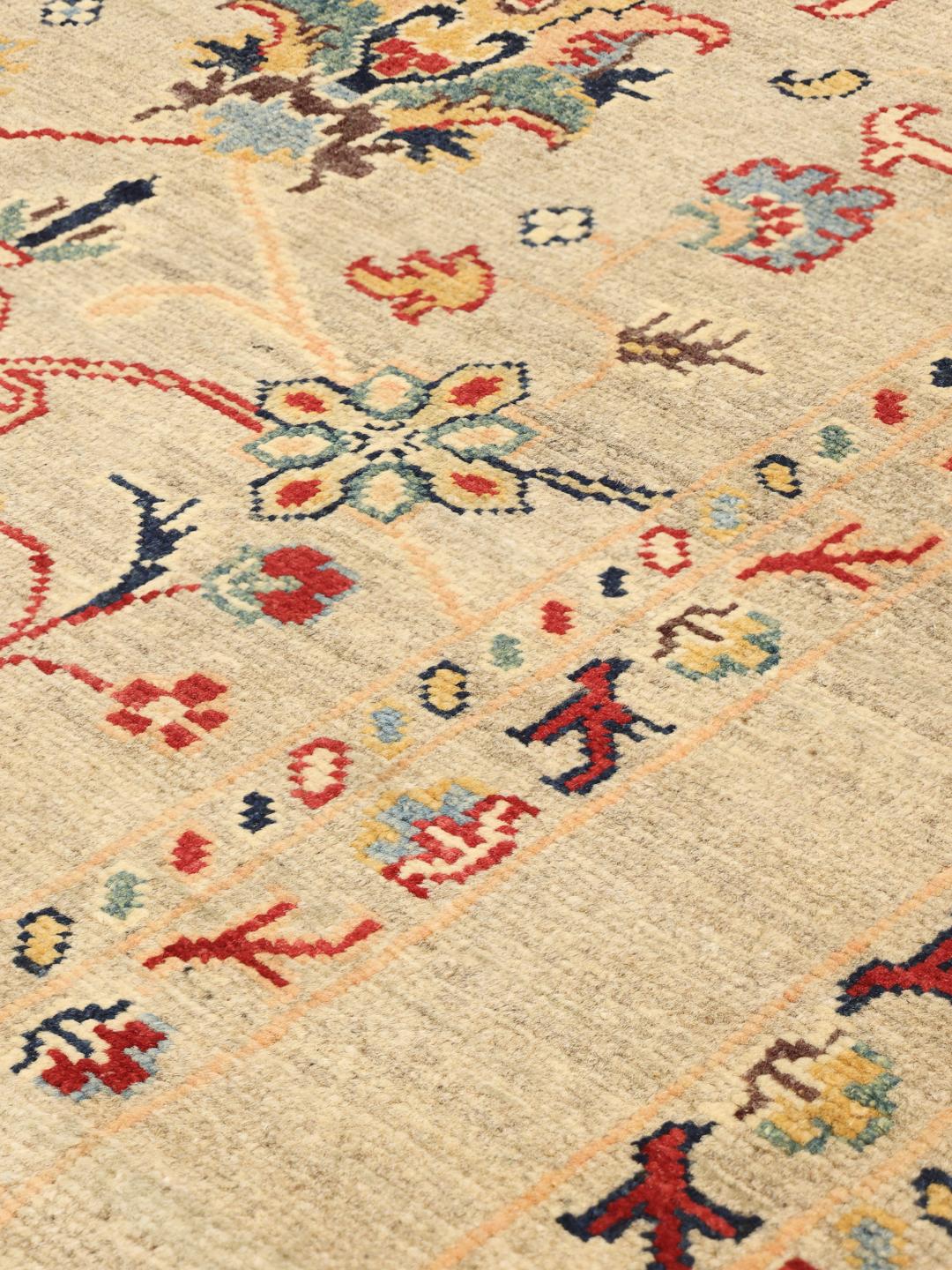
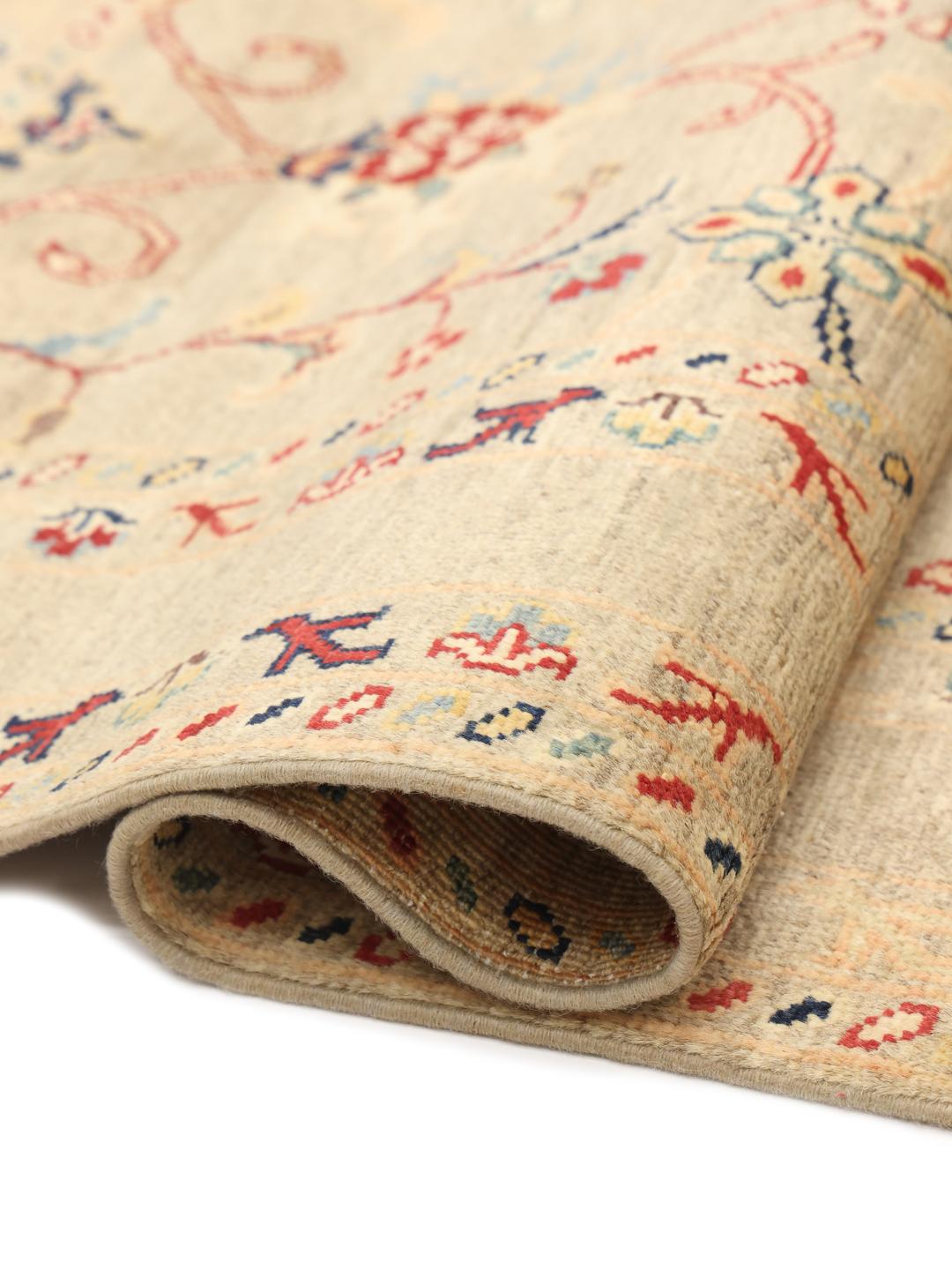
The terminology used to describe these rugs often refers to the specific knotting techniques and material choices that influence their quality. The use of wool for the pile is essential, as it provides both the durability and the characteristic lustre that collectors look for. A well-constructed rug of this type features a dense, tight knotting structure, which allows the intricate designs to remain sharp and clear, ensuring the rug remains a beautiful feature in your home for a long time.
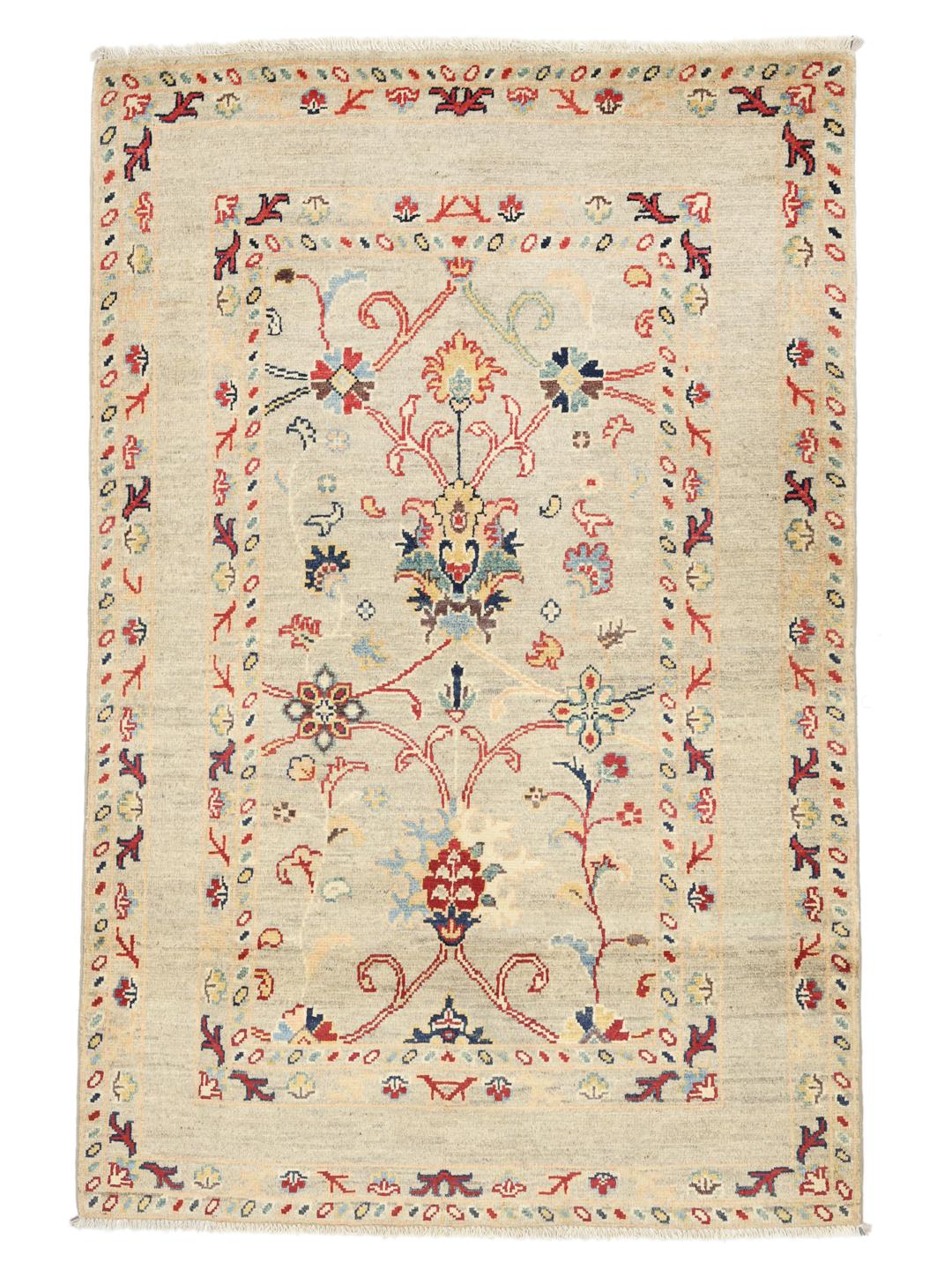
Signature design elements of these rugs include bold, stylised motifs and a strong sense of symmetry. While many traditional Kazak rugs are known for their geometric medallions, others, like this piece, feature refined floral patterns and decorative borders that draw on a deep well of cultural symbolism. The colours are typically derived from natural dyes, which provide a depth and richness that evolve beautifully as the rug ages.
These rugs are highly valued for their cultural significance and the skill required to produce them. Owning a hand-knotted rug from this tradition is an opportunity to connect with a history of craftsmanship that has been passed down through generations. Collectors prize them not only for their aesthetic beauty but also for the human effort and artistic intent woven into every piece, making each one a meaningful addition to any interior.