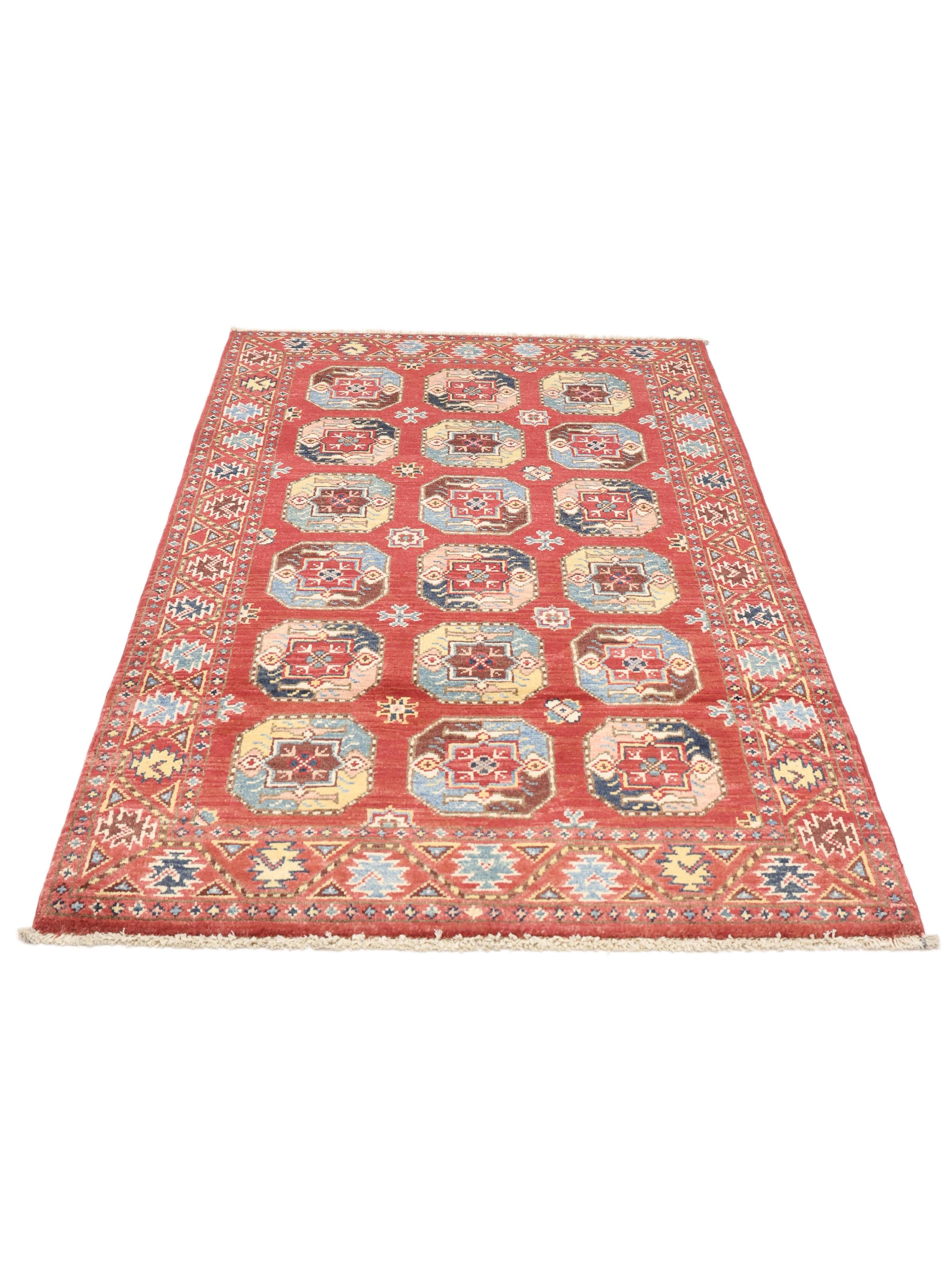
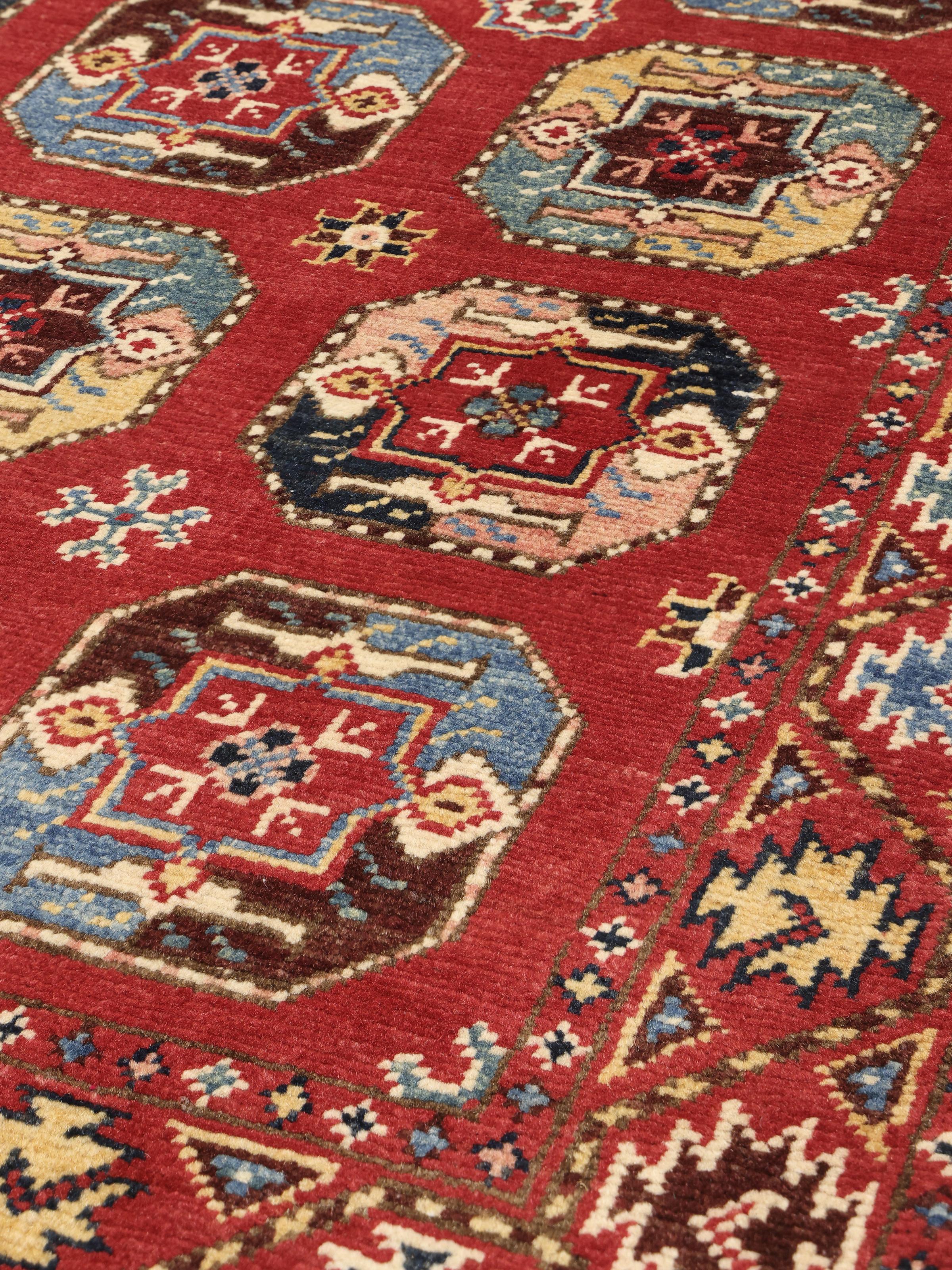
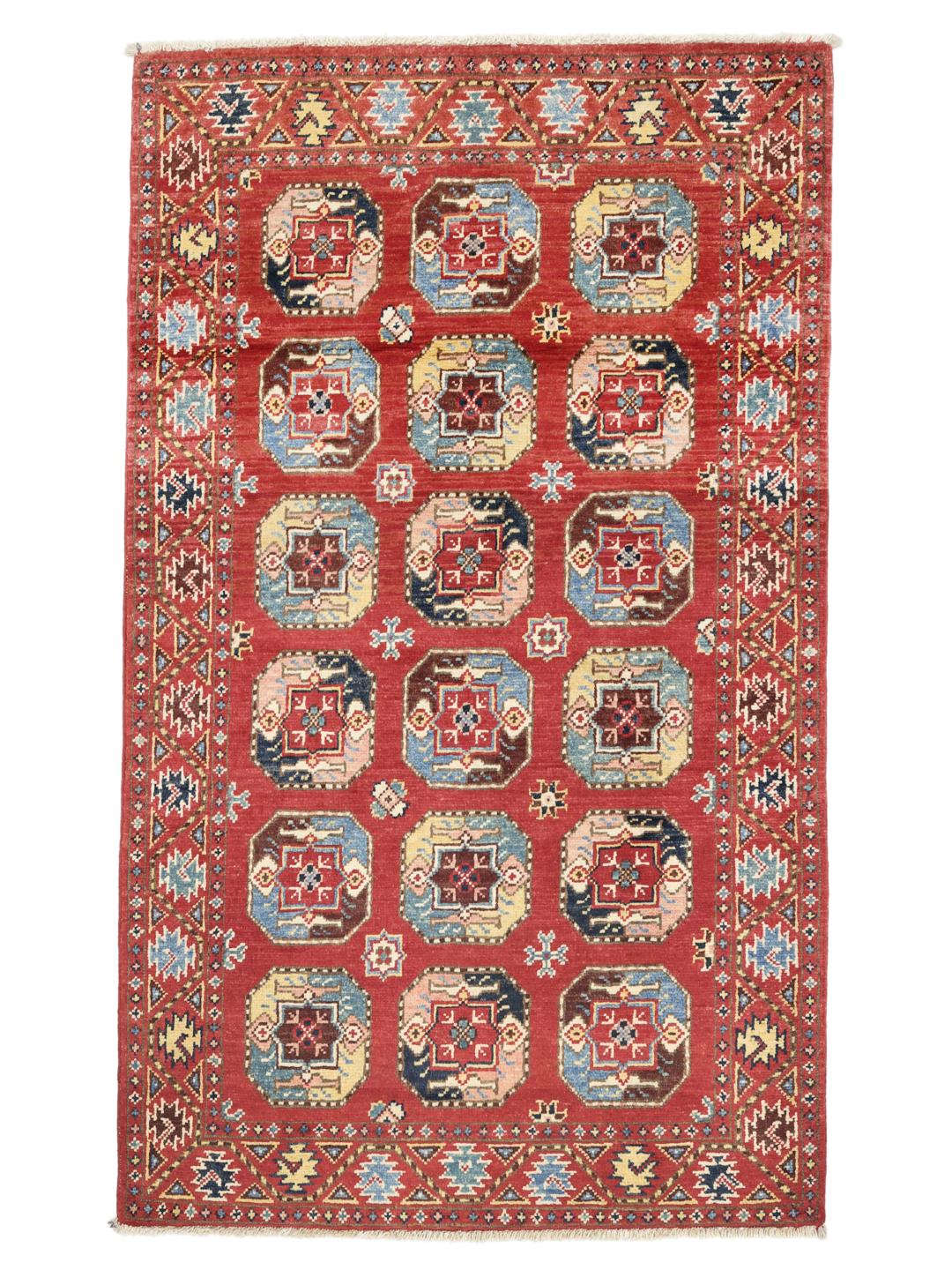
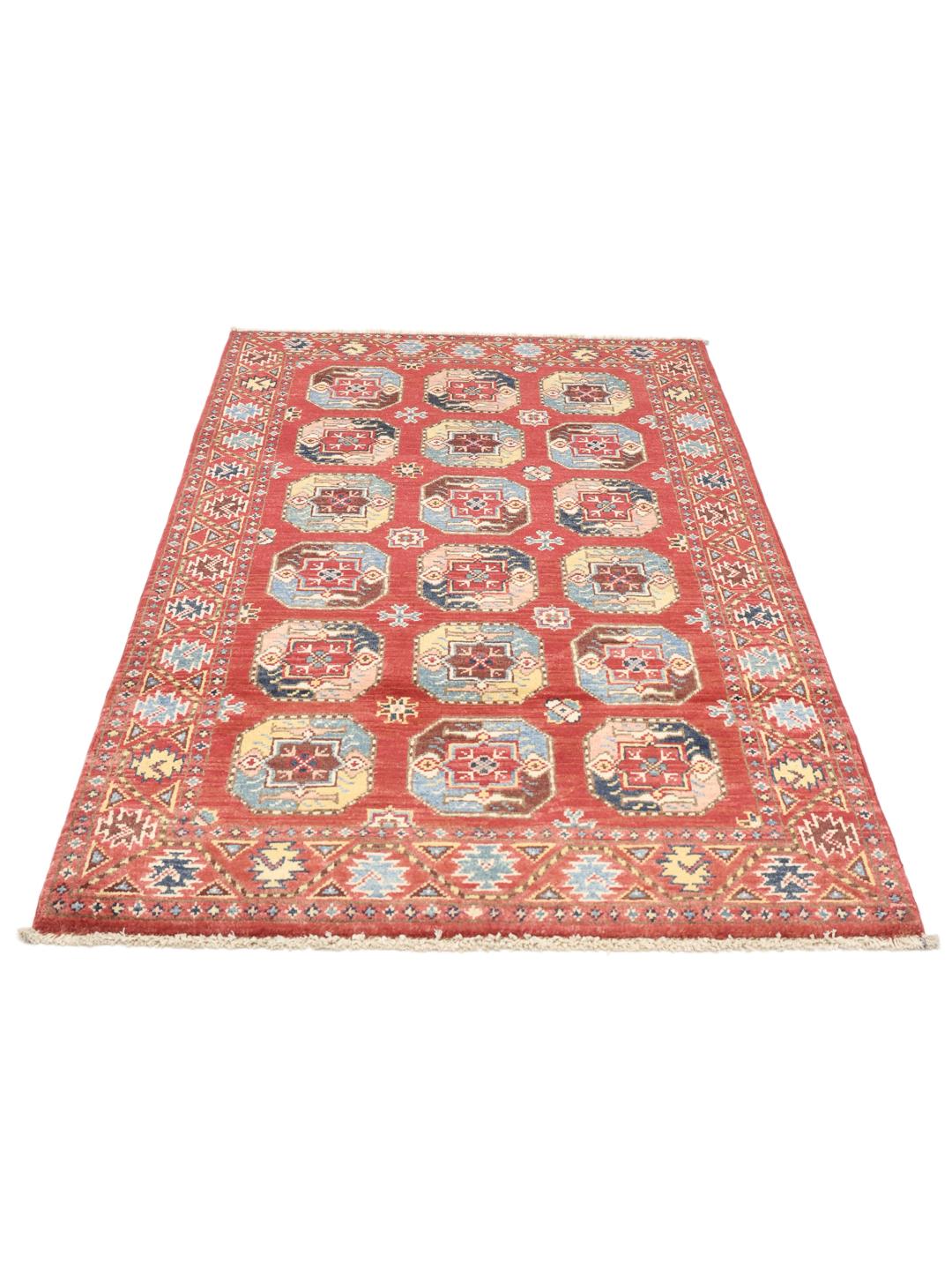
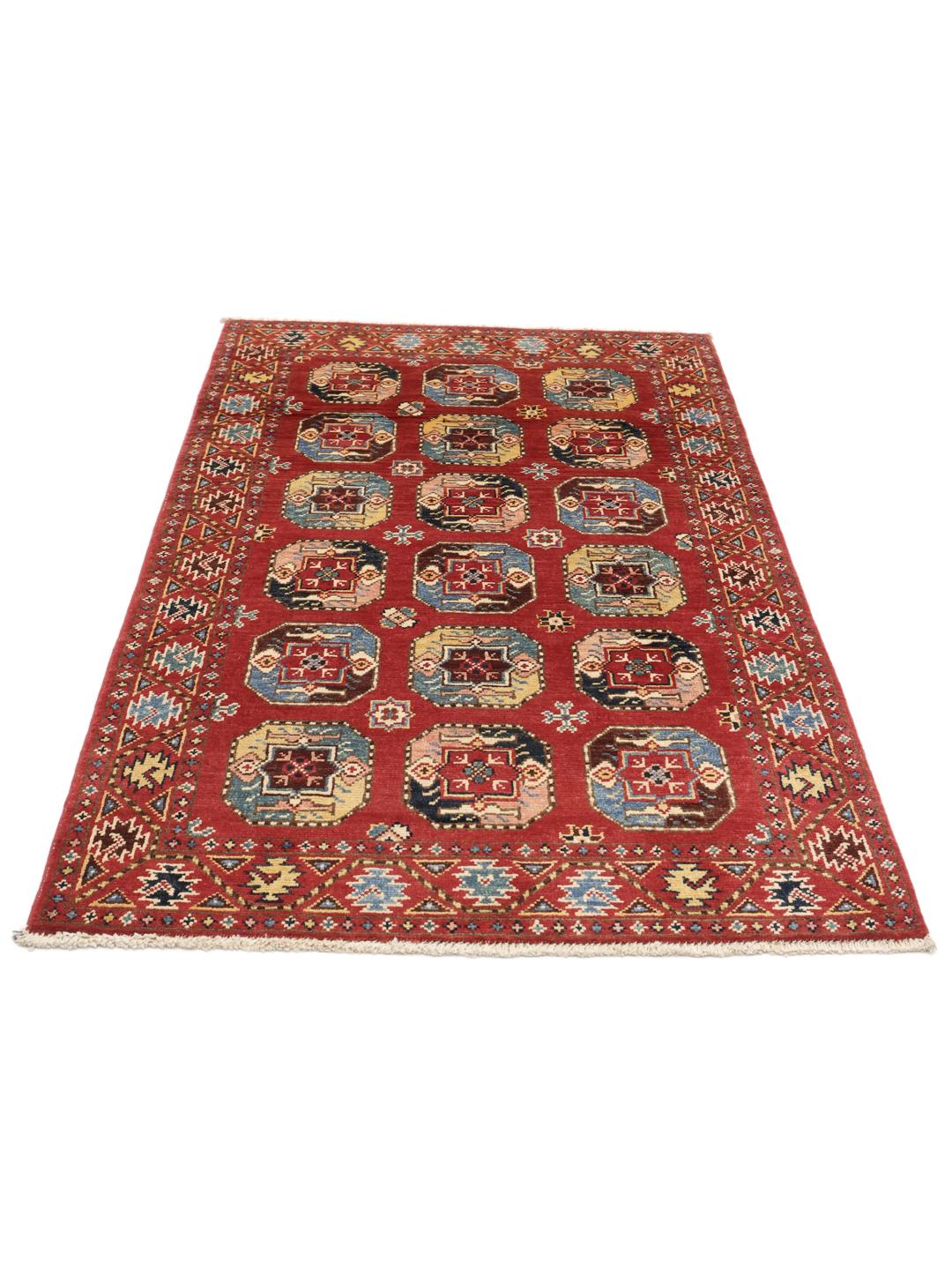
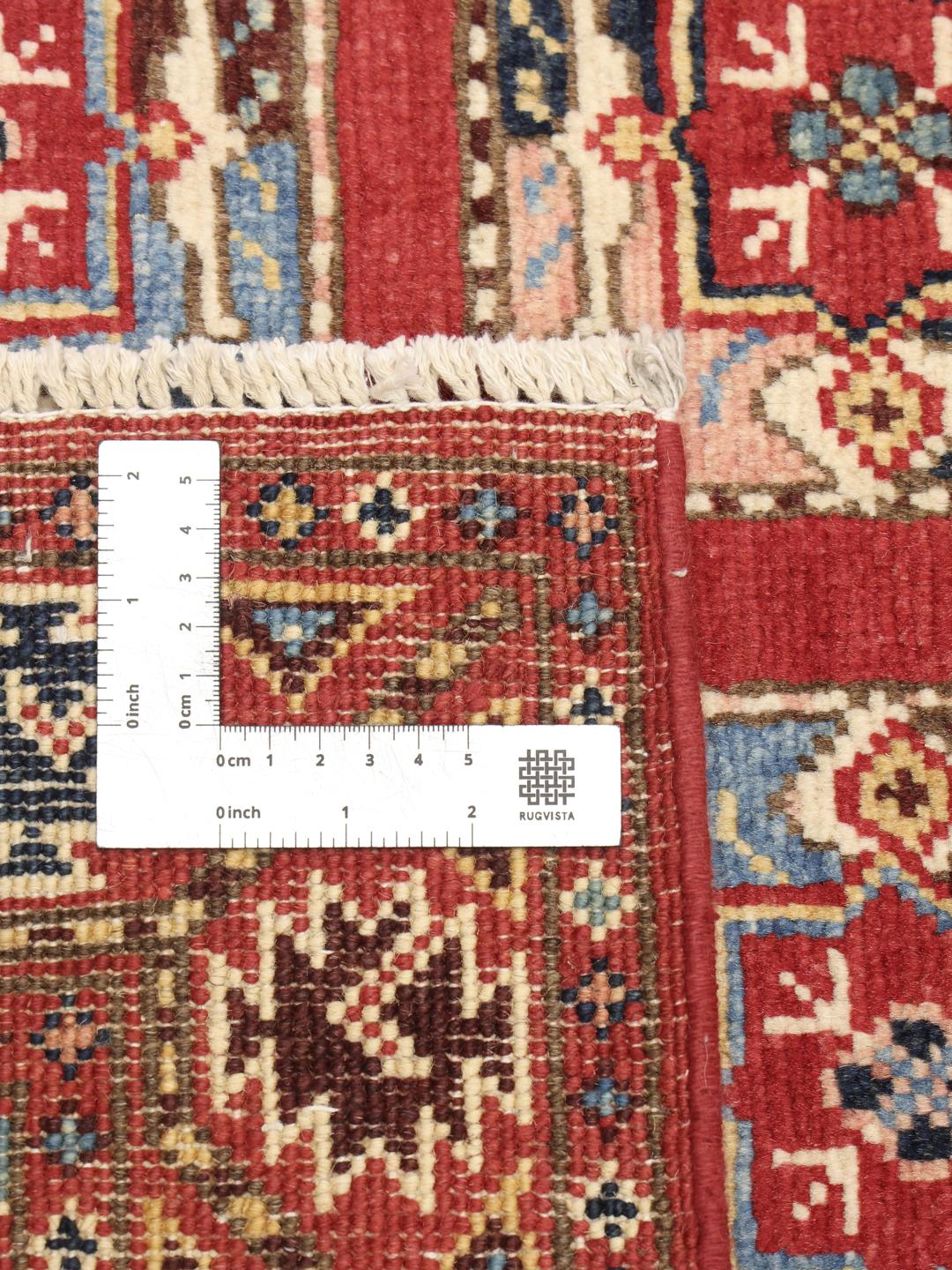
The Kazak tradition is deeply rooted in the Caucasus region, where tribal weavers developed a distinct style characterised by bold geometric shapes and a vibrant colour palette. While these designs originated in the mountainous areas between the Black and Caspian Seas, the tradition has evolved and flourished through the work of weavers in Afghanistan. Today, Afghan artisans continue to honour these ancient aesthetics, keeping the spirit of the original Kazak designs alive through their own unique interpretations.
The term Kazak refers to a specific style of tribal rug known for its large-scale geometric medallions and use of saturated, earthy tones. These rugs are not made from pre-set patterns found in books; rather, they are the result of collective memory and cultural heritage passed down through generations. The weavers rely on their artistic intuition, ensuring that every piece retains the authentic spirit of the tradition.
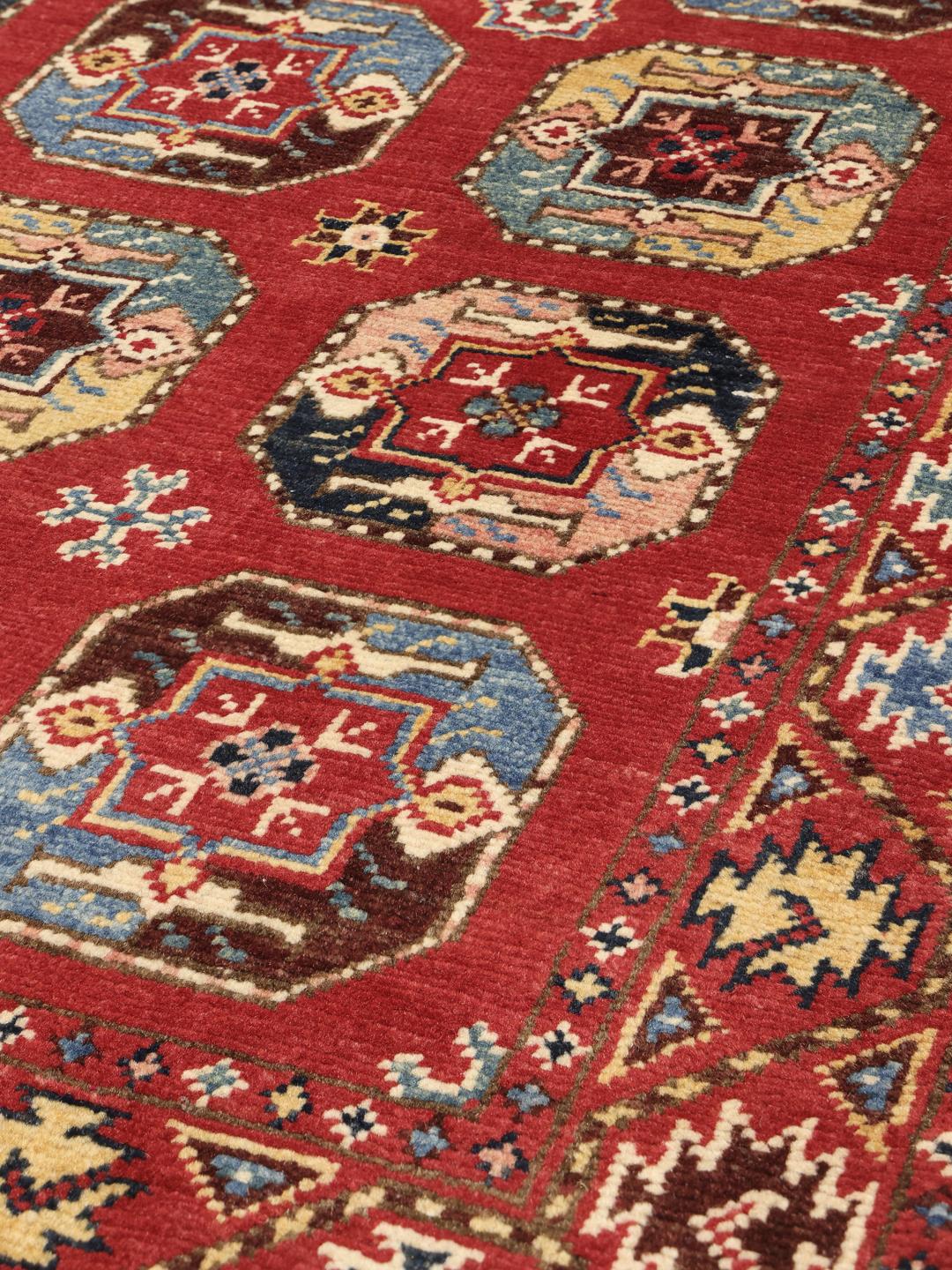
Signature elements of a Kazak rug include powerful, symbolic motifs—often referred to as guls or geometric medallions—that are set against a dramatic, often red, field. The borders are typically decorated with complex, angular designs that frame the central field, providing a sense of balance and structure. The use of varied, deep shades creates a dynamic visual effect that makes these rugs stand out as focal points in any room.
Owning a Kazak rug is a way to connect with a long lineage of craft and cultural expression. These pieces are highly valued by collectors and enthusiasts who appreciate the skill required to translate complex traditional motifs into a finished, durable textile. By bringing this rug into your space, you are not just acquiring a floor covering, but a piece of cultural history that showcases the enduring talent of its makers.