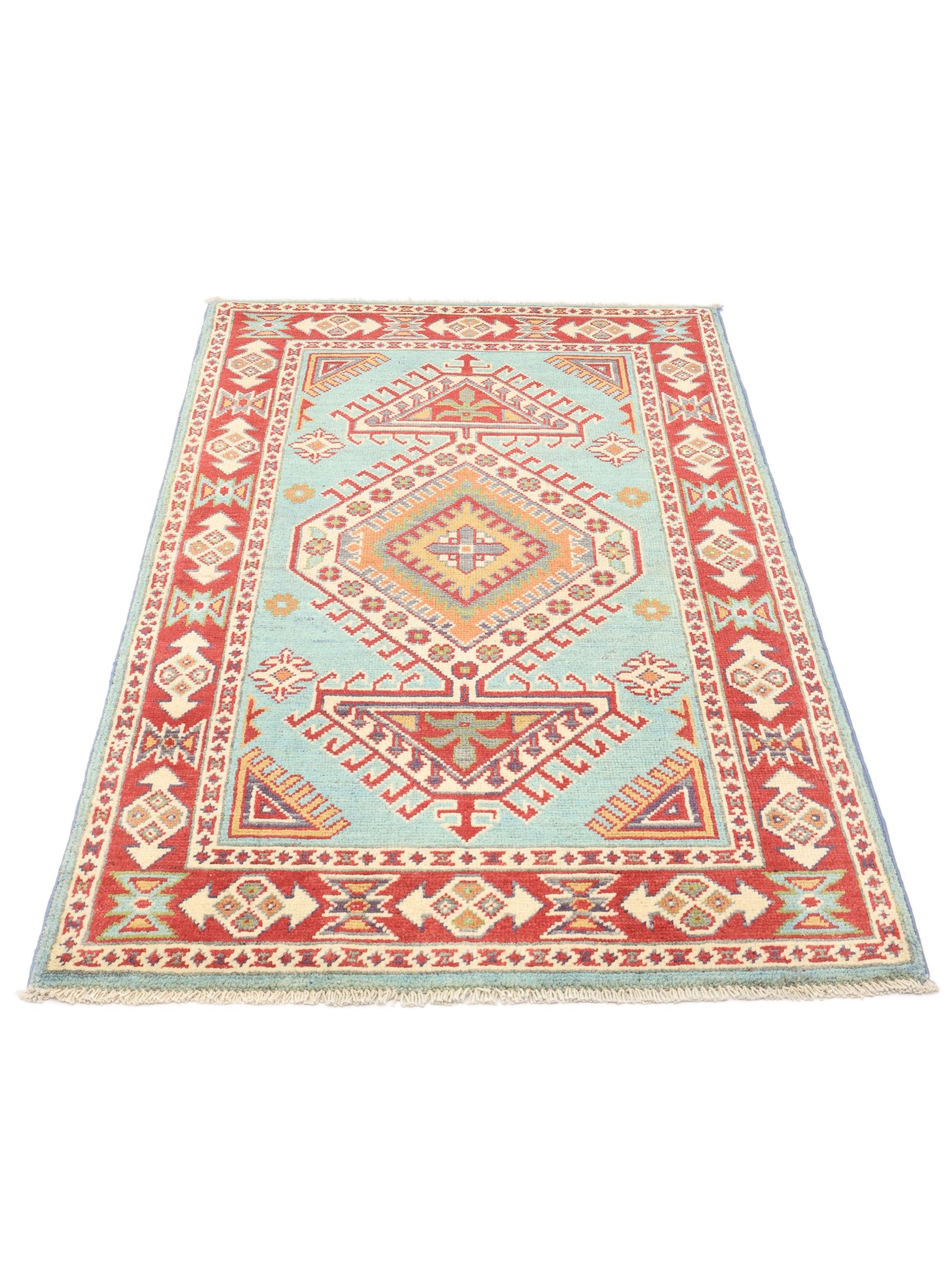
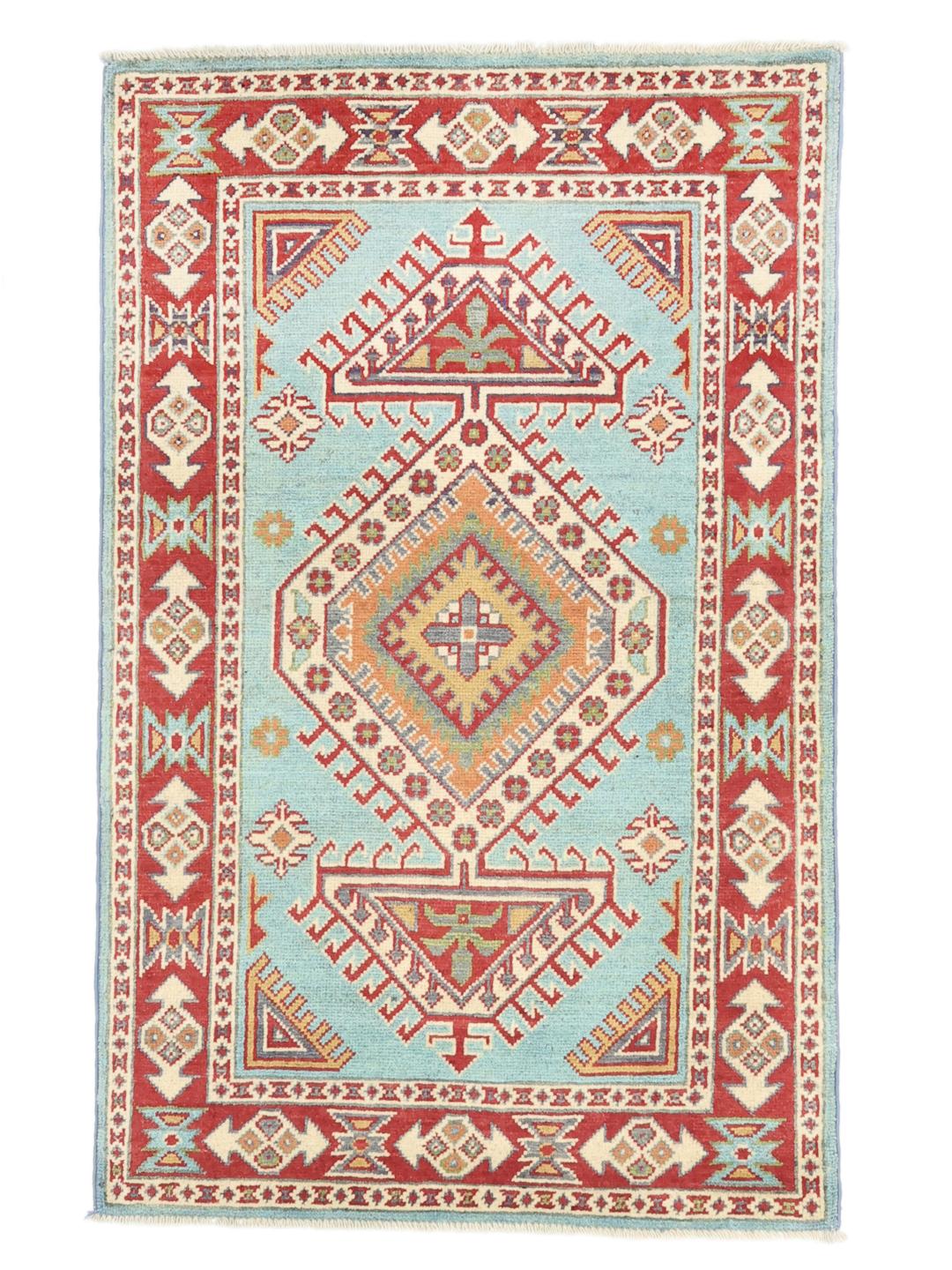
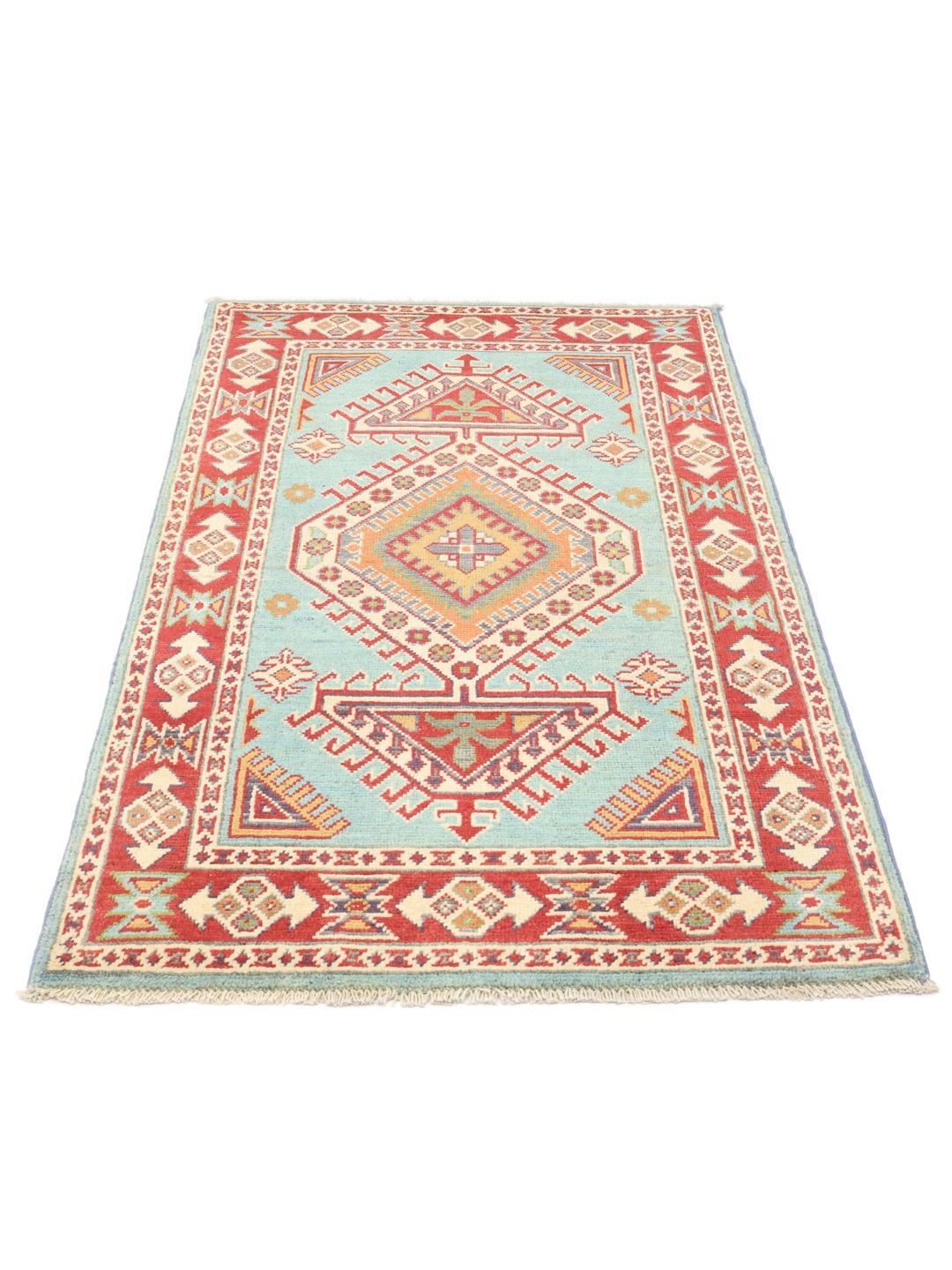
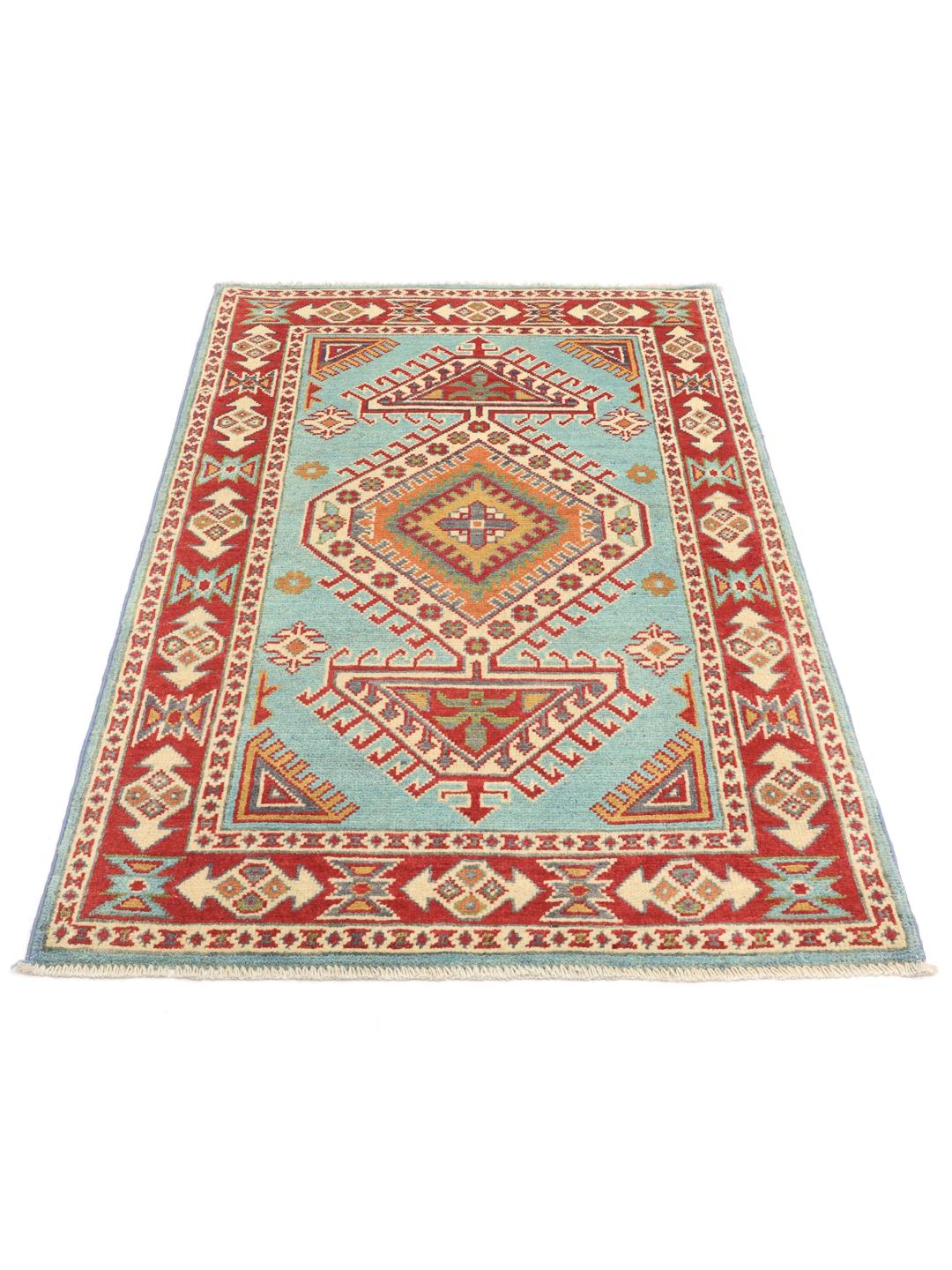
Kazak rugs originate from the Caucasus region and are celebrated for their bold, powerful designs. While the traditional weaving centres were historically located in the mountains between the Black and Caspian Seas, the craft has evolved significantly over centuries. Today, the most vibrant and authentic examples of this style are crafted in Afghanistan, where weavers maintain the ancient methods while infusing the rugs with their own regional artistic sensibilities.
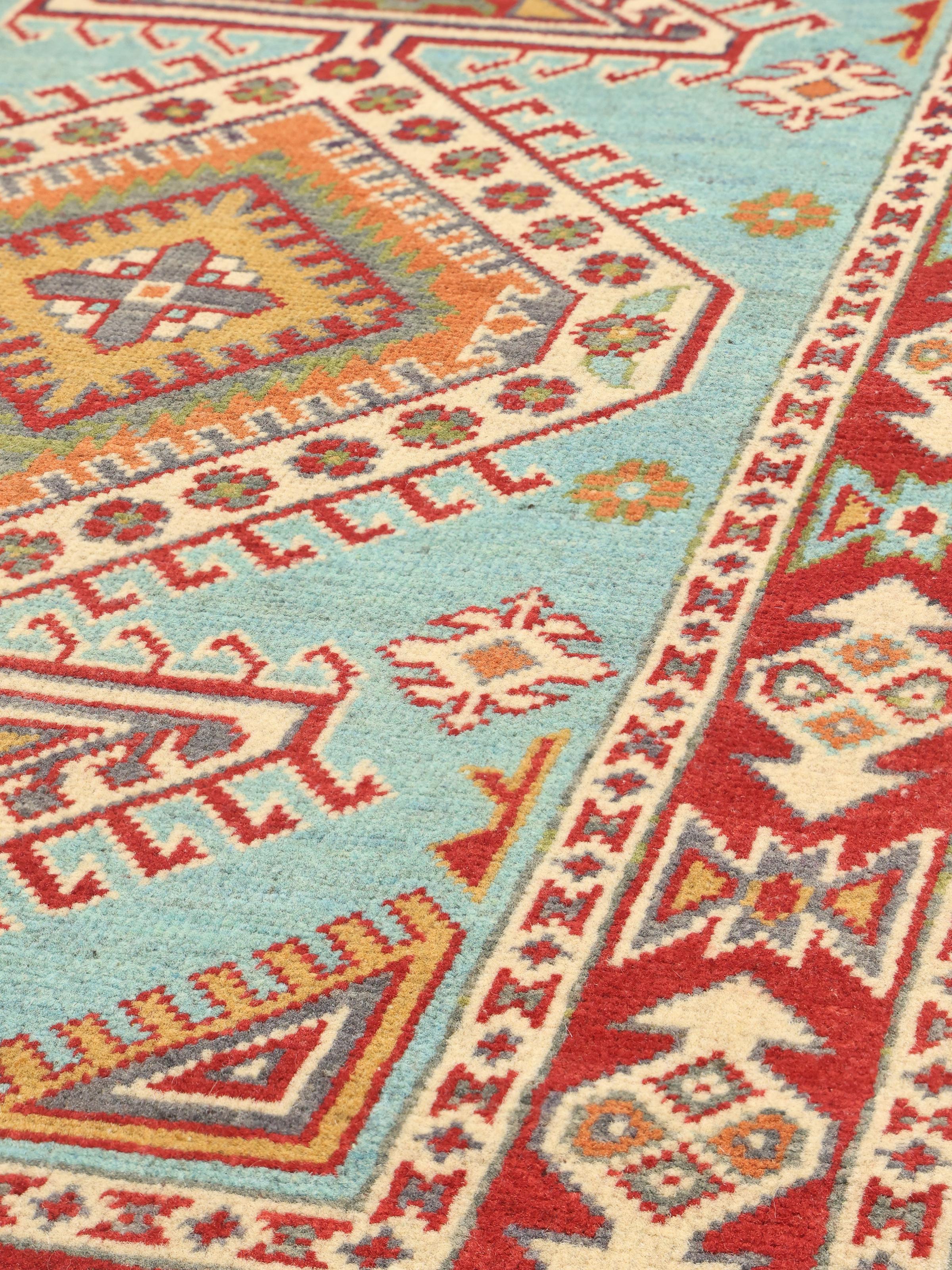
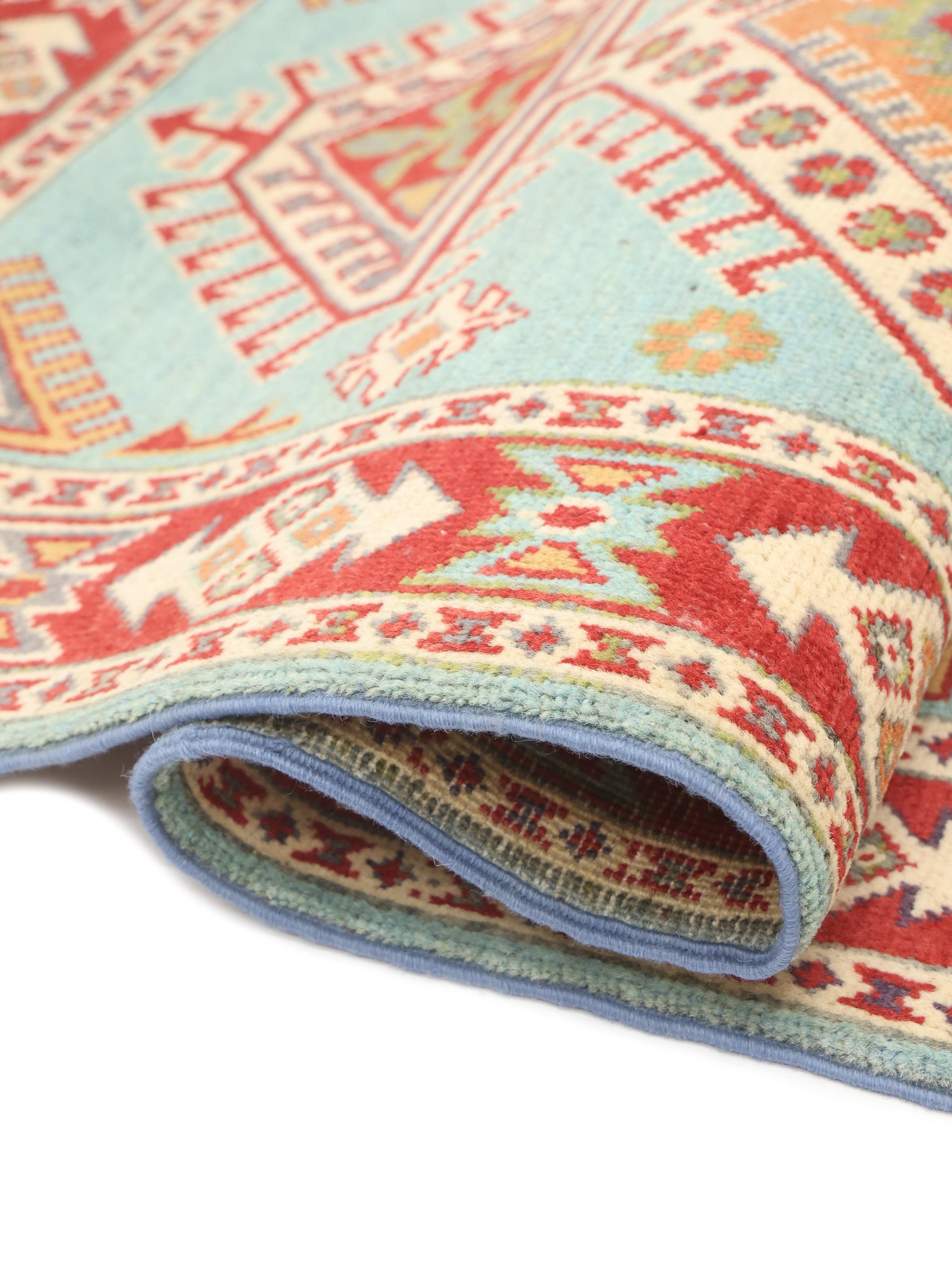
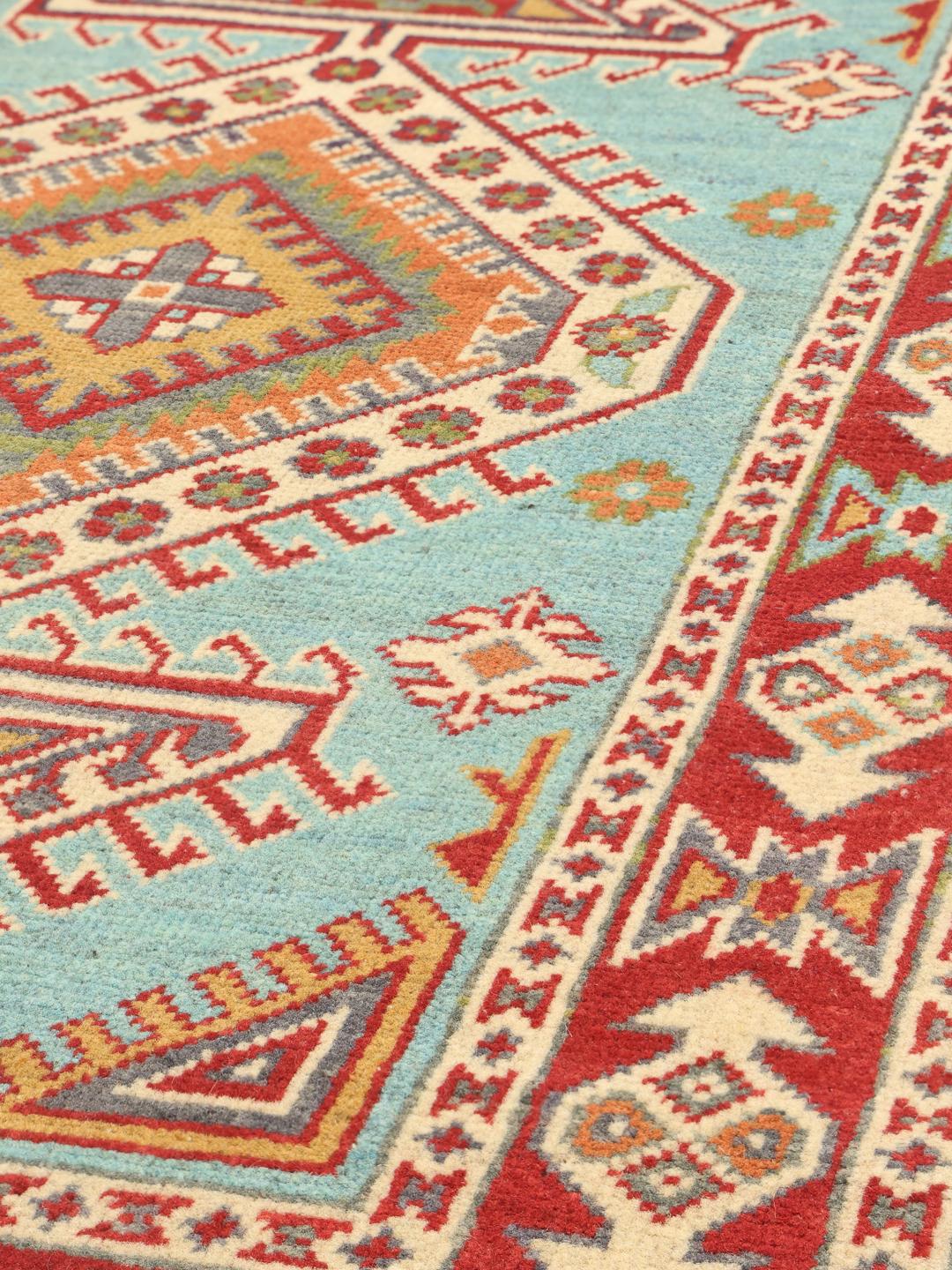
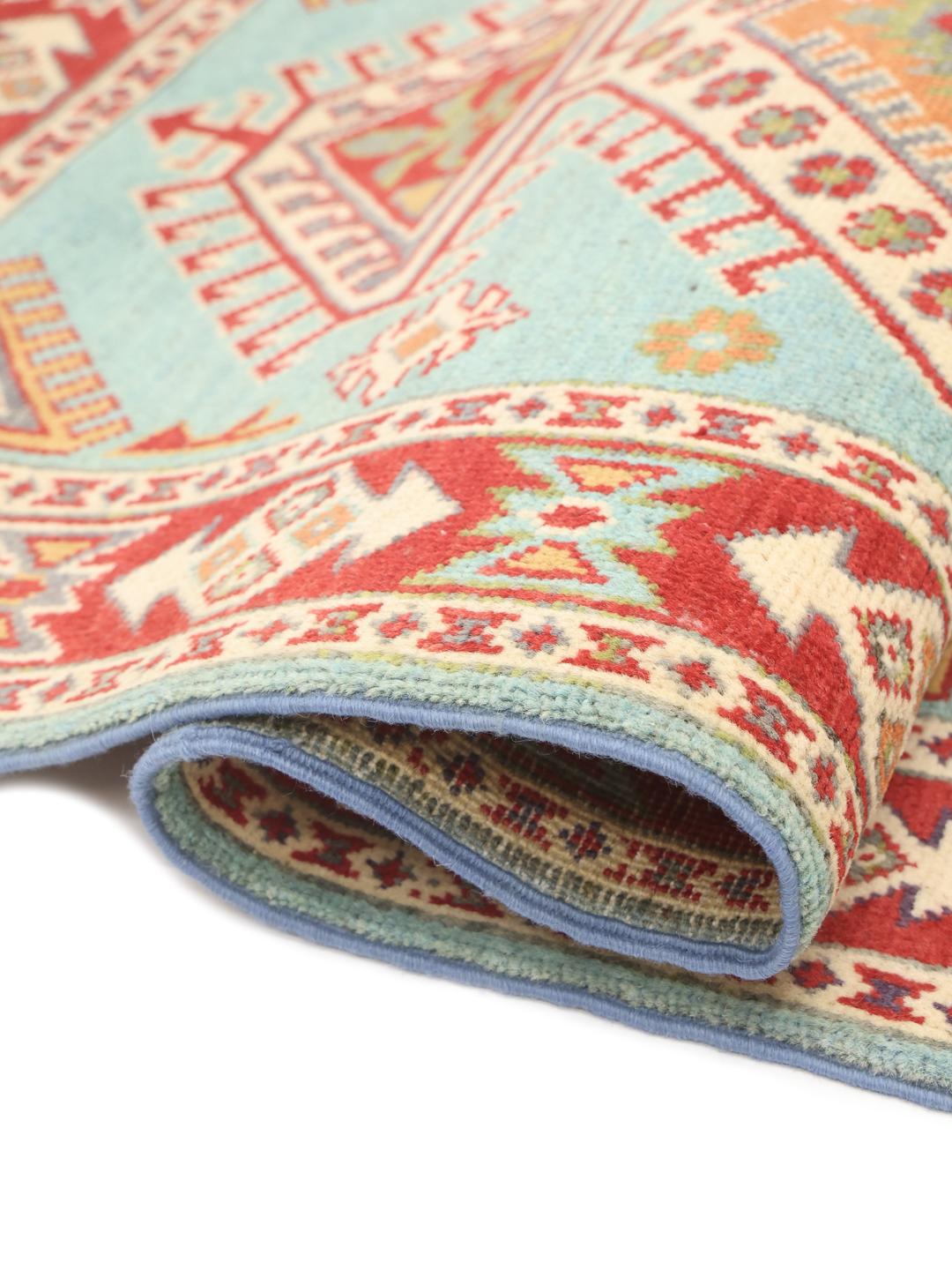
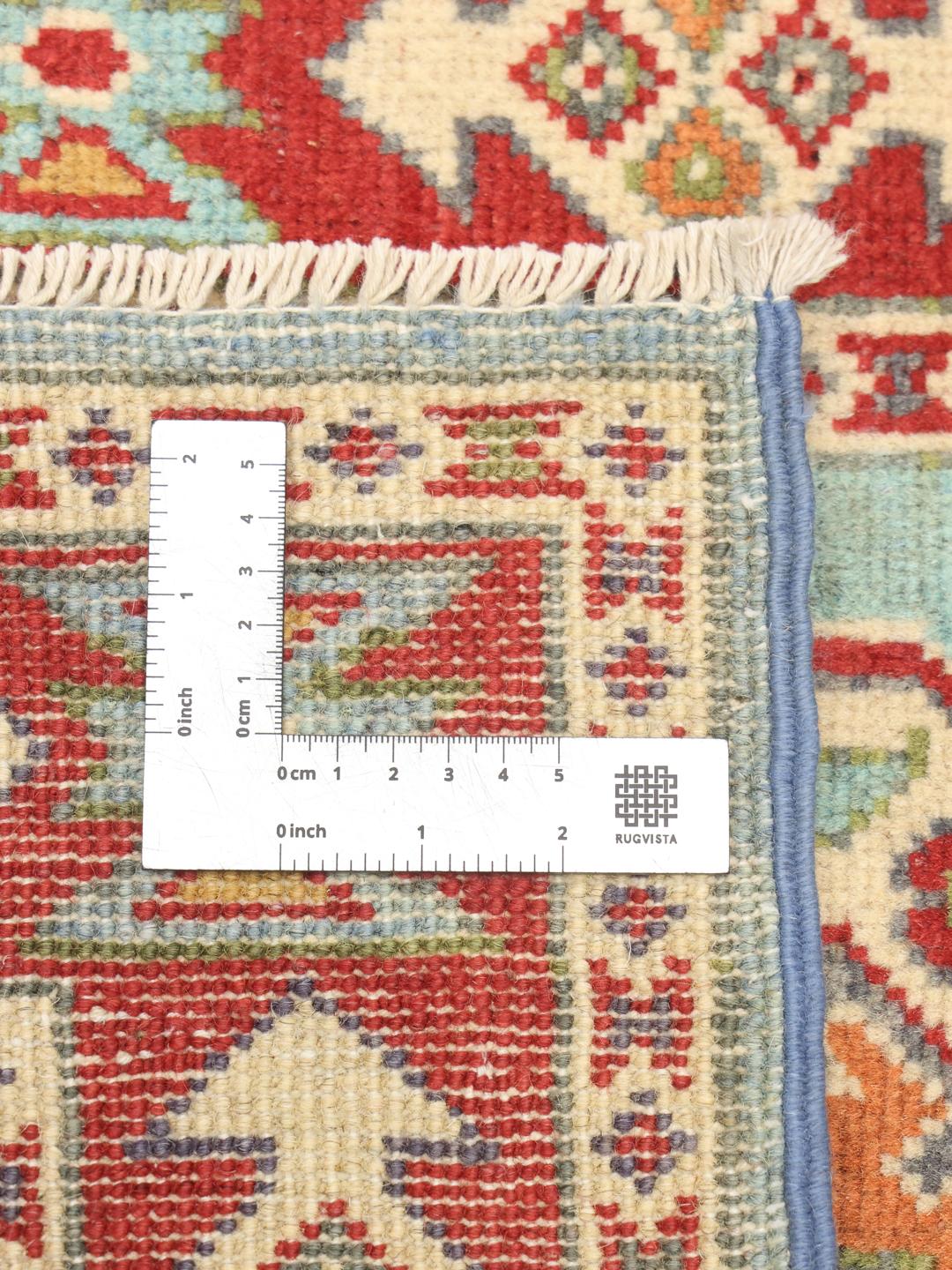
Technical terms like hand-knotted are essential to understanding the quality of these pieces. A hand-knotted rug is constructed by looping individual strands of wool around the warp and weft threads, a method that is far superior to machine-made alternatives. This creates a stronger, more flexible foundation that allows the rug to lie flat and remain durable even after years of use, ensuring the design remains sharp and clear.
The visual language of Kazak rugs is defined by its geometric boldness. You will typically see large, stylized medallions, serrated leaves, and repeating motifs such as diamonds and stars set against a deep, rich field. These rugs are known for their use of strong, saturated colours, which are often achieved using traditional dyeing techniques. The presence of such intricate borders and symbolic patterns is a hallmark of this tradition, designed to tell a story or offer protection.
Collecting a Kazak rug is an investment in cultural heritage. These pieces are highly valued not just for their aesthetic appeal, but for the skill and patience required to produce them. Each rug is a record of the weaver's tradition and personal expression, making them sought-after items for those who appreciate authentic craftsmanship. Owning one means holding a piece of history that continues to bring warmth and personality to the modern home.