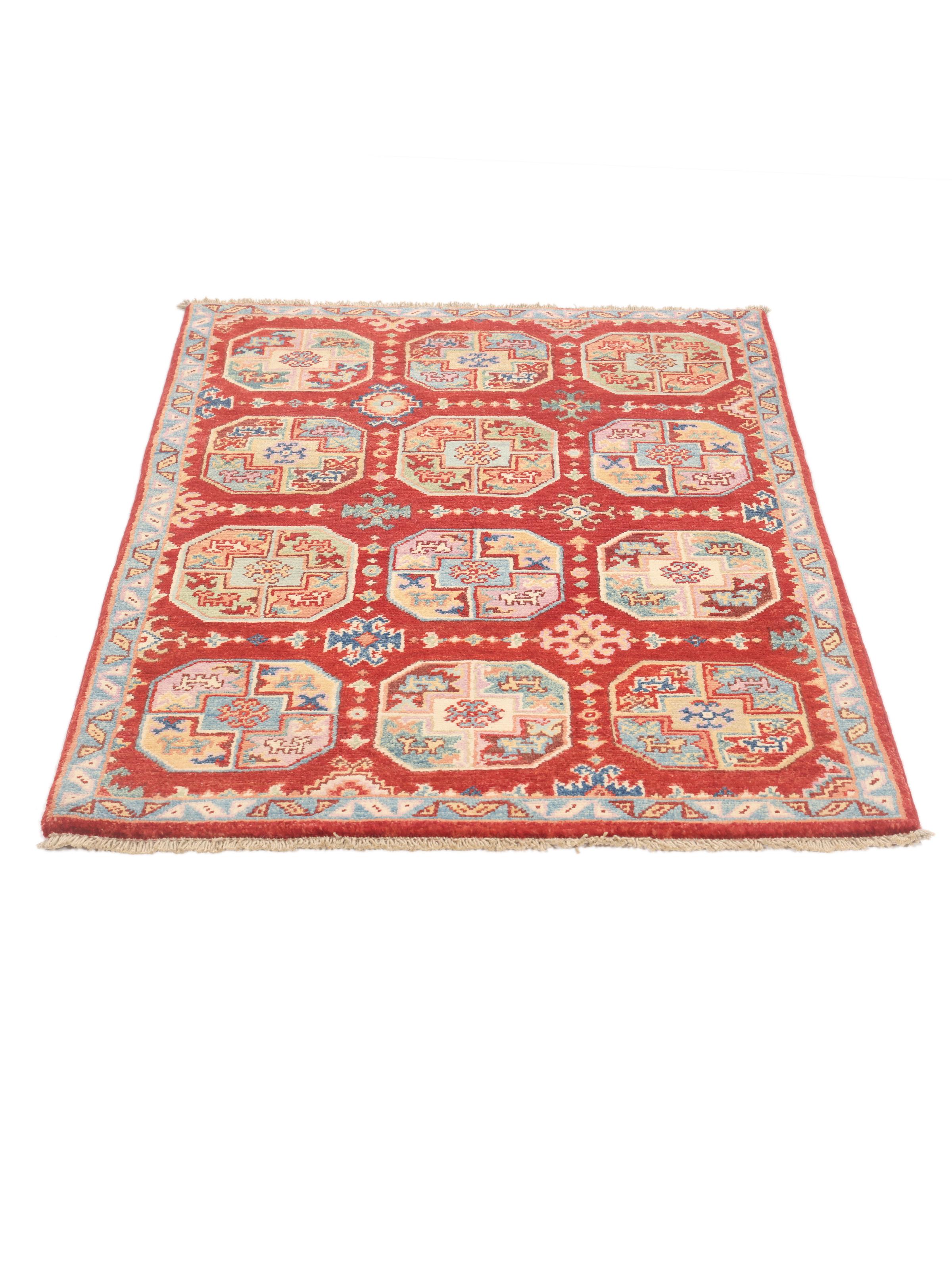
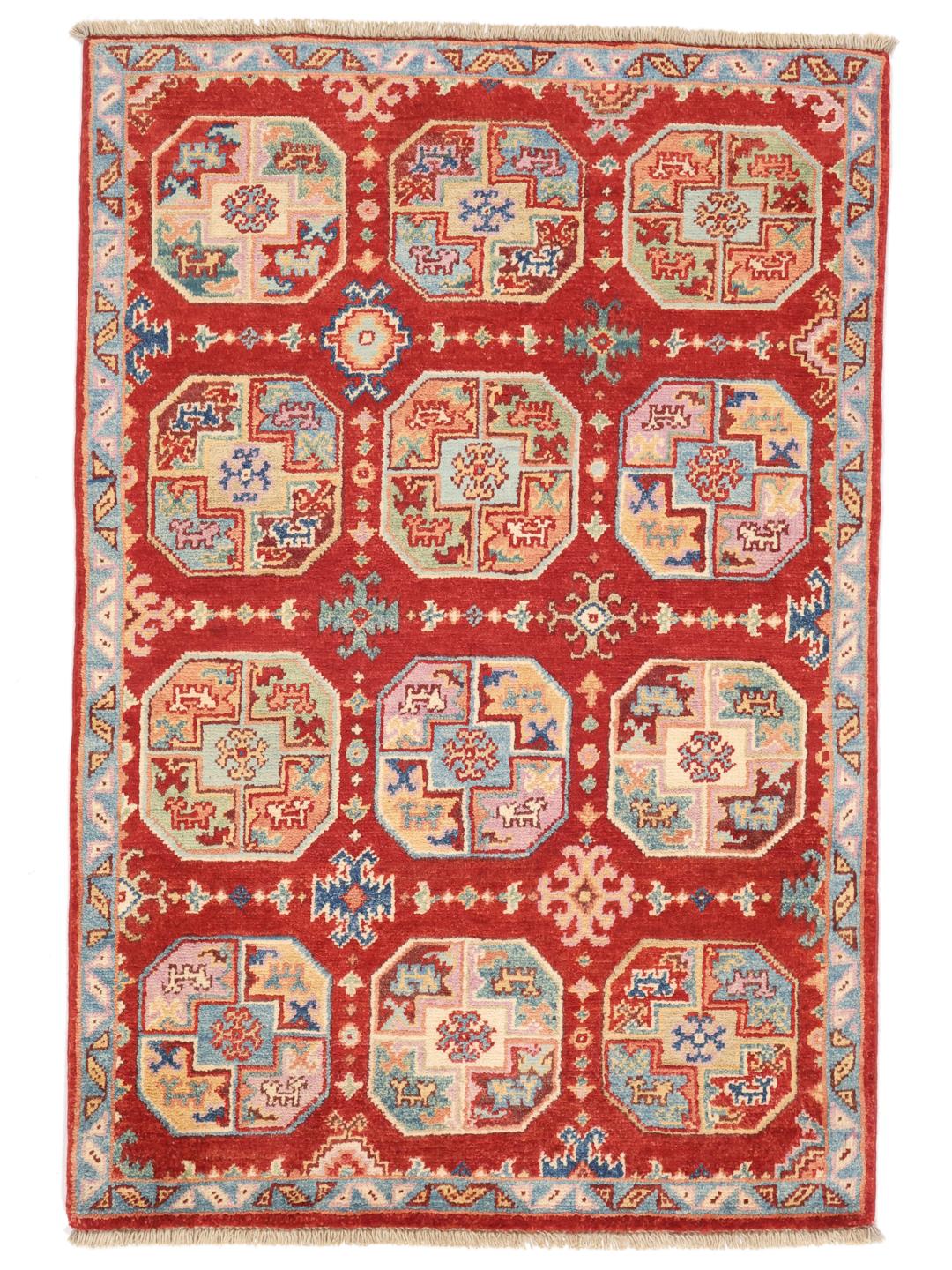
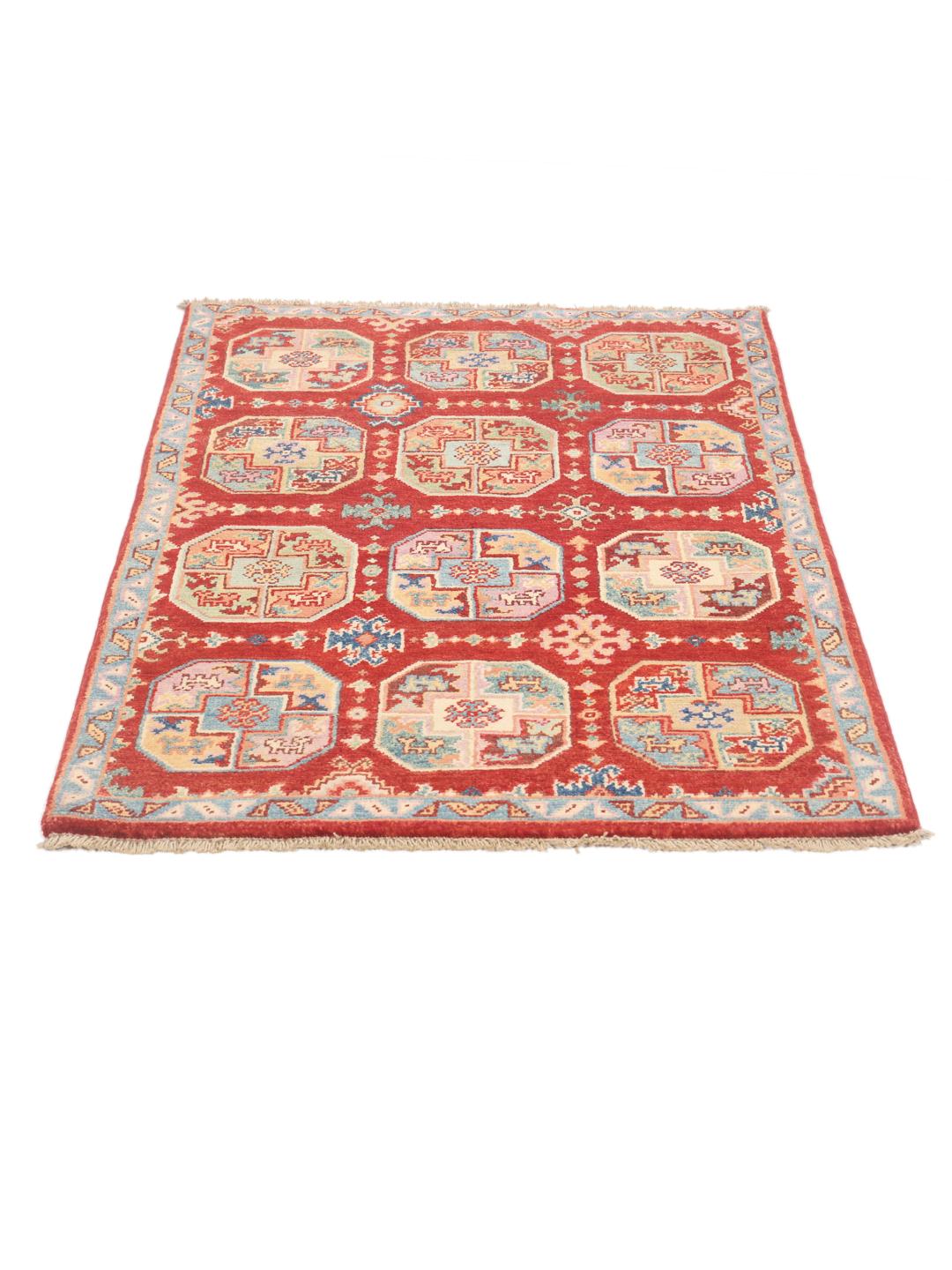
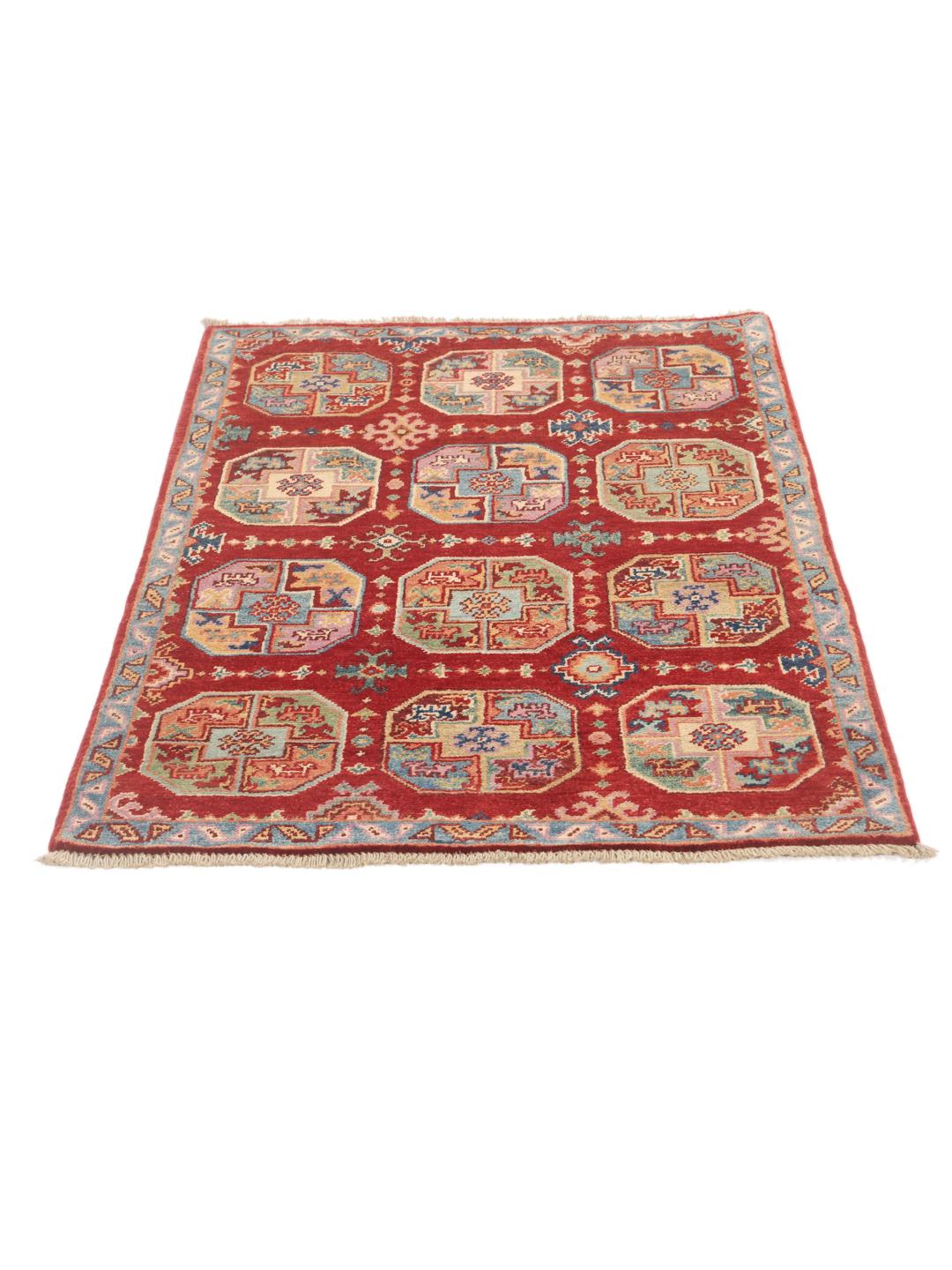
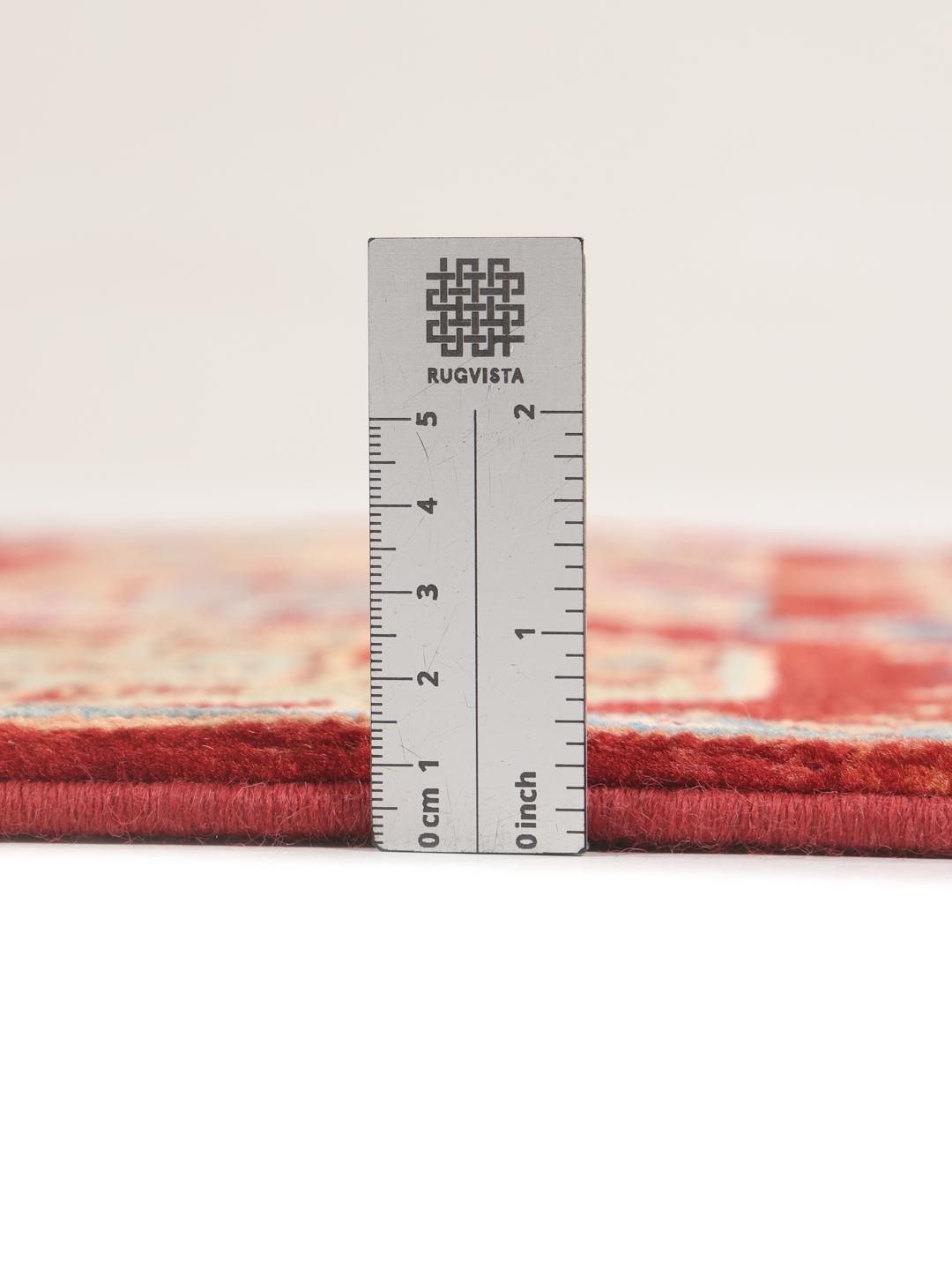
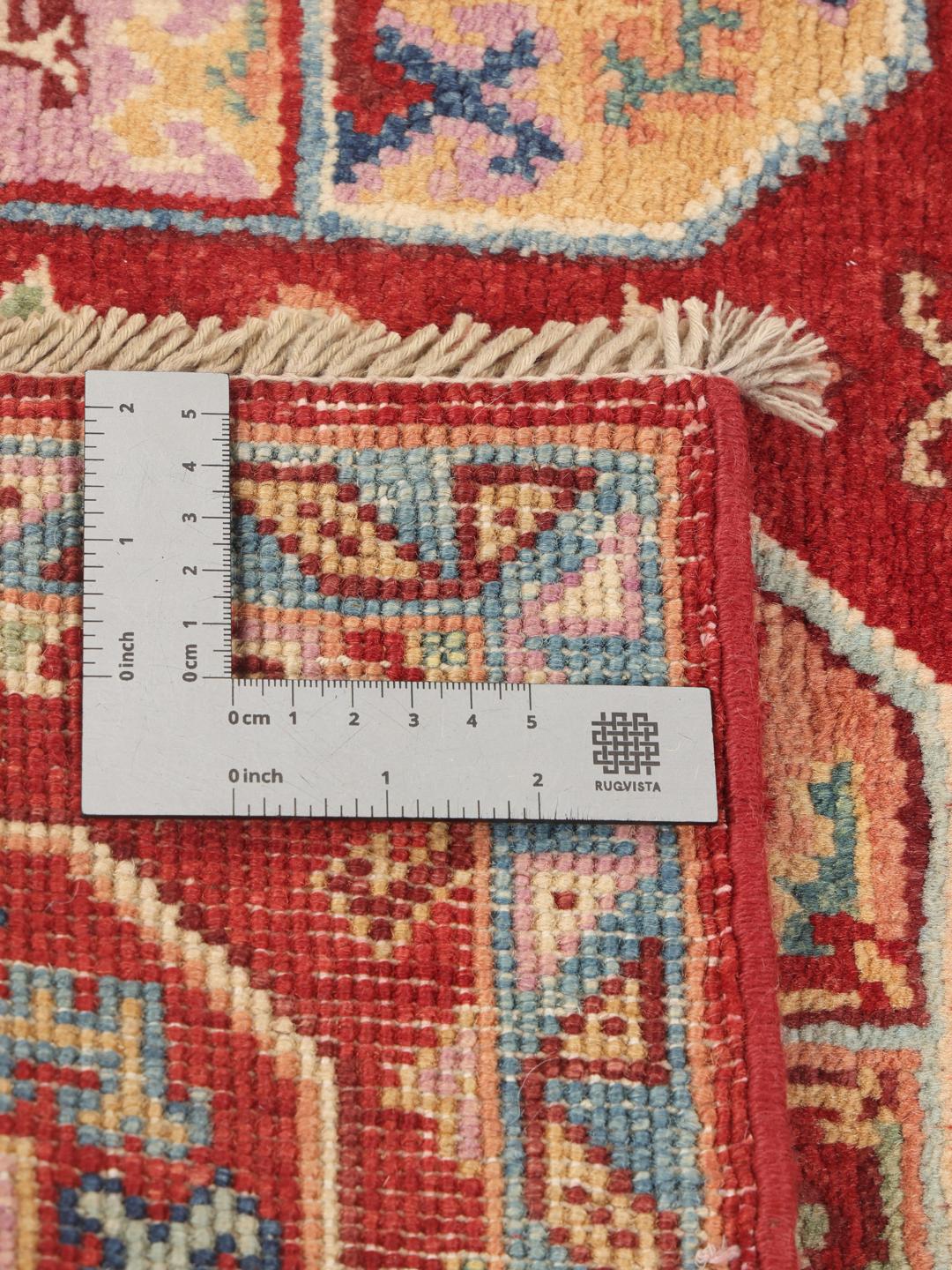
Kazak rugs originate from the Caucasus region, a historical crossroads between the Middle East, Central Asia, and Europe. Known for their bold, geometric designs and rich, saturated colours, these rugs have been woven for centuries by tribal groups who infused their textiles with deep cultural meaning. While the traditional designs are rooted in the Caucasus, the craft has flourished in Afghanistan, where artisans continue to honour these historic patterns with incredible skill.
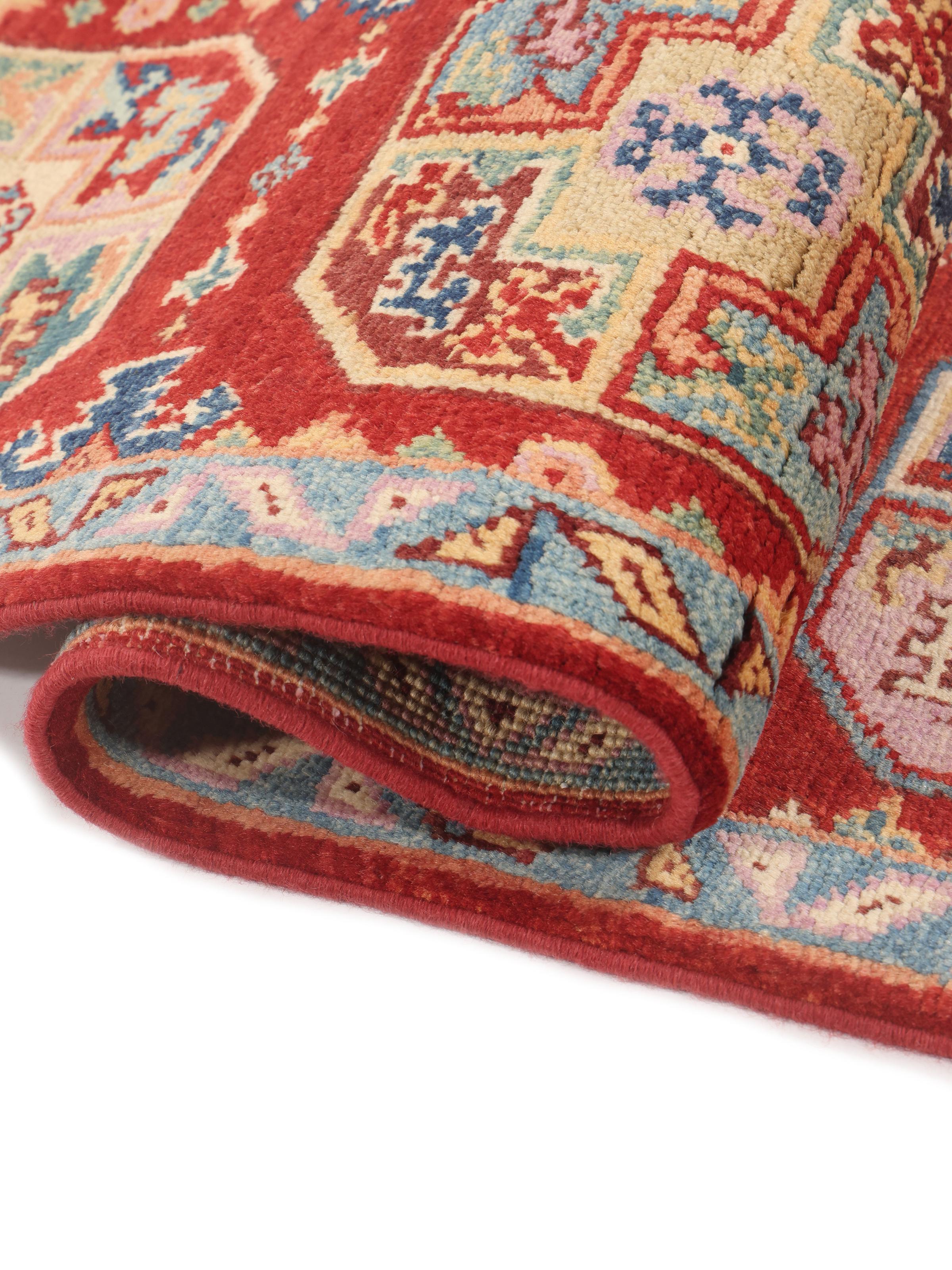
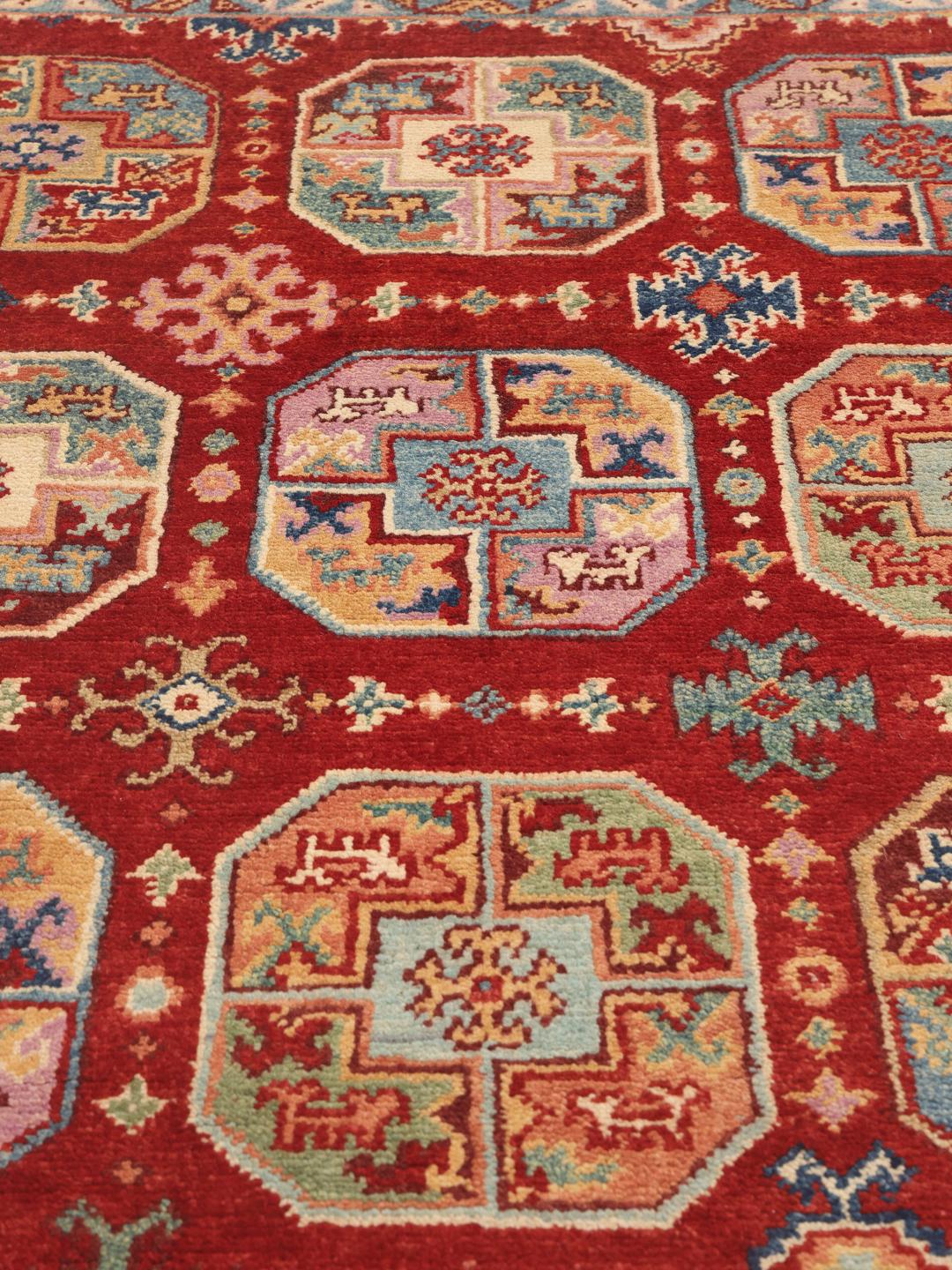
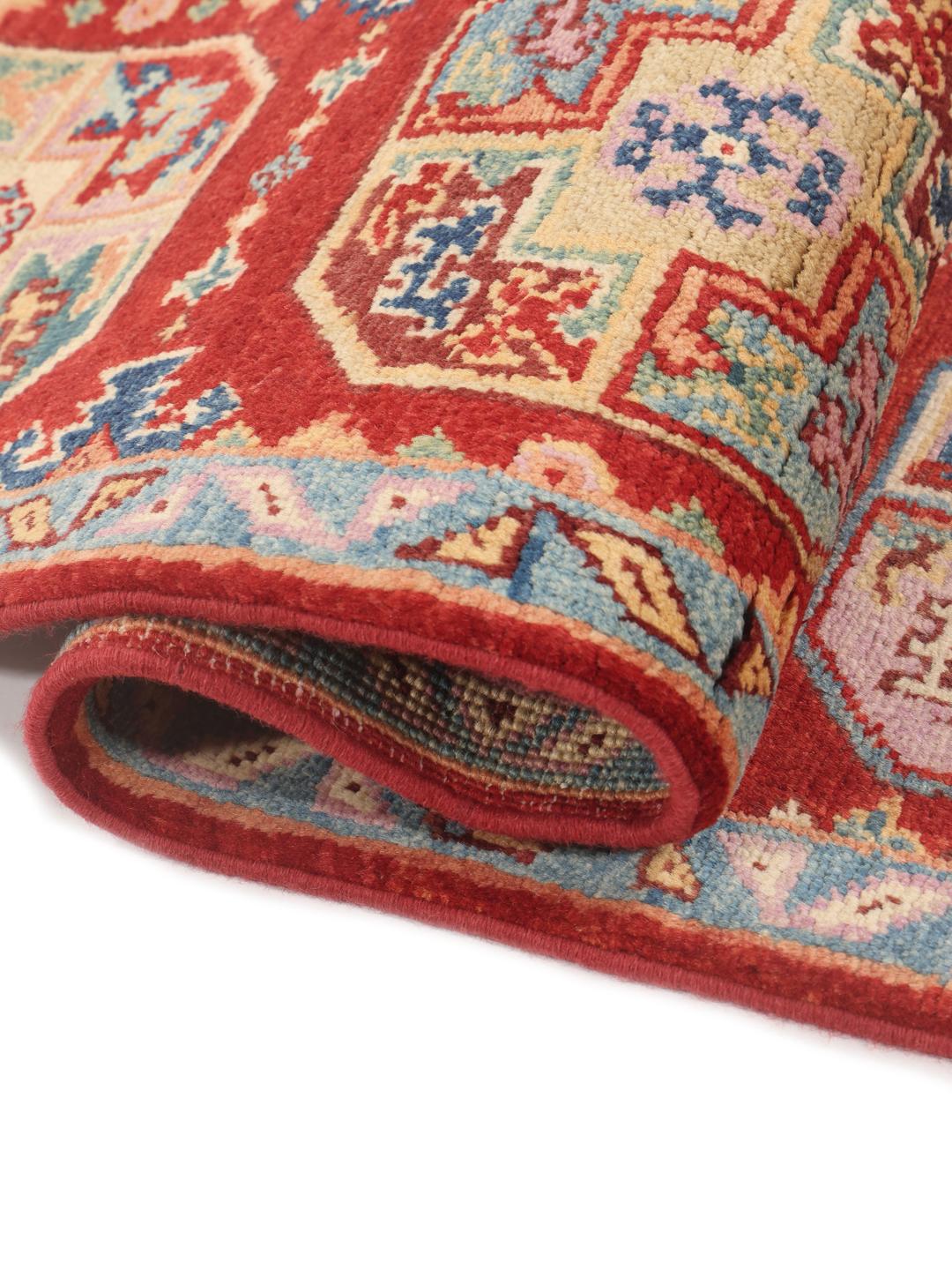
The term 'Kazak' refers to a specific design tradition rather than a single village, encompassing a variety of patterns that celebrate geometric abstraction and bold symmetry. These rugs are traditionally woven with a wool pile that is known for its durability and natural lustre. The process of hand-knotting ensures that the wool remains tightly packed, resulting in a robust, long-lasting textile that maintains its shape and beauty through generations of use.
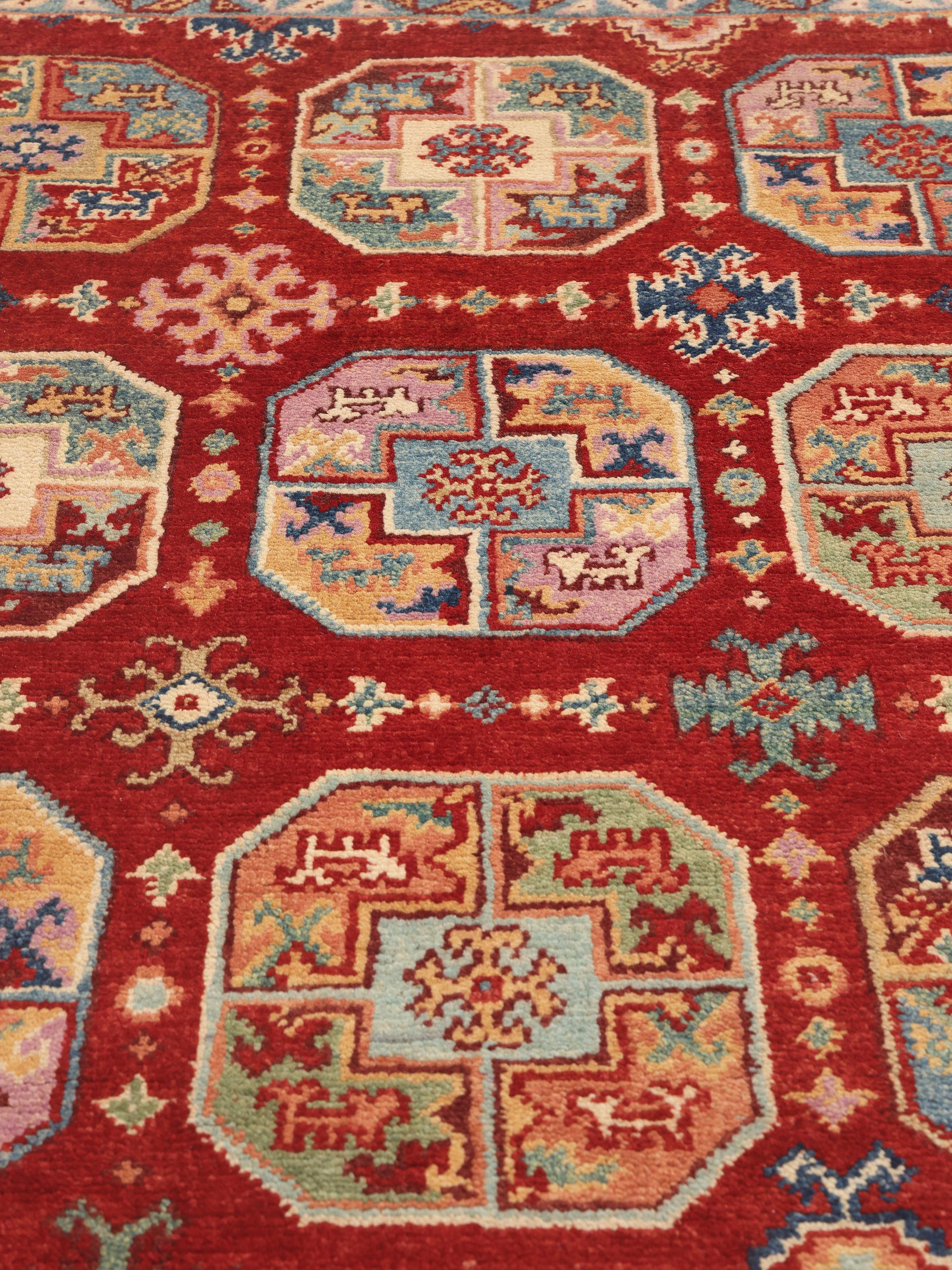
Signature design elements of the Kazak tradition include large, stylised medallions, often referred to as 'guls' or 'elephant-foot' motifs, which are frequently set against a vibrant, solid-coloured field. The borders are typically filled with geometric vine work or repeating latch-hook motifs, framing the central design with complexity and order. Every rug in this tradition is an expression of the weaver's personal interpretation of these classic symbols, making each piece a unique historical document.
Collectors value Kazak rugs for their untamed, artistic spirit and their undeniable link to tribal history. Owning a rug from this tradition is a way to connect with a legacy of craft that prioritises natural materials and human connection over industrial speed. These rugs are not just floor coverings; they are symbols of home and heritage that bring a sense of history and permanence to any contemporary interior.