Kazak rugs originate from the Caucasus region, a mountainous area known for its rich and varied weaving traditions. While the name refers to a specific historical style, the craft has evolved and flourished in Afghanistan, where weavers have mastered the intricate techniques required to produce these bold, expressive floor coverings. The migration of these styles along ancient trade routes has allowed the Kazak tradition to remain a vital part of contemporary textile art.
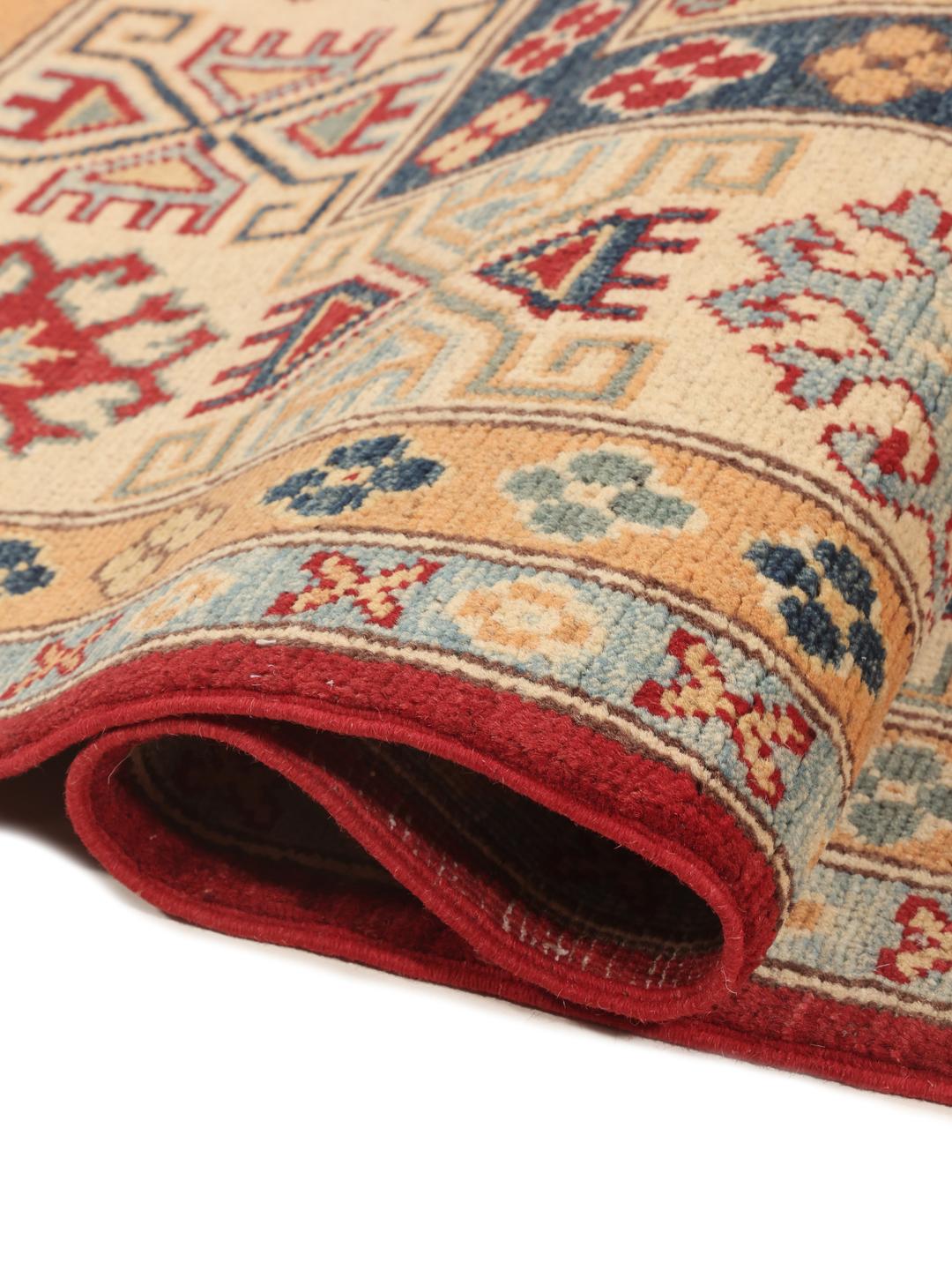
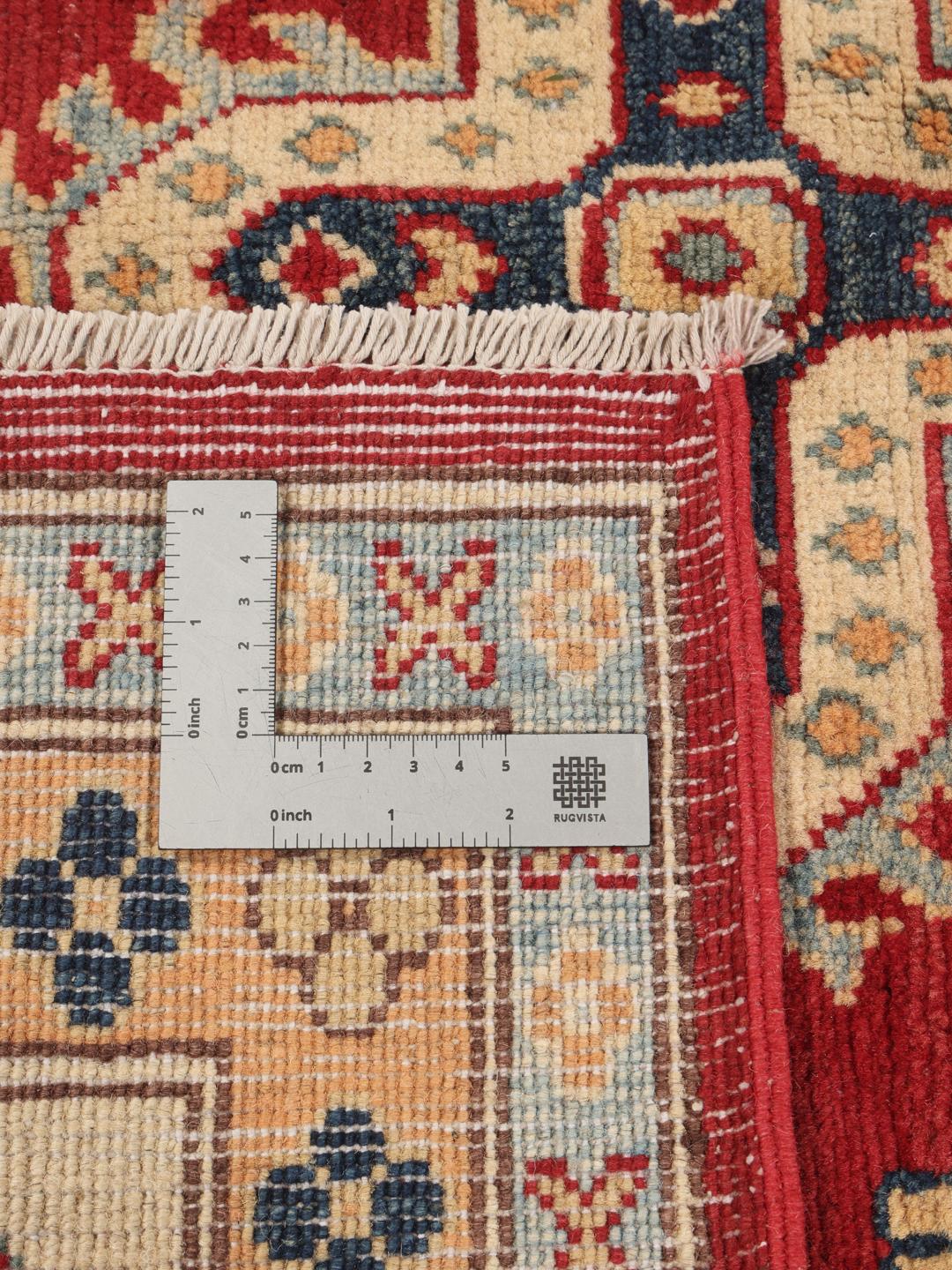
The term 'Kazak' is synonymous with a specific, highly recognisable aesthetic that emphasises geometric forms over floral or curvilinear designs. These rugs are typically constructed using high-quality wool, which is known for its natural resilience and ability to hold deep, rich dyes. The foundation is carefully prepared to ensure the final piece is both flexible and durable, a hallmark of the nomadic weaving heritage that prioritises both beauty and function.
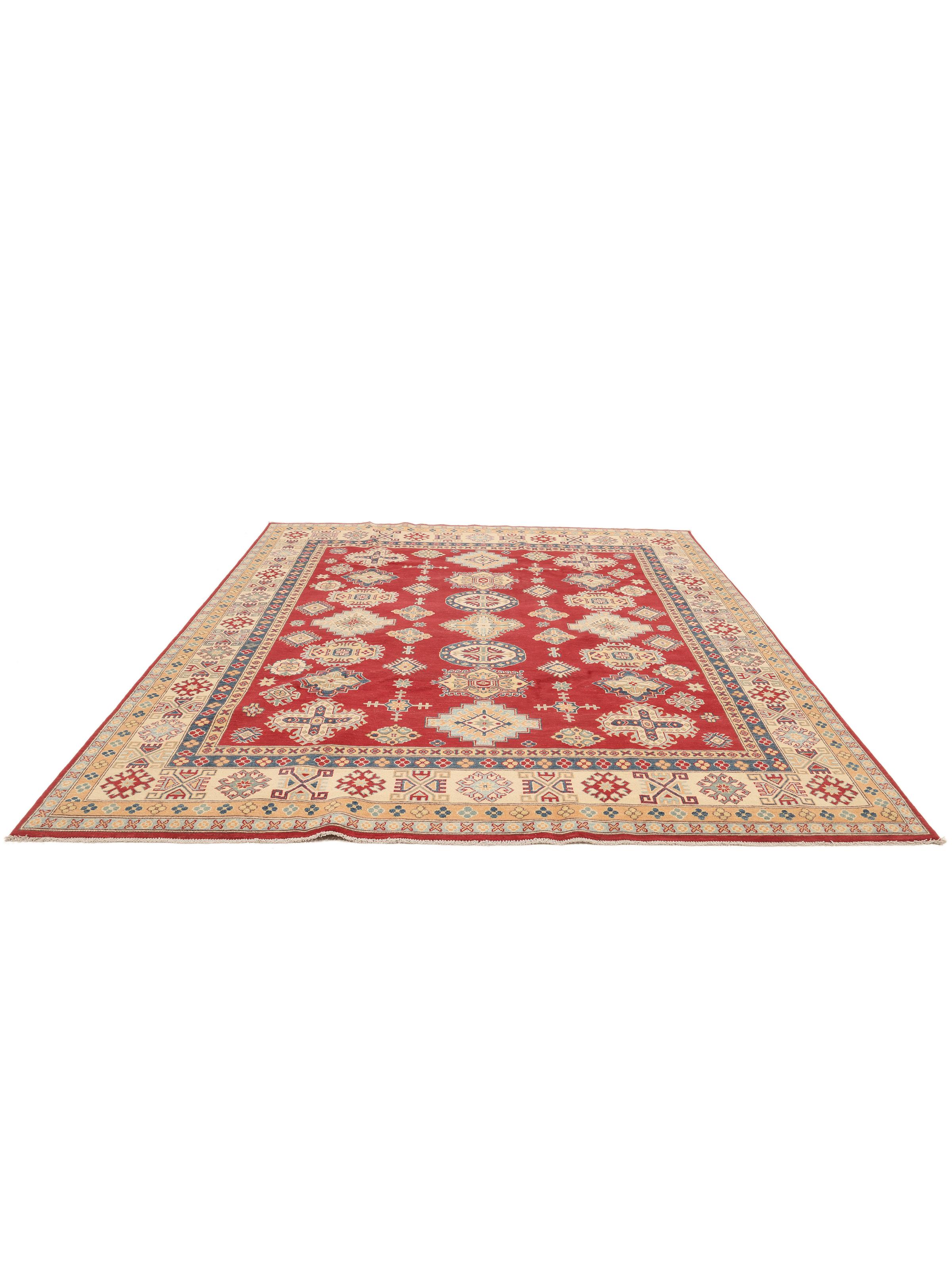
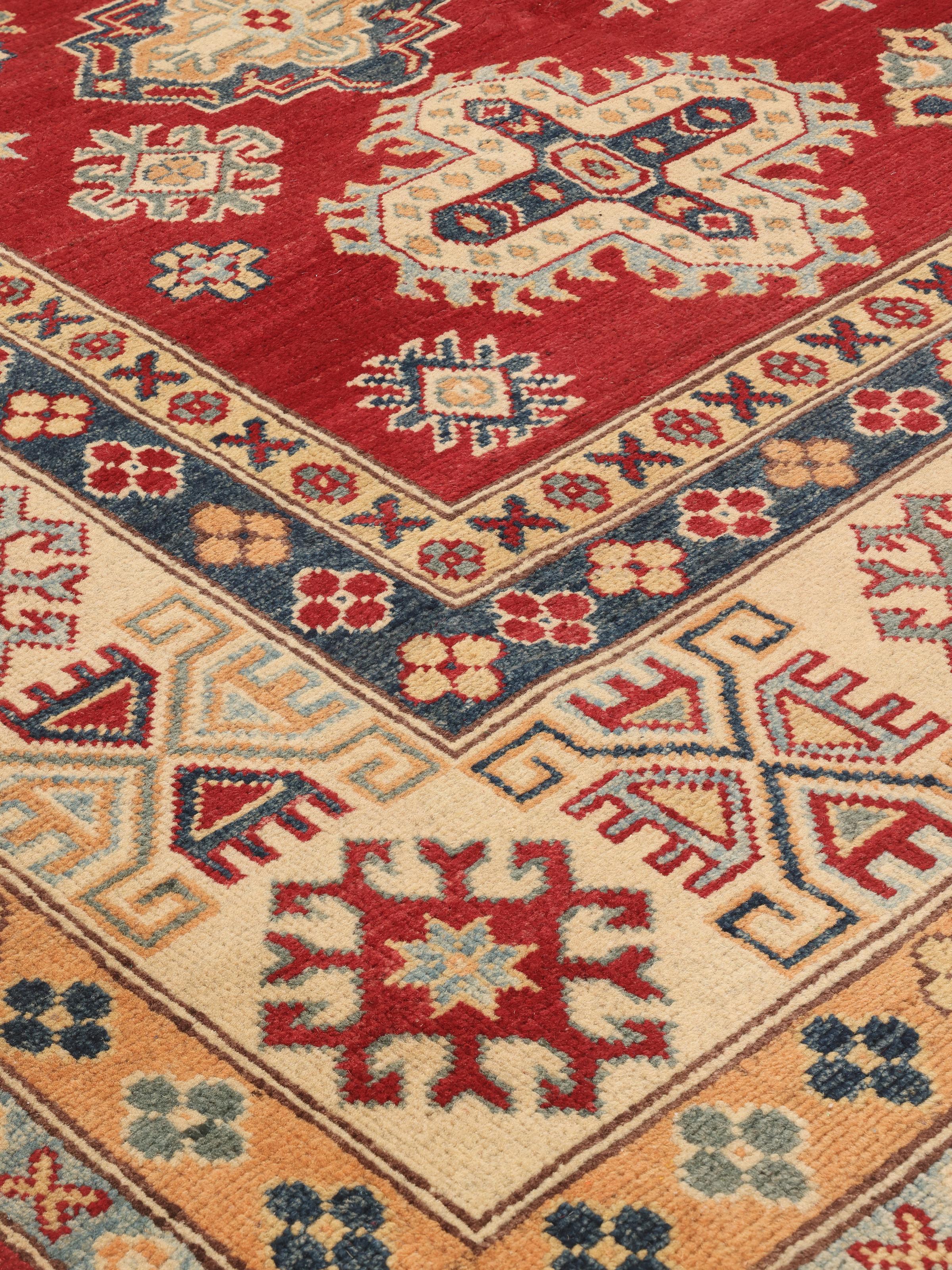
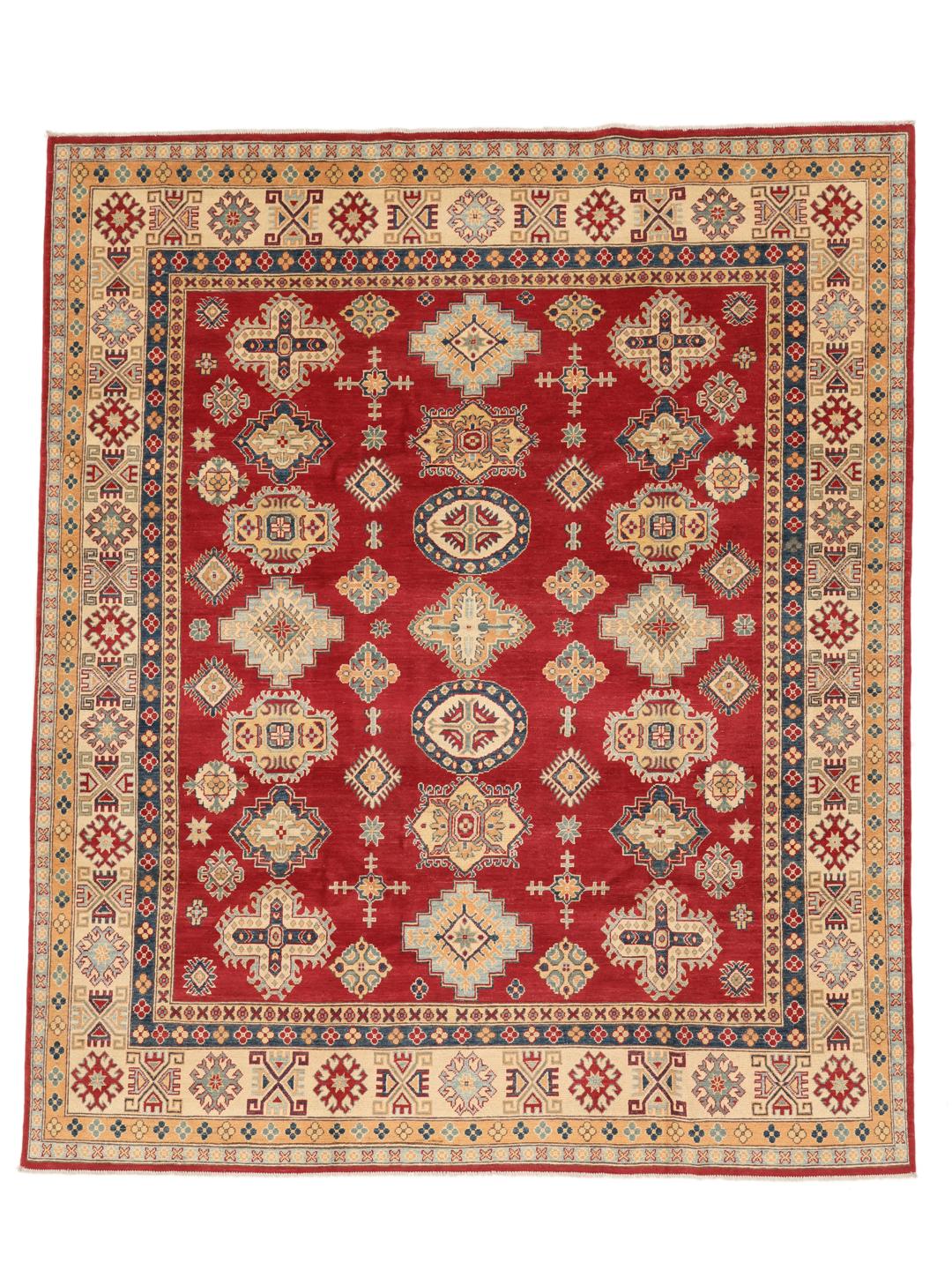
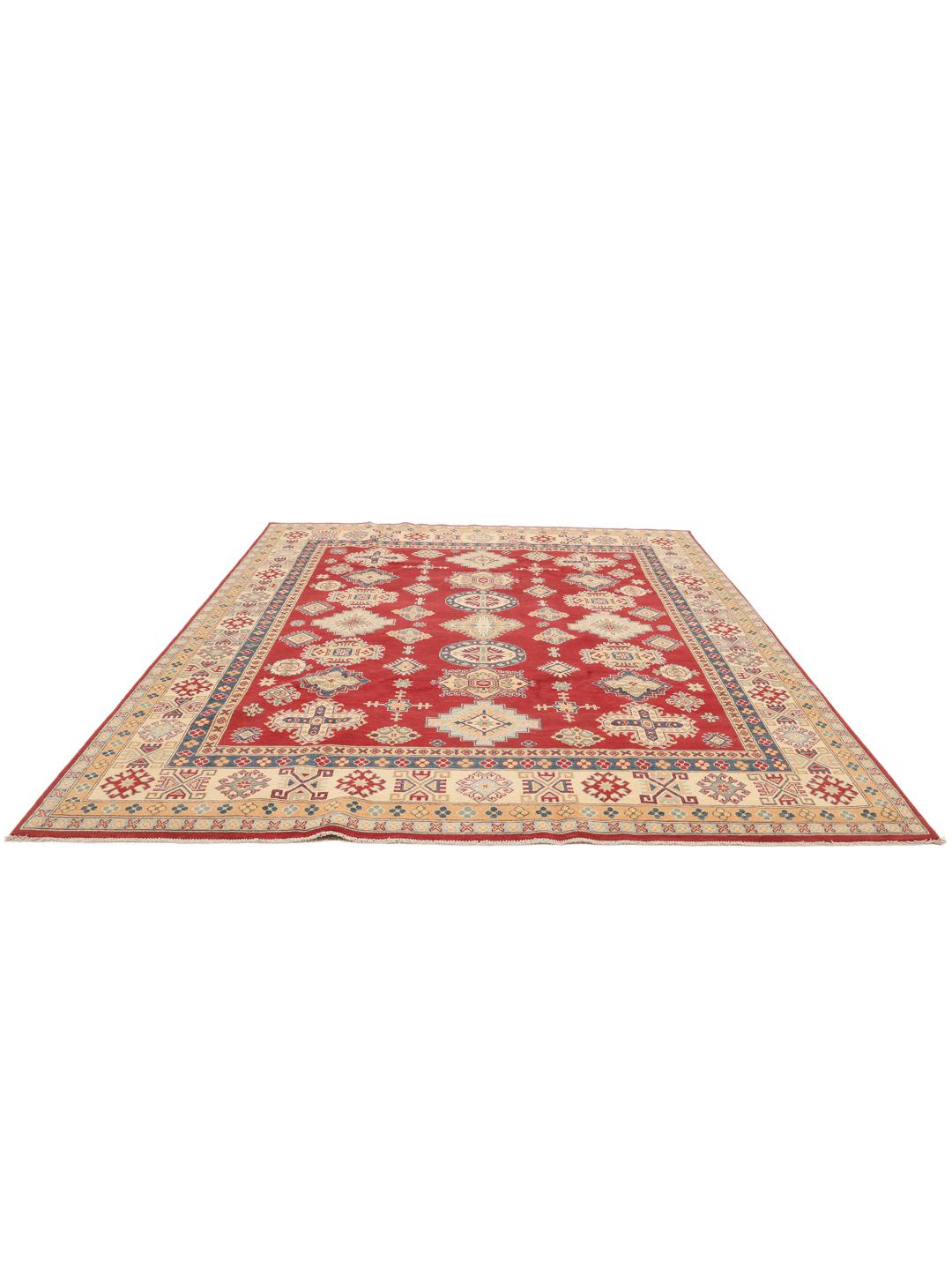
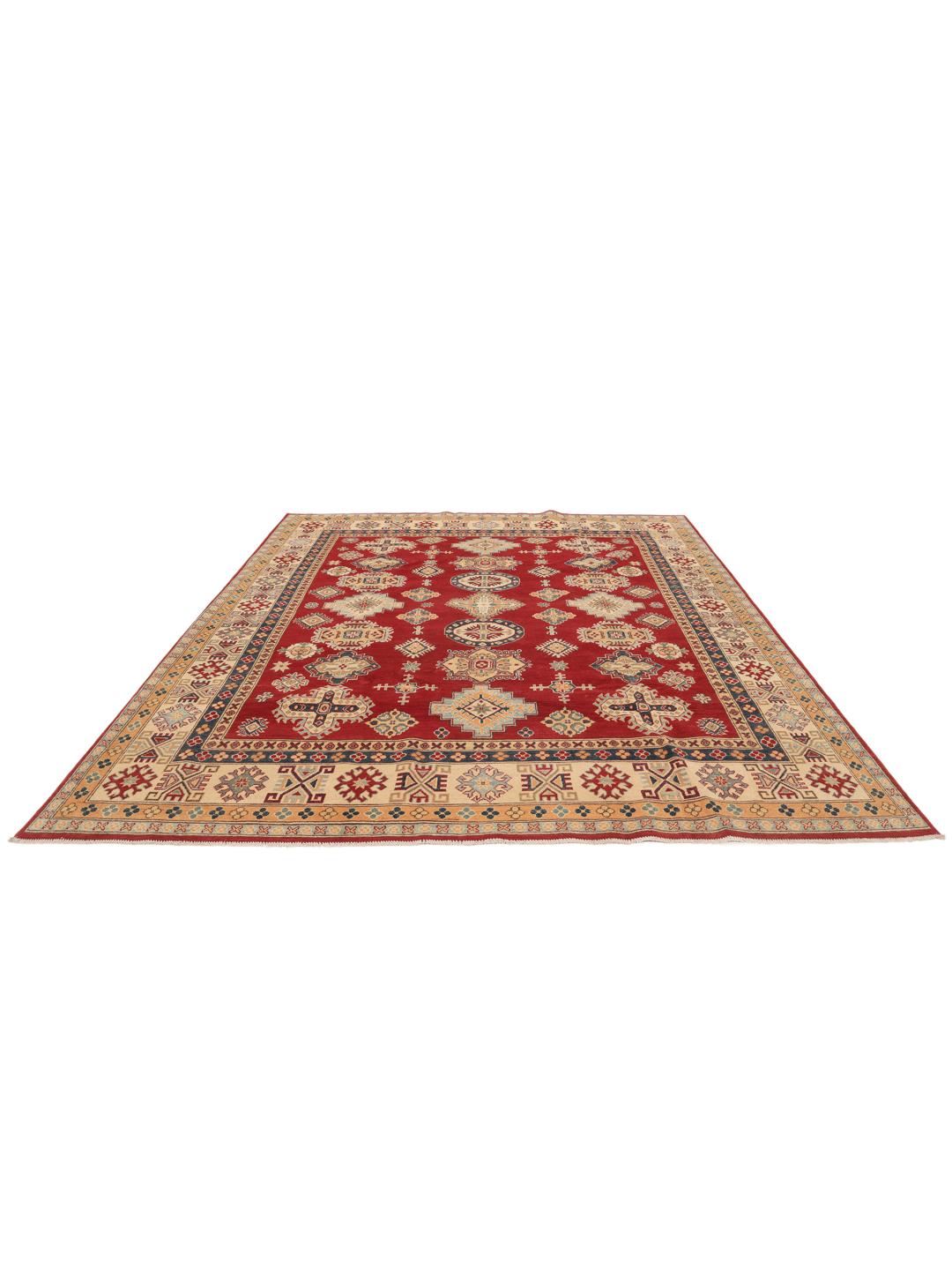
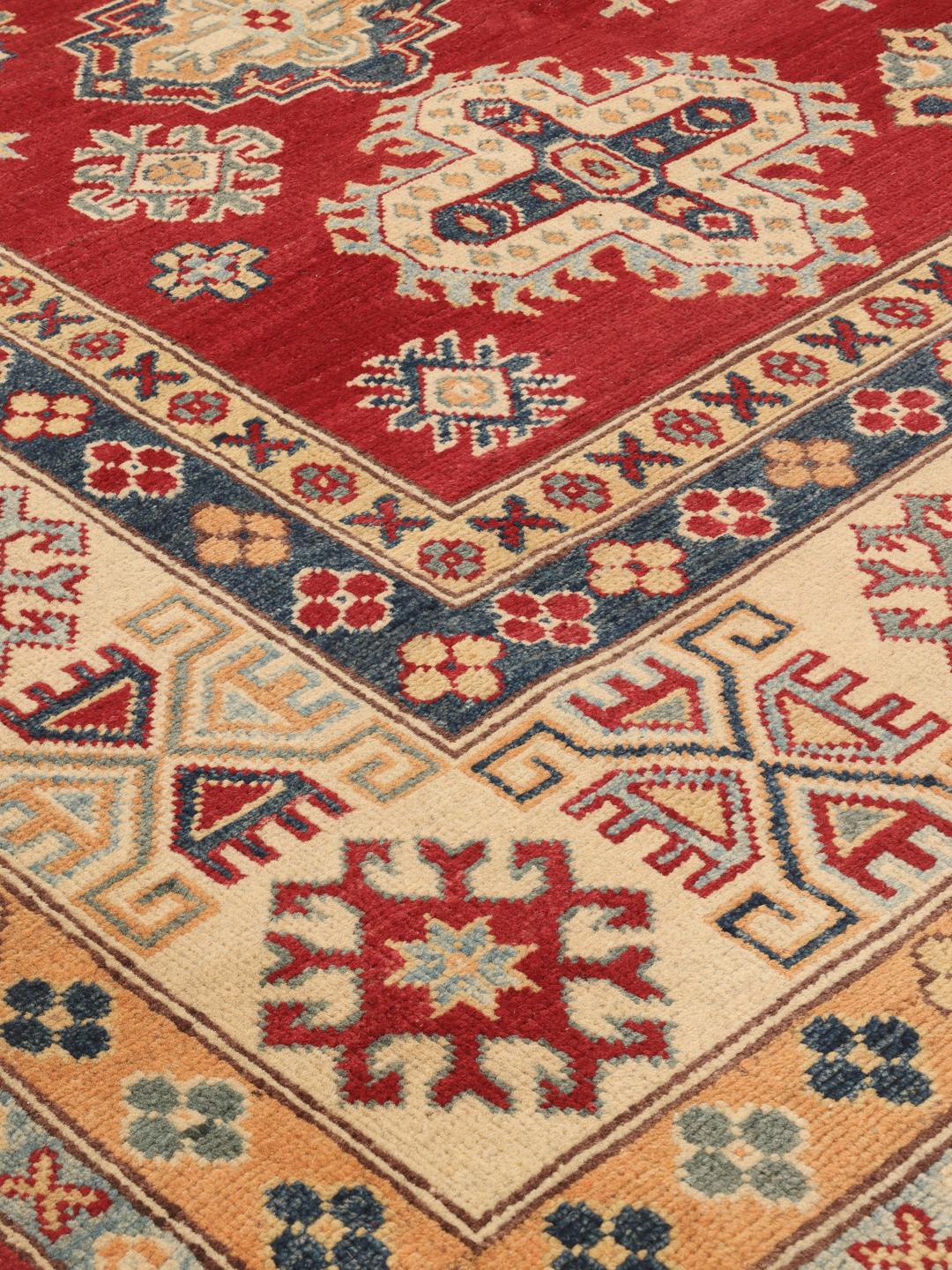
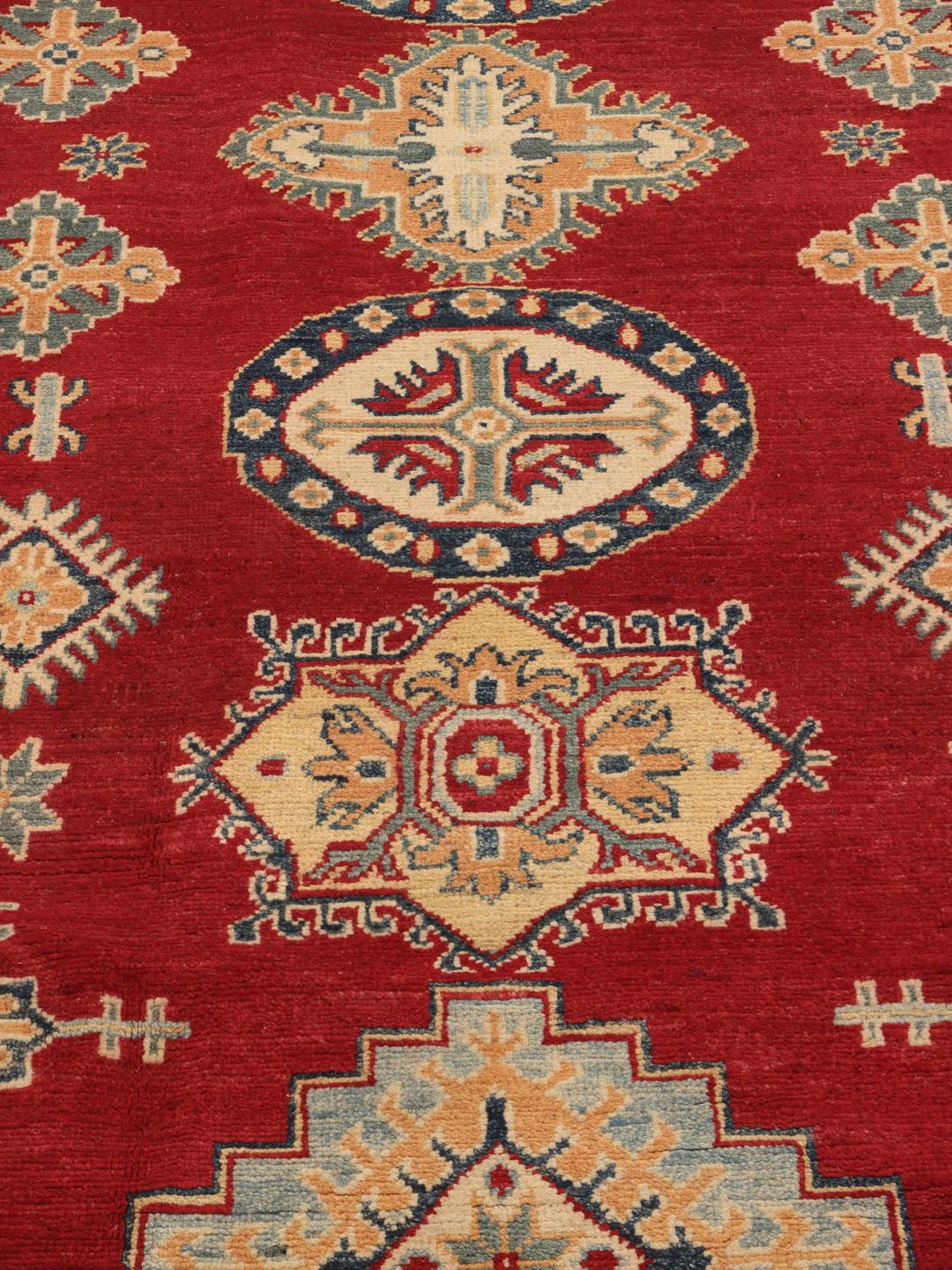
Signature design elements of Kazak rugs include large, stylised medallions, geometric latch-hook motifs, and a strong, bold use of colour. The field is often filled with these powerful symbols, framed by elaborate, multi-layered borders that guide the eye around the central patterns. In this piece, the traditional red field provides a dramatic backdrop for the intricate, light-toned geometric shapes, creating a striking contrast that is a hallmark of the most sought-after examples.
Collectors value Kazak rugs for their untamed, artistic spirit and the visible hand of the weaver in every motif. Owning a piece from this tradition is an act of preserving a craft that relies on human intuition and cultural memory rather than industrial efficiency. Each rug serves as a testament to the enduring appeal of hand-knotted textiles, offering a connection to the past while providing a warm, sophisticated foundation for modern living.