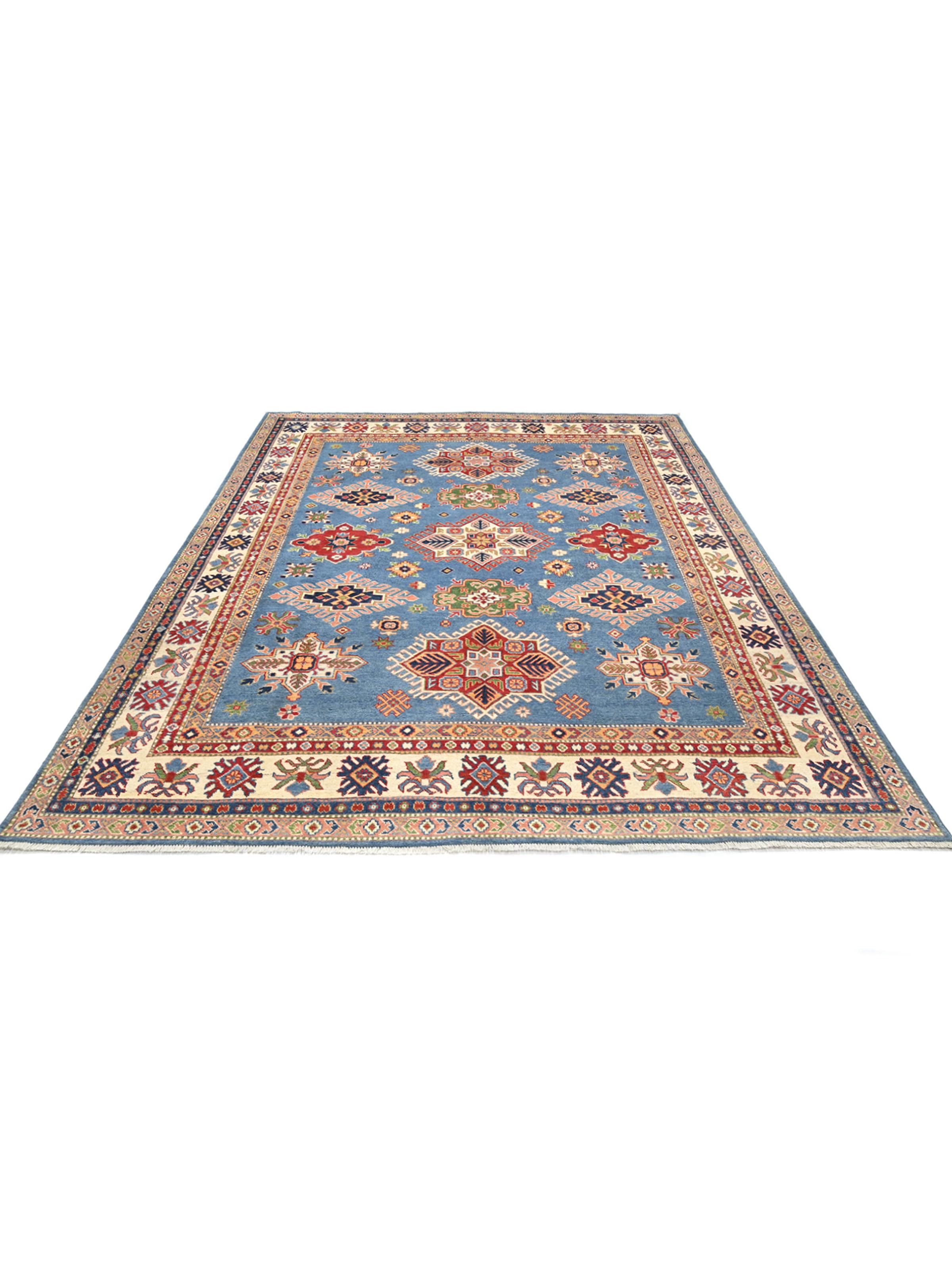
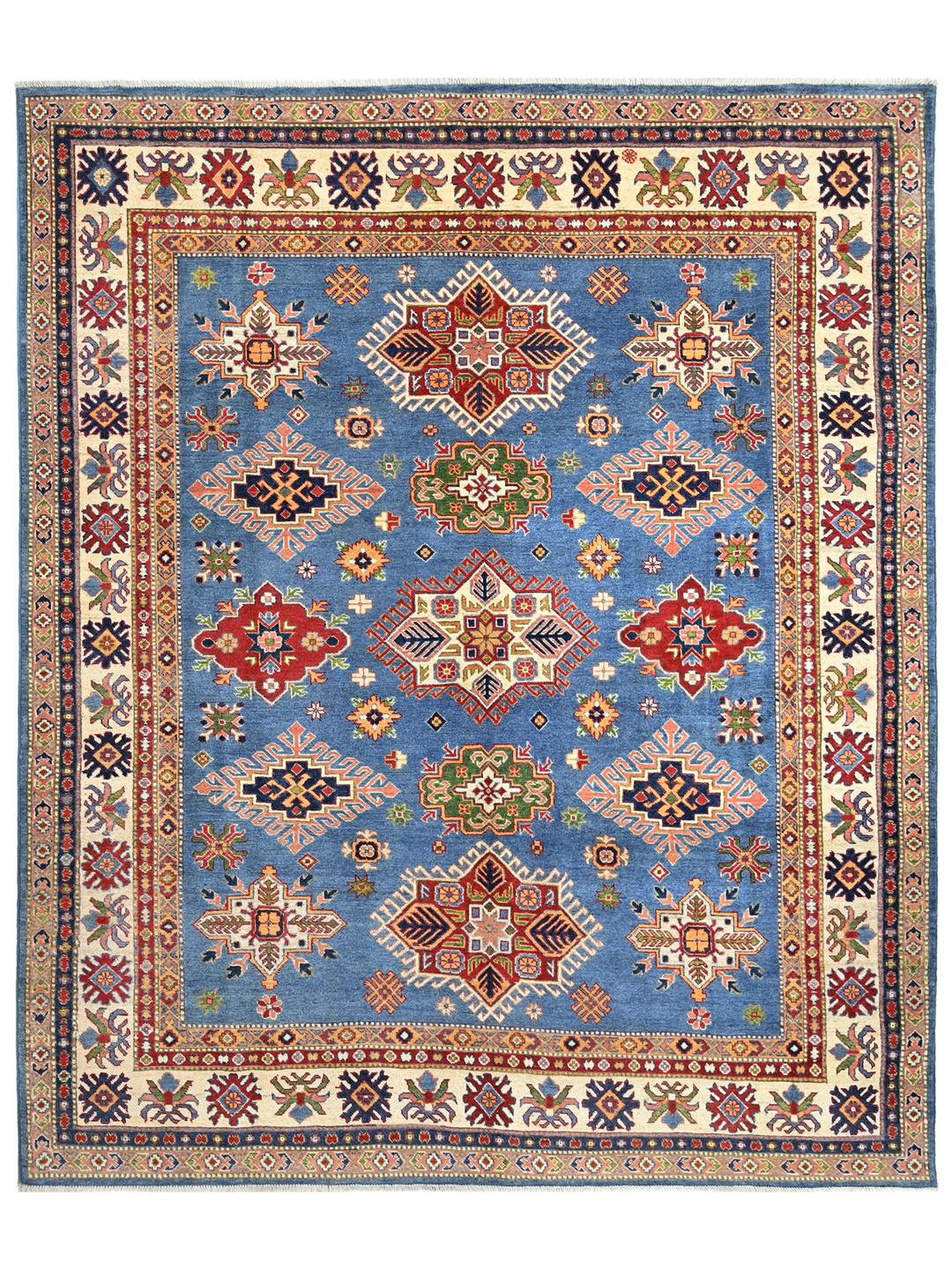
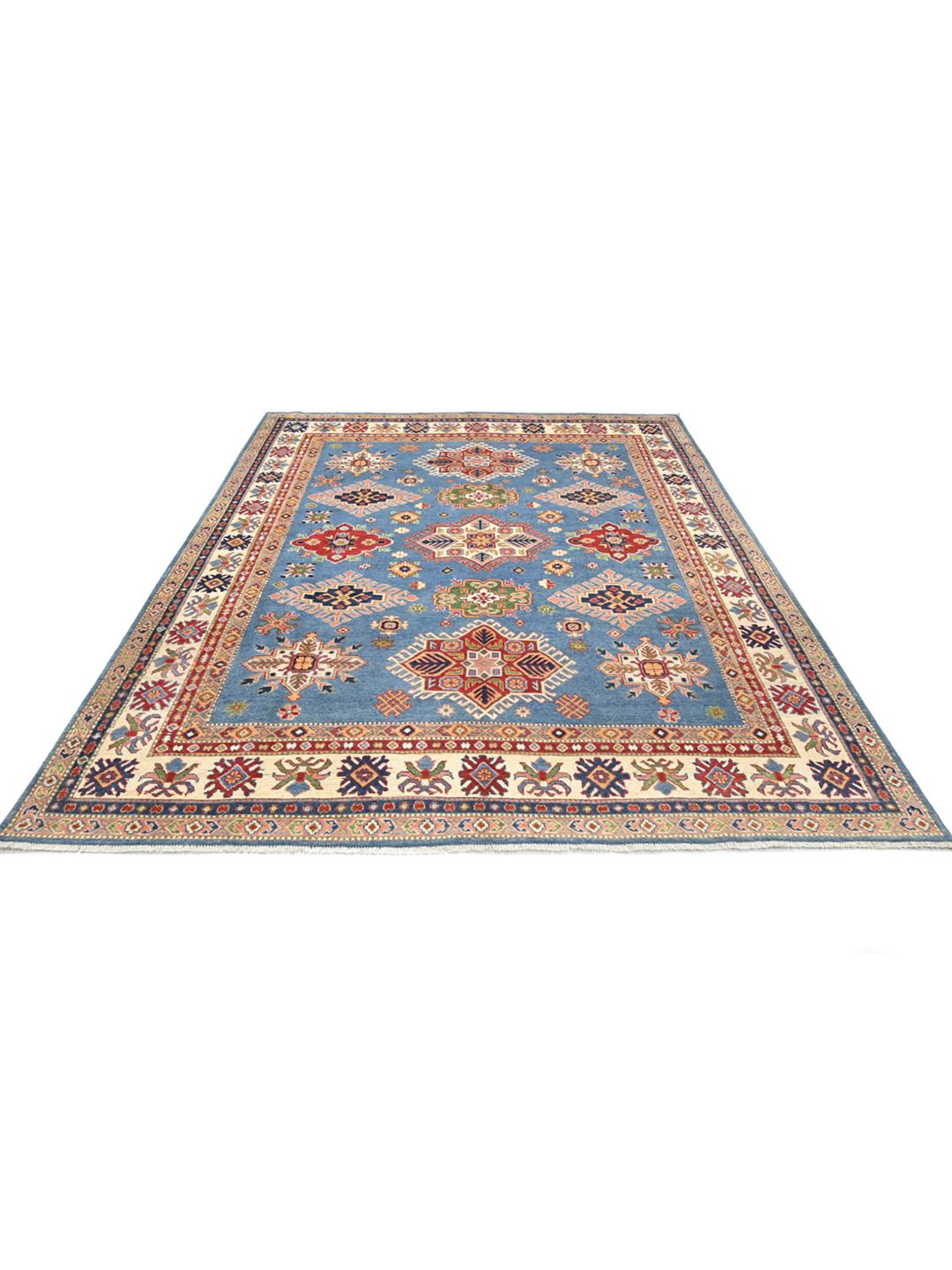
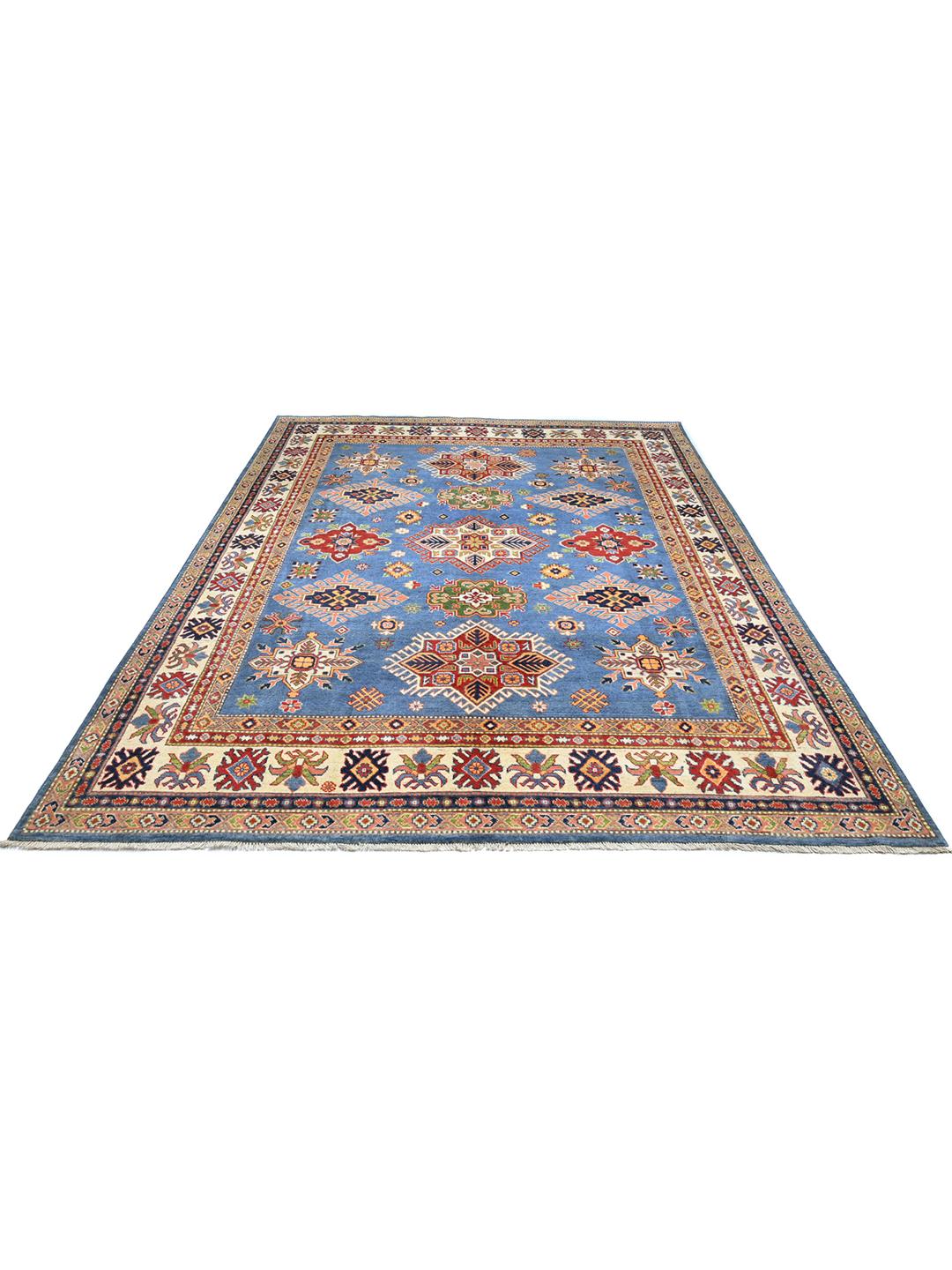
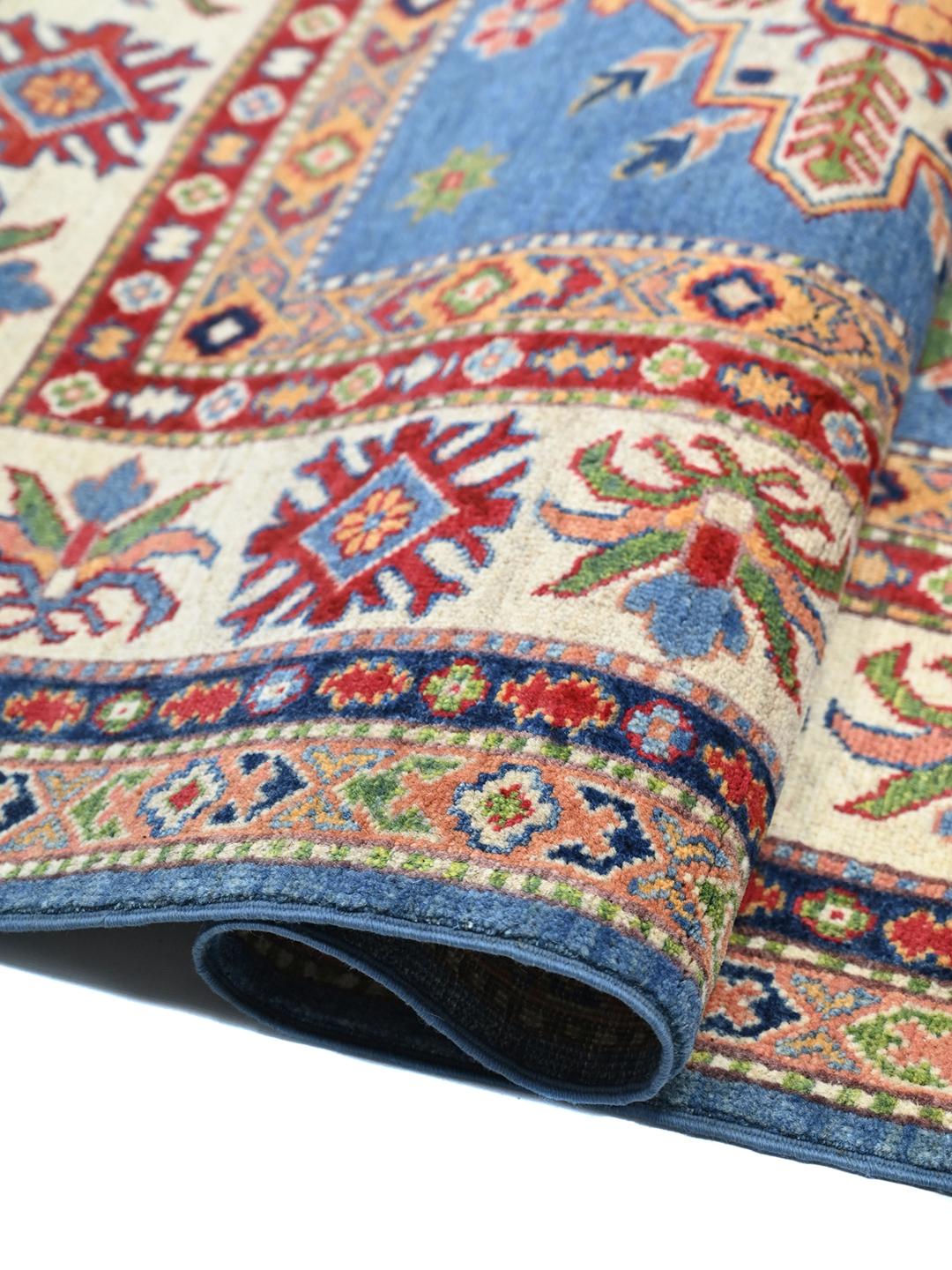
Kazak rugs originate from the Caucasus region, where they have been woven for centuries by nomadic tribes. While the name refers to these historical roots, the finest contemporary examples, such as this one, are crafted in Afghanistan. This evolution reflects the migration of weaving traditions along ancient trade routes, where techniques and patterns were preserved and adapted by skilled artisans in new locales.
The term 'Kazak' denotes a specific style of tribal weaving characterised by bold, large-scale geometric designs. Unlike the more curvilinear patterns found in urban workshops, these rugs are celebrated for their strong, primitive aesthetic. The use of vibrant, natural-looking dyes and a long, thick pile is a hallmark of the tradition, designed to provide warmth in the harsh climates of the high-altitude regions where these rugs were traditionally used.
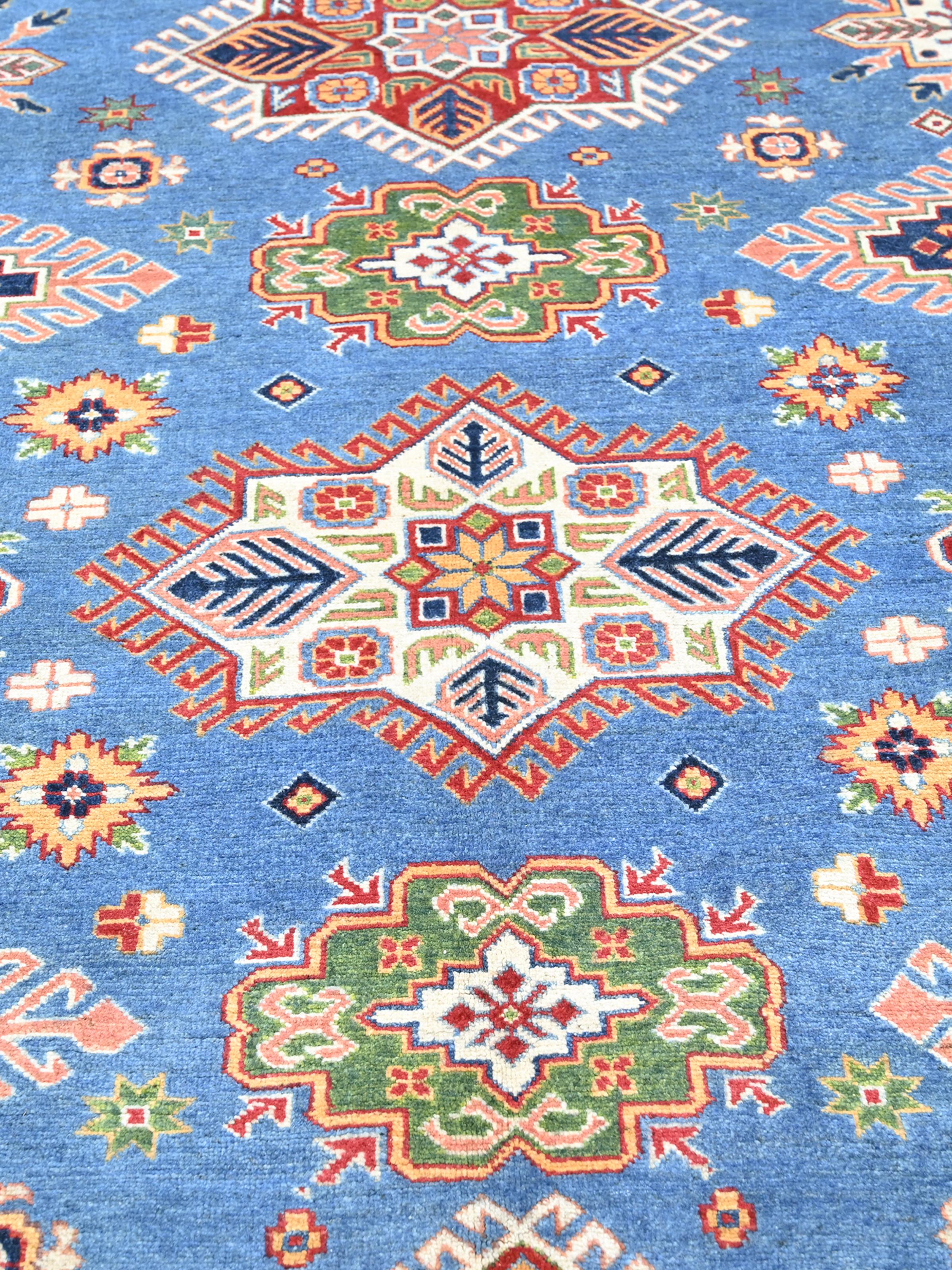
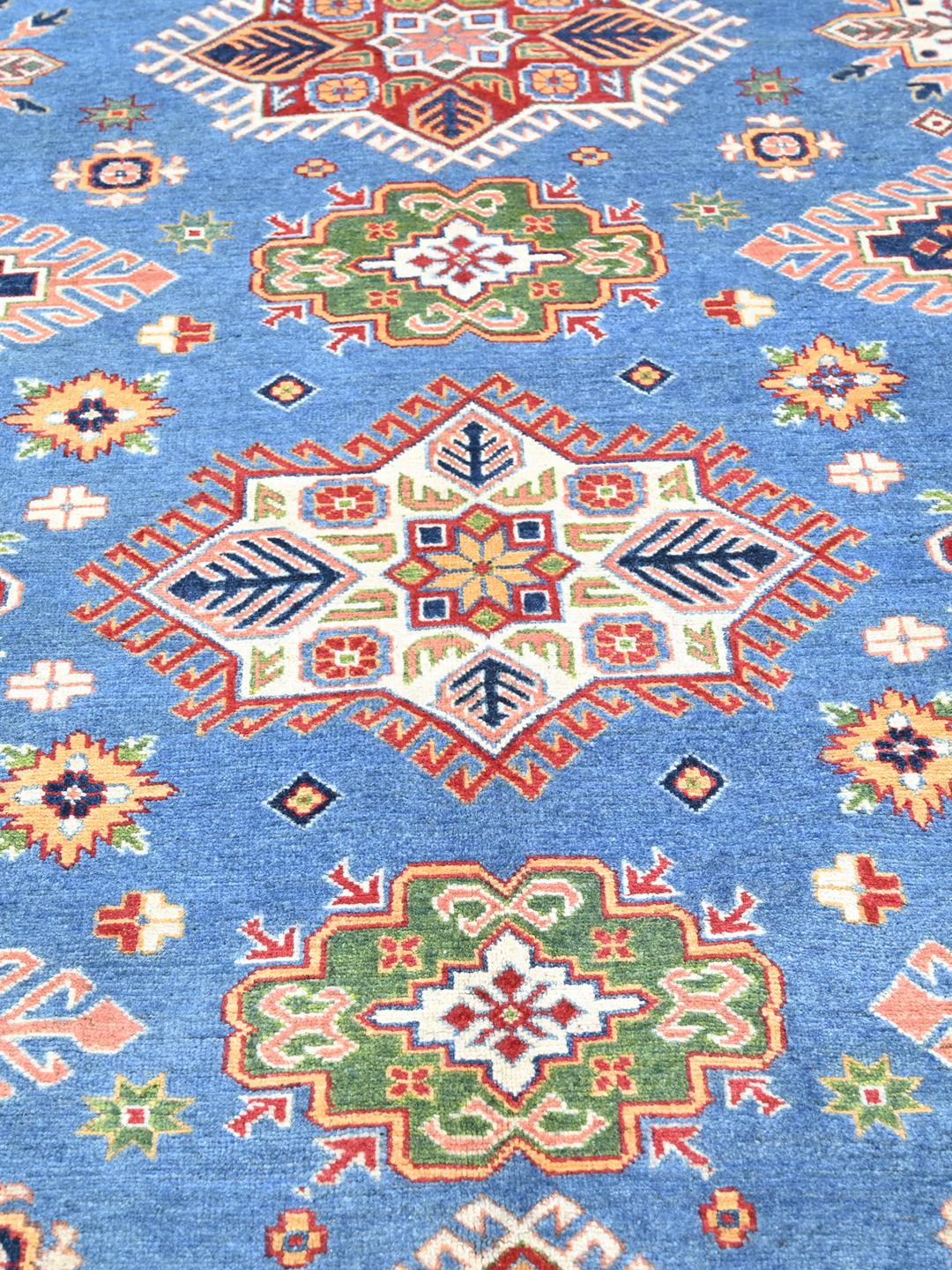
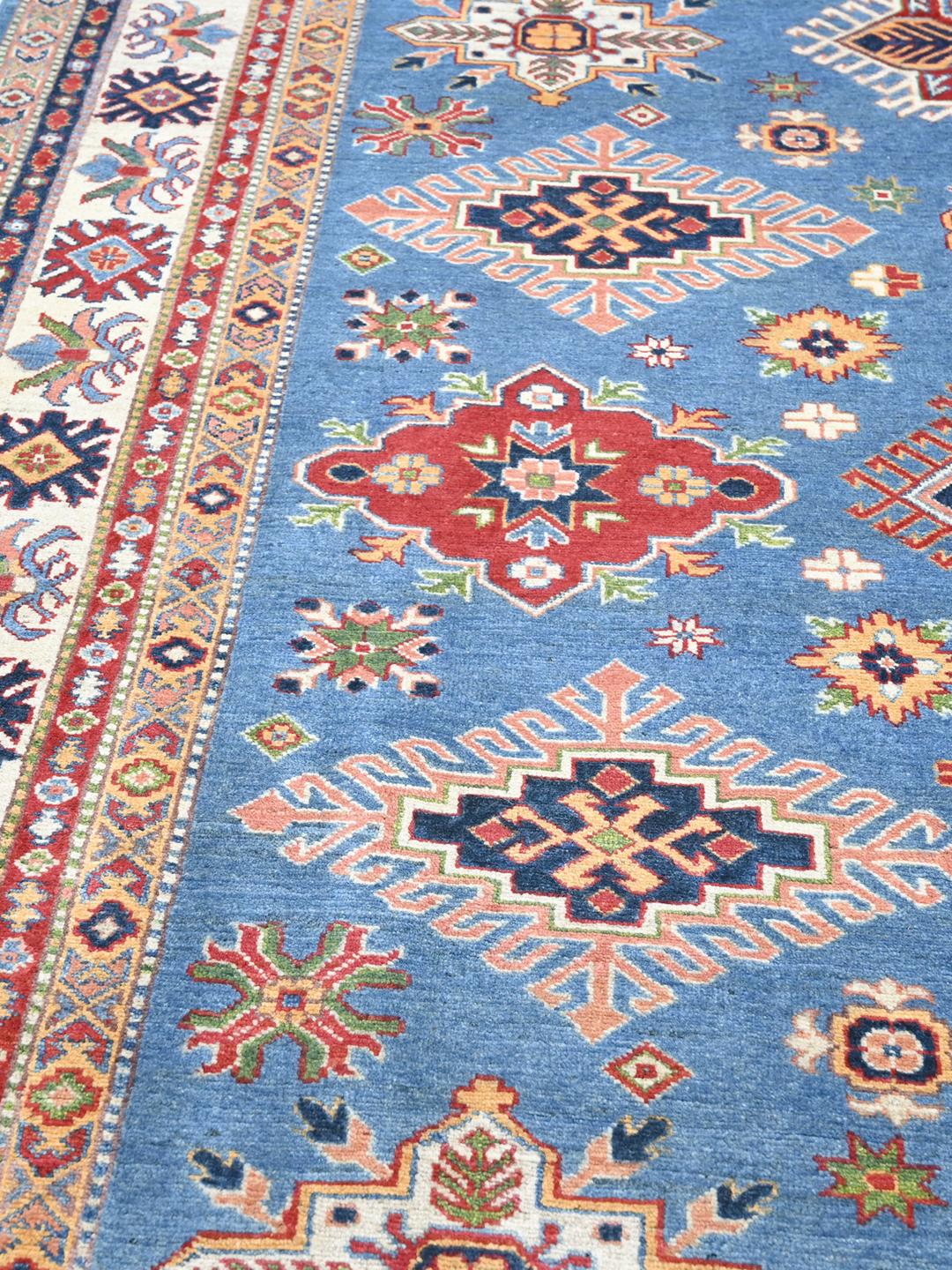
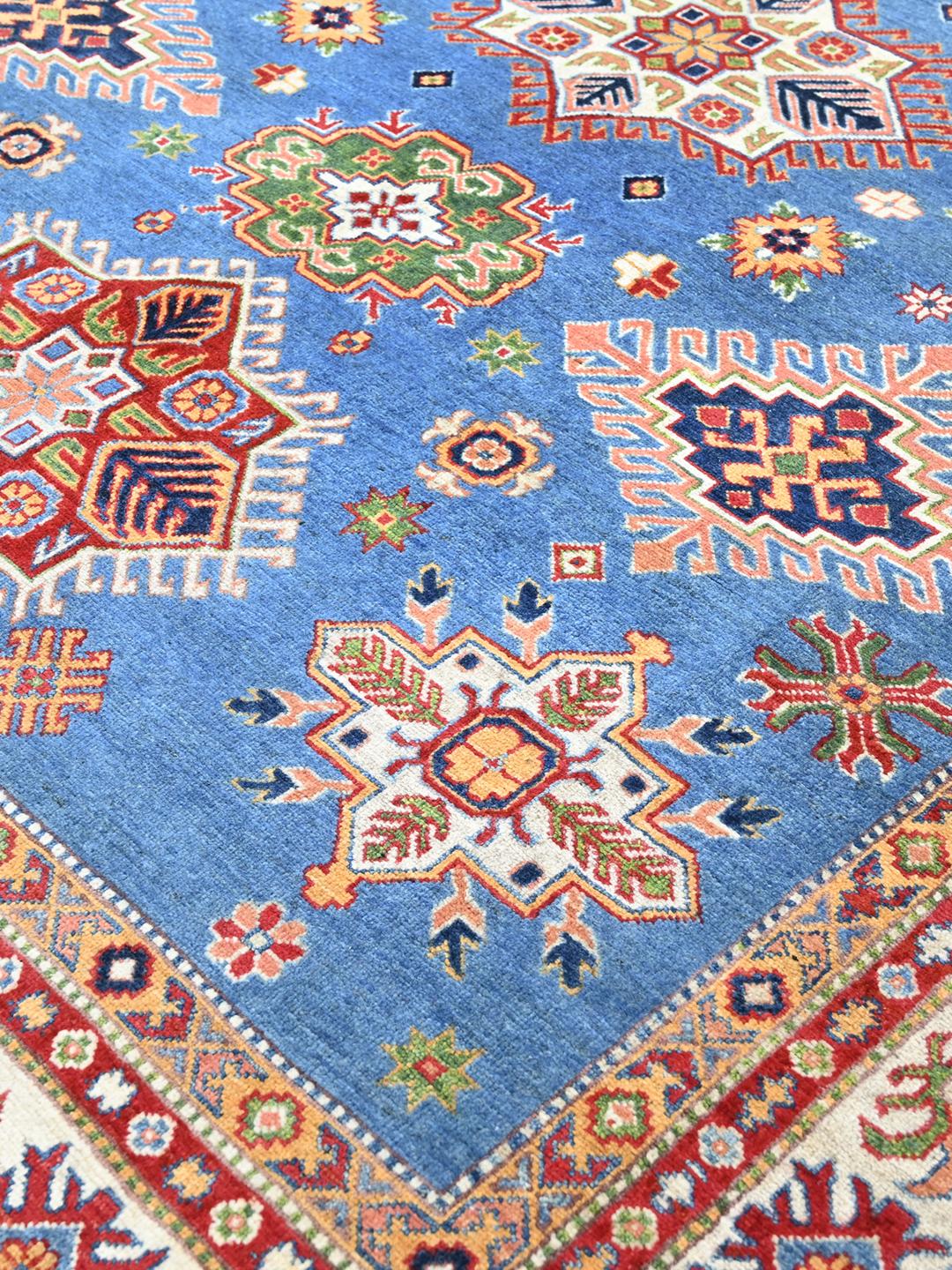
The design language of a Kazak is highly symbolic. The field is typically filled with stylized medallions, hooked guls, and geometric shapes that often represent tribal identity, protective amulets, or elements of the natural world. The borders are equally distinct, often featuring reciprocal trefoil patterns or wide, protective guard stripes that frame the central field with a sense of order and strength.
Owning a piece from this tradition is a connection to a deep-rooted cultural heritage. These rugs are highly valued by collectors not only for their visual impact but for the skill required to translate complex tribal geometry into a hand-knotted textile. Each rug is a testament to the endurance of these traditional methods, offering a sense of history and permanence that modern, mass-produced items lack.