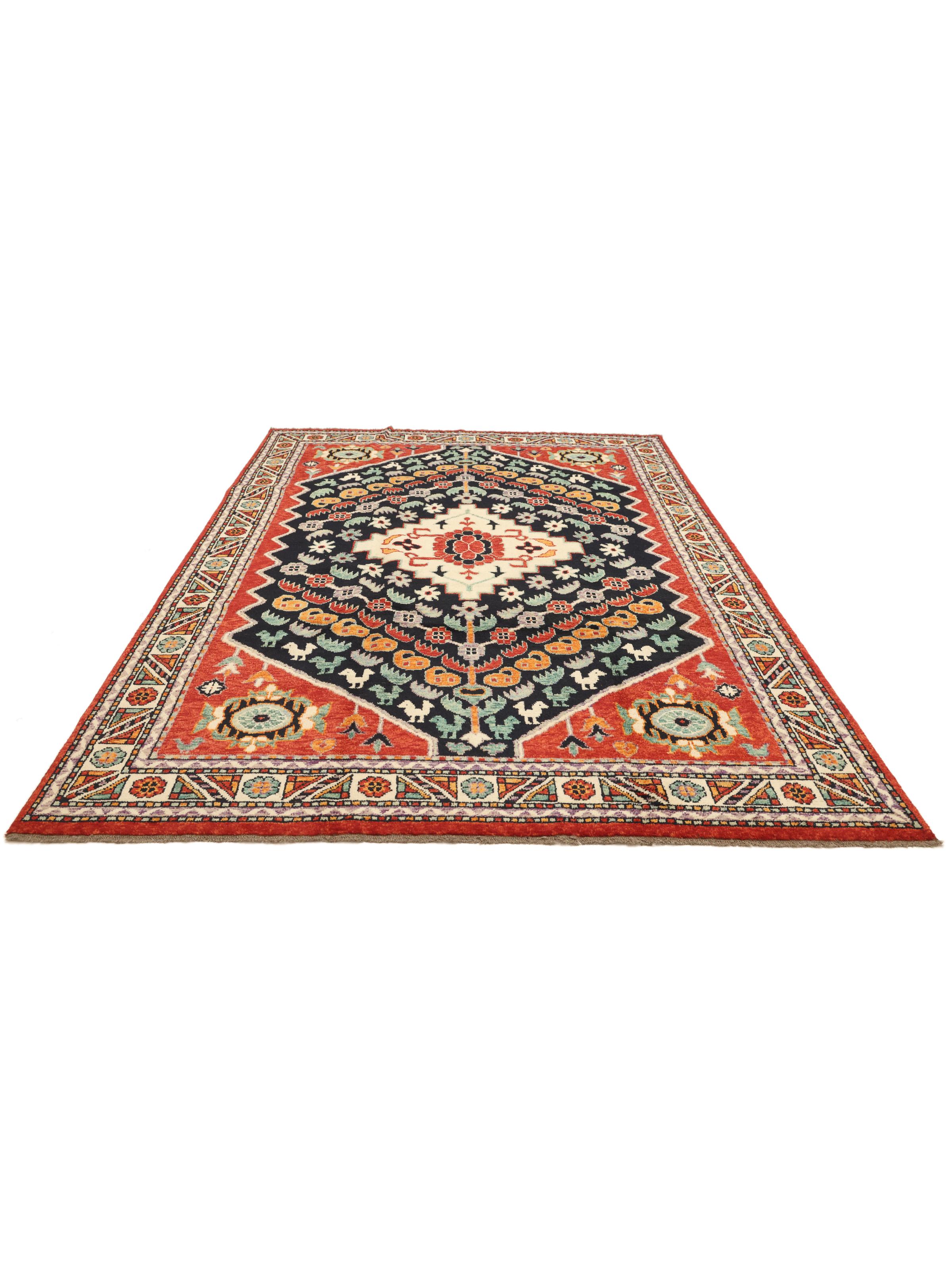
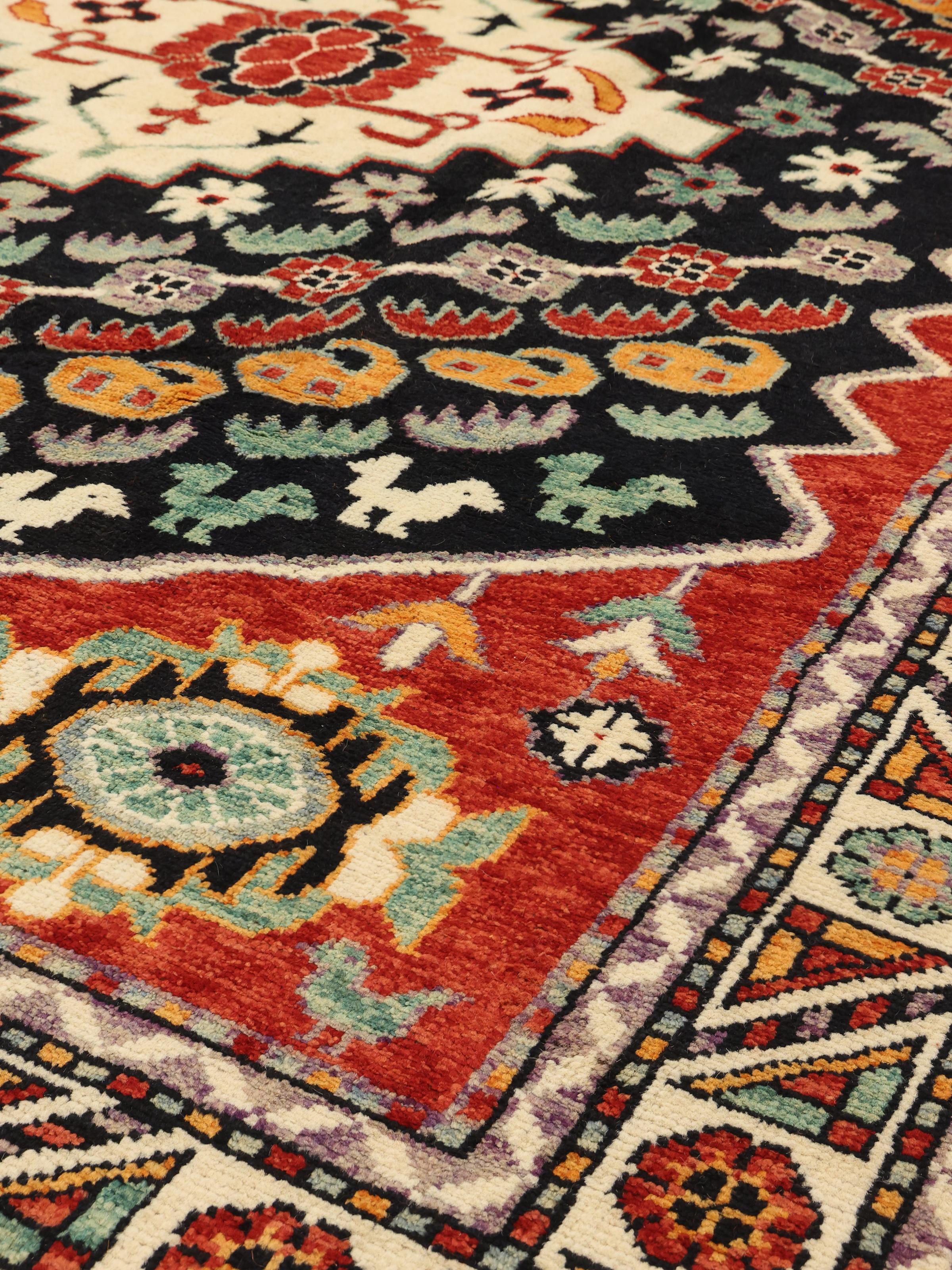
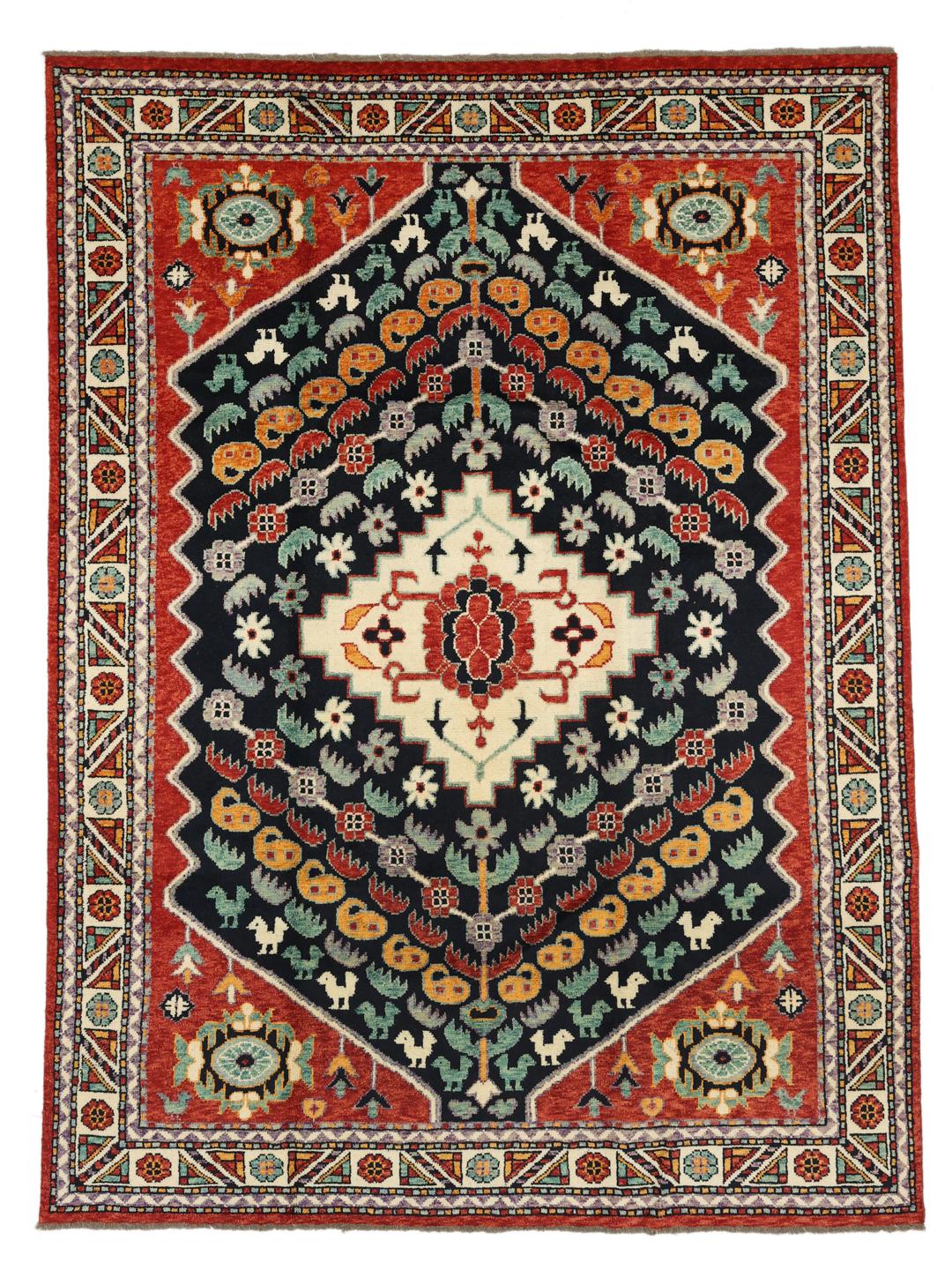
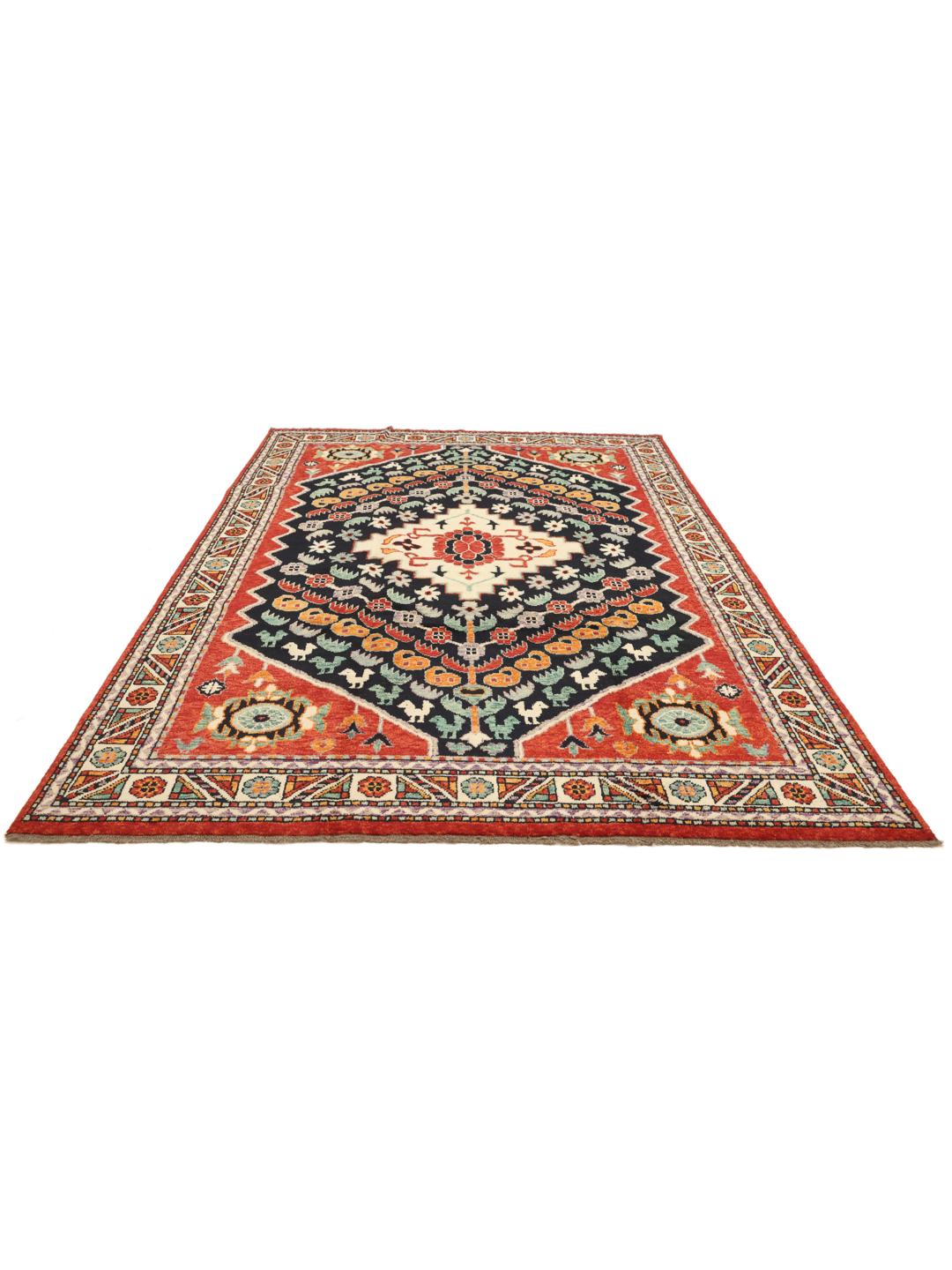
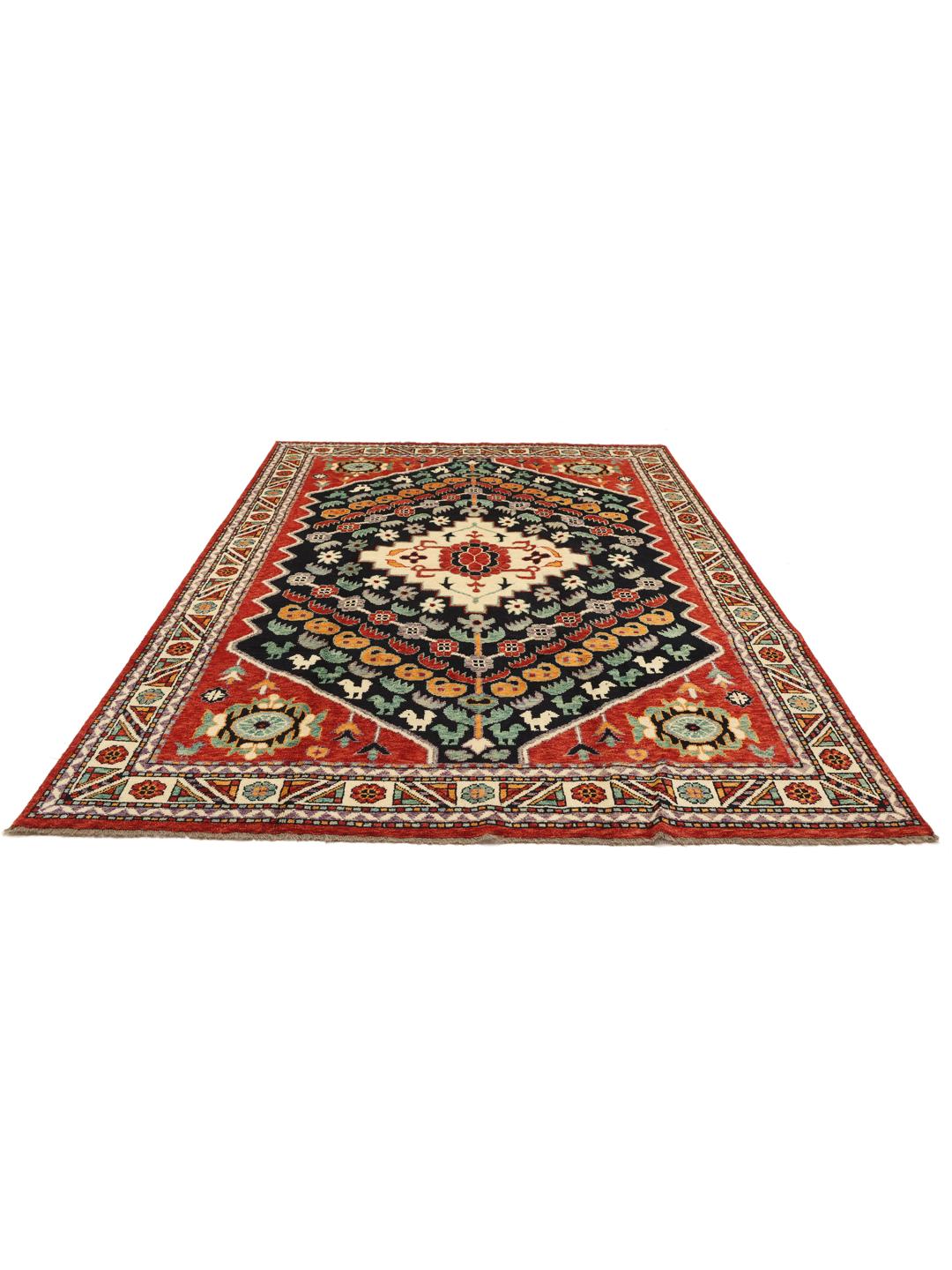
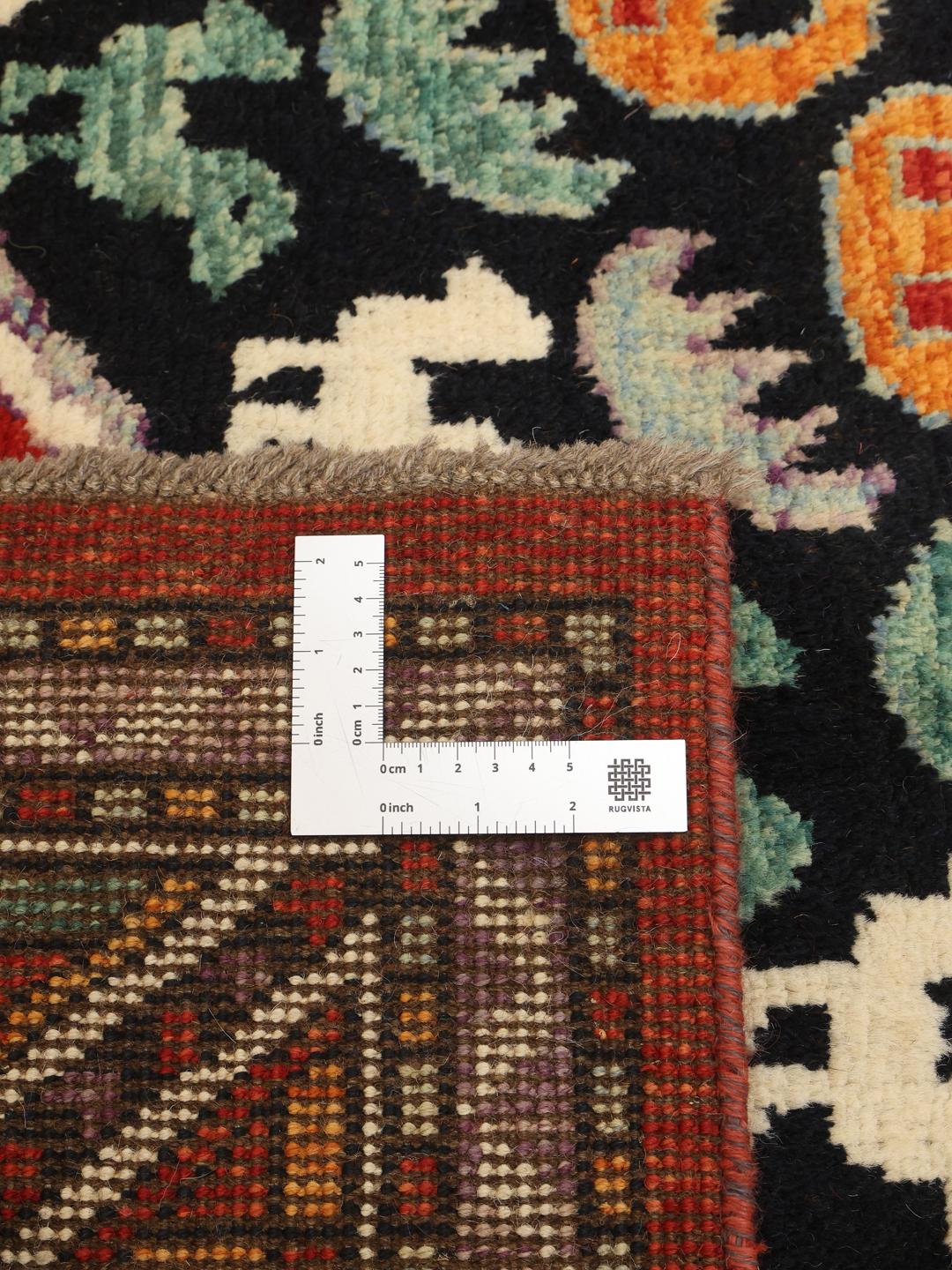
Kazak rugs originate from the Caucasus region, historically serving as a bridge between the nomadic weaving traditions of the mountain tribes and the formal design language of the Middle East. While the original Kazak style is rooted in the high-altitude landscapes of the Caucasus, the tradition has evolved significantly, with modern master weavers in Afghanistan now producing some of the most sought-after examples that honour these ancient aesthetic roots.
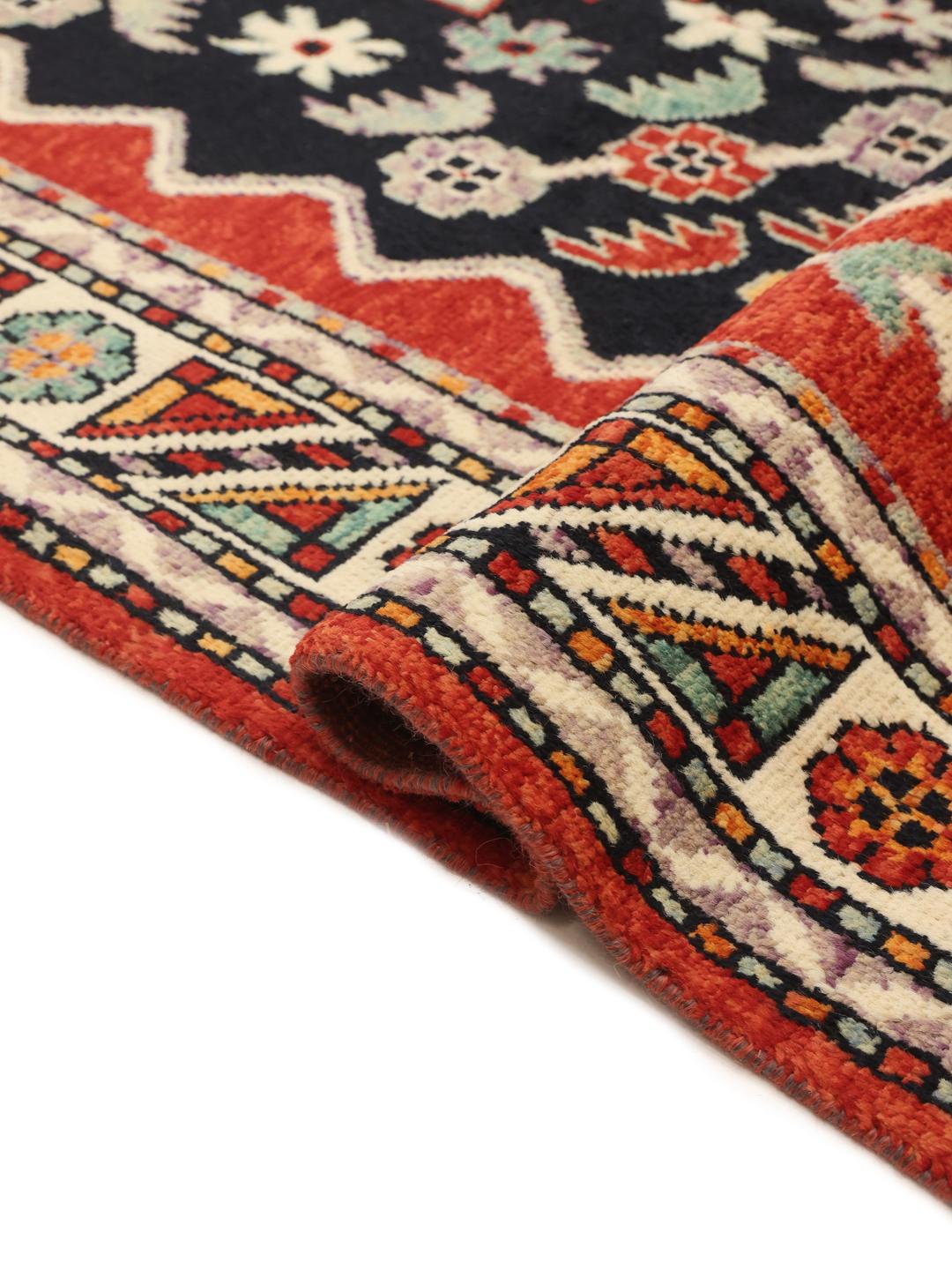
The term Kazak generally refers to rugs with a bold, graphic sensibility, often characterised by their use of high-quality Wool and vibrant, natural dyes. These rugs are known for their geometric simplicity and use of primary colours, which distinguish them from the more ornate, curvilinear designs found elsewhere in the Middle East. The construction focuses on creating a robust, functional pile that is designed for both floor use and decorative display.
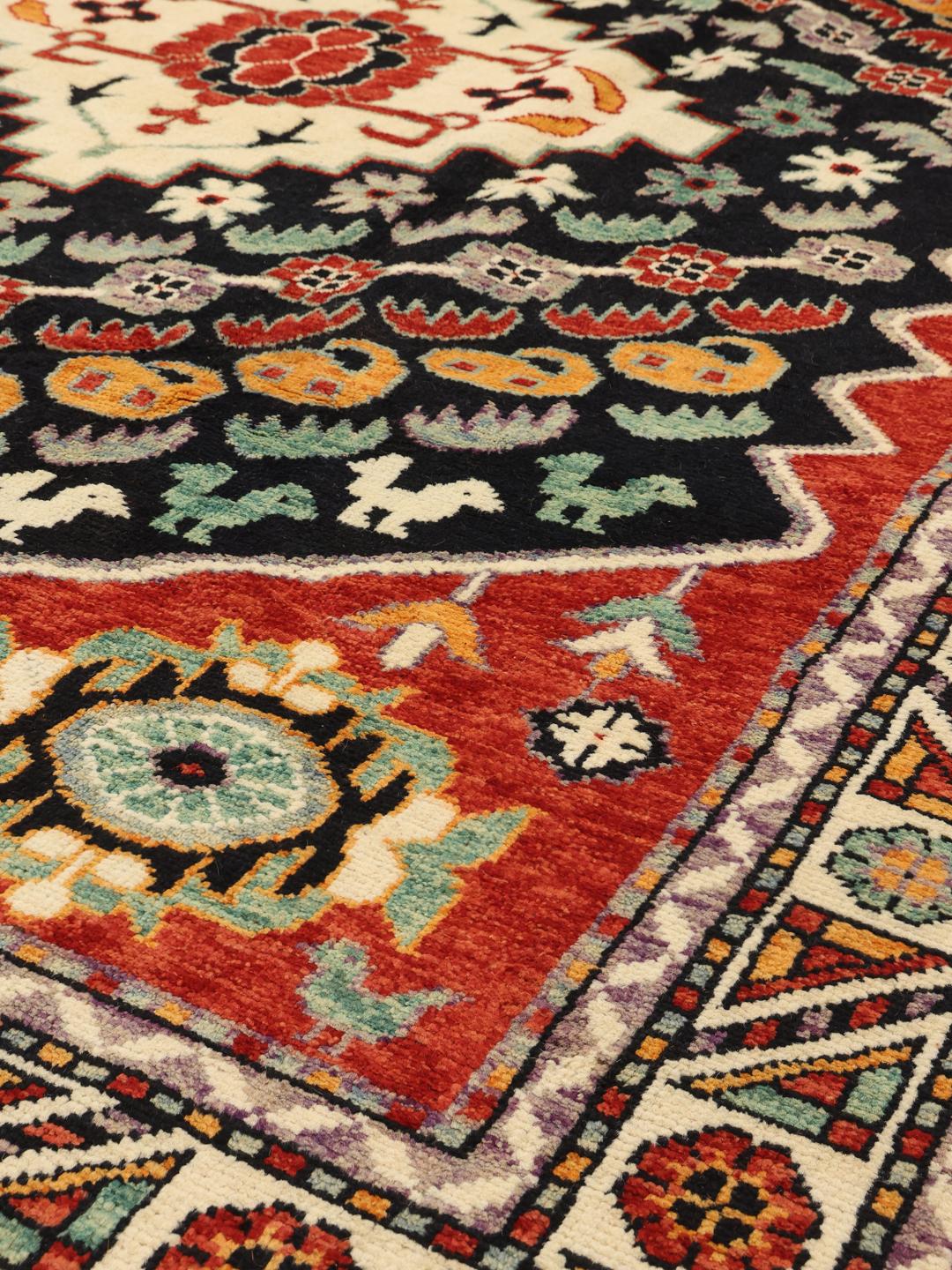
Signature motifs often include large, stylised medallions, geometric animals, and repeating floral or star elements, all enclosed within heavy, distinct borders. The design of this particular rug reflects these classic traditions, using a geometric vocabulary that has been passed down through generations of weavers. The layout is balanced yet expressive, celebrating the symbolic shapes that have defined this craft for centuries.
Collectors value these rugs for their authenticity and the sheer skill required to produce such bold patterns by hand. Owning a Kazak rug is an investment in cultural heritage, representing a connection to a long line of artisans who have kept these specific weaving traditions alive. It is a piece that carries real weight and presence, serving as a focal point that tells a story of tradition and human effort.