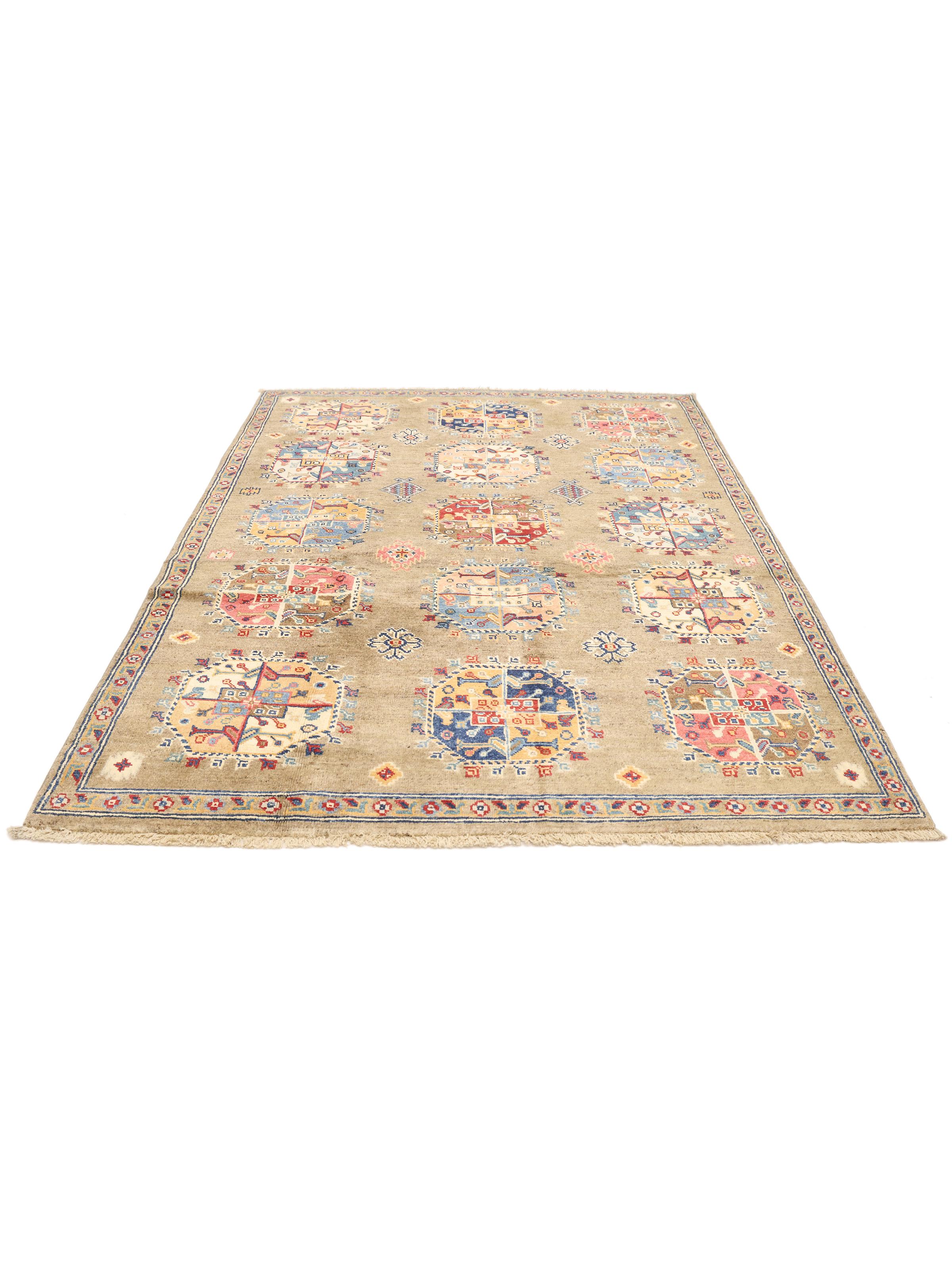
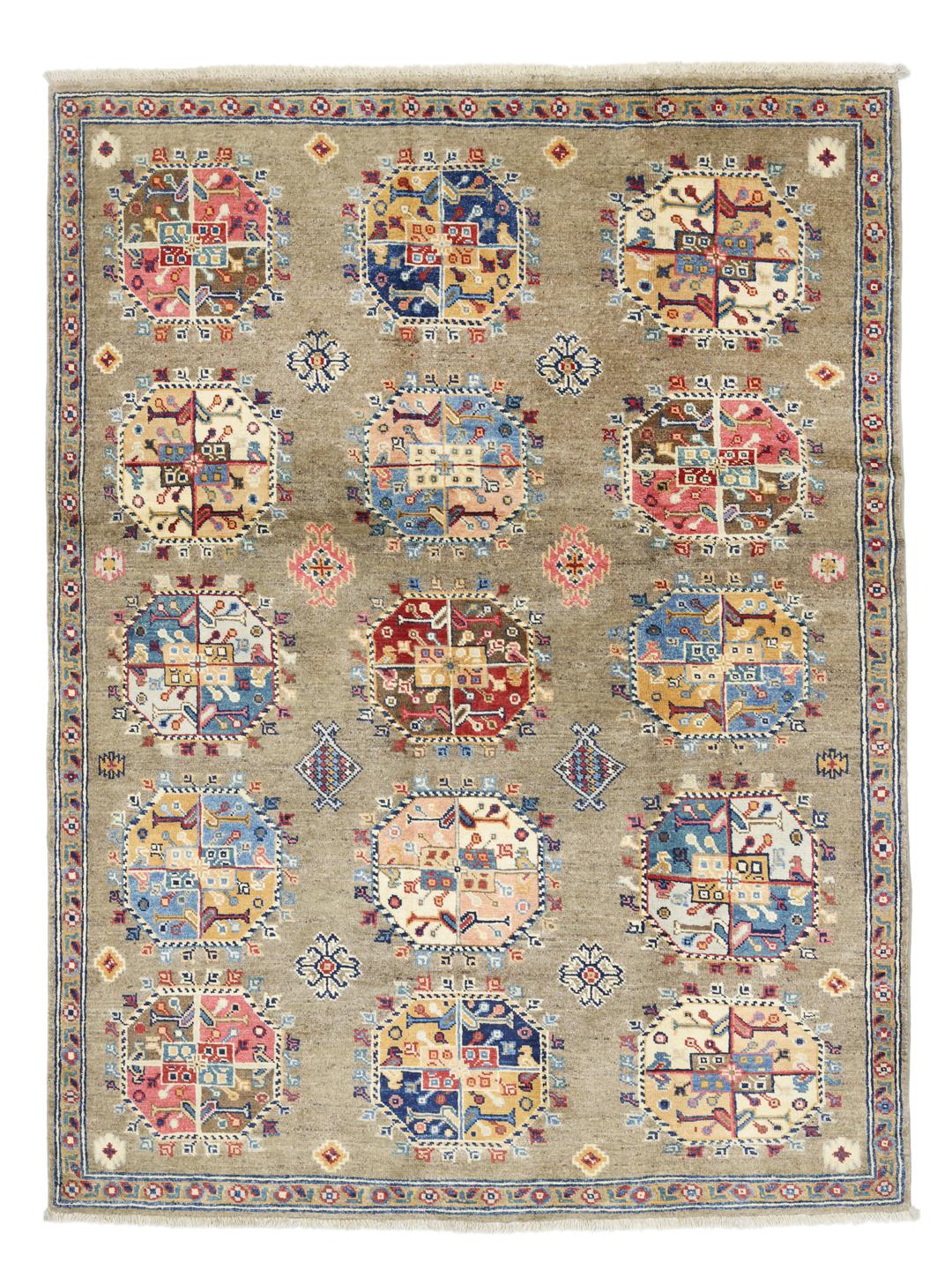
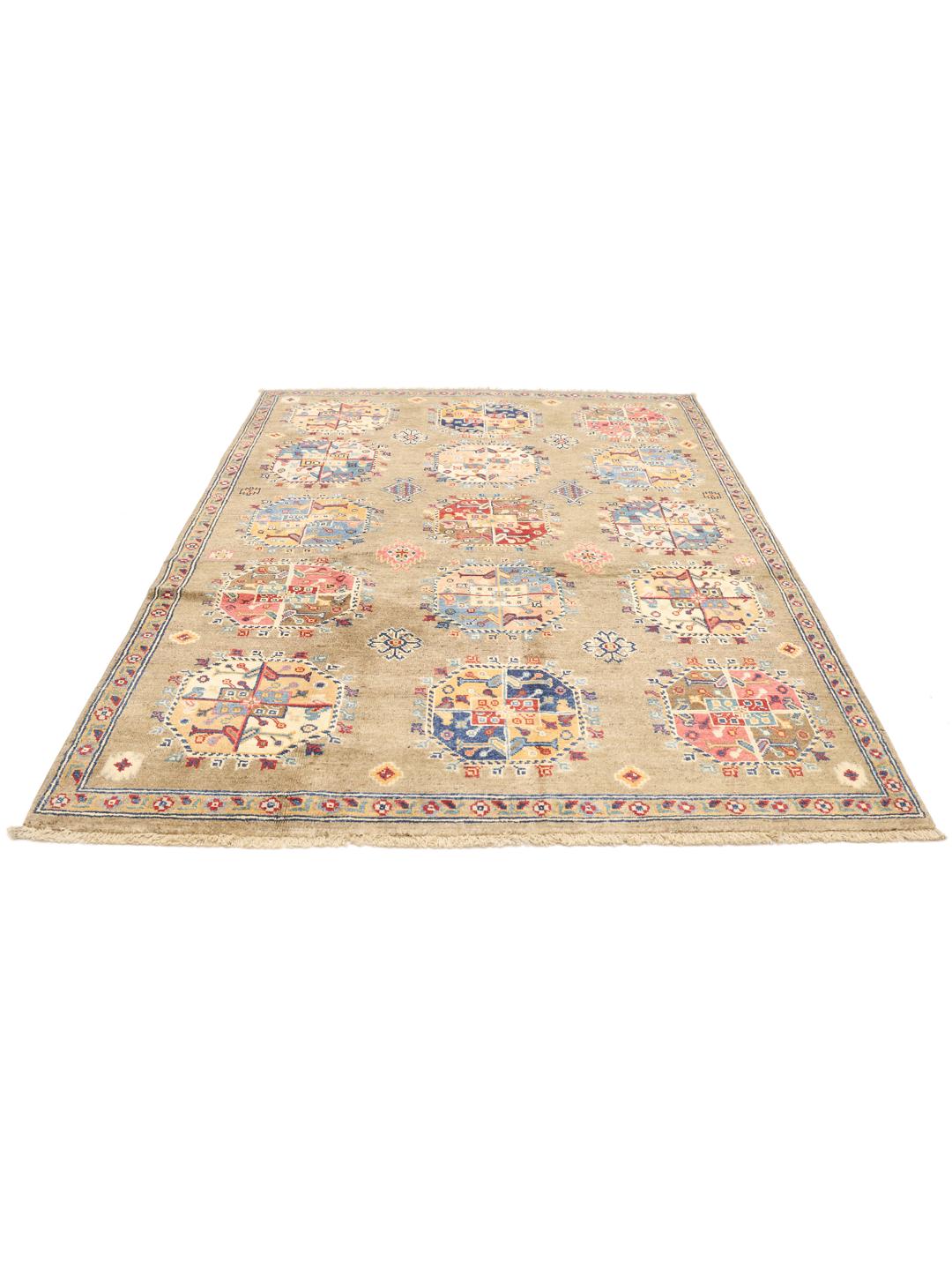
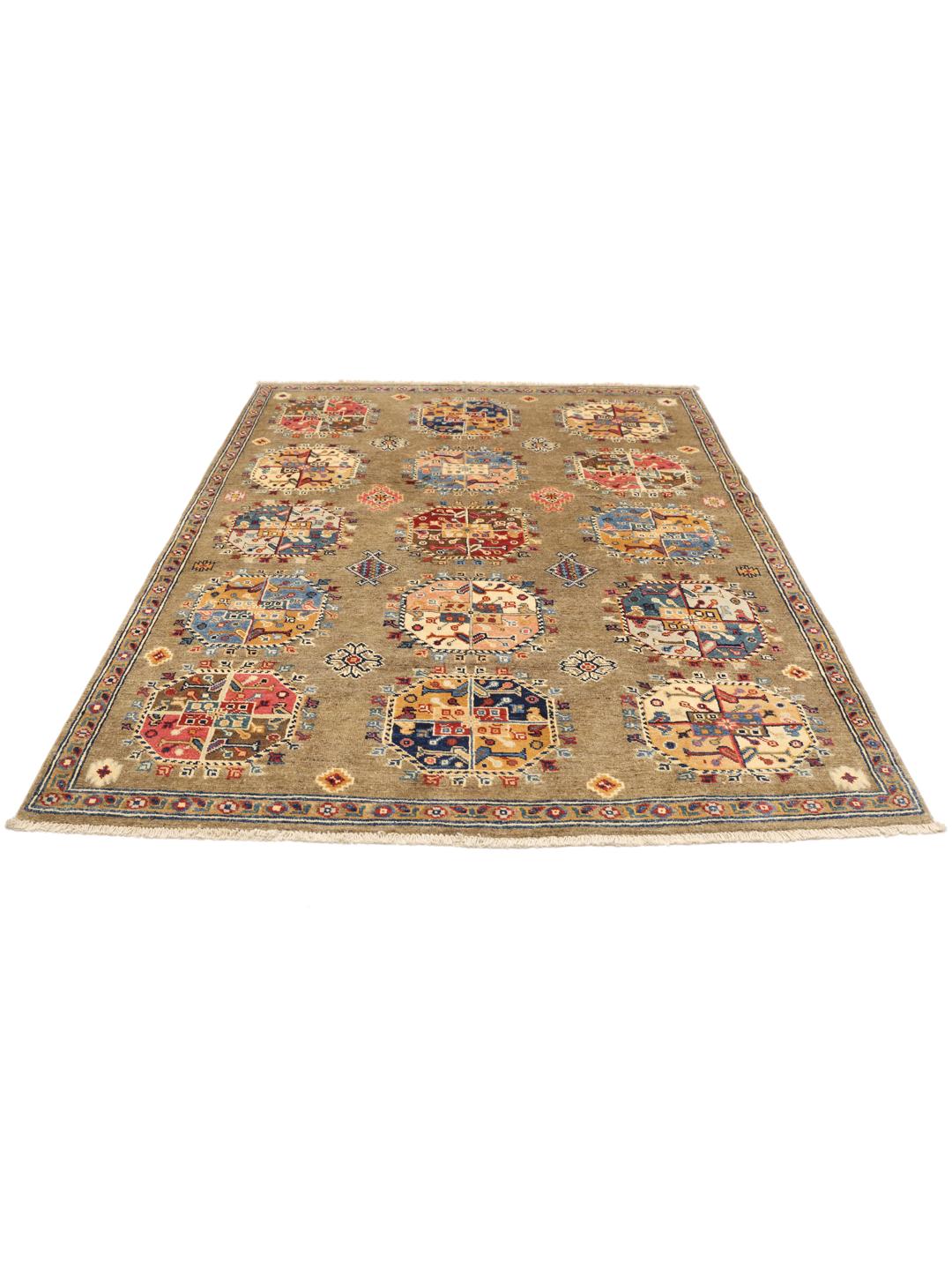
Kazak rugs trace their storied lineage to the mountainous regions of the Caucasus, where nomadic and semi-nomadic tribes developed a distinct aesthetic language. Over time, these weaving traditions migrated and found a new home in Afghanistan, where local artisans have embraced and refined the style. This evolution has allowed the Kazak tradition to flourish, blending ancient techniques with the unique cultural expressions of its new region.
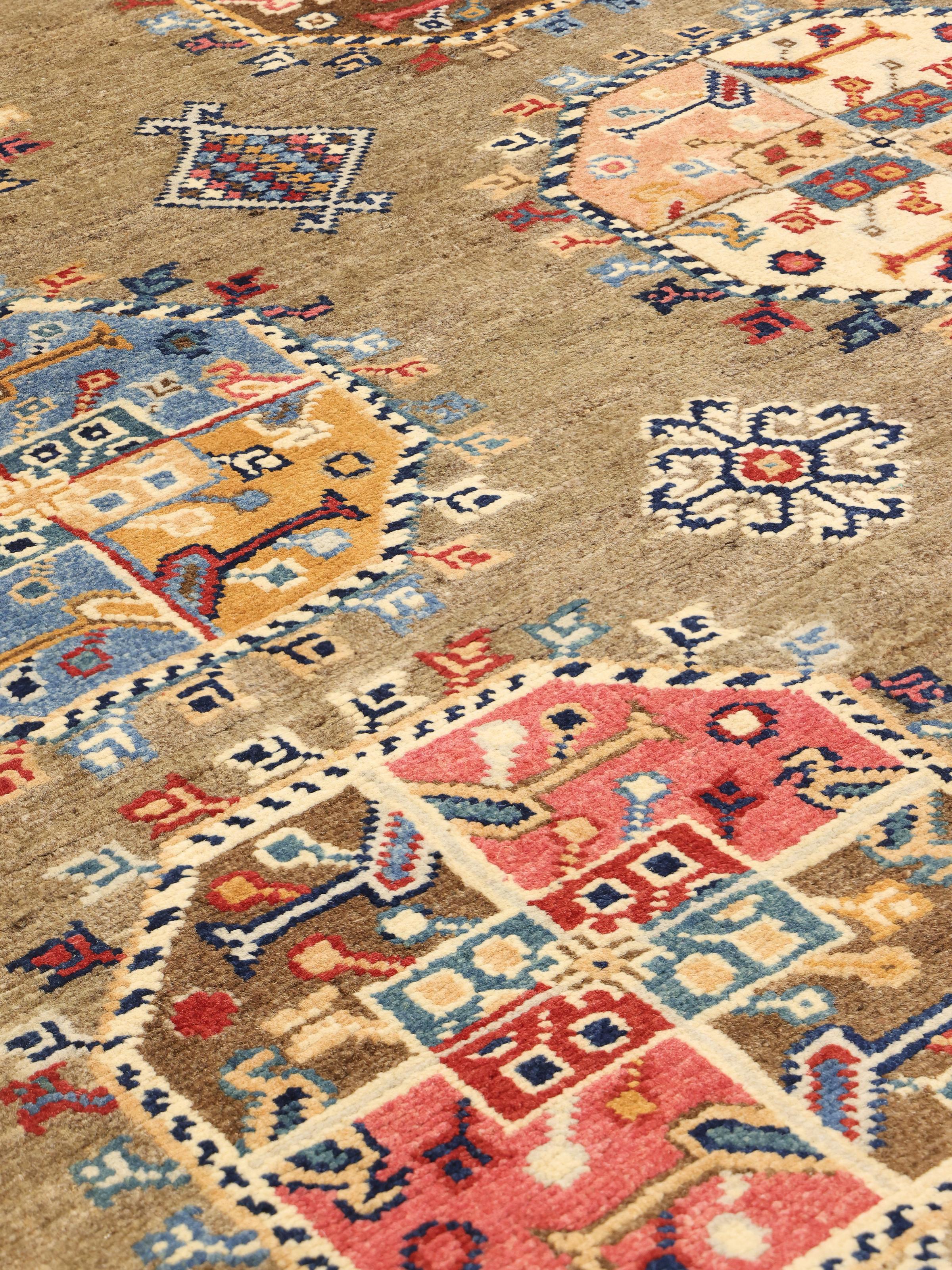
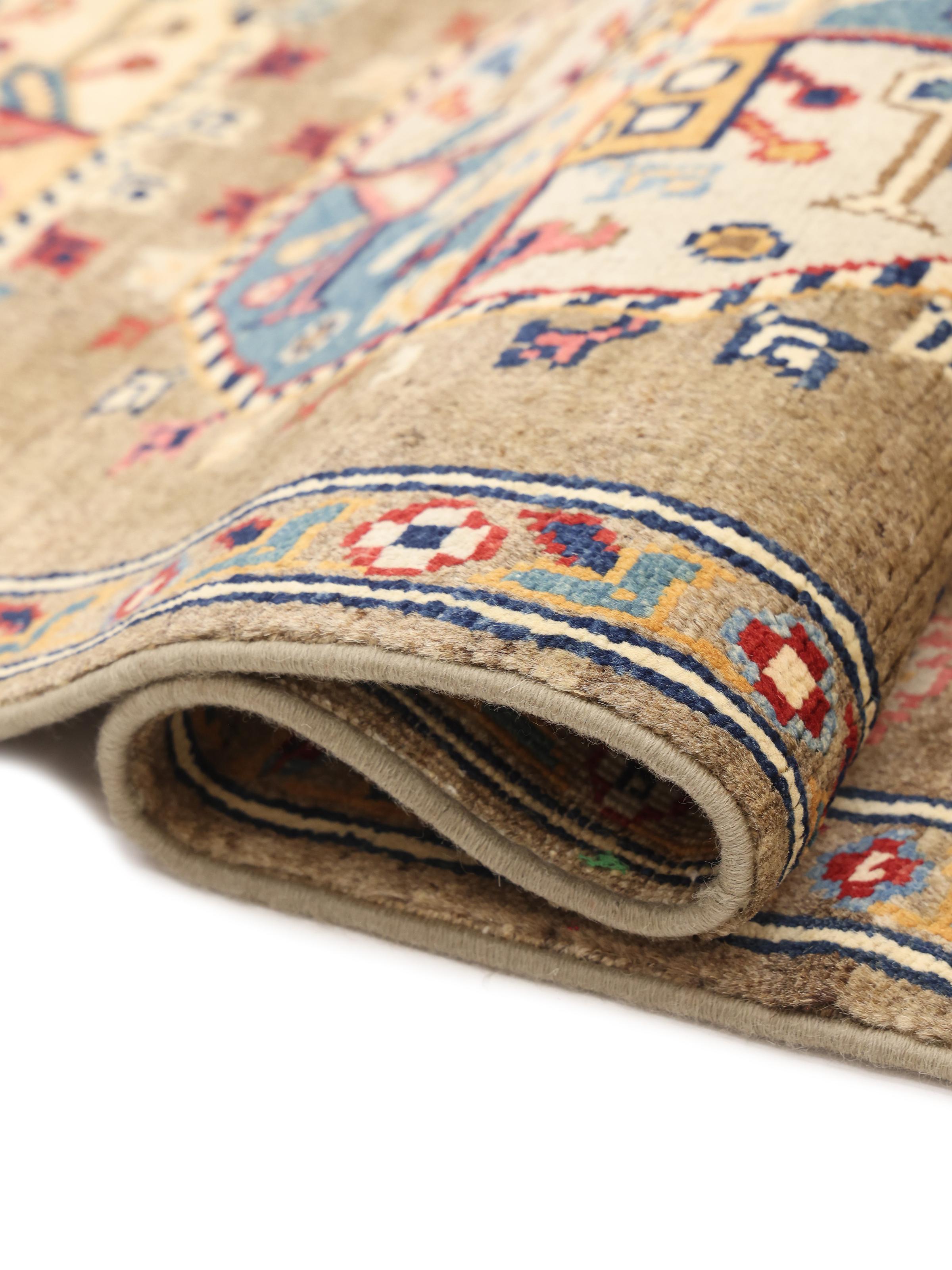
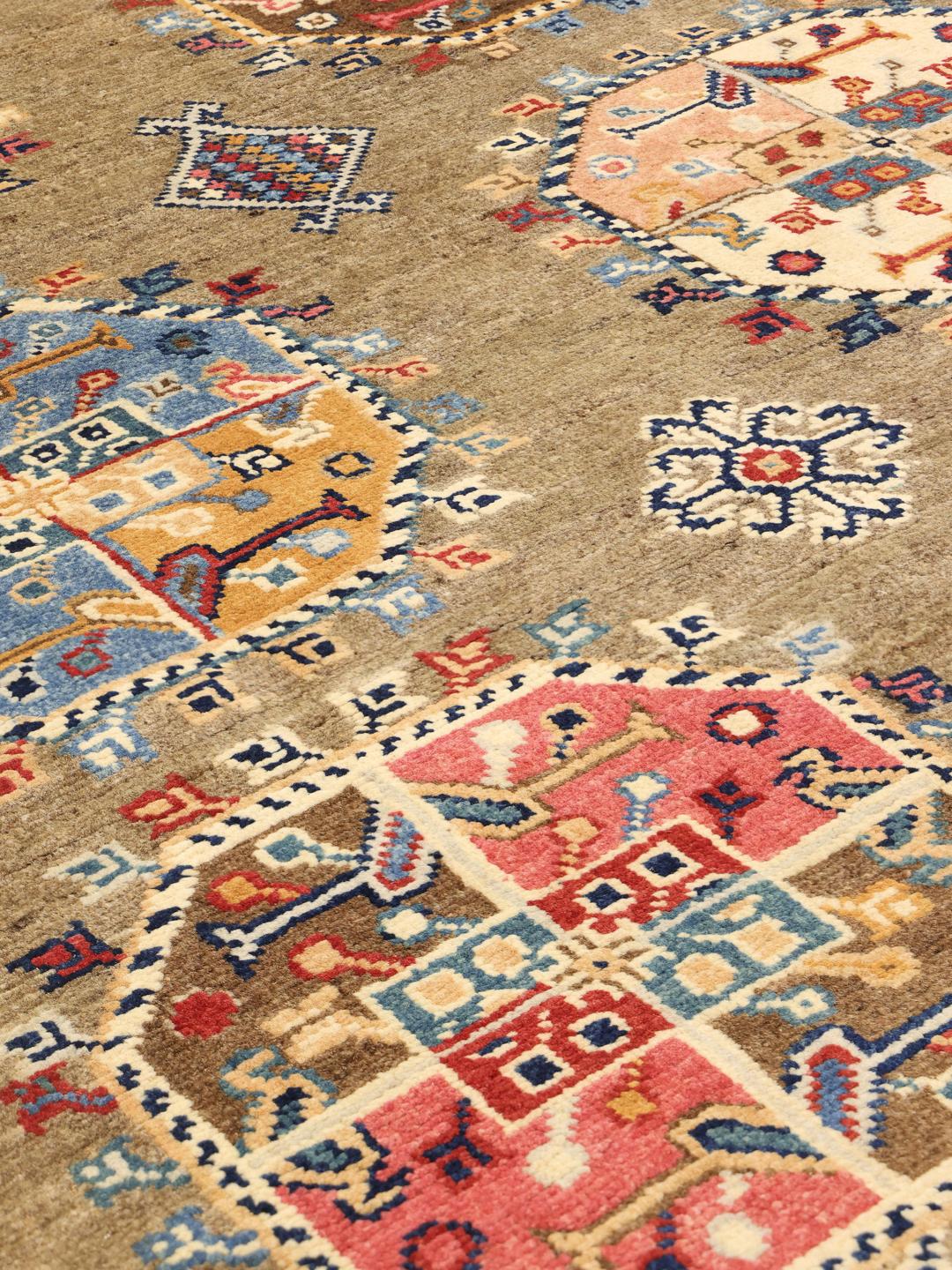
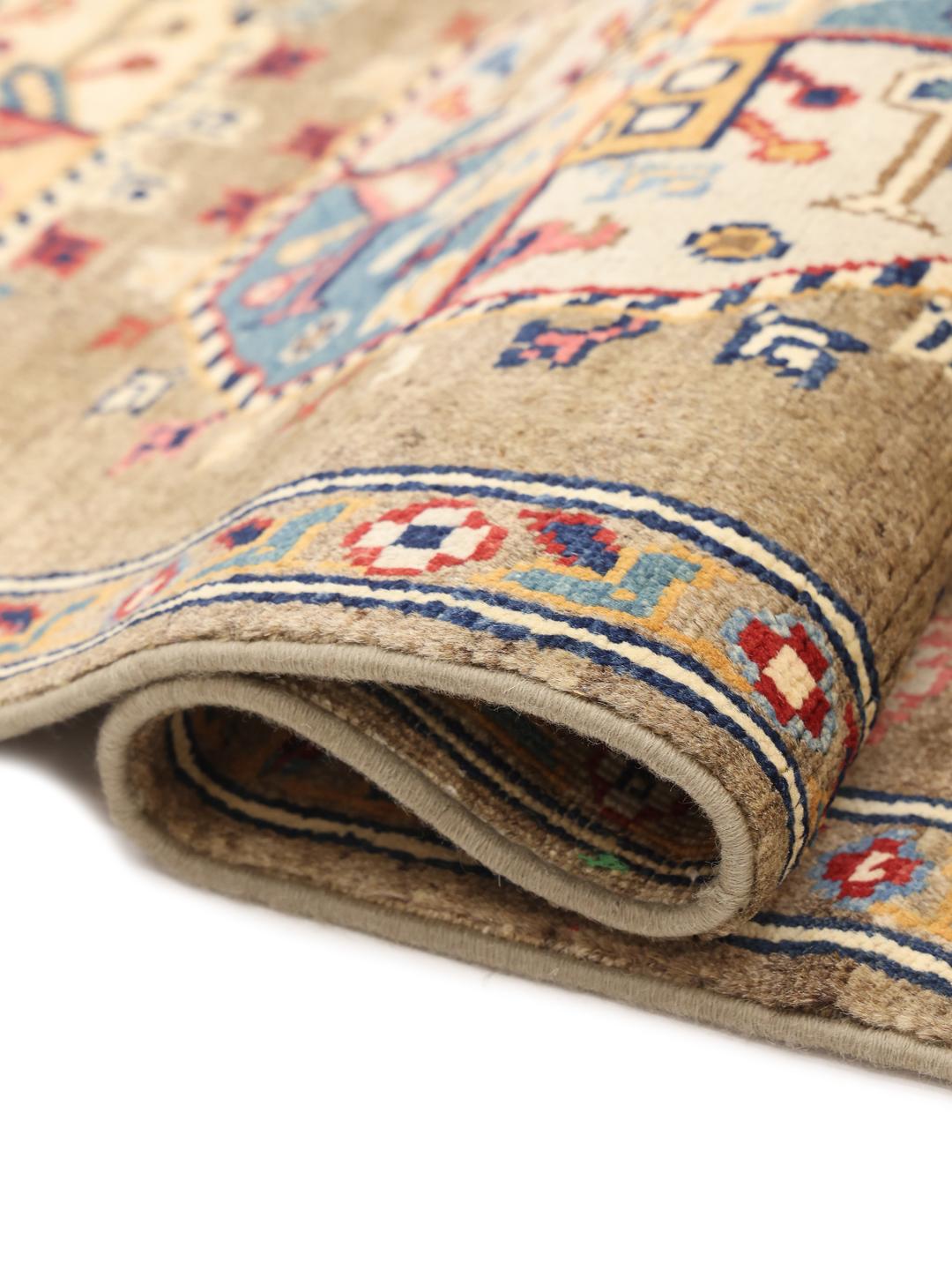
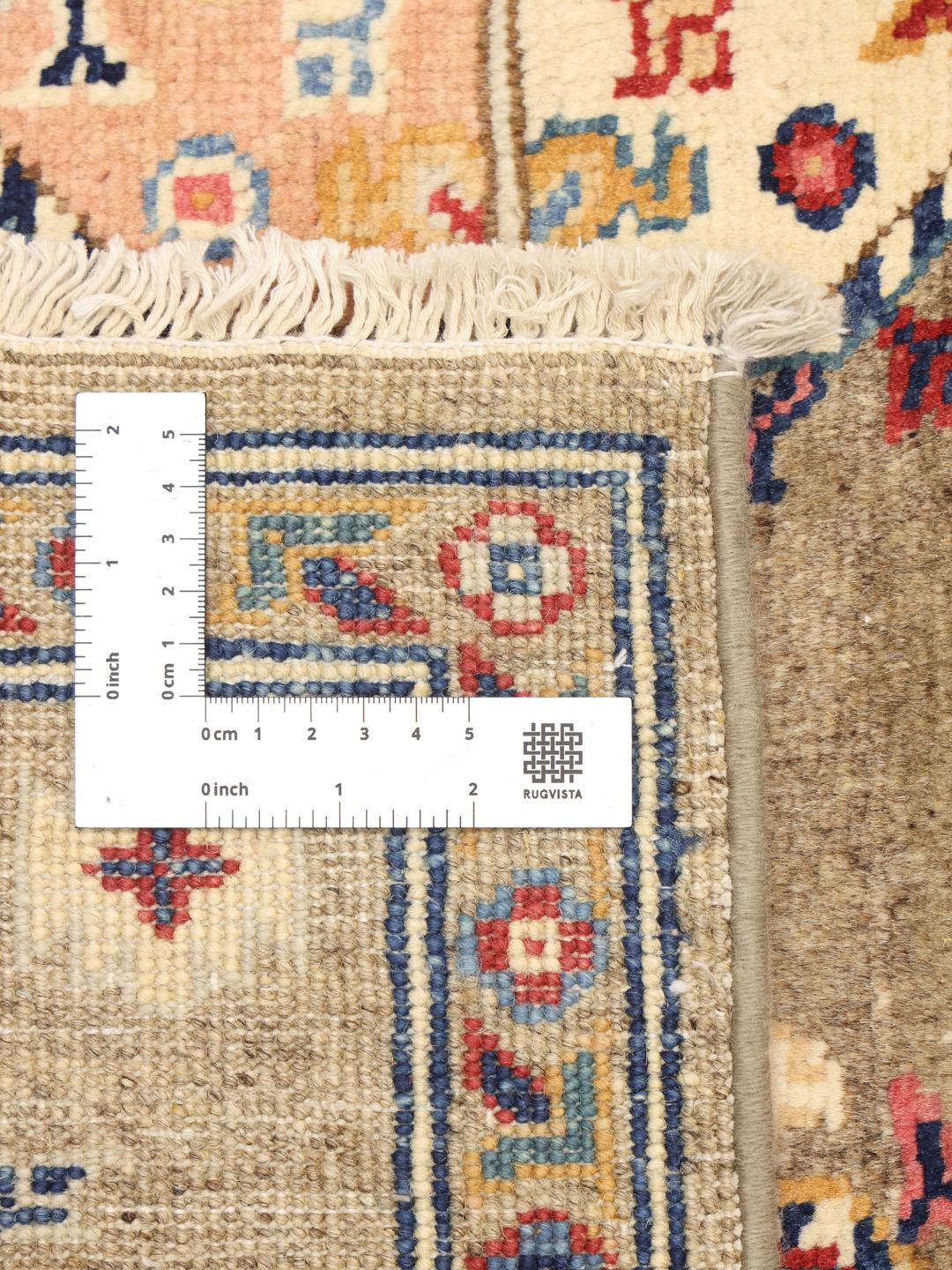
The term Kazak refers to a specific, bold style of rug-making that prioritises geometric clarity and strong colour palettes. These rugs are known for their sturdy, hand-knotted construction, which results in a dense and resilient pile. This durability is a hallmark of the tradition, designed originally to withstand the rugged conditions of mountain life, which translates today into a floor covering that is exceptionally well-suited for high-traffic areas in the home.
Visually, these rugs are defined by their use of bold, abstract motifs. You will often see large, stylised medallions, geometric borders, and a vibrant array of colours that contrast sharply against the field. While traditional designs are grounded in symbolism, the modern Kazak style remains celebrated for its ability to look striking in a variety of settings, from more traditional rooms to those with a modern, eclectic edge.
Owning a Kazak rug is an invitation to engage with a long history of craftsmanship. These pieces are highly valued by collectors and homeowners alike because they represent a marriage of function and cultural heritage. By acquiring this rug, you are not just buying a floor covering; you are supporting a living tradition and bringing a piece of genuine, human-centred artistry into your living space.