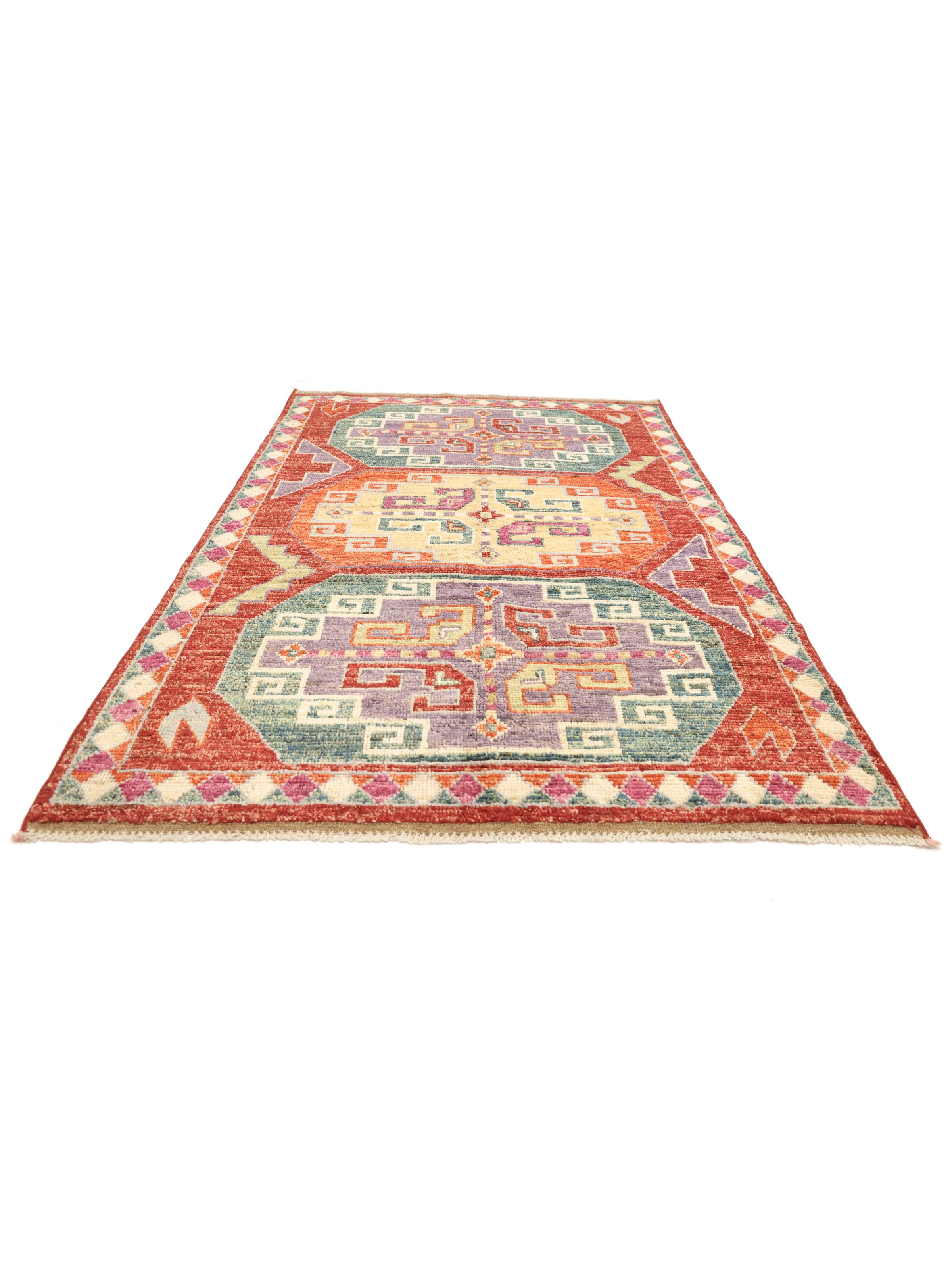
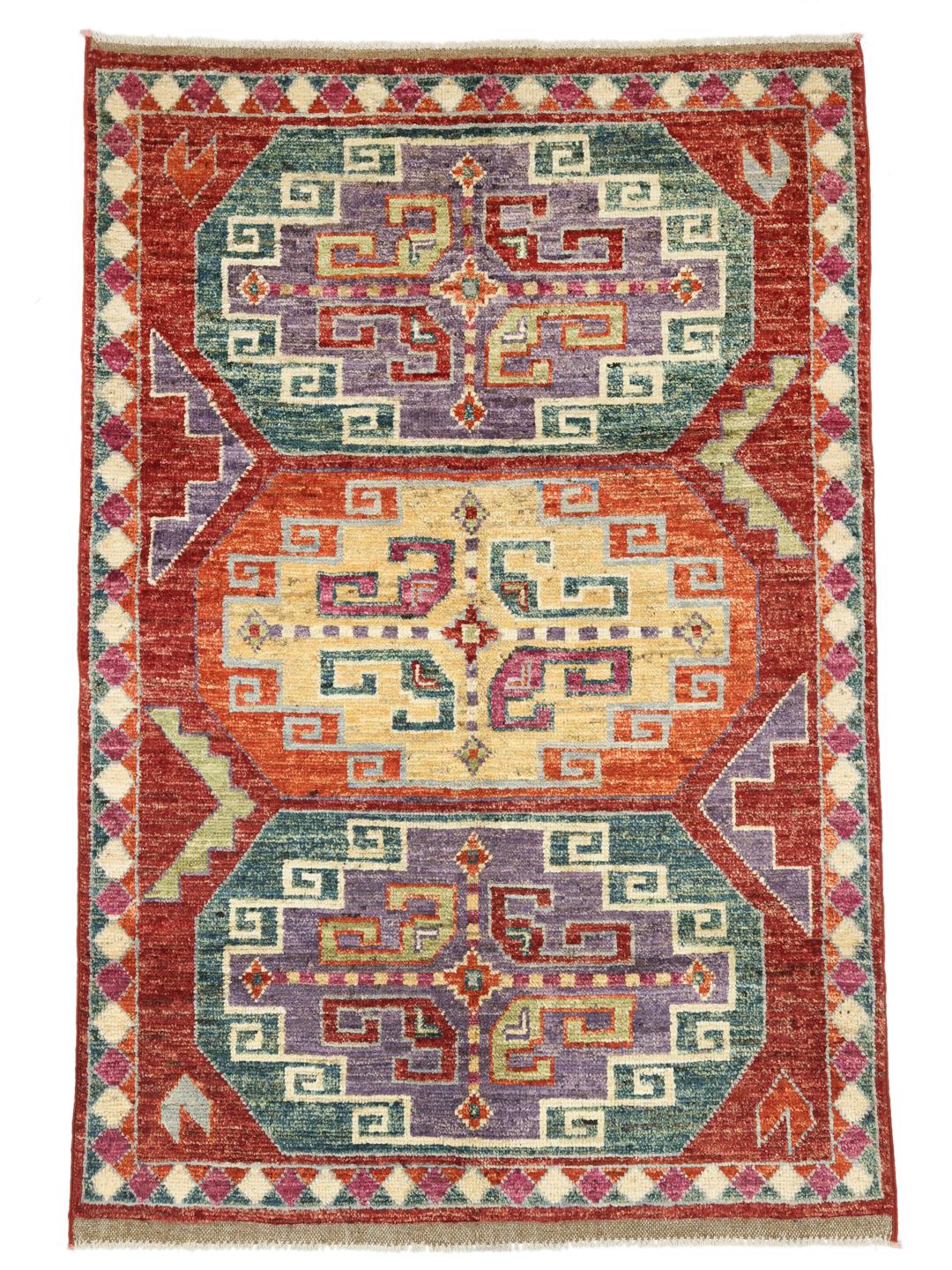
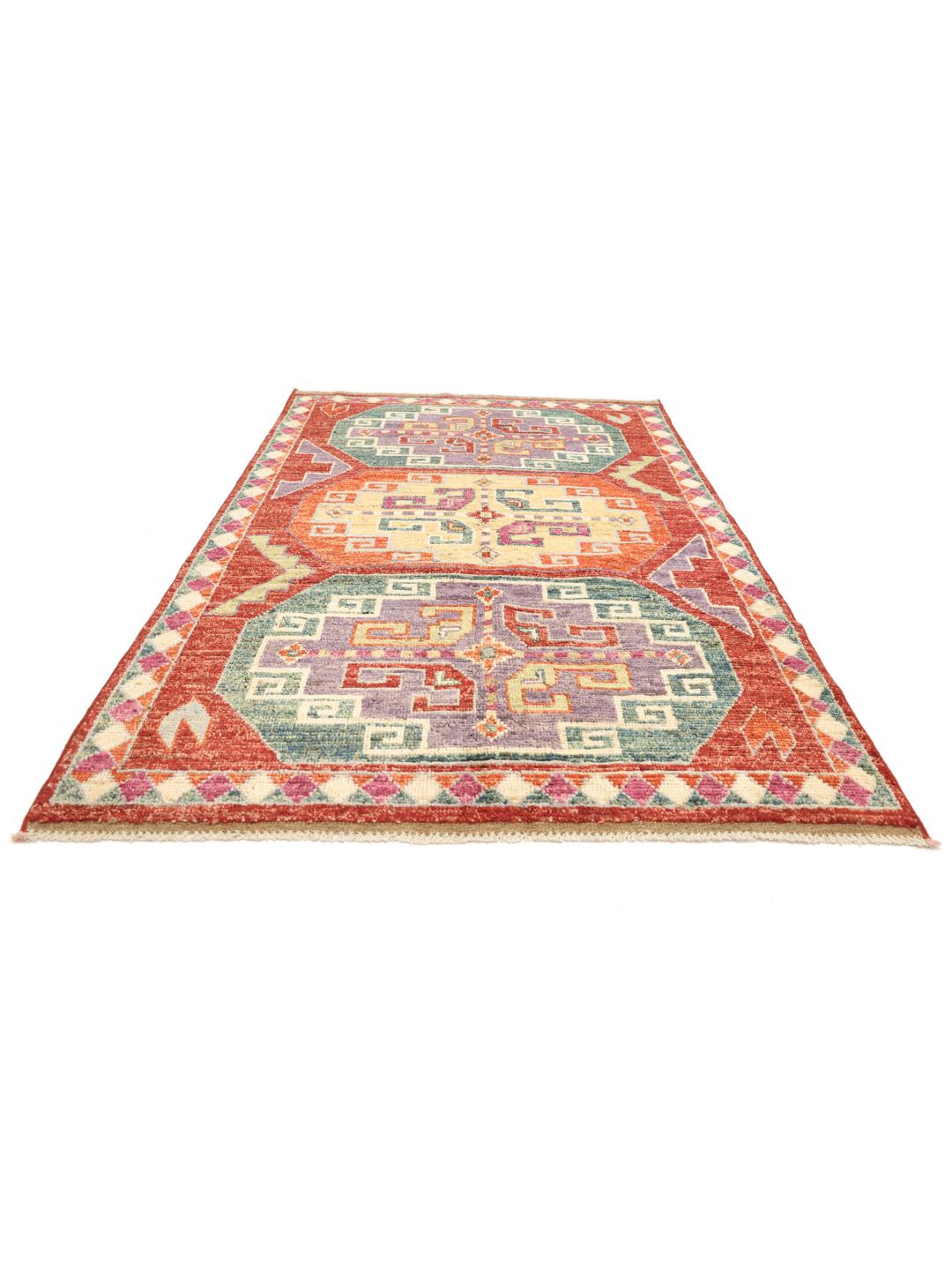
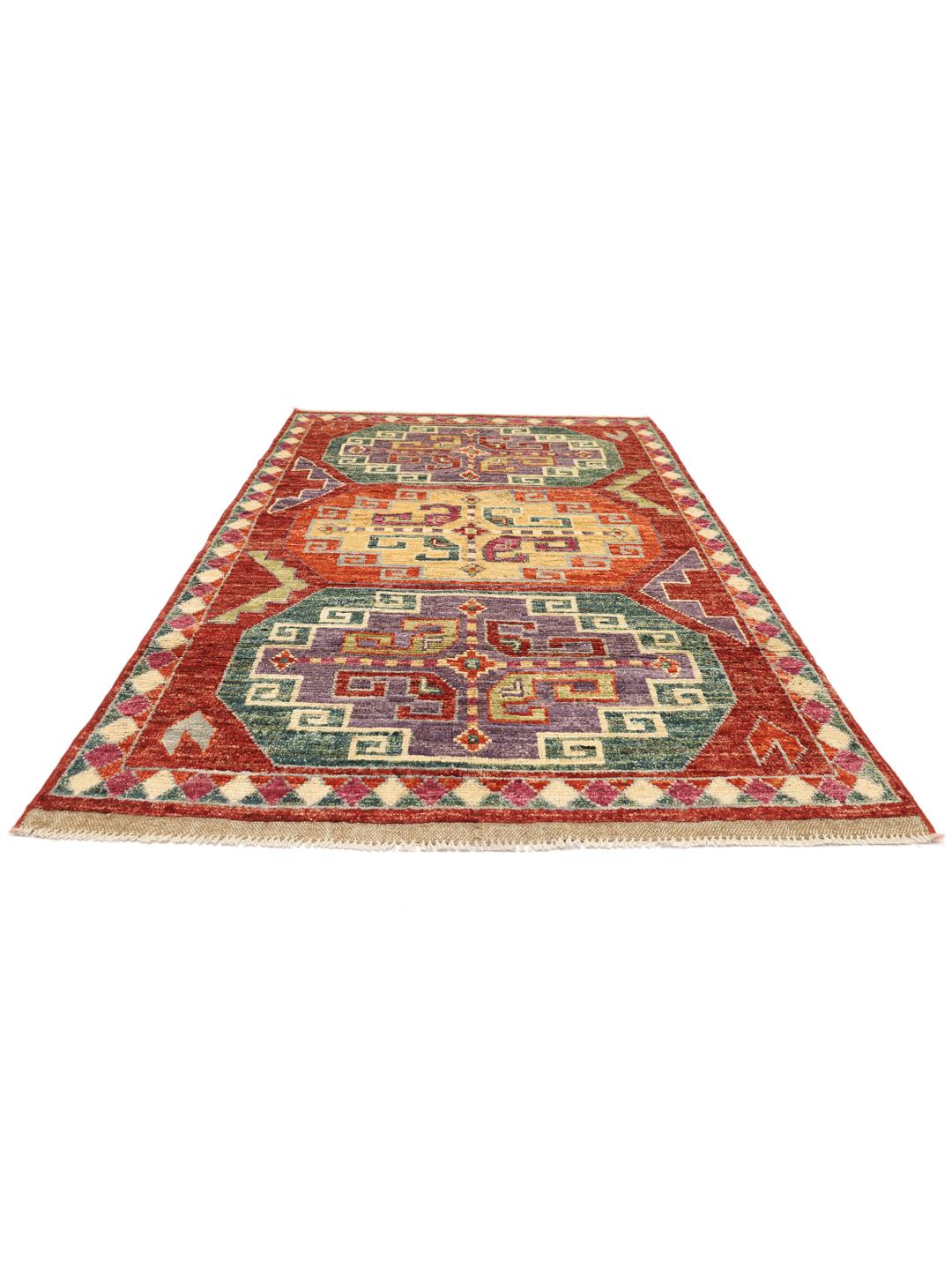
Kazak rugs originate from the Caucasus region, a mountainous area known for its rich weaving traditions. While the name originally referred to specific tribes in the Caucasus, the tradition has evolved significantly over centuries. Today, some of the most vibrant and high-quality examples of this style are crafted in Afghanistan, where weavers maintain the ancient methods of creating bold, expressive floor coverings.
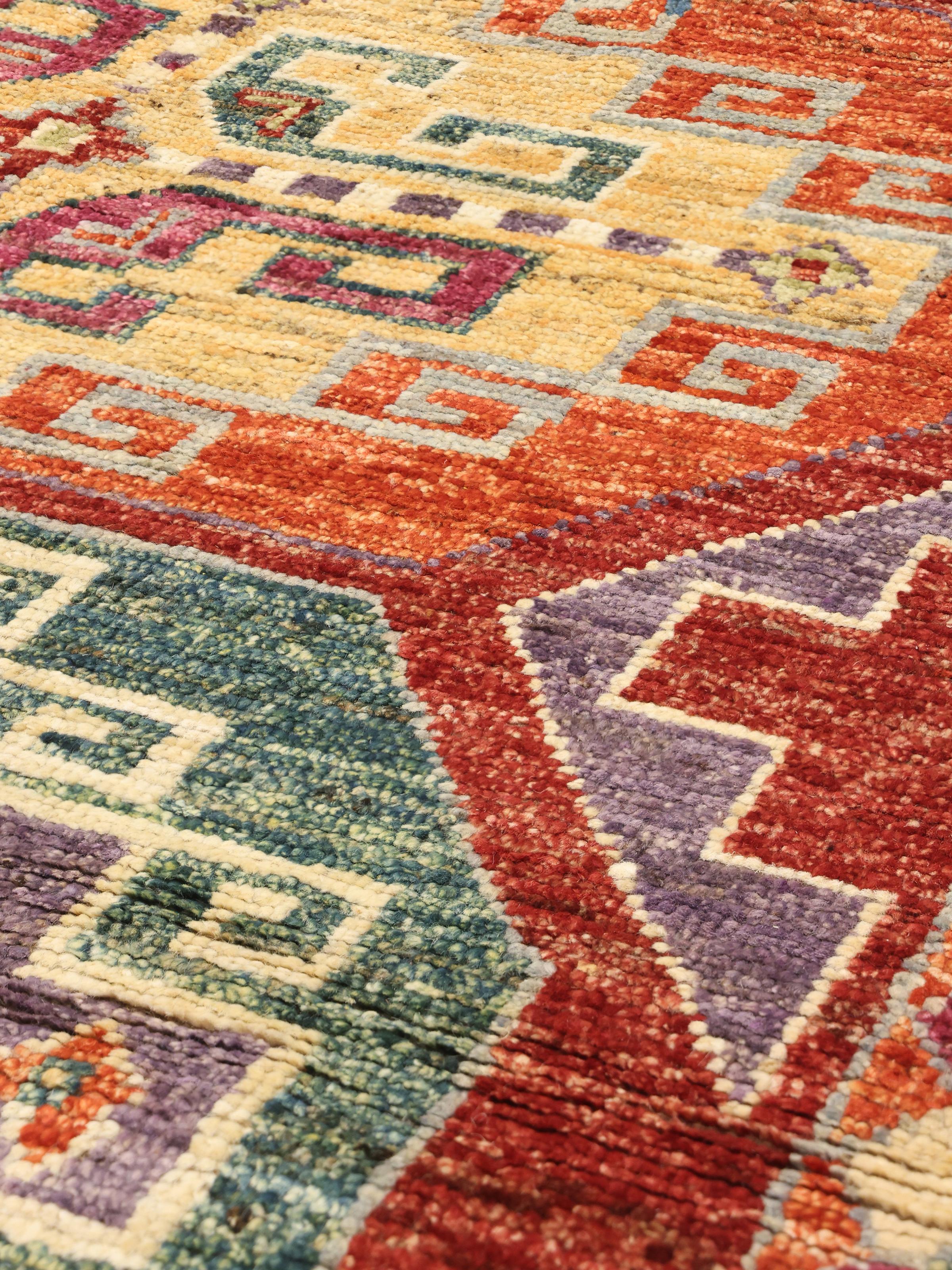
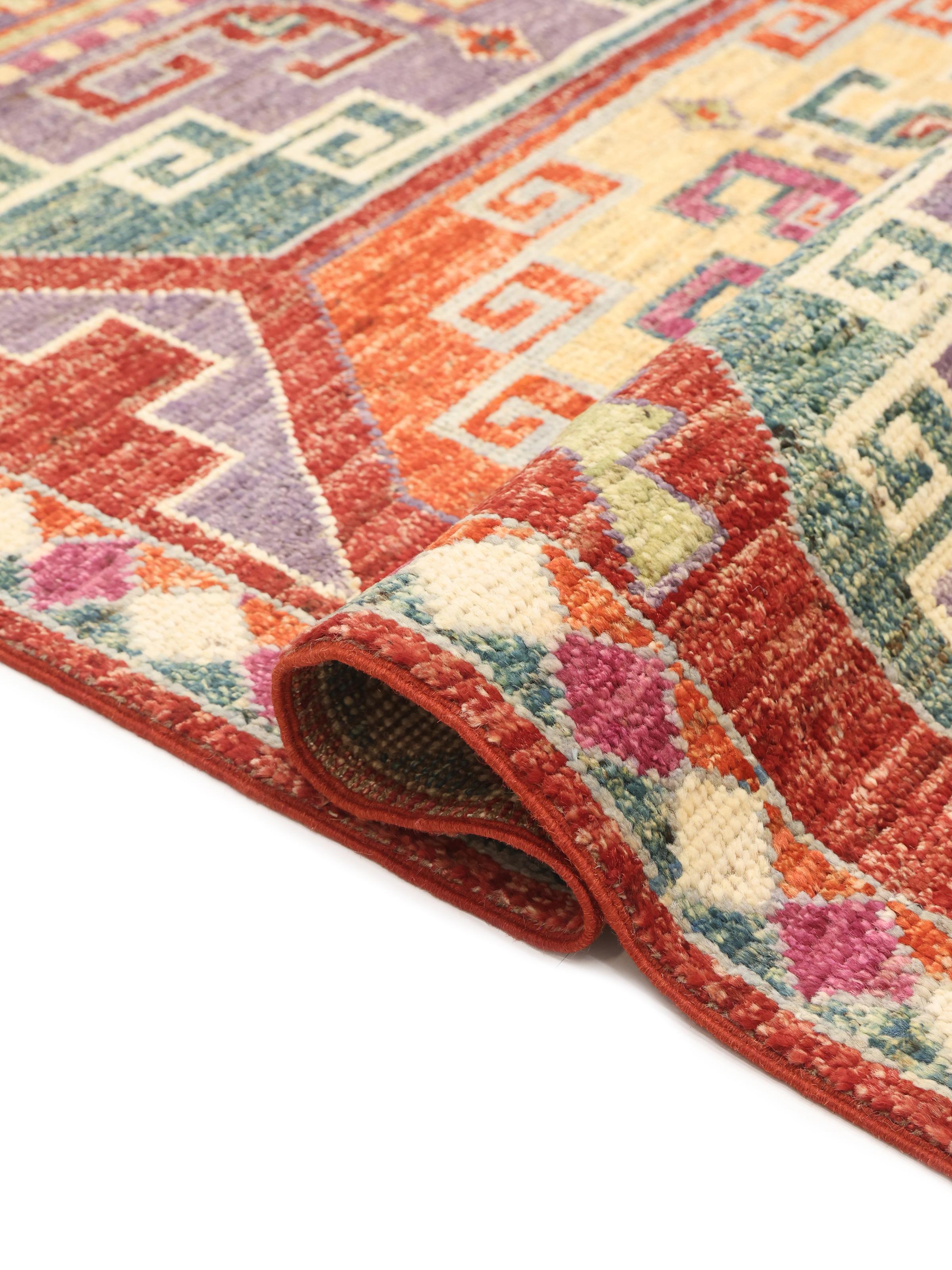
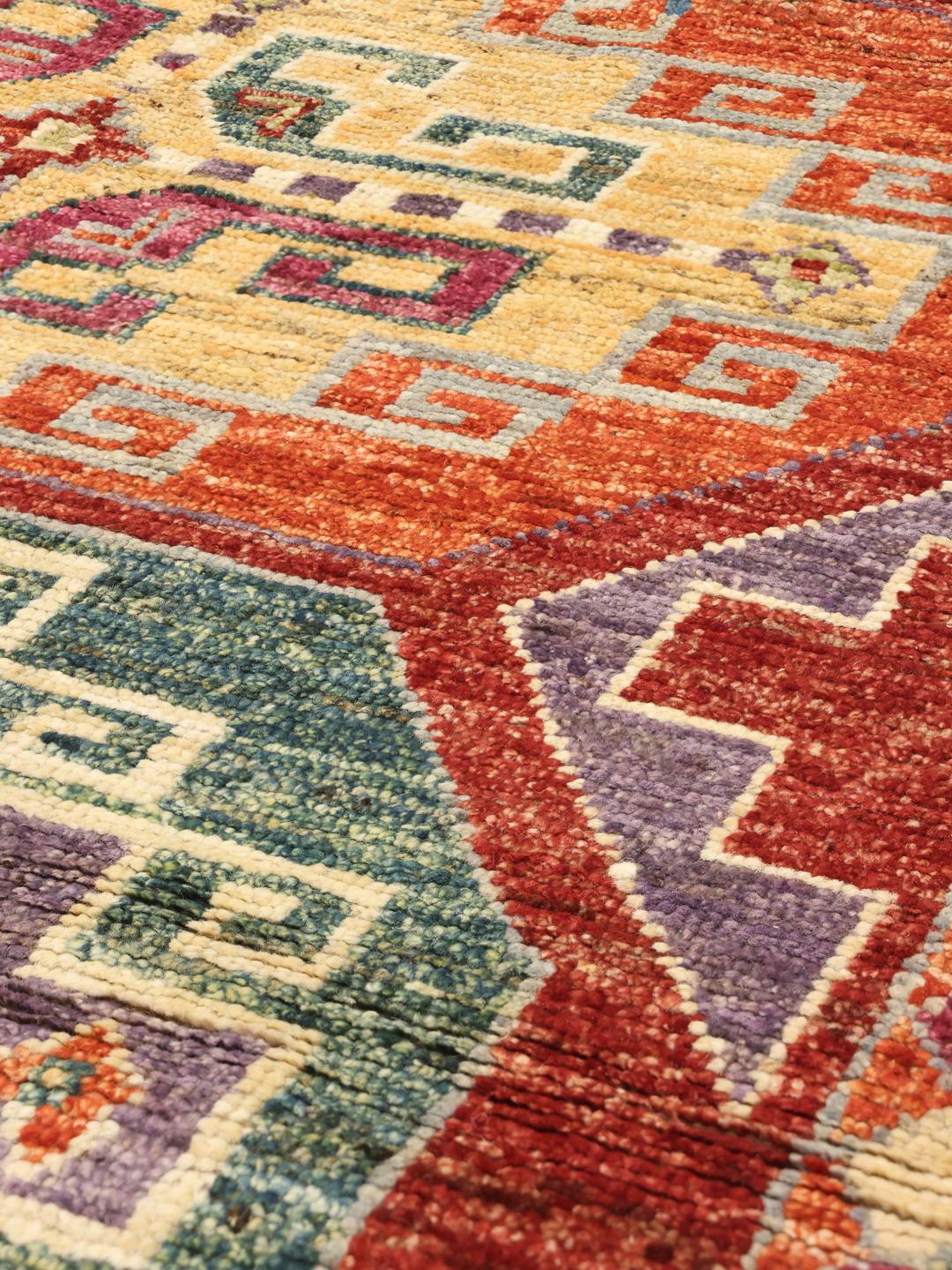
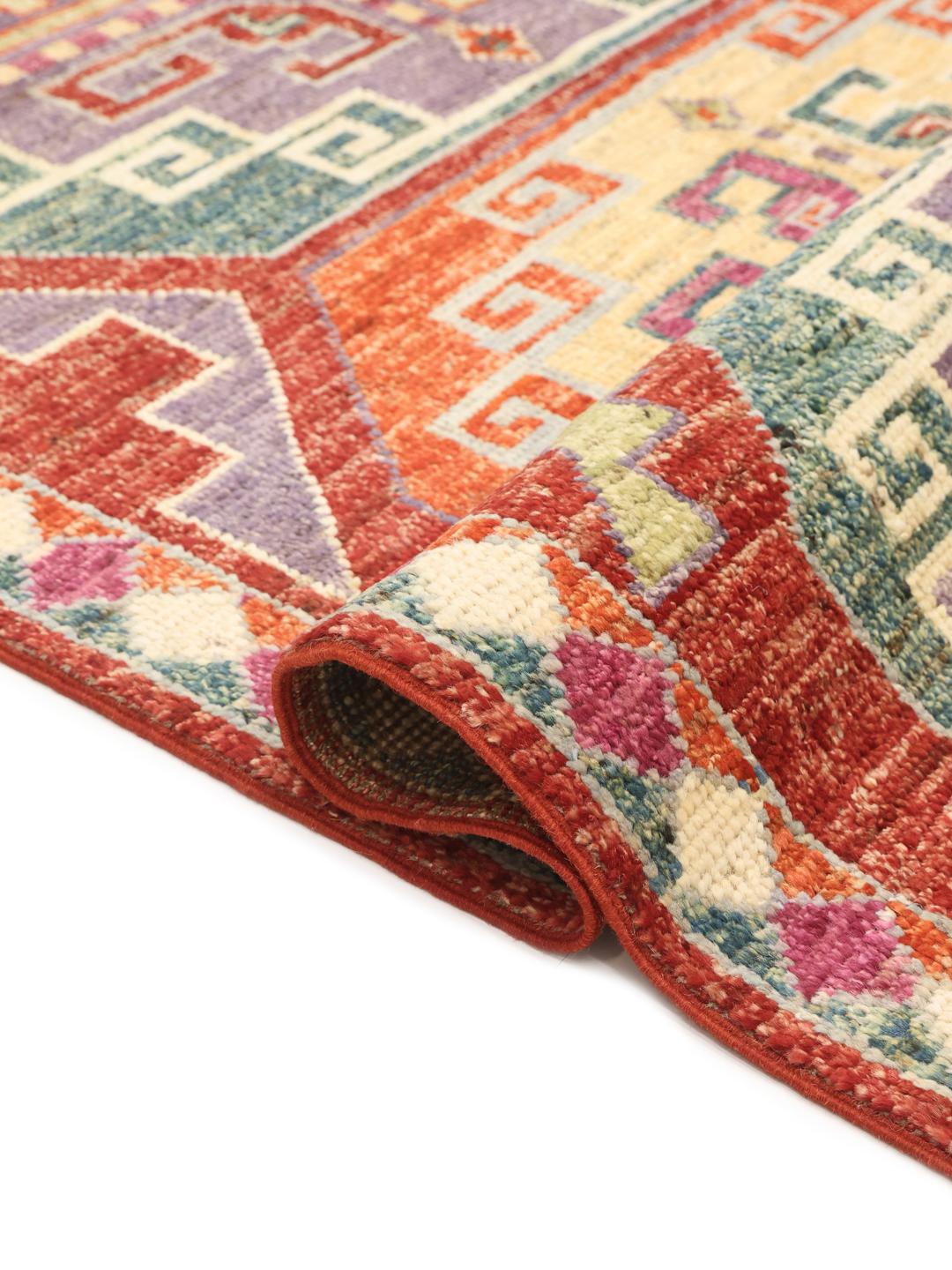
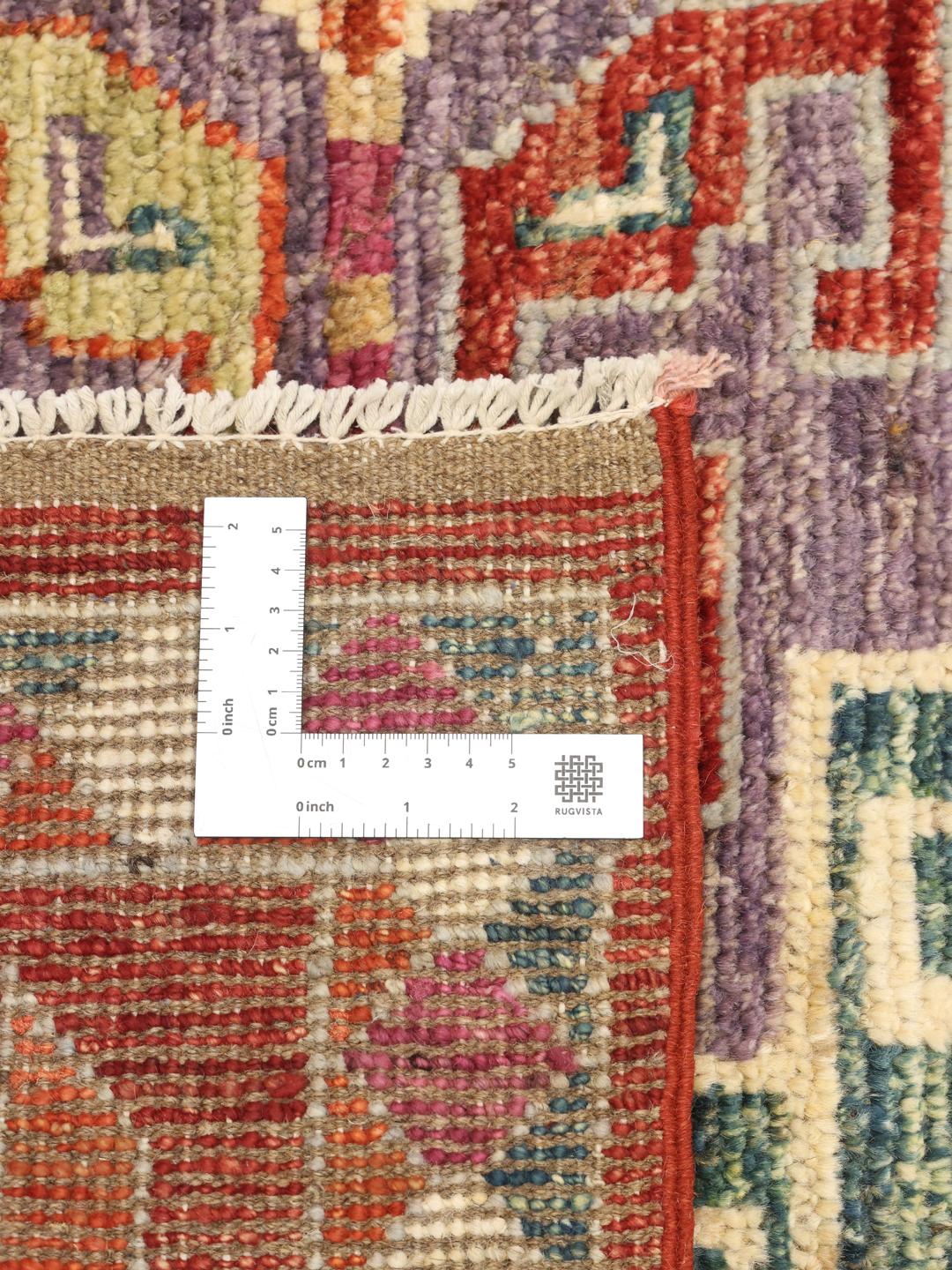
The term 'Kazak' often signifies a specific approach to design, characterised by a focus on scale and impact. These rugs are typically constructed with a thicker pile and a sturdy foundation, which makes them incredibly durable. The use of hand-spun Wool and natural dyes creates a variation in tone across the field, a feature that collectors prize for the life and depth it brings to the rug.
Visually, these rugs are defined by their geometric language. You will frequently see large-scale medallions, latch-hook motifs, and simplified floral or animal forms that have been abstracted into sharp, angular shapes. The borders are often just as significant as the field, featuring repeating guard stripes that frame the central design and provide a sense of structure to the overall composition.
These rugs are highly valued for their artistic integrity and the cultural history they represent. They are not merely floor coverings, but records of a craft tradition that prioritises the weaver's creative expression over rigid, industrial uniformity. Owning a Kazak rug is an investment in a legacy of skill, offering a piece of history that continues to bring warmth and beauty into the contemporary home.