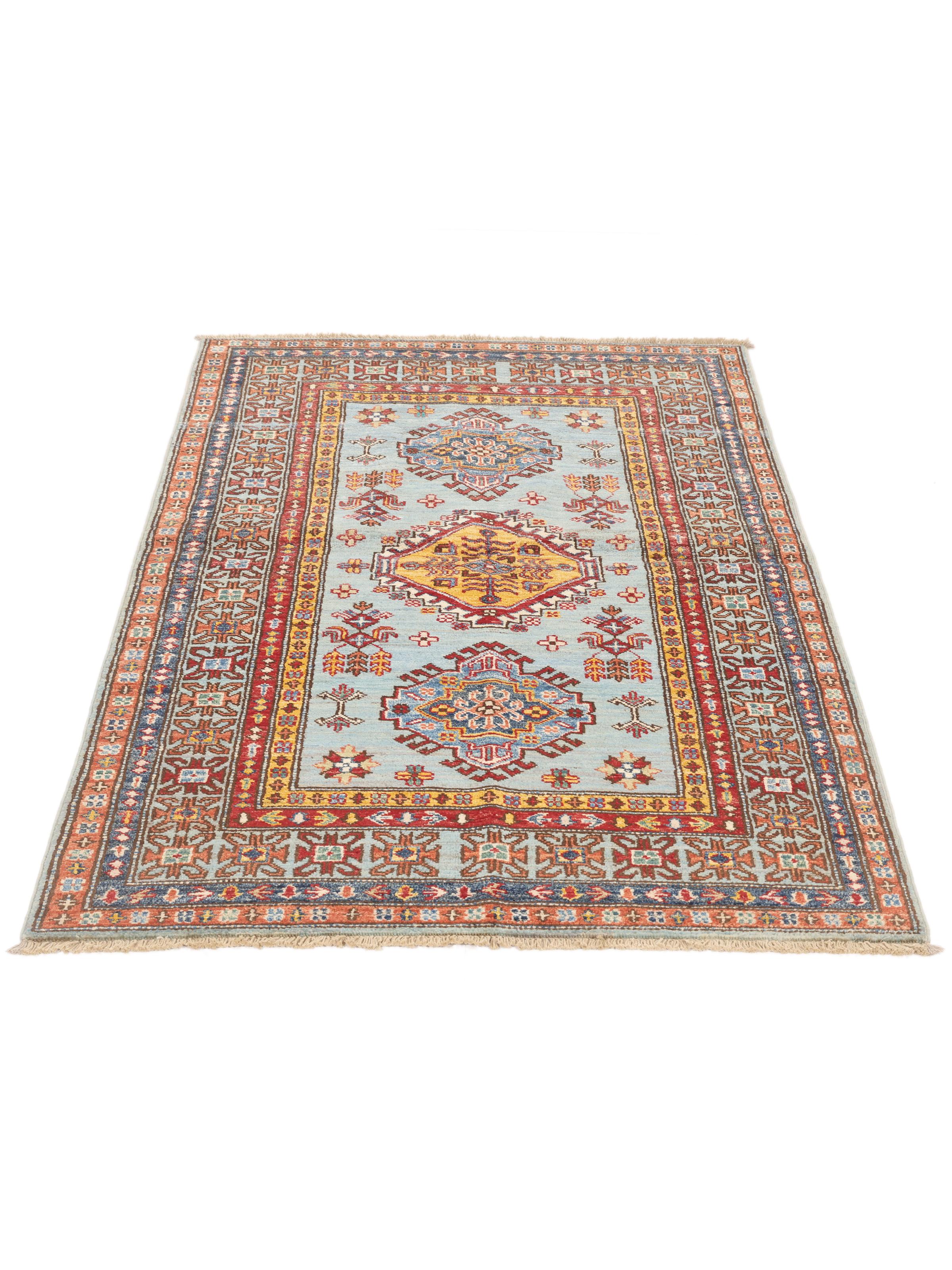
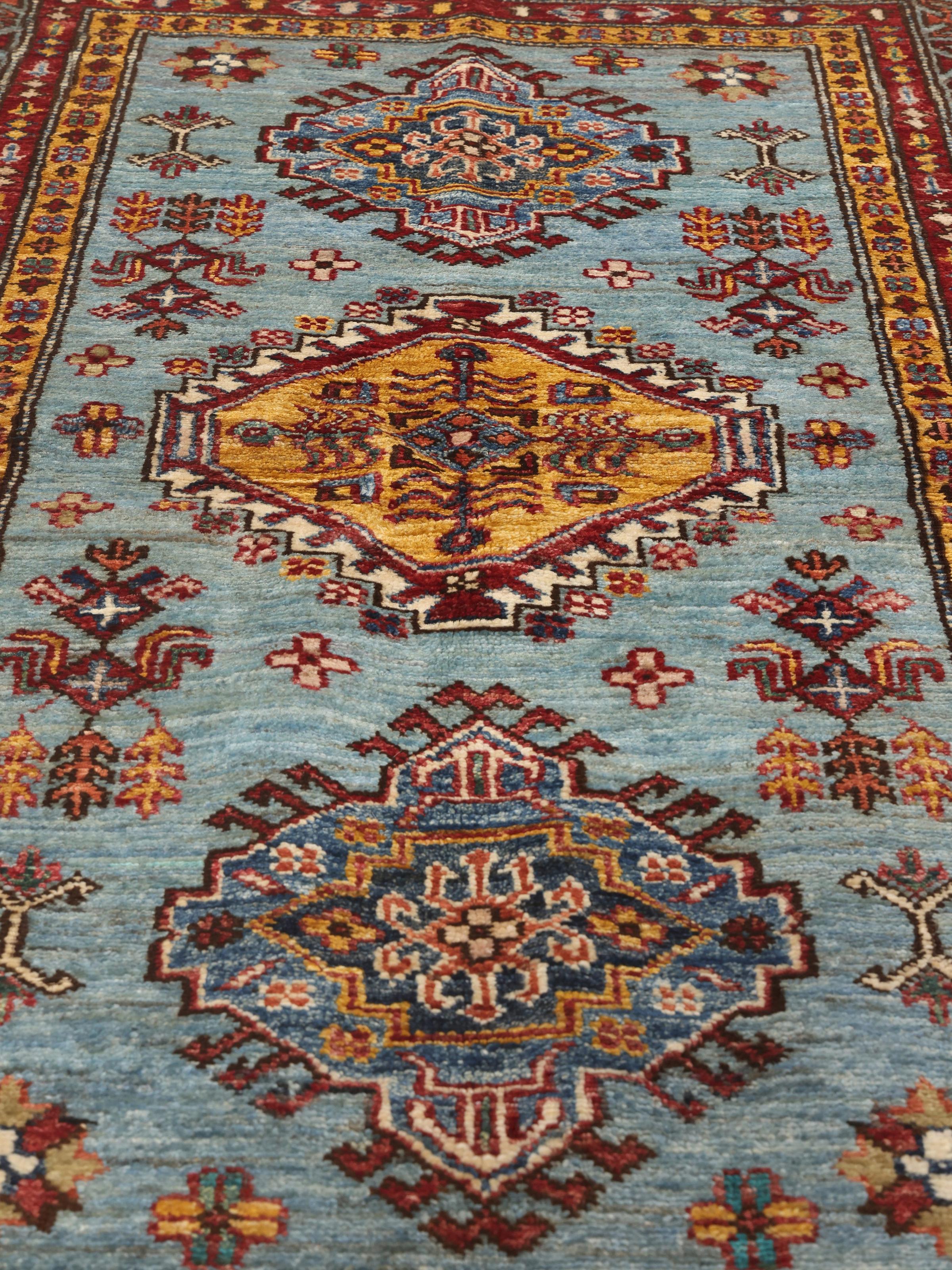
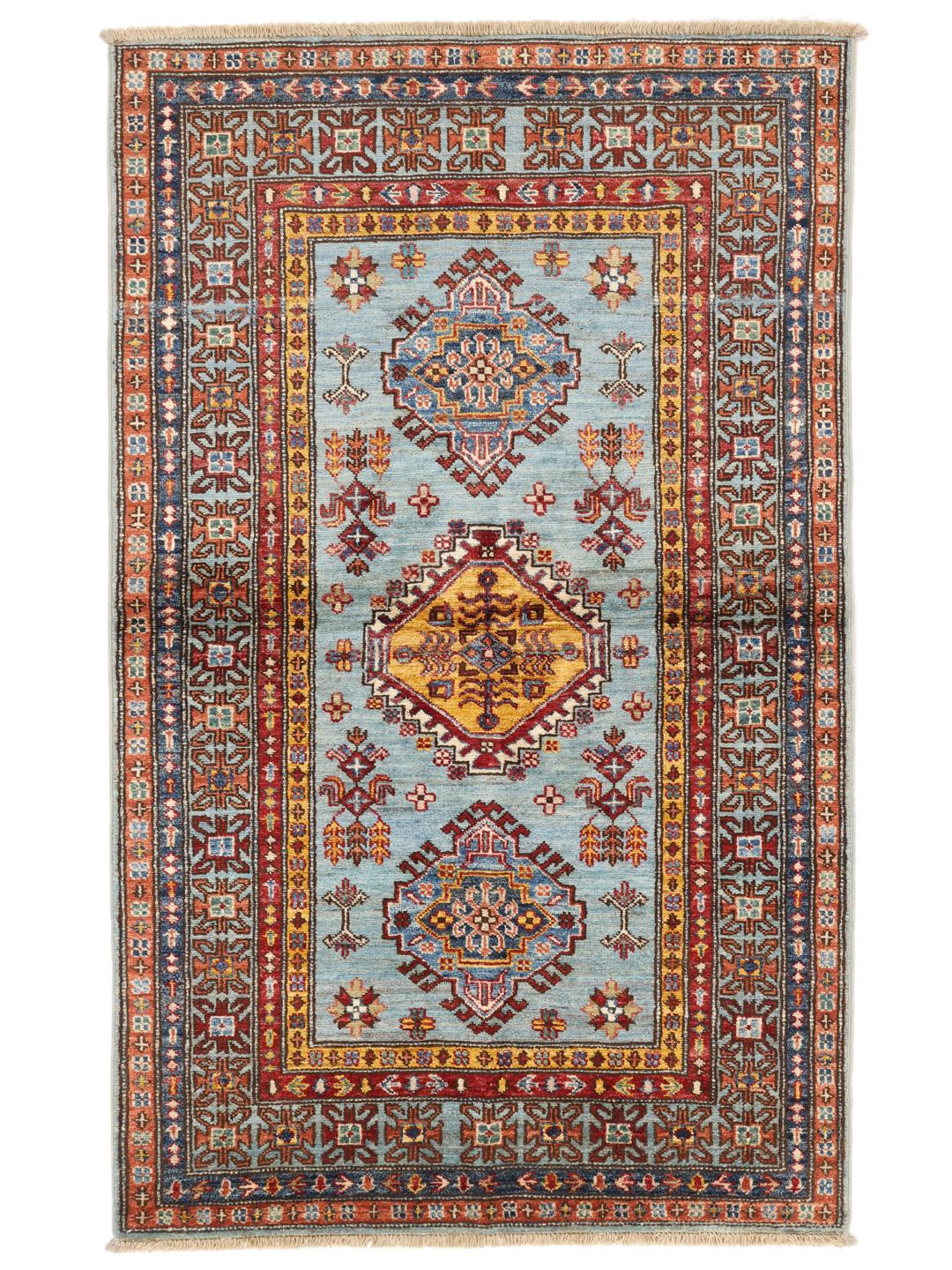
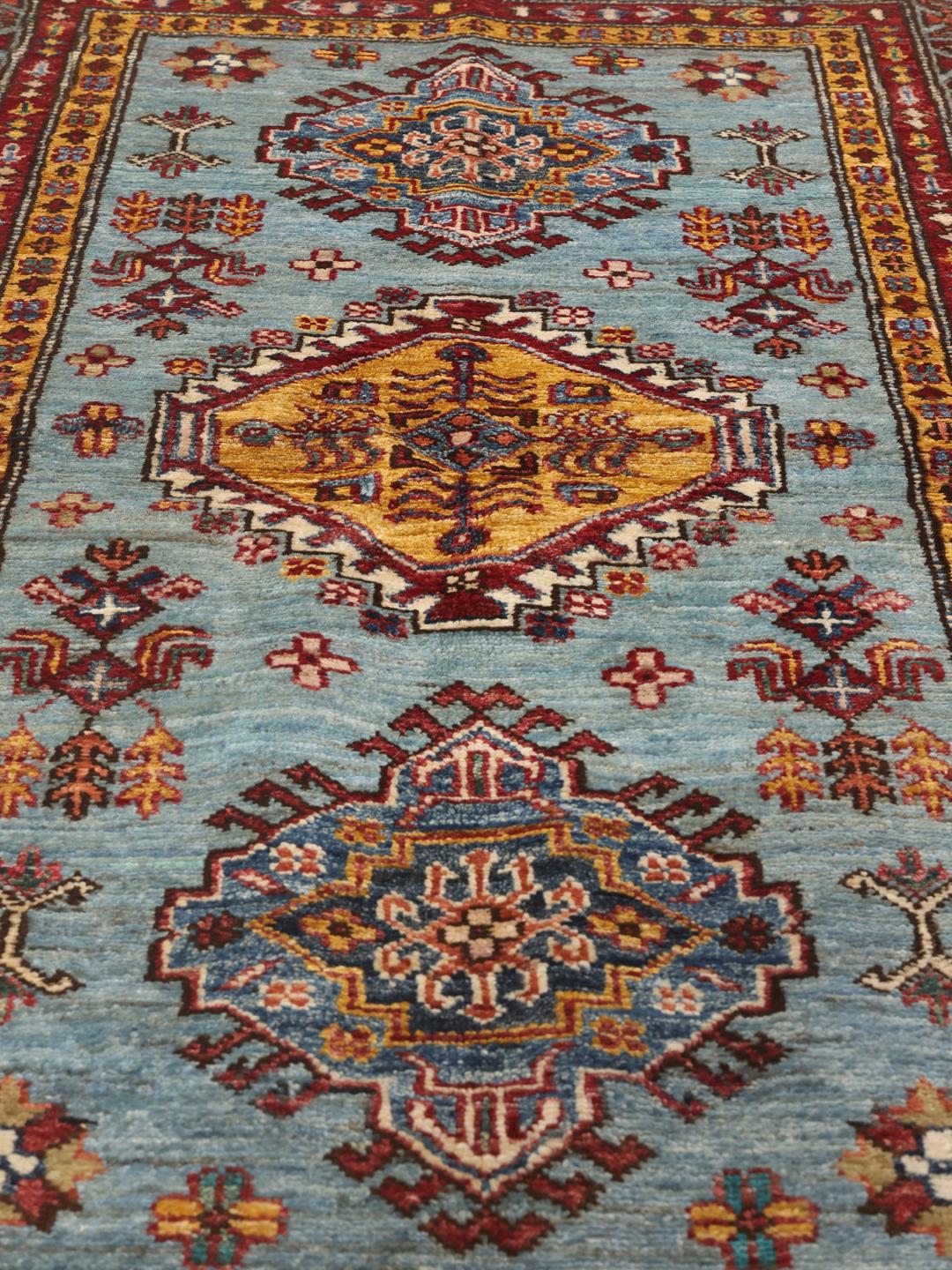
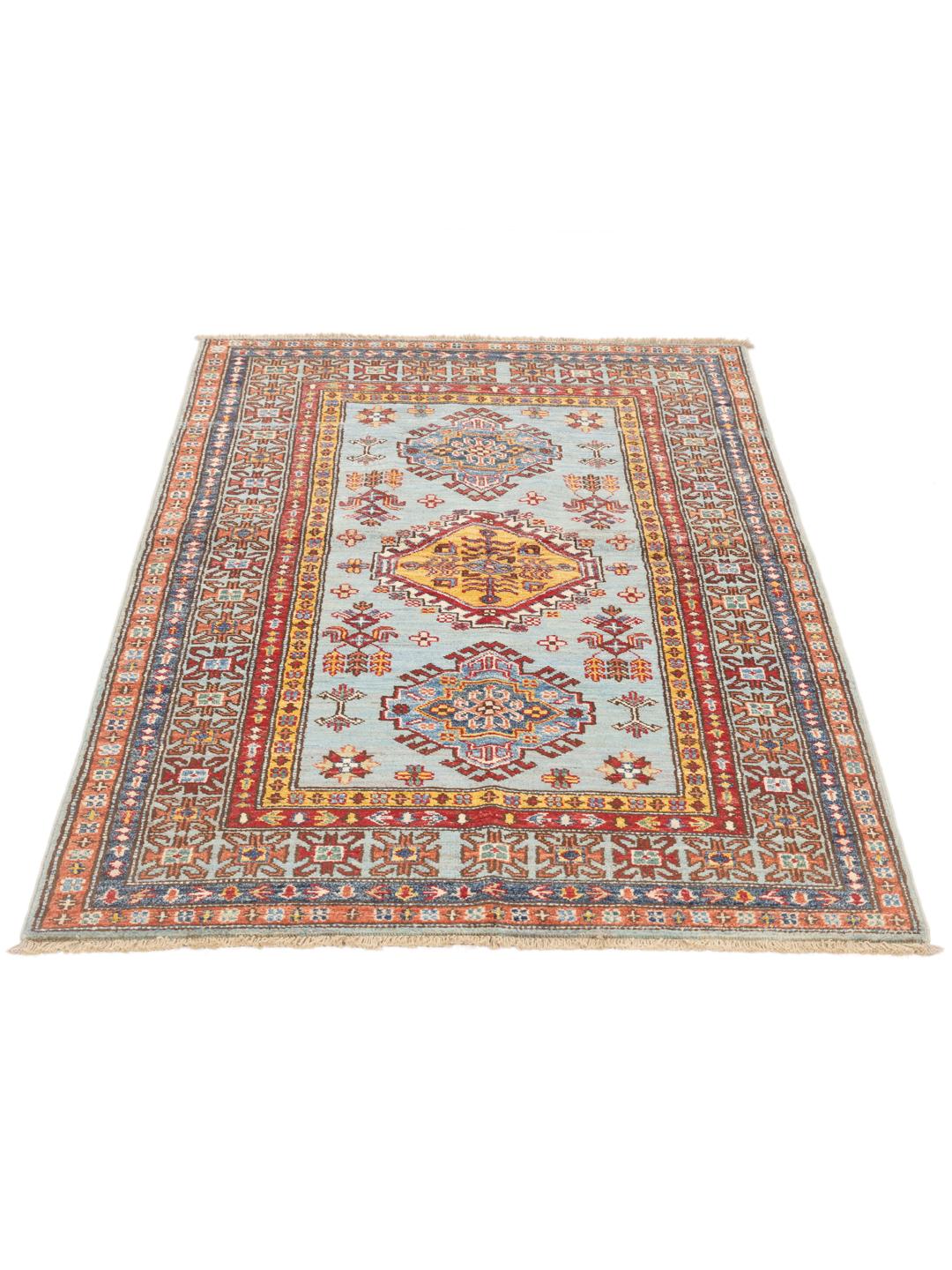
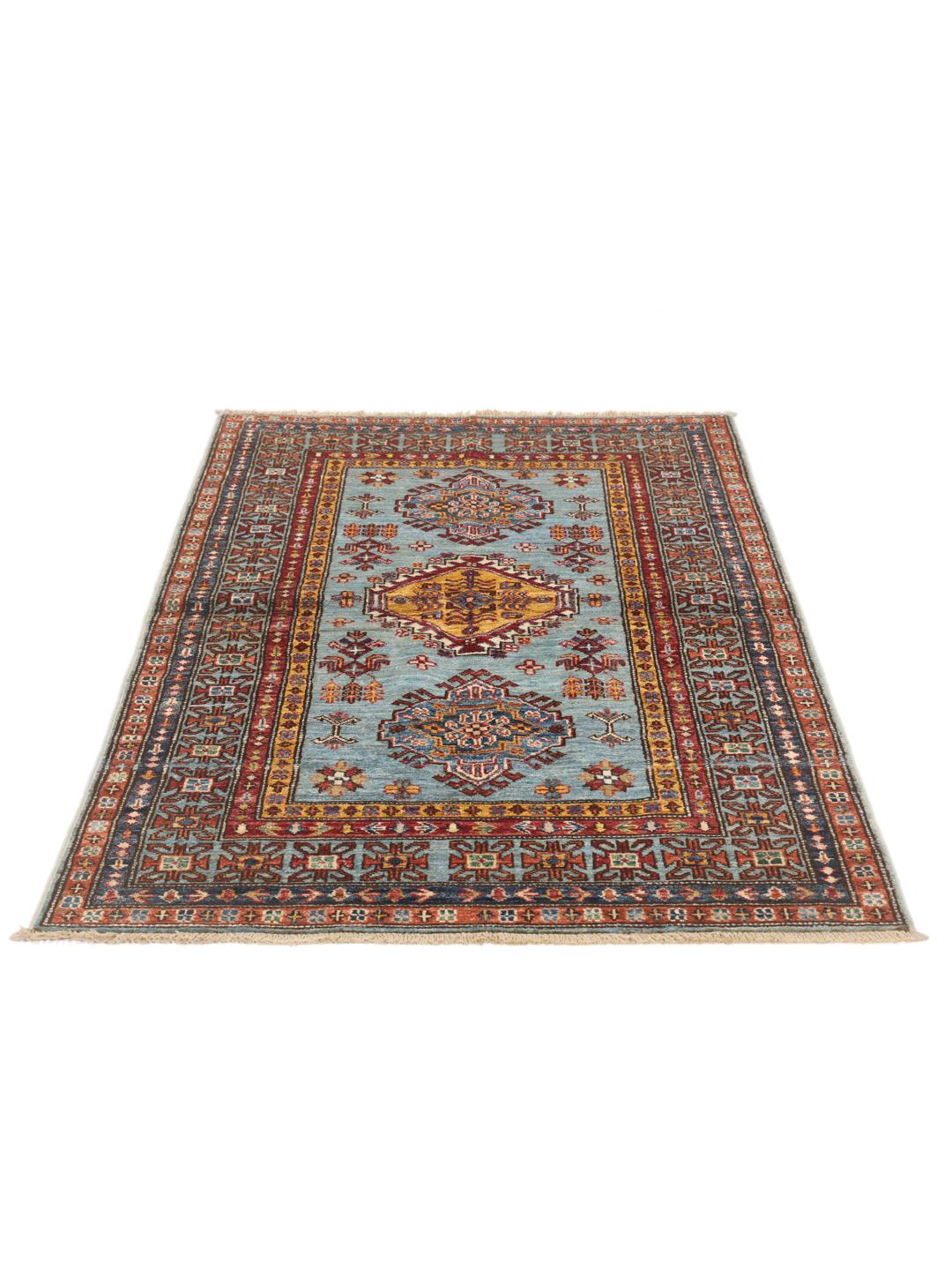
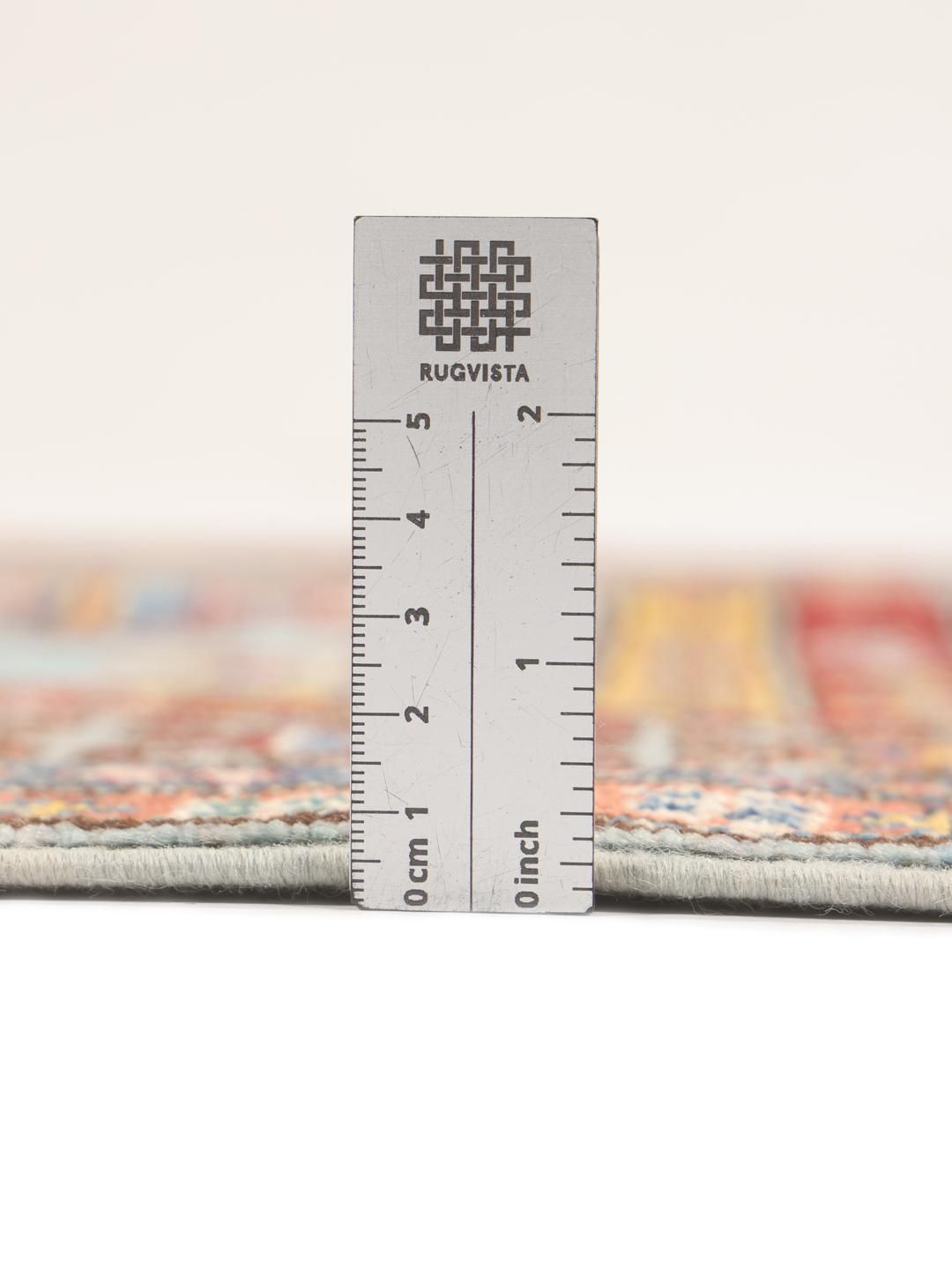
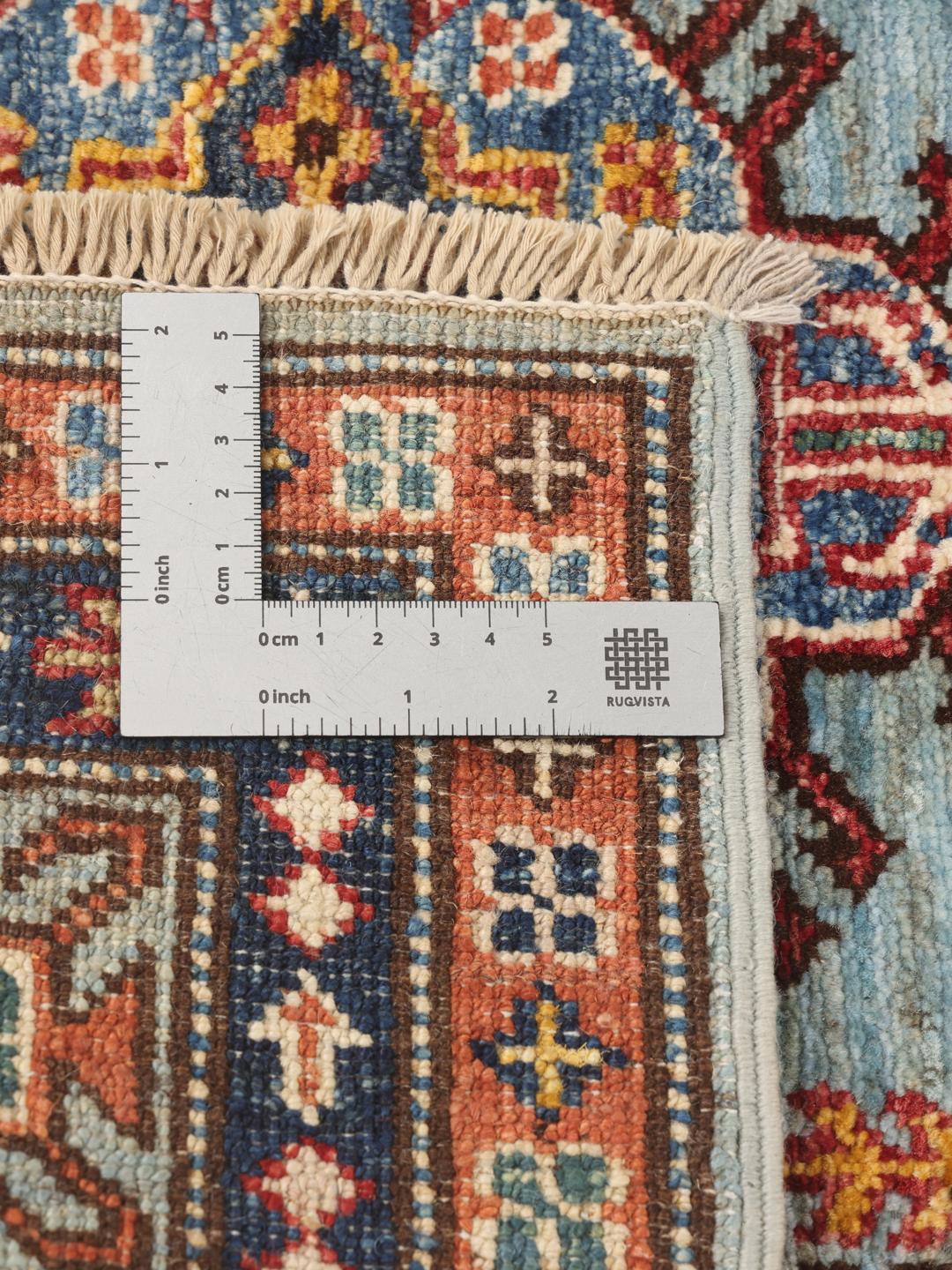
The Kazak tradition has its roots in the mountainous regions of the Caucasus, where nomadic tribes historically wove rugs characterised by their bold, geometric designs and rich, saturated colours. While the original Kazak rugs were crafted for personal use and utility within tribal camps, the aesthetic has evolved significantly over time. Today, the finest examples of this style are predominantly woven in Afghanistan, where artisans continue to honour these ancient design principles.
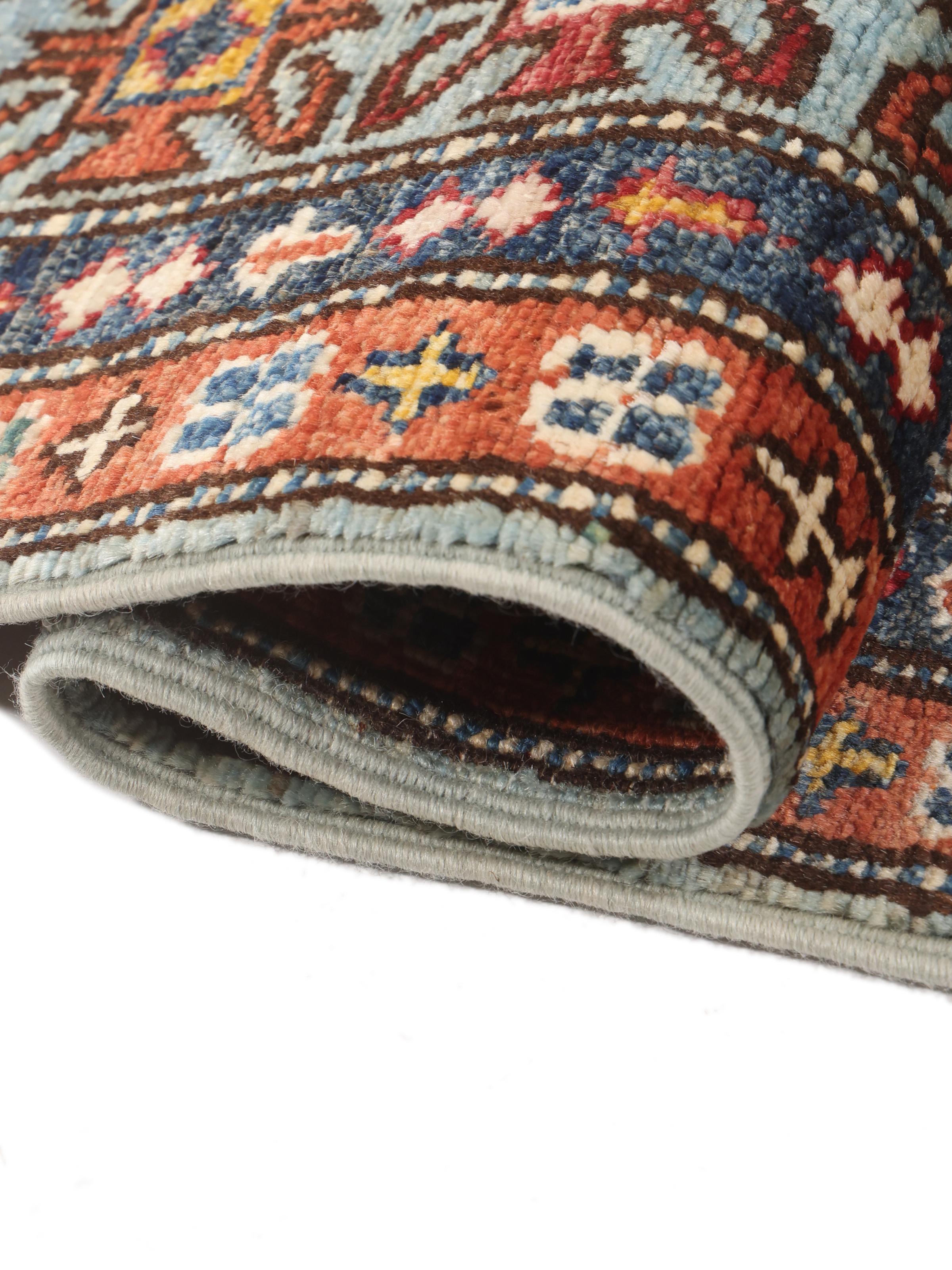
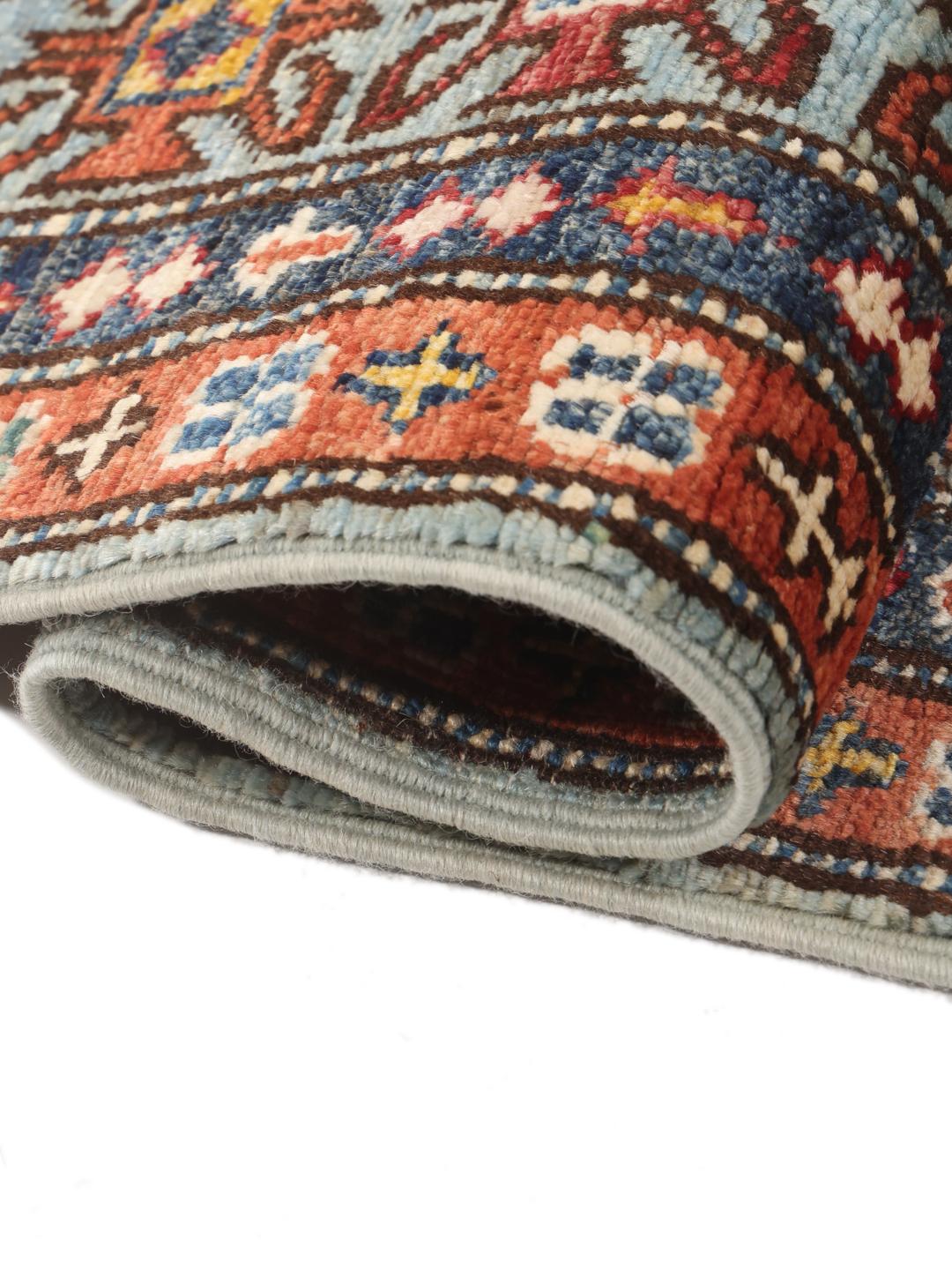
The term Kazak refers to a style rather than a specific geographic location, encompassing a wide range of motifs that have been passed down through generations. These rugs are known for their sturdy construction and the use of natural dyes, which give the wool a vibrant, organic depth. The craftsmanship involved in these pieces is highly regarded because it balances historical accuracy with a refined, contemporary sensibility.
Signature design elements of the Kazak tradition include large-scale geometric medallions, stylised floral motifs, and bold, stepped borders. The use of repeating patterns, such as the gul or diamond shapes seen here, creates a rhythmic visual flow that is both balanced and dynamic. These motifs are often symbolic, representing the heritage and cultural identity of the communities that keep this art form alive.
Owning a hand-knotted rug from this tradition is an investment in cultural history and superior craft. These rugs are highly valued by collectors and design enthusiasts alike, not only for their aesthetic beauty but for the human story embedded in every knot. By bringing such a piece into your home, you are participating in a long-standing legacy of artistry that celebrates individual expression and enduring quality.