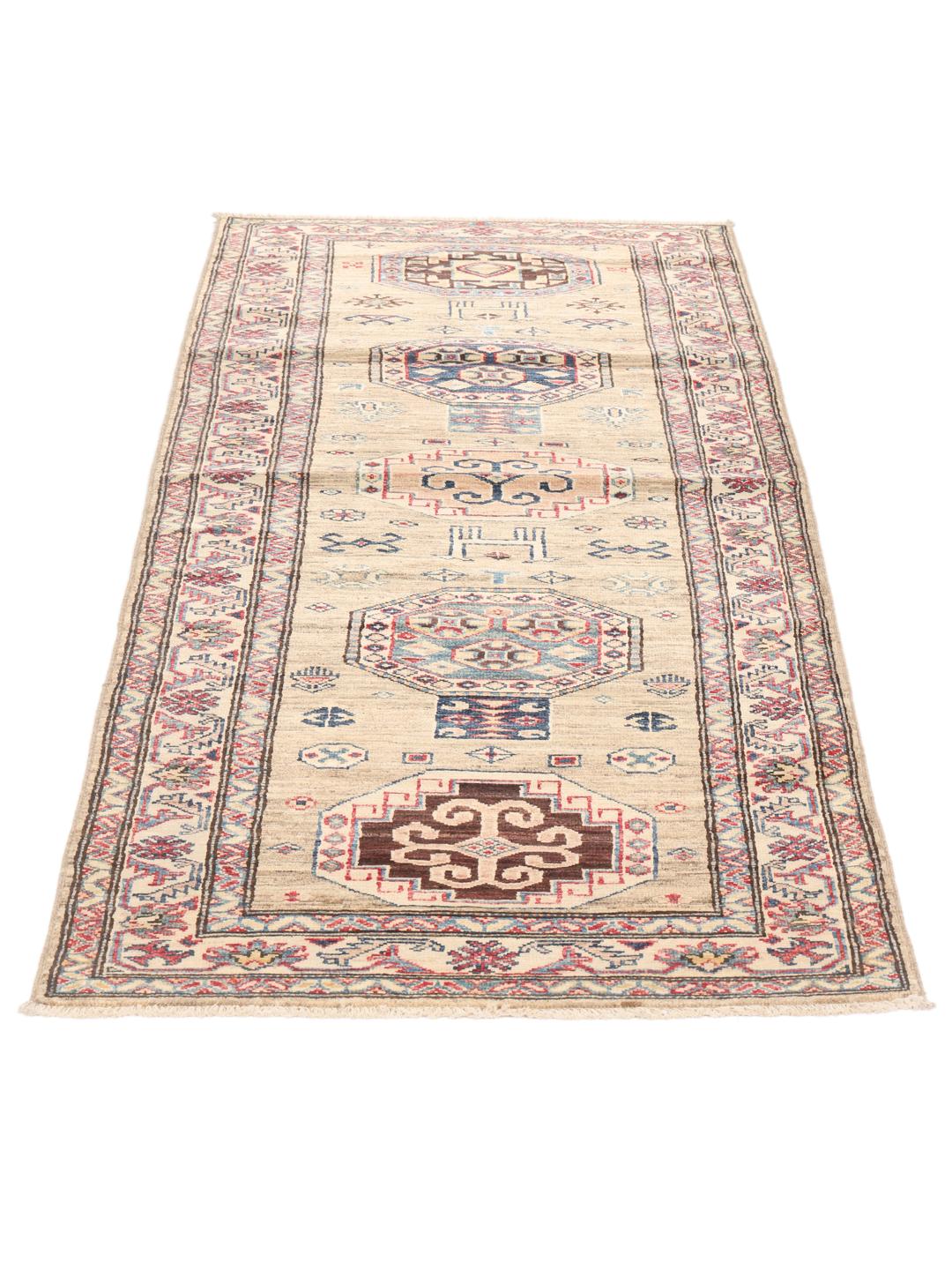
The Kazak tradition has its roots in the mountainous regions of the Caucasus, where nomadic tribes historically wove rugs for practical use. While the style evolved over centuries, it remains defined by a bold, geometric aesthetic that reflects the rugged landscape and cultural identity of its originators. Today, weavers in the Middle East have masterfully adopted this tradition, infusing these designs with their own regional techniques and natural materials.
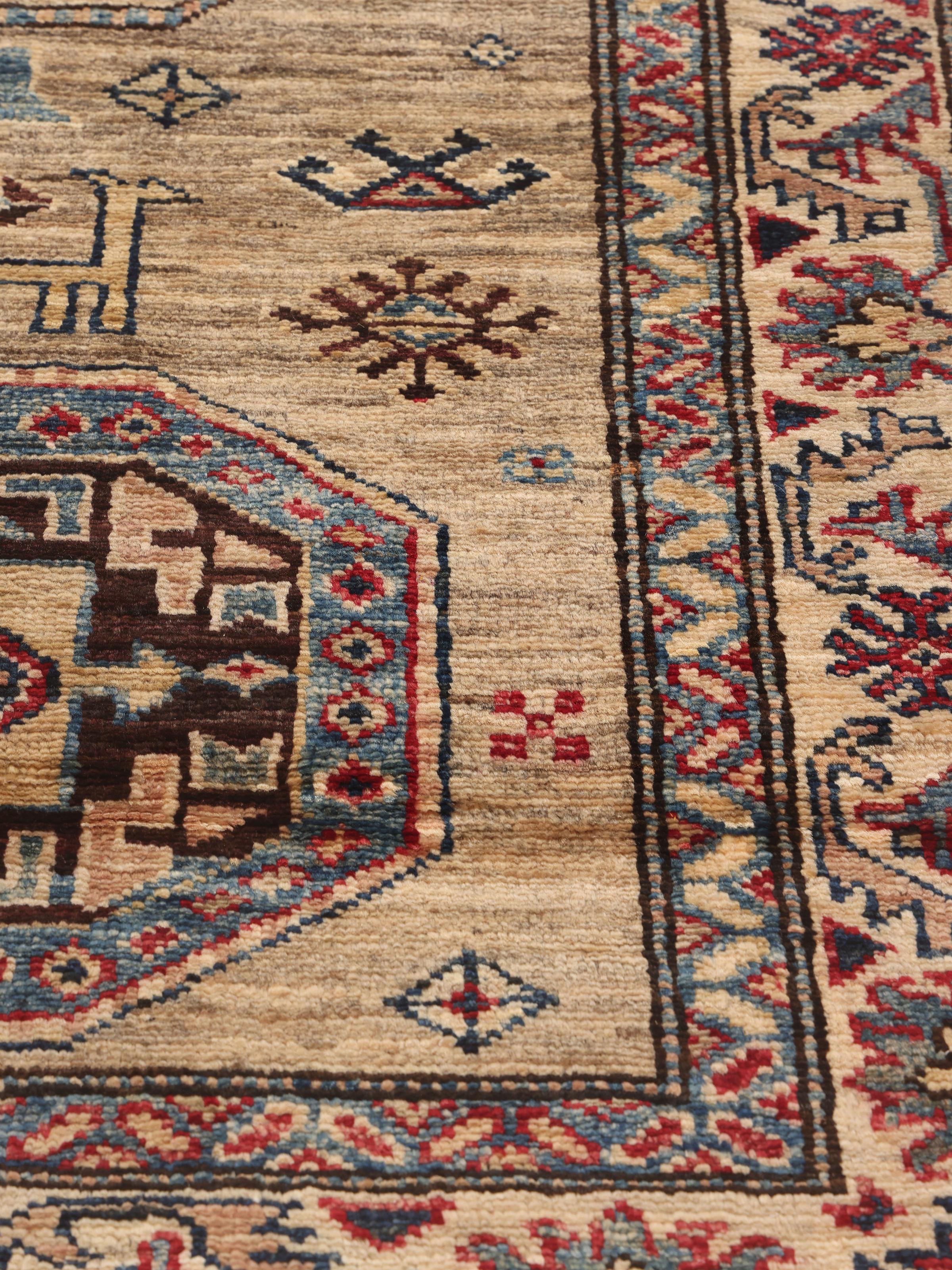
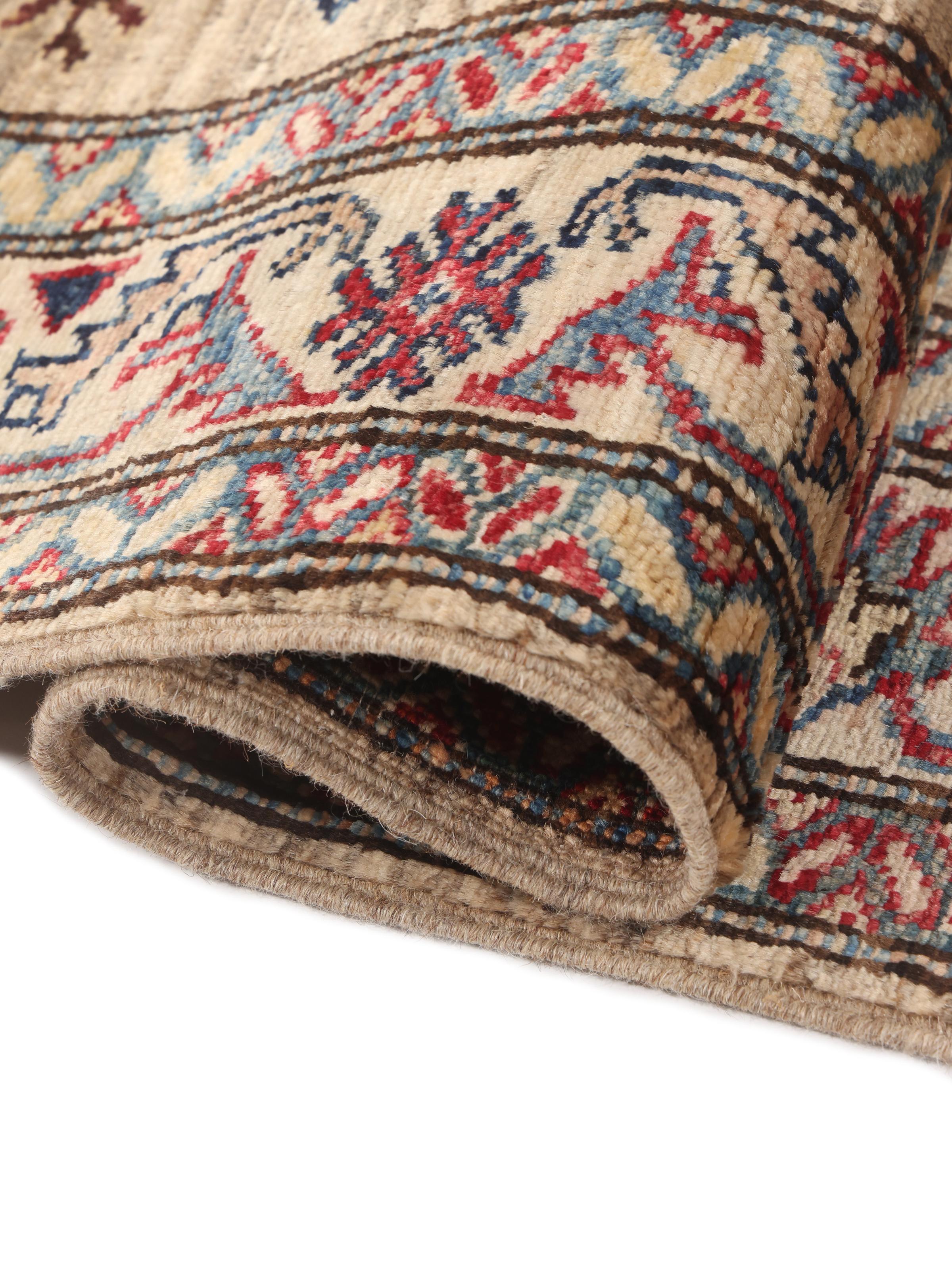
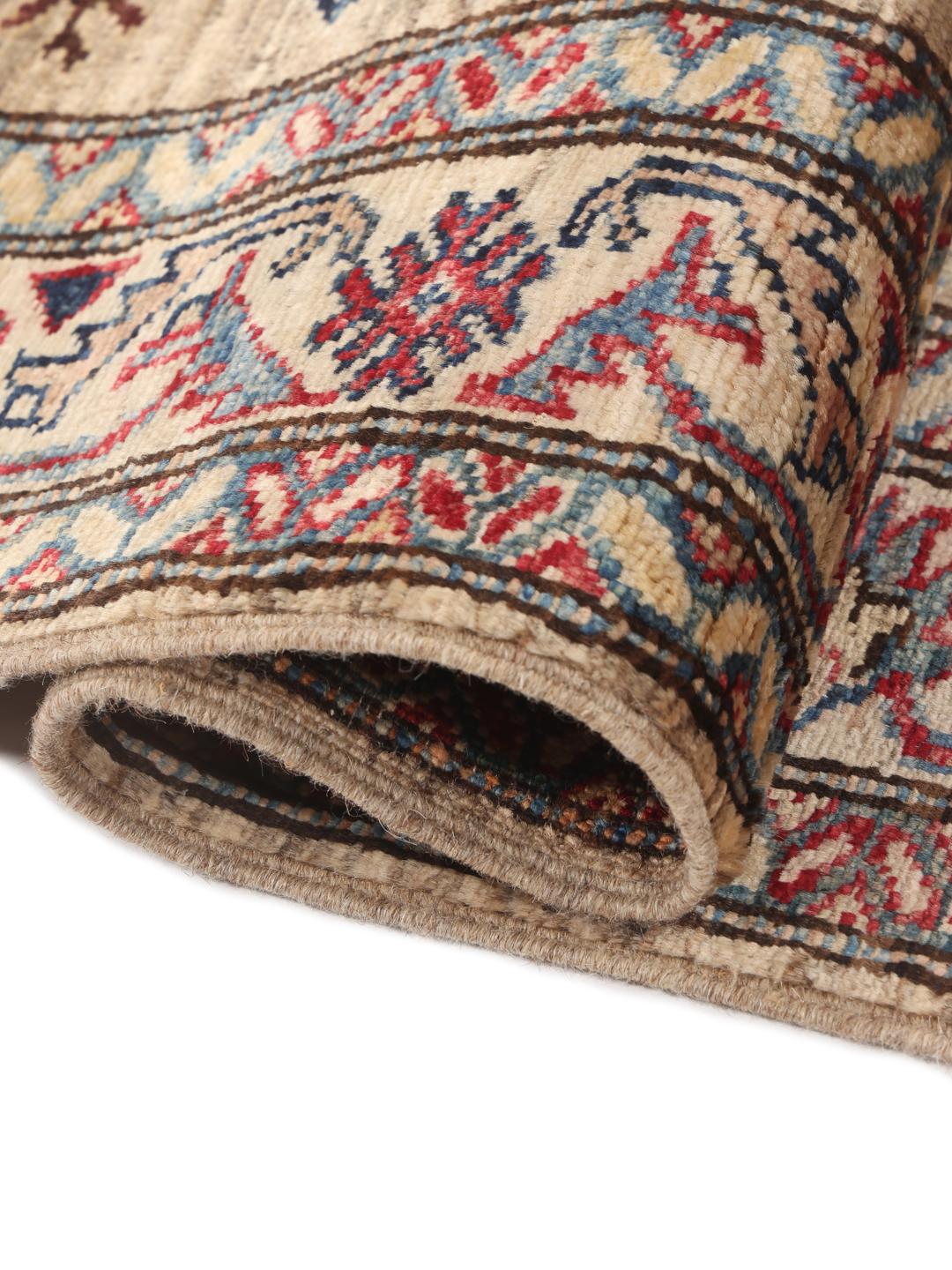
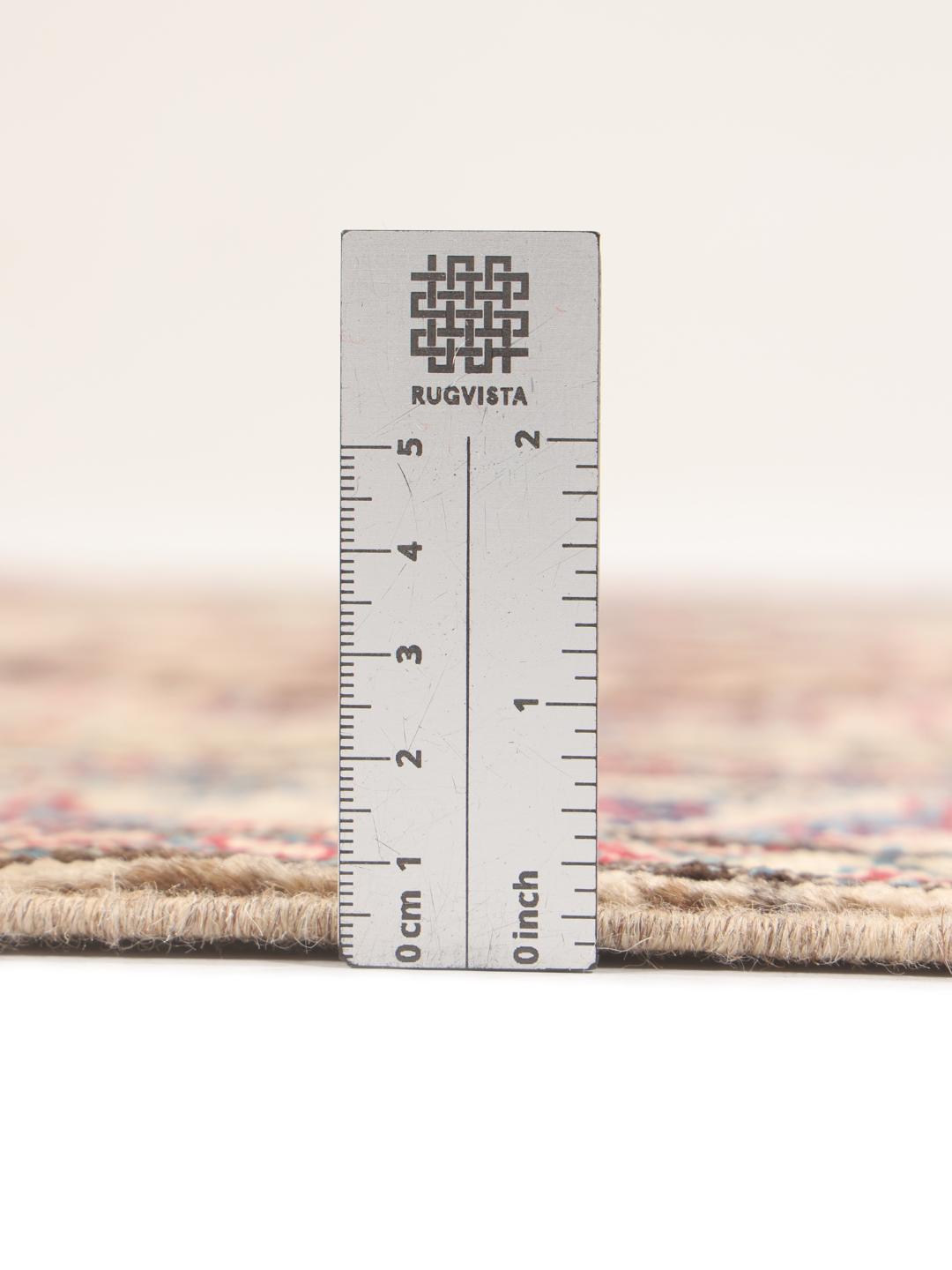
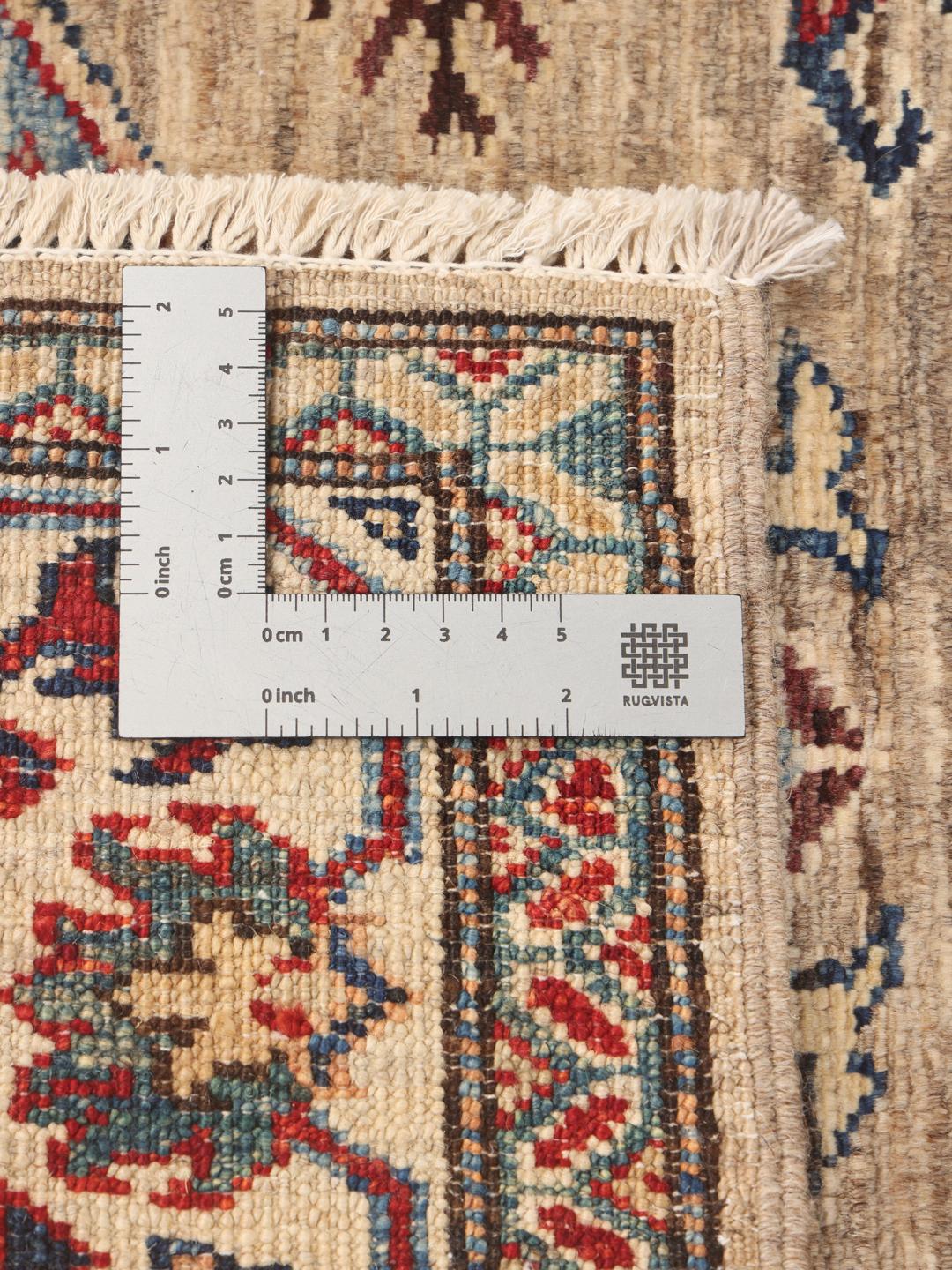
The term 'Kazak' refers to these specific, often bold, geometric rug traditions. These pieces are known for their sturdy construction and use of high-quality wool, which is often spun to create a resilient pile. The strength of the materials and the density of the knotting are what give these rugs their longevity, allowing them to withstand the rigours of daily life while retaining their character.
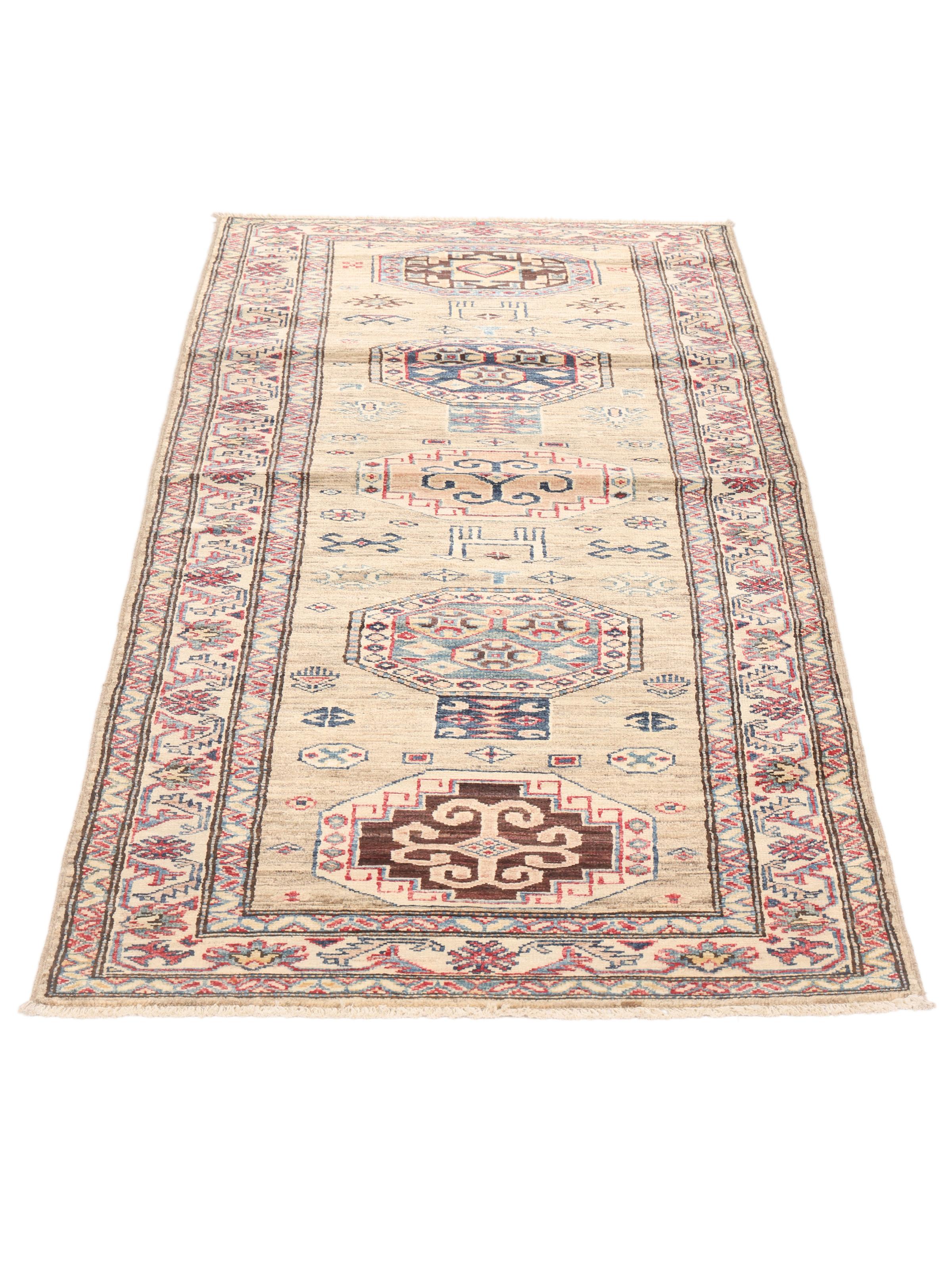
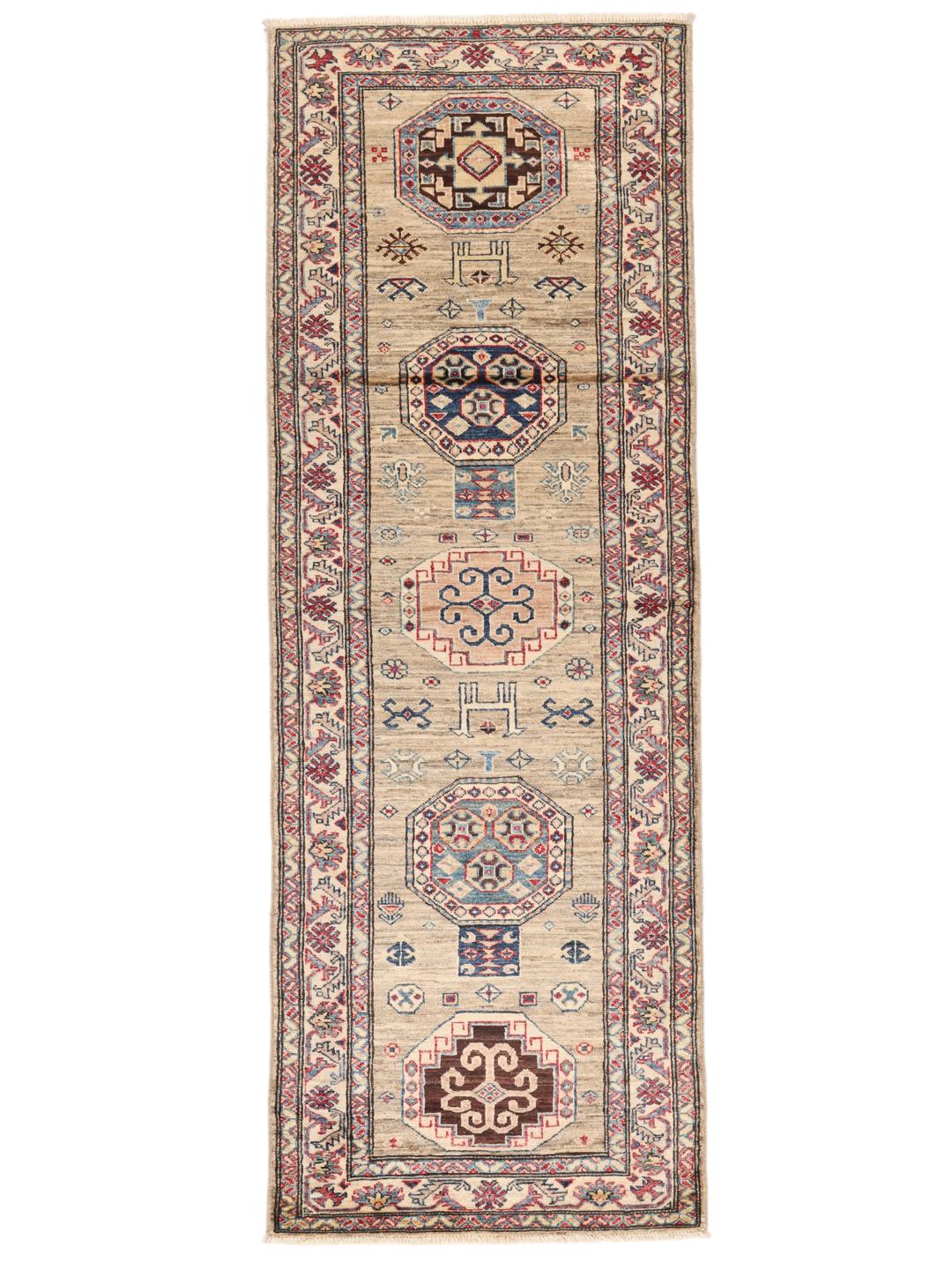
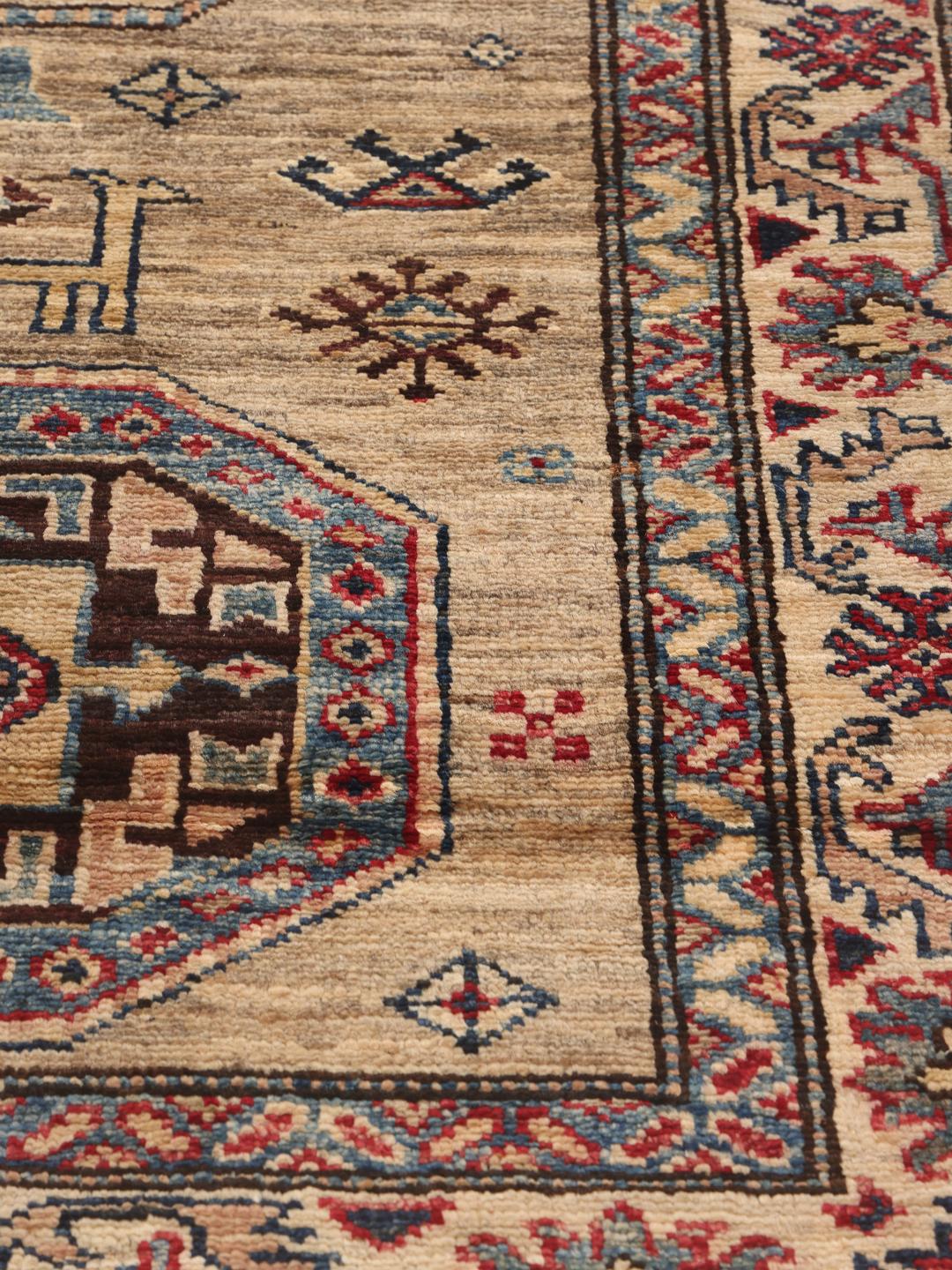
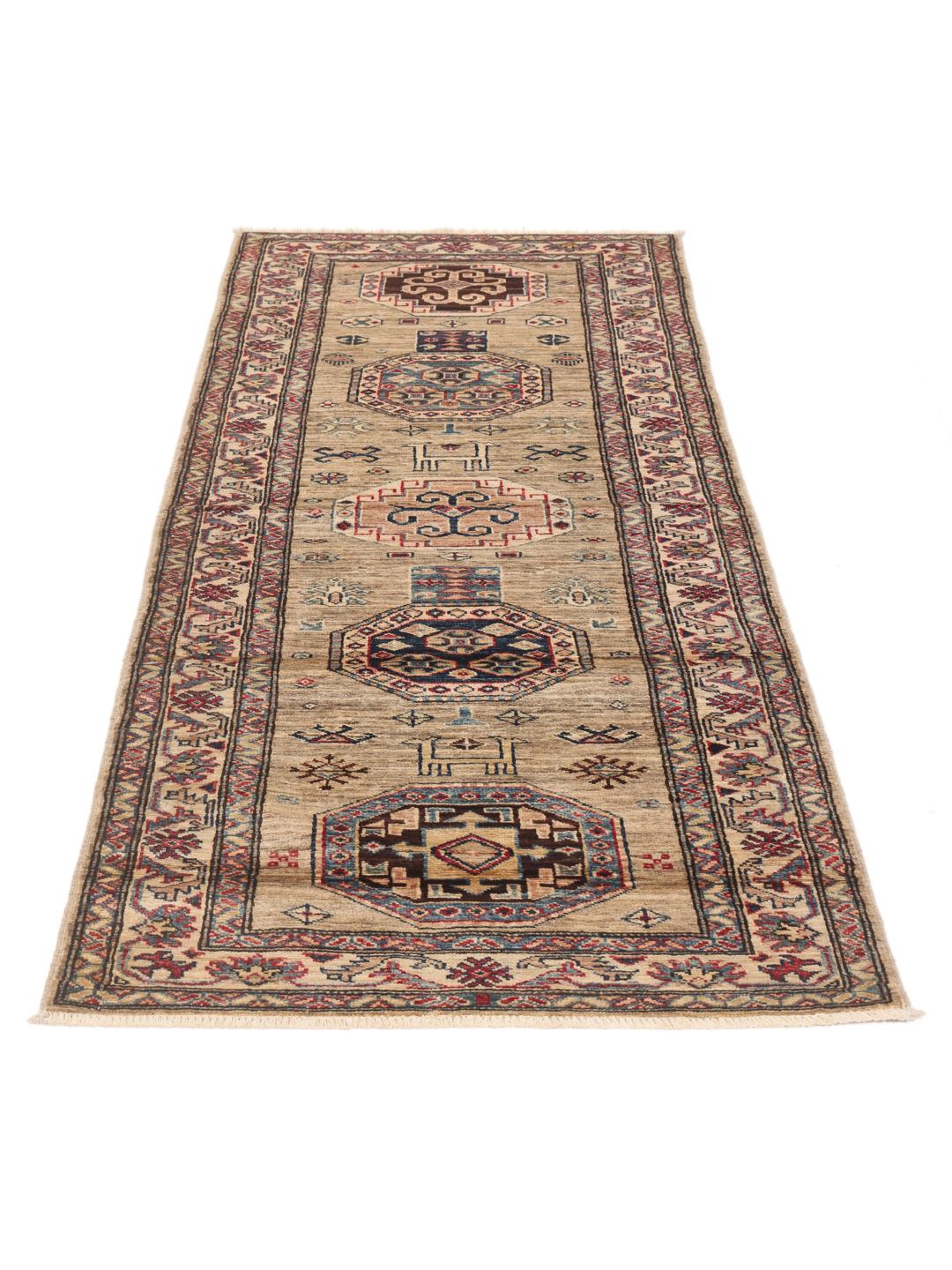
Visually, these rugs are famous for their stylized geometric motifs, such as medallions, hooked diamonds, and varied tribal symbols. The borders are often as significant as the central field, featuring intricate, repeated patterns that frame the composition. In this particular piece, the colour palette and pattern arrangement highlight the classic balance between bold, symbolic shapes and a neutral, grounded field.
Collectors value Kazak rugs for their authentic connection to nomadic history and the human skill required to produce them. Owning a piece from this tradition means bringing a sense of heritage and cultural depth into your home. It is a testament to a craft that has survived through generations, offering not just a floor covering, but a narrative of artistic expression and enduring utility.