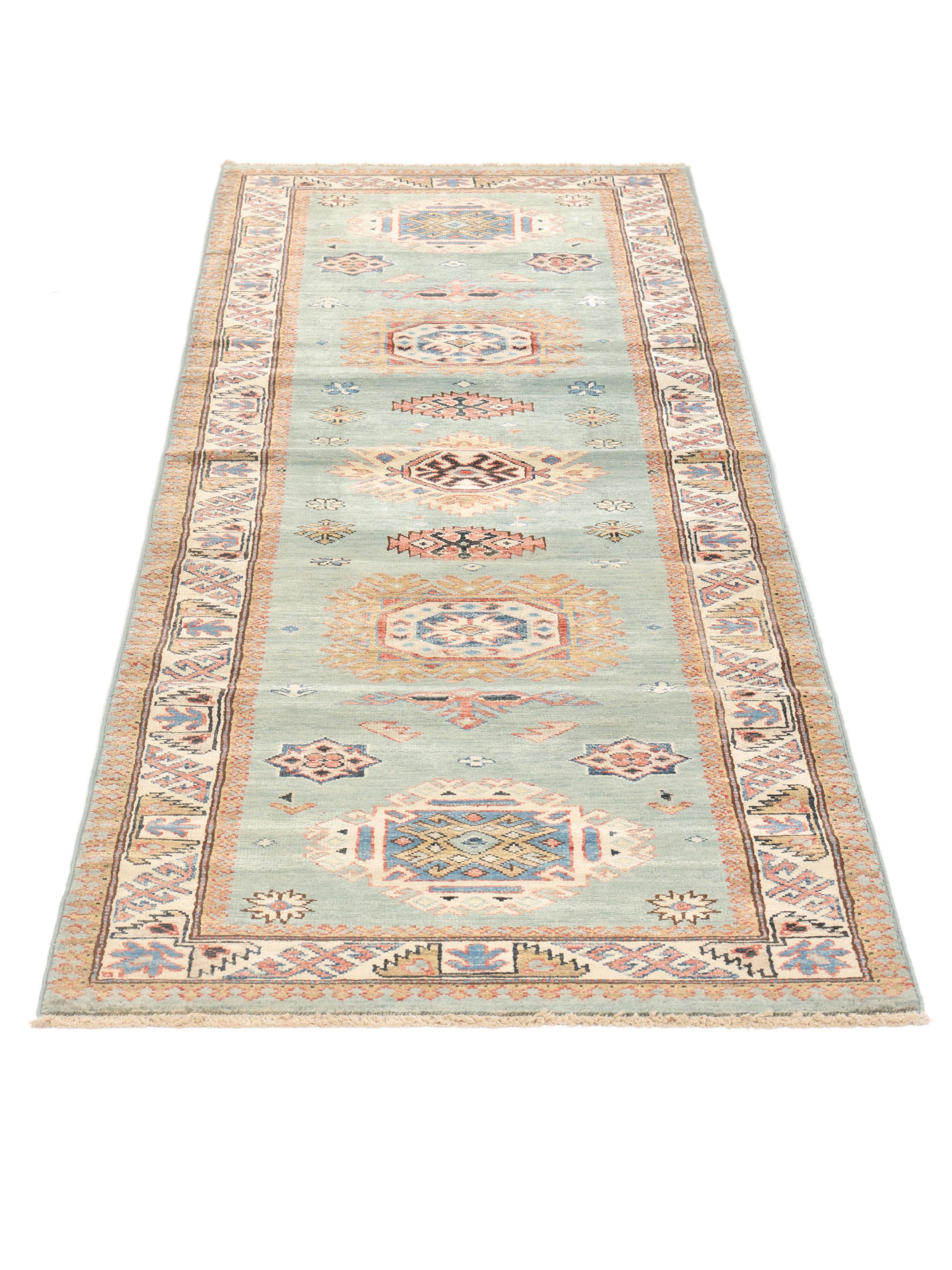
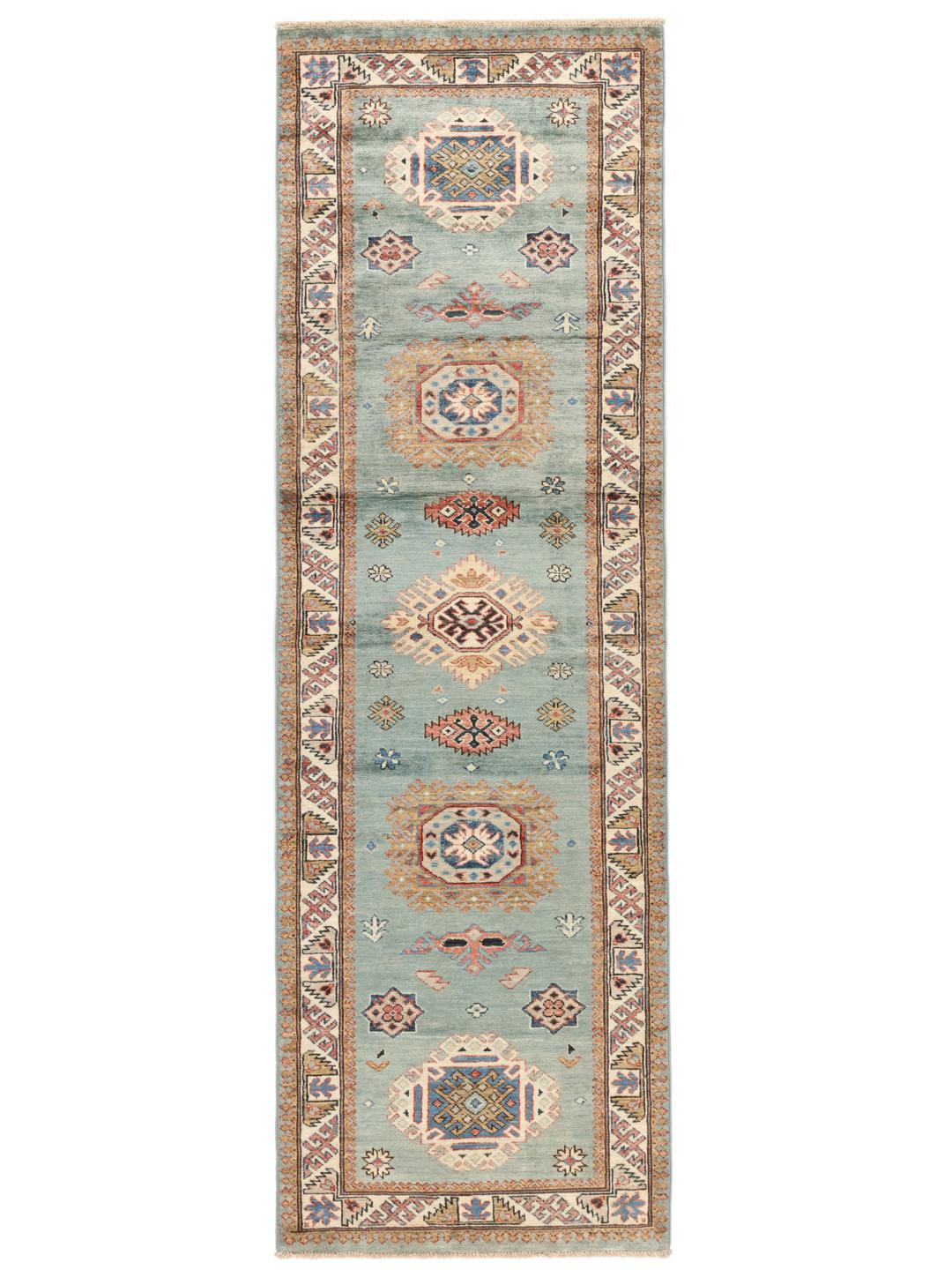
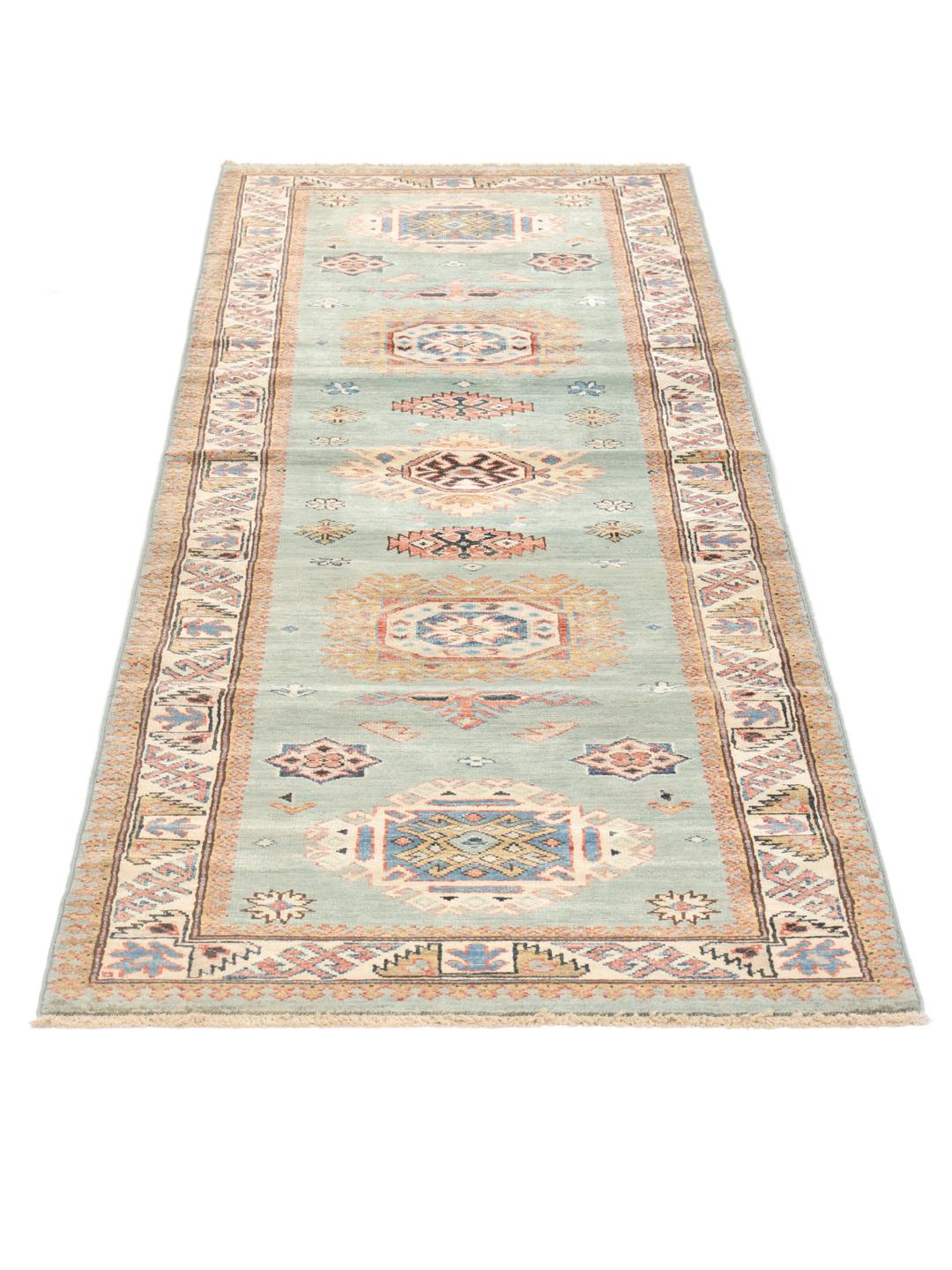
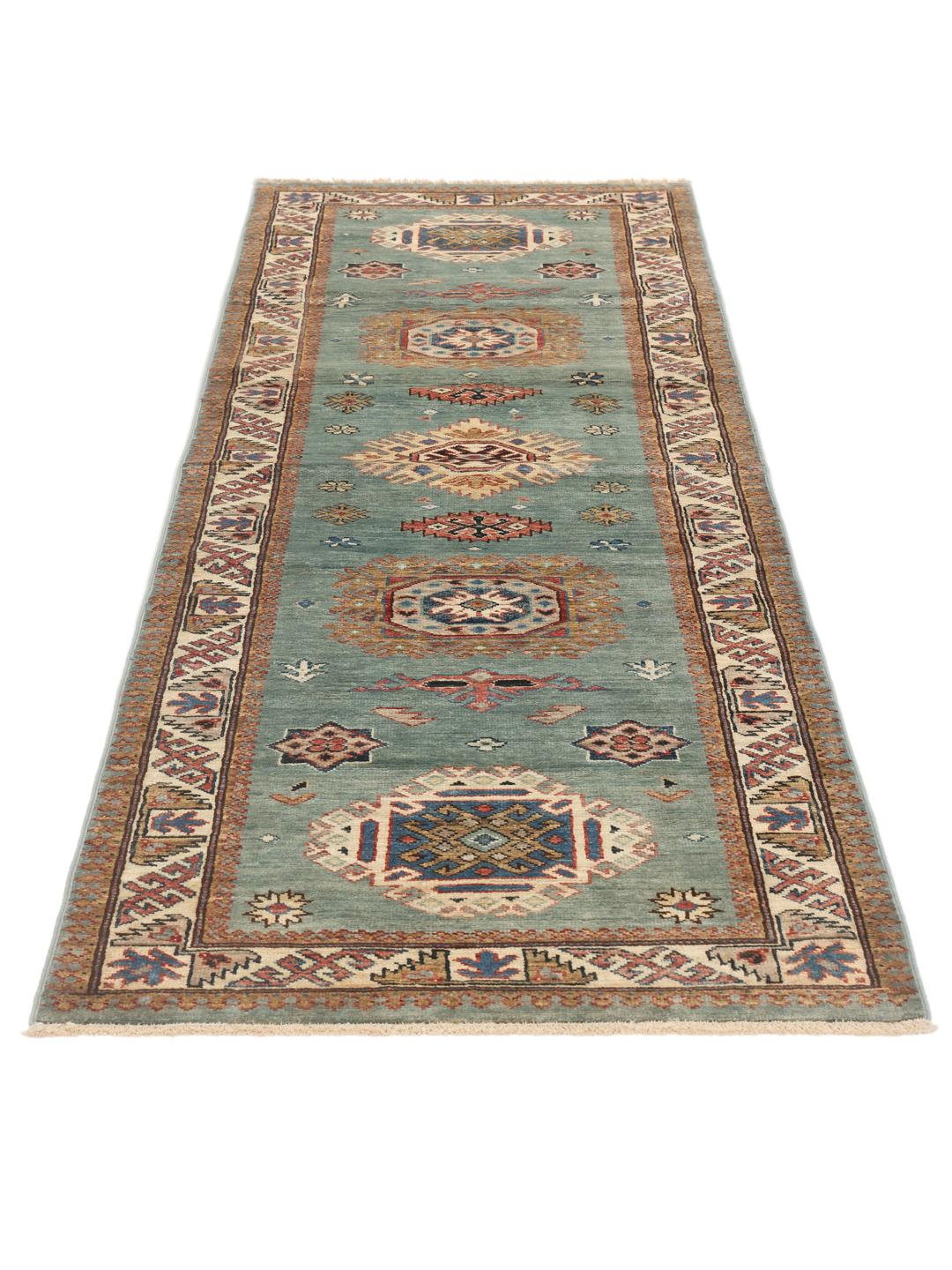
Kazak rugs originate from the mountainous regions of the Caucasus, though the term has evolved to represent a specific style of bold, geometric rug-making now thriving in Afghanistan. These rugs are celebrated for their vibrant, expressive designs that often prioritise tribal aesthetics over the formal, curvilinear patterns found in other Middle Eastern traditions.
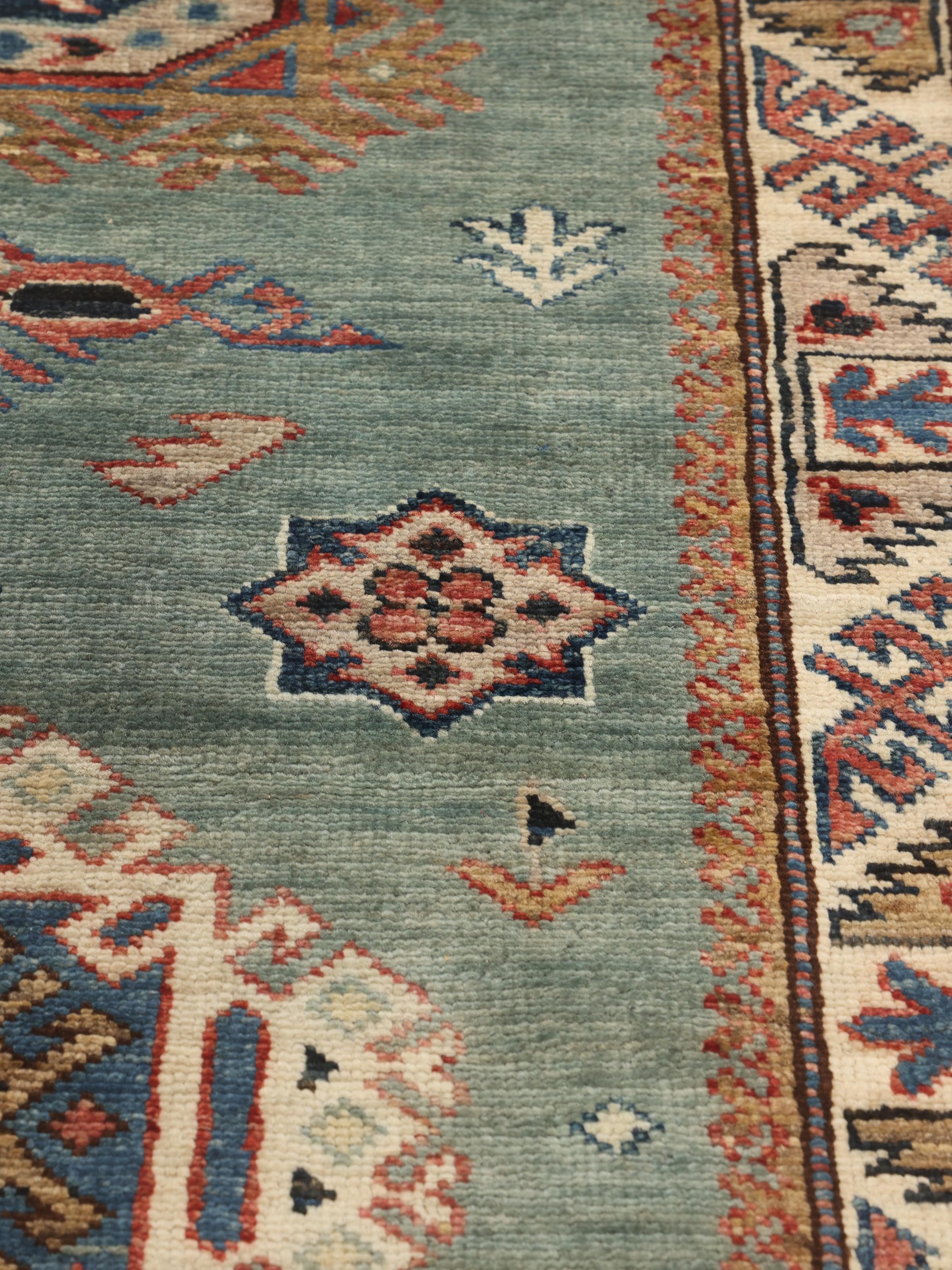
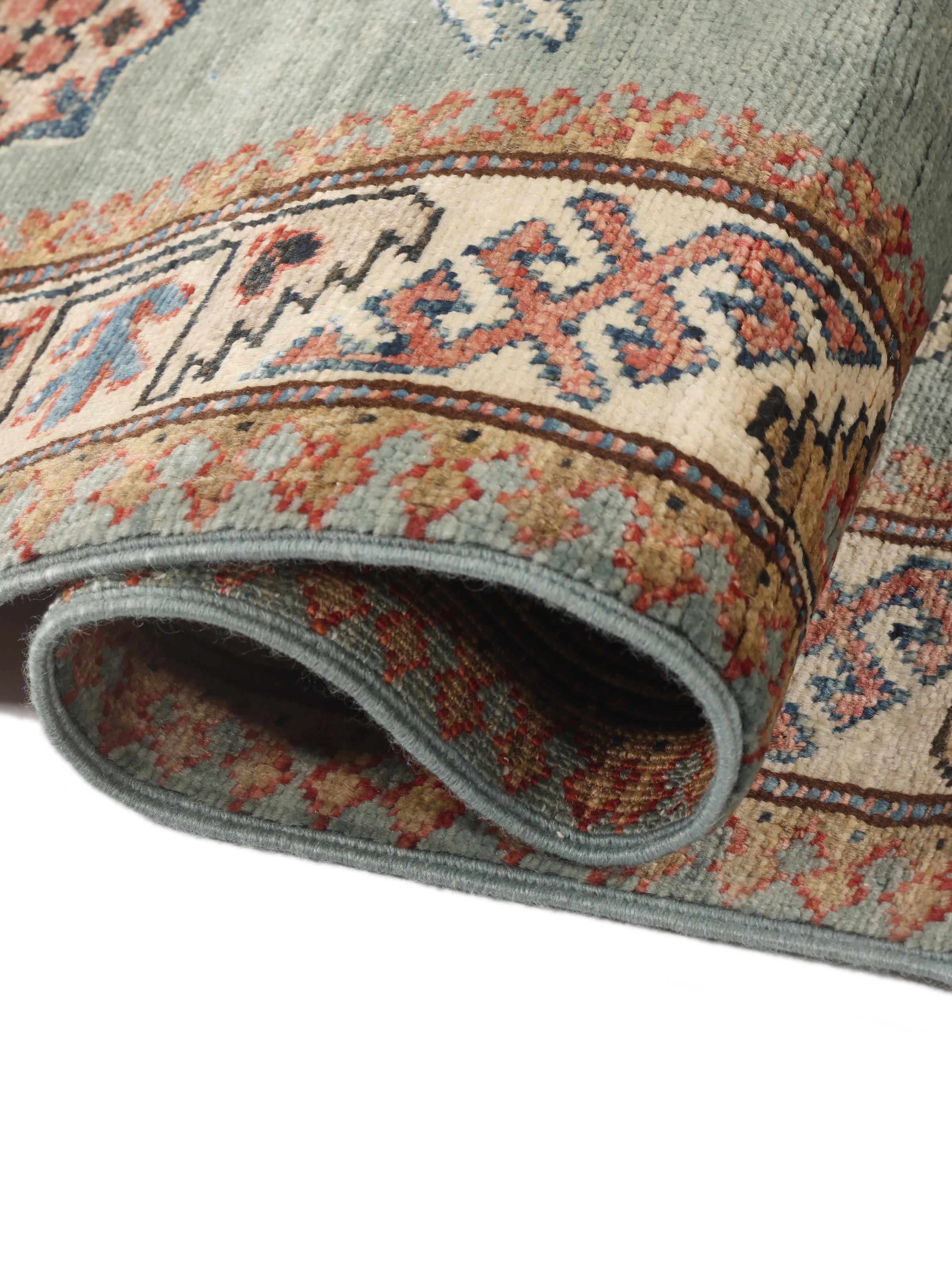
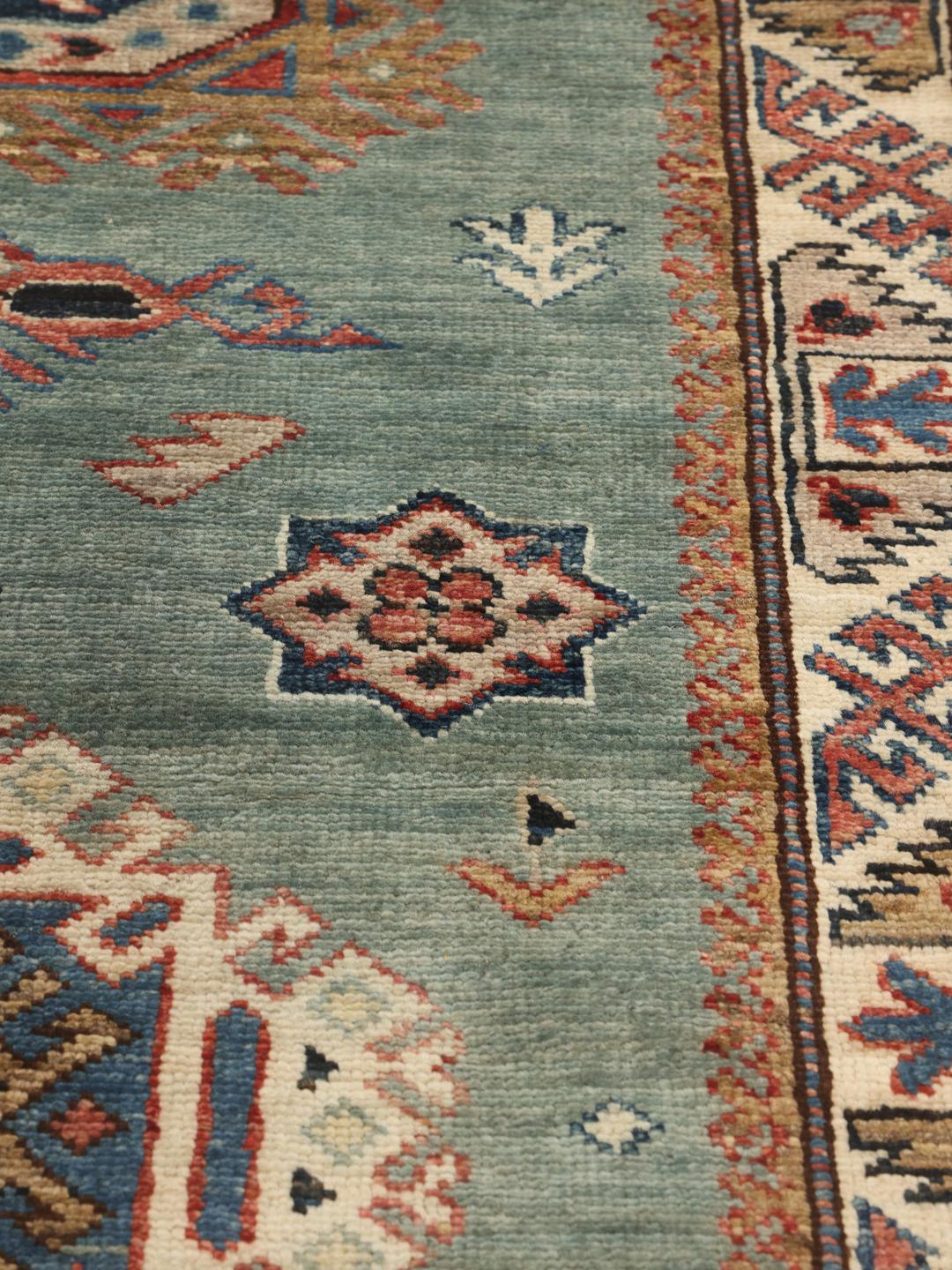
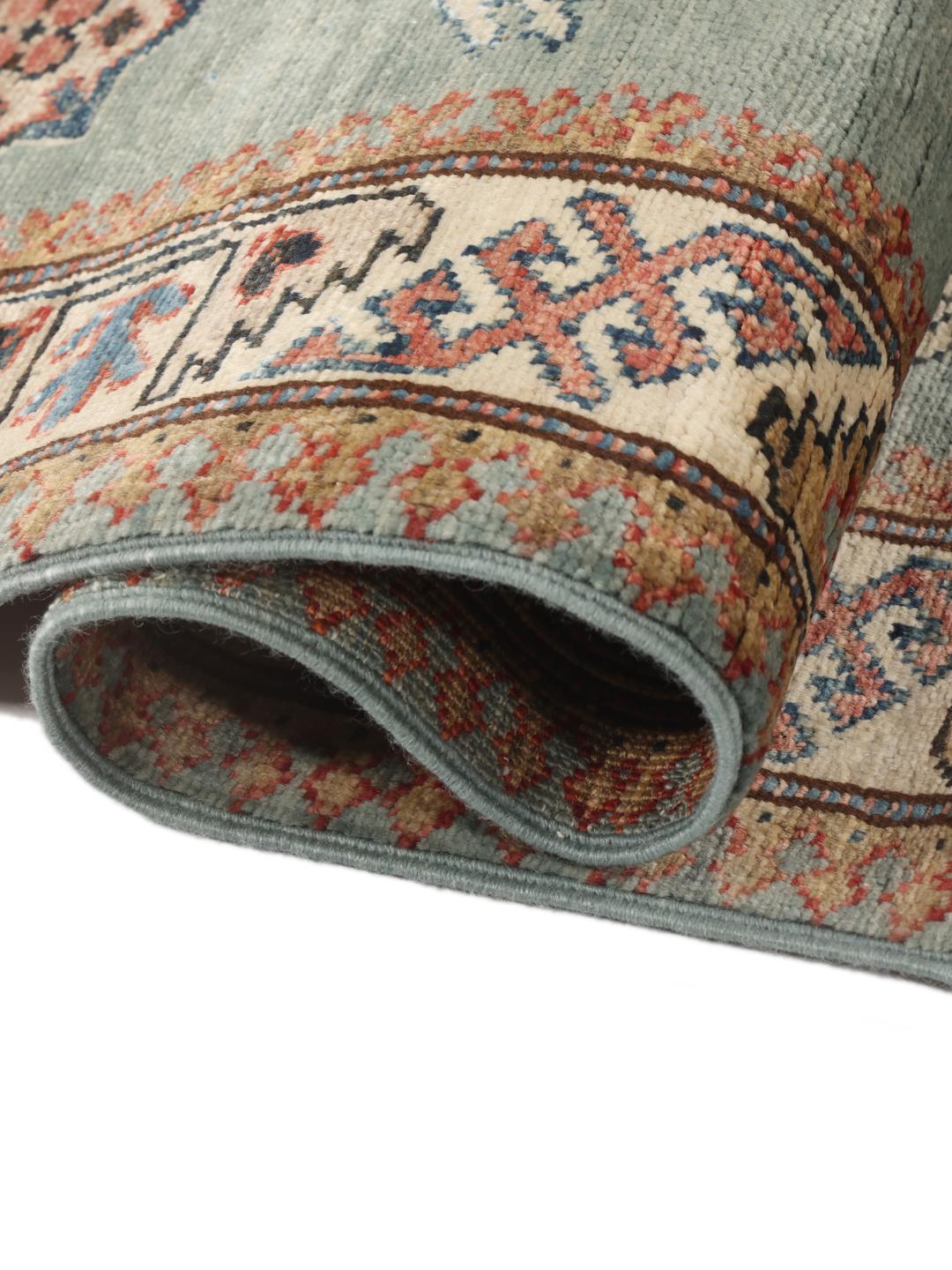
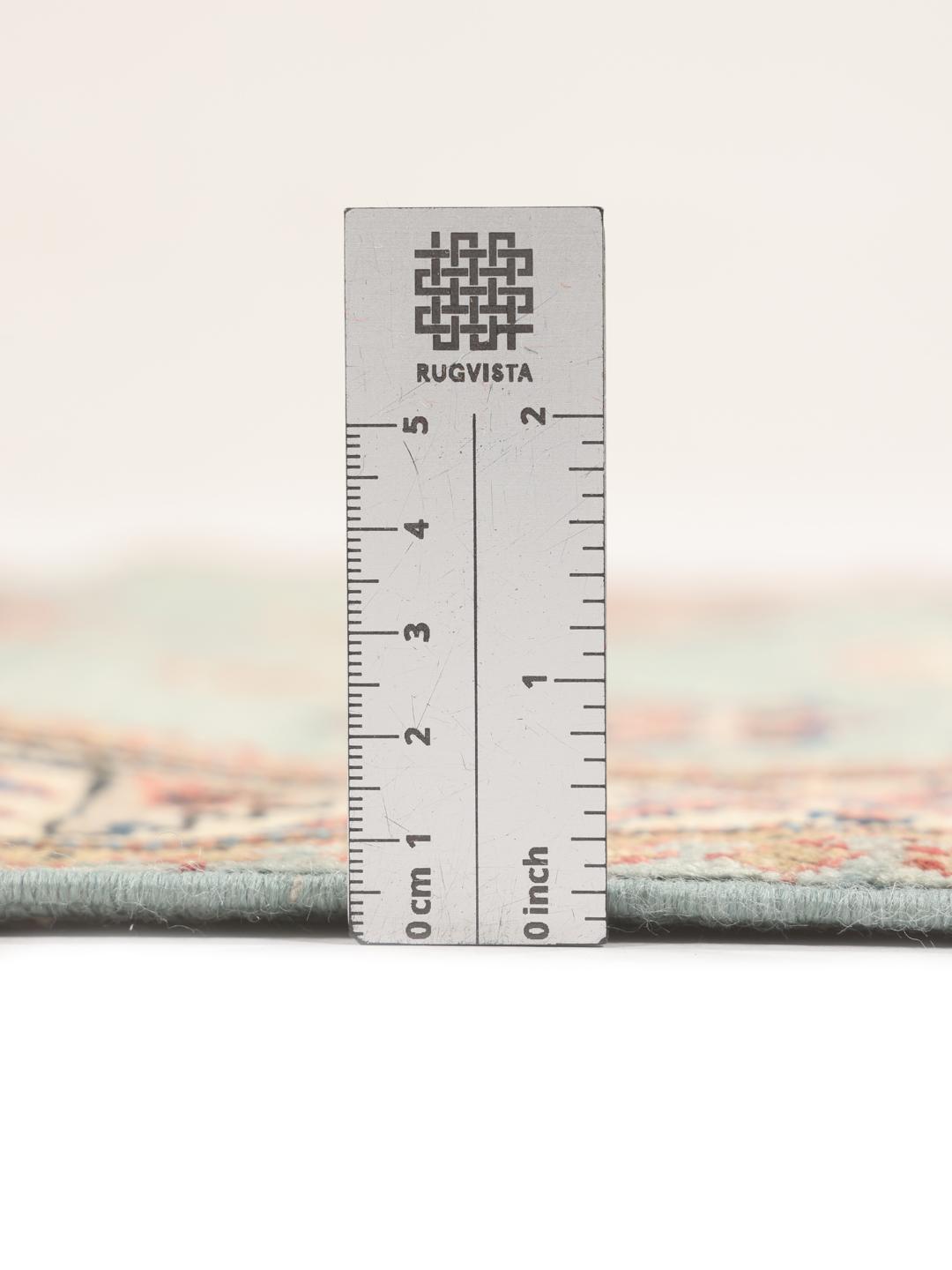
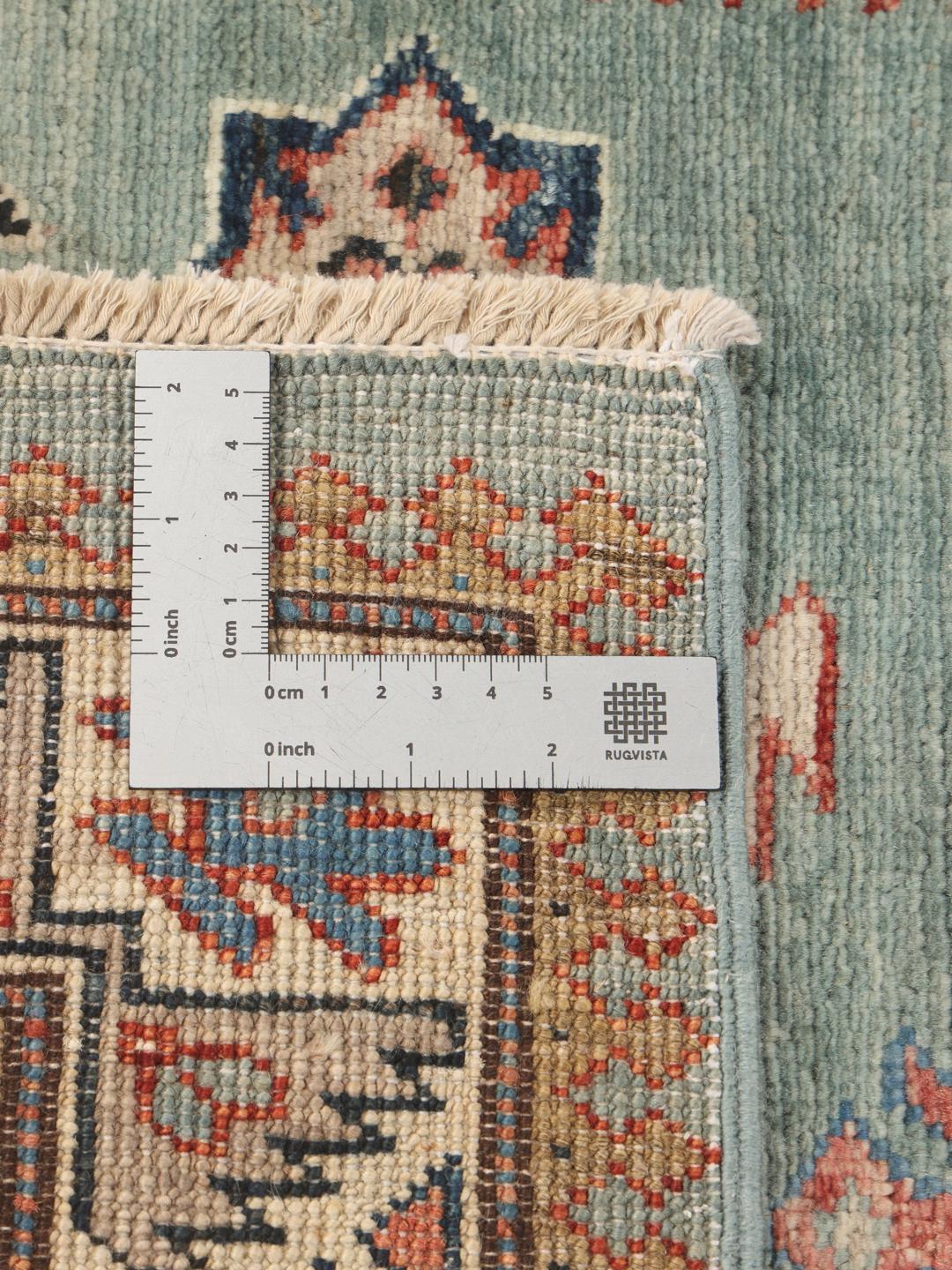
The construction of these rugs typically involves a robust foundation of cotton, which provides the necessary stability for the dense wool pile. The term 'Kazak' refers not to a specific tribe, but rather to a style of weaving that emphasises durability and a thick, soft pile. This construction is highly valued because it creates a resilient surface that is both comfortable underfoot and capable of enduring generations of use.
Signature design elements of the Kazak tradition include large, stylised geometric medallions, often referred to as 'guls' or tribal motifs. These are frequently accompanied by stepped edges, angular floral forms, and dramatic, wide borders. This specific runner utilises a light-blue field to offer a softer, more contemporary take on the traditional, bolder colour palettes often associated with these designs.
Collectors value Kazak rugs for their authentic, soulful appearance and the clear evidence of the weaver's hand. Owning a piece from this tradition is an invitation to connect with a long, storied heritage of textile art. Each rug serves as a cultural artefact, preserving ancient motifs while providing a warm, grounded presence in the modern home.