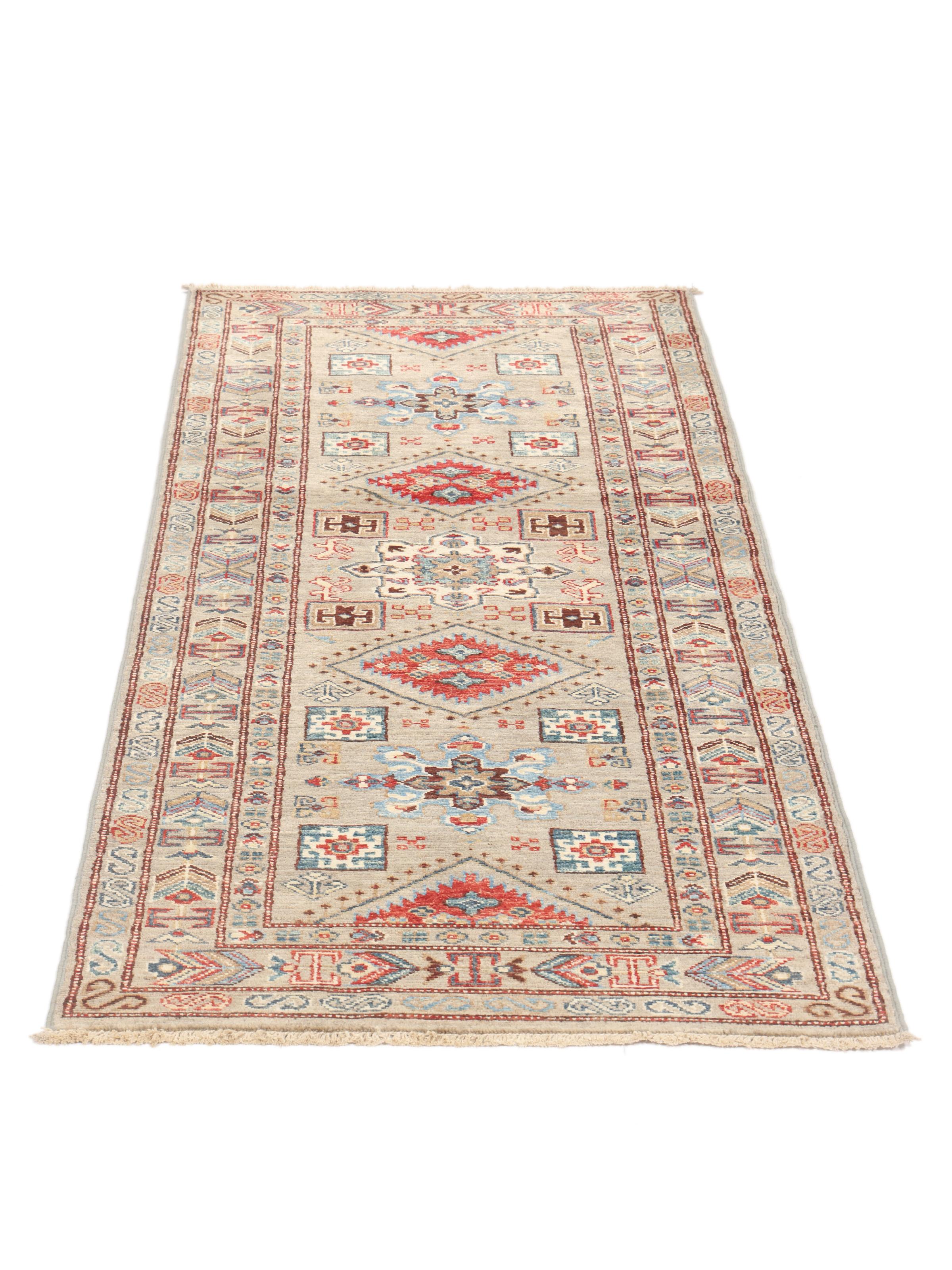
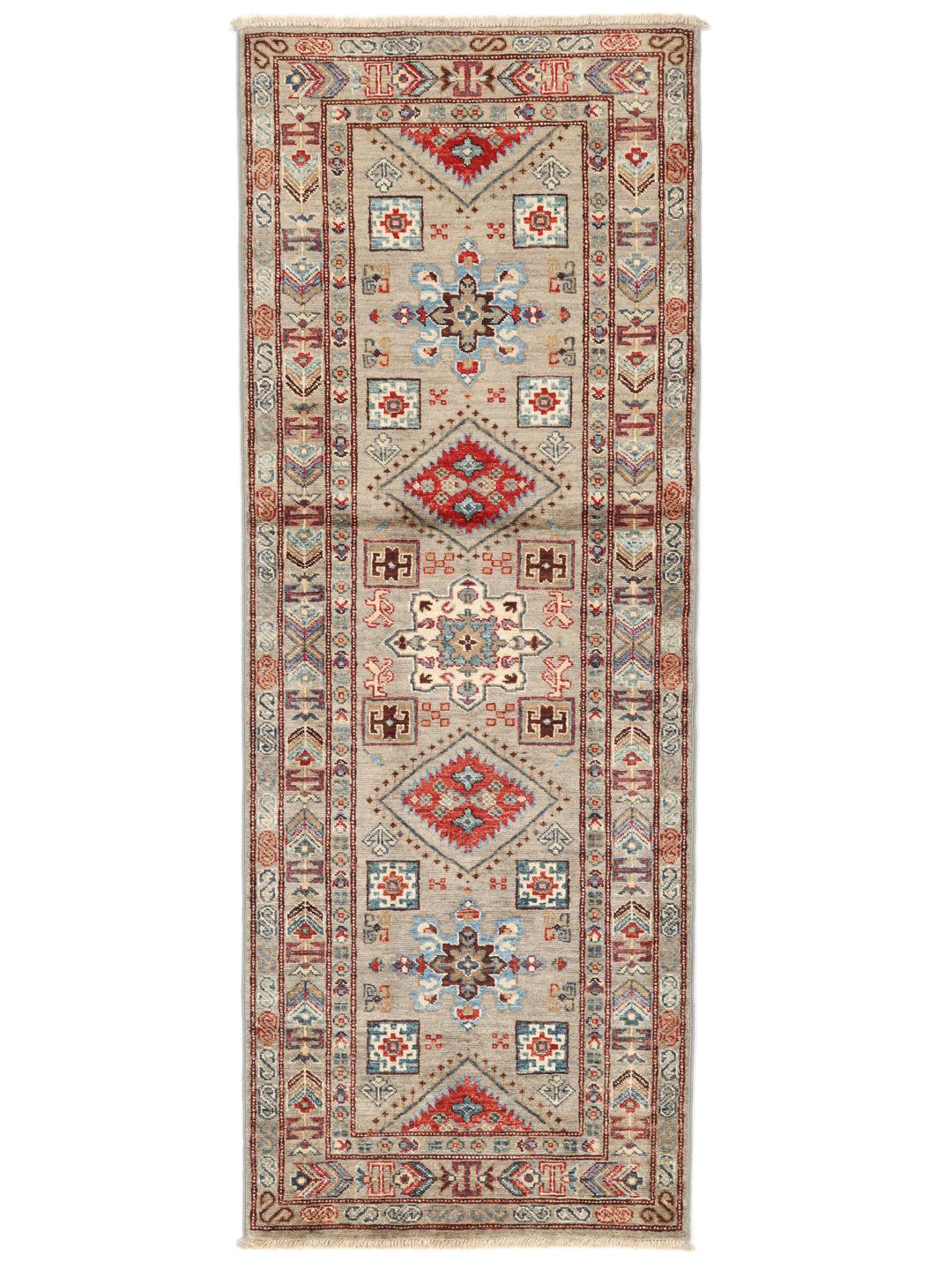
The Kazak tradition has its roots in the mountainous regions of the Caucasus, where nomadic tribes developed a distinct style of weaving characterised by bold, geometric designs and a strong, earthy colour palette. Over generations, these techniques migrated and evolved, eventually finding a new home in Afghanistan, where artisans continue to produce these rugs using traditional methods that respect the original design language.
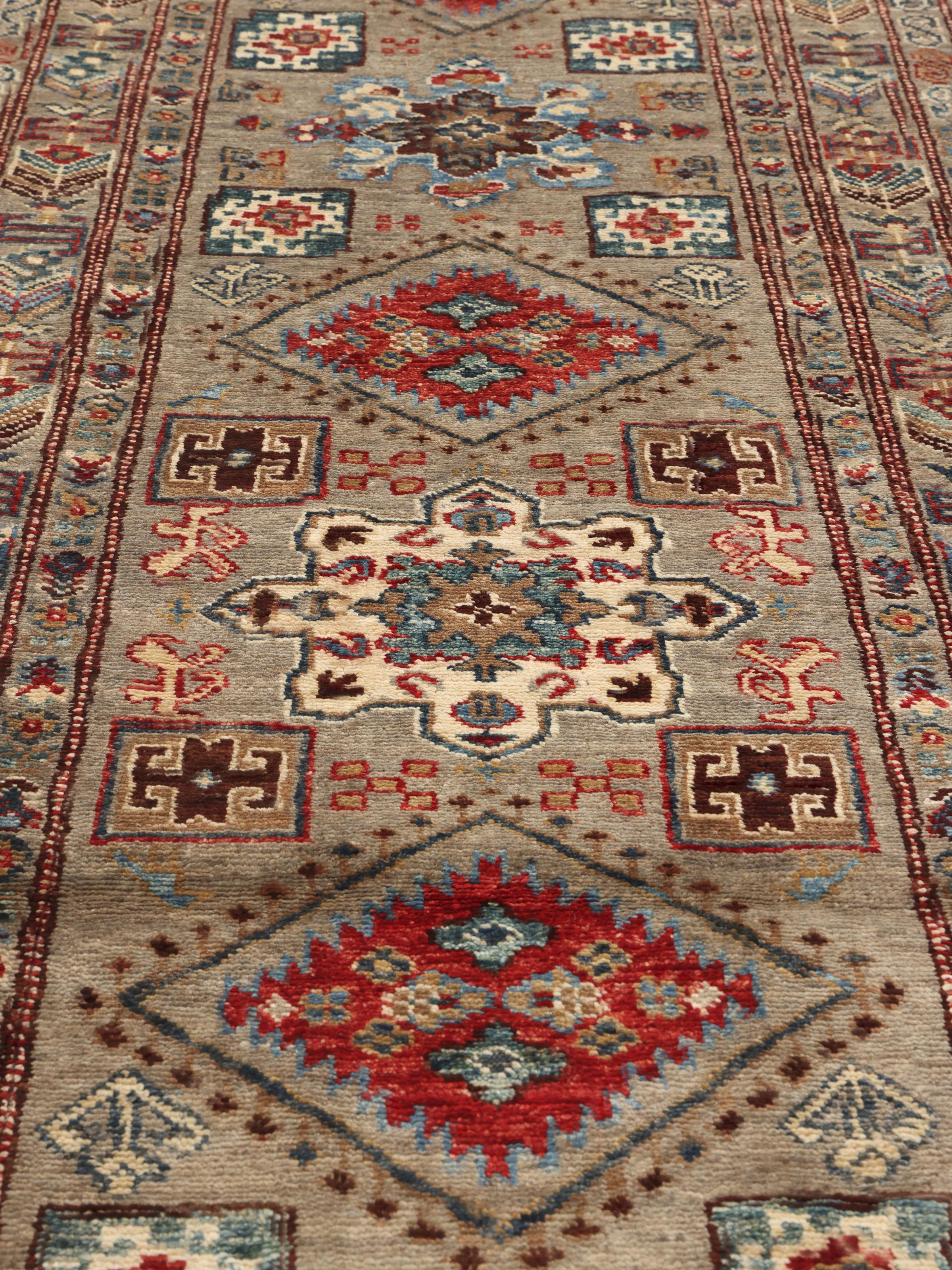
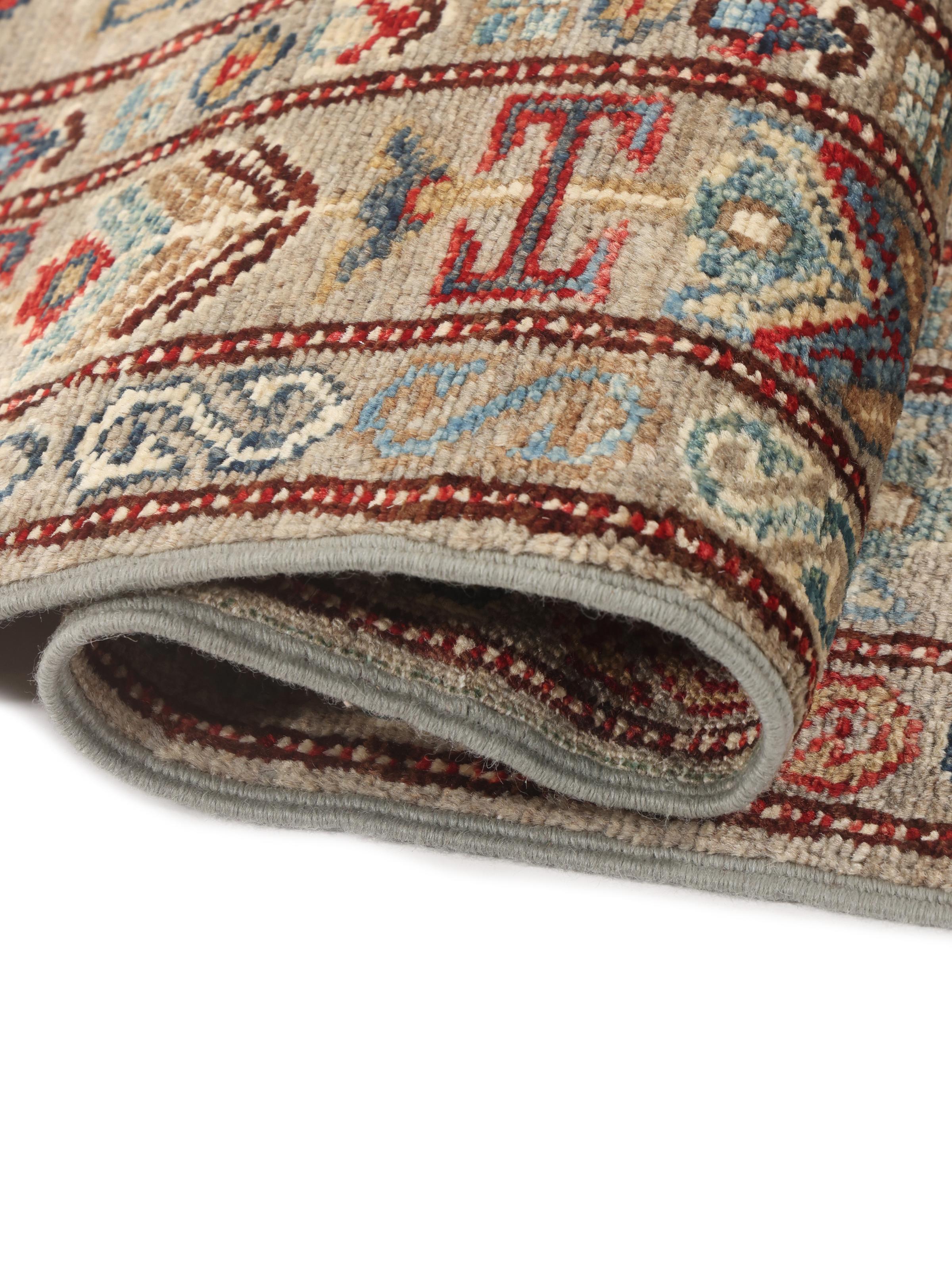
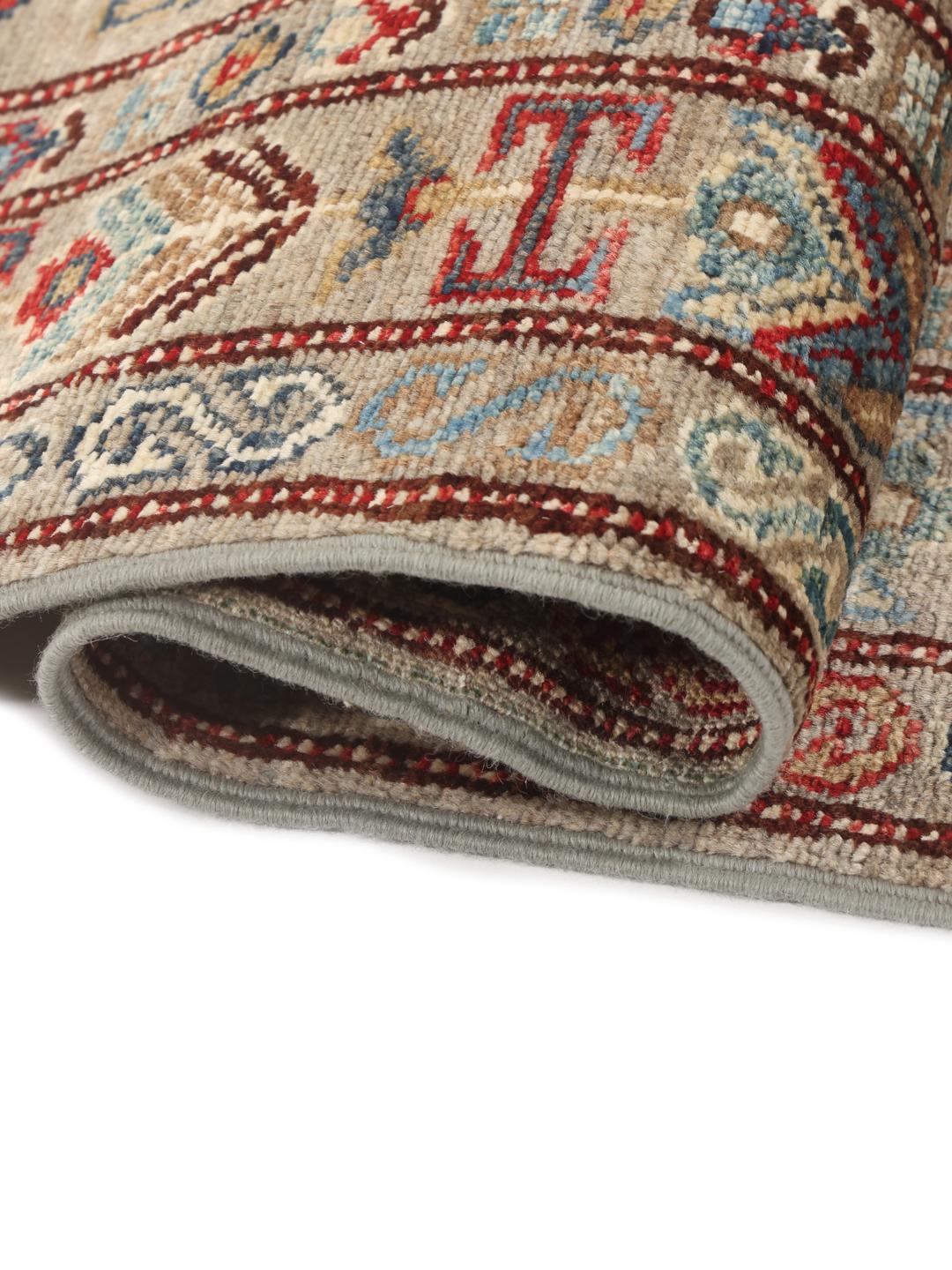
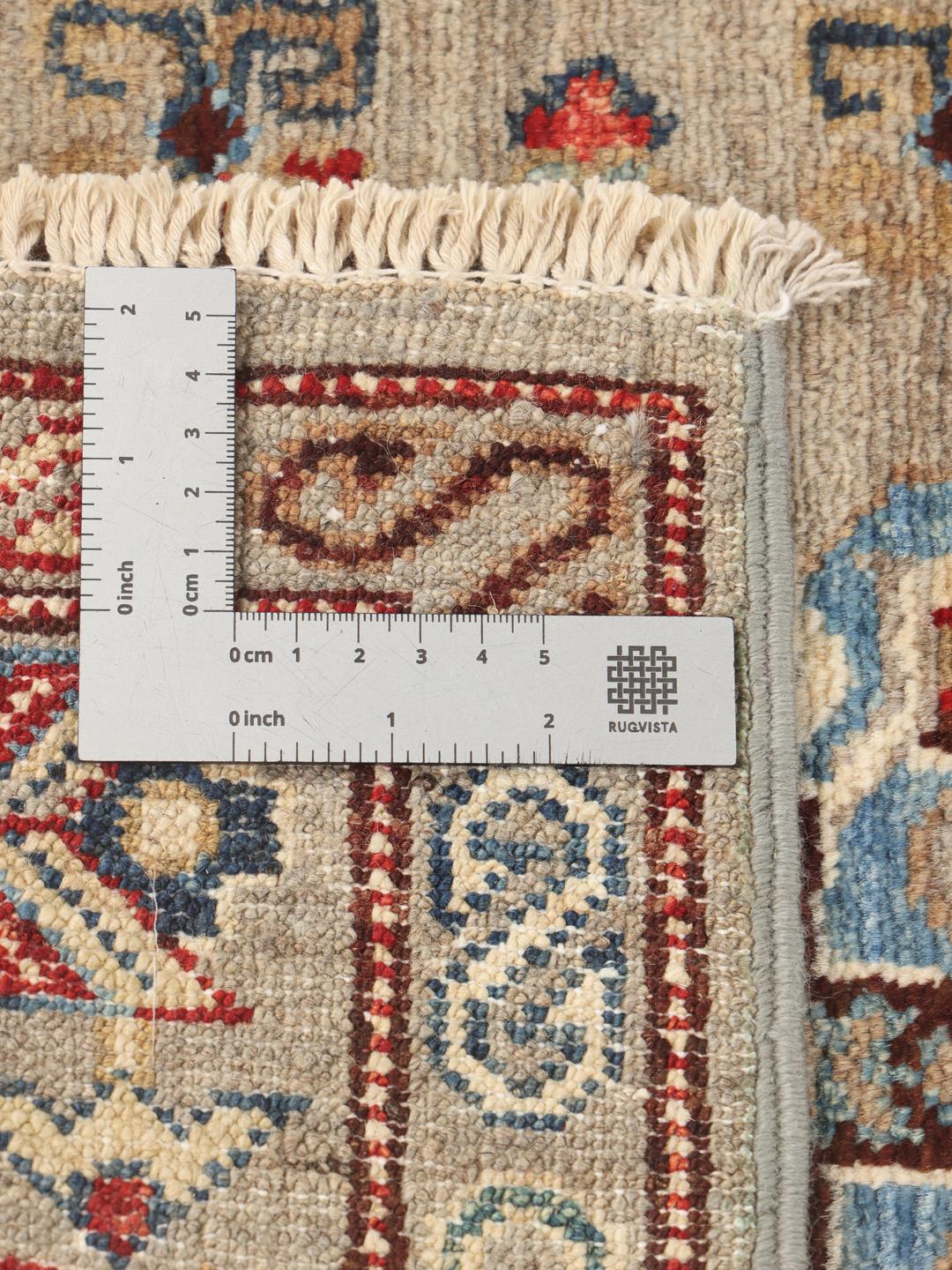
When we refer to a rug as hand-knotted, we are describing a technique where every single knot is tied individually onto the foundation by a skilled weaver. This is a labour-intensive process that results in a much higher degree of durability and precision than any machine-made alternative. The density of these knots directly influences the sharpness of the pattern and the luxurious feel of the pile underfoot.
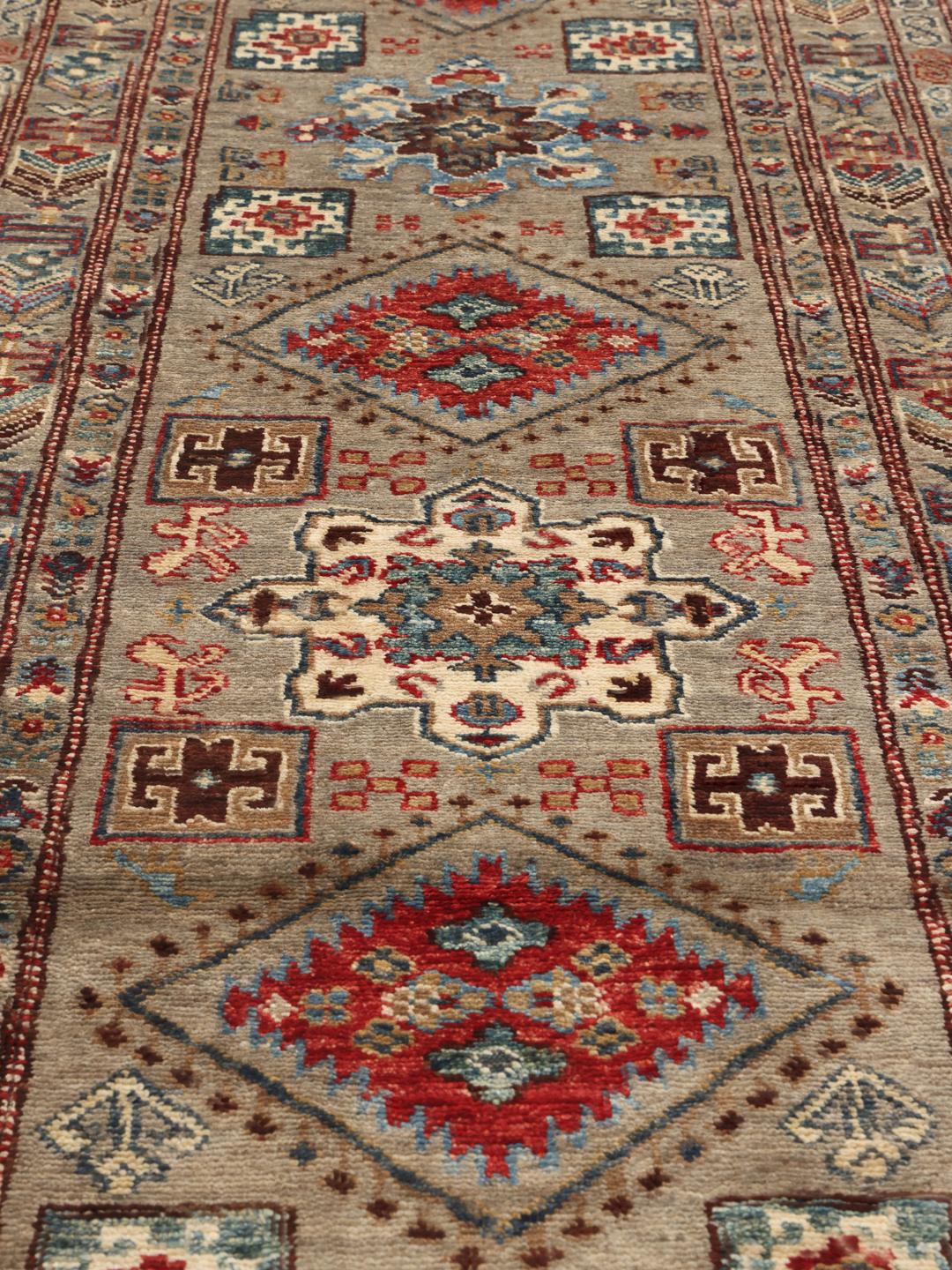
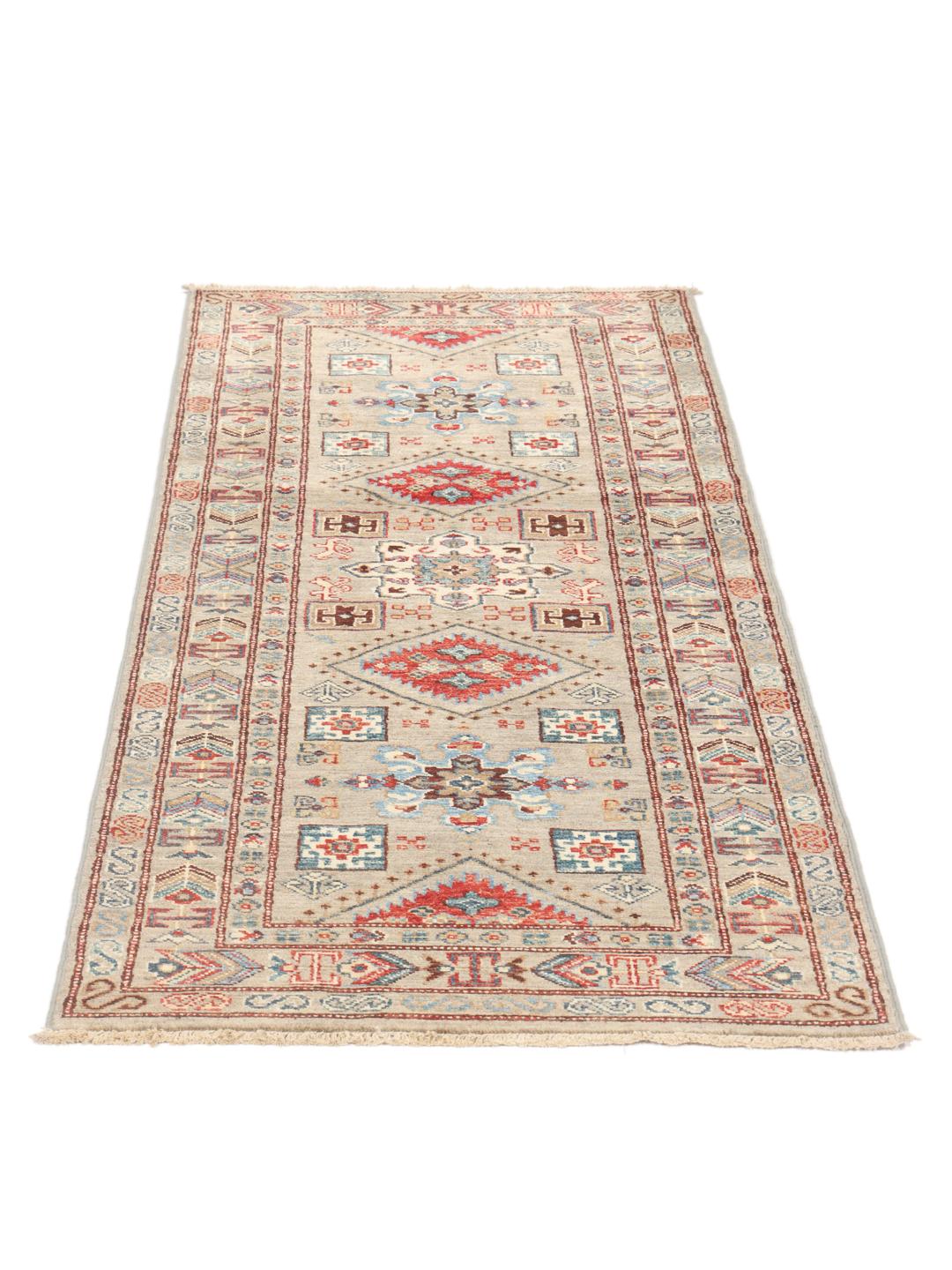
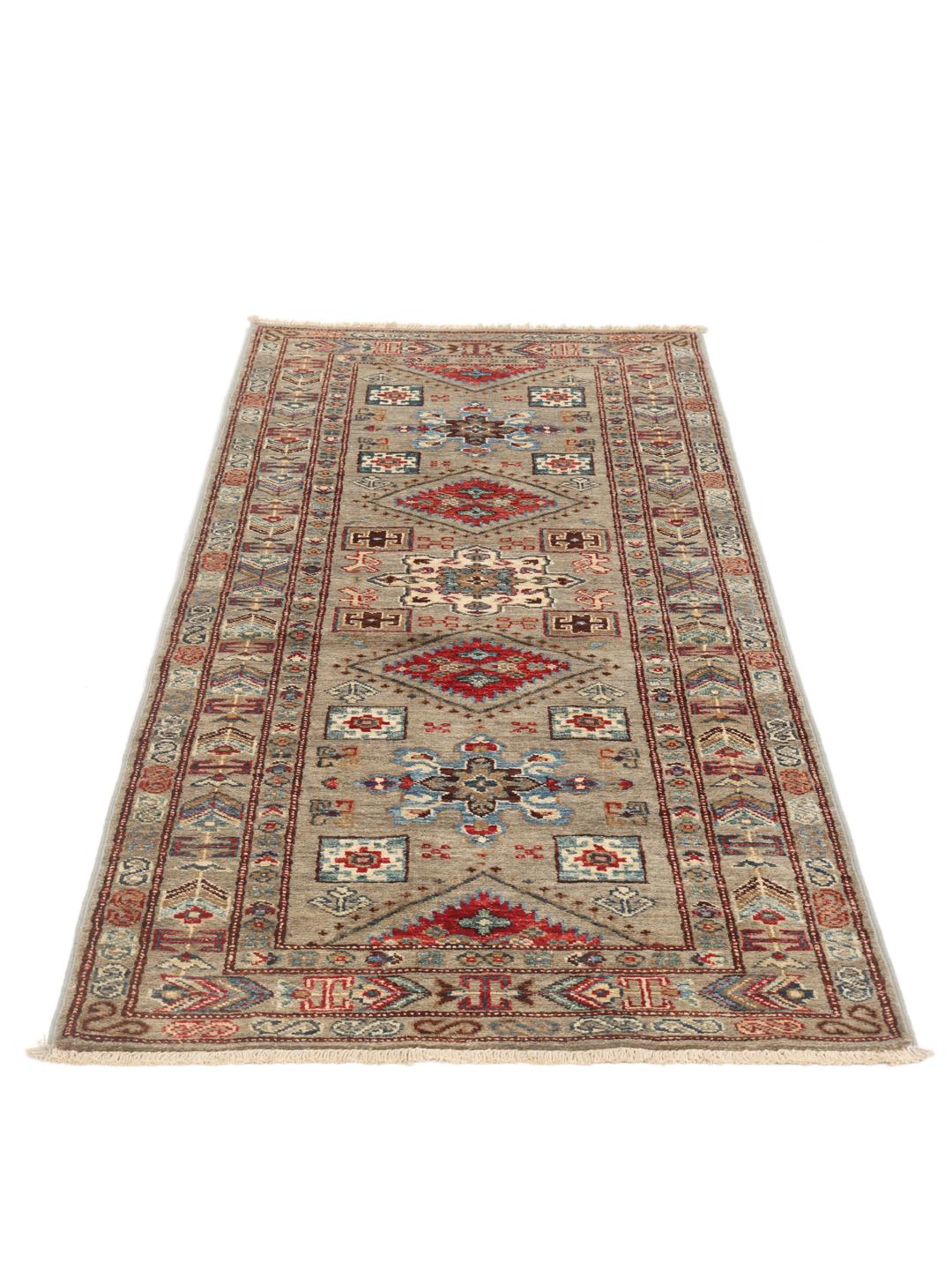
The design of this runner is defined by its use of repeating geometric medallions and symbolic motifs. These patterns are not merely decorative but are deeply rooted in the cultural history of the region. The use of a central field filled with stylised forms, enclosed by a formal, multi-layered border, is a classic arrangement that creates a sense of harmony and structure.
Collecting a rug from this tradition is about valuing the human skill and historical continuity that goes into every piece. These rugs are highly regarded for their ability to age beautifully, often gaining more character over time. Owning one is an opportunity to preserve a piece of cultural heritage that brings both lasting quality and a unique aesthetic narrative to your living space.