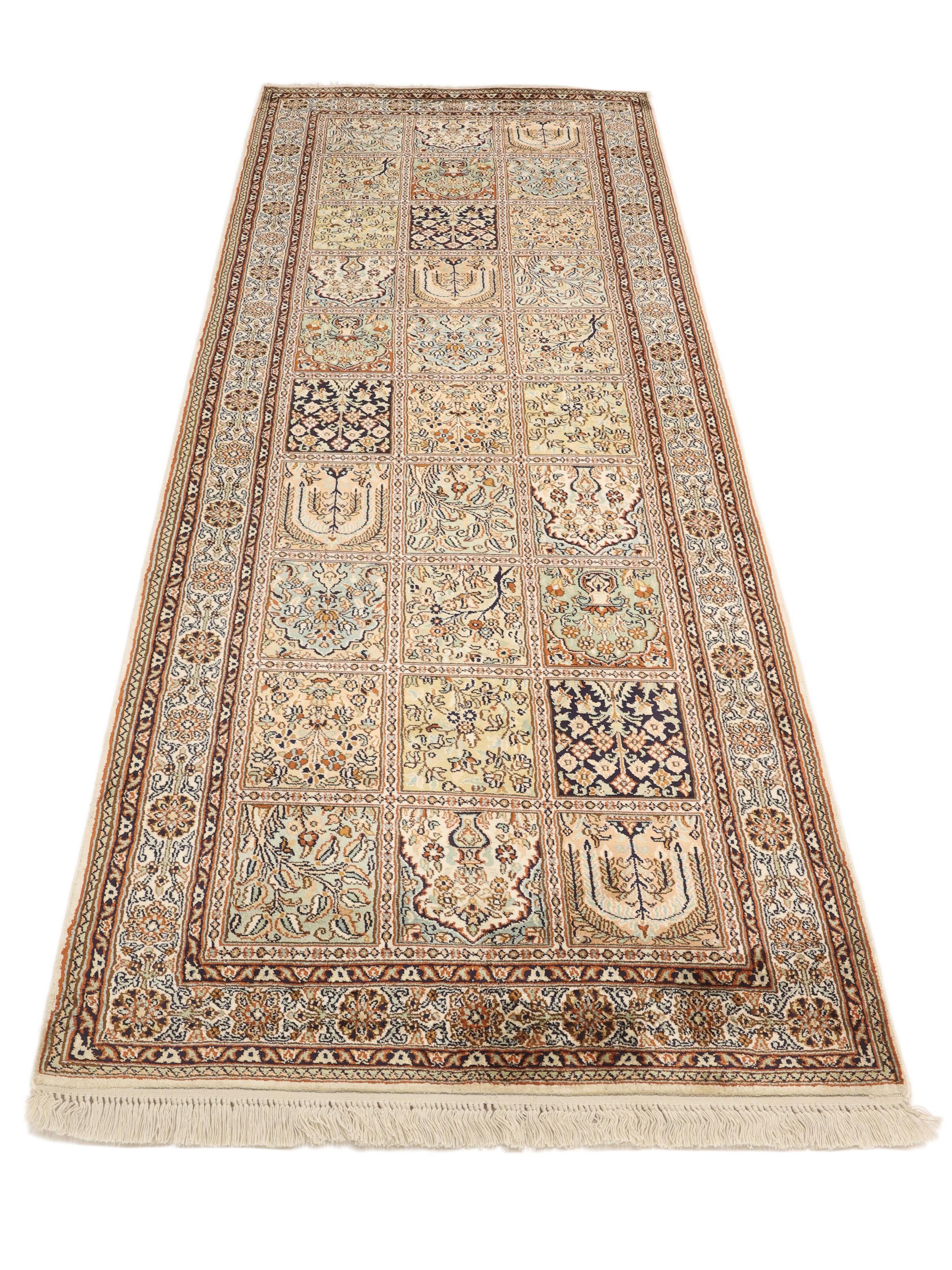
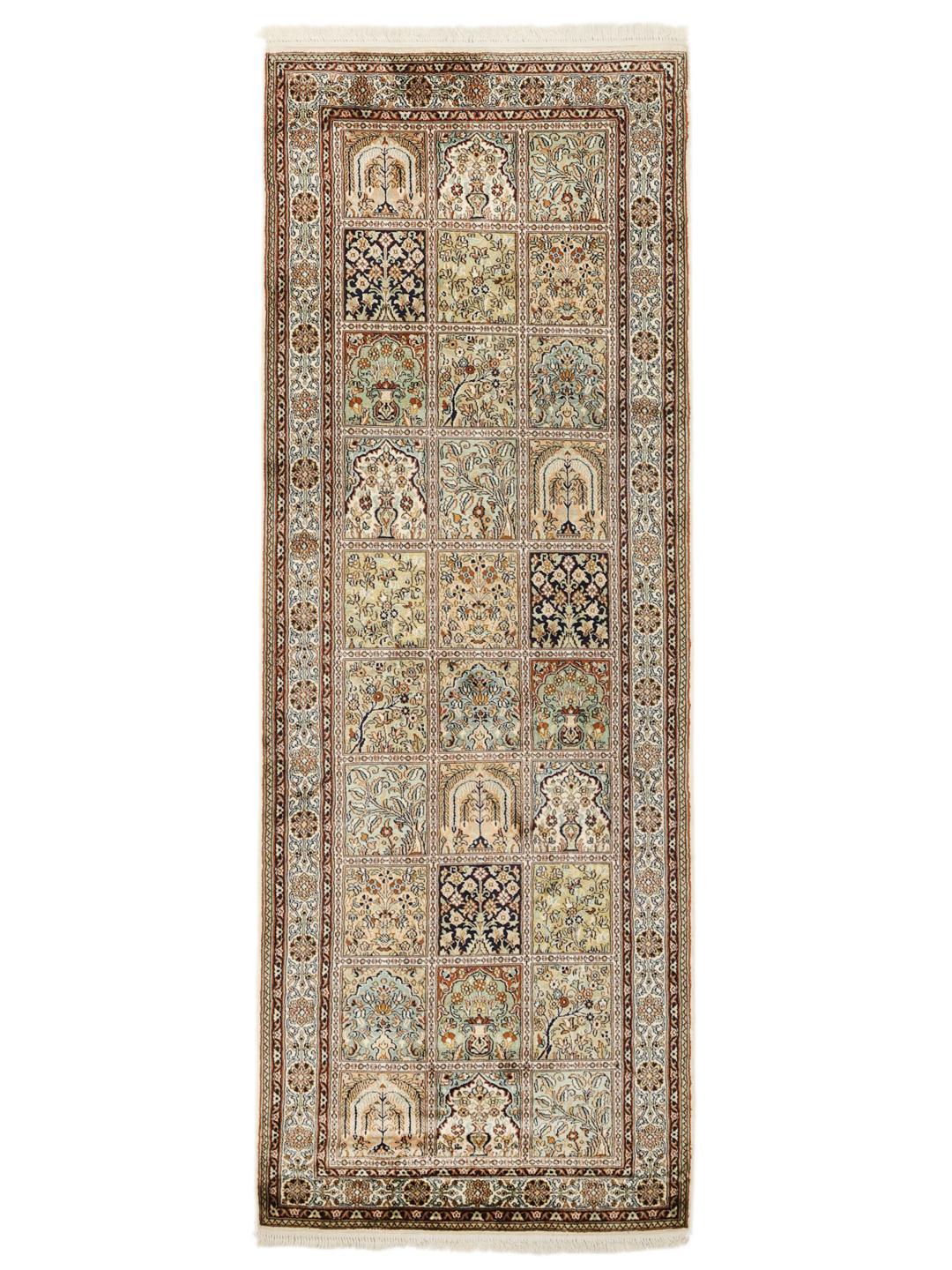
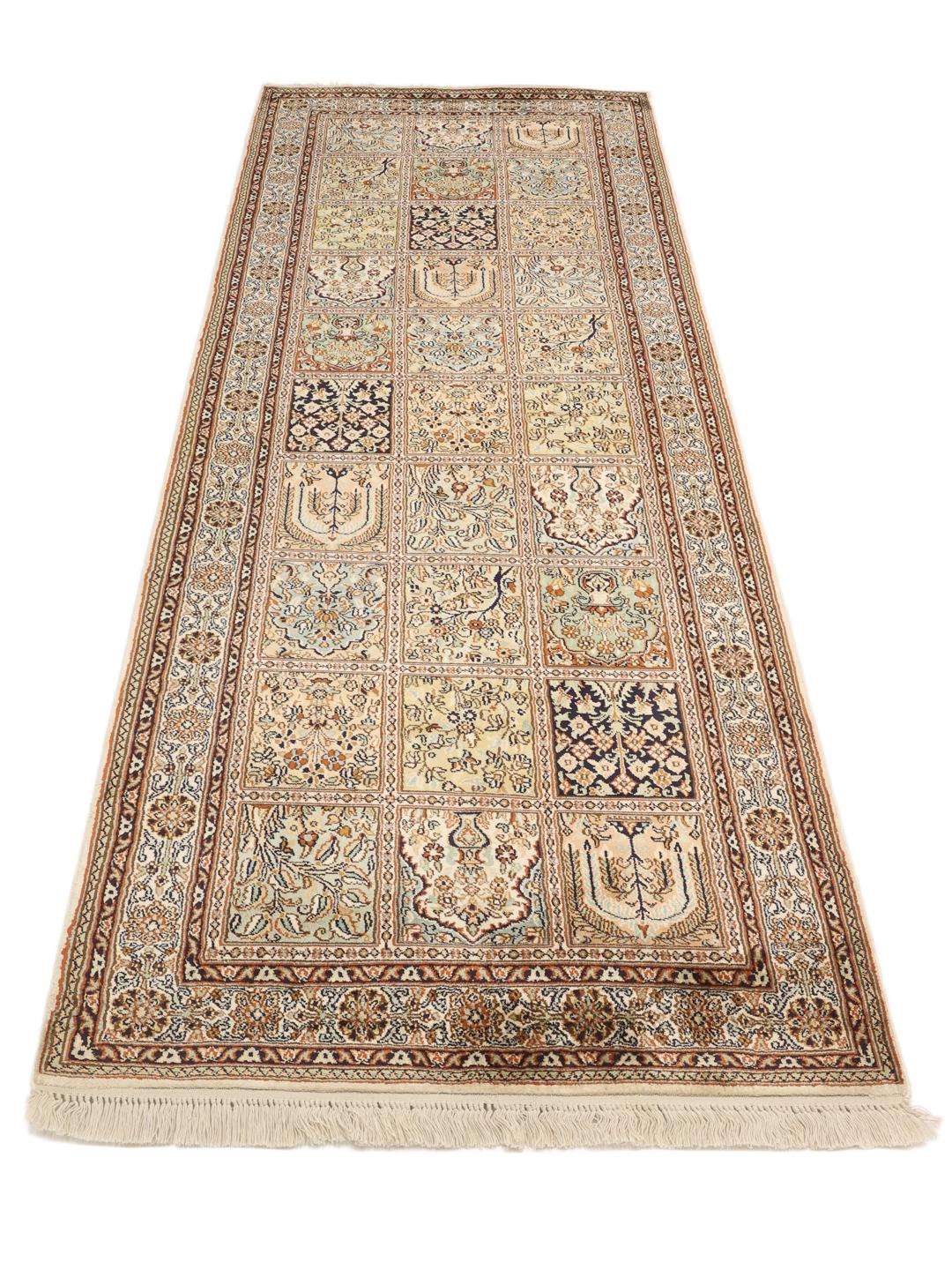
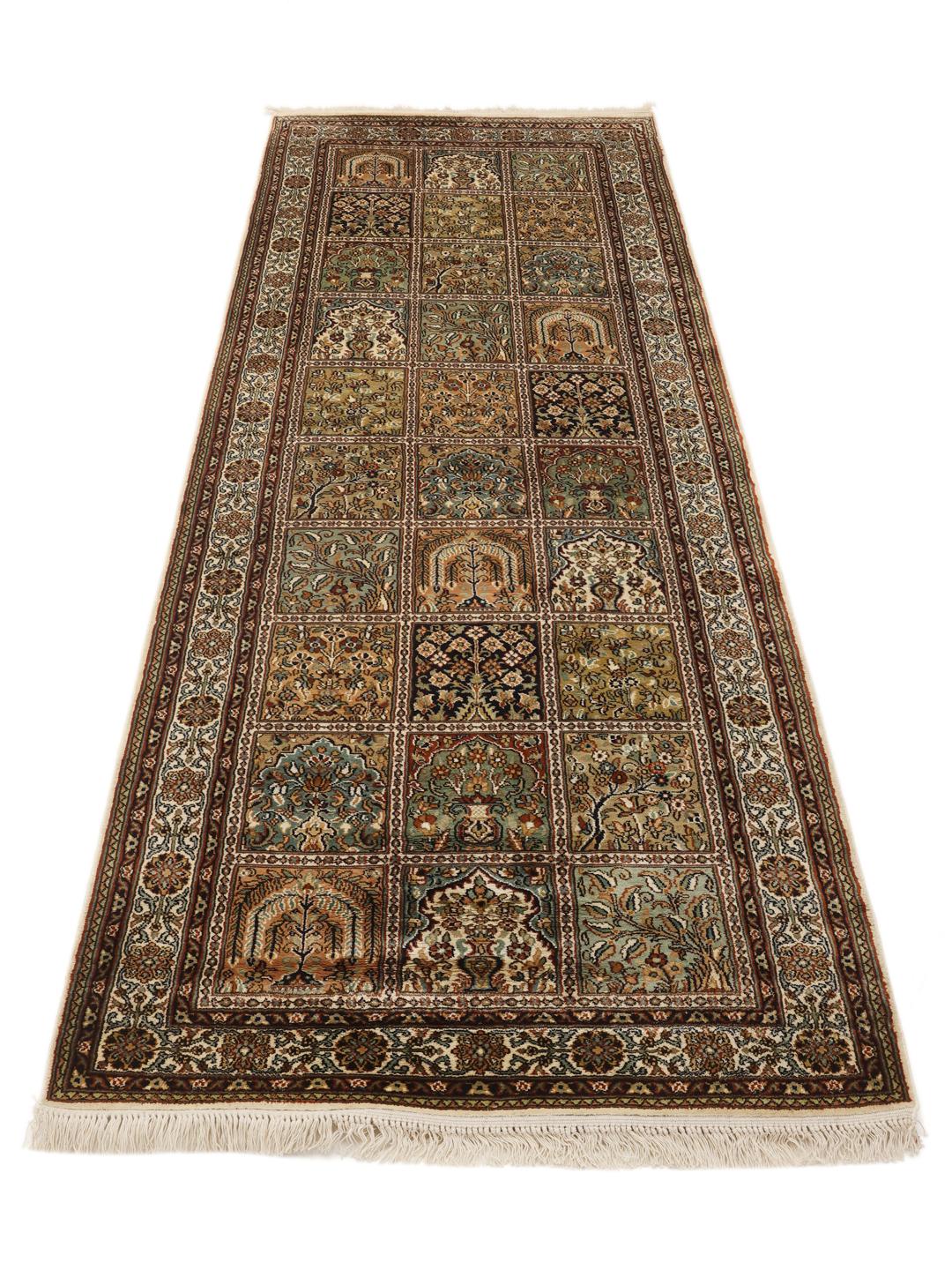
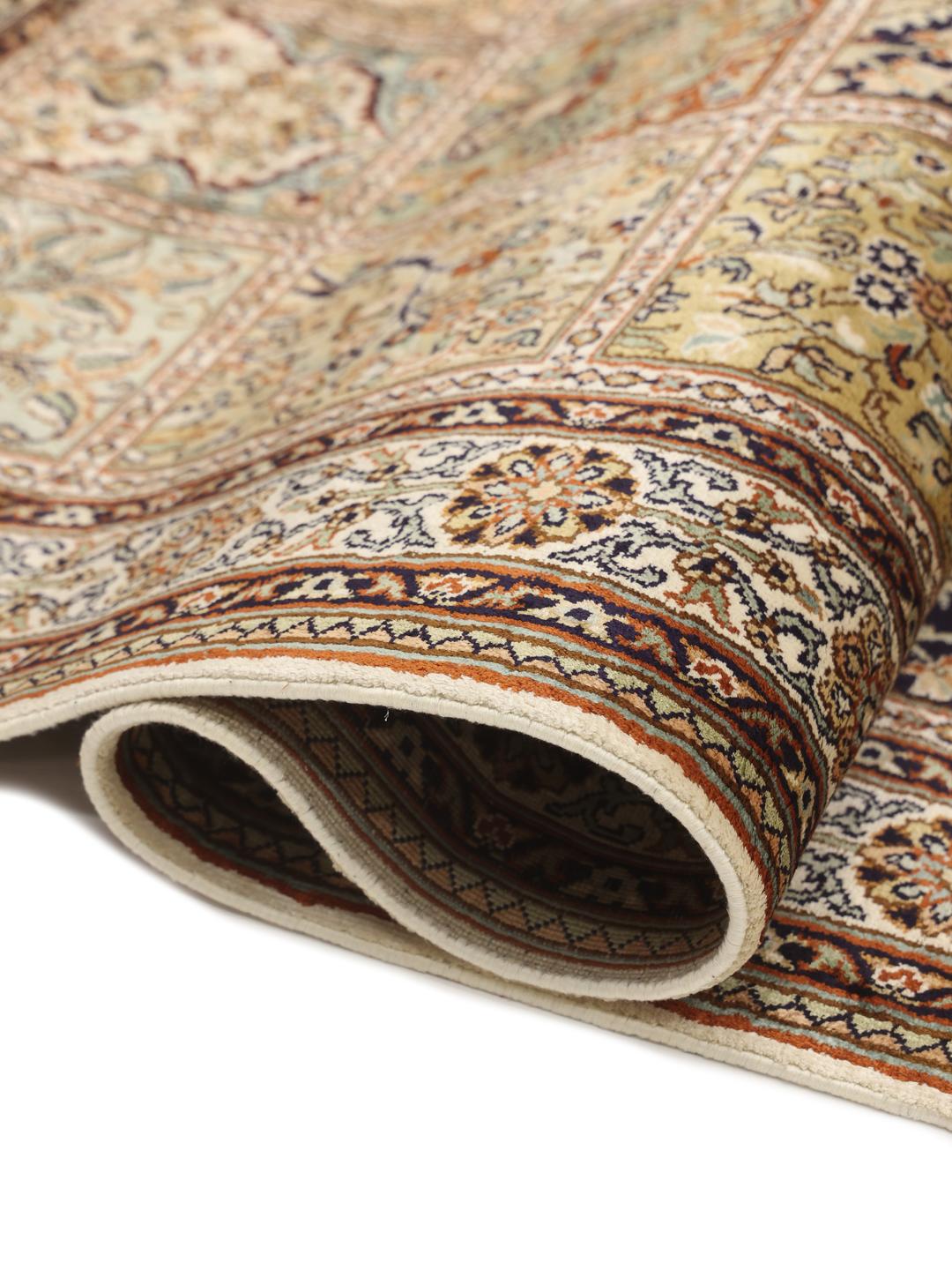
Kashmir silk rugs are celebrated globally as some of the finest examples of textile art, with a history rooted in the rich cultural exchange of the Indian subcontinent. The craft was introduced to the Kashmir region centuries ago, evolving through a fusion of local artistic sensibilities and traditional weaving techniques brought from the Middle East. Over time, these rugs developed their own distinct identity, characterised by the use of fine, locally sourced silk and a mastery of intricate, curvilinear designs.
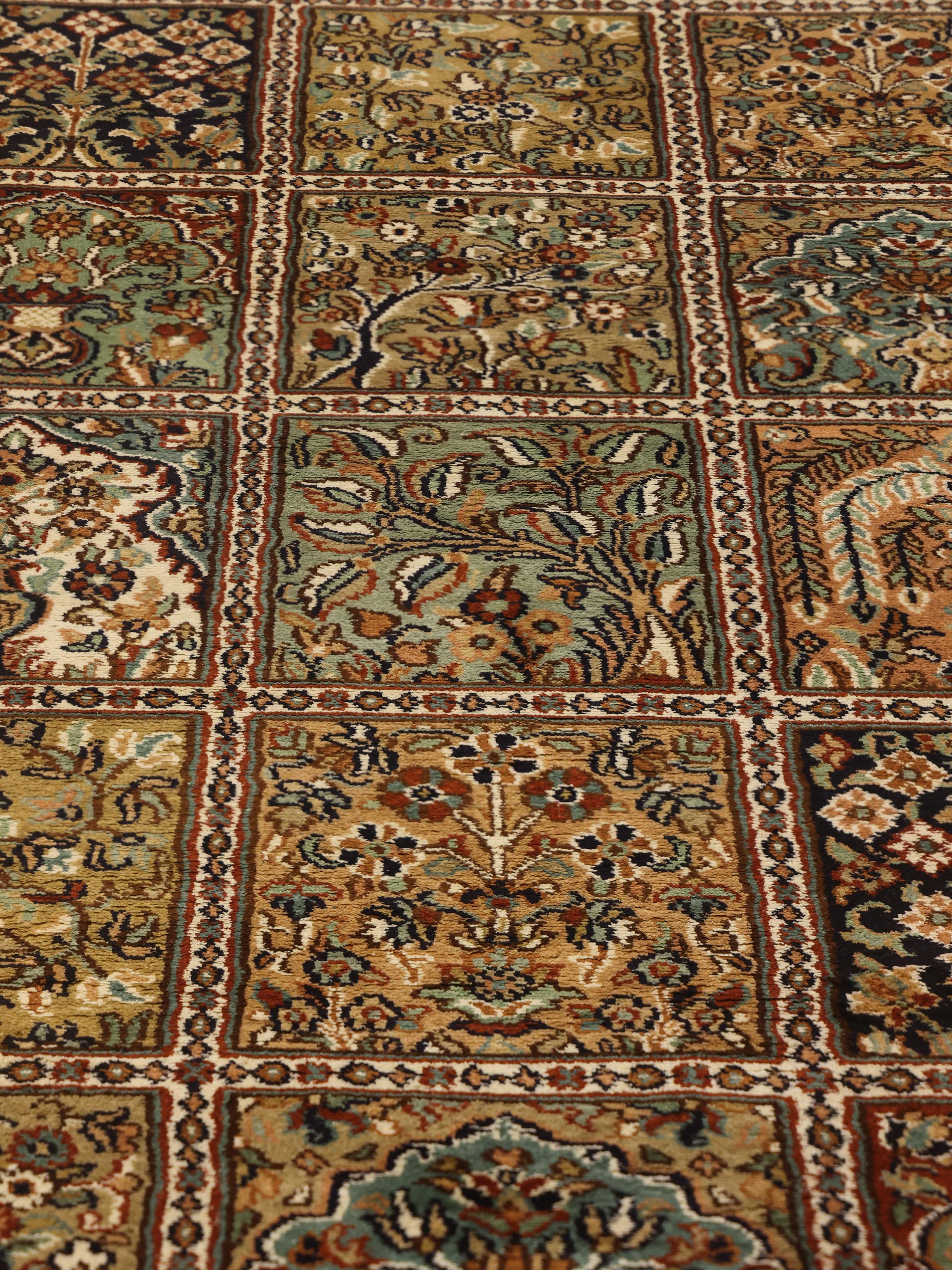
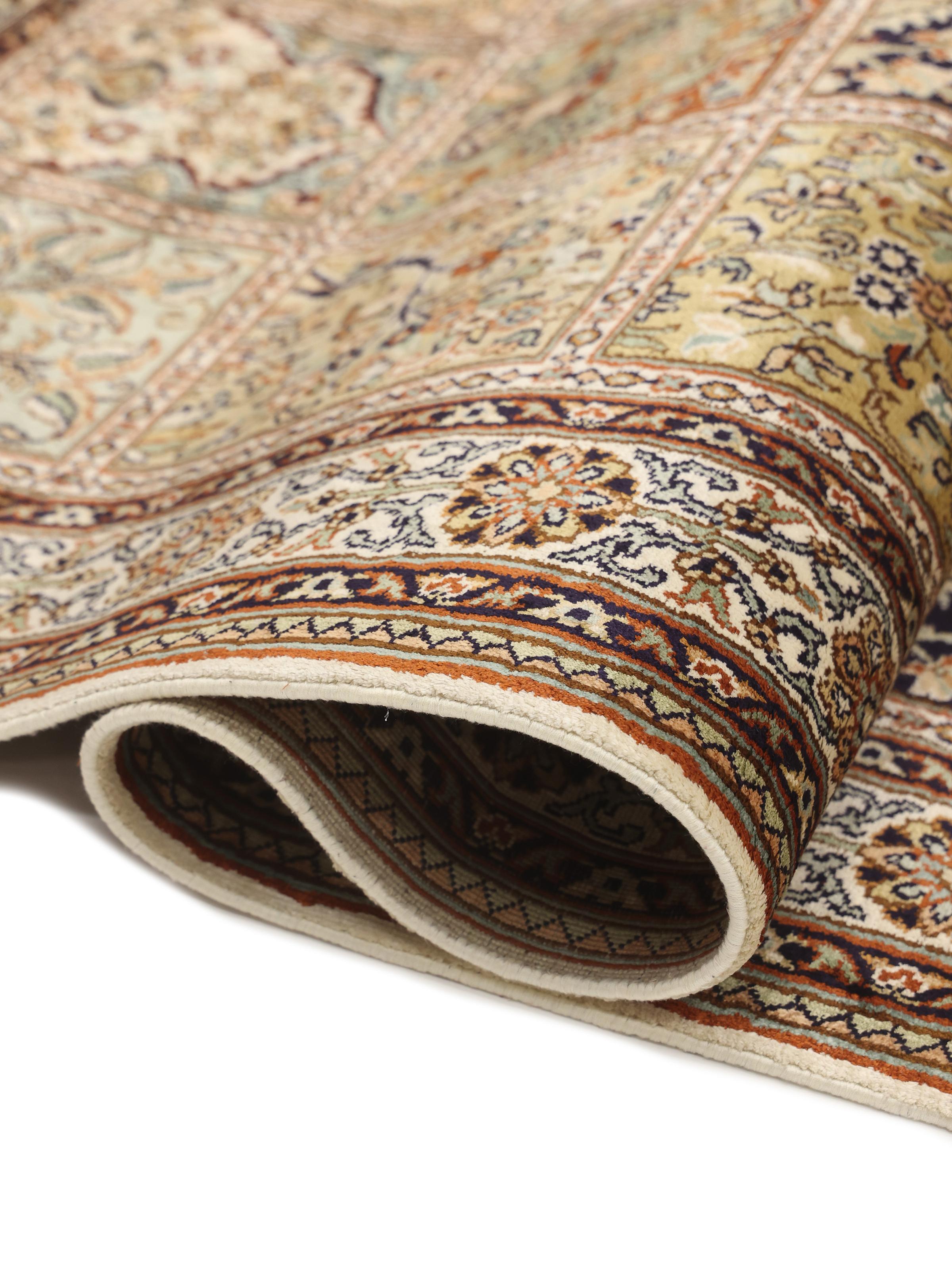
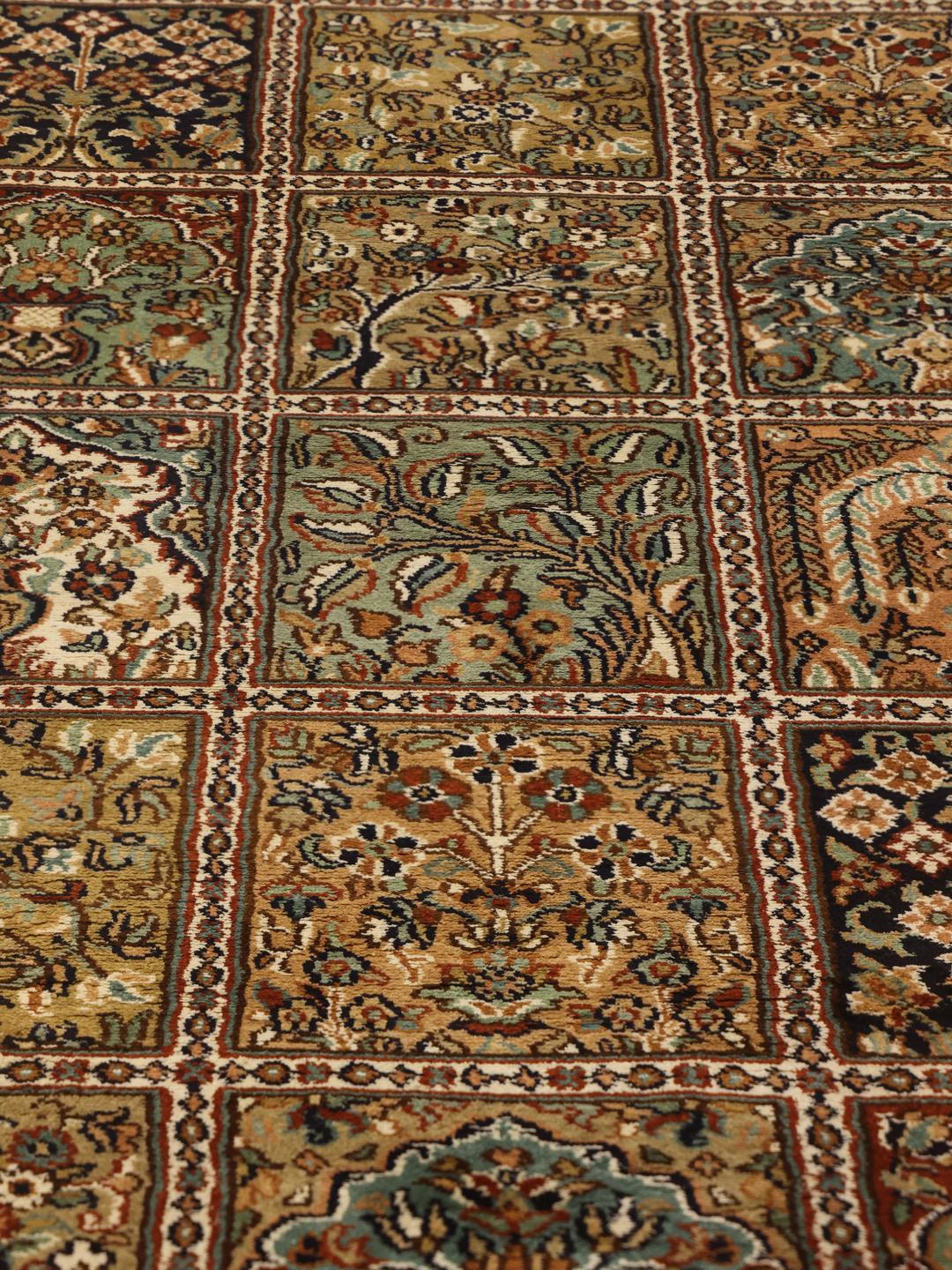
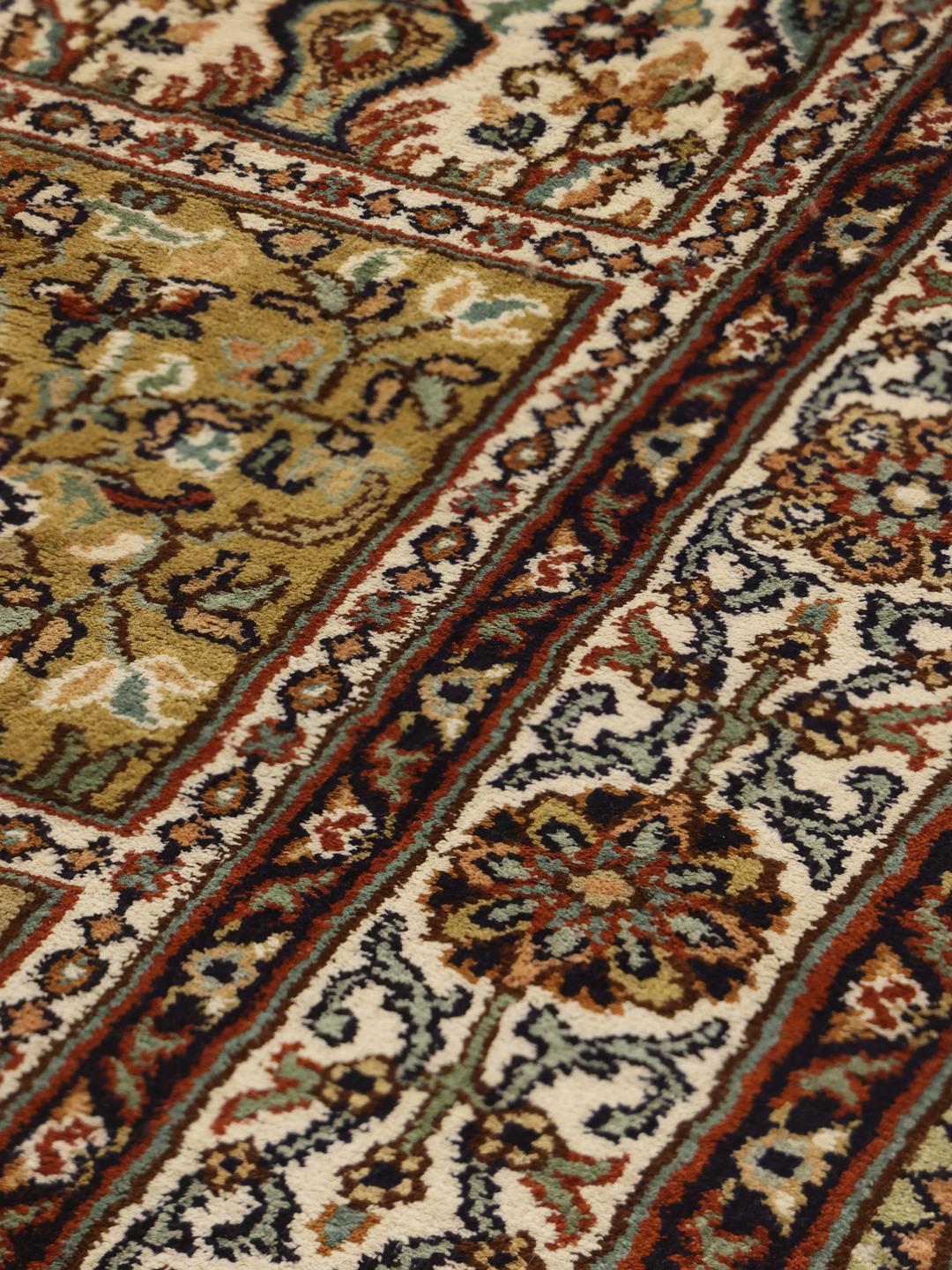
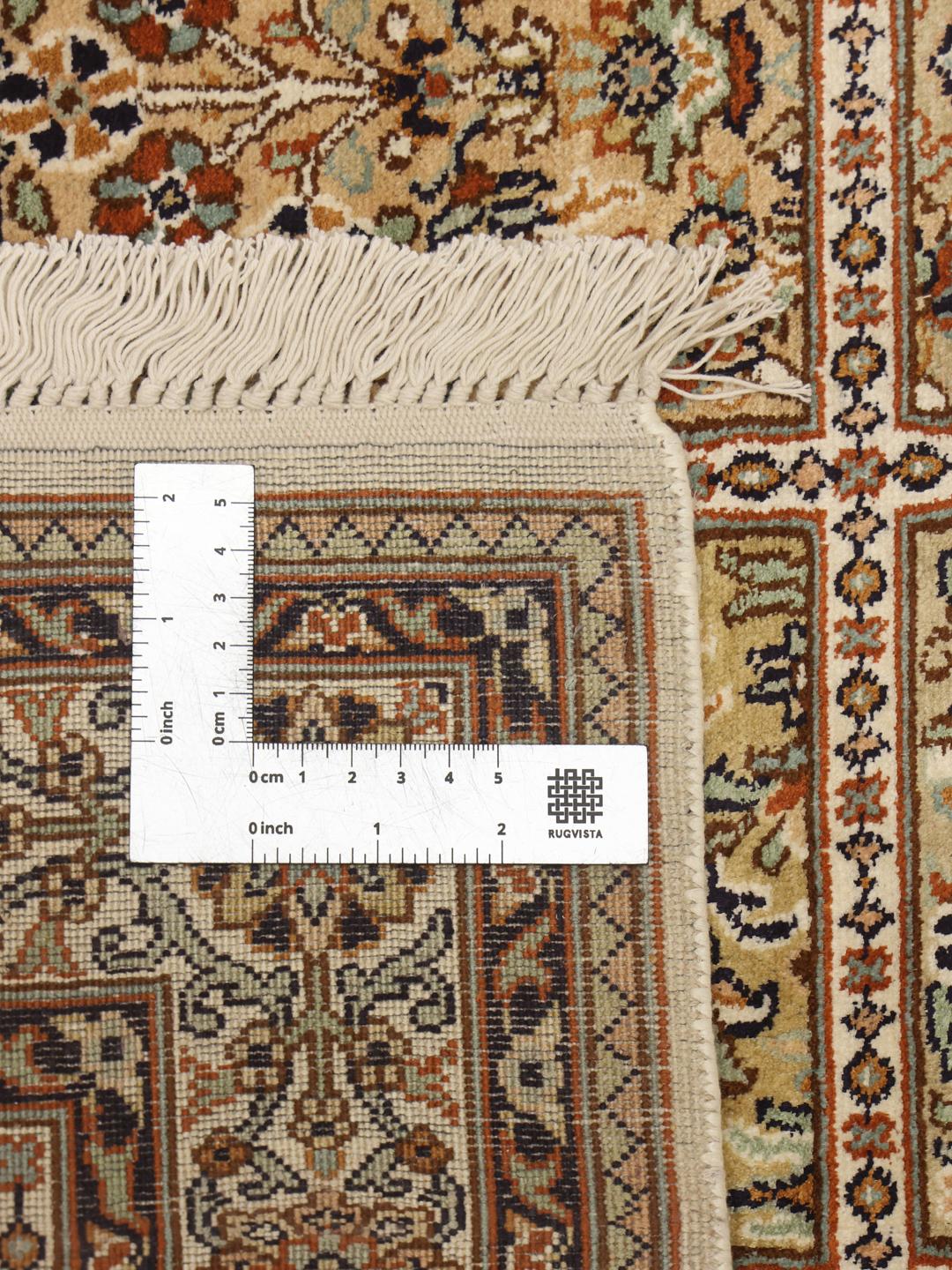
The term 'hand-knotted' refers to the traditional method of building the rug knot by knot on a vertical loom. This process is the hallmark of quality in the region, as it allows for a level of detail and durability that cannot be replicated by automated machinery. The use of a silk pile is particularly prized for its ability to hold vibrant colours and its natural, reflective quality, which gives each rug a luminous depth that synthetic materials simply cannot match.
Signature design elements in Kashmir rugs often draw inspiration from the natural beauty of the region, frequently featuring 'Tree of Life' motifs, floral sprays, and elaborate garden scenes. The garden grid pattern seen here is a classic evolution of this tradition, where the field is subdivided into smaller, self-contained sections. This layout allows the weaver to showcase a wide variety of botanical and architectural details, framed by elaborate, multi-layered borders that provide a sense of balance and harmony.
Beyond their aesthetic appeal, these rugs are highly valued by collectors for the immense skill required to produce them. Owning a Kashmir silk rug is an investment in a storied tradition that prioritises patience, precision, and the preservation of craft. These pieces are intended to be passed down as family heirlooms, representing a standard of quality and cultural heritage that remains untouched by modern trends and mass production.