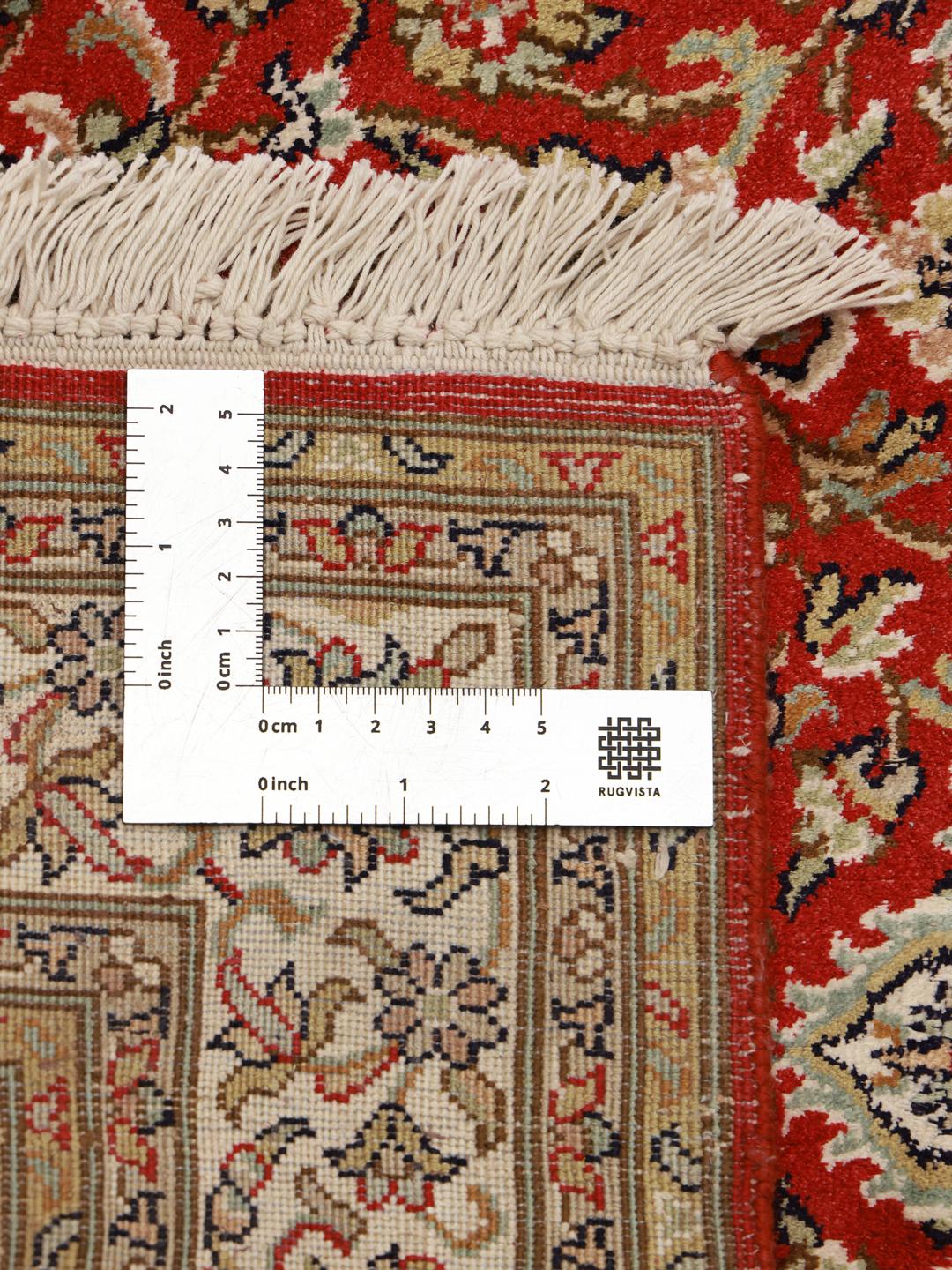
The tradition of weaving in the Kashmir valley is a storied craft that has evolved over centuries, heavily influenced by the artistic exchanges along the Silk Road. While the region is historically renowned for its shawls, the art of weaving silk rugs emerged as a highly respected practice, blending local aesthetic sensibilities with refined techniques from the broader Middle Eastern and Central Asian weaving traditions.
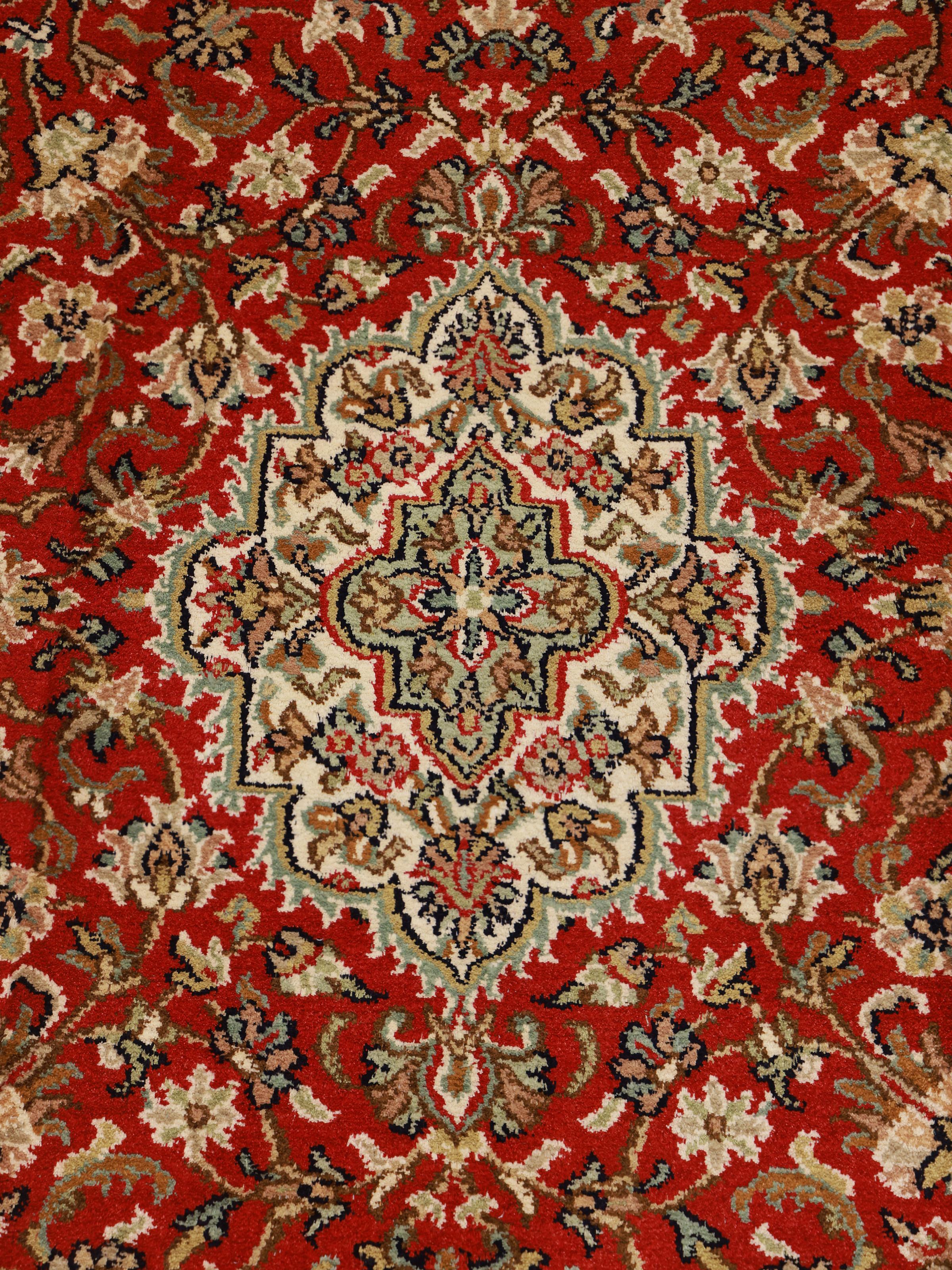
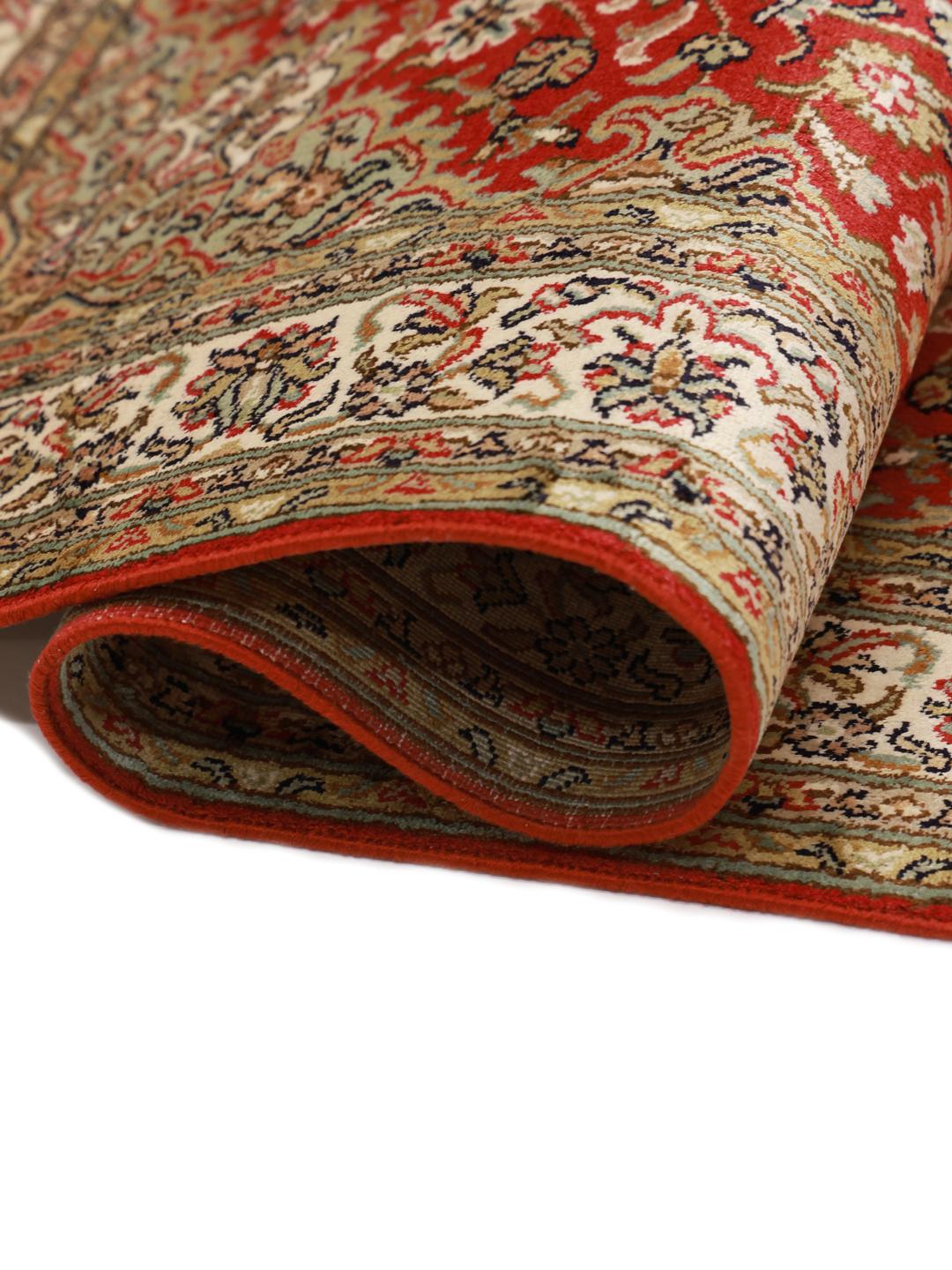
Kashmir silk rugs are defined by their incredibly fine construction and the use of high-quality silk, which allows for a level of detail that is difficult to achieve with other materials. The term 'hand-knotted' refers to the labour-intensive process where each individual knot is tied by hand onto the foundation. This method is the hallmark of quality, ensuring a dense, resilient pile that remains lustrous and soft for generations.
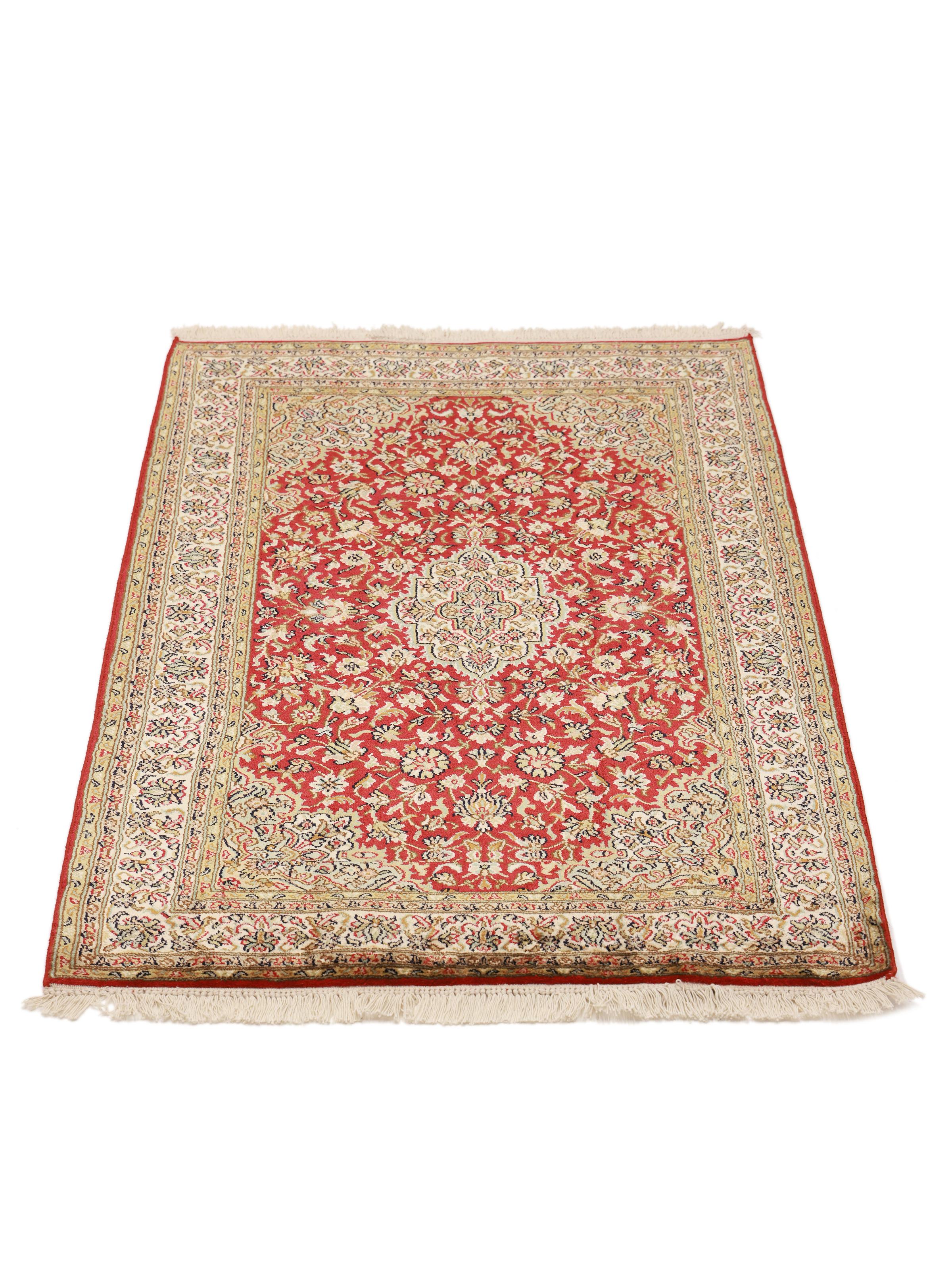
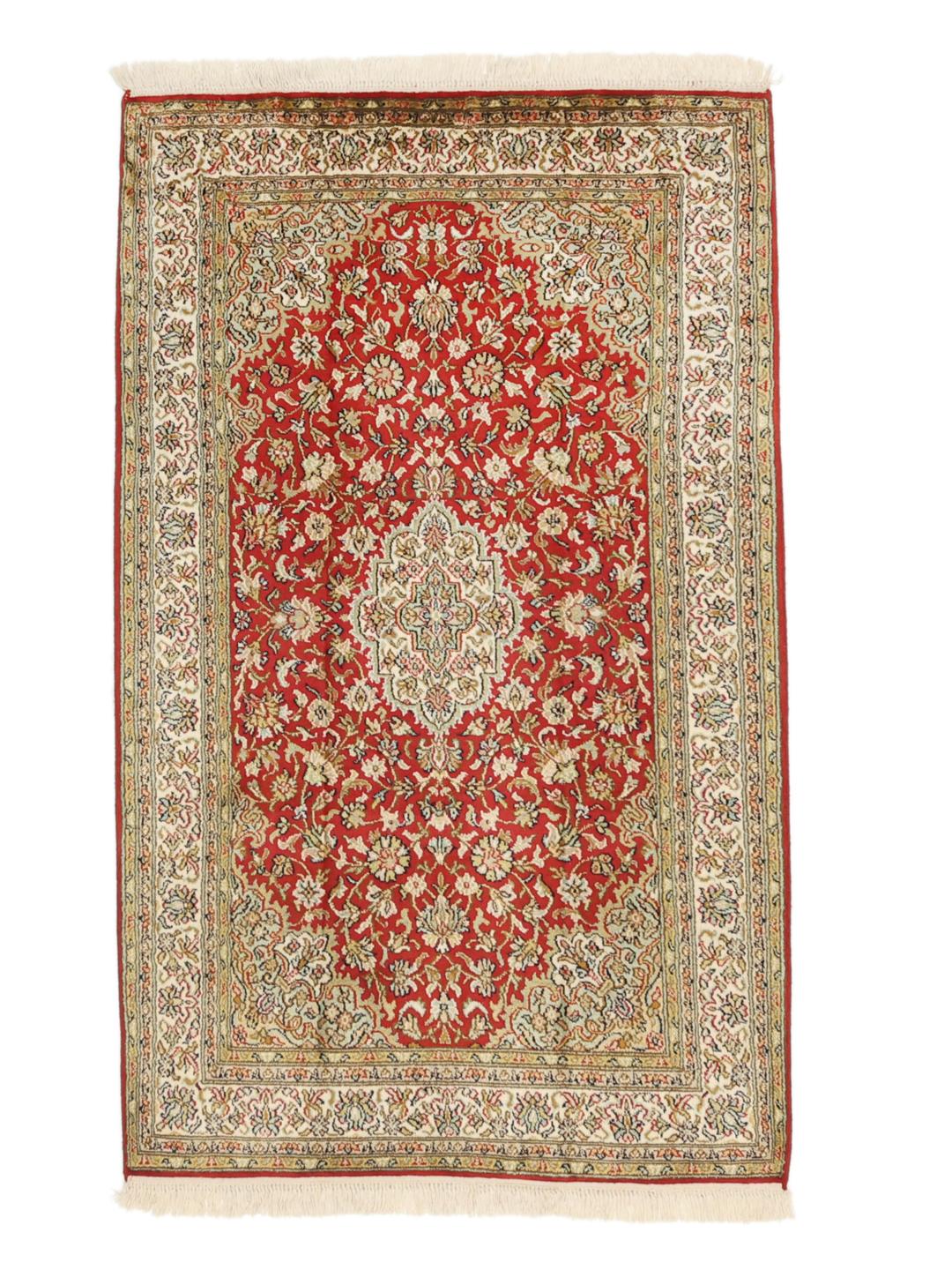
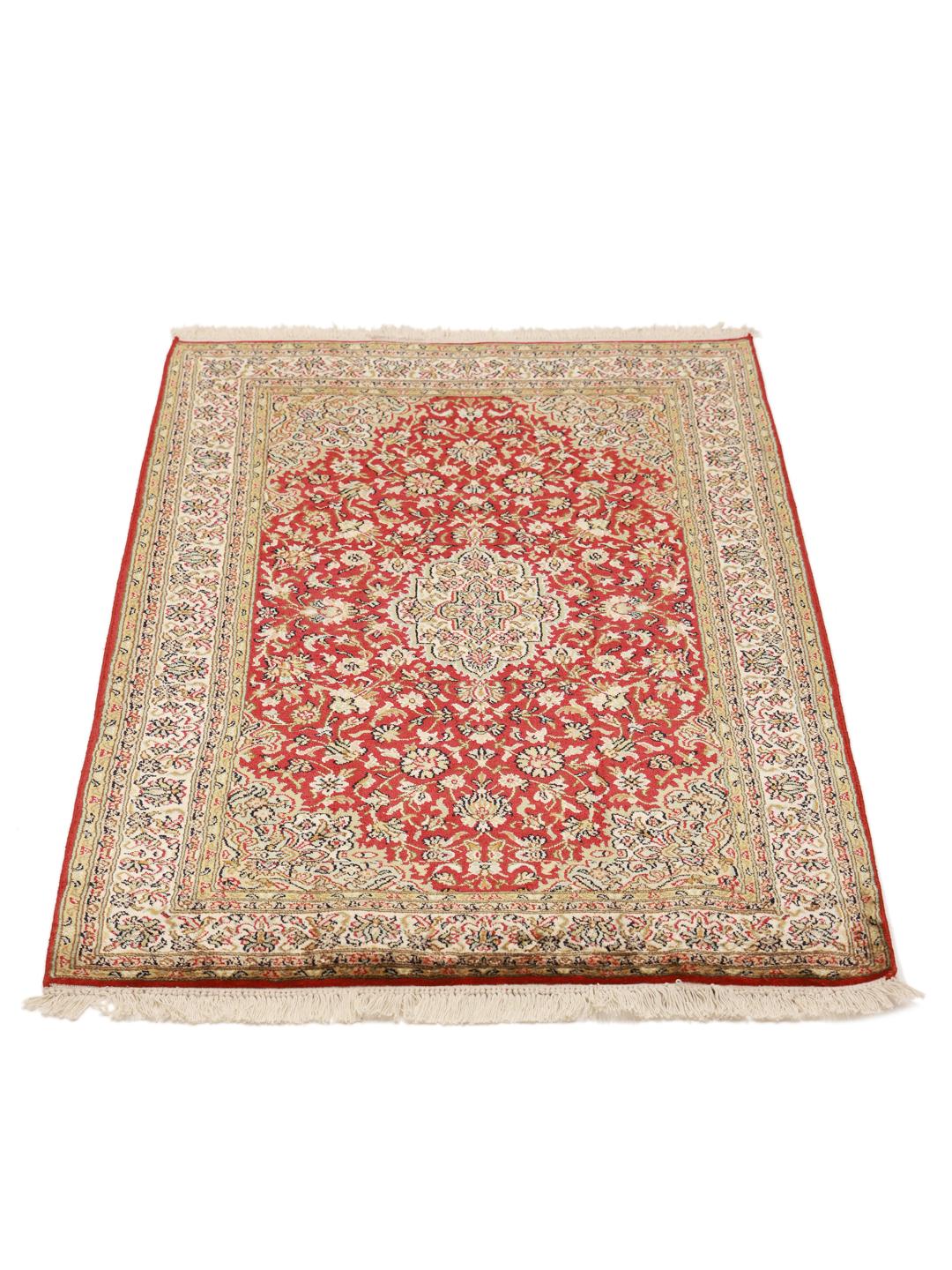
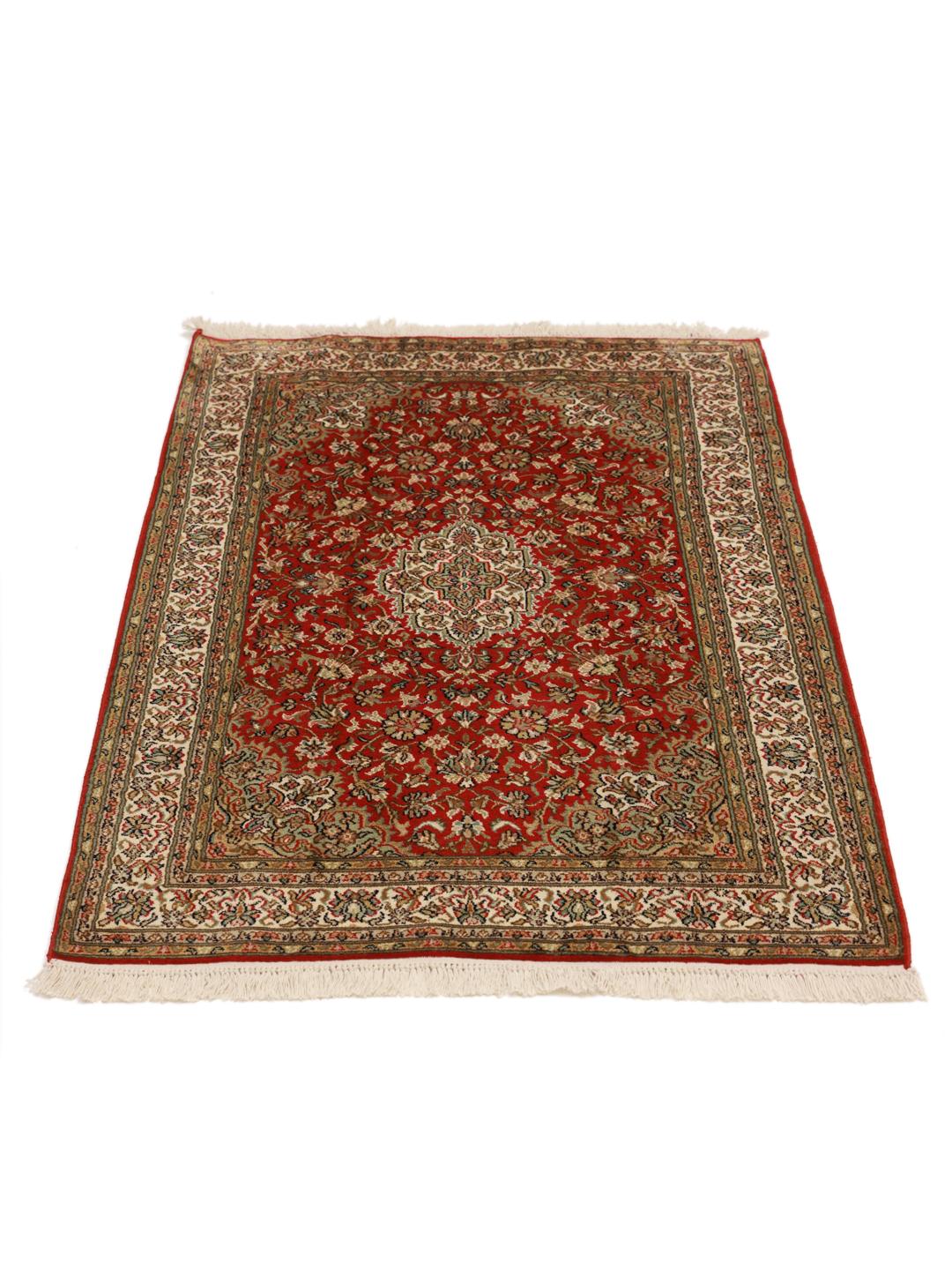
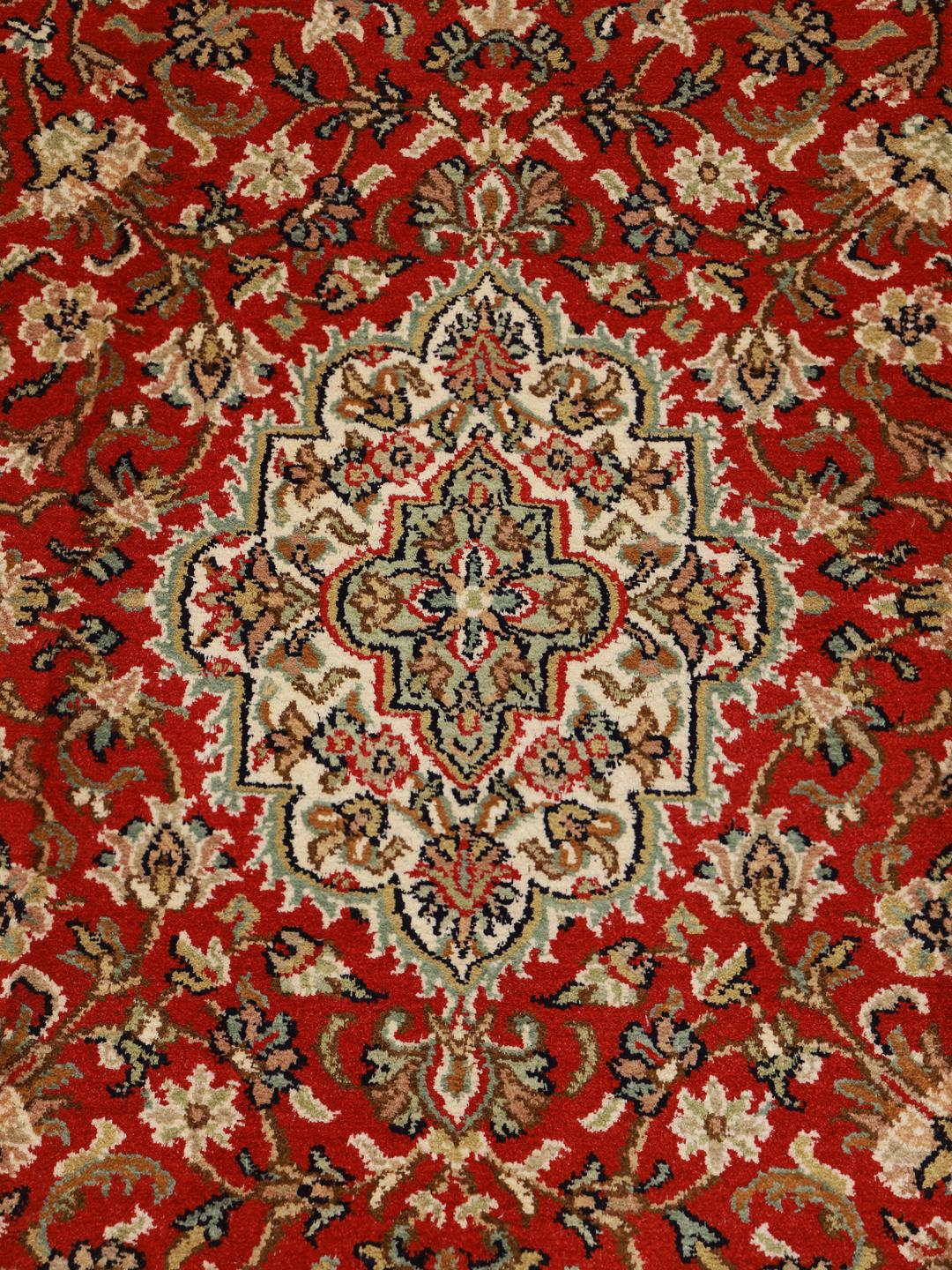
Visually, these rugs are celebrated for their intricate floral designs, often featuring central medallions surrounded by elaborate vine-work and detailed borders. The colour palettes are typically rich and harmonious, designed to complement the complexity of the patterns. This particular piece showcases a classic approach to these motifs, where every element is balanced to create a sense of order and grace.
These rugs are highly sought after by collectors who value the intersection of cultural history and skilled craftsmanship. Owning a Kashmir silk rug is an act of preserving a traditional art form, as each piece serves as a physical record of the weaver's expertise and the cultural identity of the region. It is a genuine piece of history that brings a sense of sophistication and enduring value to any interior.