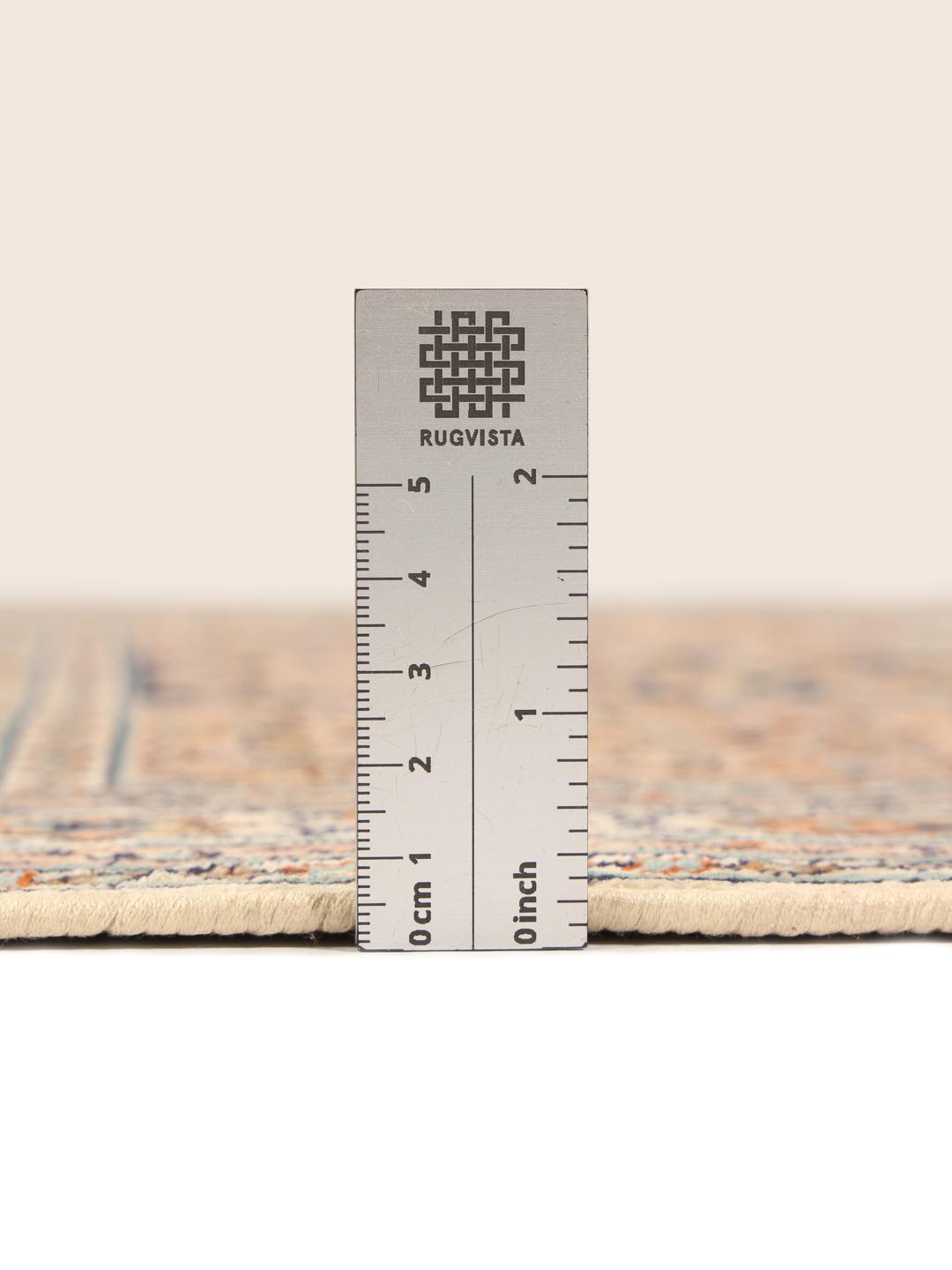
Kashmir silk rugs originate from the breathtaking valley of Kashmir in Northern India, a region with a storied history of textile excellence. The craft was introduced to the area centuries ago and has since evolved into a world-renowned tradition, blending local artistic sensibilities with the sophisticated techniques of the broader Middle Eastern rug-making heritage.
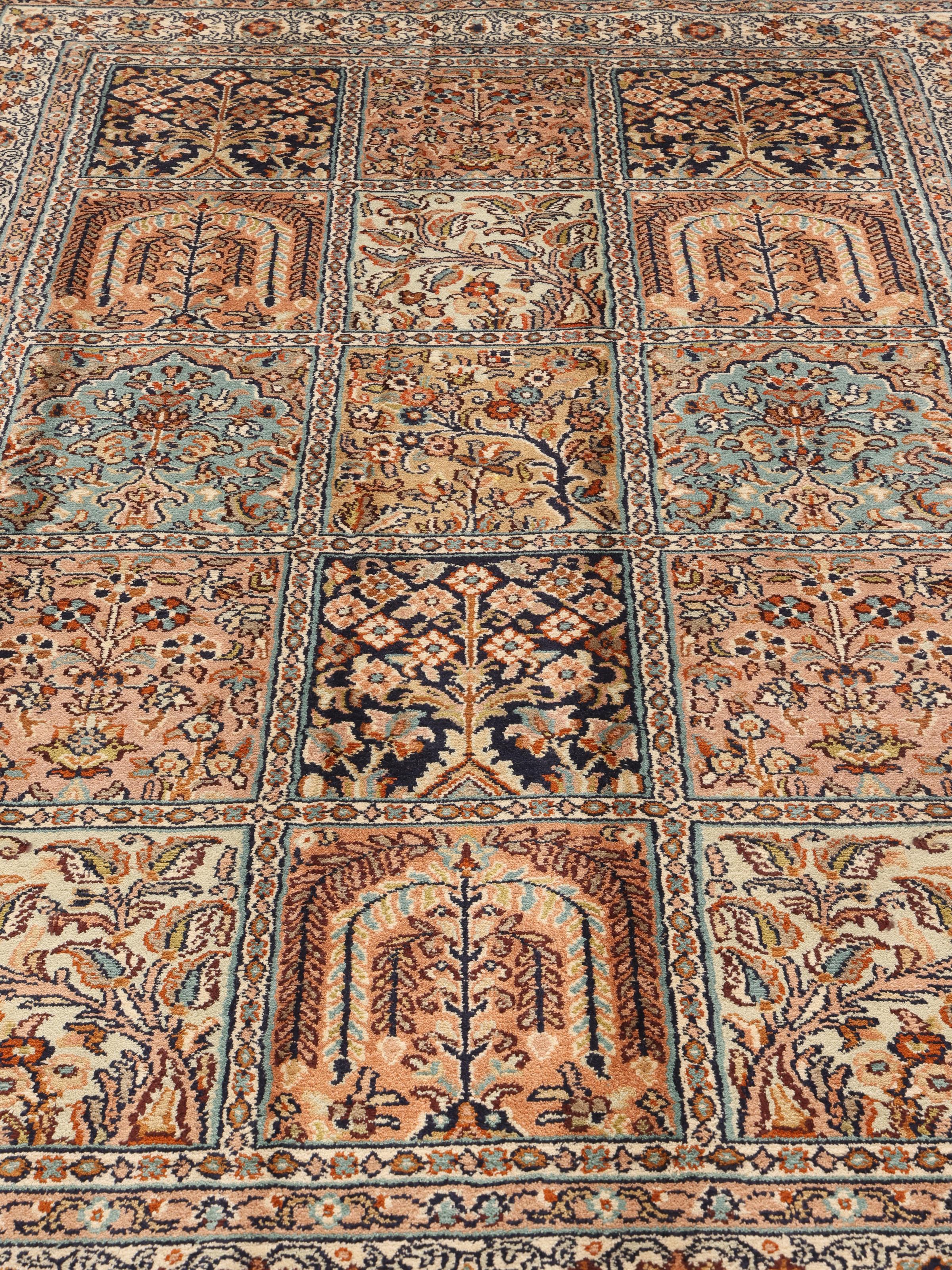
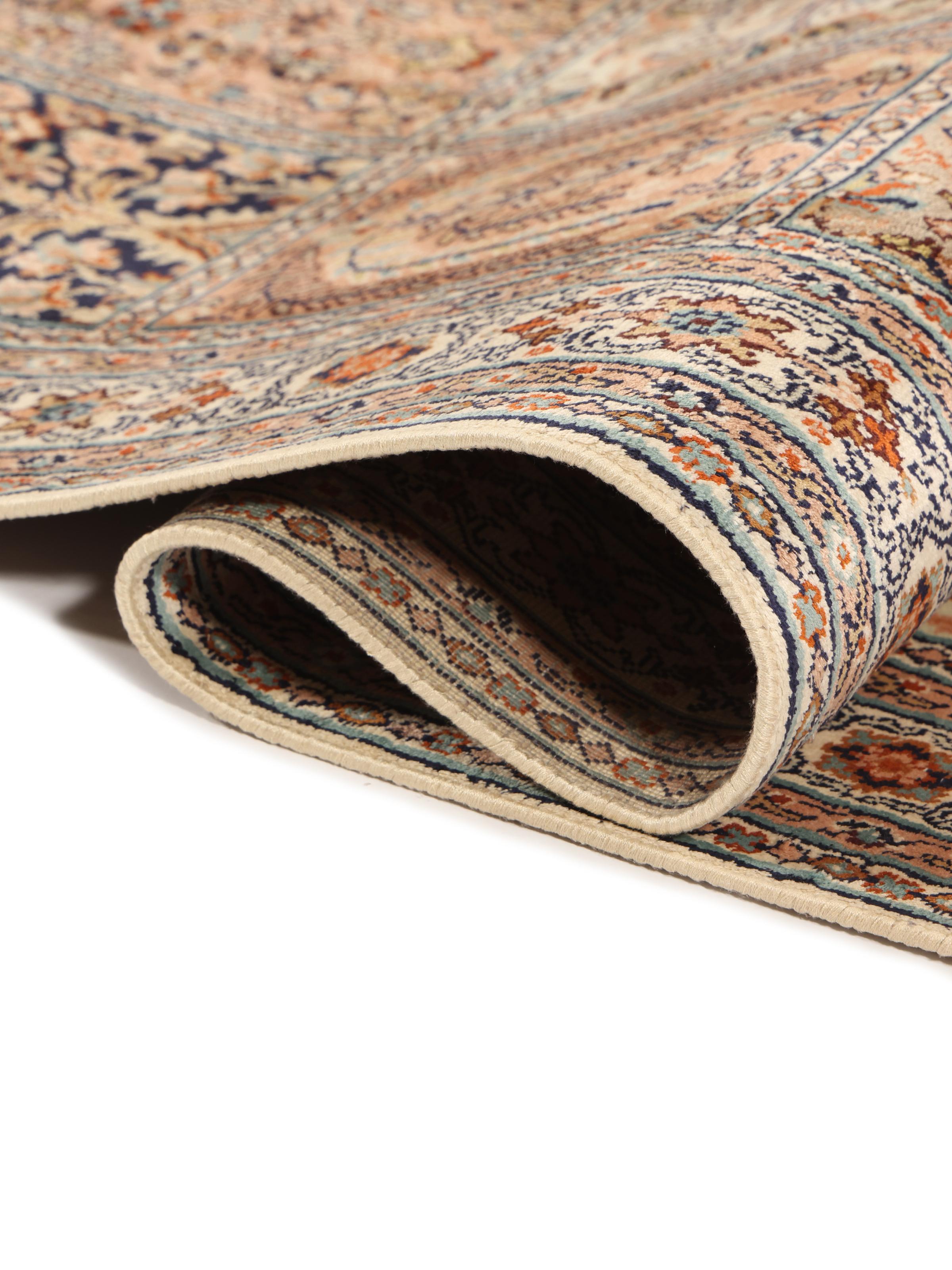
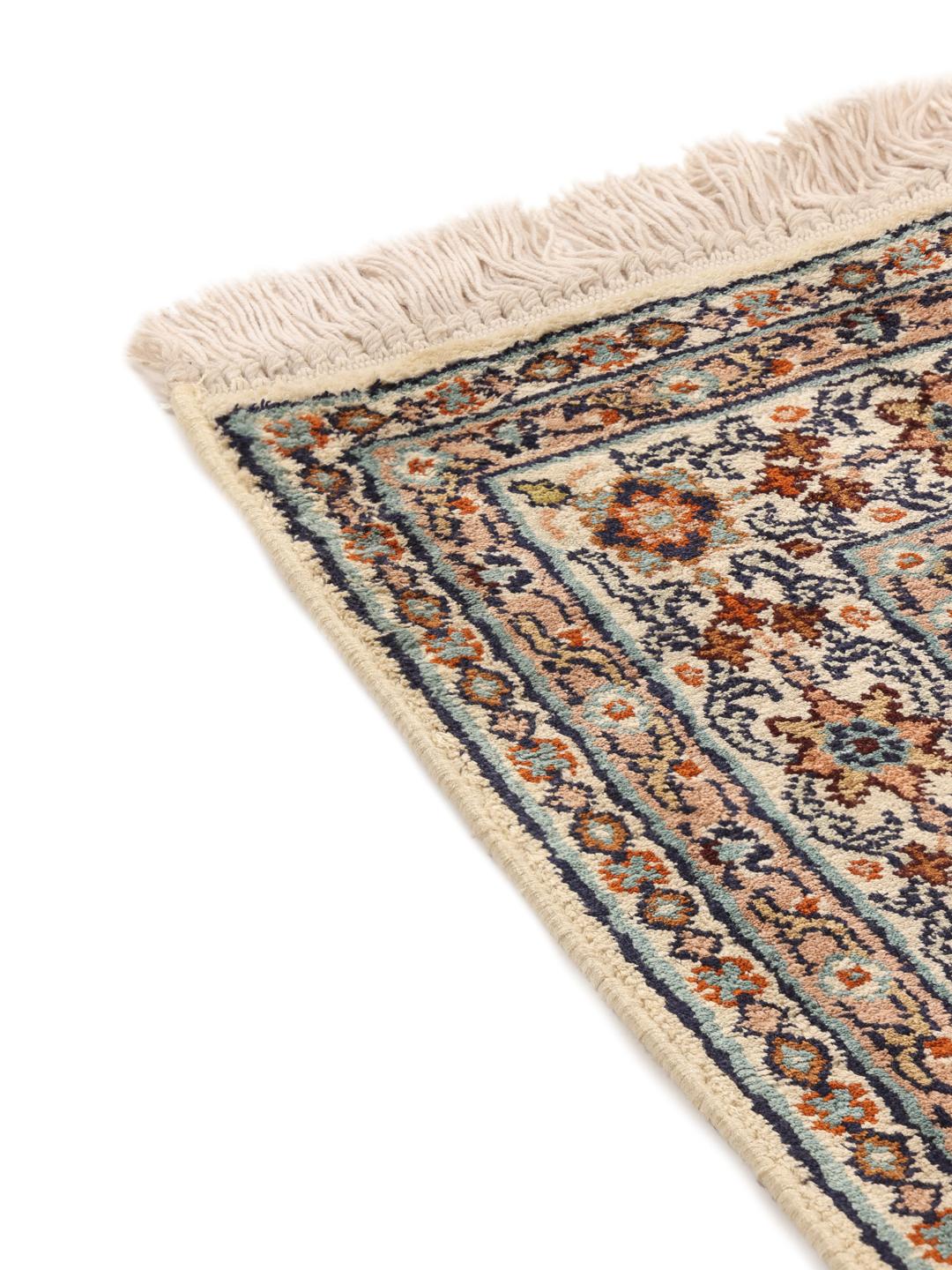
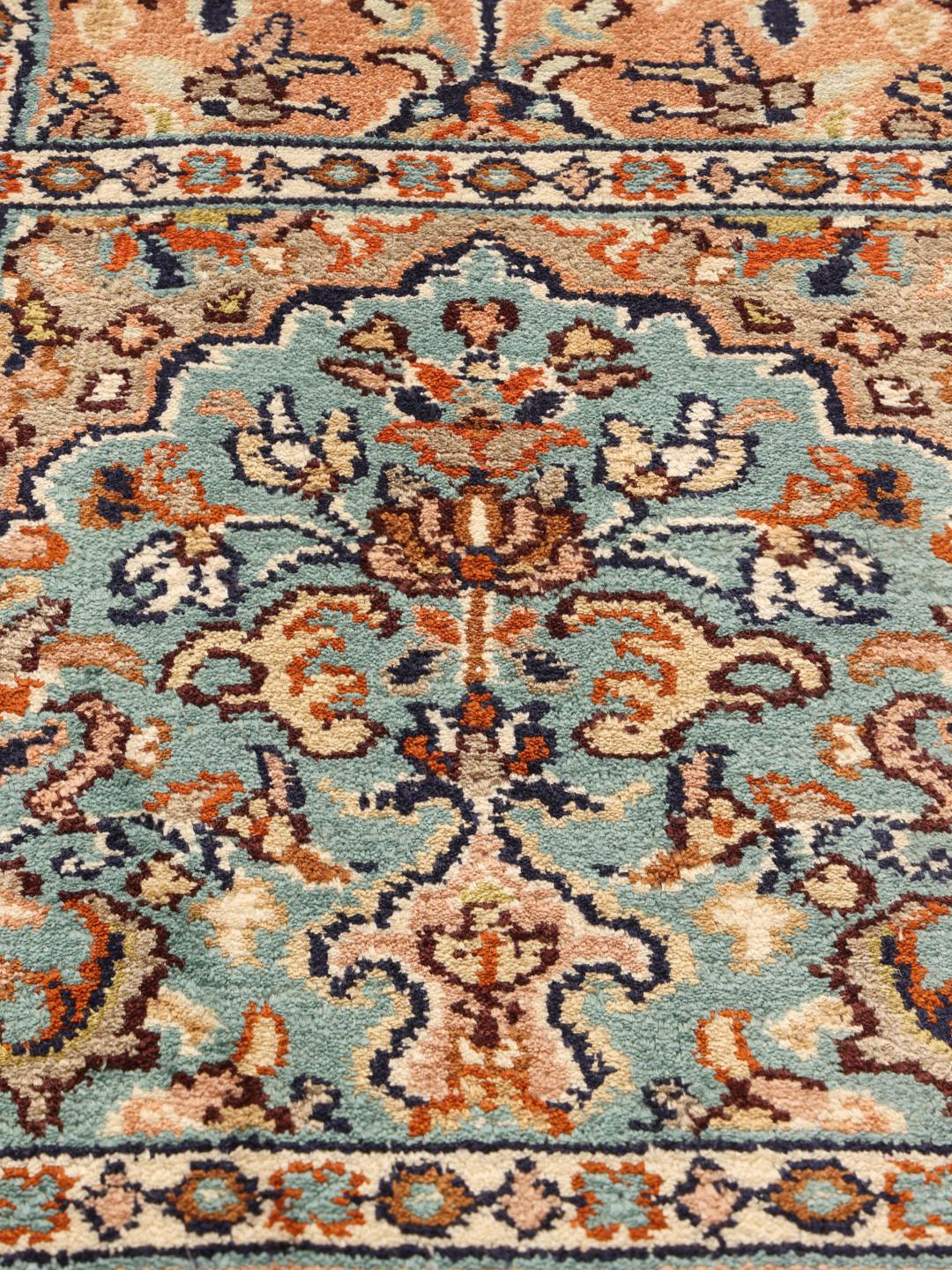
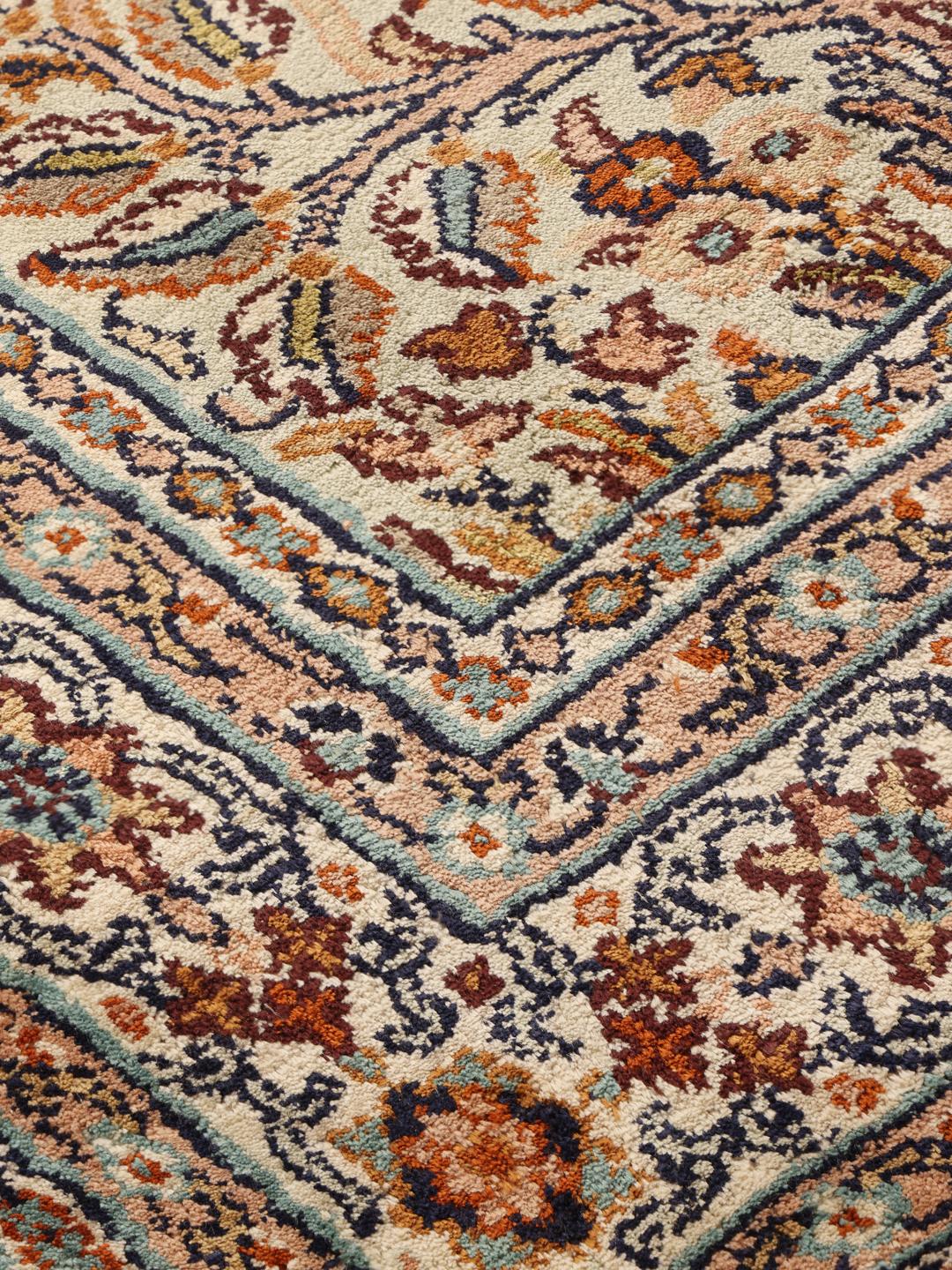
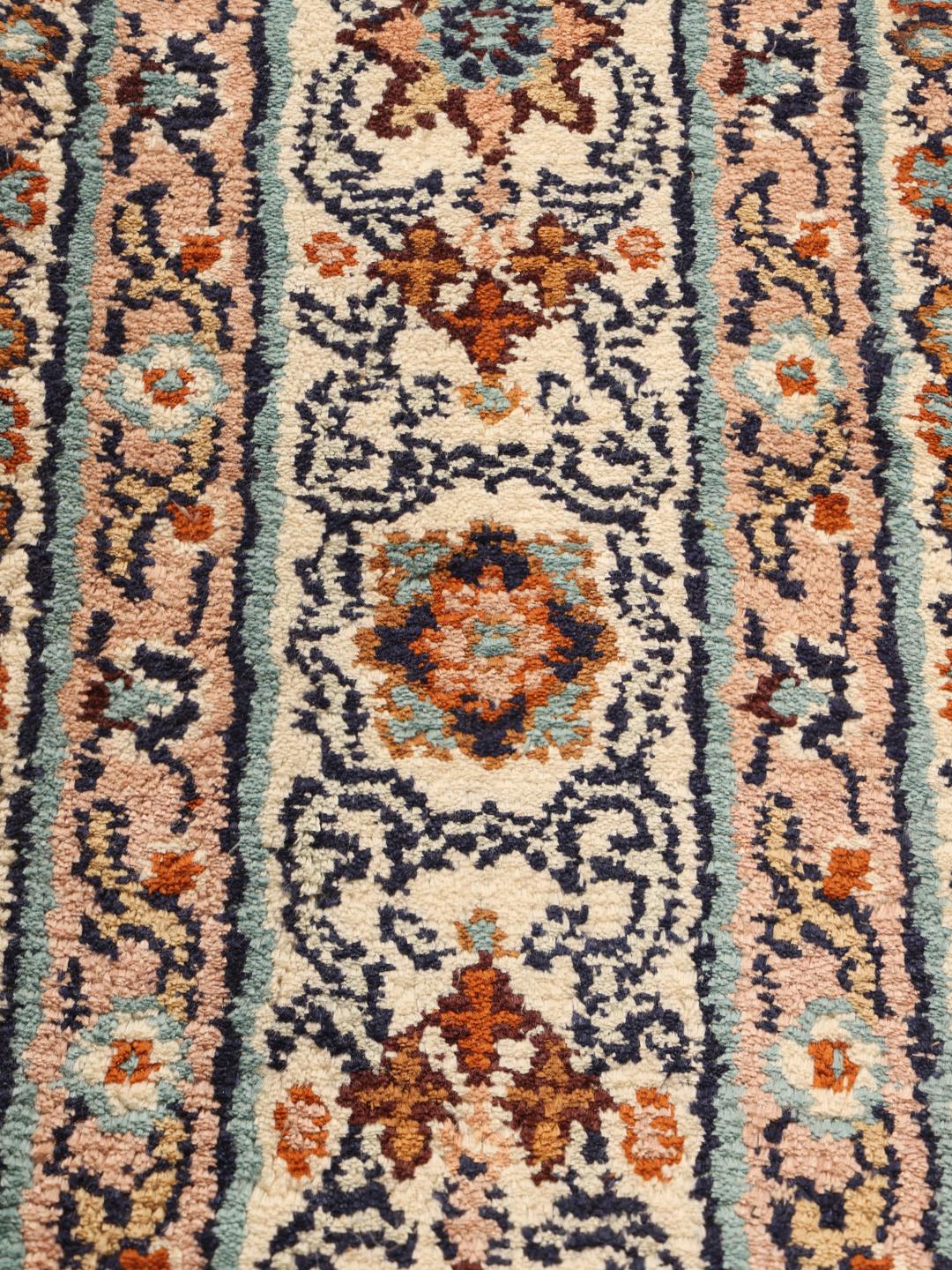
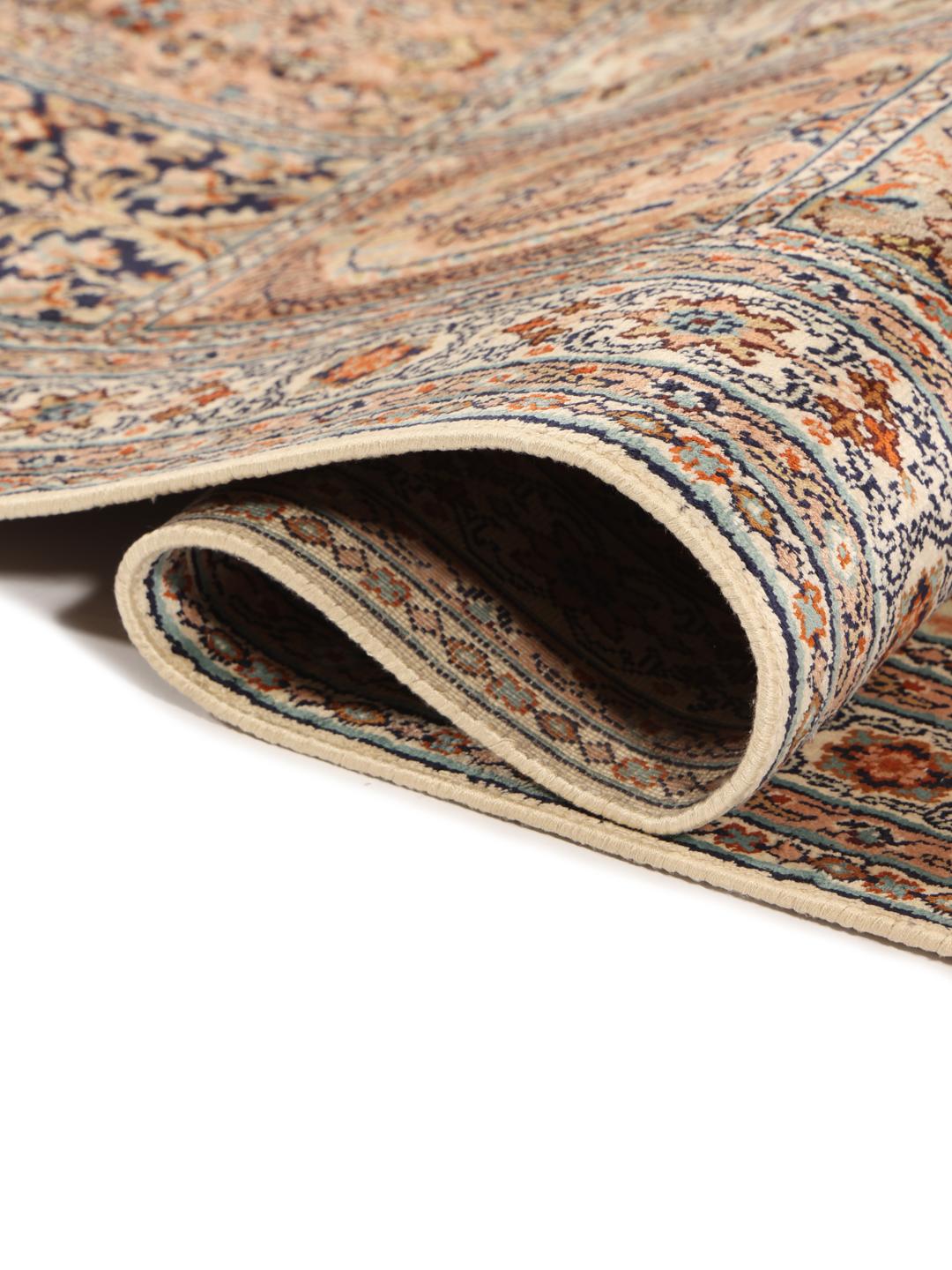
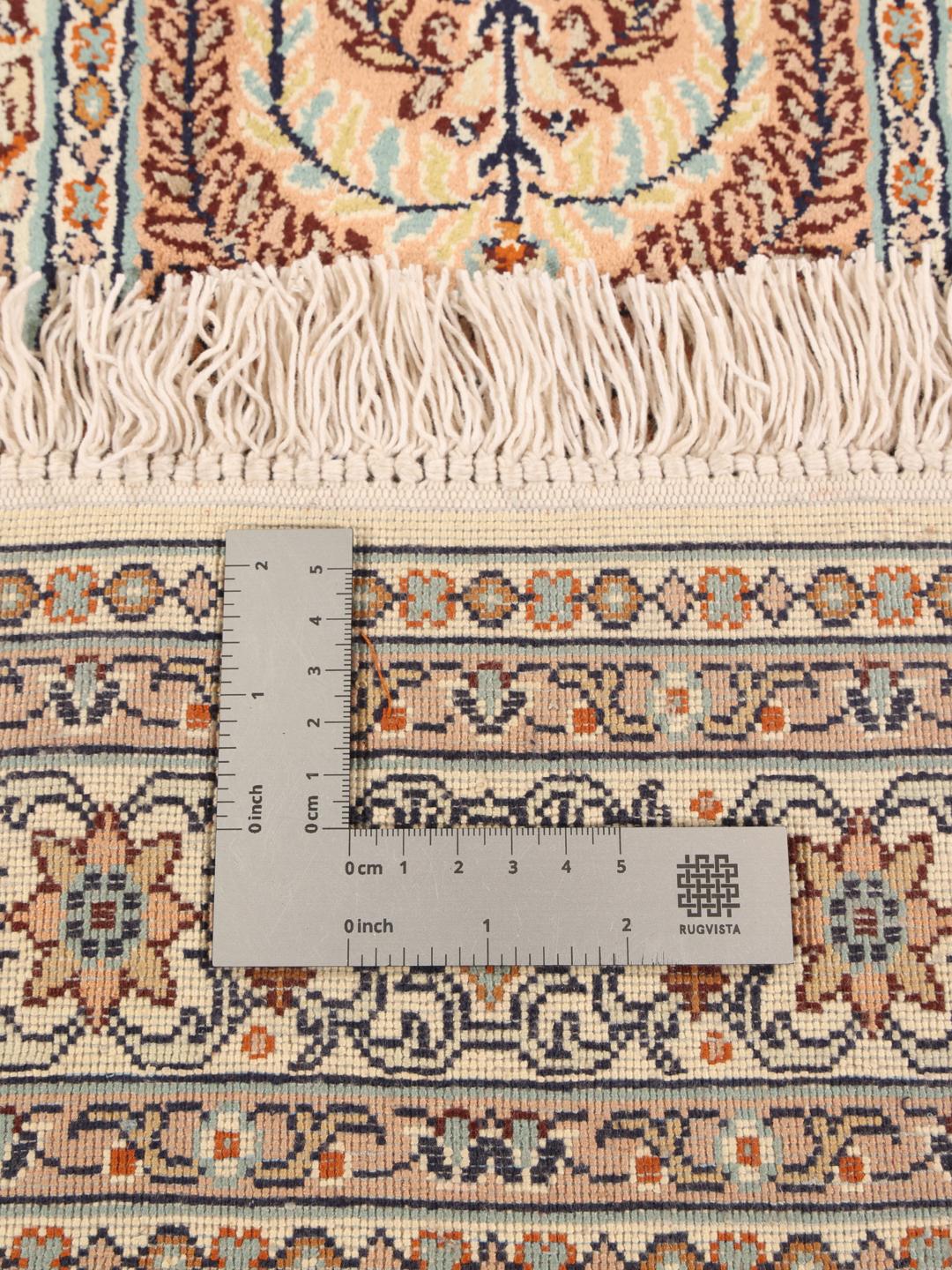
The defining characteristic of these rugs is the use of silk, which allows for a much finer weave than wool. This material choice is what enables the incredibly high knot density that collectors prize. By using fine silk threads, weavers can achieve a level of detail and colour gradation that makes the surface appear almost like a painting, with a light-reflecting quality that changes depending on the angle of view.
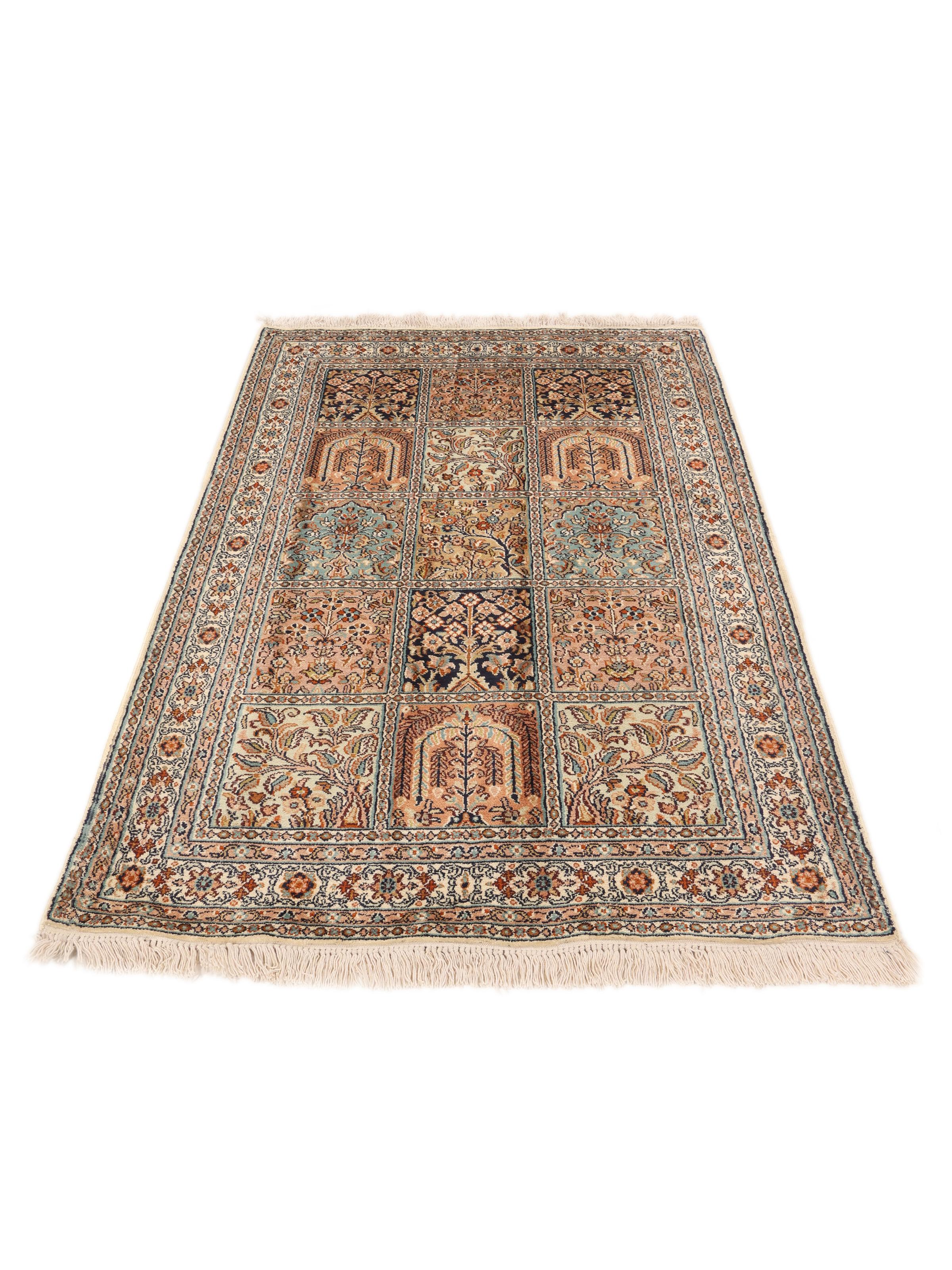
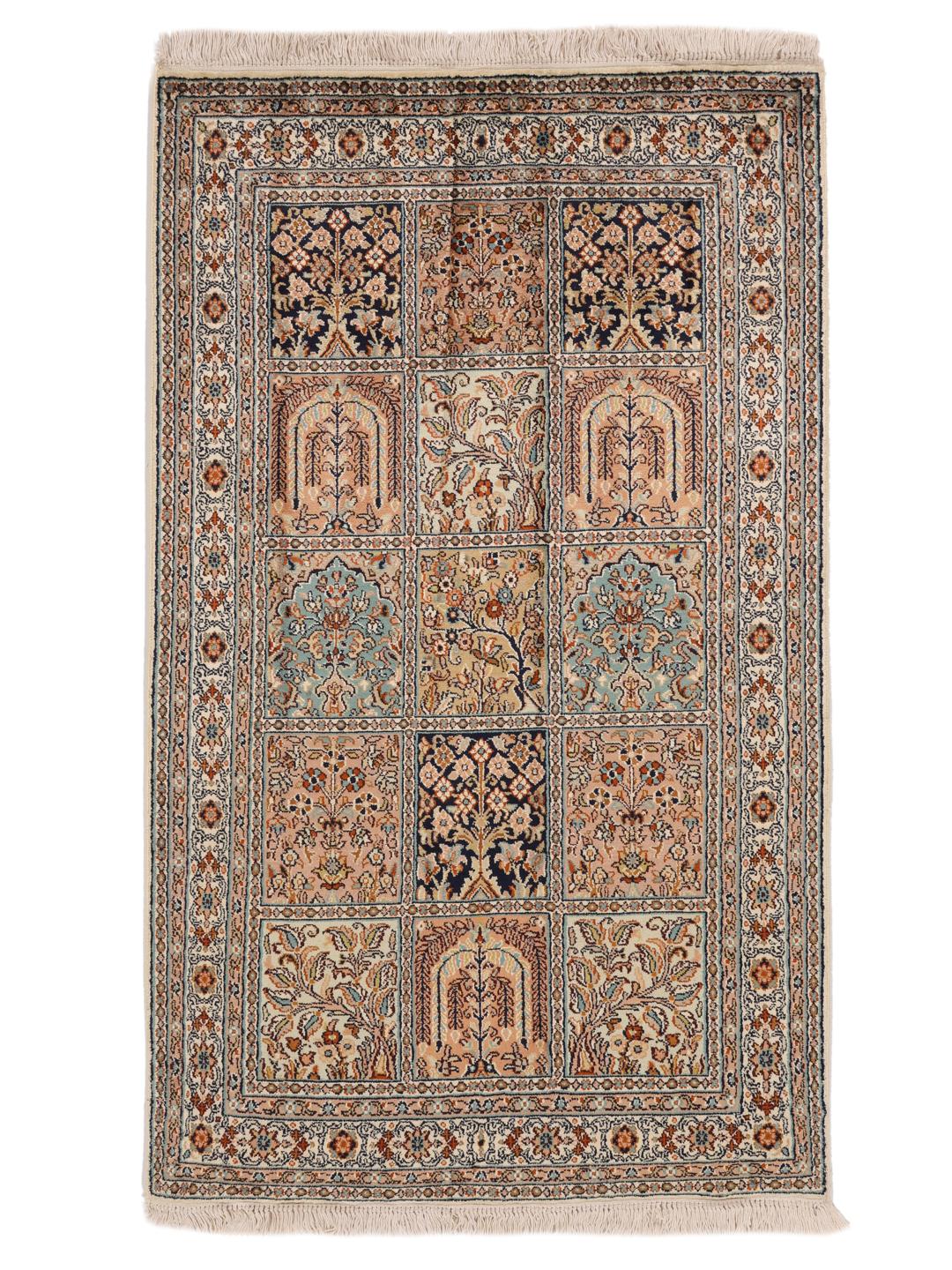
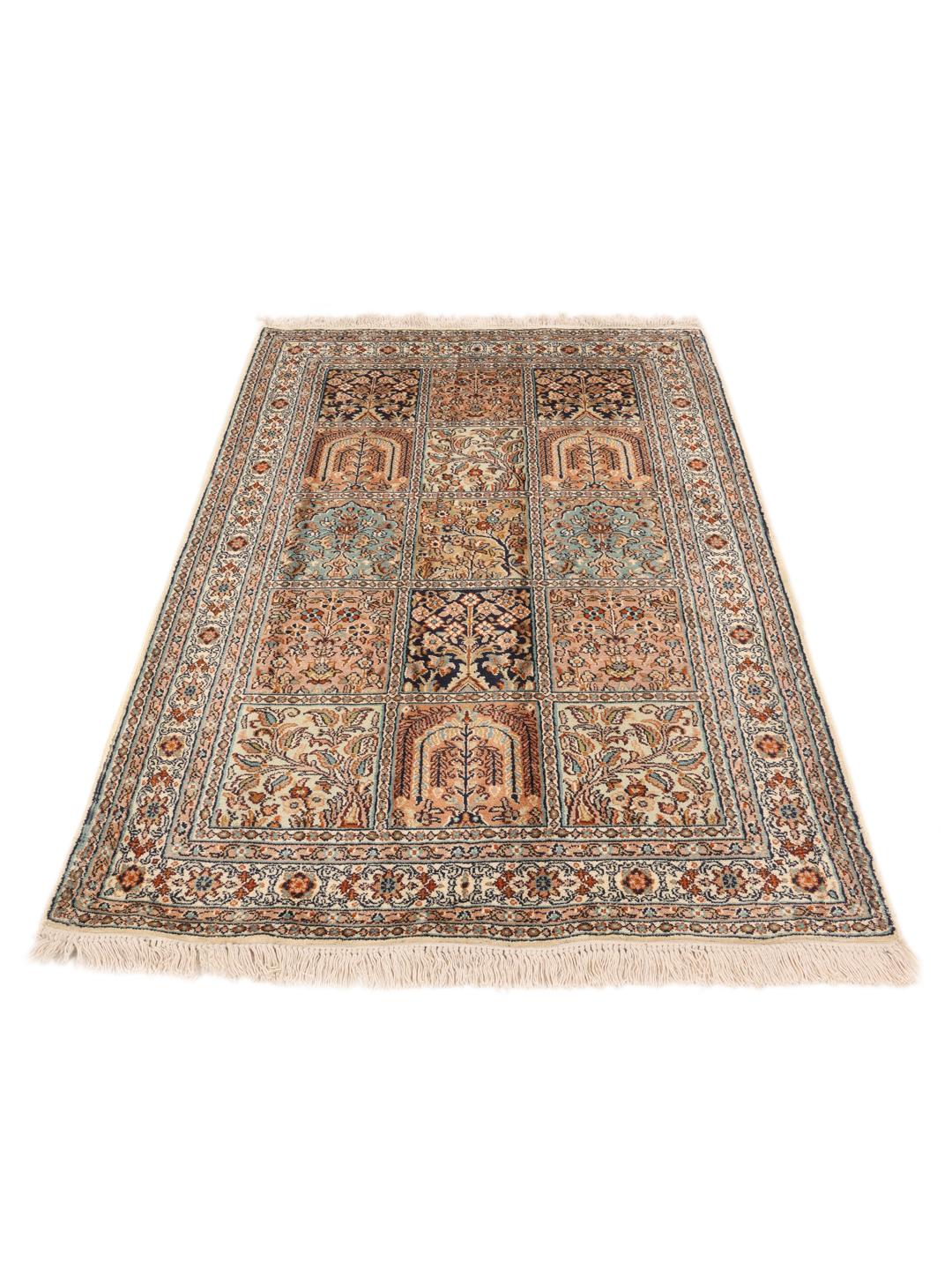
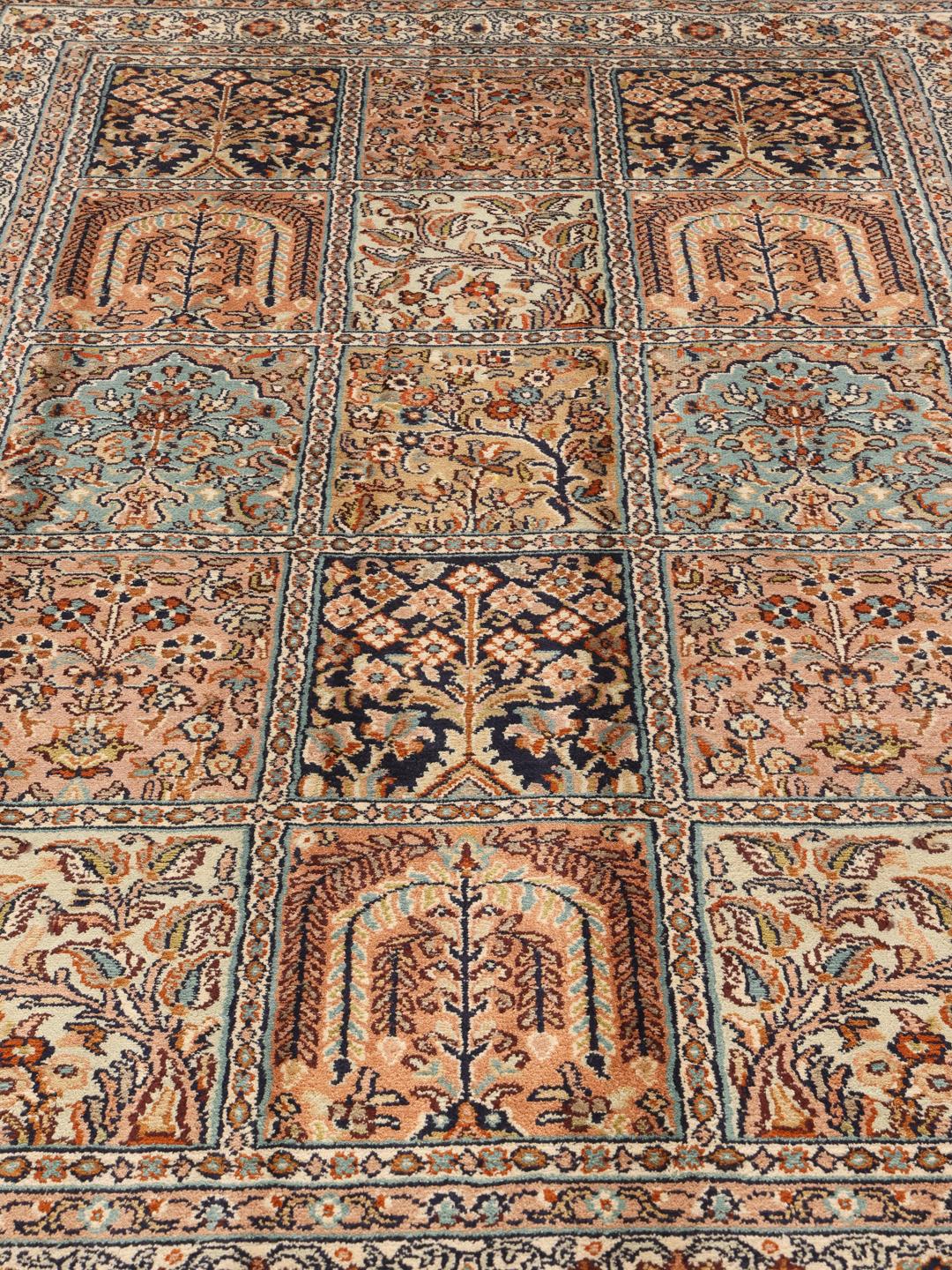
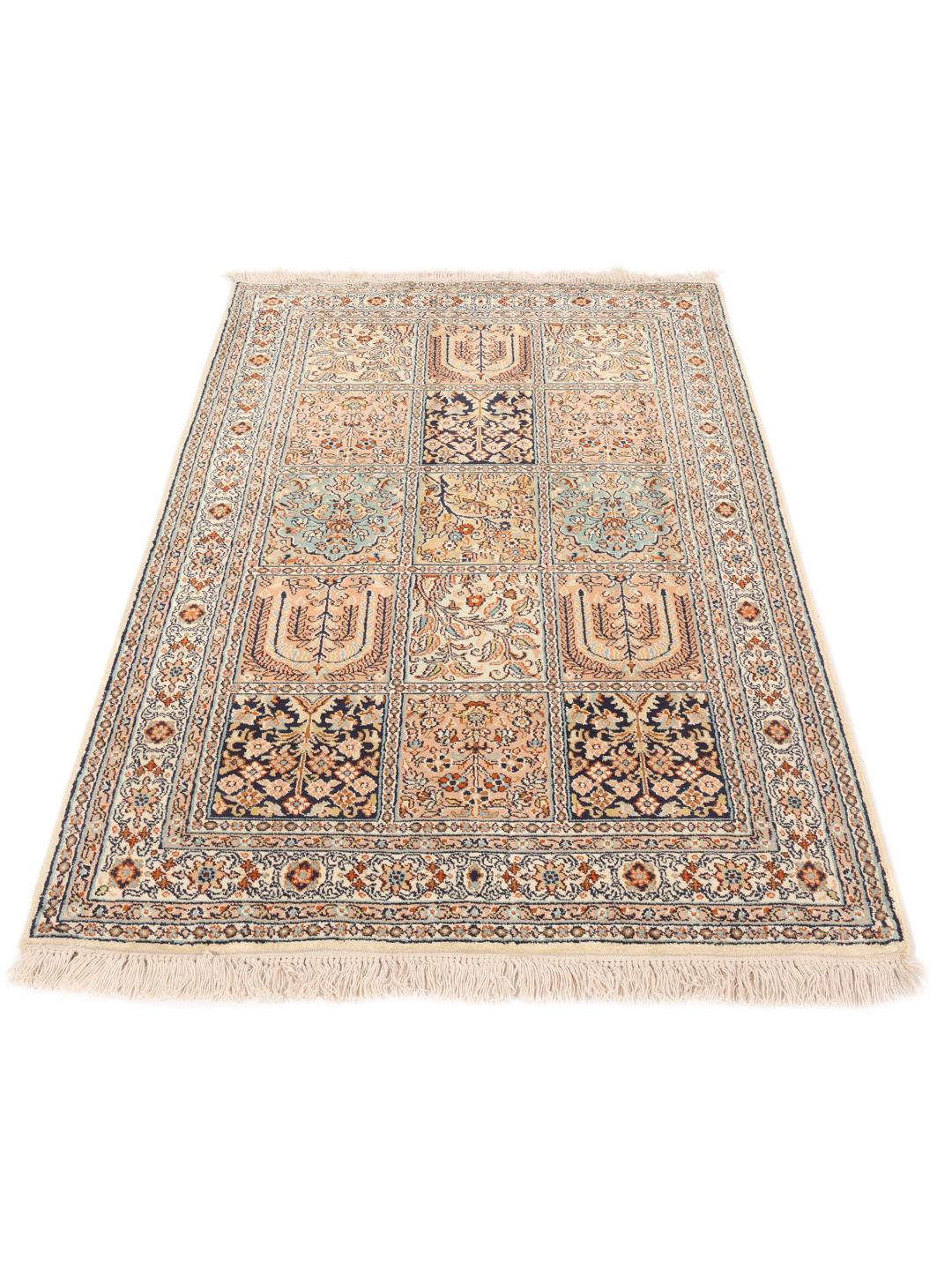
The design language of a Kashmir rug often centres on the 'tree of life' or intricate floral 'garden' motifs, organised into either central medallions or, as seen here, a structured grid. These patterns are deeply rooted in the cultural history of the region, symbolising growth, harmony, and the lush beauty of the Kashmiri landscape. The borders are typically filled with delicate vines and leaves that frame the central narrative.
Owning a Kashmir silk rug is widely considered an investment in cultural heritage. Collectors value these pieces not only for their beauty but for the immense skill they represent. Because each rug is a reflection of the weaver's personal interpretation of traditional motifs, it serves as a tangible link to a long-standing craft tradition that continues to thrive through the dedication of modern artisans.