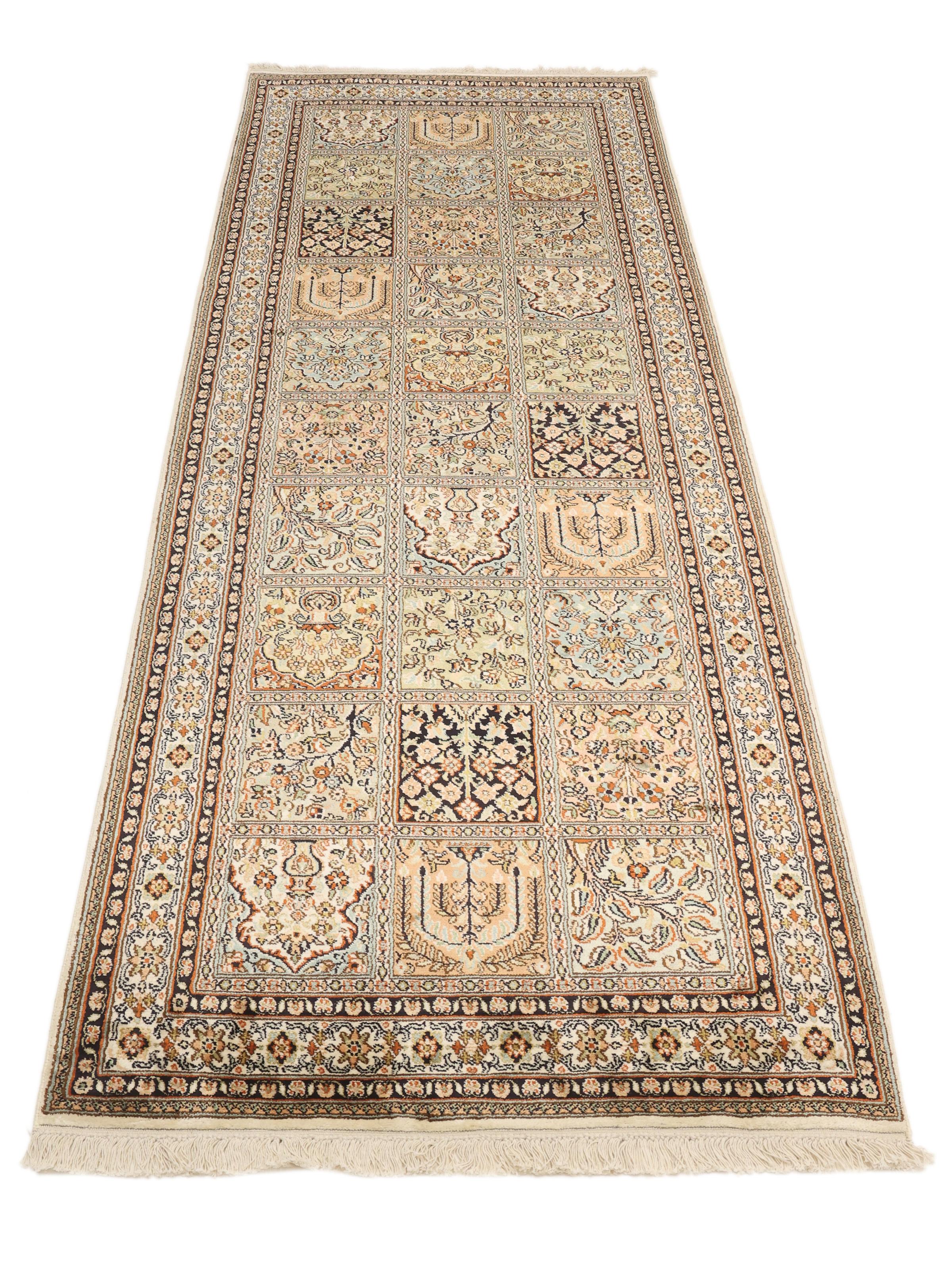
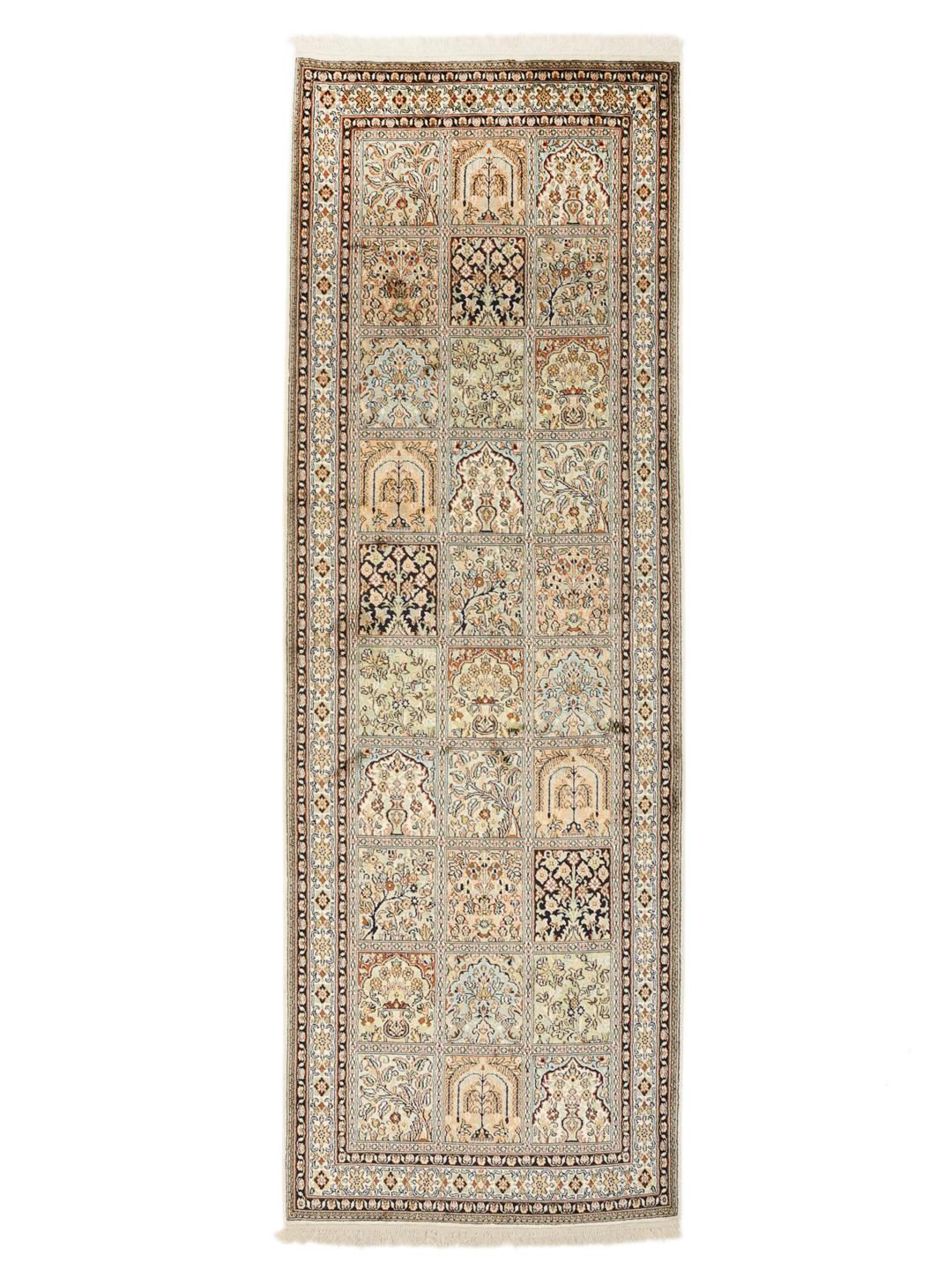
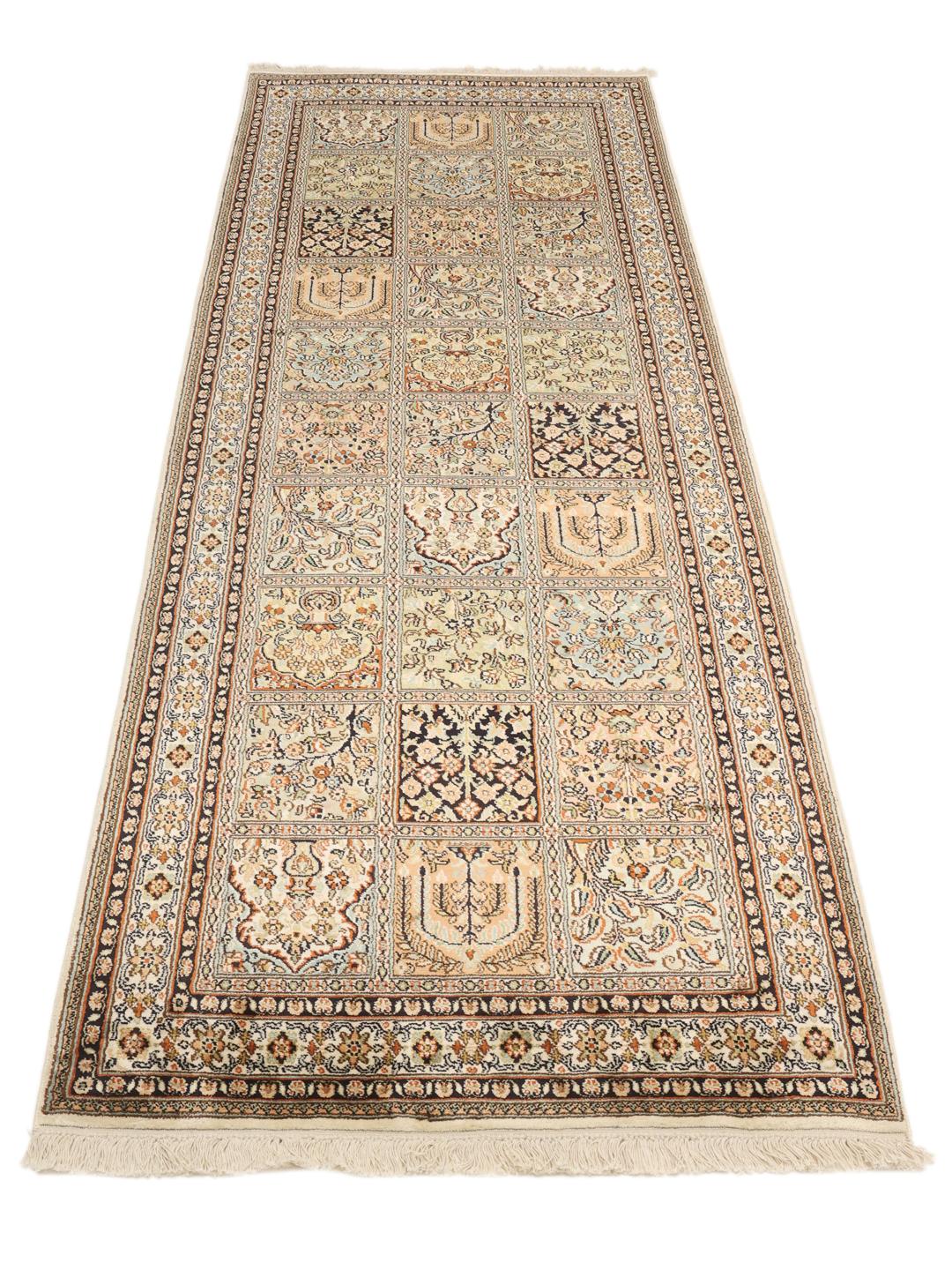
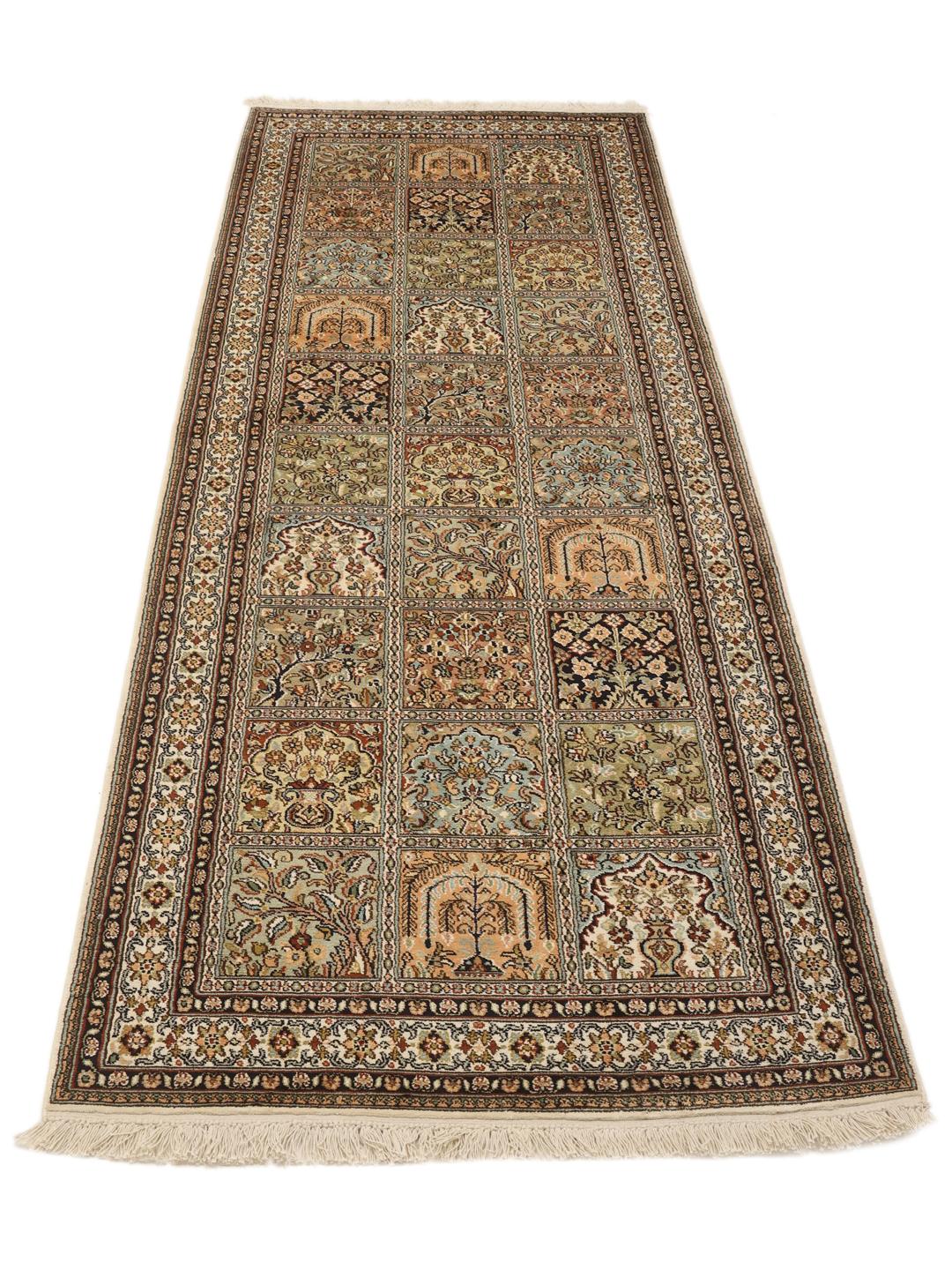
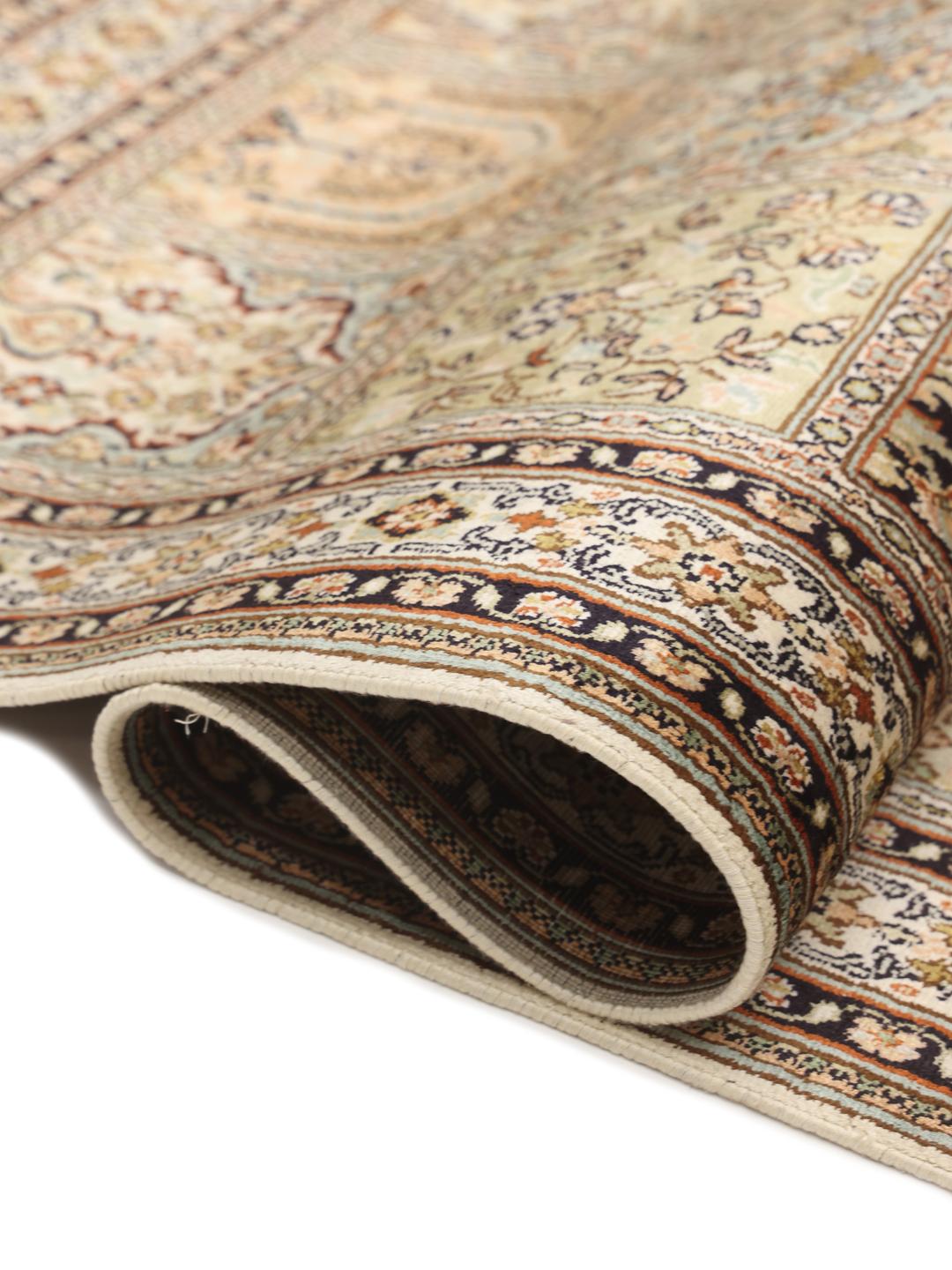
Kashmir silk rugs are celebrated globally for their connection to the rich textile history of the Kashmir region in India. Influenced by the artistic traditions of the Middle East and Central Asia, these rugs evolved into a distinct style that emphasises fine detail, sophisticated colour palettes, and the use of the highest quality natural materials. The region has long been a crossroads for silk production, allowing artisans to master the craft of weaving with this challenging but rewarding fibre.
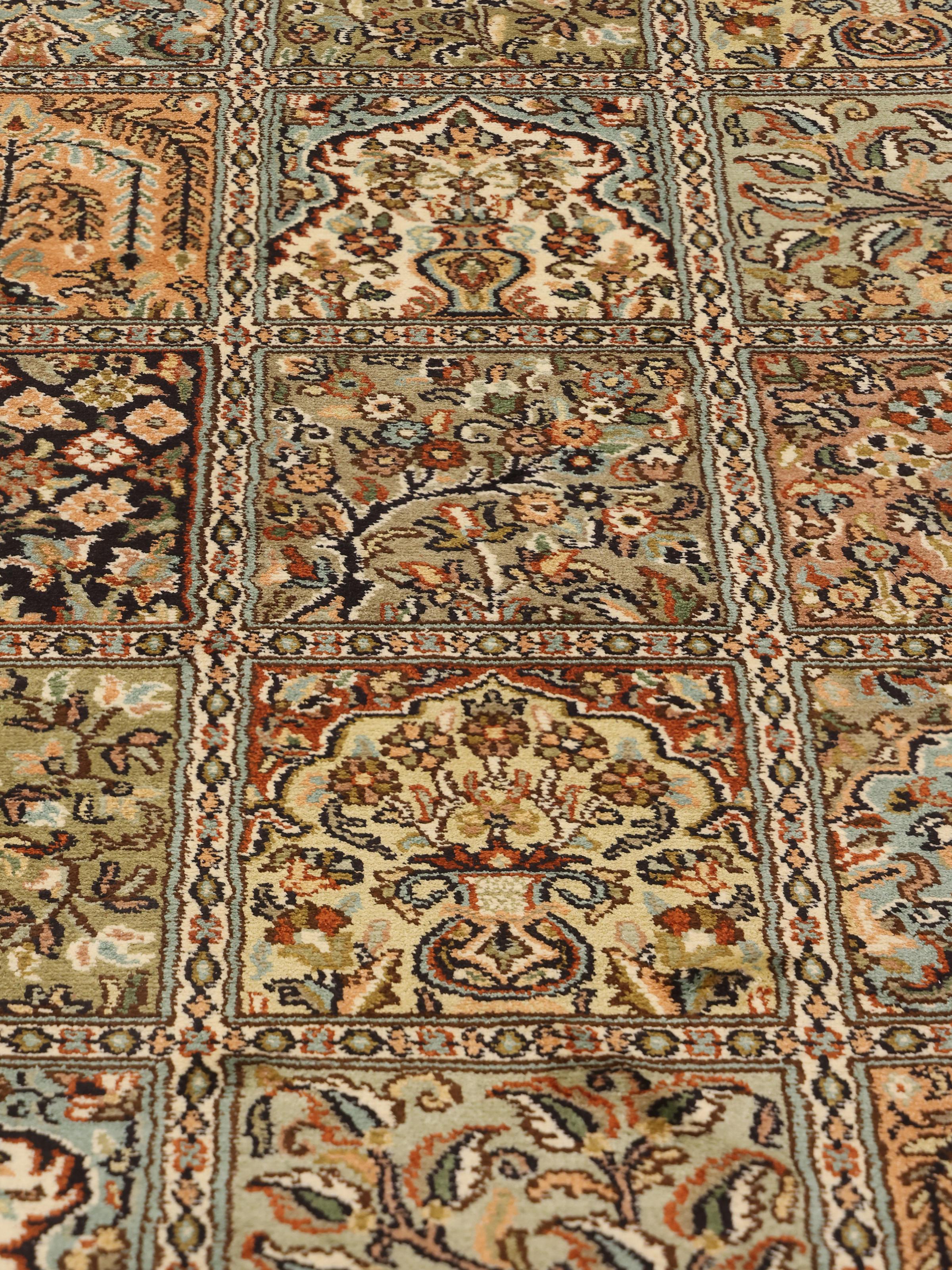
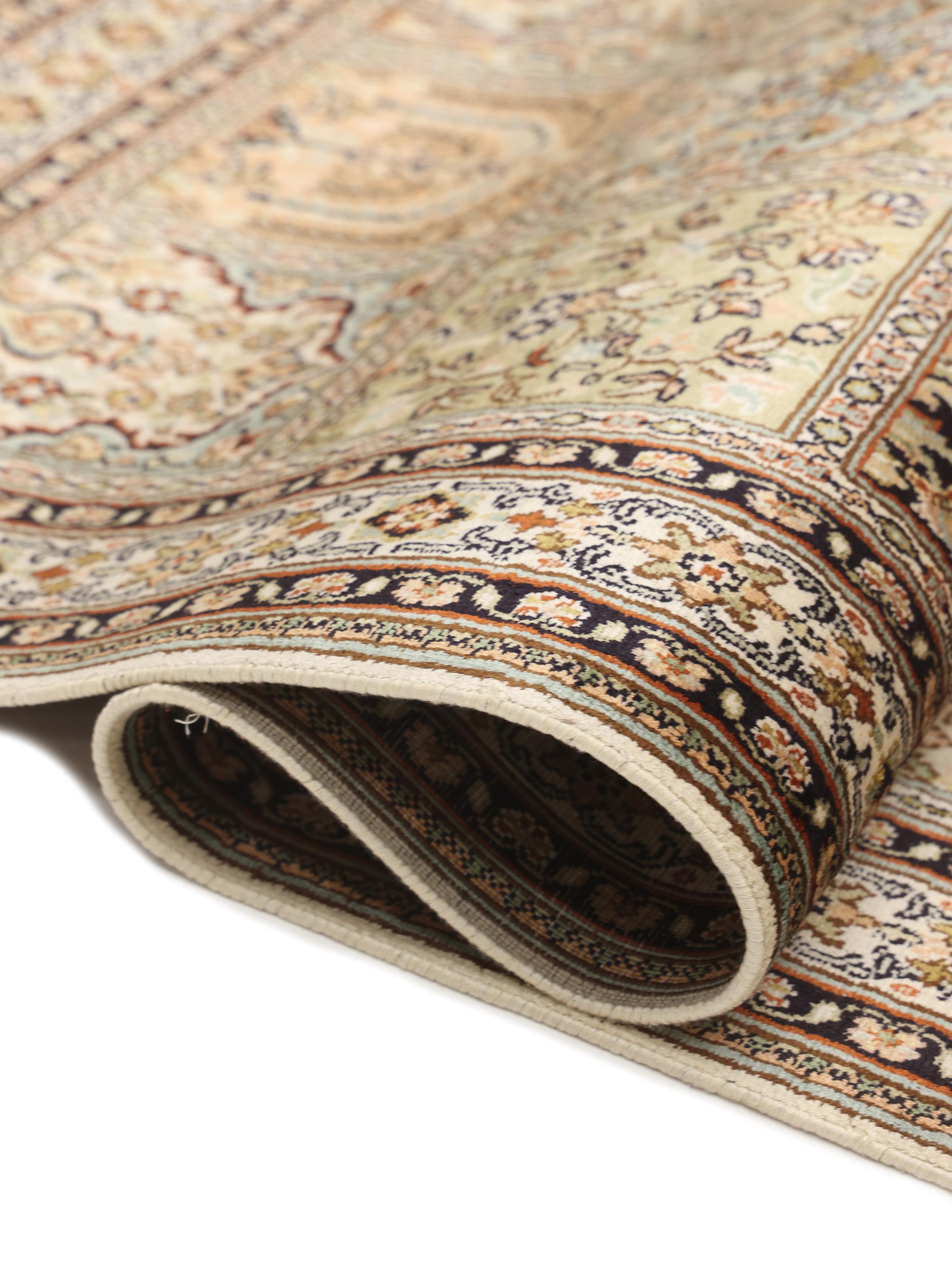
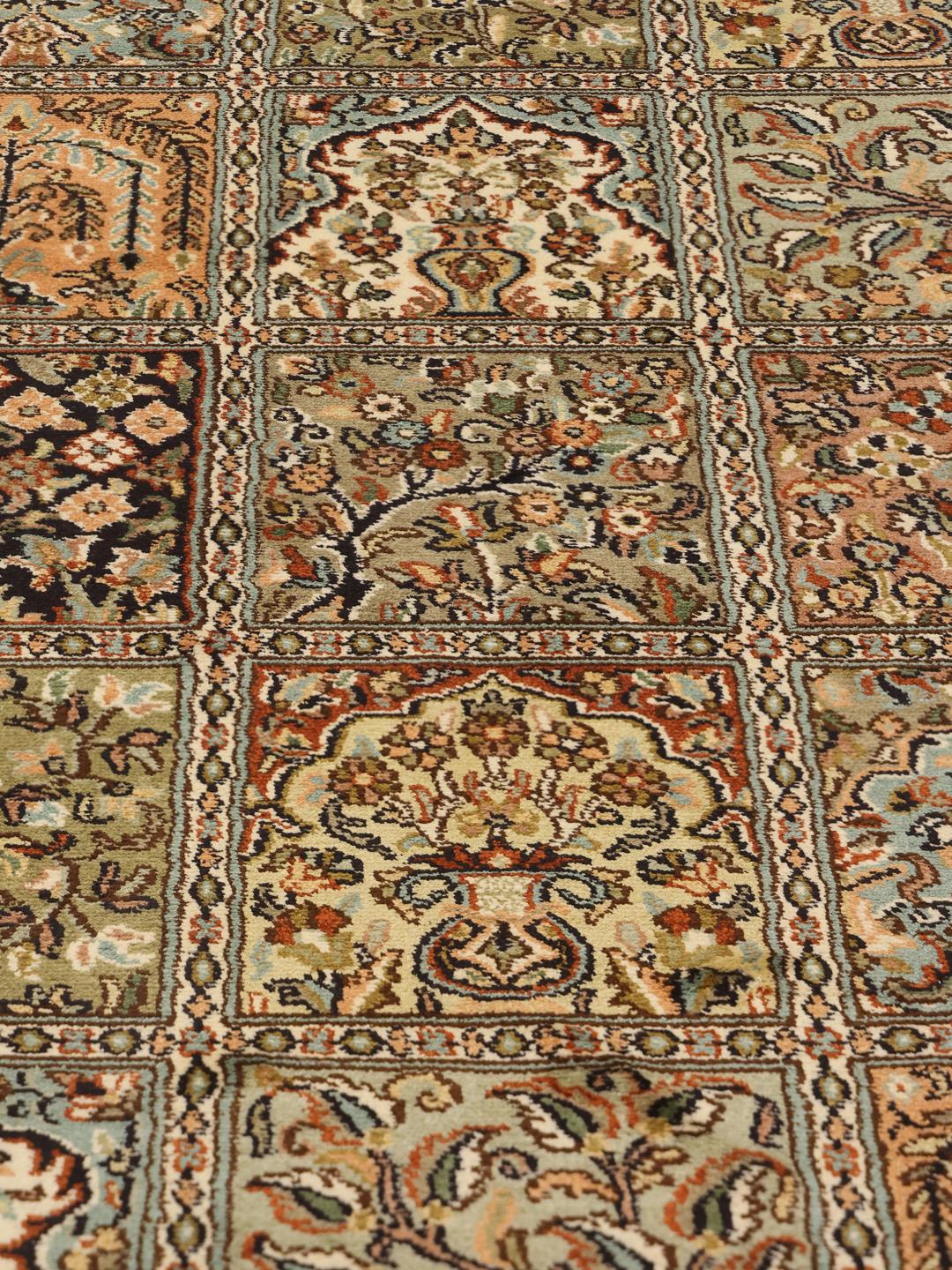
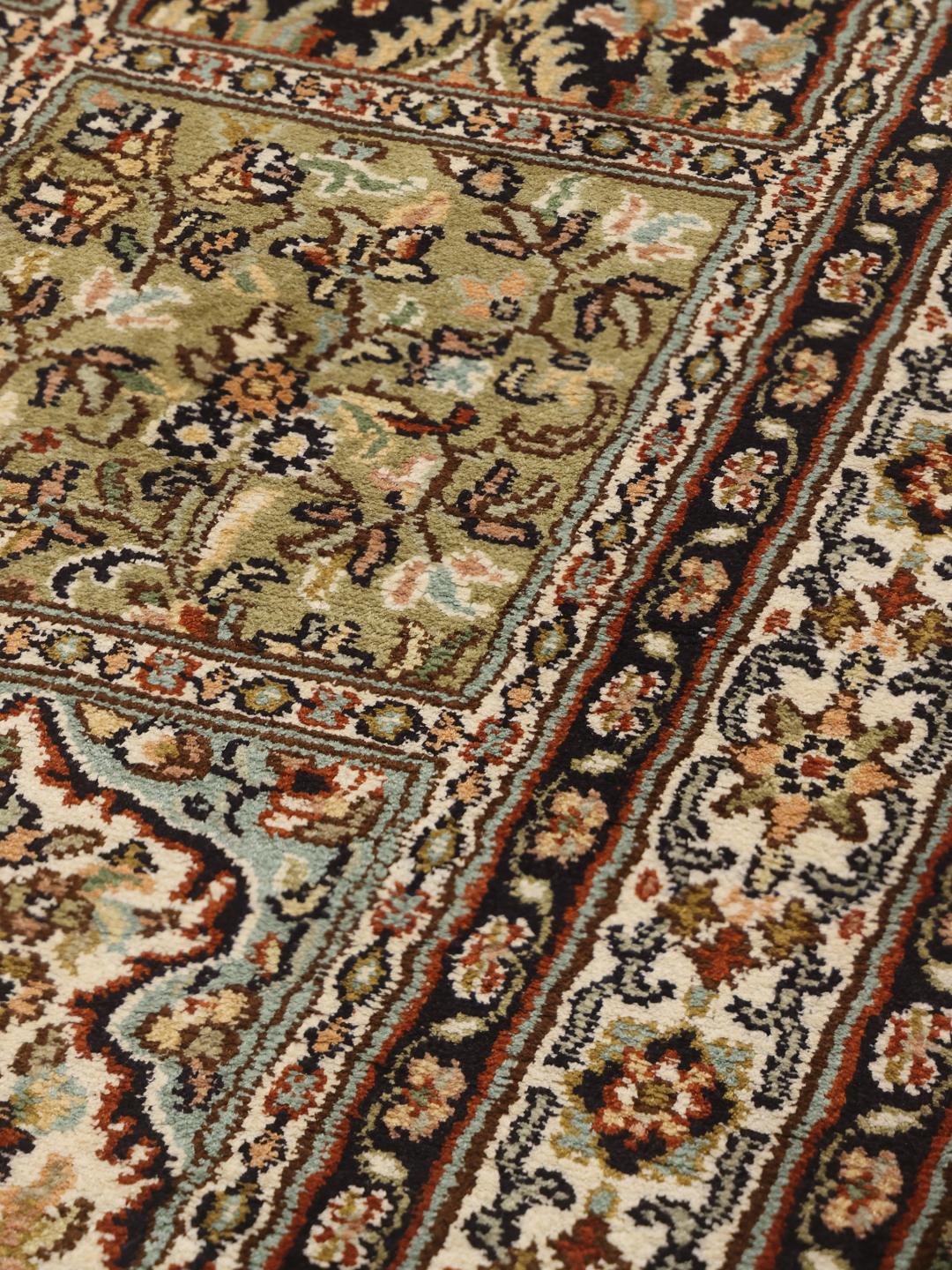
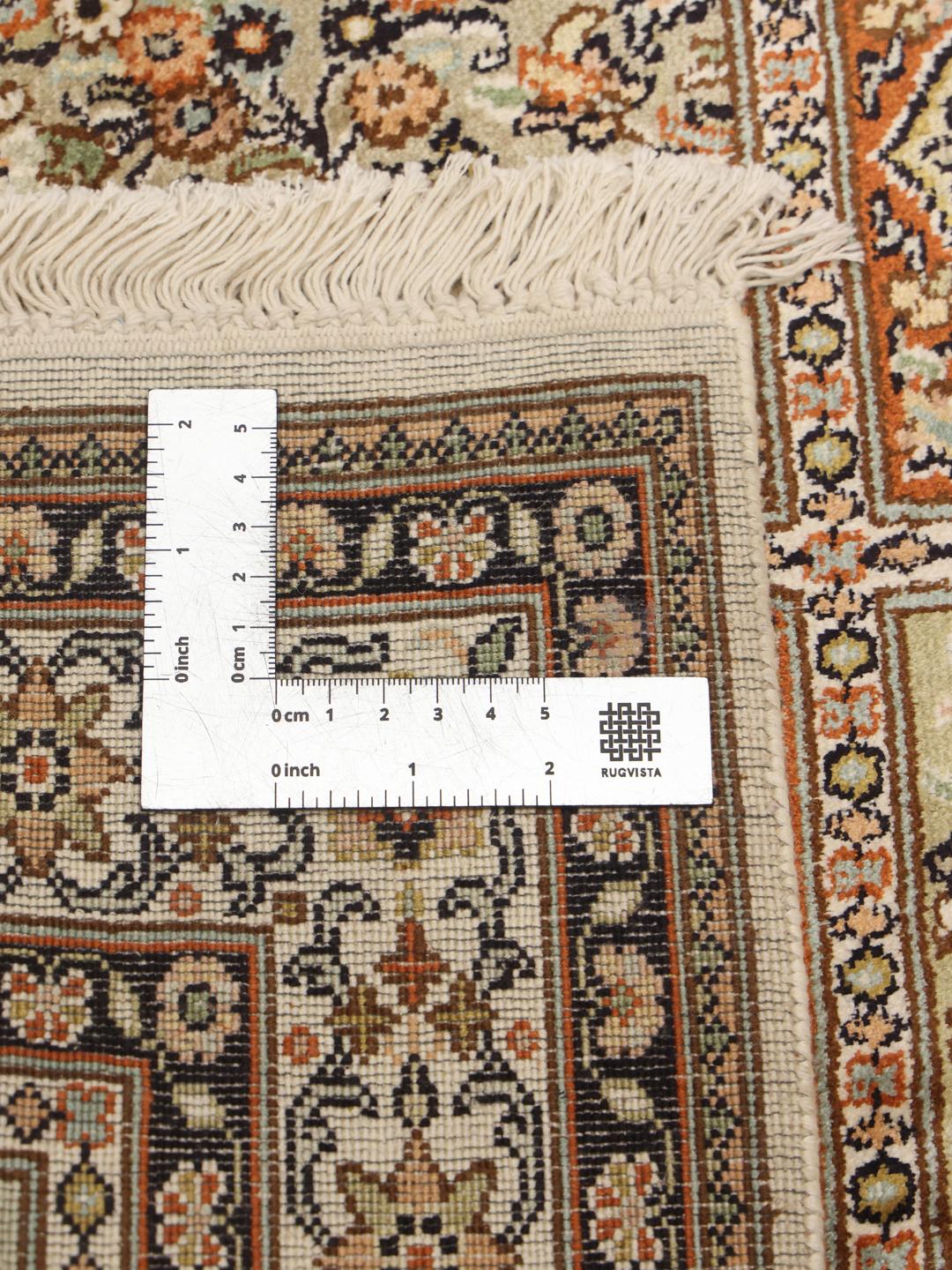
The term 'hand-knotted' refers to the traditional technique where each individual thread is tied by hand onto the foundation. This process is essential for creating the fine, high-density pile that defines Kashmir silk rugs. Unlike machine-made alternatives, this method allows for a level of complexity in the weave that ensures the rug remains supple and durable, with a drape and feel that only authentic hand-worked silk can provide.
Visually, these rugs are often defined by their intricate floral patterns, paisley-inspired motifs, and geometric panel designs. The aesthetic is one of harmony and balance, drawing on centuries-old design motifs that have been passed down through generations of weaving families. The use of natural dyes combined with the inherent lustre of silk creates a vibrant, multi-dimensional look that is synonymous with the Kashmir tradition.
Collecting a hand-knotted Kashmir runner is an invitation to own a piece of cultural heritage. These rugs are highly valued for their exceptional skill, cultural significance, and the time-honoured techniques required to produce them. By choosing a unique piece, you are supporting a legacy of craftsmanship that has survived for centuries, ensuring that this tradition of beauty and quality continues to thrive in modern interiors.