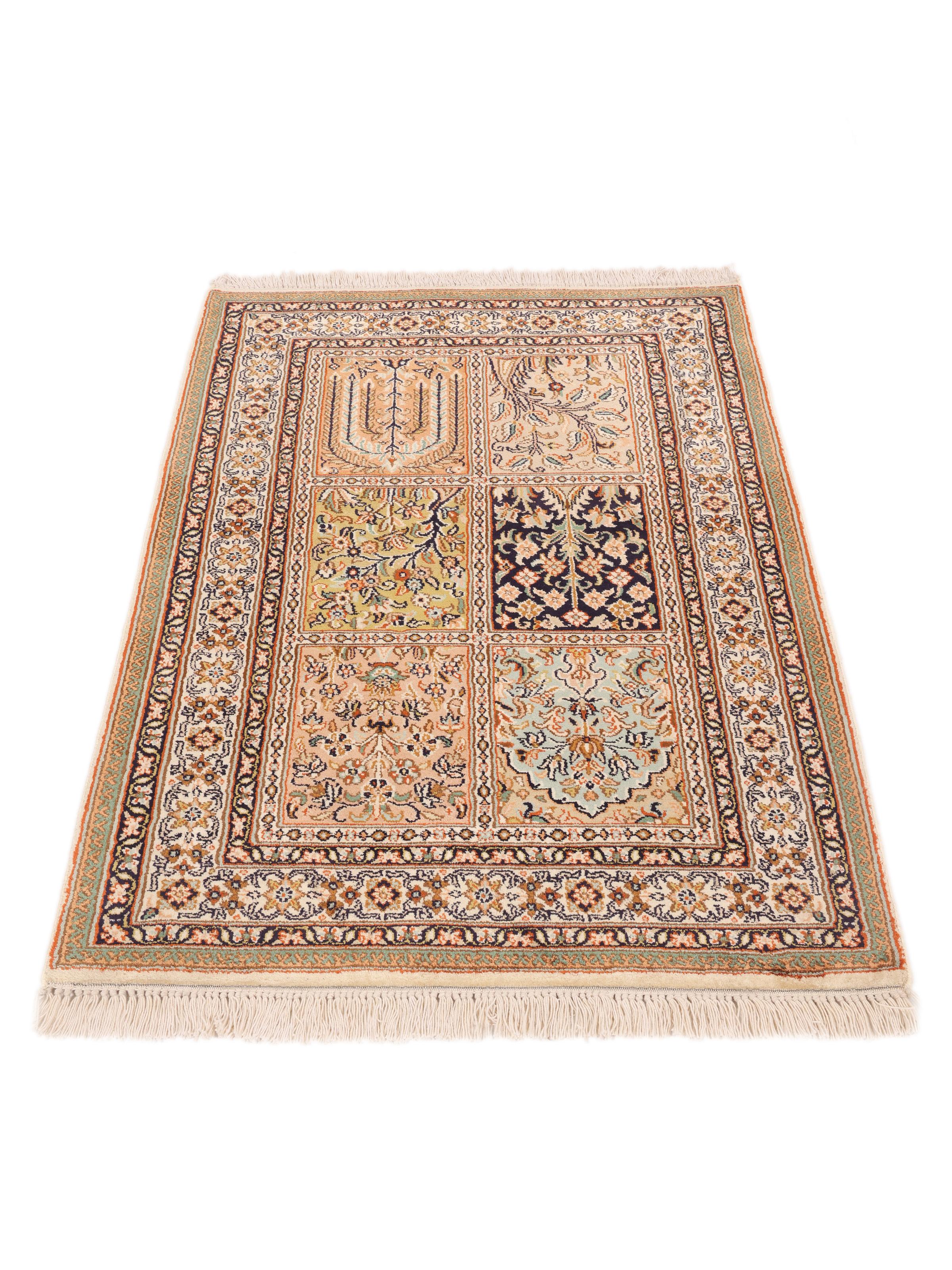
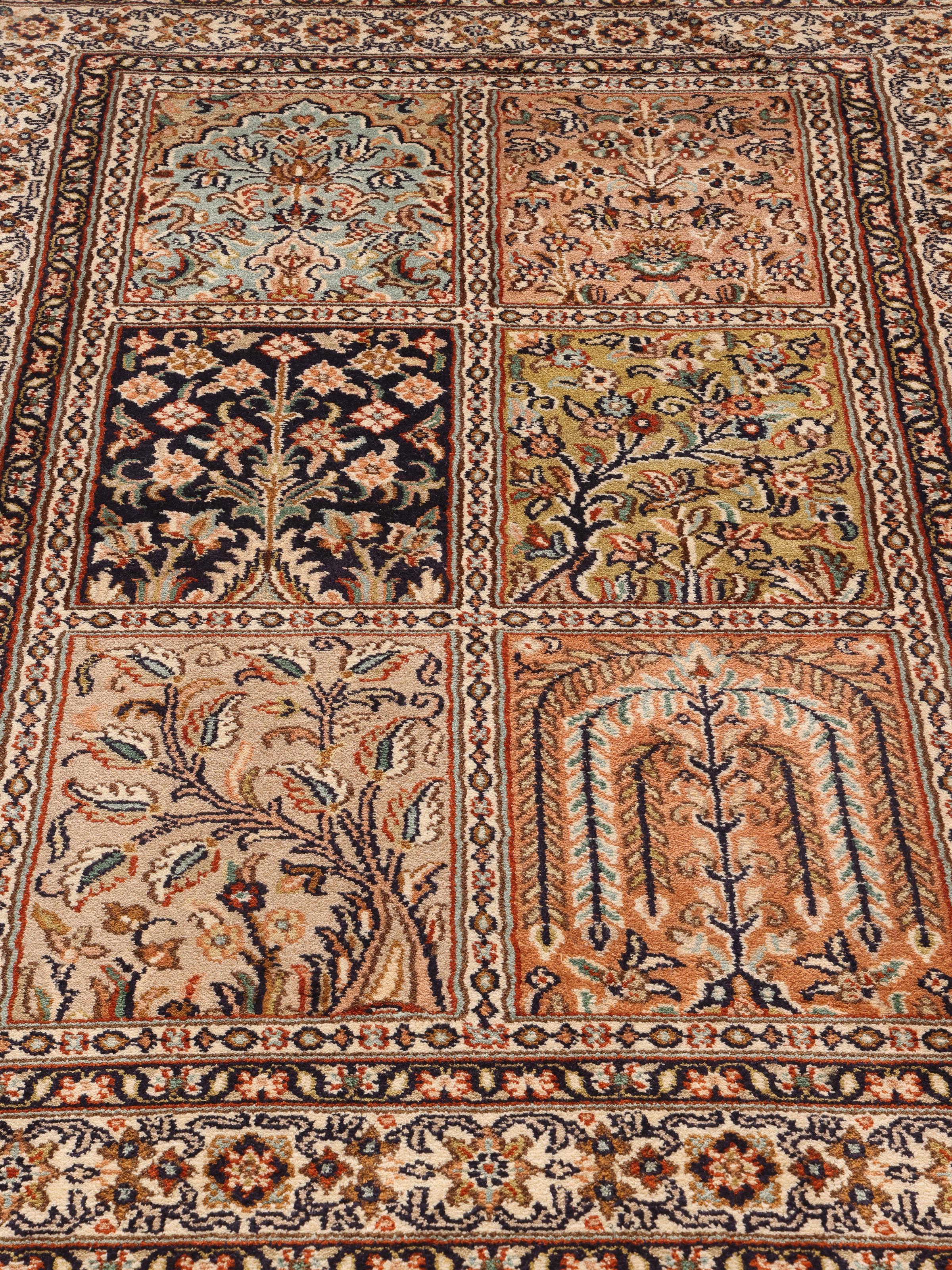
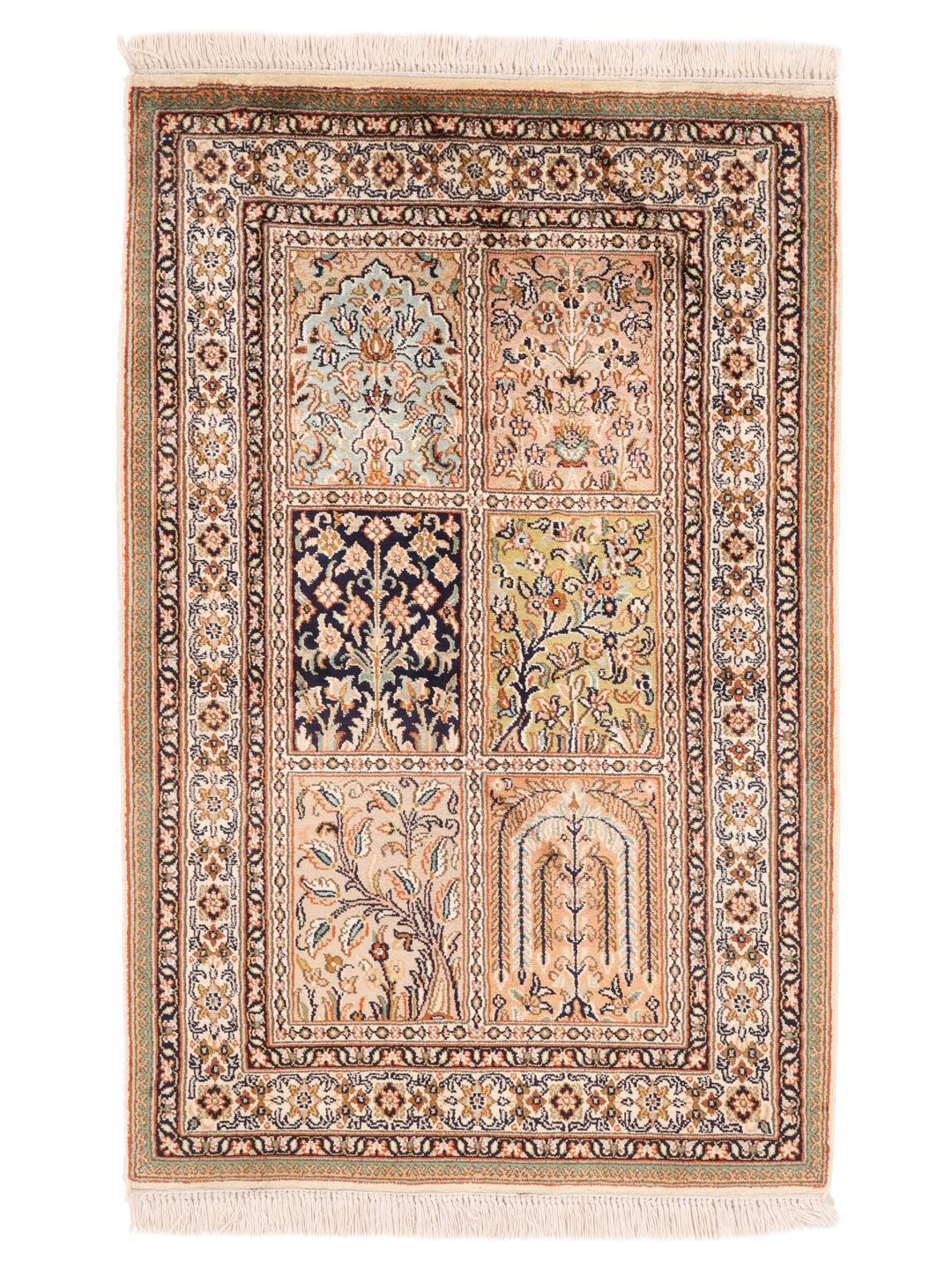
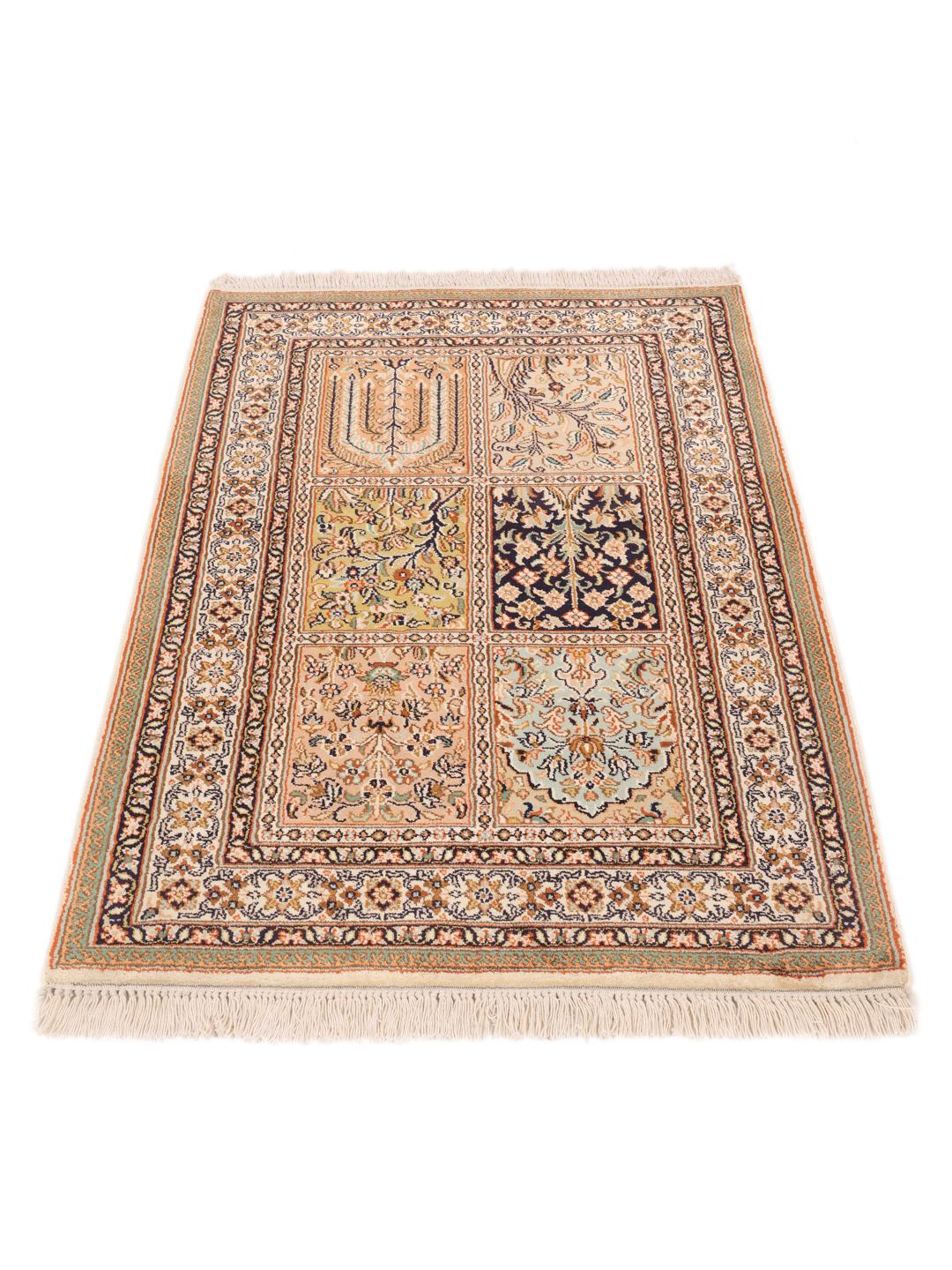
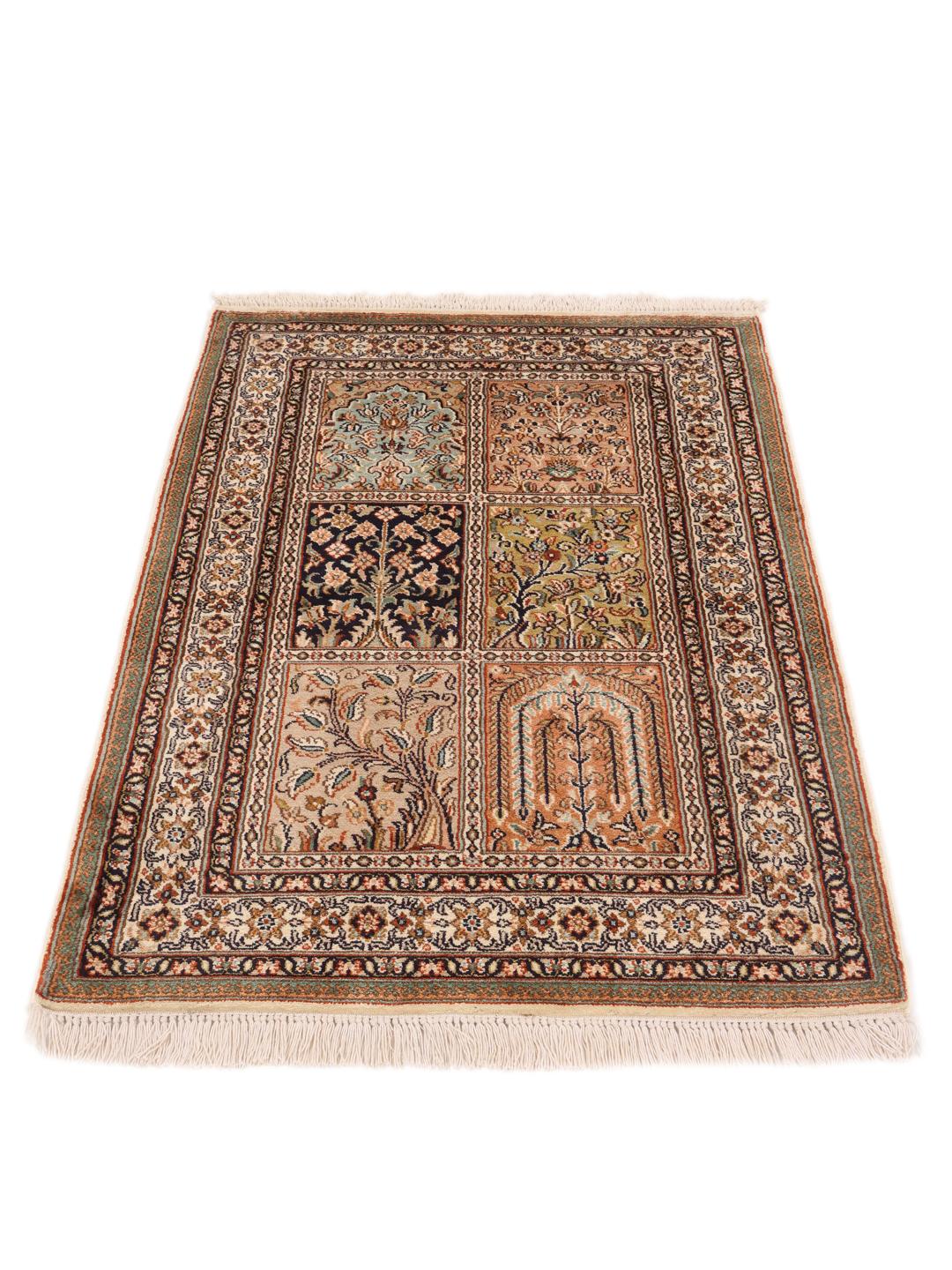
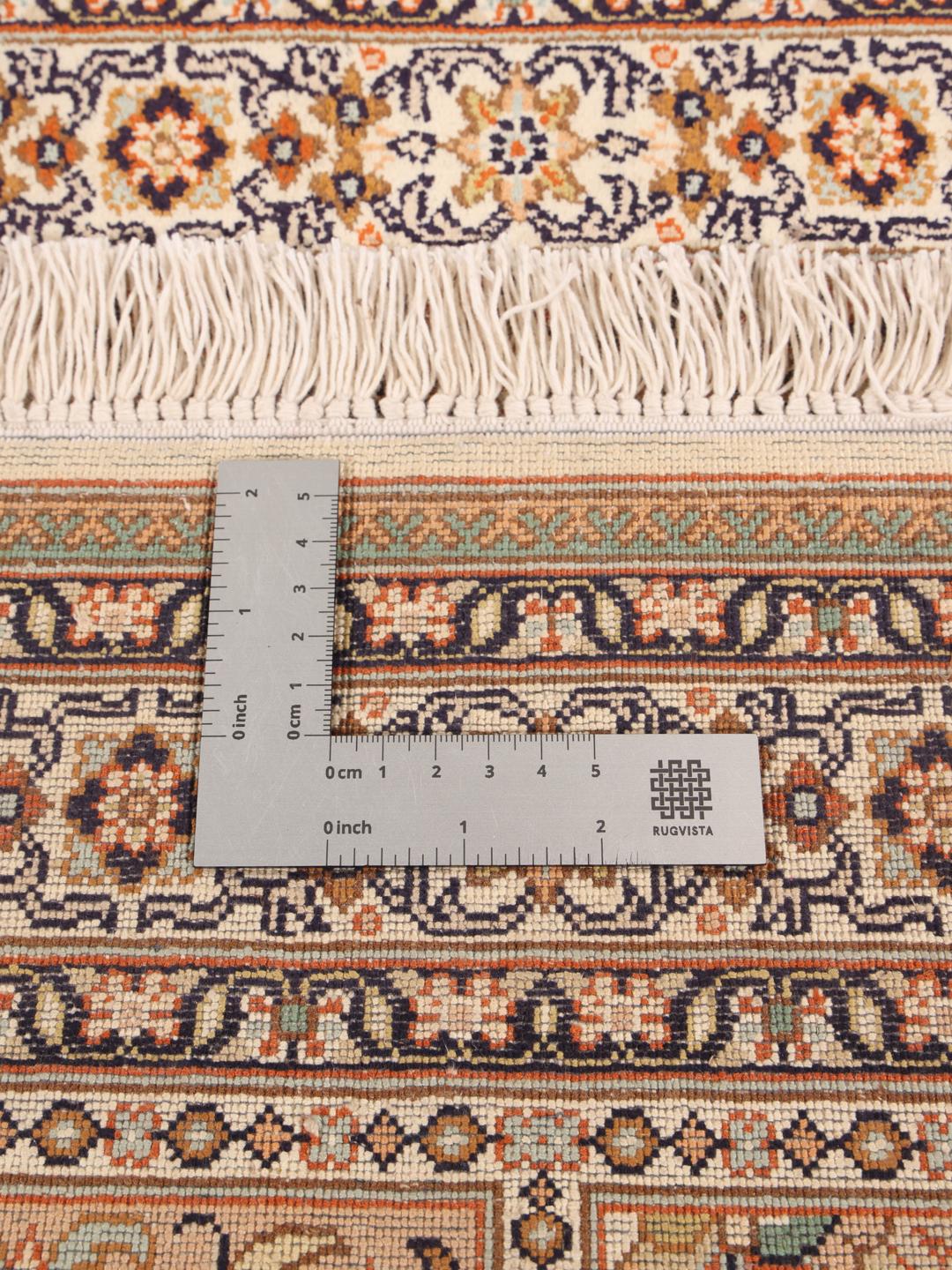
Kashmir silk rugs are celebrated across the globe for their fine craftsmanship and deep roots in the artistic heritage of Northern India. The tradition of weaving in this region dates back centuries, heavily influenced by the rich decorative arts of the Middle East. Over time, local weavers developed a distinct style that integrates local flora and fauna, creating a unique aesthetic that is instantly recognisable to collectors.
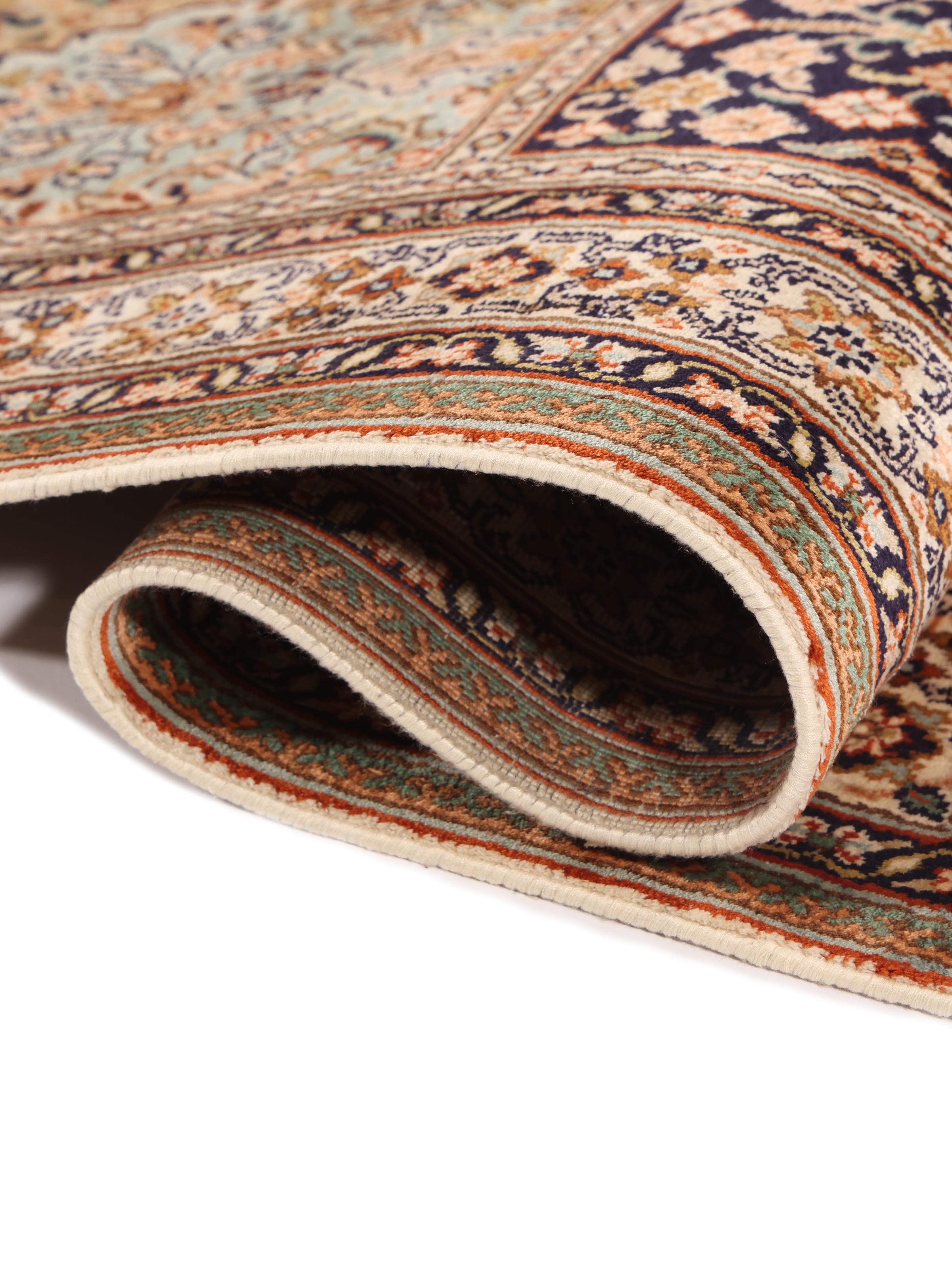
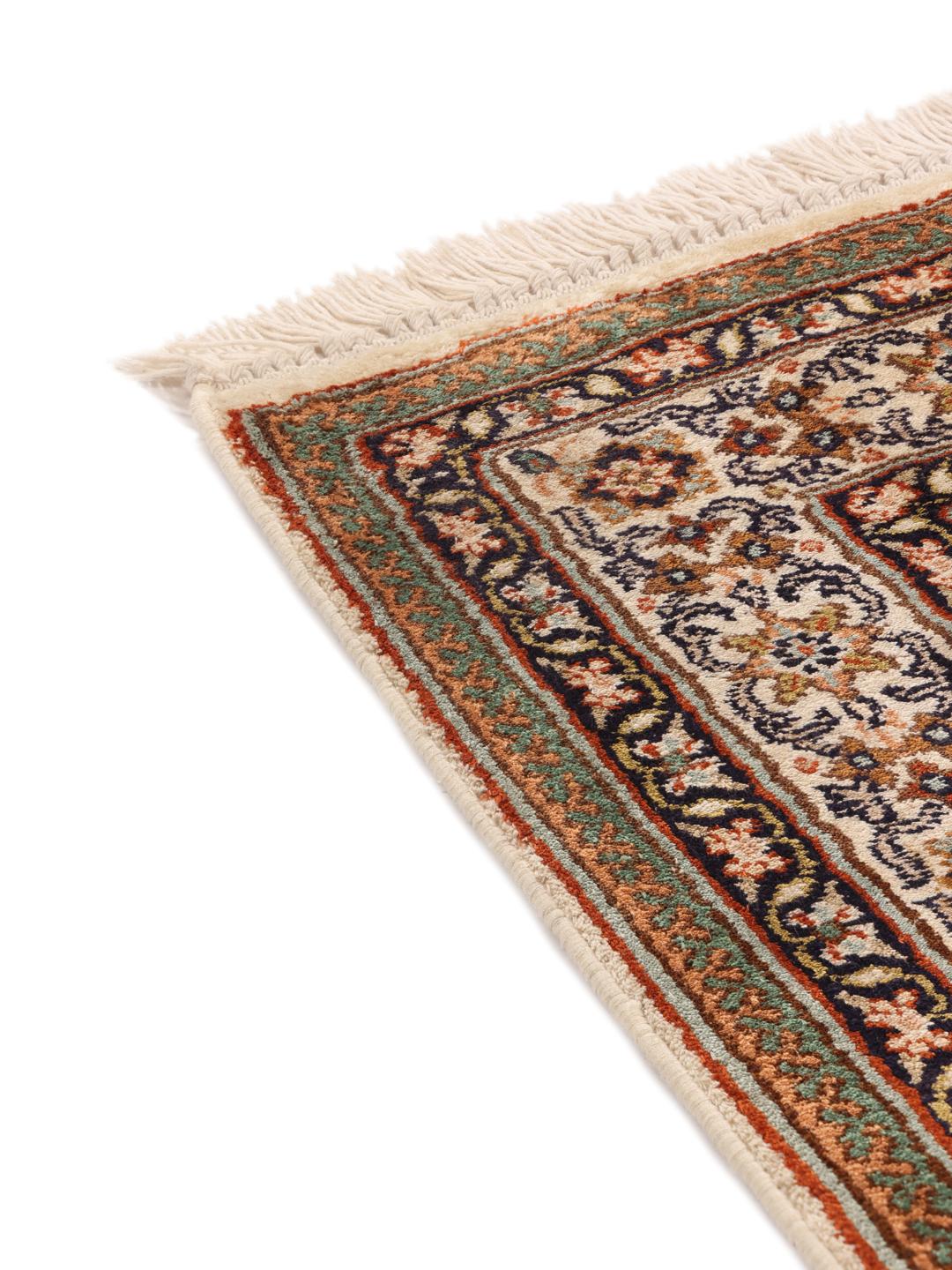
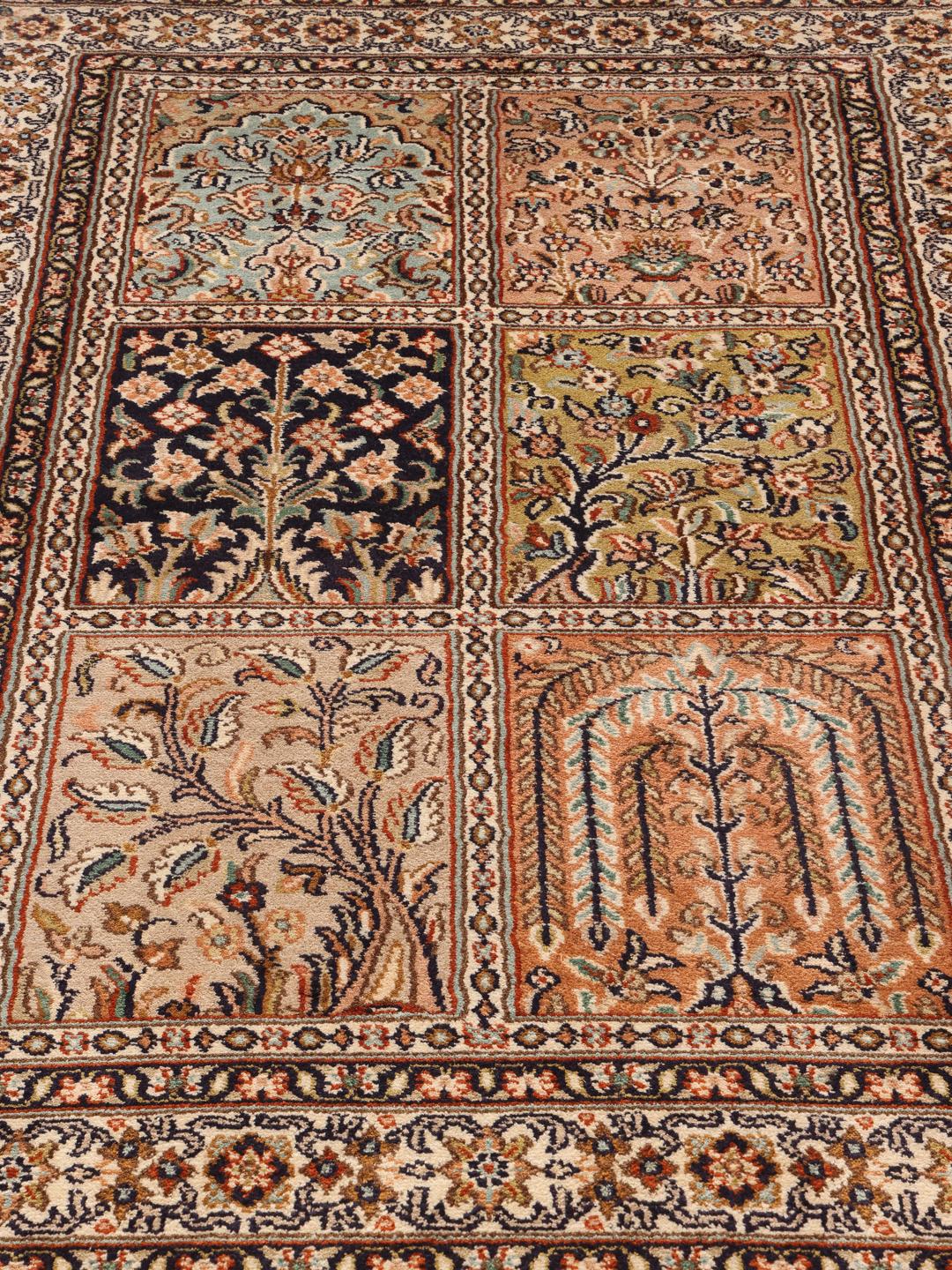
The term silk in this context refers to the use of high-quality filaments that are carefully prepared and dyed to achieve a characteristic lustre. When hand-knotted, these silk threads allow for a level of detail that would be impossible with coarser materials. The fineness of the knotting is a key indicator of quality, as it allows weavers to execute complex, curvilinear patterns that appear almost like paintings on the floor.
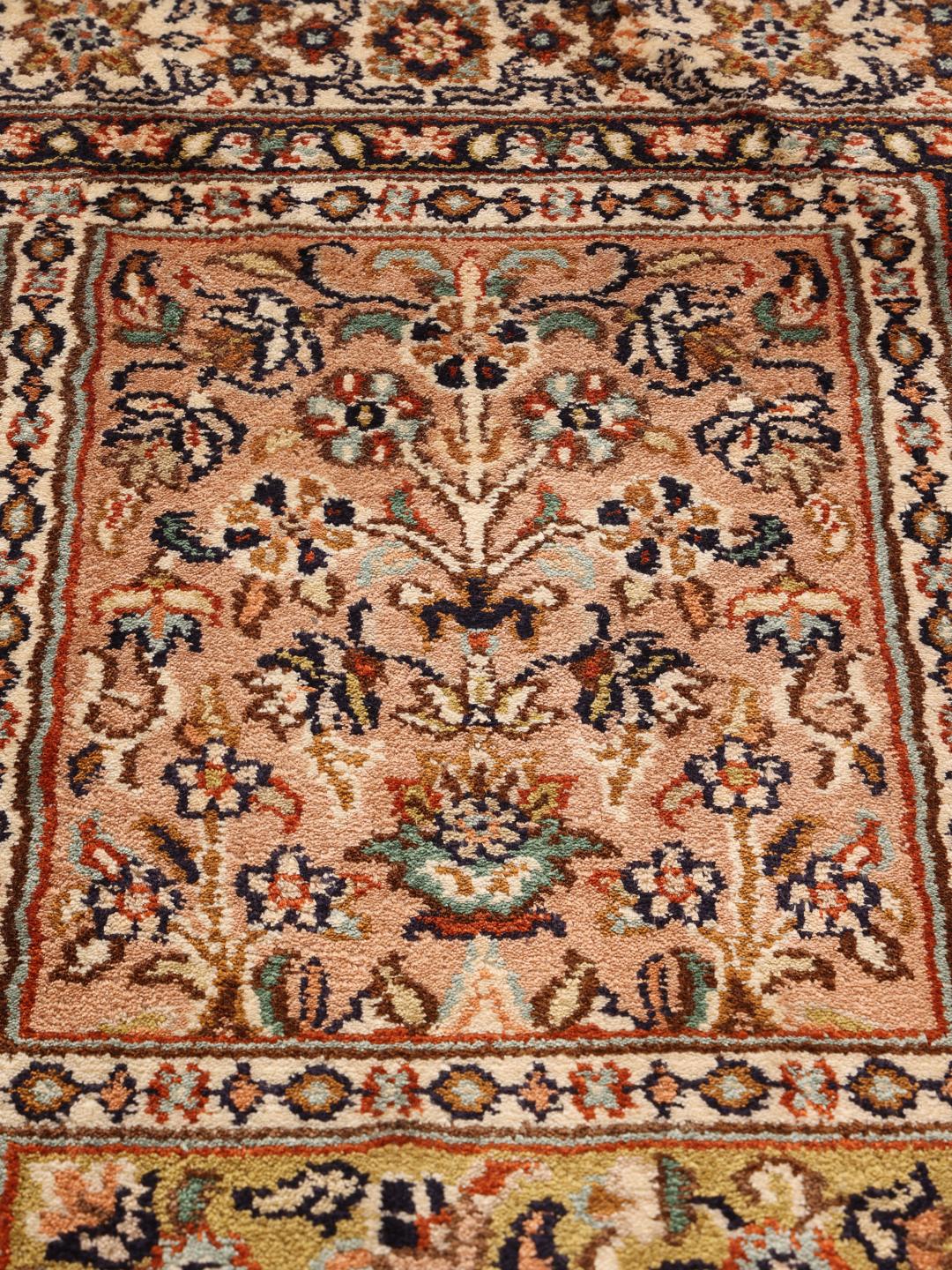
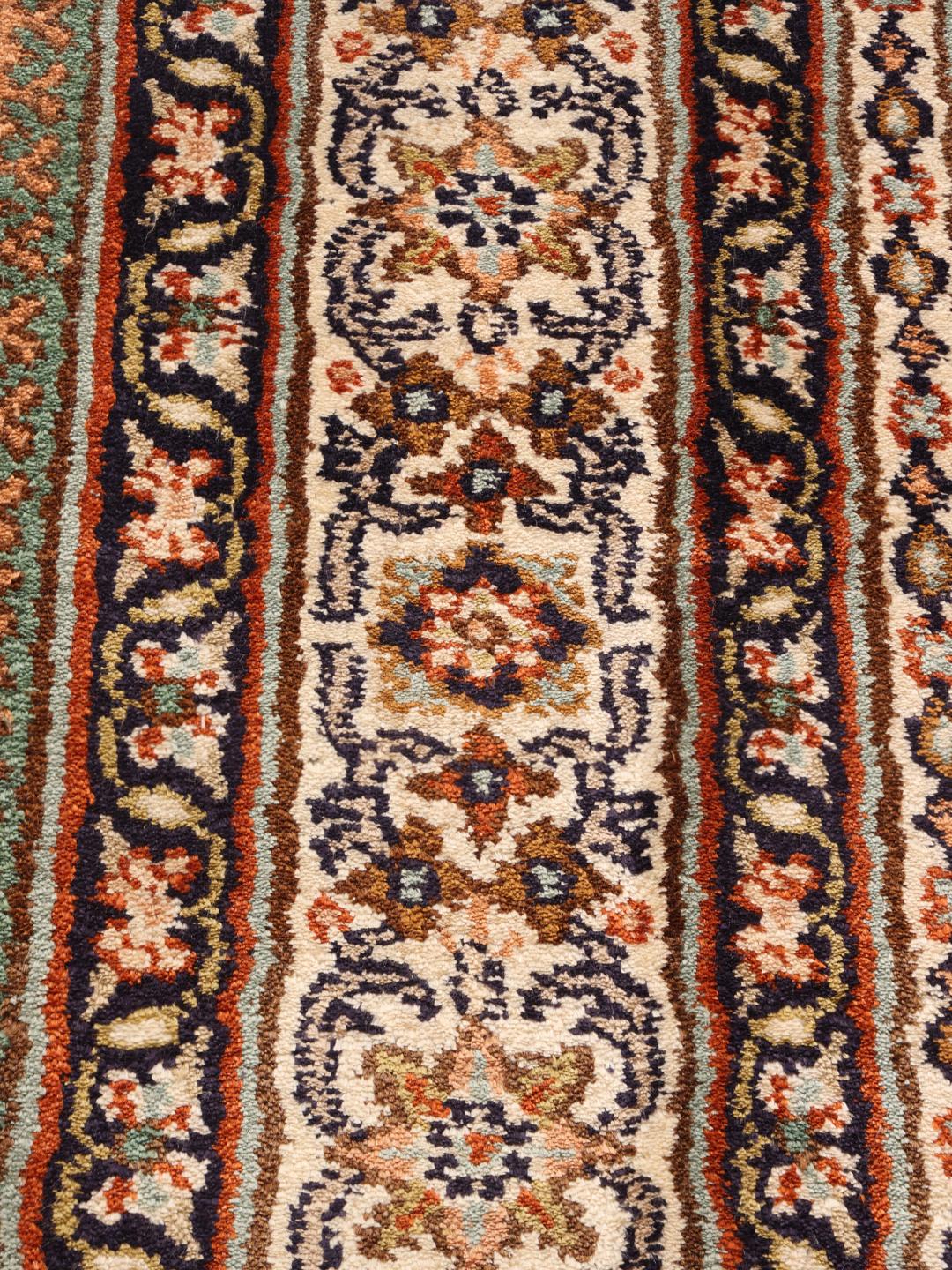
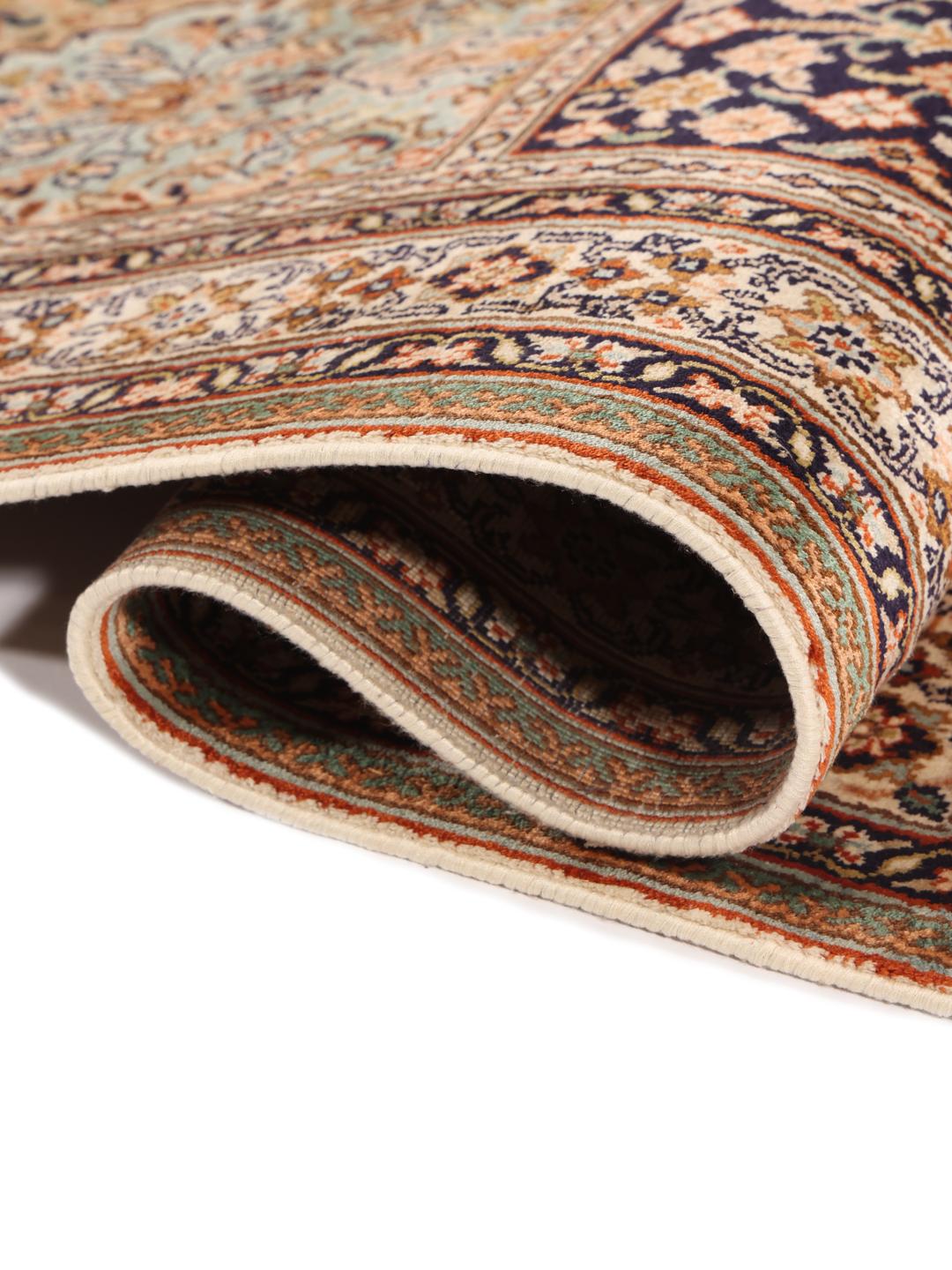
The design of this rug is characterised by its intricate panelling, a classic layout that allows for the display of multiple motifs within a single frame. Often, these panels contain stylised floral motifs or garden scenes, each framed by decorative borders that anchor the composition. The use of varied colours across the panels is a signature of the tradition, designed to showcase the weaver's ability to transition seamlessly between different shades and intricate shapes.
Owning a Kashmir silk rug is a testament to the appreciation of human skill and cultural history. These pieces are not merely floor coverings but are considered collector items because of the time, effort, and specific regional knowledge required to produce them. By preserving these traditional methods, every rug serves as a bridge between the past and the present, offering an authentic piece of heritage for your home.