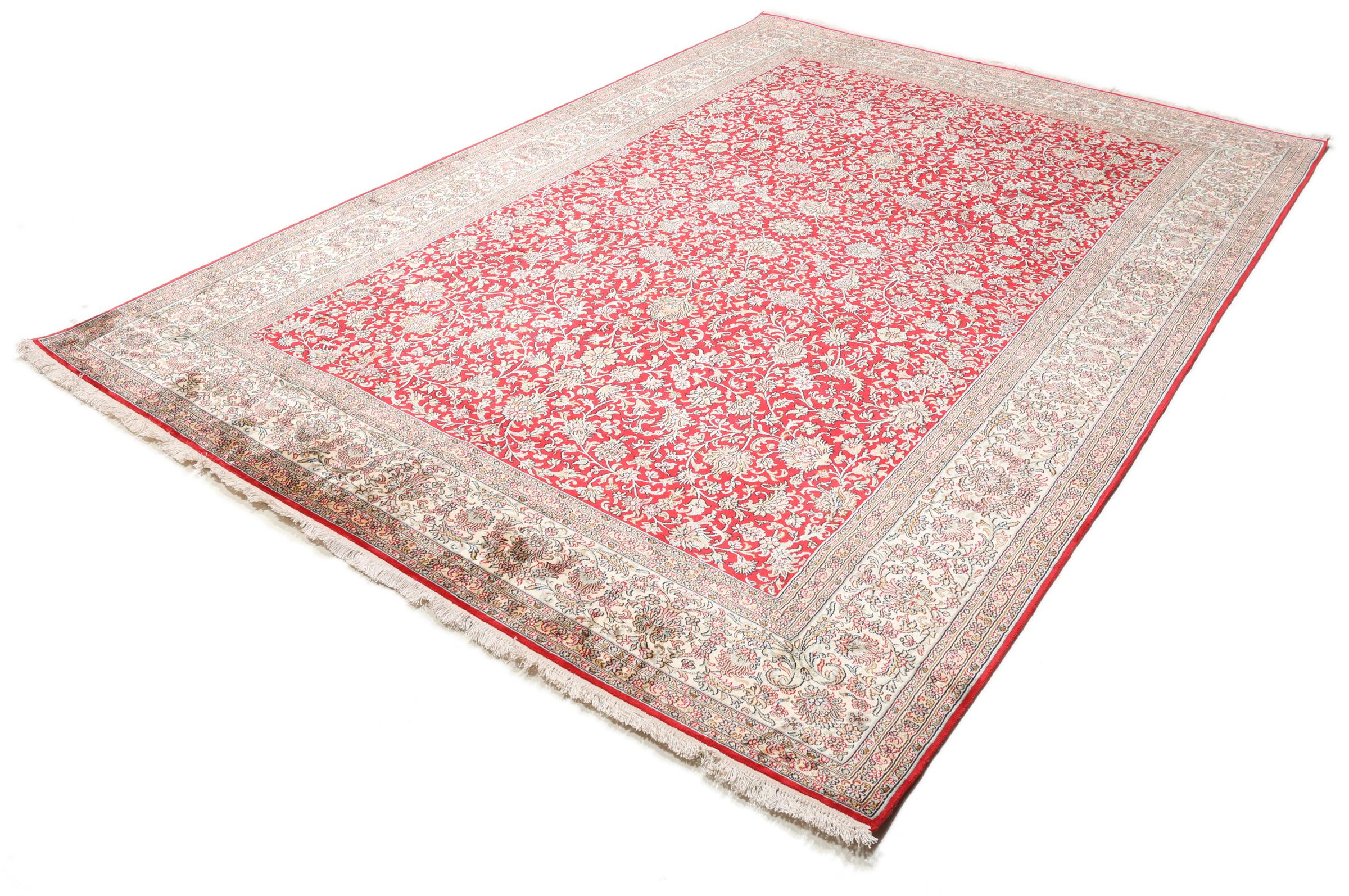
The tradition of Kashmir silk weaving is deeply rooted in the cultural history of Northern India. Historically, these rugs were influenced by the artistic exchanges along the ancient trade routes, where Middle Eastern carpet-making techniques merged with local Indian craftsmanship to create a distinct, opulent style known for its intricate detail and fine materials.
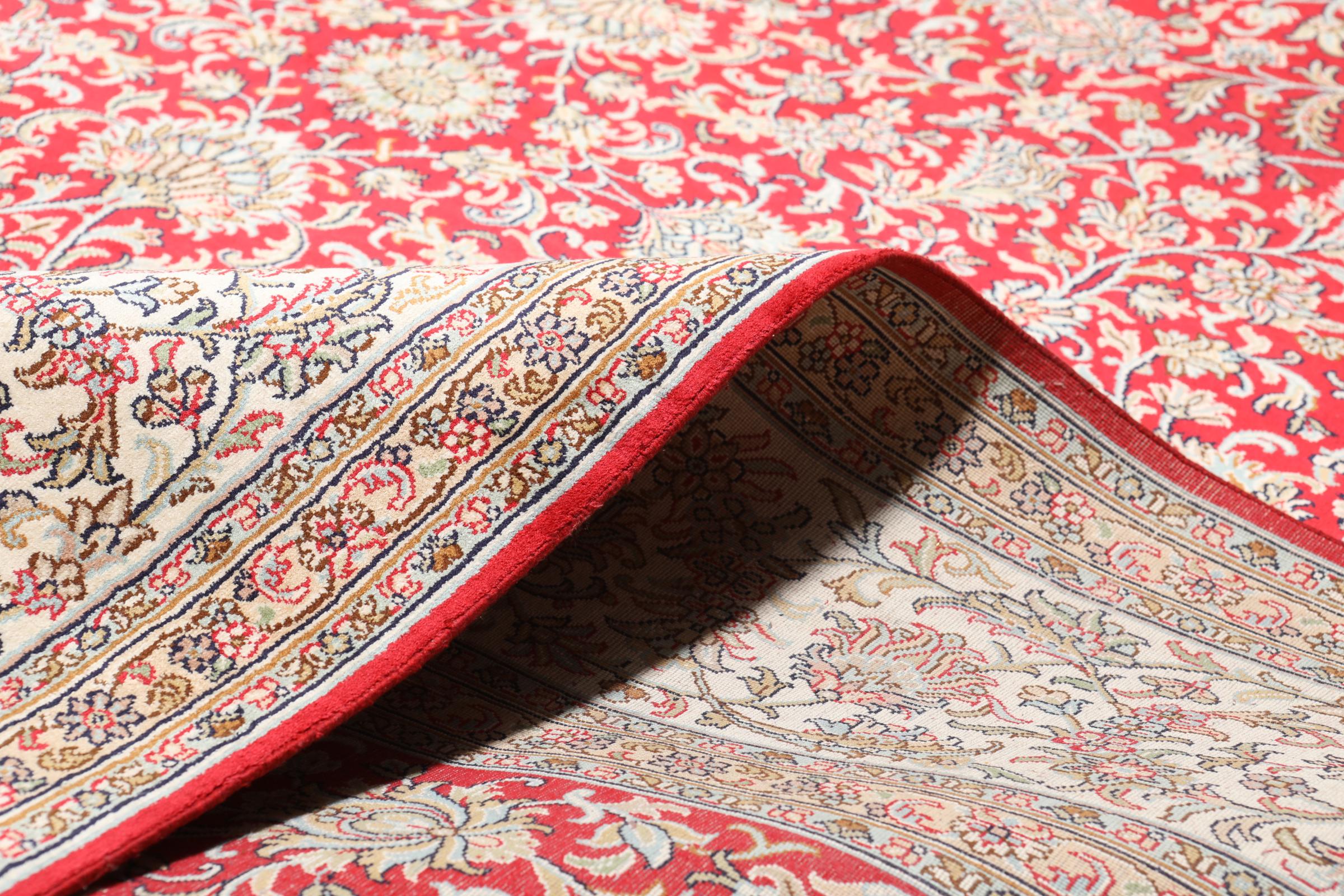
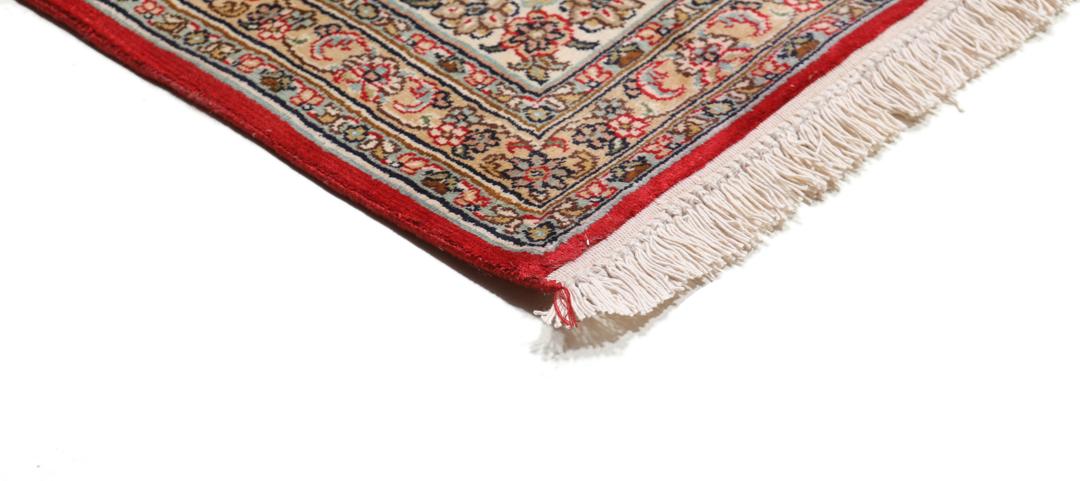
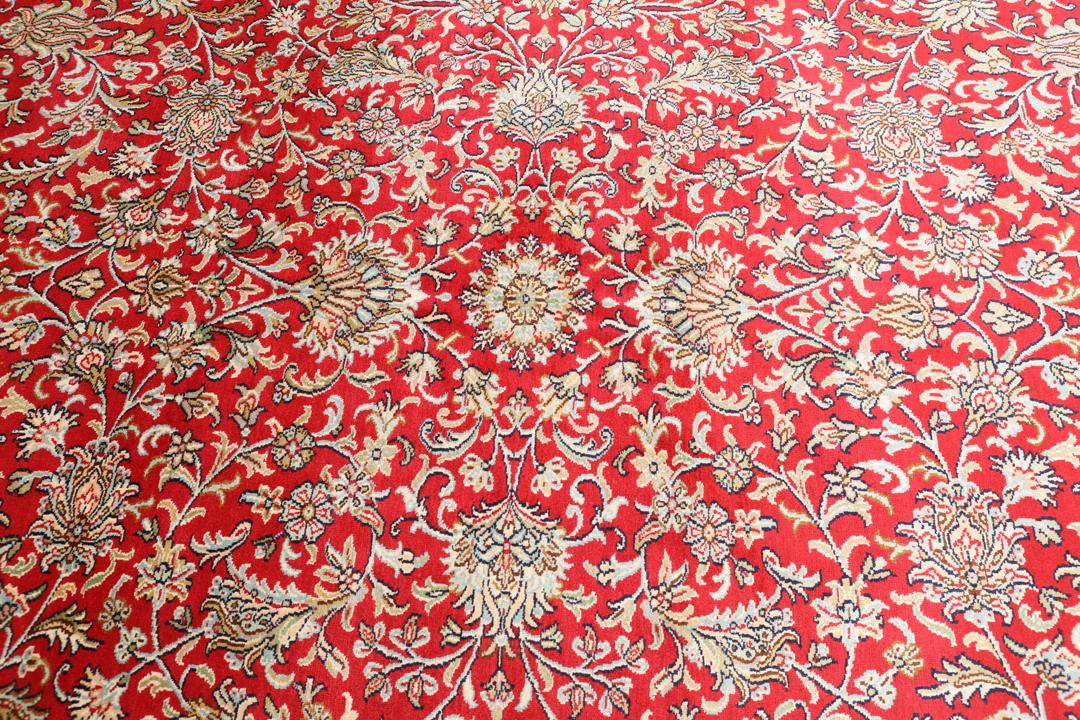
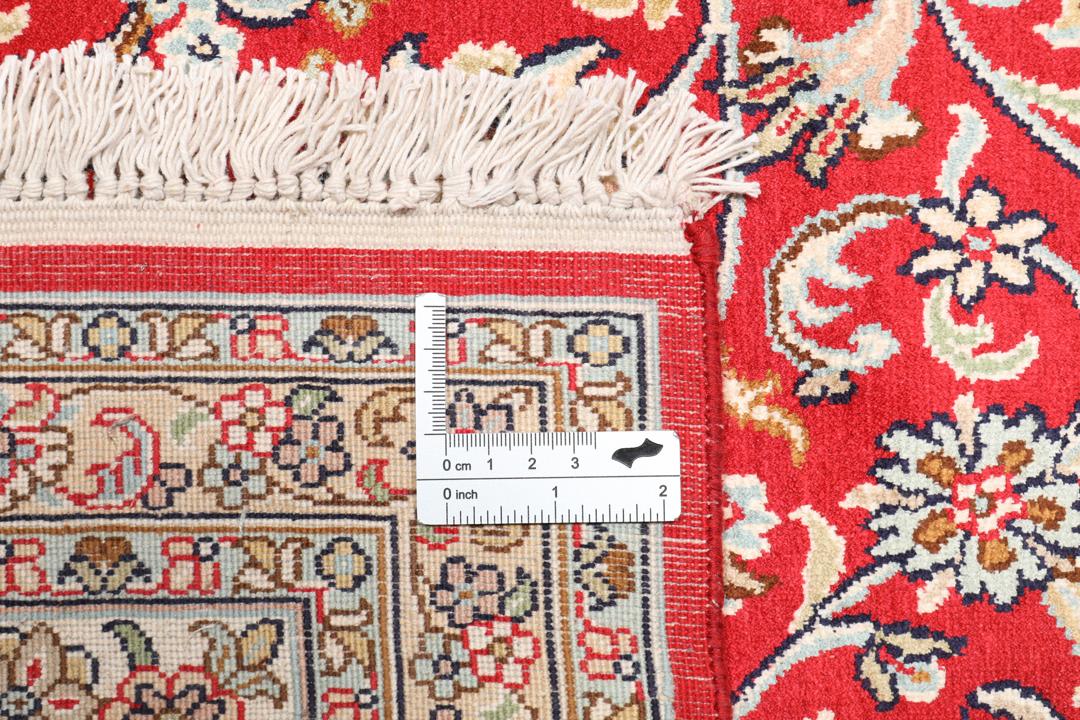
The term Kashmir silk refers to the specific provenance and the elevated quality of the materials employed. Using silk as a pile material is a choice that reflects a long-standing commitment to luxury, as silk allows for a much finer knotting process than wool. This results in rugs that are not only softer and more lustrous but also capable of displaying incredibly complex, curvilinear designs that would be difficult to achieve with coarser fibres.
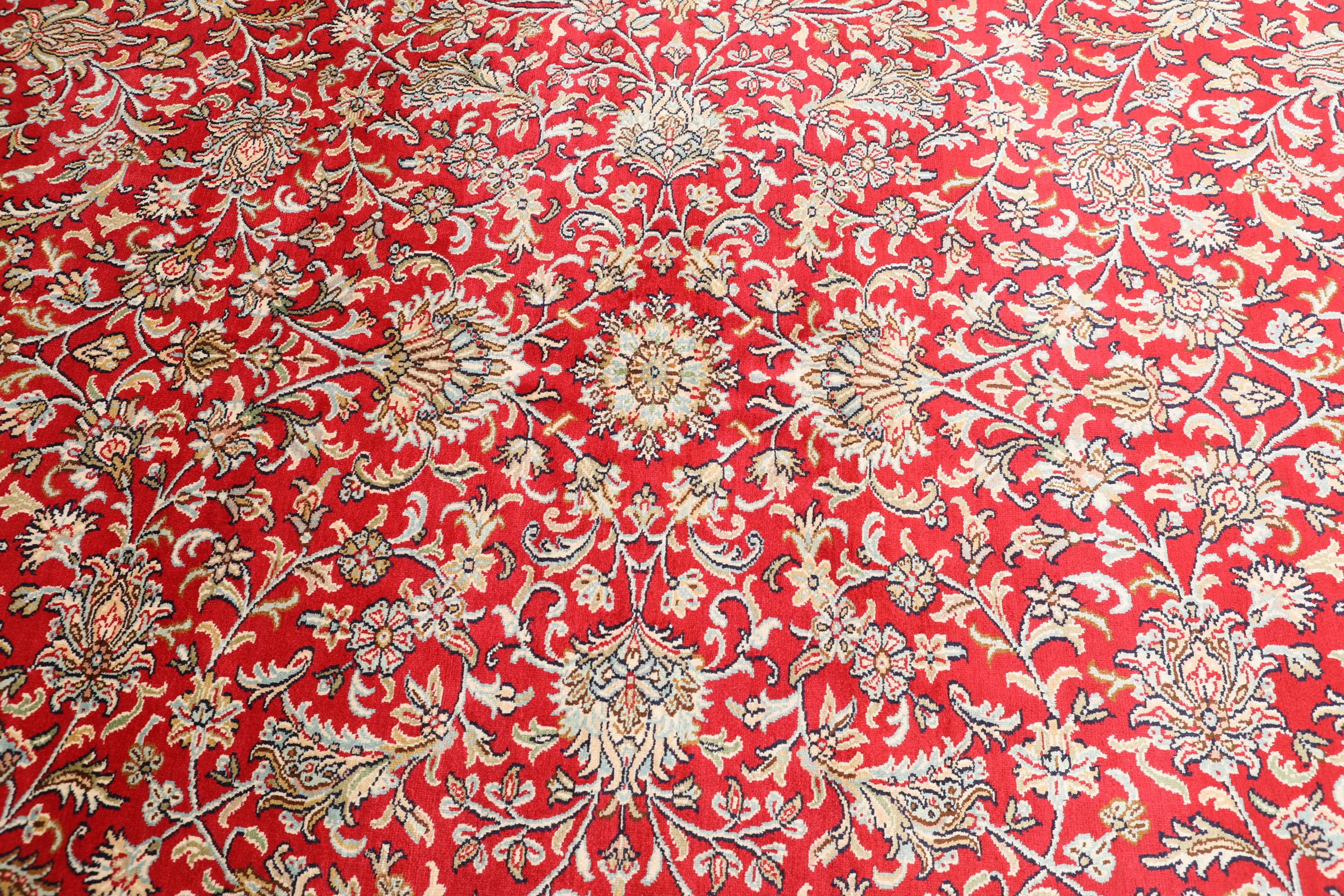
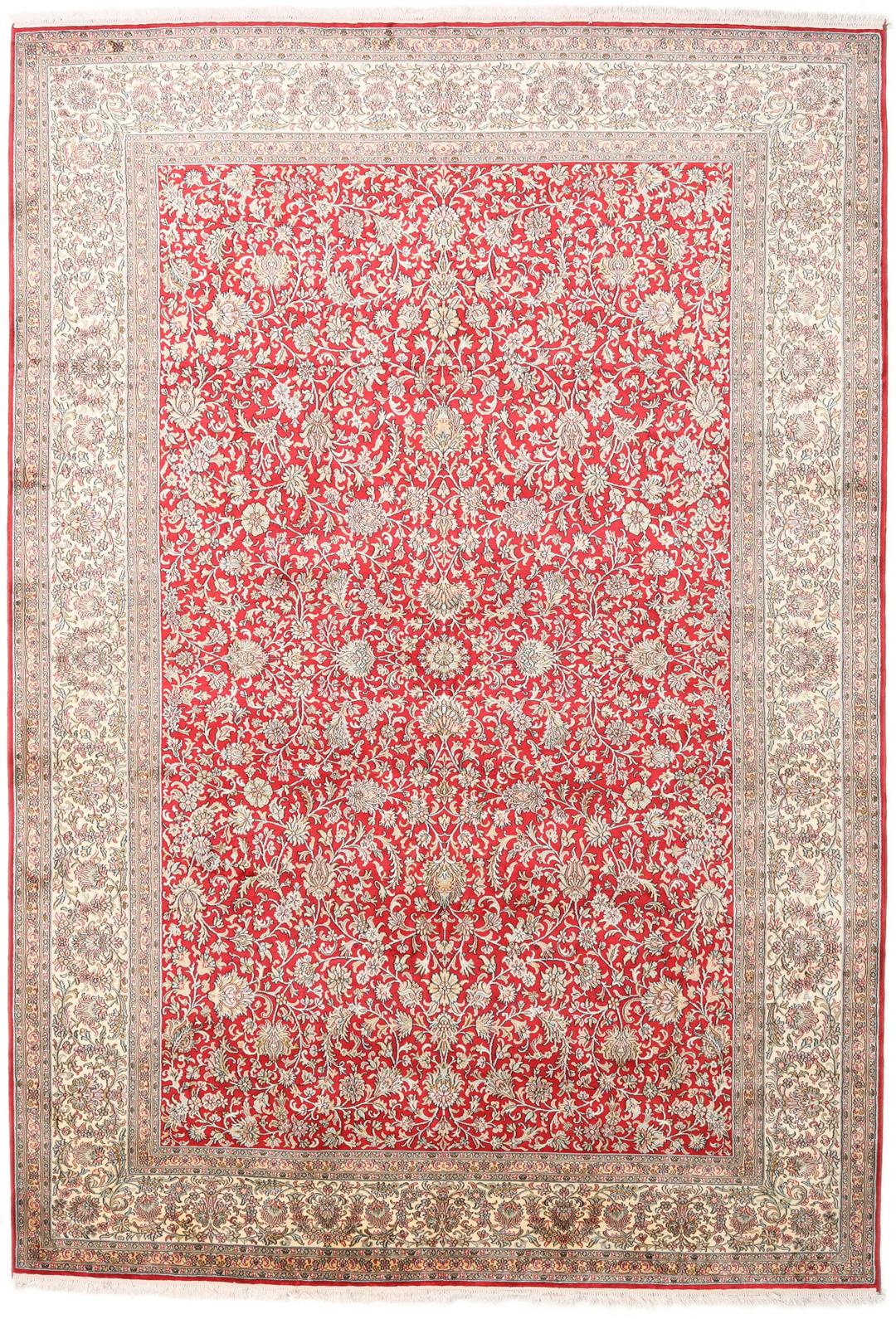
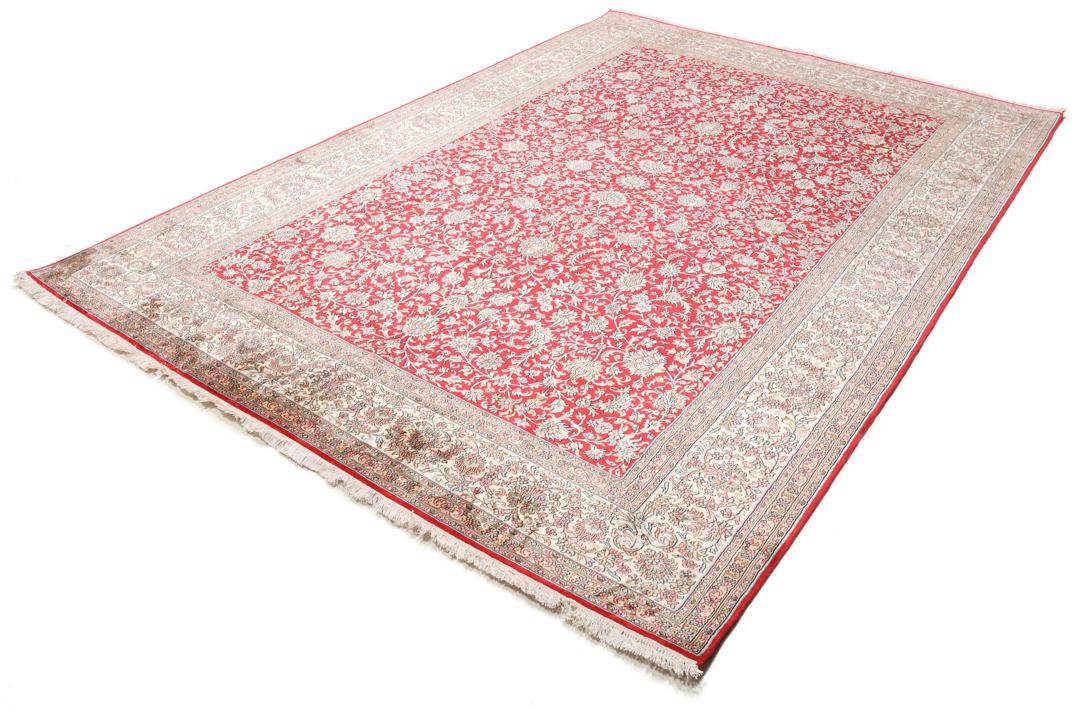
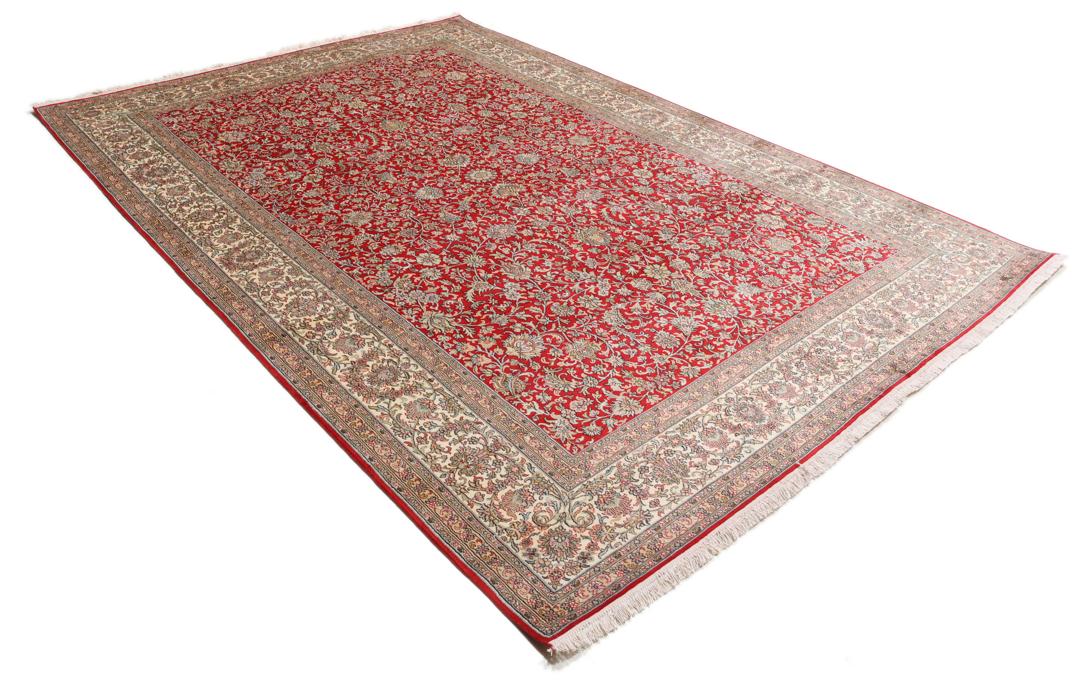
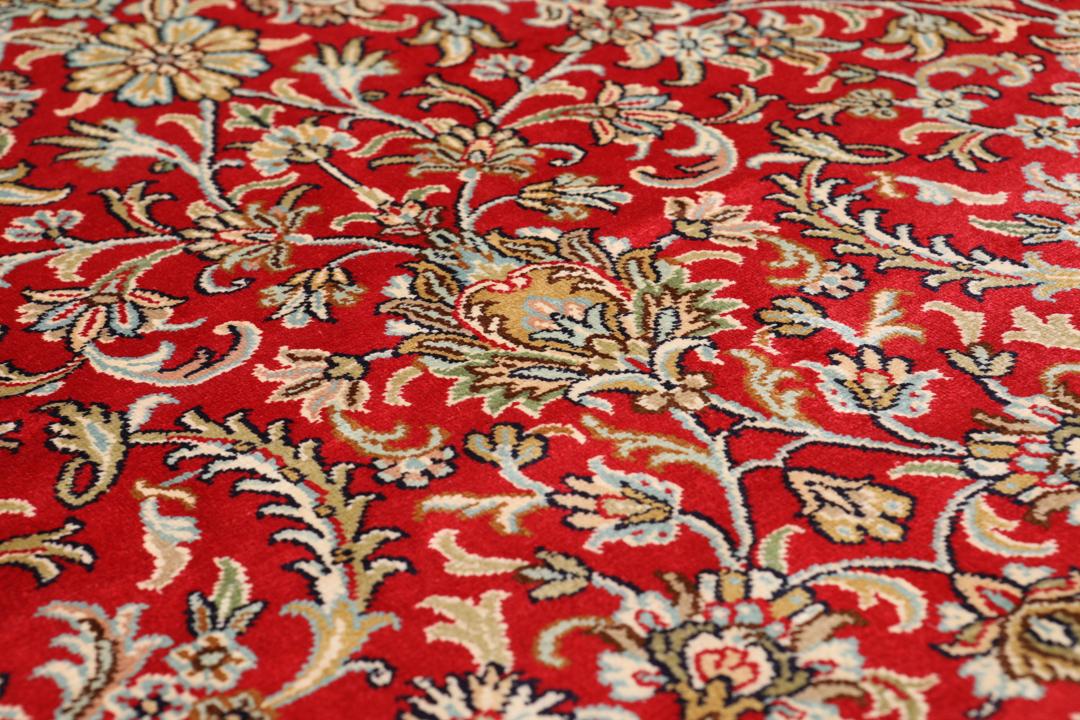
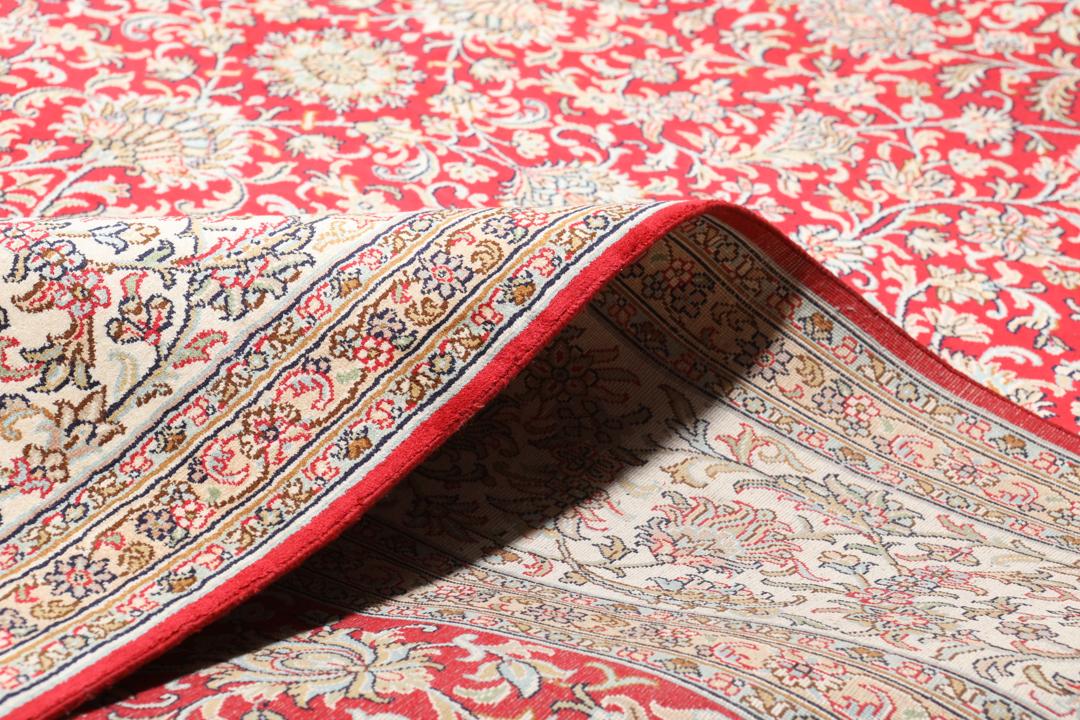
Signature design elements in these rugs often include the classic floral motifs and elaborate borders seen here. These patterns are frequently inspired by nature and the surrounding landscapes, translated into a formal, symmetrical layout that emphasises balance and harmony. The use of dense, flowing vines and delicate blossoms is a hallmark of this tradition, reflecting a refined aesthetic that has been perfected over generations.
Today, these rugs are highly sought after by collectors and interior enthusiasts alike for their historical significance and the immense skill required to produce them. Owning a Kashmir silk rug is an investment in cultural heritage, representing a level of dedication and technical mastery that ensures the piece will remain a cherished feature in your home for many years.