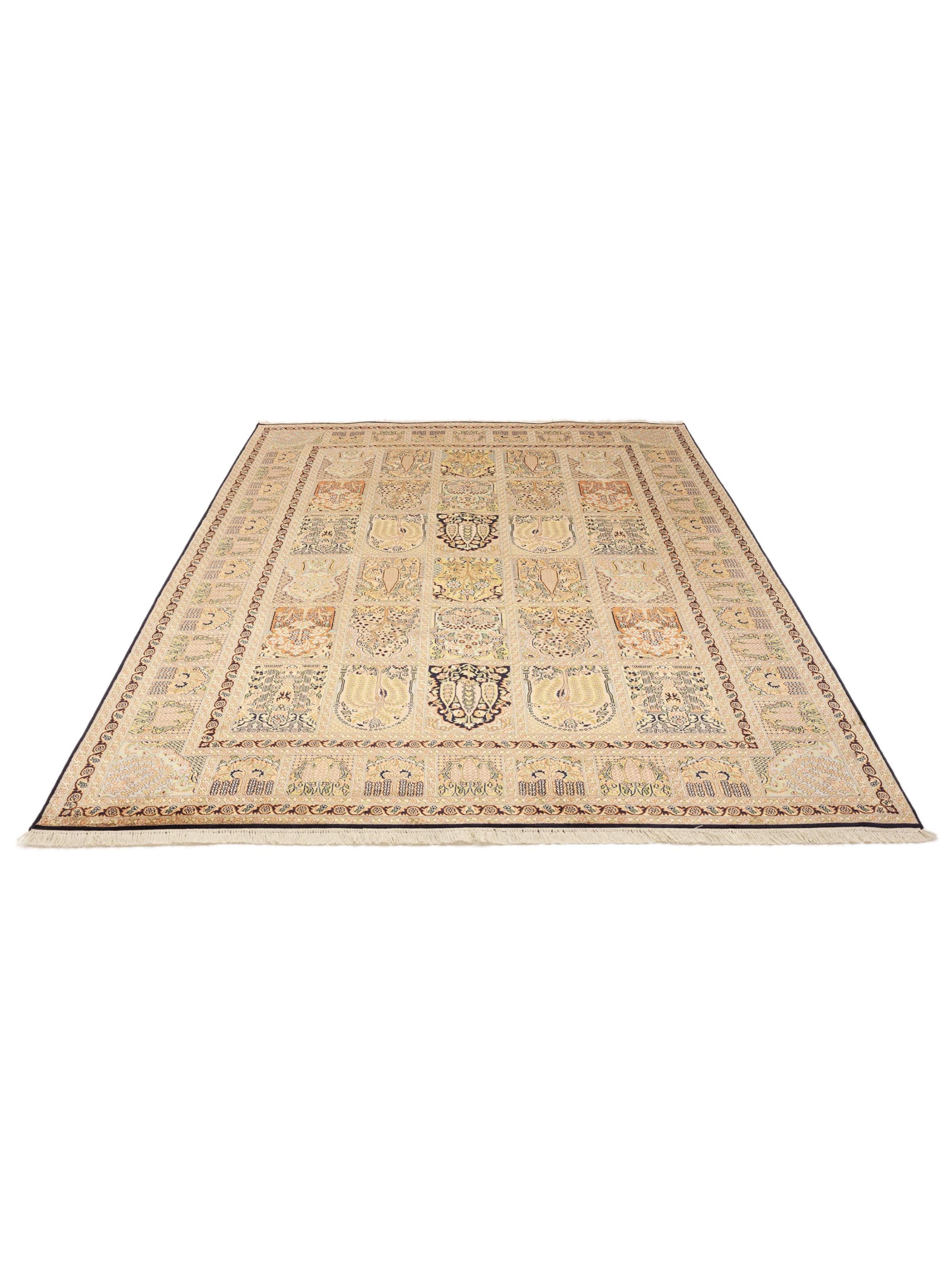
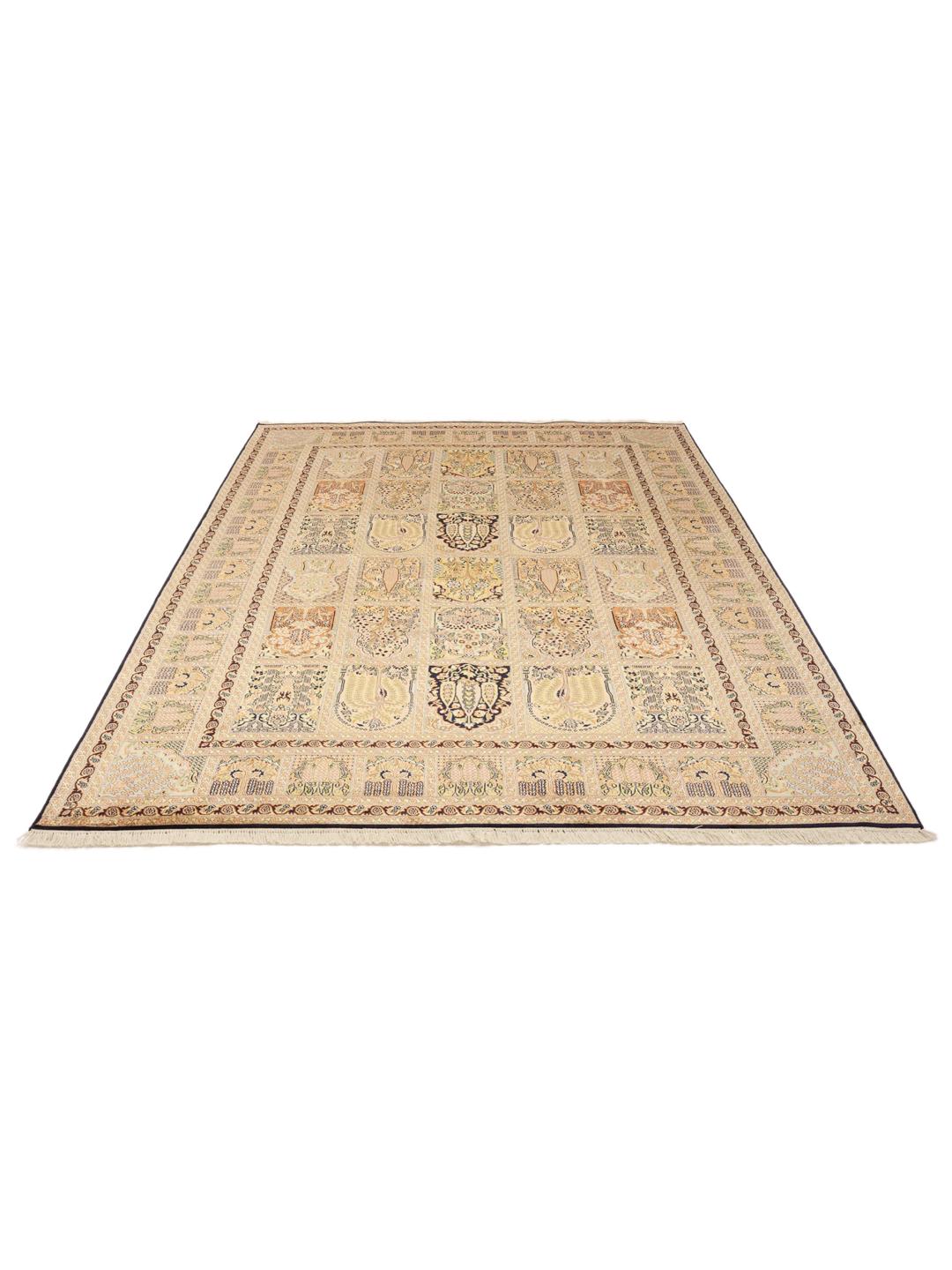
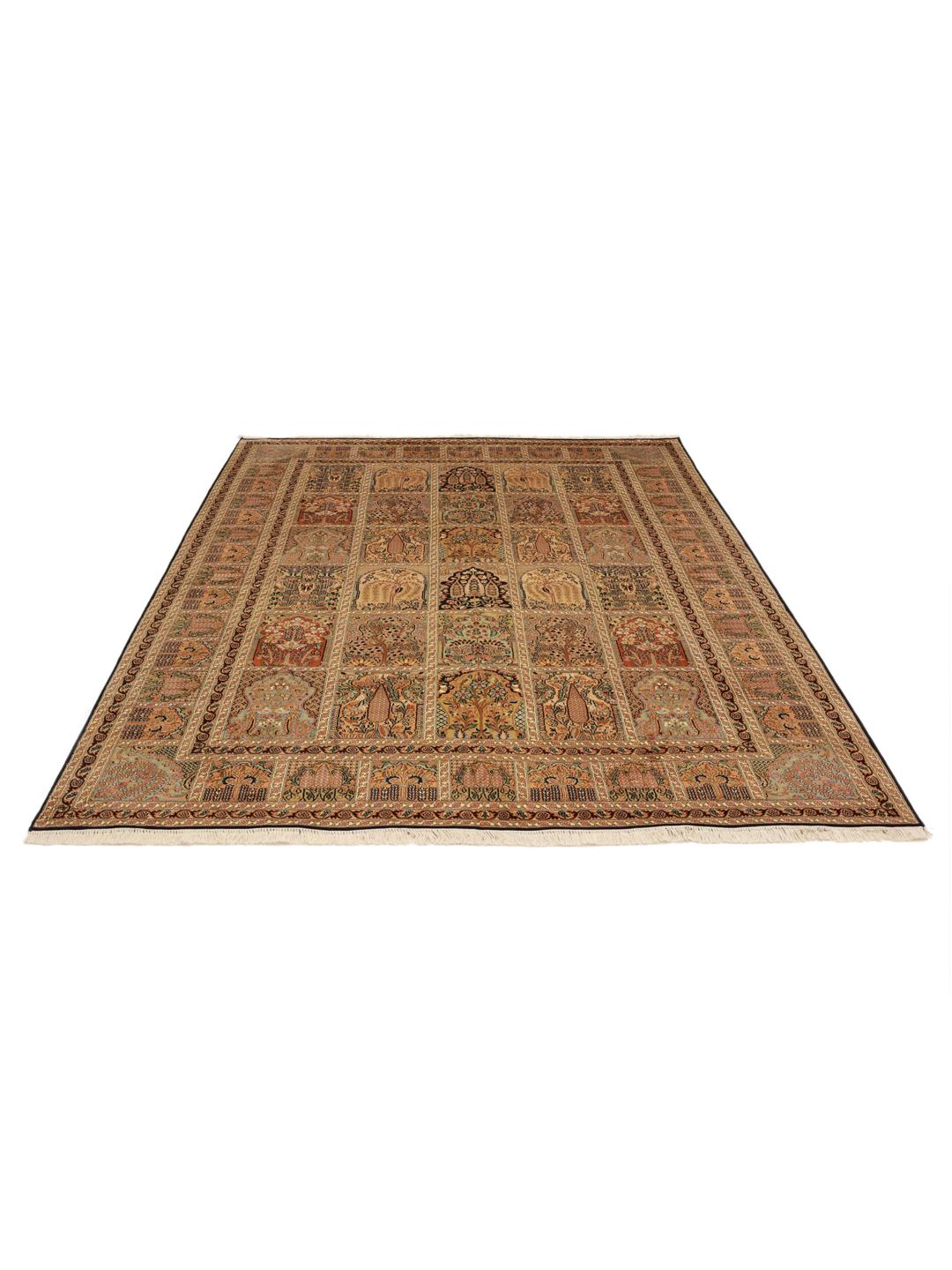
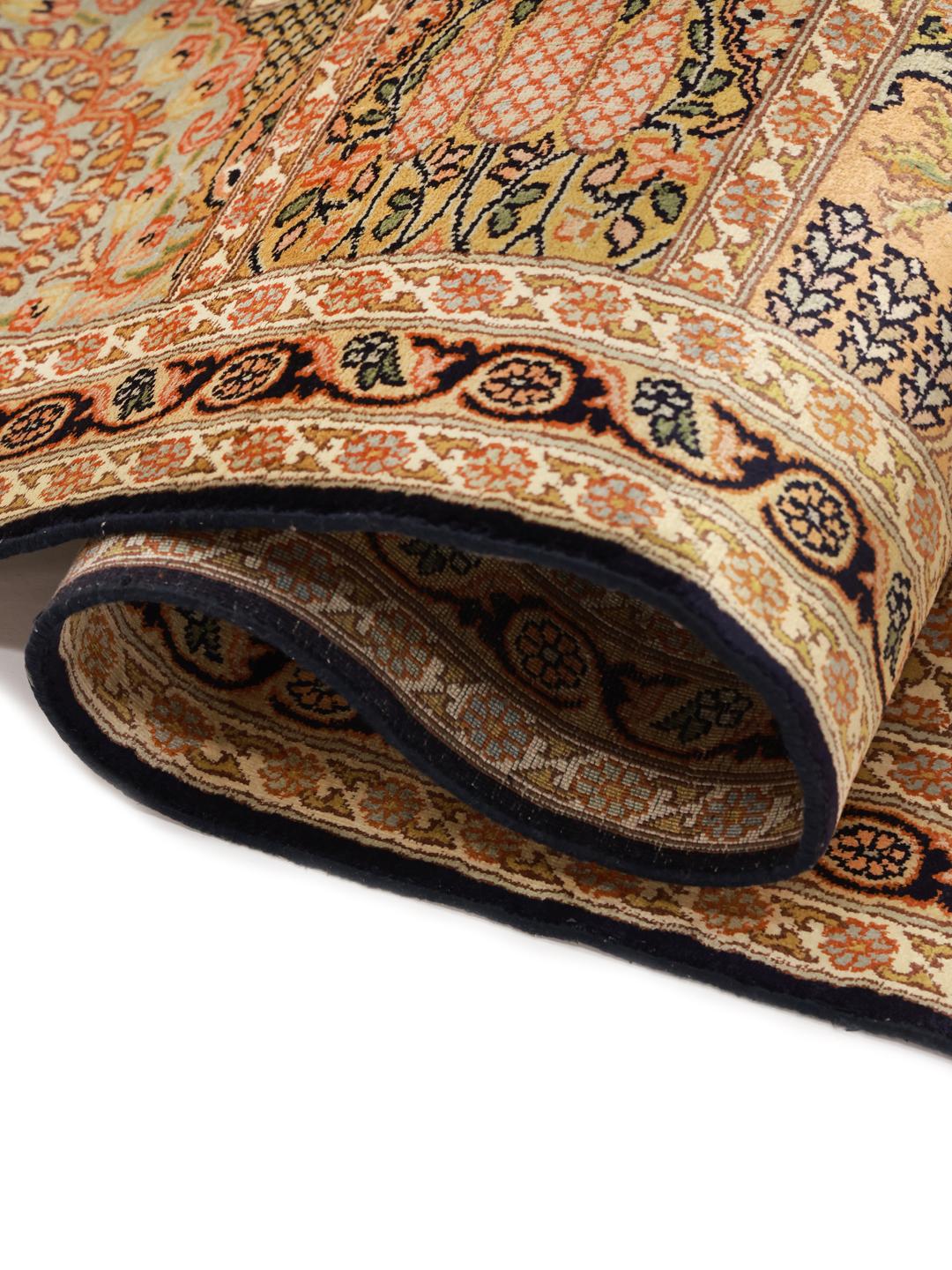
Kashmir silk rugs are celebrated globally as some of the most refined examples of textile art, with a history deeply rooted in the valley of Kashmir. This tradition was heavily influenced by the arrival of Middle Eastern weavers in the 15th century, who introduced the sophisticated techniques of pile weaving to the region. Over centuries, these influences blended with local Indian artistic sensibilities to create a distinct style known for its elegance and complexity.
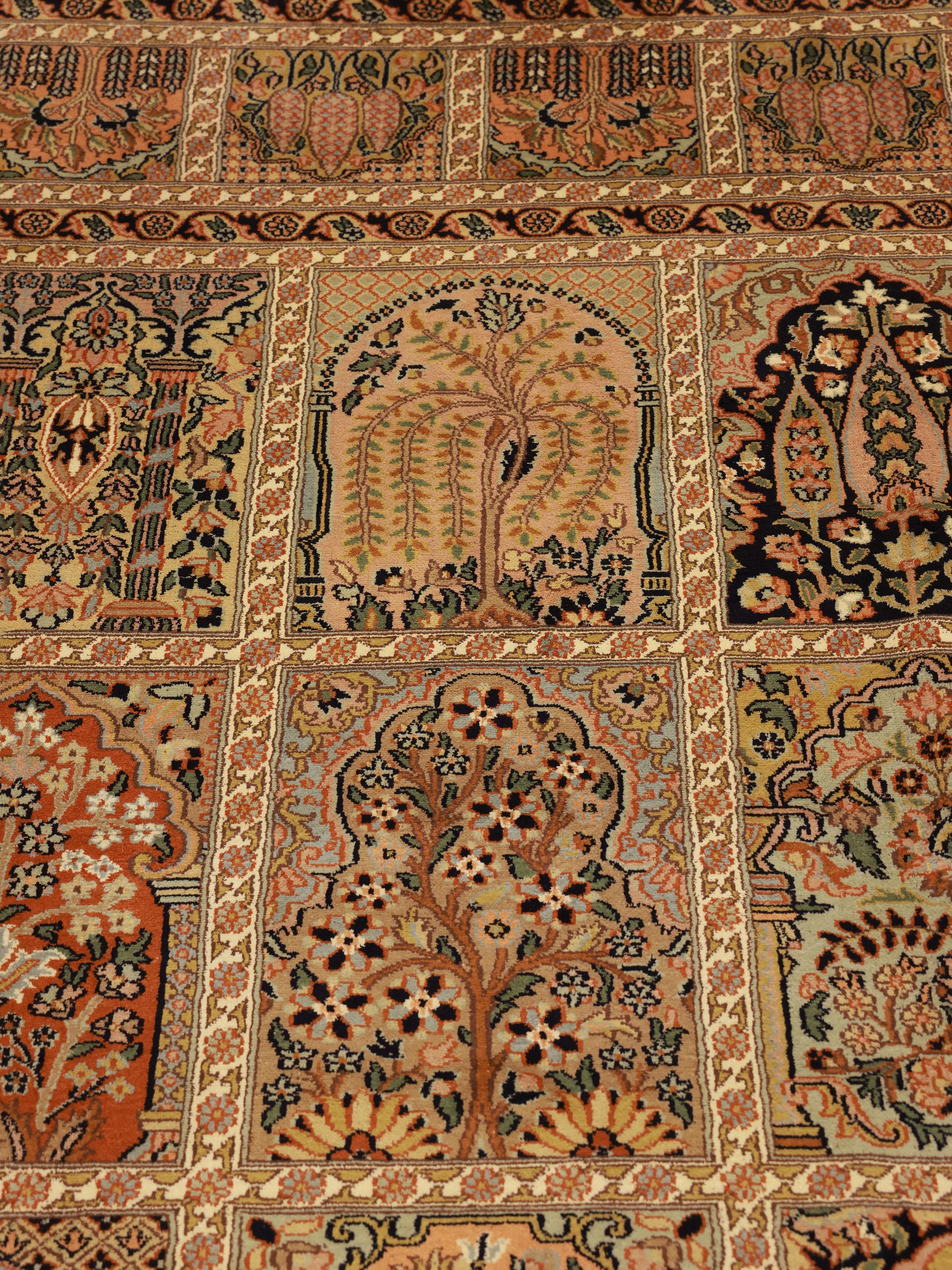
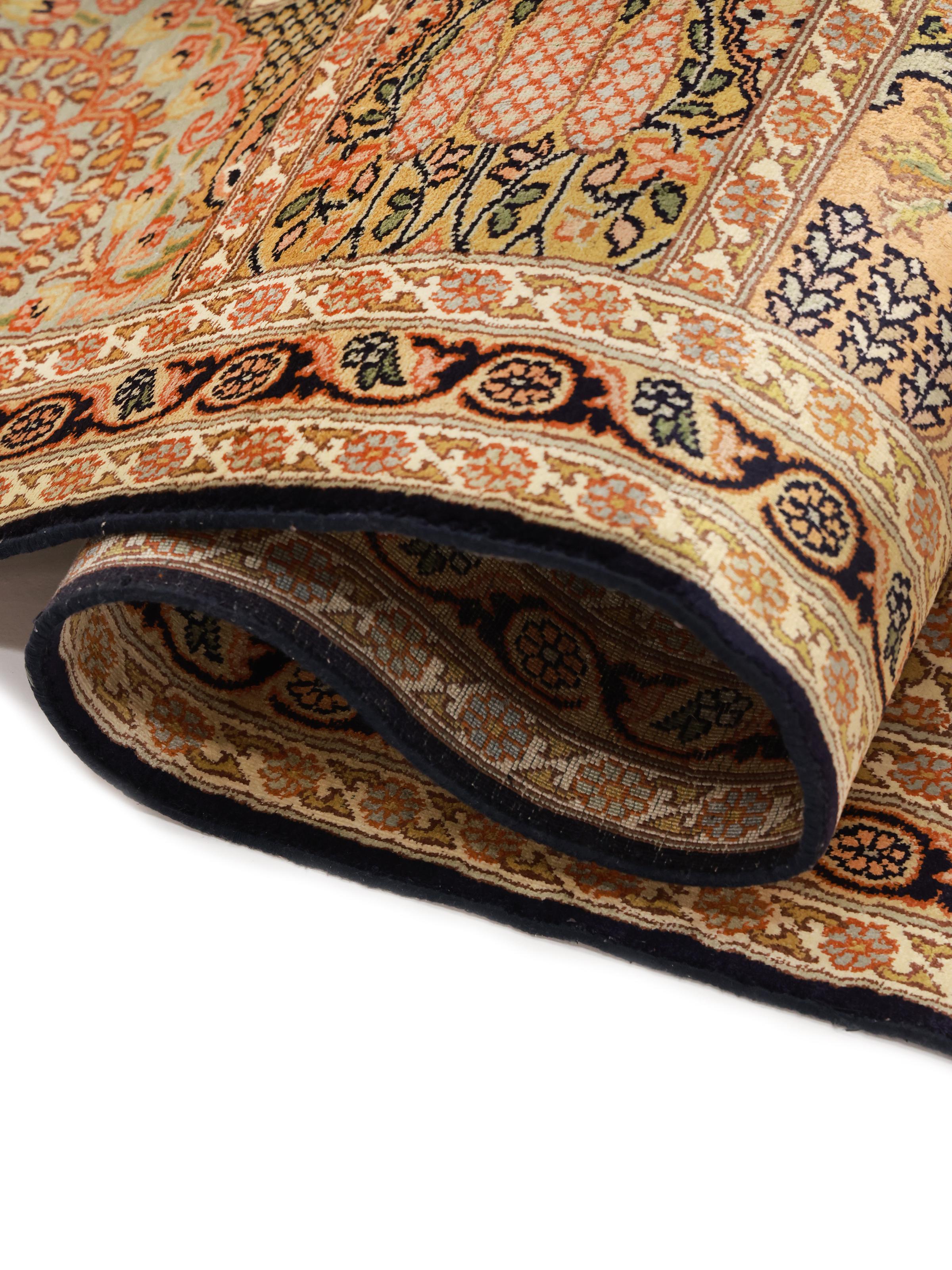
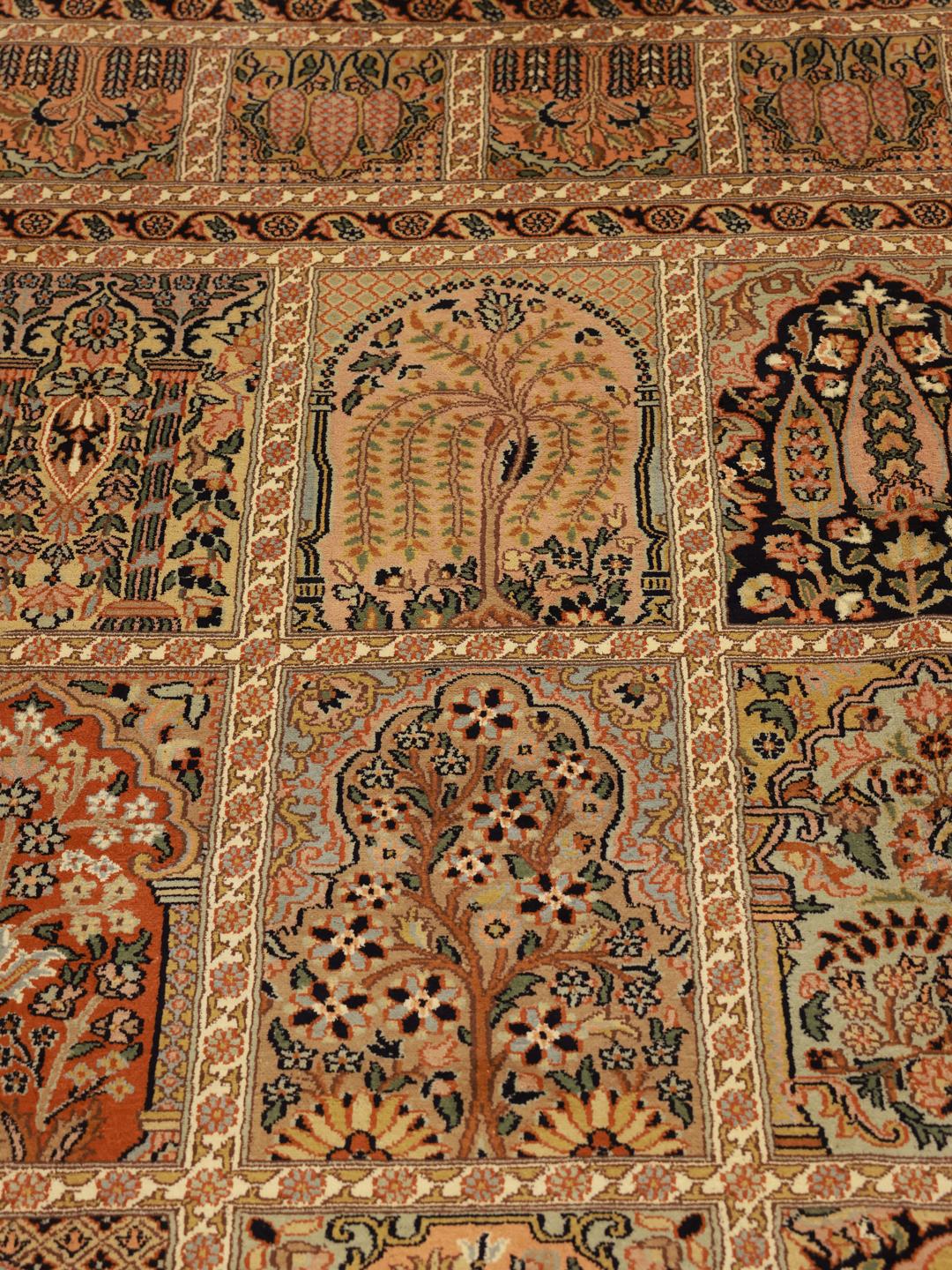
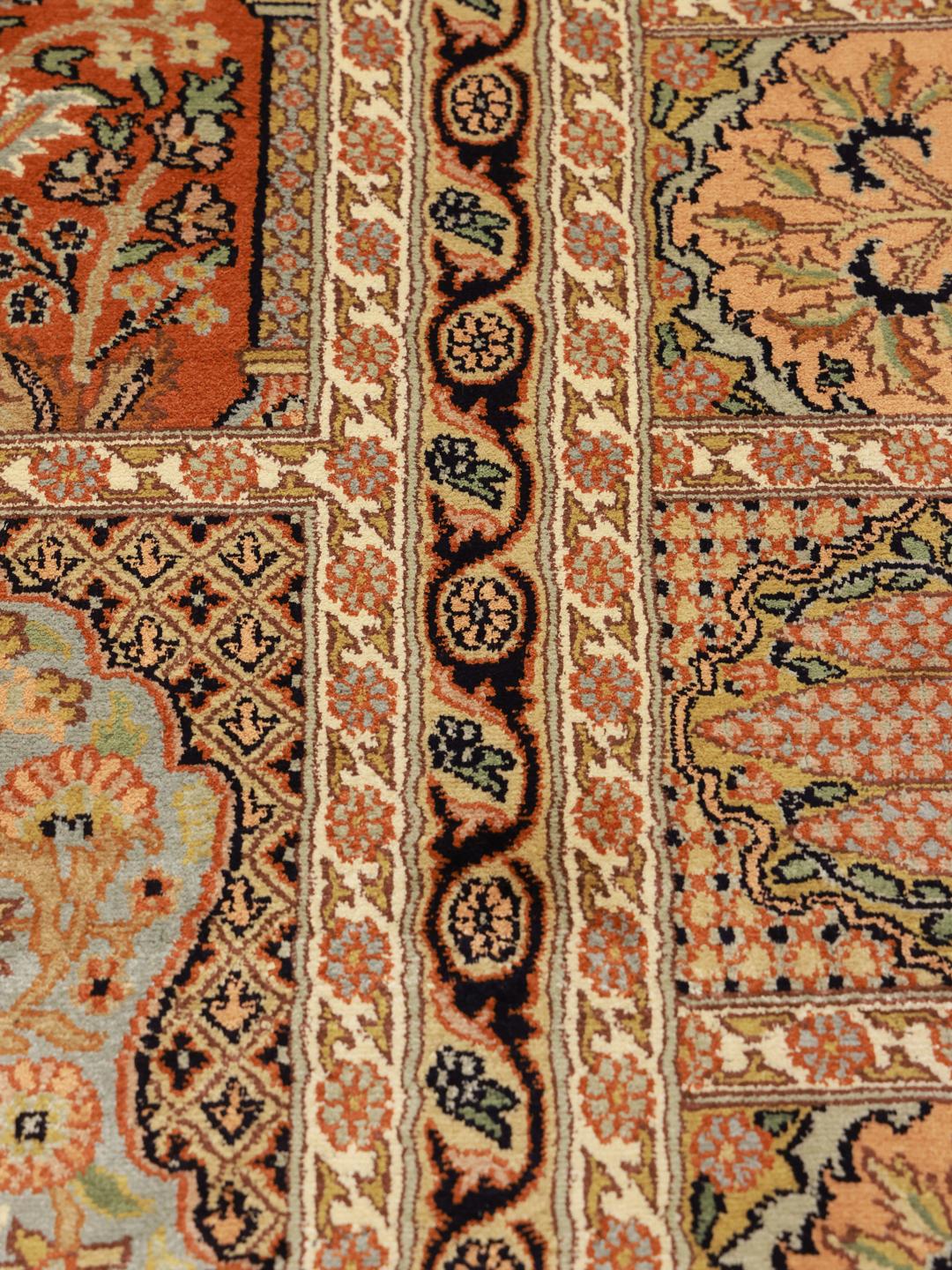
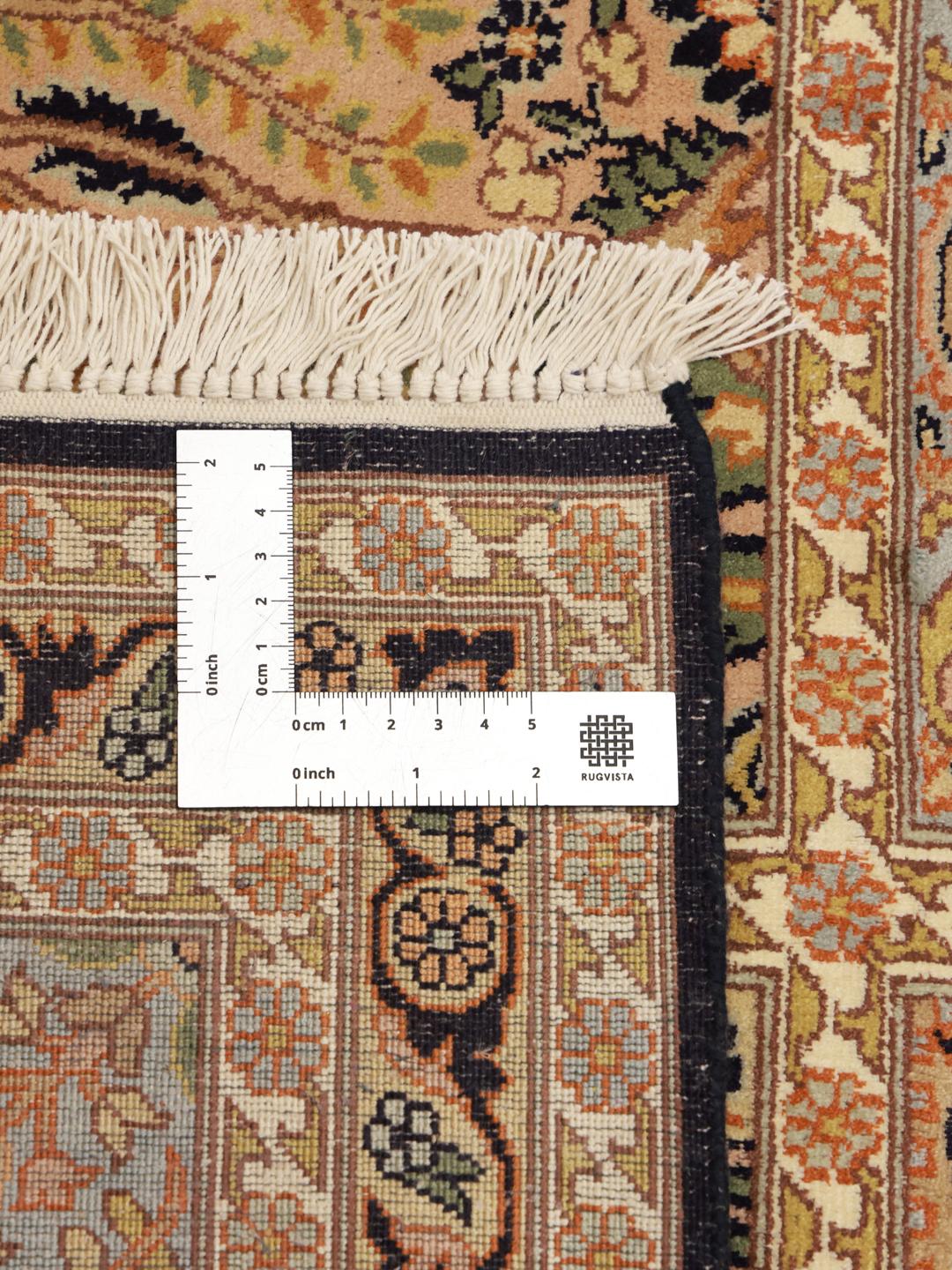
The quality of these rugs is defined by the use of high-grade, long-staple silk, which allows for the creation of exceptionally dense and intricate patterns. The term 'hand-knotted' refers to the traditional method of looping individual threads around the warp and weft, a process that requires a master's touch. This technique is what gives the rug its durability and allows the fine, silky pile to maintain its lustrous appearance and soft texture for a lifetime.
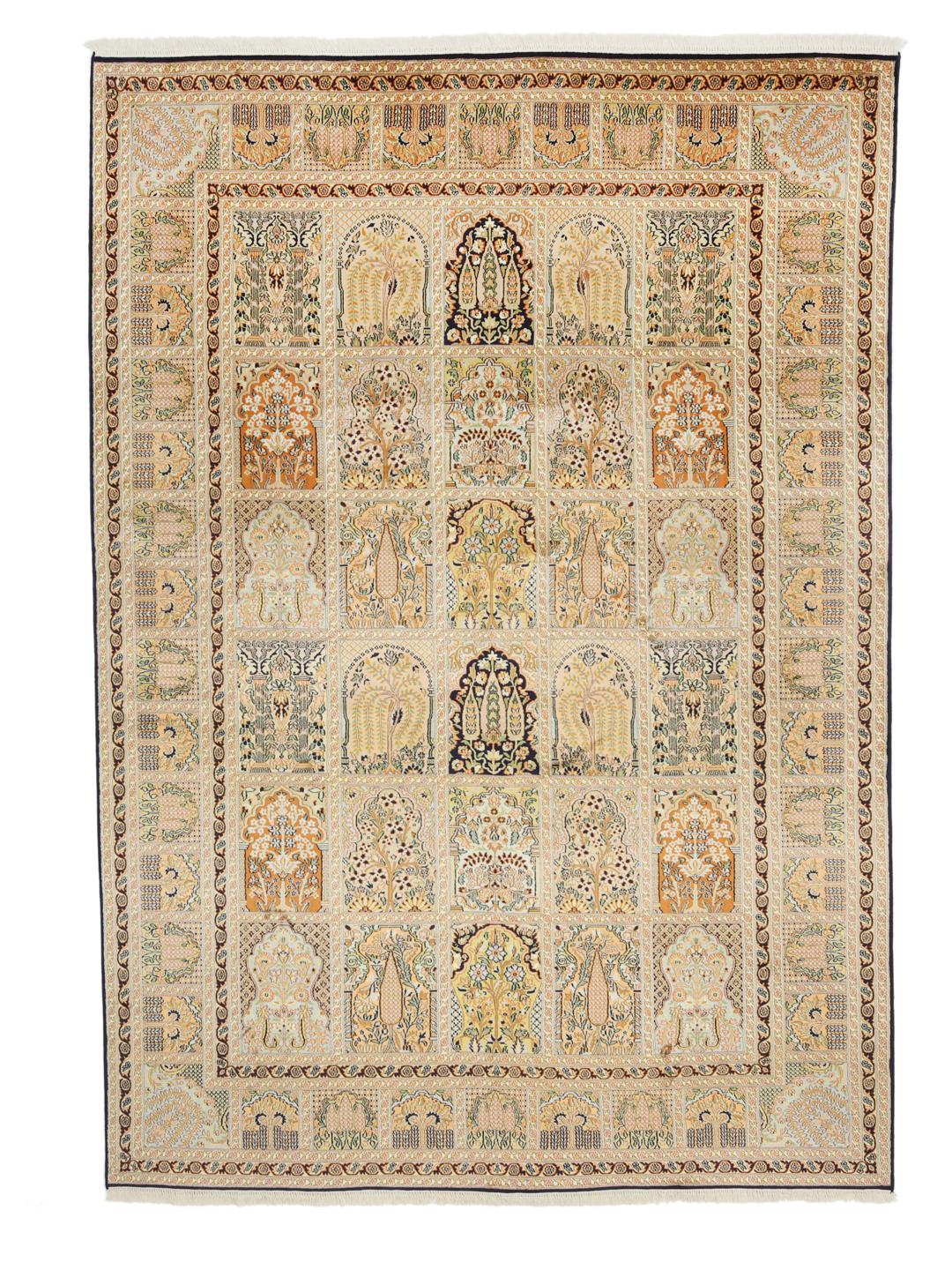
Design-wise, these rugs often draw inspiration from the natural world, featuring detailed floral motifs, delicate vines, and ornate medallions. The patterns are usually symmetrical and balanced, reflecting the Mughal-era aesthetic that emphasised harmony and order. The borders are often as intricate as the central field, framing the composition with a formal elegance that is a hallmark of the Kashmiri weaving tradition.
Owning a Kashmir silk rug is more than just a decorative choice; it is an appreciation of a craft passed down through generations. These pieces are highly sought after by collectors for their technical precision and the human story behind every knot. They represent a bridge between ancient craftsmanship and contemporary home luxury, standing as a testament to the enduring value of handmade, artisanal work.