The history of Kashmir rug weaving is deeply rooted in the cultural exchange that occurred along the historic Silk Road. Drawing influence from Middle Eastern design traditions, the weavers of the Kashmir valley in India developed a unique style characterised by complex floral motifs and a remarkable level of refinement. Over centuries, these artisans have adapted and perfected their craft, blending regional aesthetics with global demand to create some of the most sought-after textiles in the world.
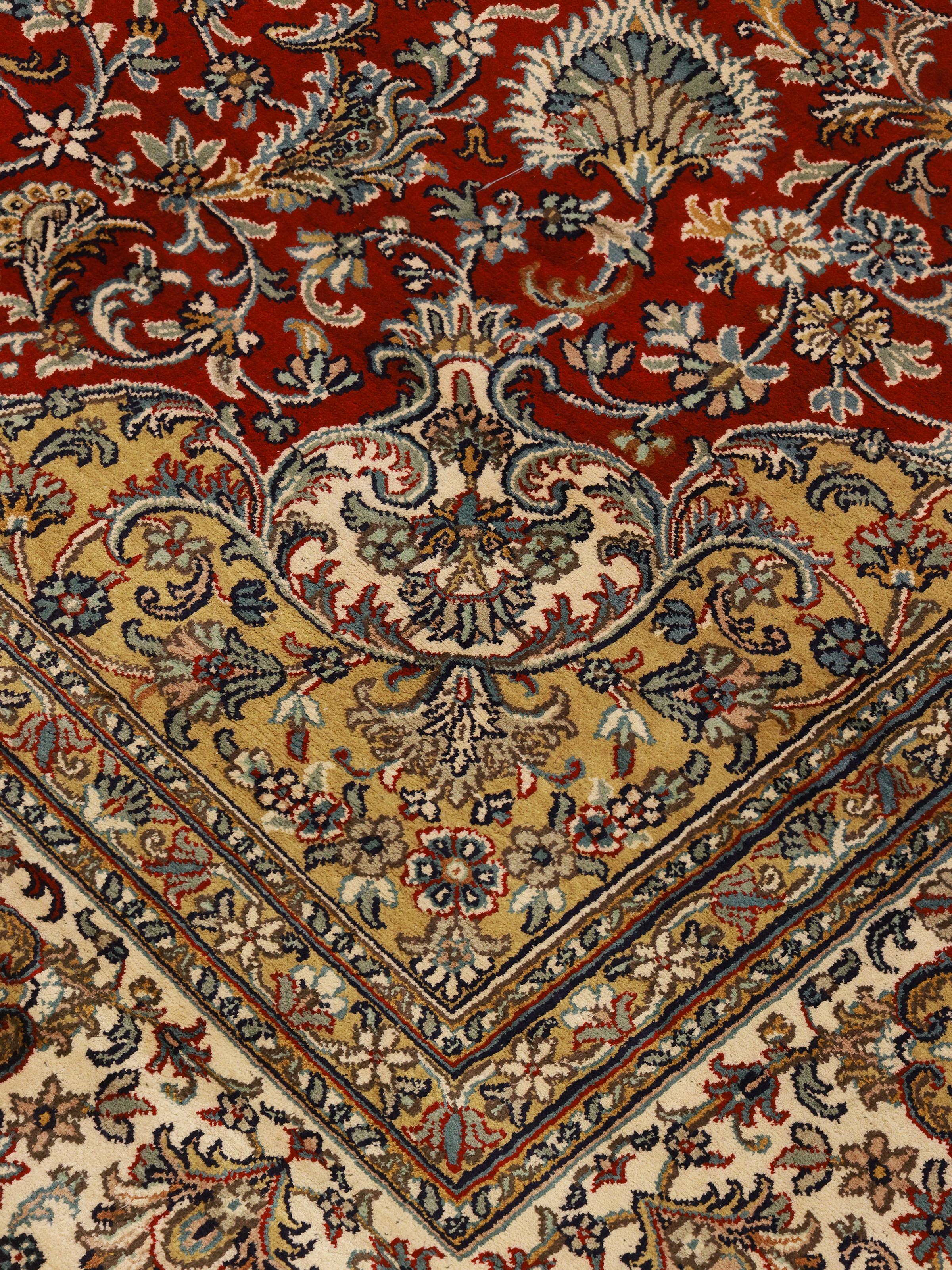
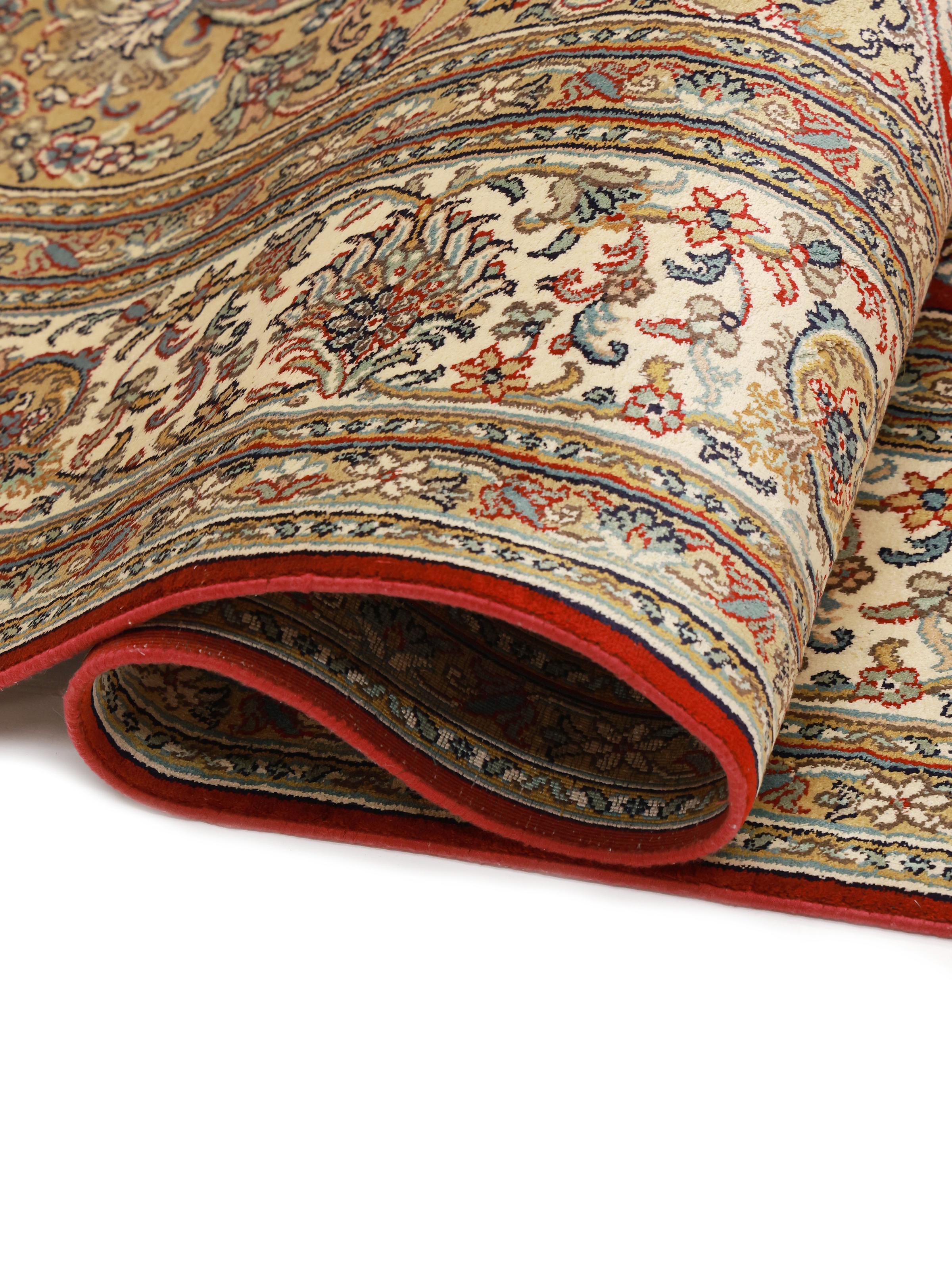
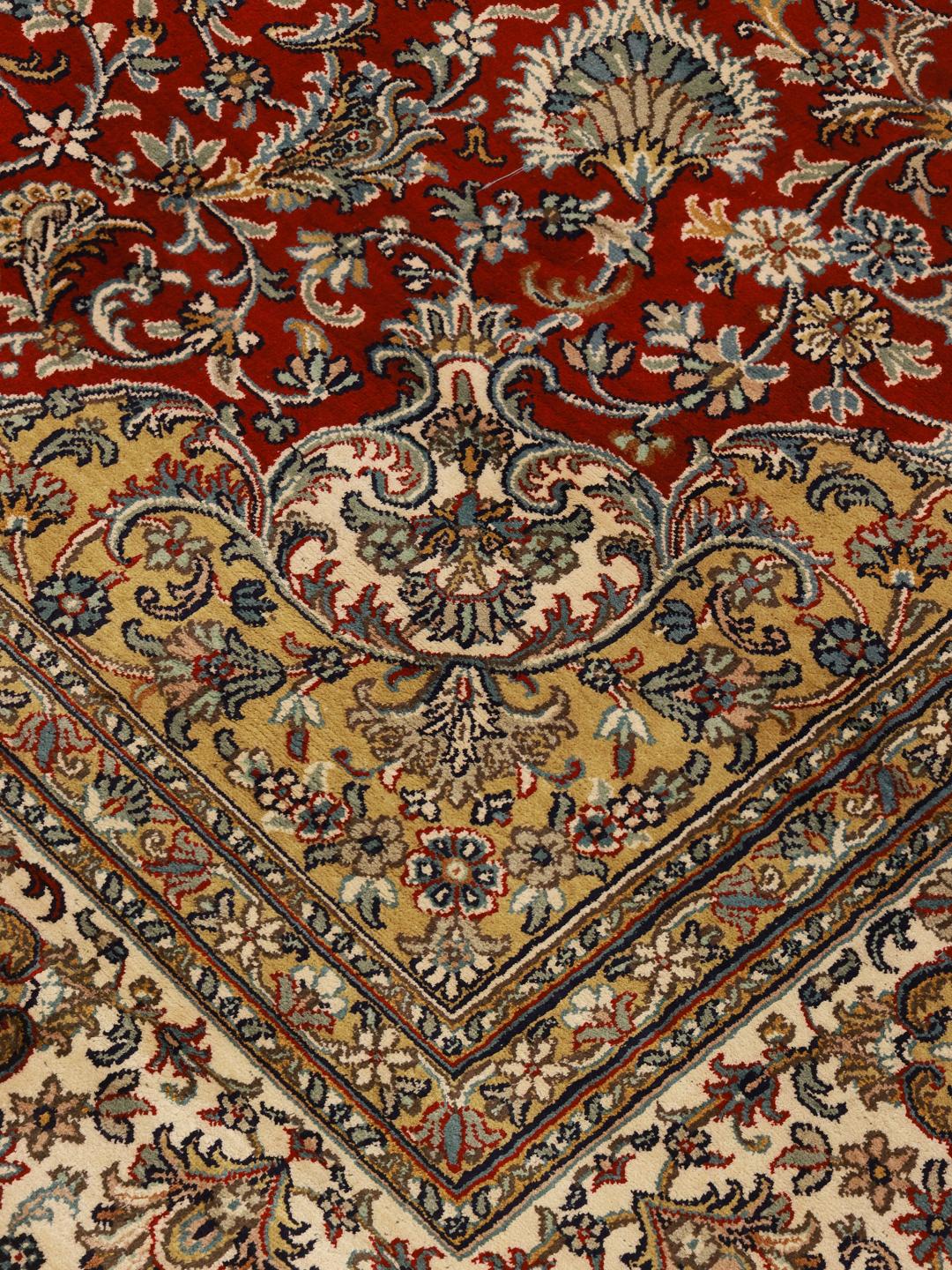
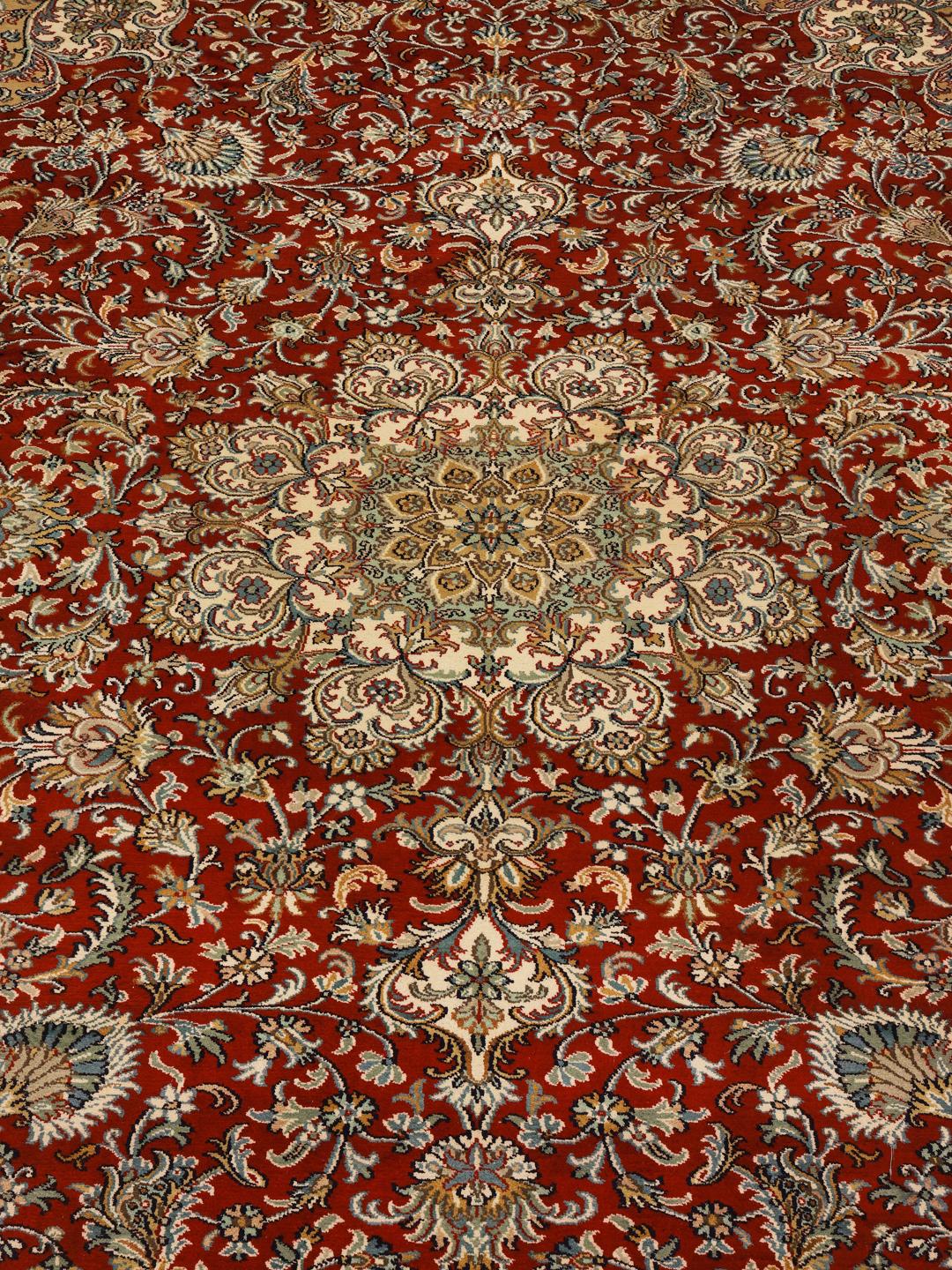
The term Kashmir silk refers to the specific tradition of using fine, lustrous threads to achieve highly detailed designs. This material choice is significant because it allows for a much finer knot density than coarser fibres, enabling the creation of intricate, almost painterly patterns. The result is a finished product that is not only visually captivating but also exceptionally smooth to the touch, reflecting the high standards of the region's long-standing weaving guilds.
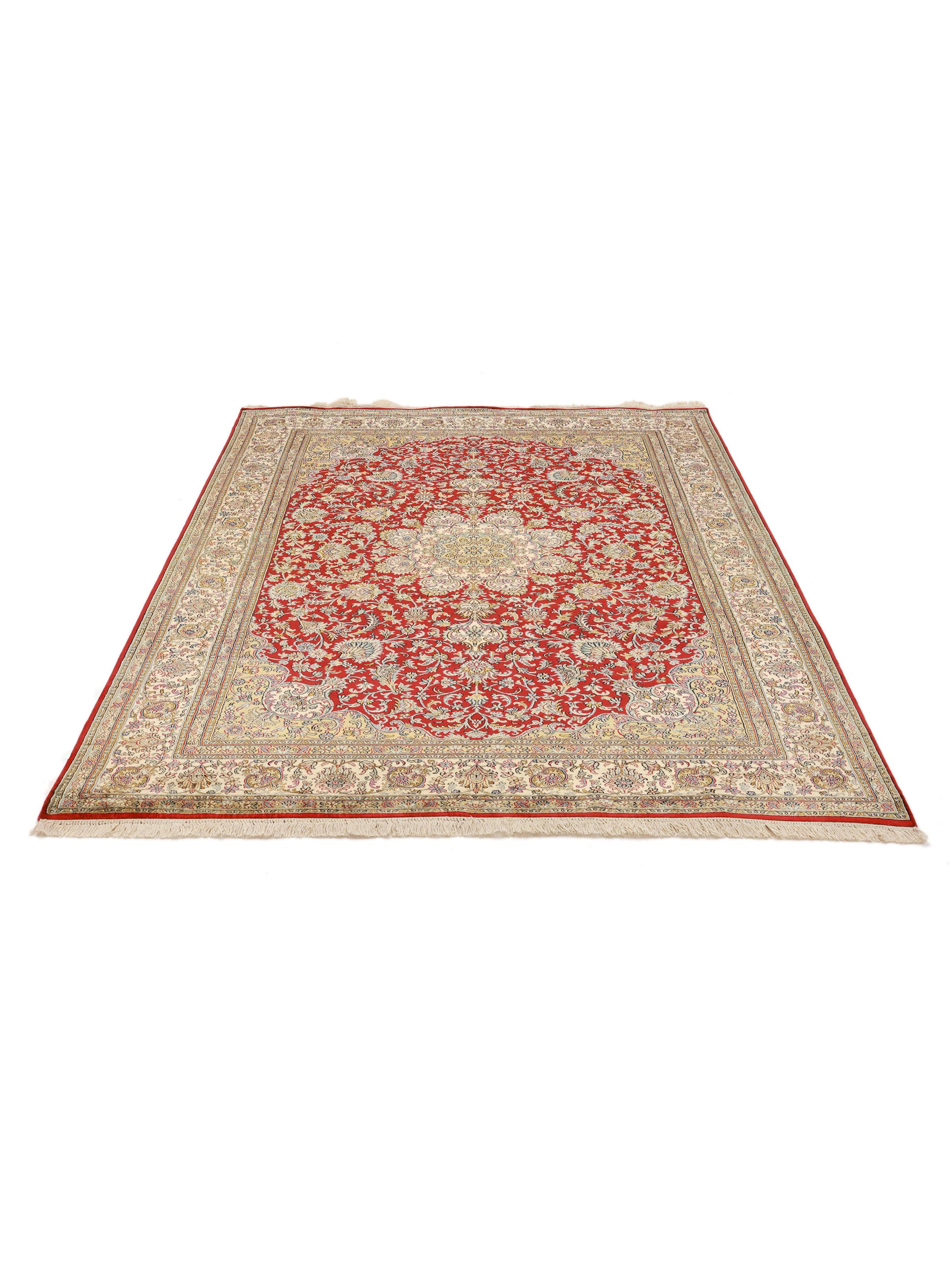
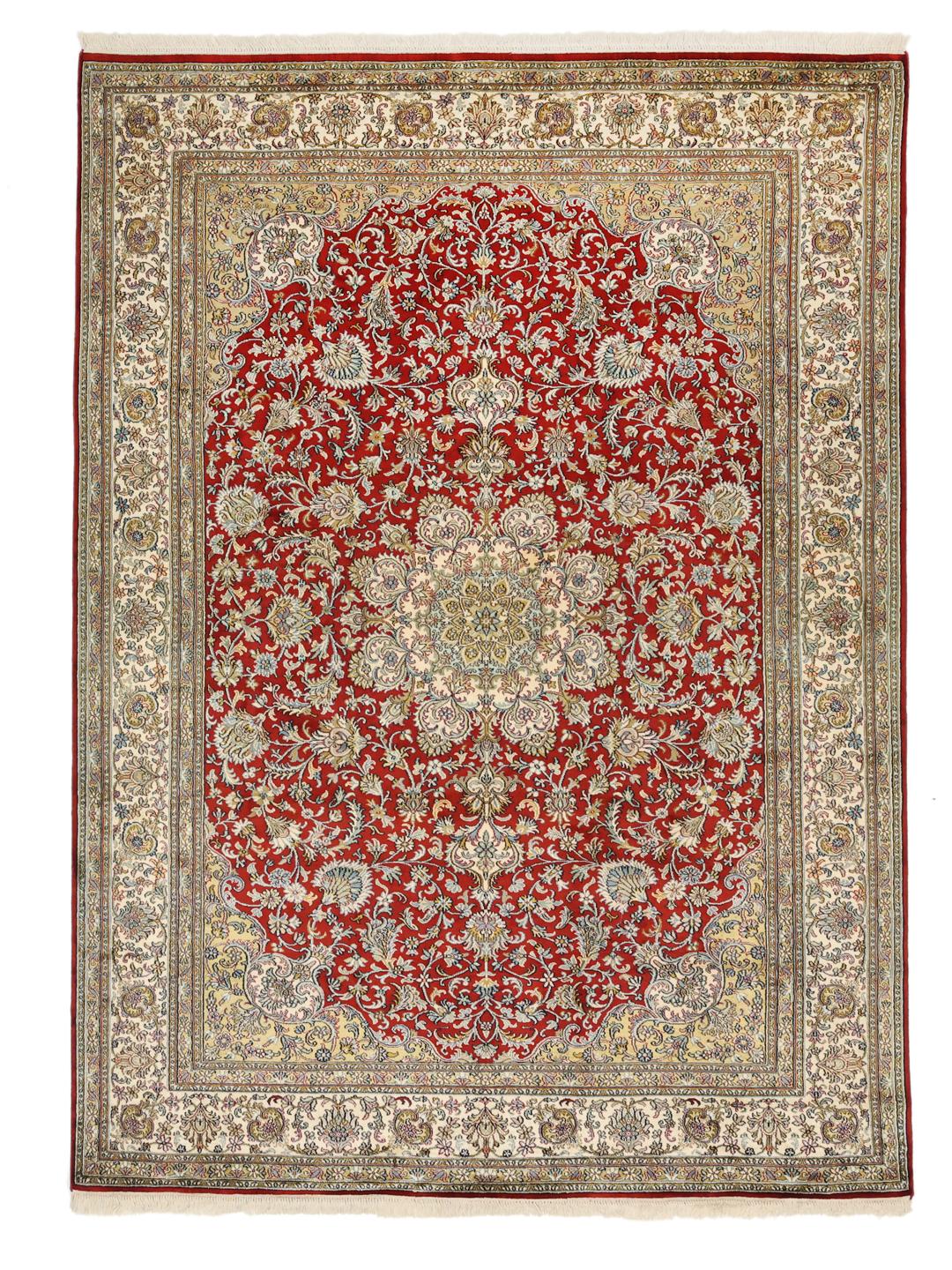
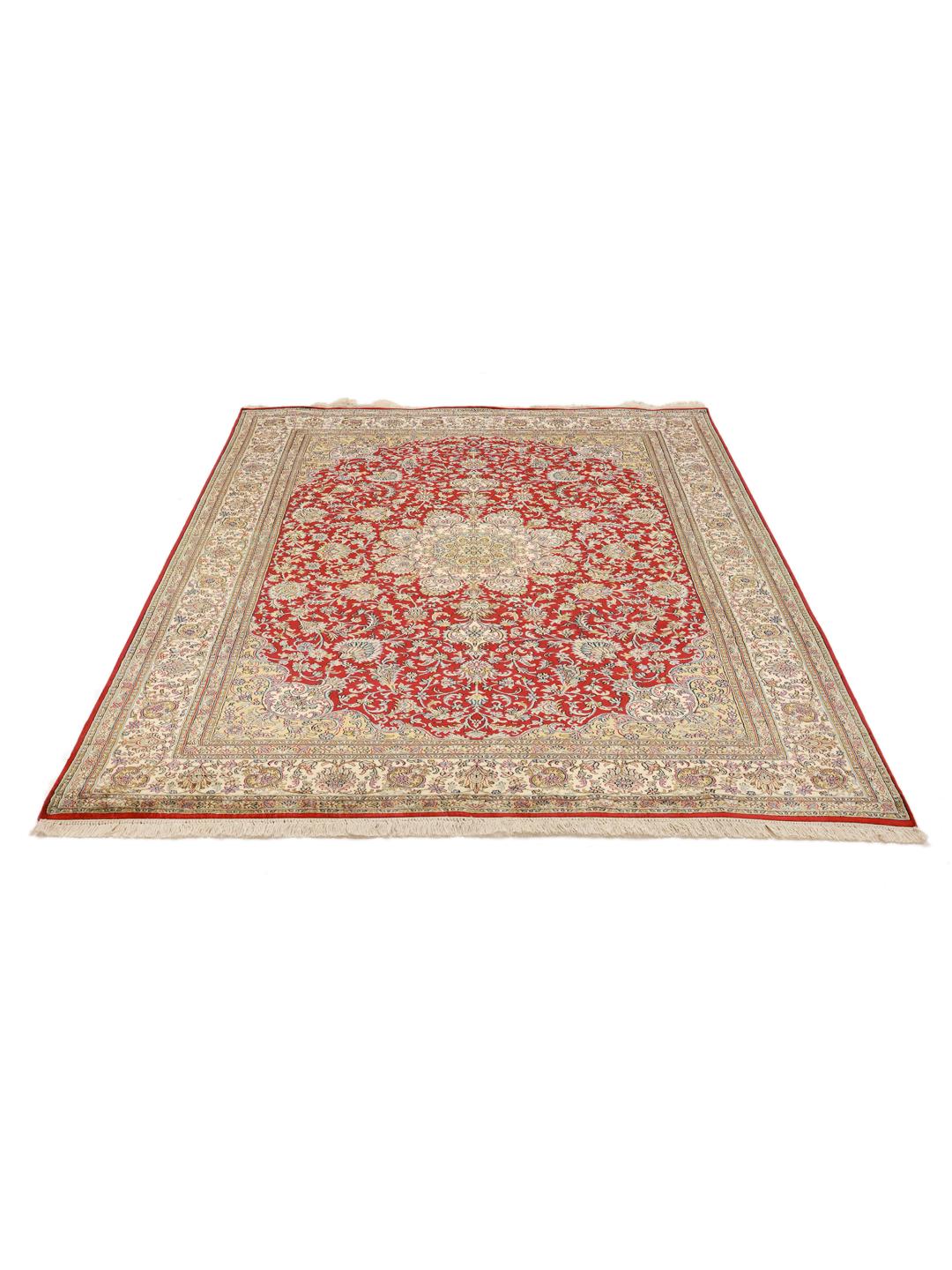
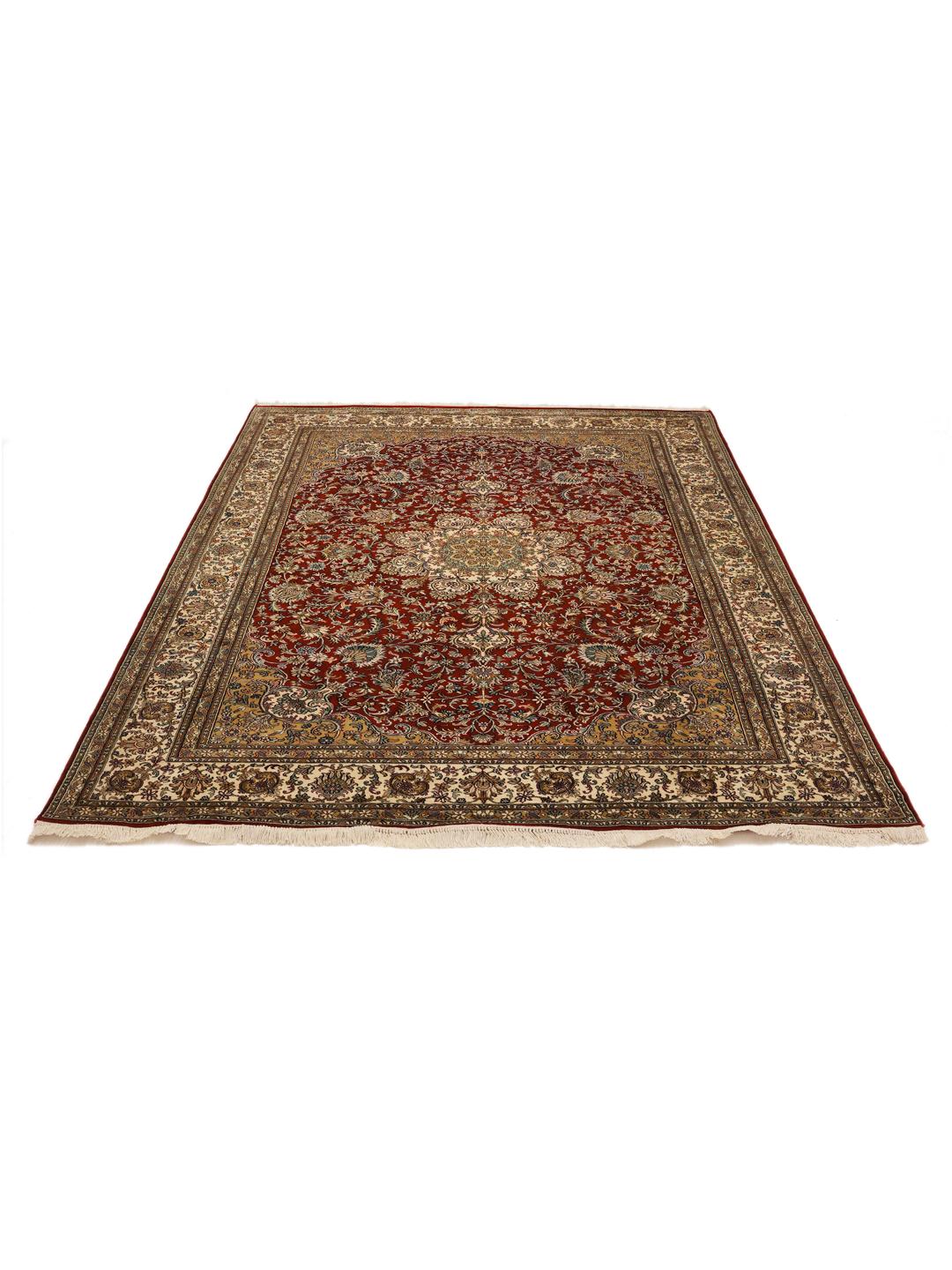
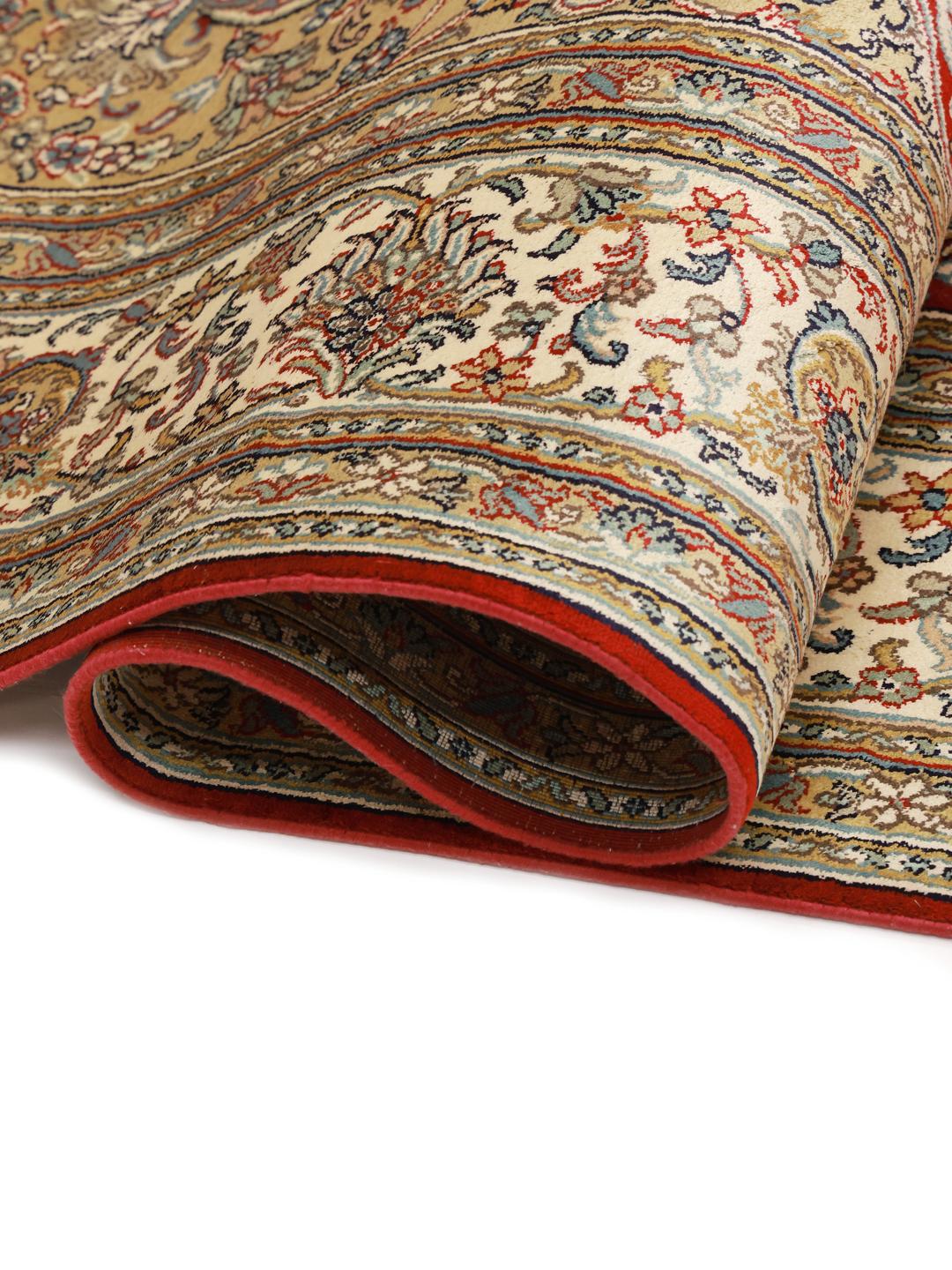
Signature elements of this tradition include the use of lush, flowing floral patterns, often centred around a detailed medallion and enclosed by elaborate, multi-layered borders. The colour palettes are typically vibrant, with deep reds and soft neutrals often used to create contrast and balance. This specific rug exemplifies these classic motifs, showcasing the organic, scrolling vines and blossoms that have been a hallmark of Kashmir artistry for generations.
Owning a piece from this tradition is a way of participating in a centuries-old history of human skill and artistic expression. These rugs are highly valued by collectors not just for their beauty, but for the immense effort and cultural knowledge required to produce them. To acquire a Kashmir rug is to bring a piece of this rich heritage into your home, ensuring that the legacy of these dedicated artisans continues to be appreciated and preserved.