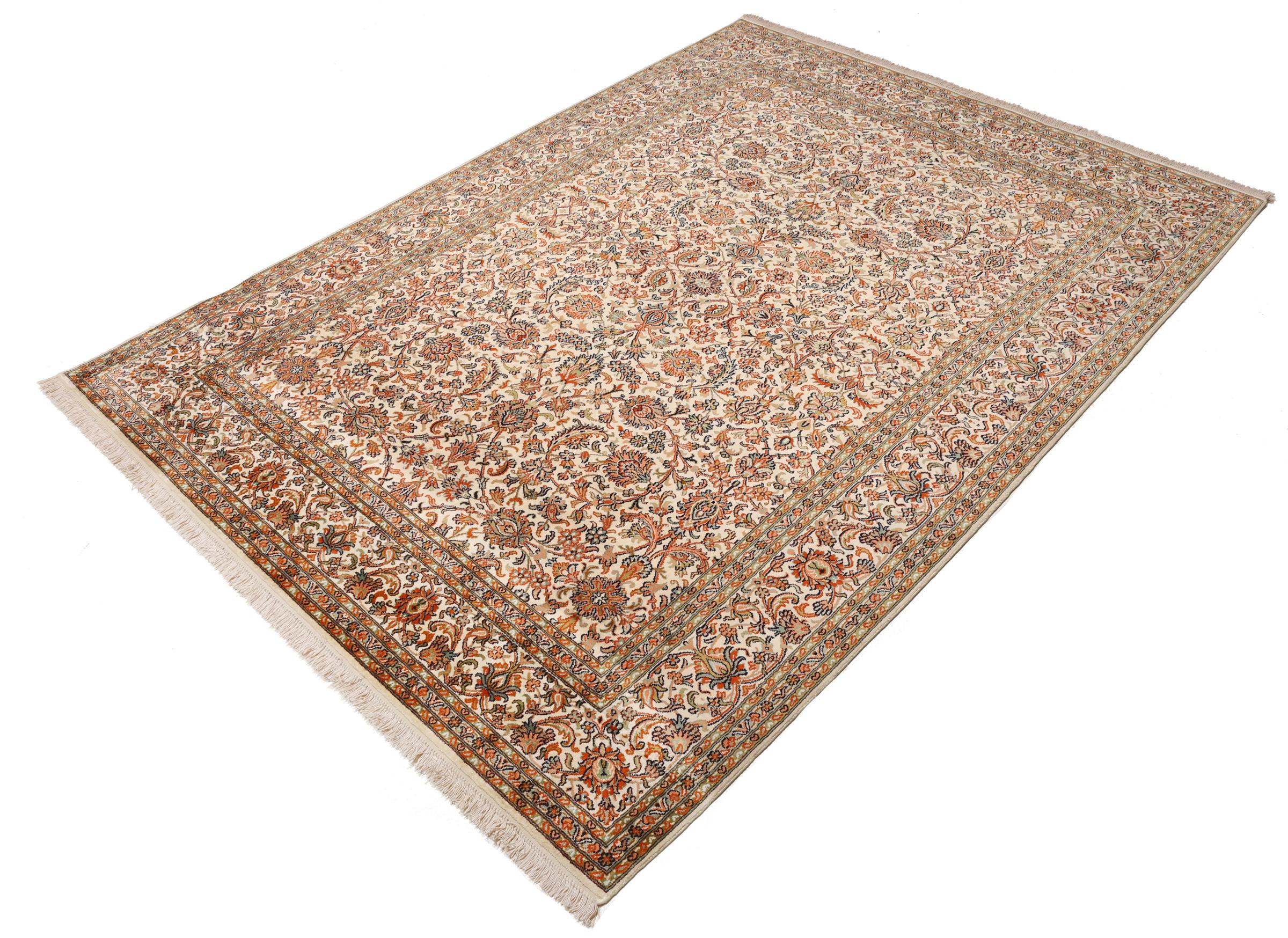
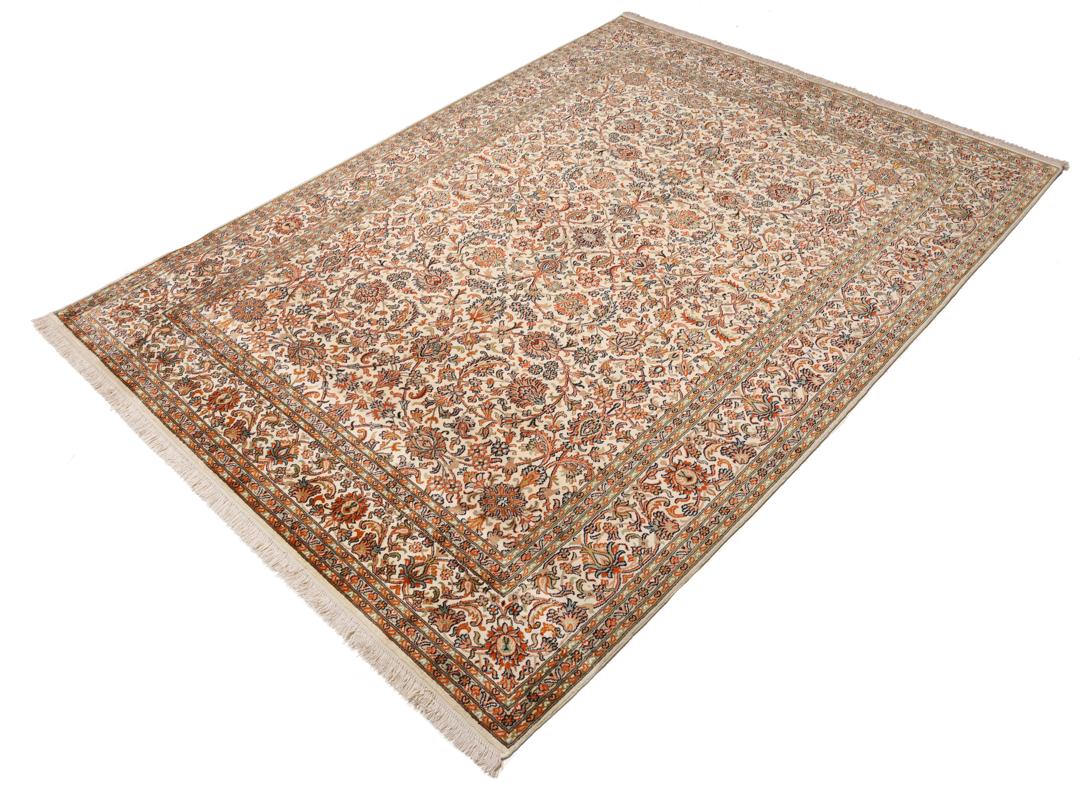
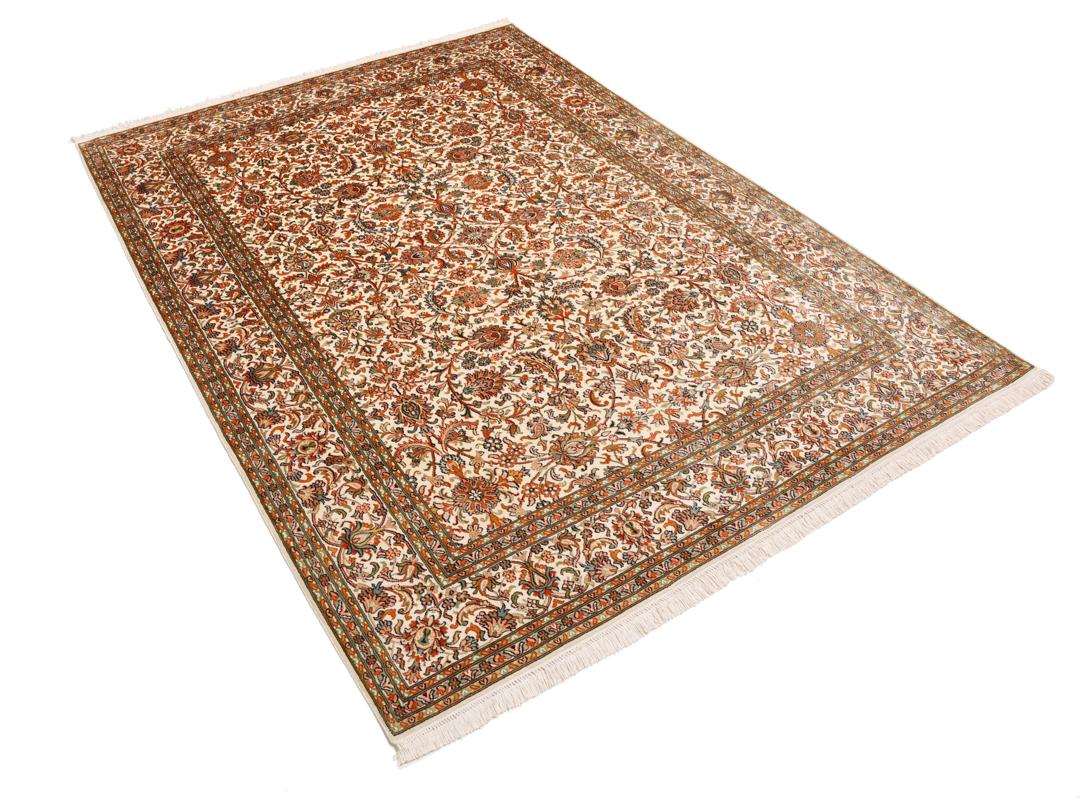
Kashmir rugs, particularly those crafted from silk, are deeply rooted in the artistic heritage of Northern India. The tradition of weaving in this mountainous region was heavily influenced by travellers and artisans arriving from Central Asia and the Middle East centuries ago. Over time, these influences blended with local aesthetic sensibilities, resulting in a unique style that is celebrated for its grace and technical refinement.
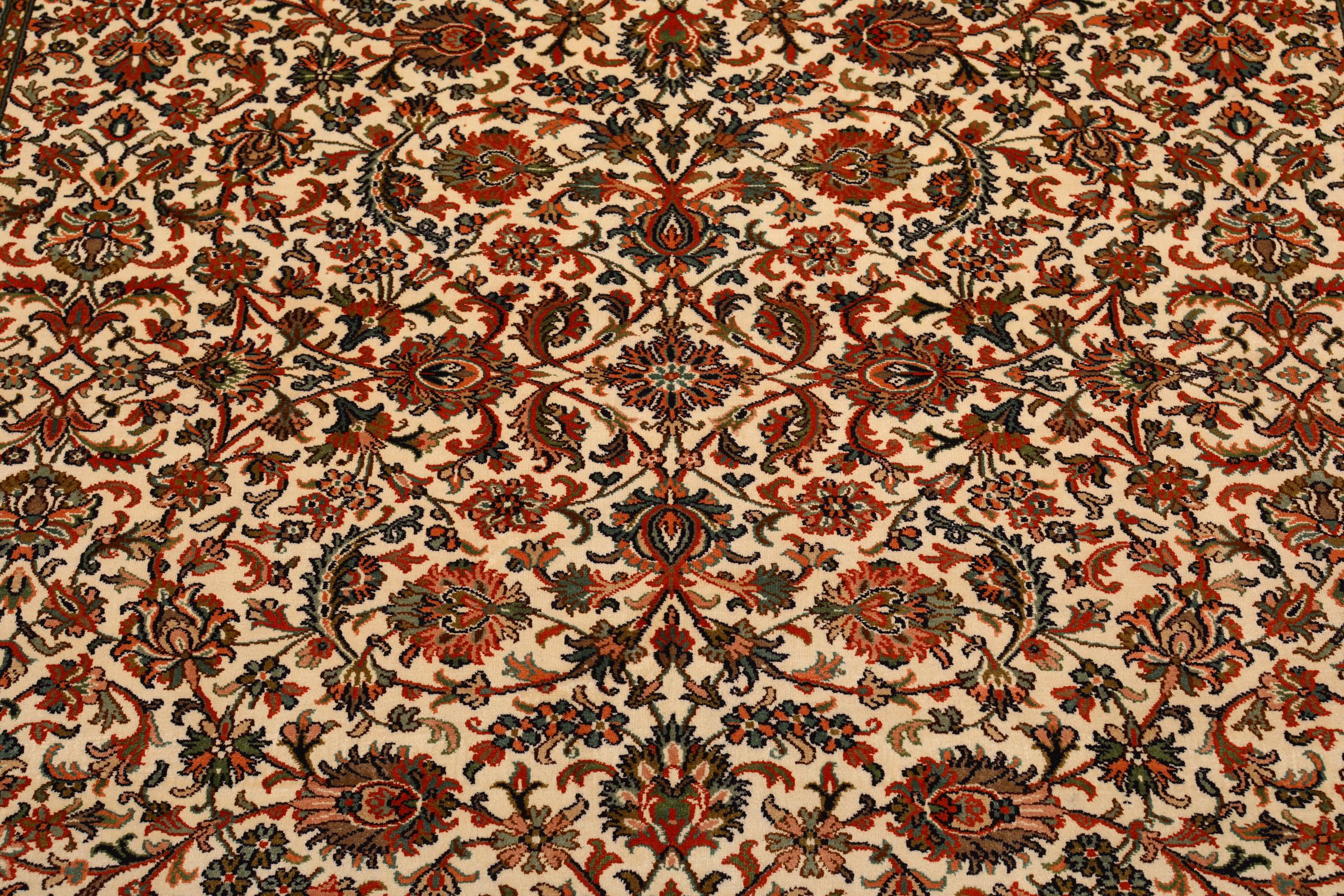
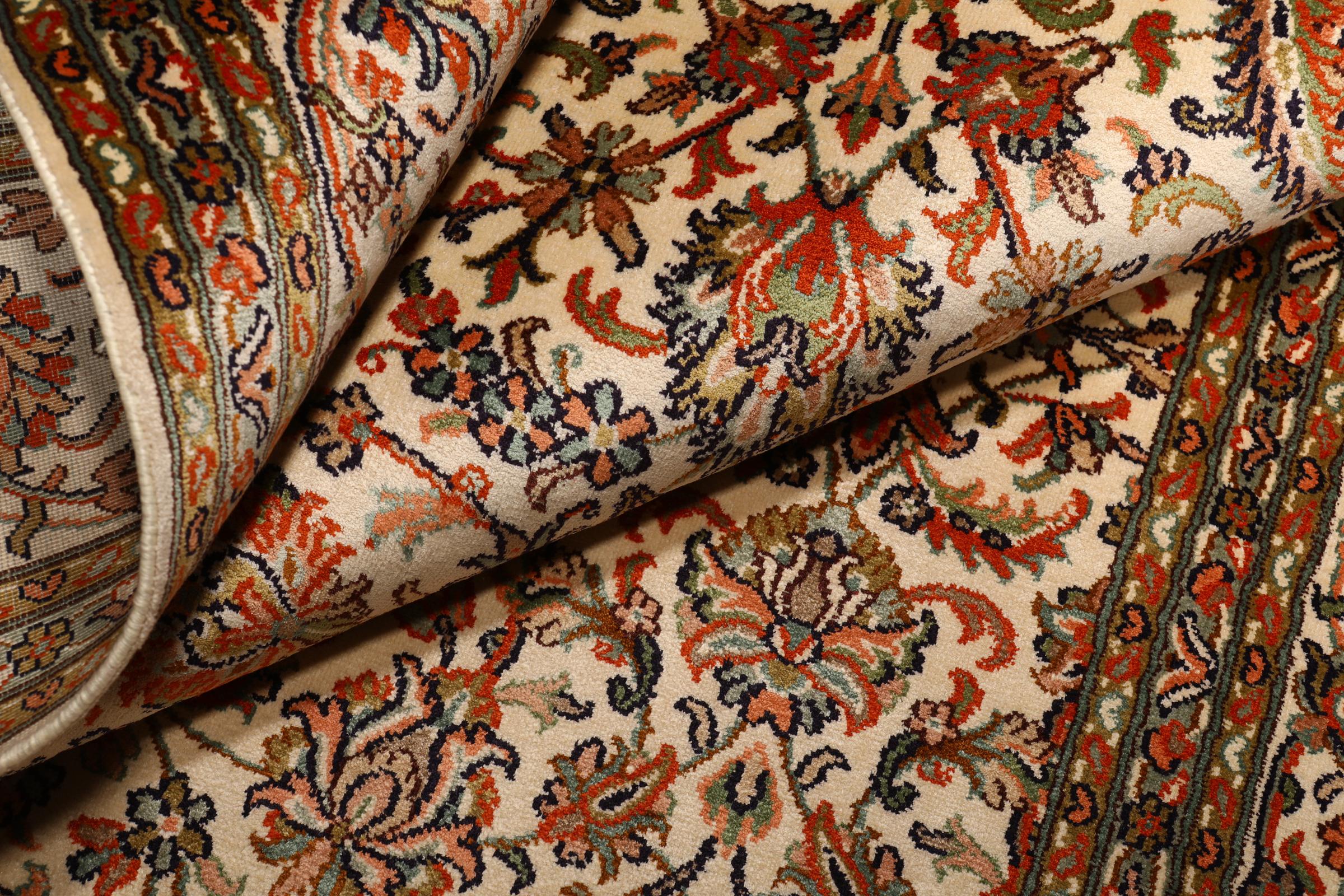
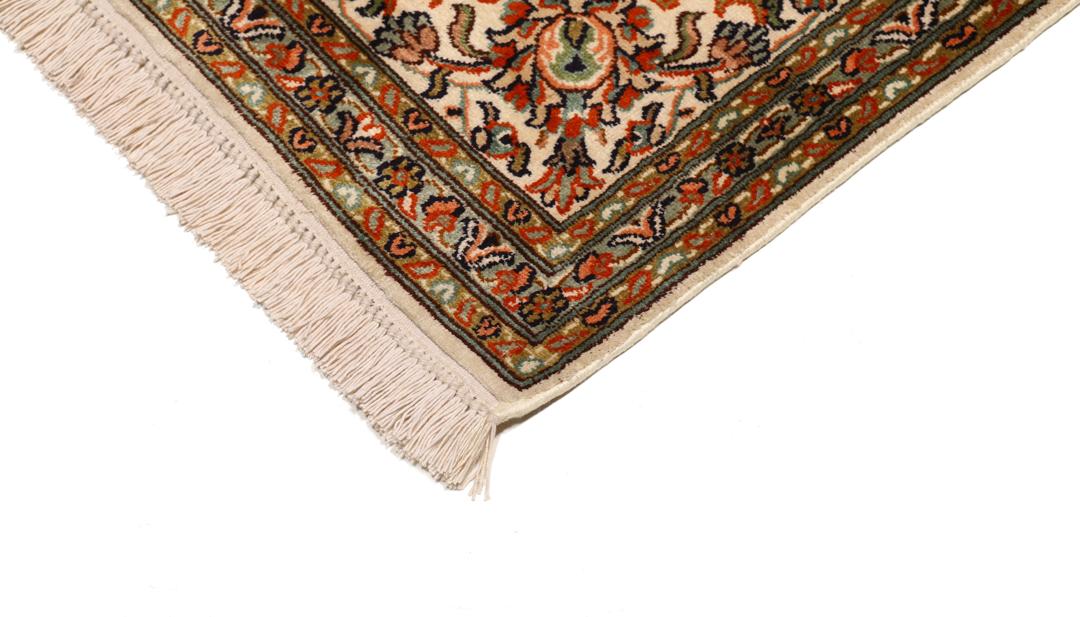
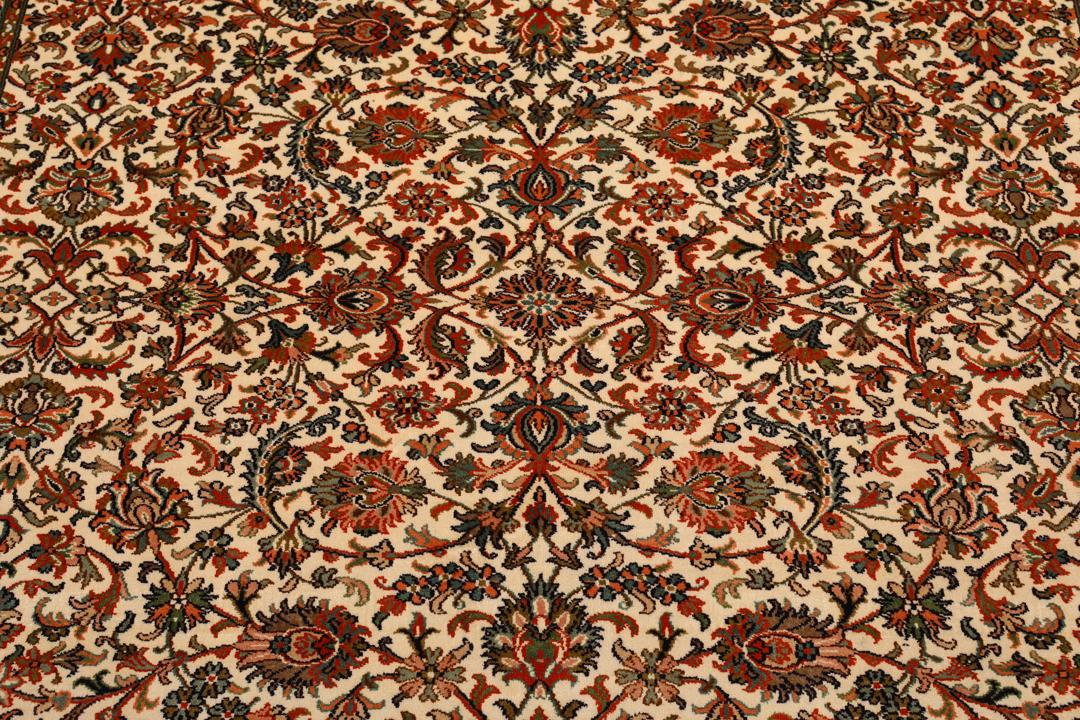
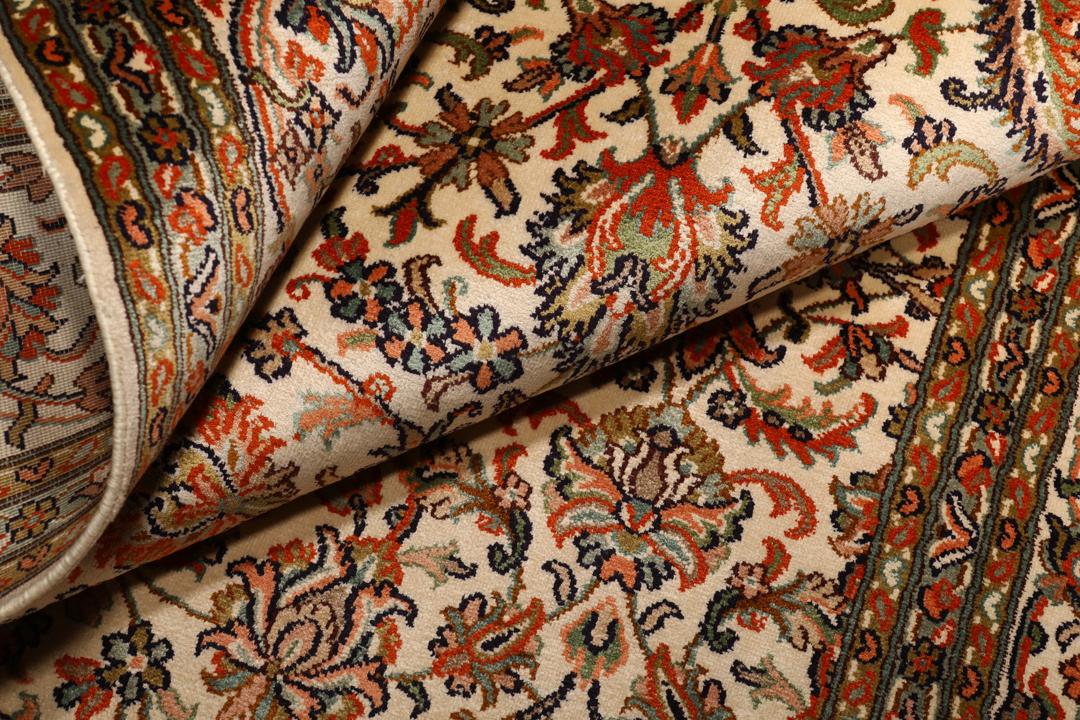
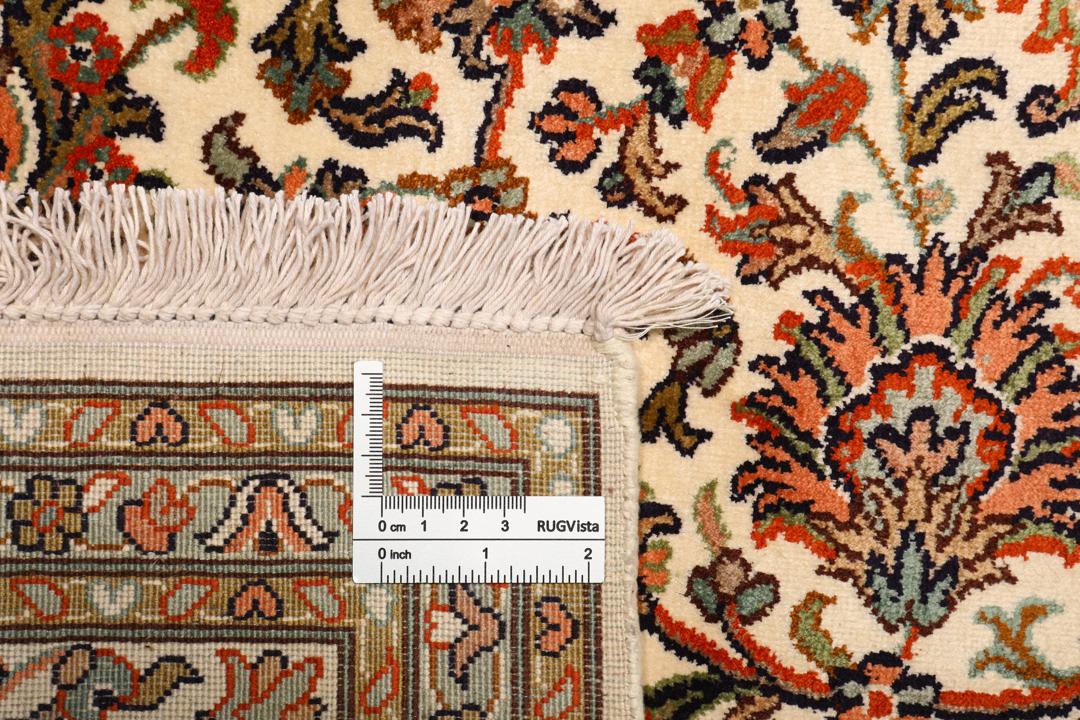
The term 'Kashmir silk' signifies a specific approach to rug making that prioritises the use of fine, long-staple silk fibres. This material is chosen for its superior strength and its ability to take vibrant, deep dyes, which allows for the creation of intricate, jewel-toned patterns. The use of these fine fibres in a hand-knotted construction creates a pile that is not only soft to the touch but also possesses a distinct, shimmering quality that shifts as you move around the rug.
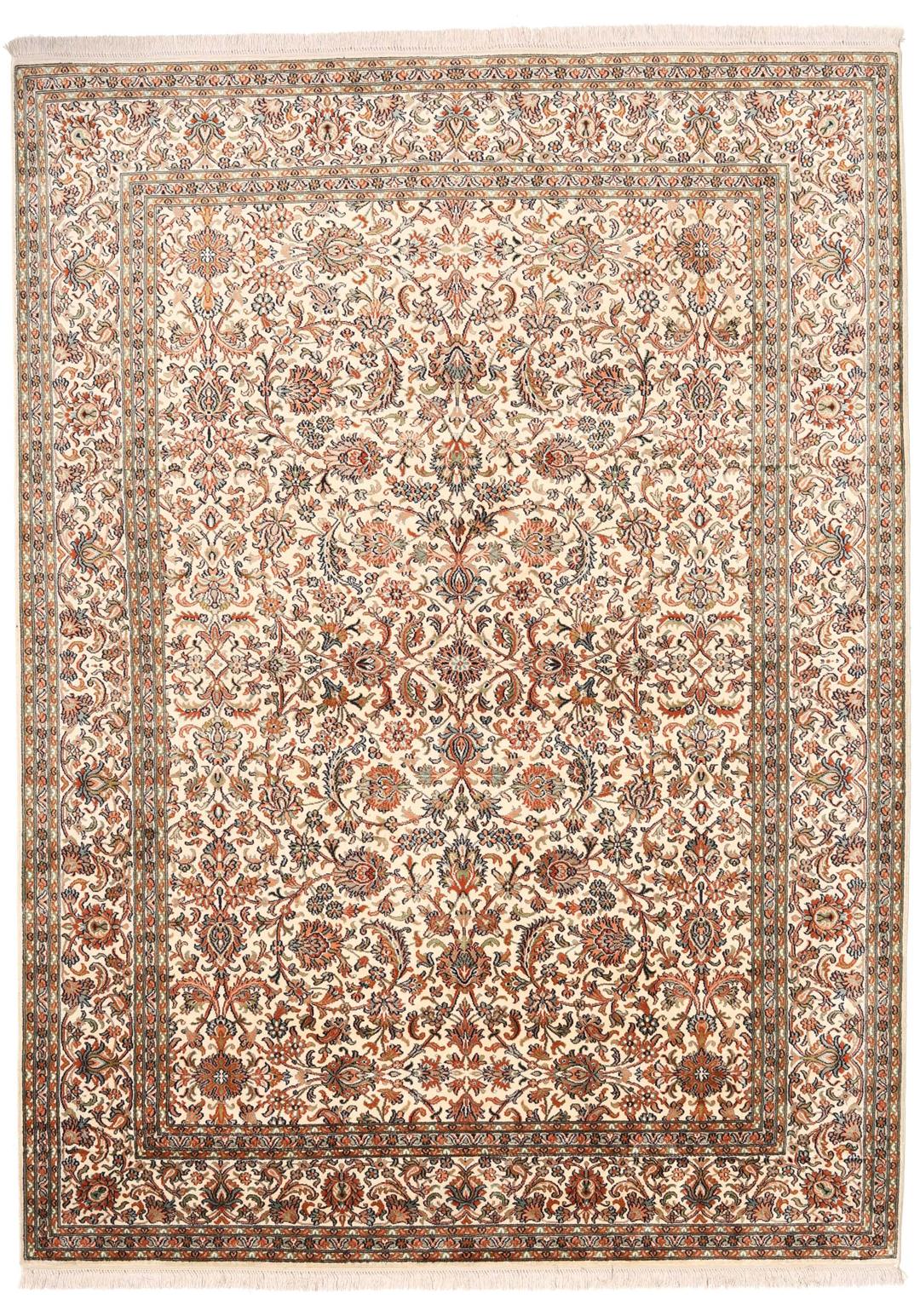
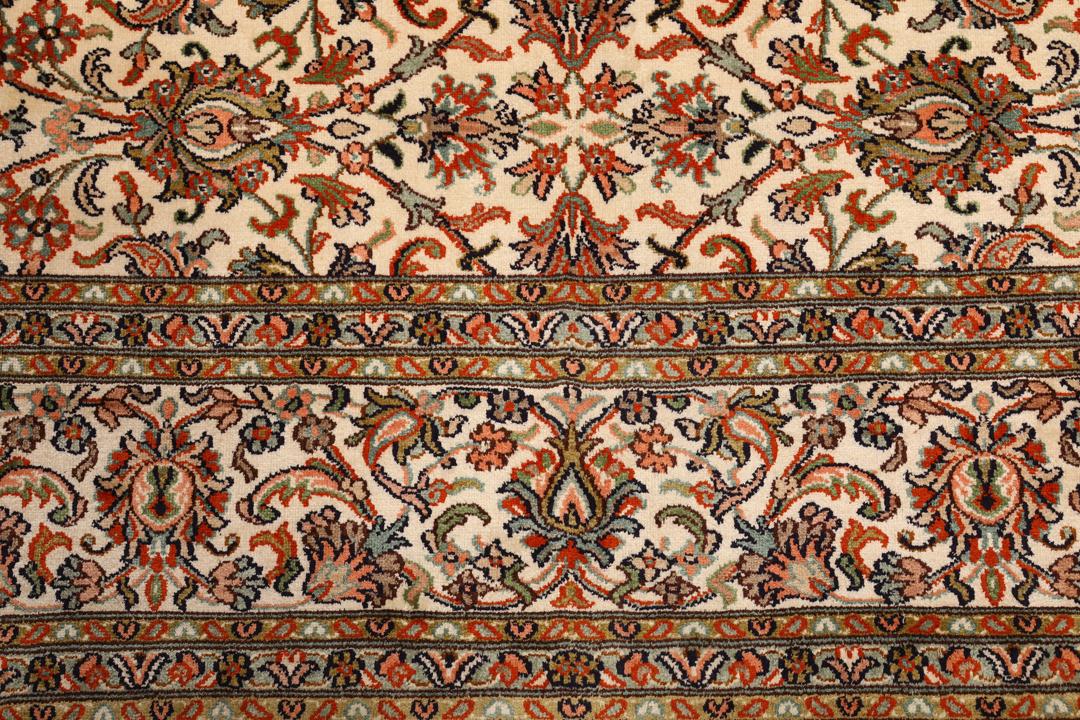
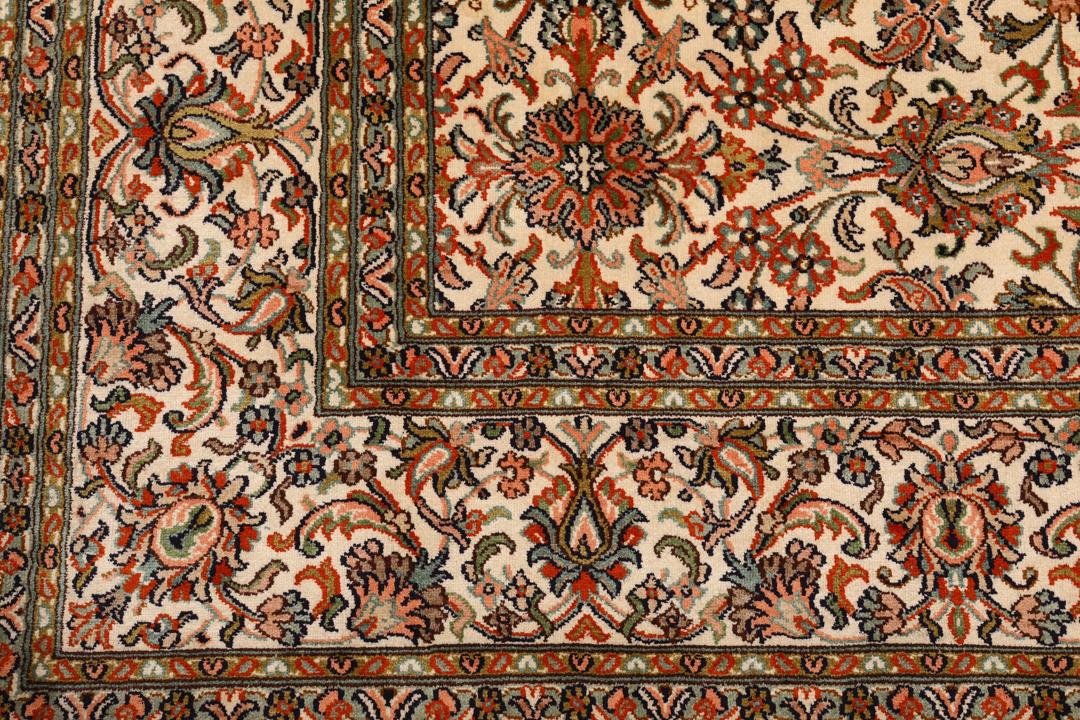
Design-wise, these rugs are famous for their dense, flowing floral motifs, often featuring vines, palmettes, and delicate leaves that mirror the natural beauty of the Kashmir valley. The formal borders are typically designed to frame the field, creating a sense of balance and harmony. While traditional patterns are the standard, the individual artistry involved means that every weaver brings their own variation to the composition, making each piece a distinct narrative of the maker's skill.
Today, these rugs are highly valued by collectors who appreciate the dedication required to produce such a refined object. Owning a Kashmir silk rug is more than a design choice; it is an acquisition of a cultural legacy. Each piece represents a connection to a centuries-old craft that continues to be a symbol of status, beauty, and the enduring human desire to create something of lasting value.