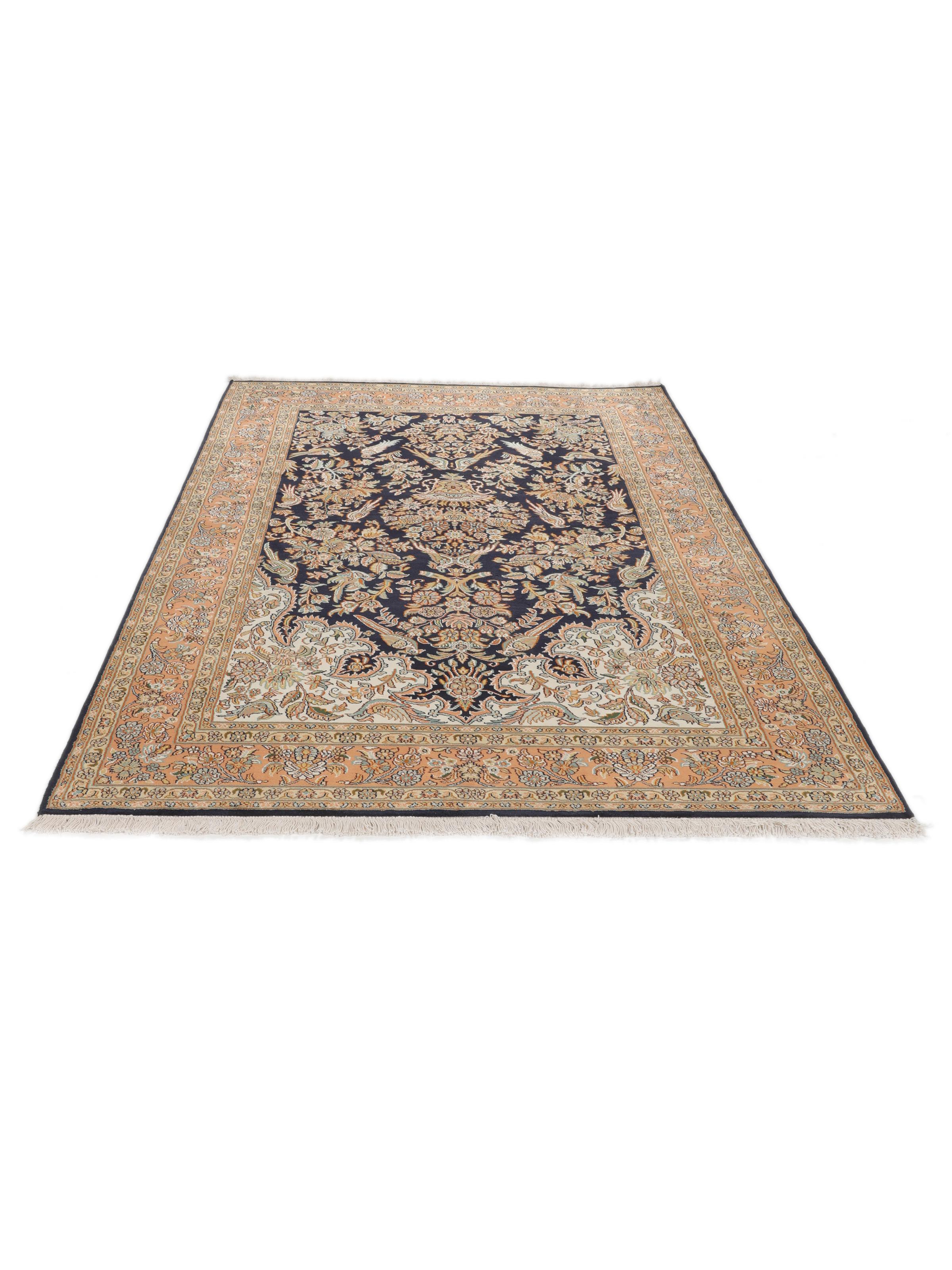
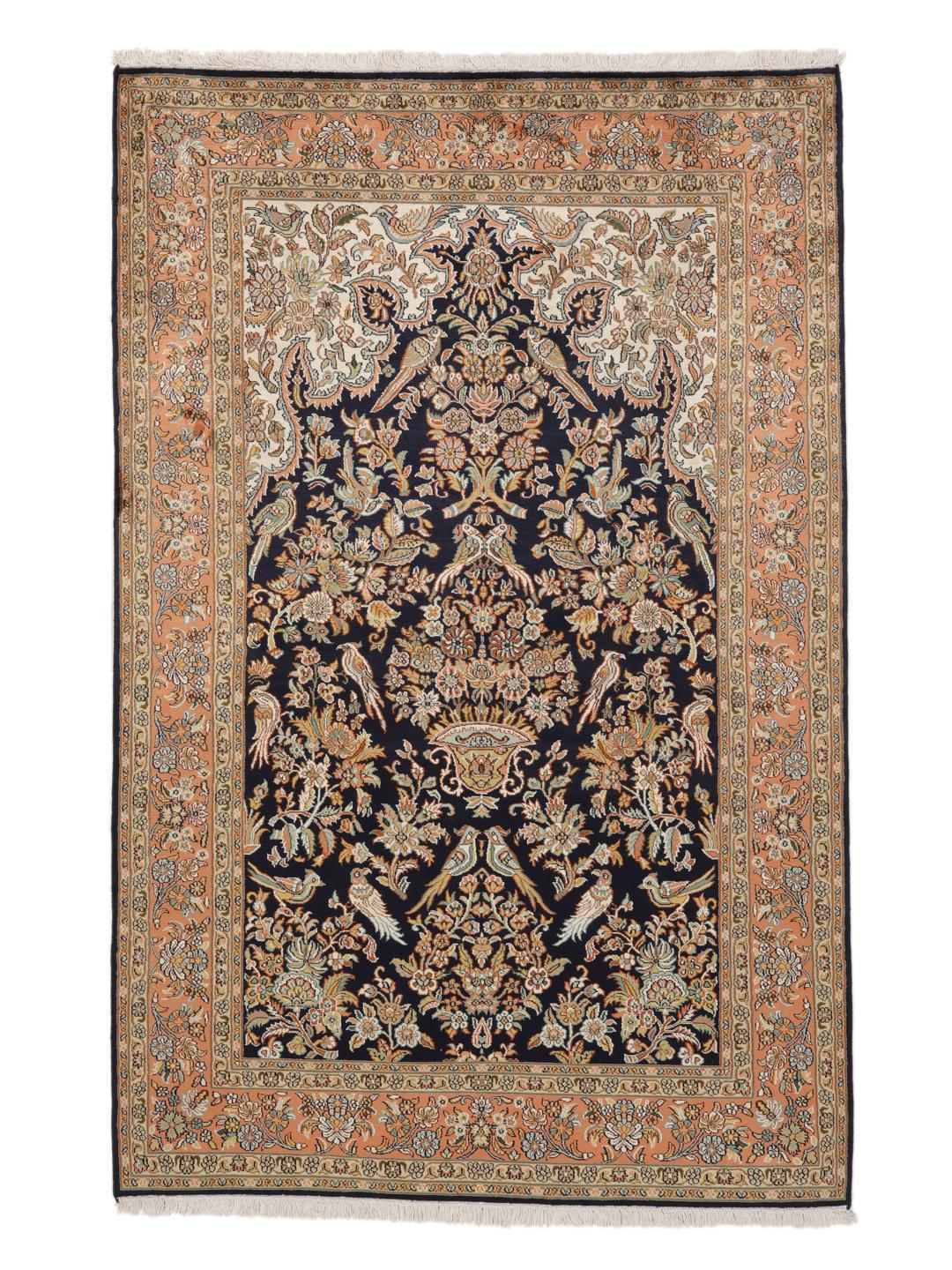
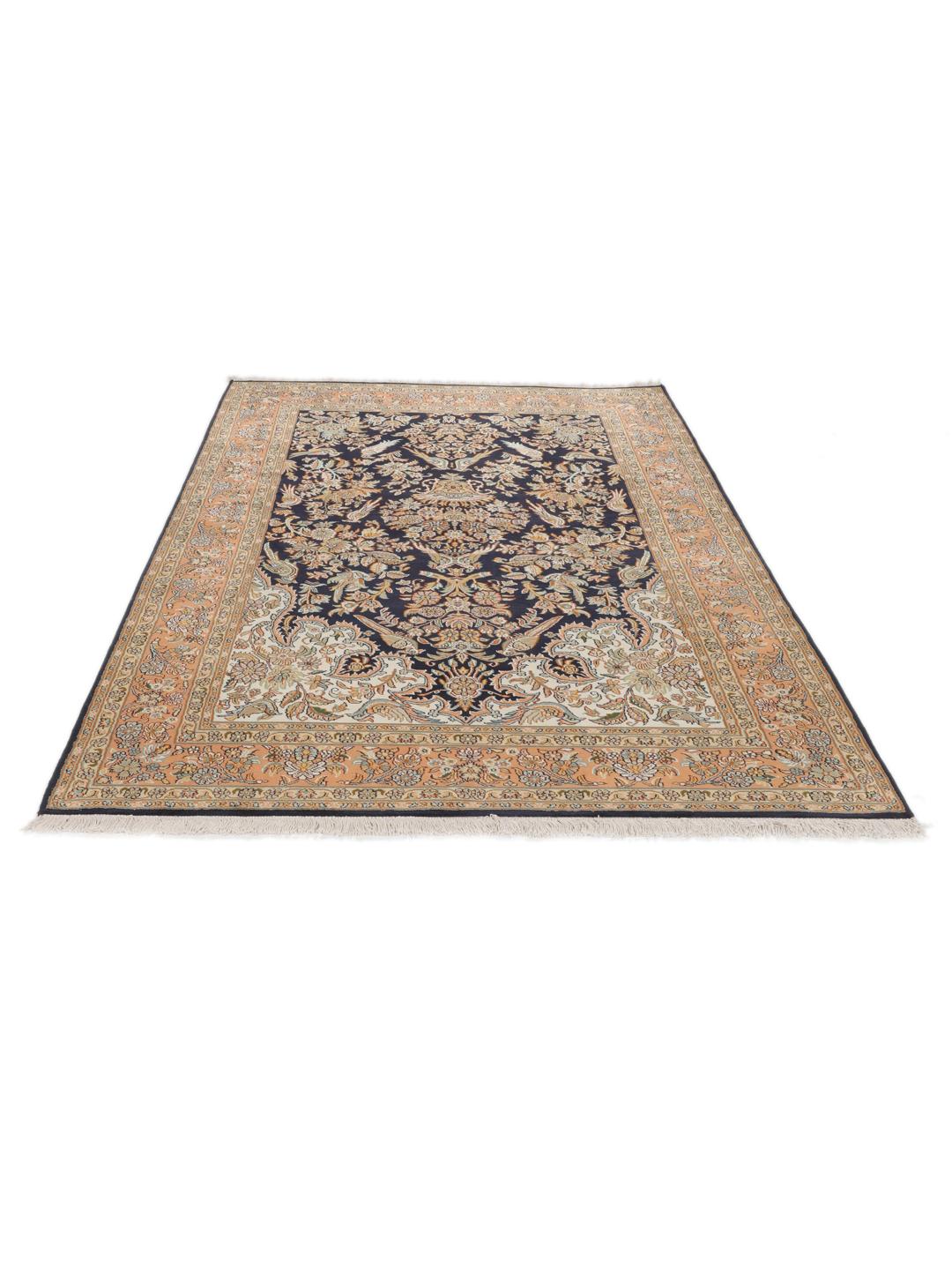
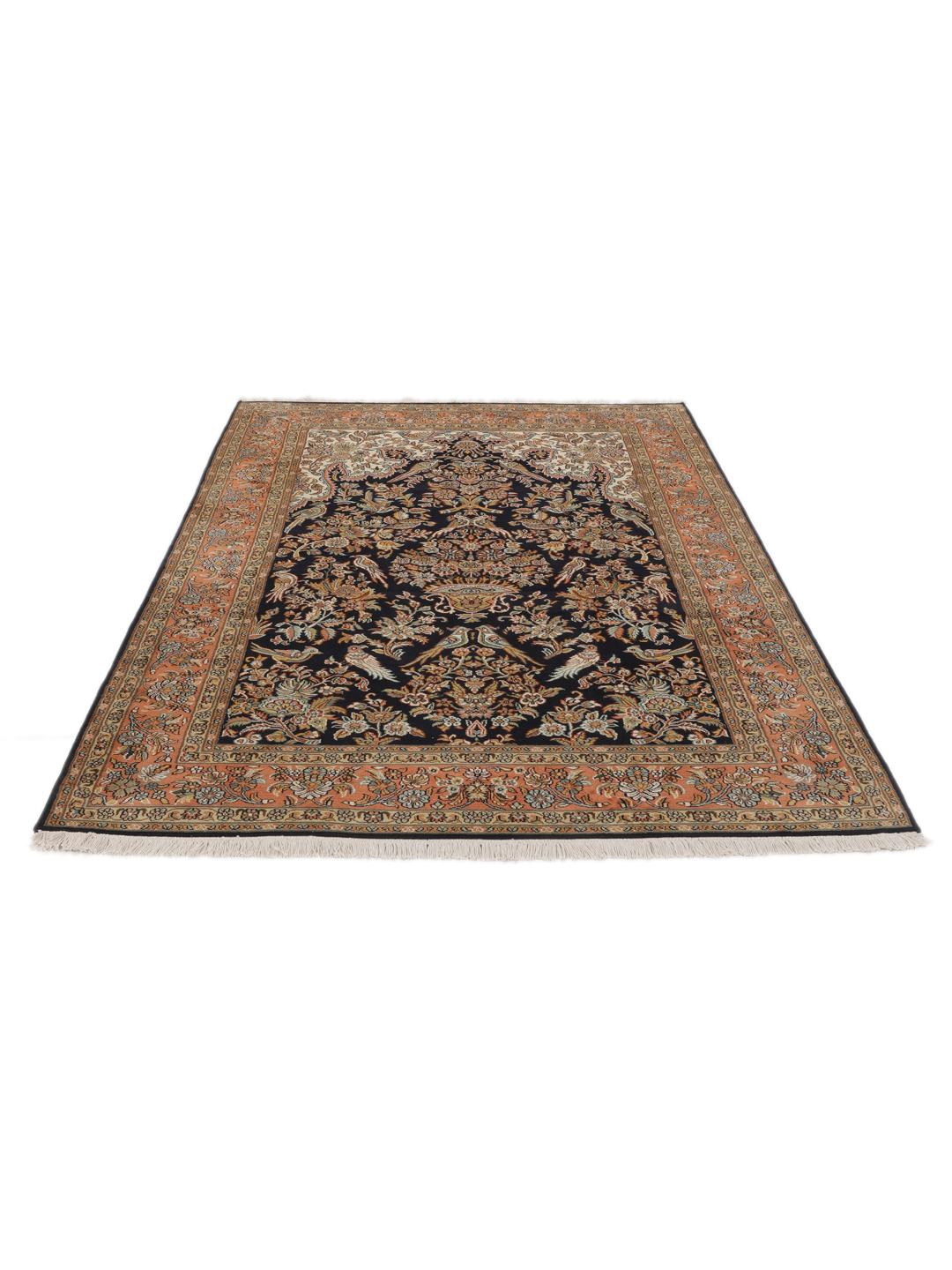
Kashmir silk rugs are celebrated globally as some of the most refined floor coverings in existence. Originating from the northernmost region of the Indian subcontinent, these rugs draw upon centuries of influence from Middle Eastern weaving traditions that were introduced to the area during the Mughal era. Over time, the local artisans developed a distinct style that blends these historical techniques with local artistic sensibilities, resulting in the iconic aesthetic found in Kashmir textiles today.
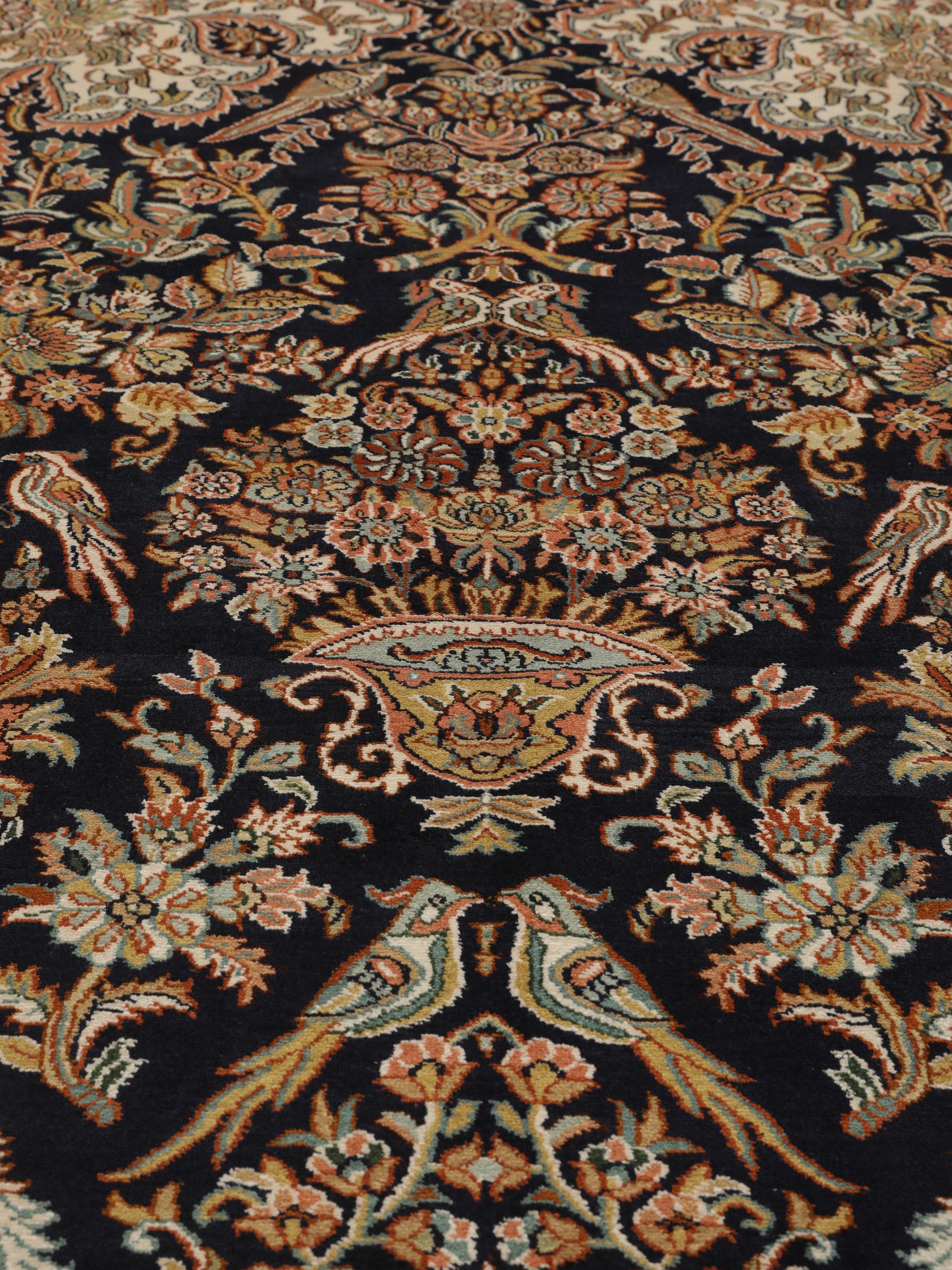
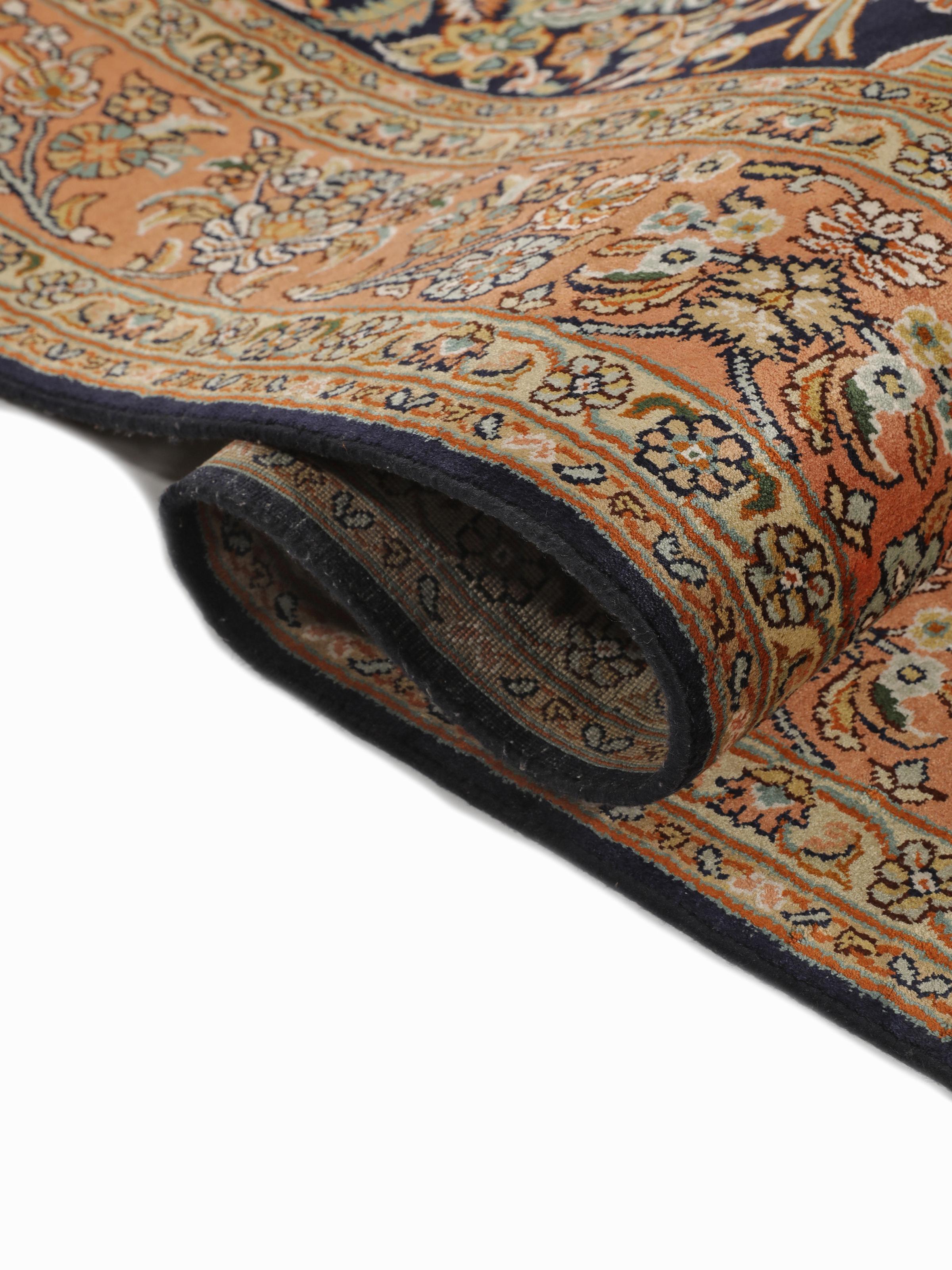
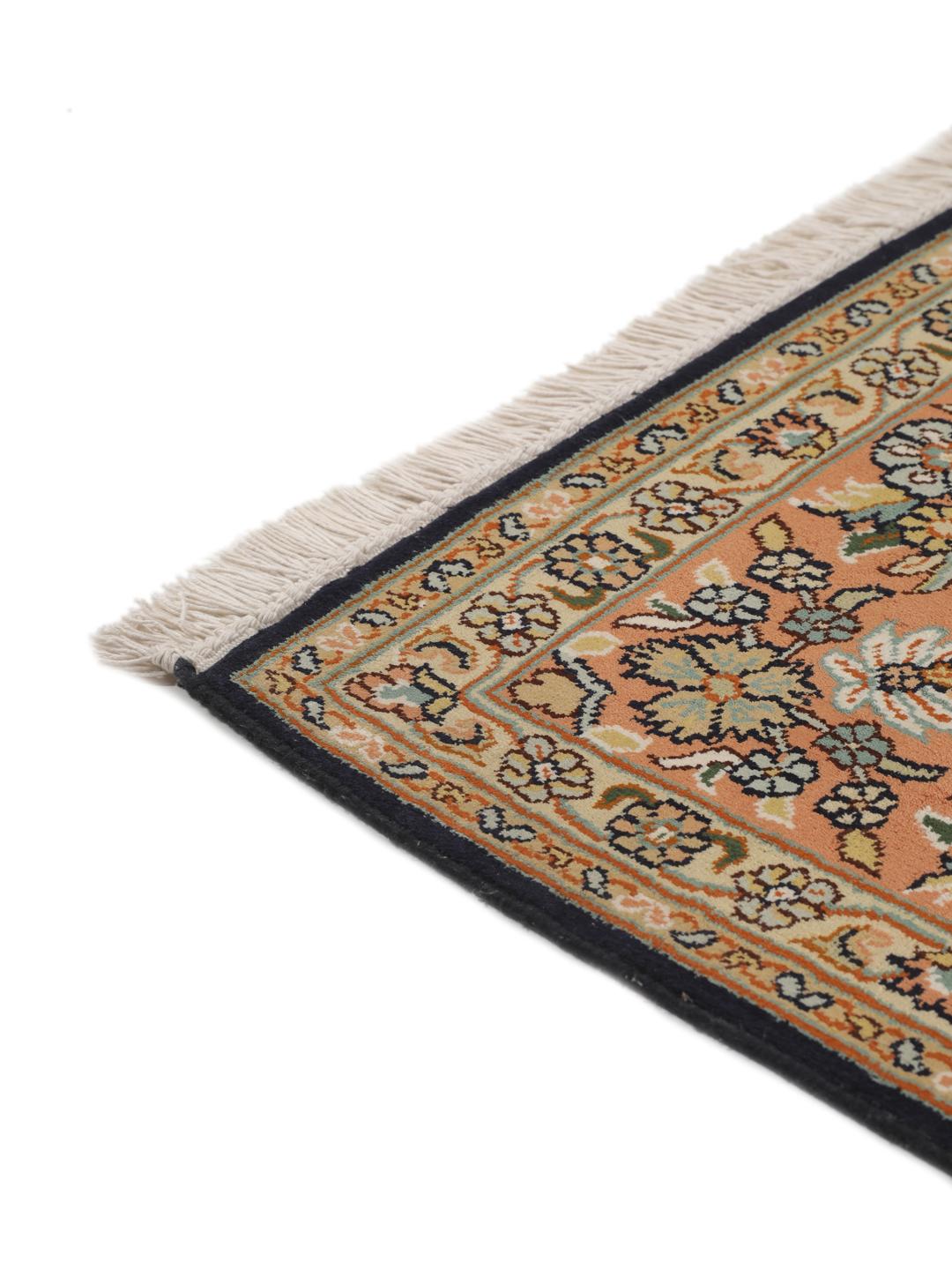
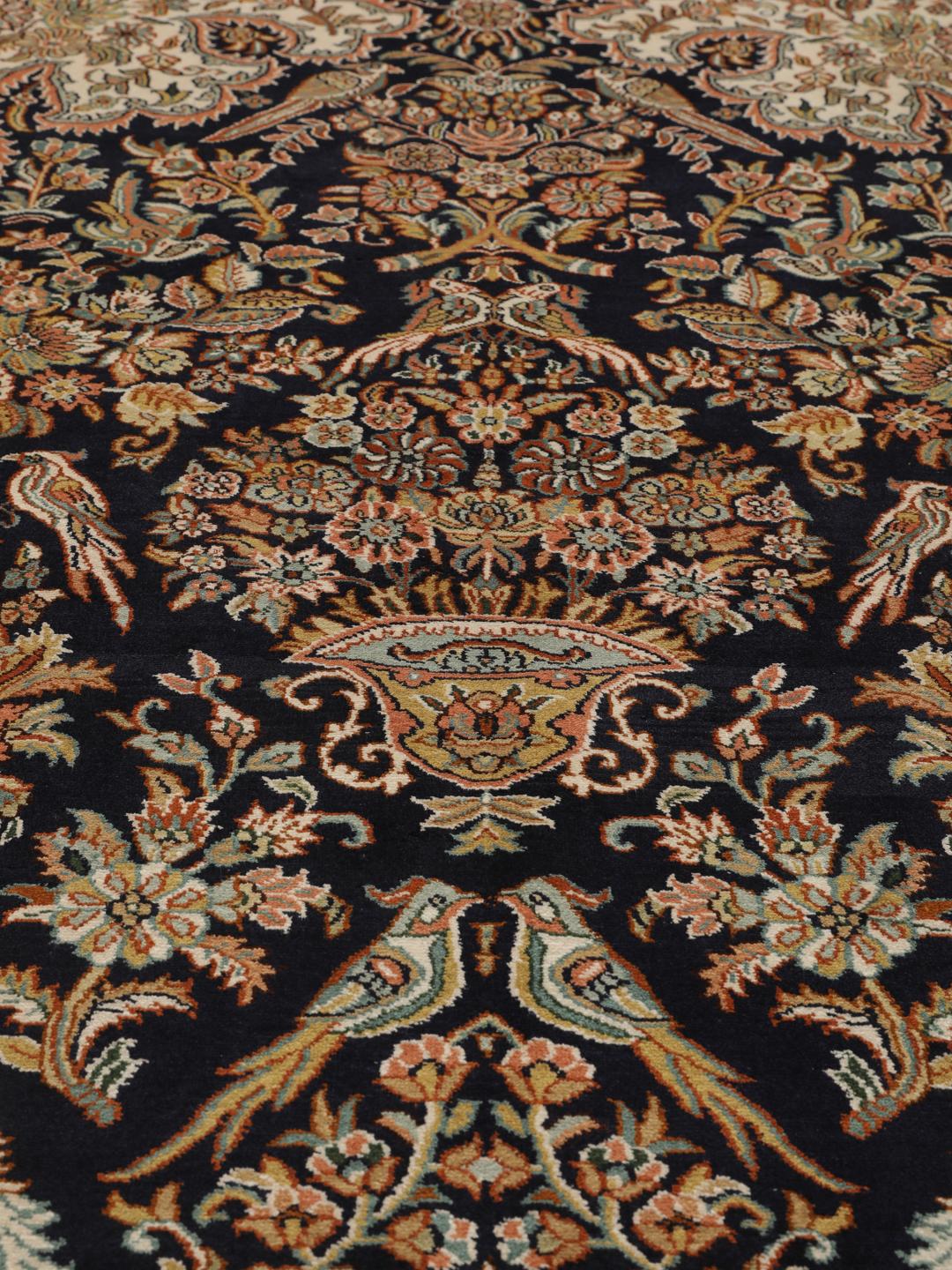
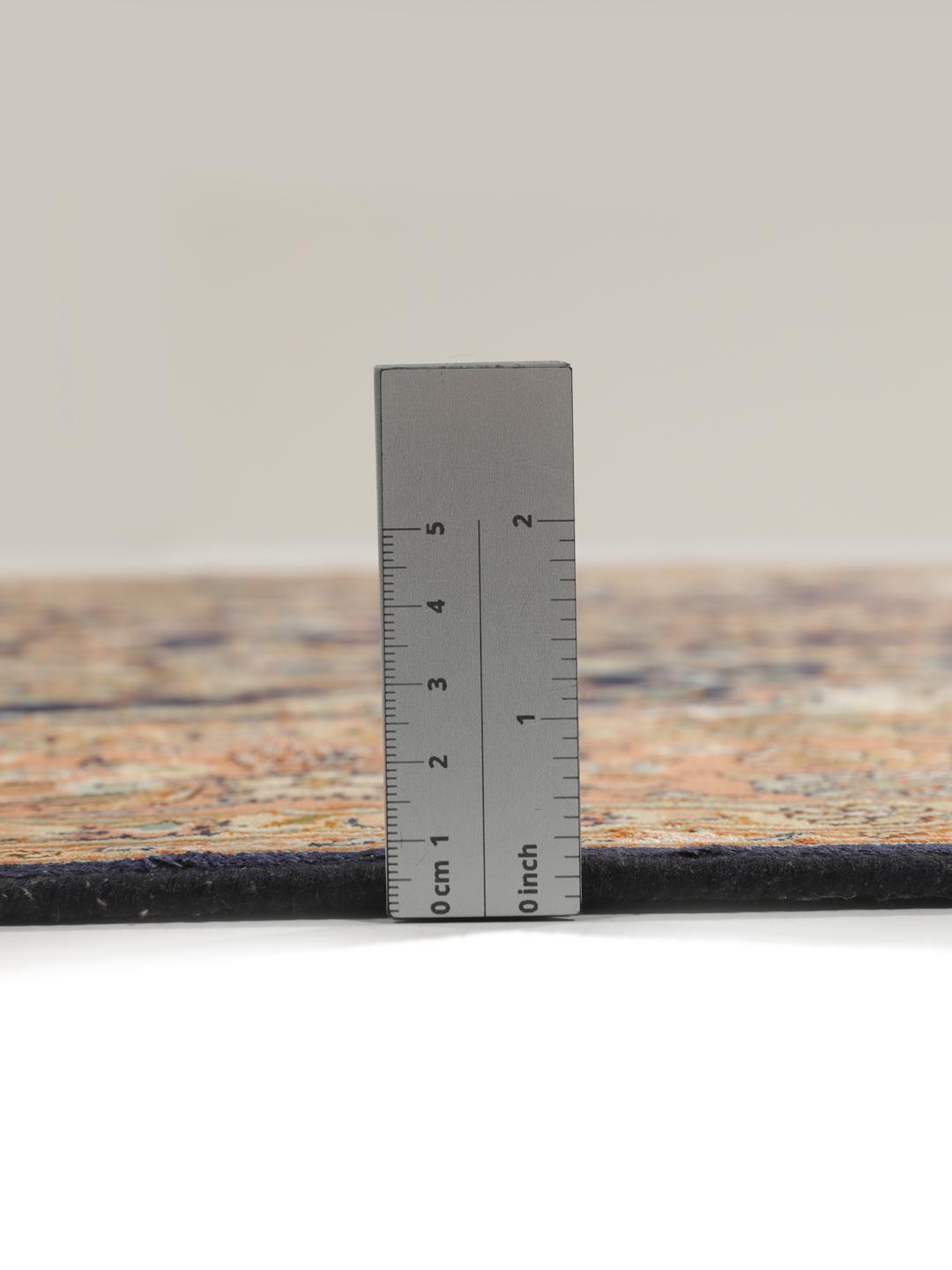
The term 'Kashmir silk' refers not only to the geographical origin but also to the specific approach to construction. These rugs are famously known for their exceptionally fine silk pile, which allows for a level of detail that is nearly impossible to achieve with other fibres. The silk is prized for its strength, its natural ability to hold vibrant dyes, and its light-reflecting properties, which lend the finished rug a jewel-like quality that evolves as the light in the room changes.
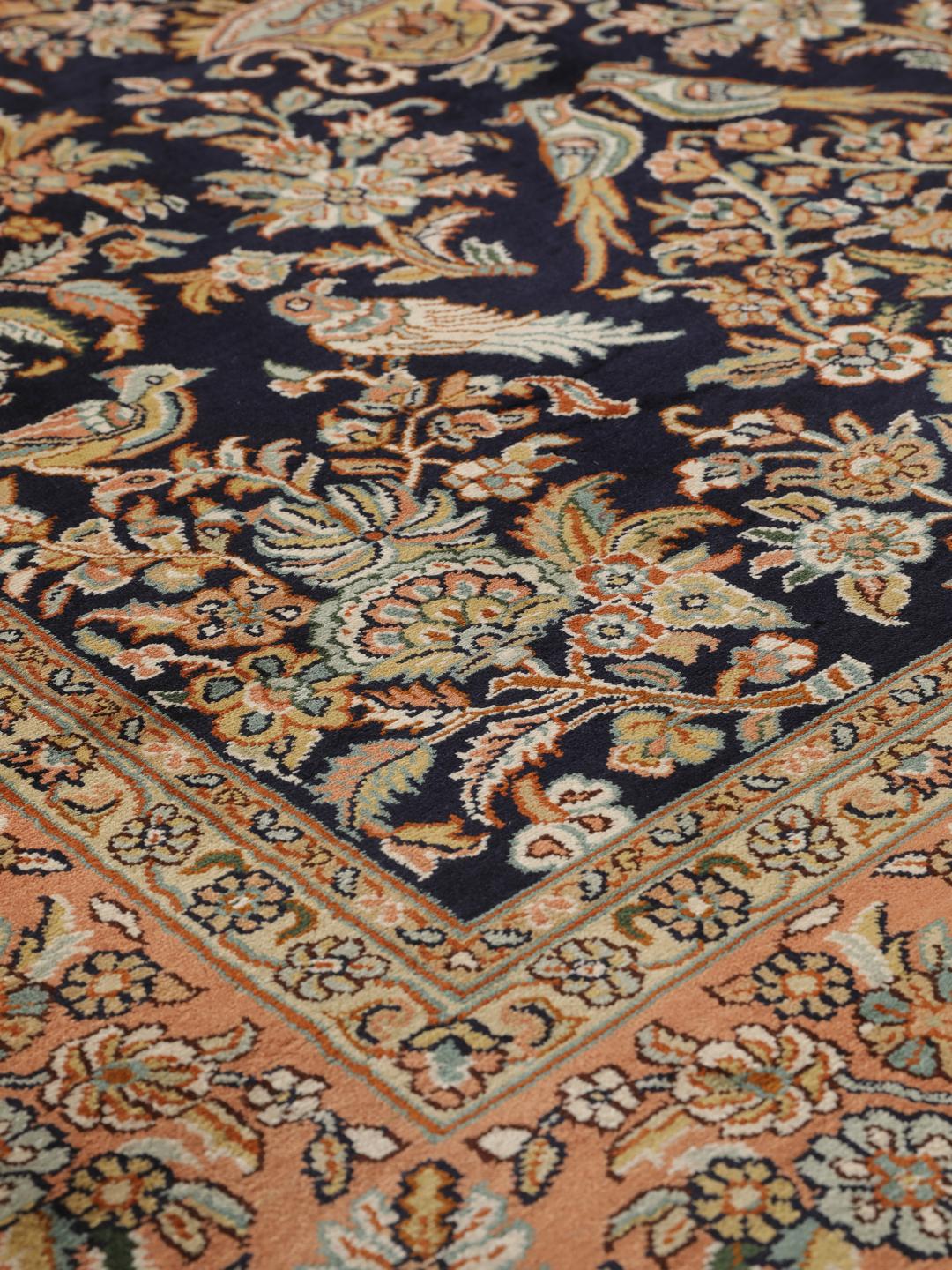
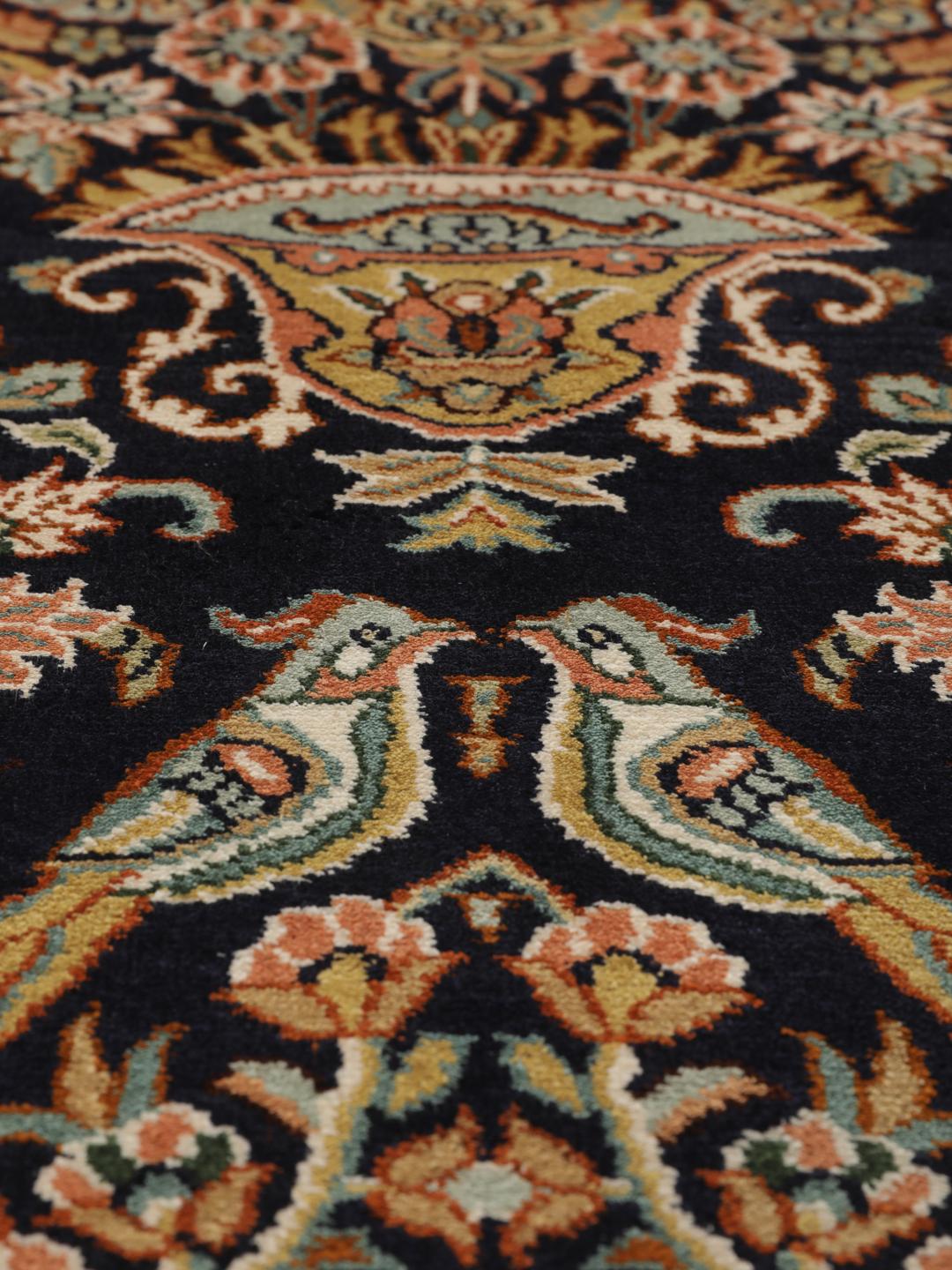
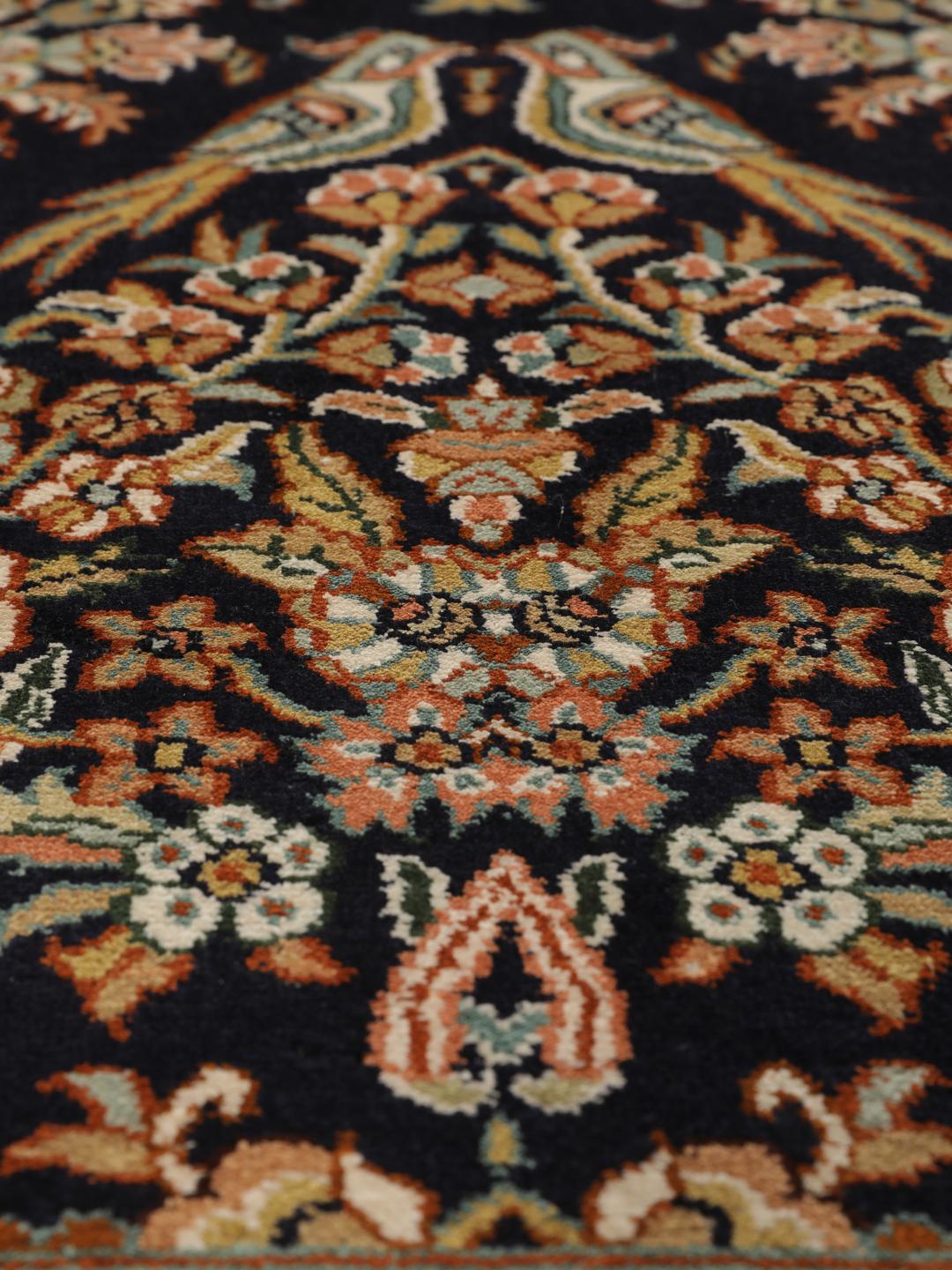
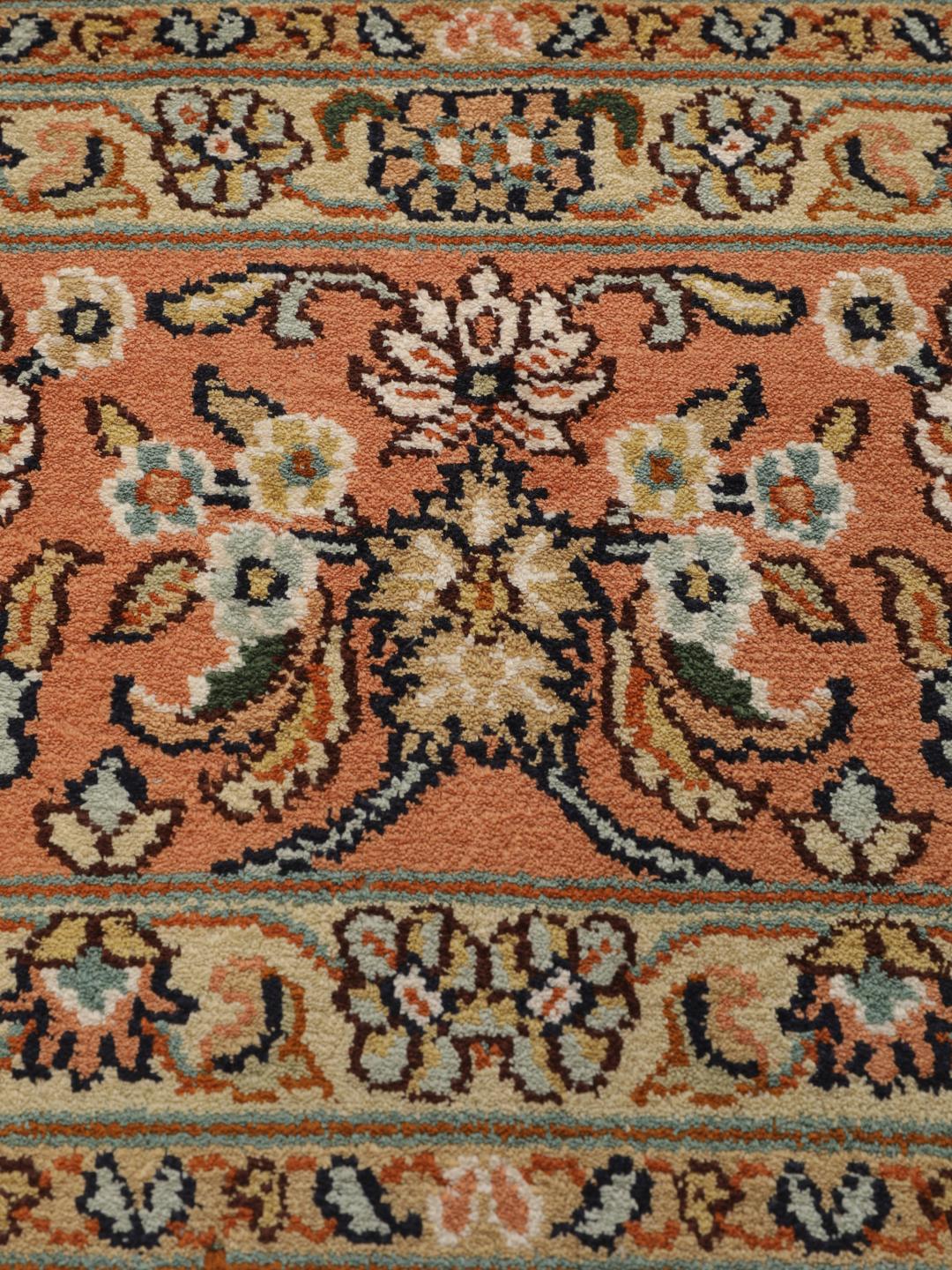
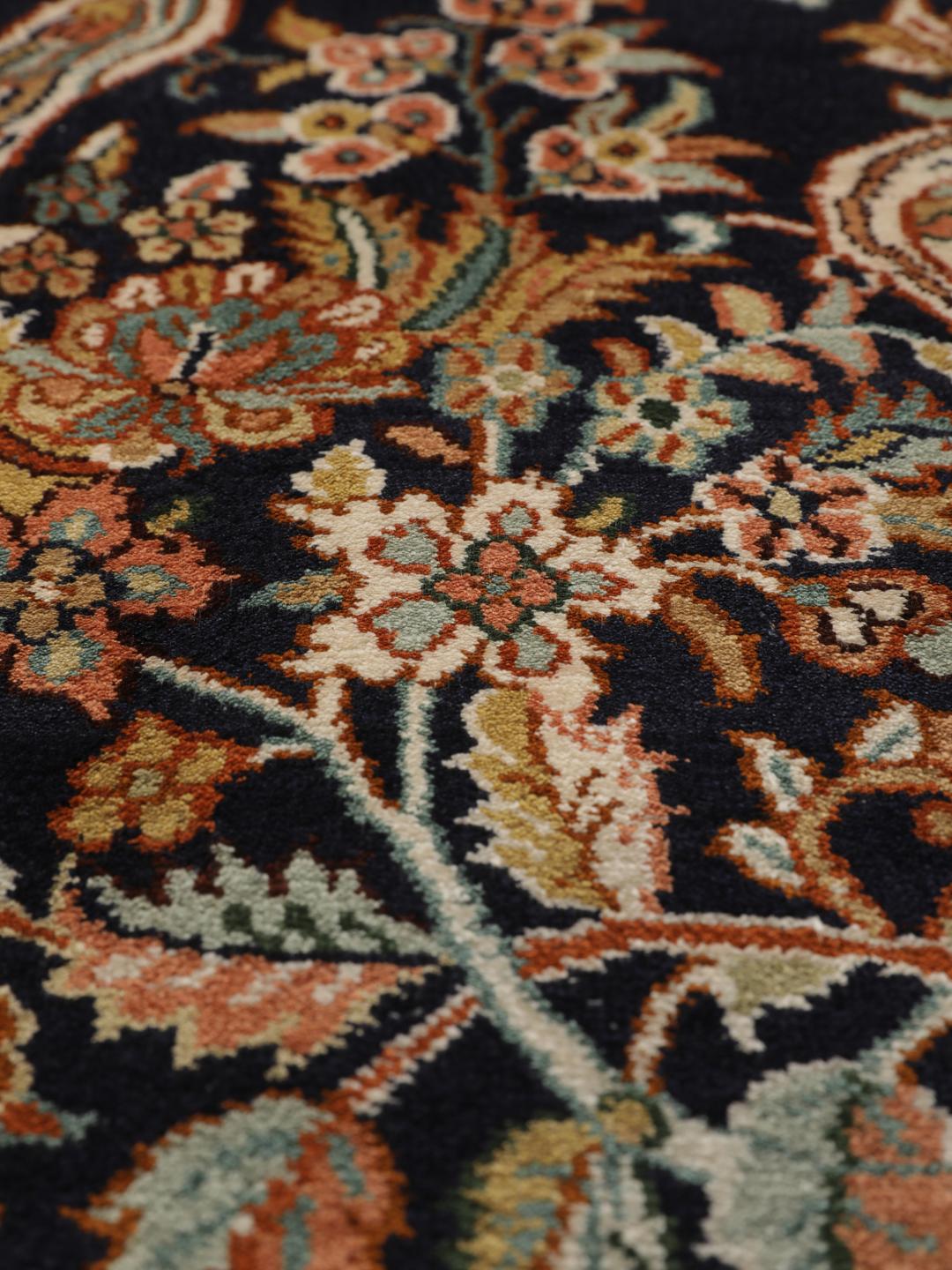
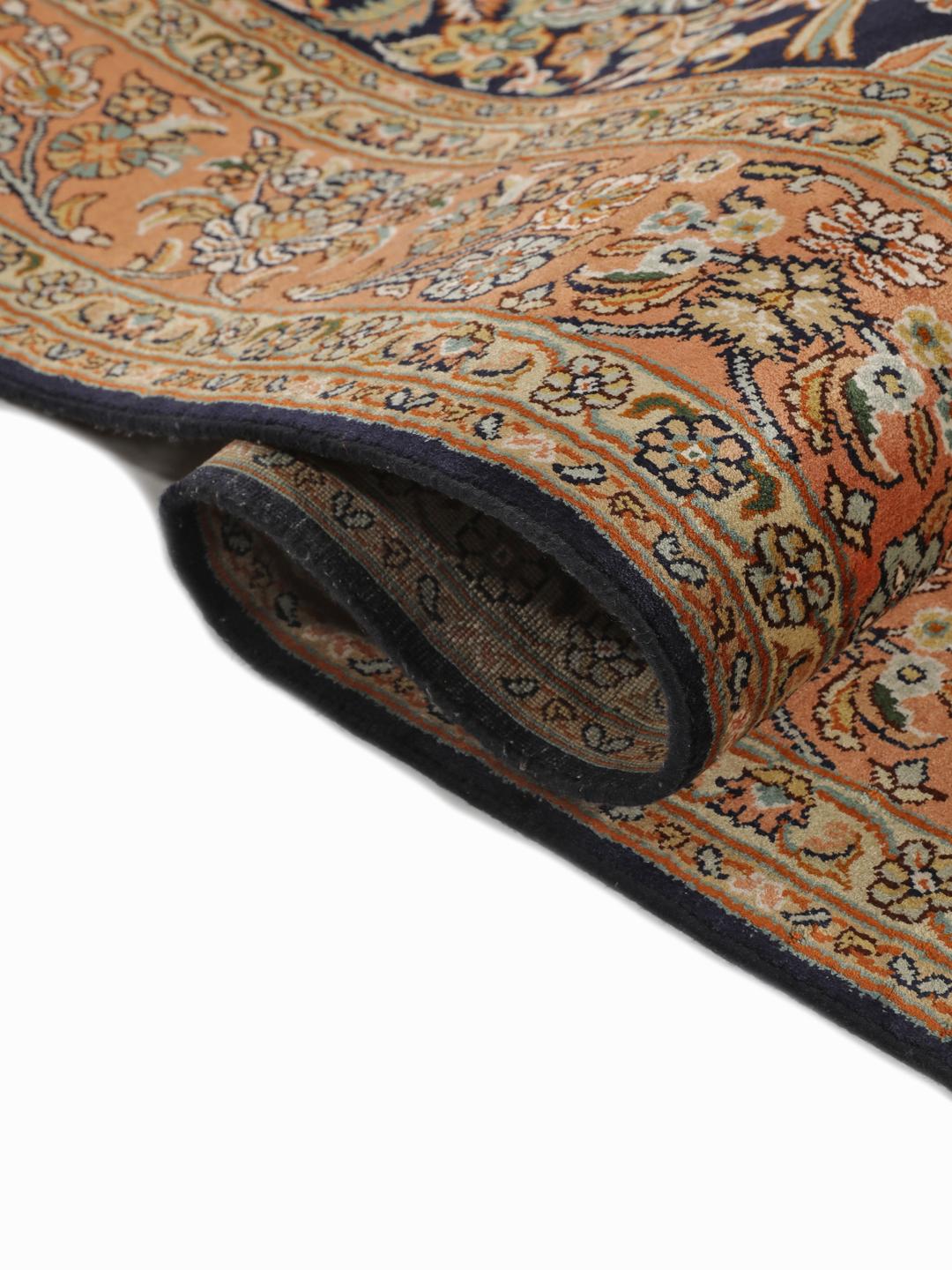
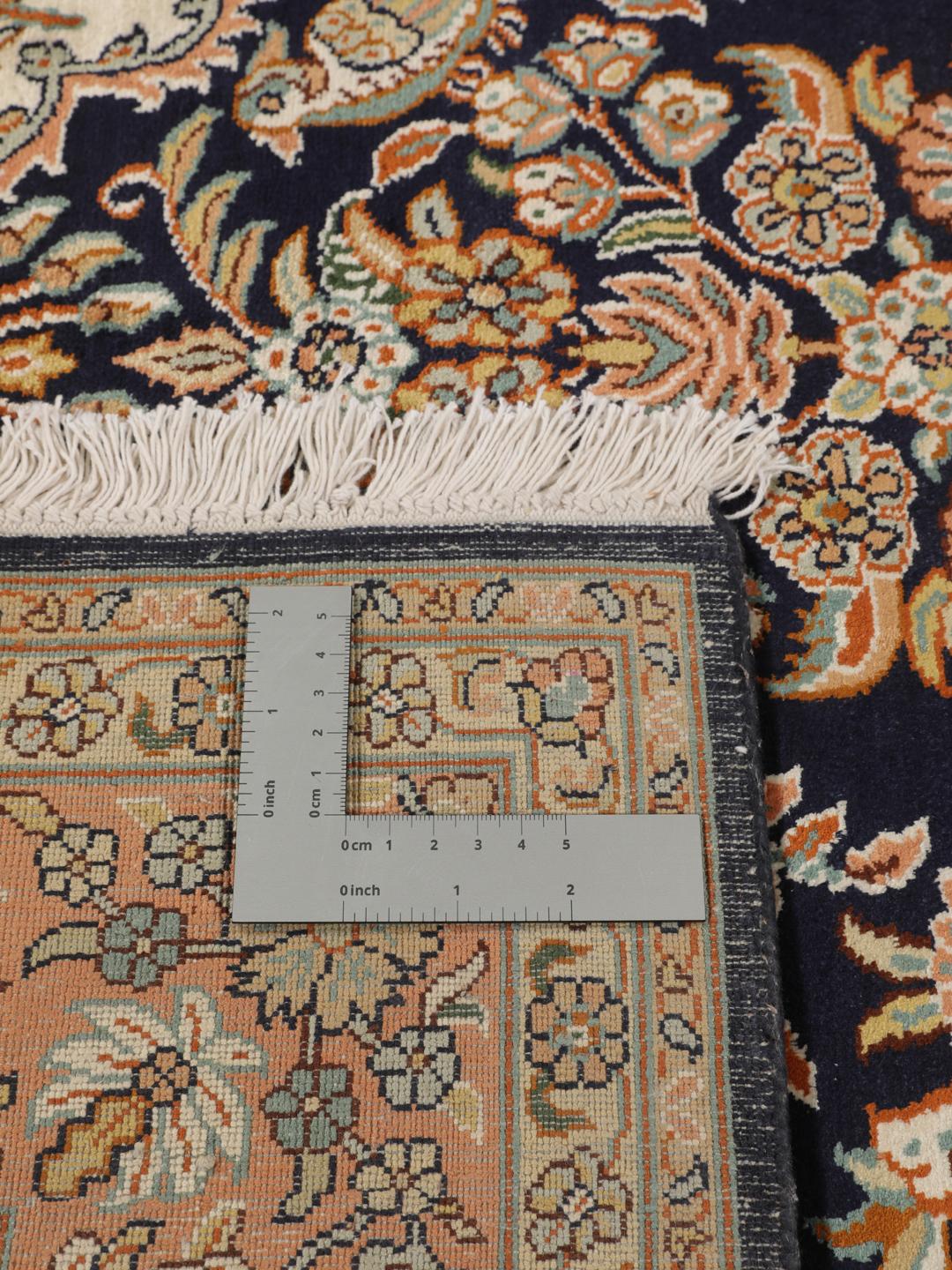
Visually, these rugs are defined by their incredibly complex and flowing designs. You will frequently find motifs inspired by the natural world, such as the 'tree of life', intricate floral vines, and stylised birds, all woven with a precision that mirrors high-end miniature painting. The borders are often as detailed as the centre field, creating a cohesive visual narrative that reflects the rich botanical landscapes of the Kashmir valley. The use of a dark field, as seen here, is a classic choice that makes the lighter, multi-coloured details pop with dramatic effect.
Collectors value these rugs for their combination of artistic beauty and technical mastery. Owning a piece from this tradition is about more than just floor decor; it is about preserving a legacy of craftsmanship that has been passed down through generations of families. Because each rug is created by hand in a process that cannot be automated, they are held in high regard as rare, cultural artefacts that represent a pinnacle of human skill and dedication to beauty.