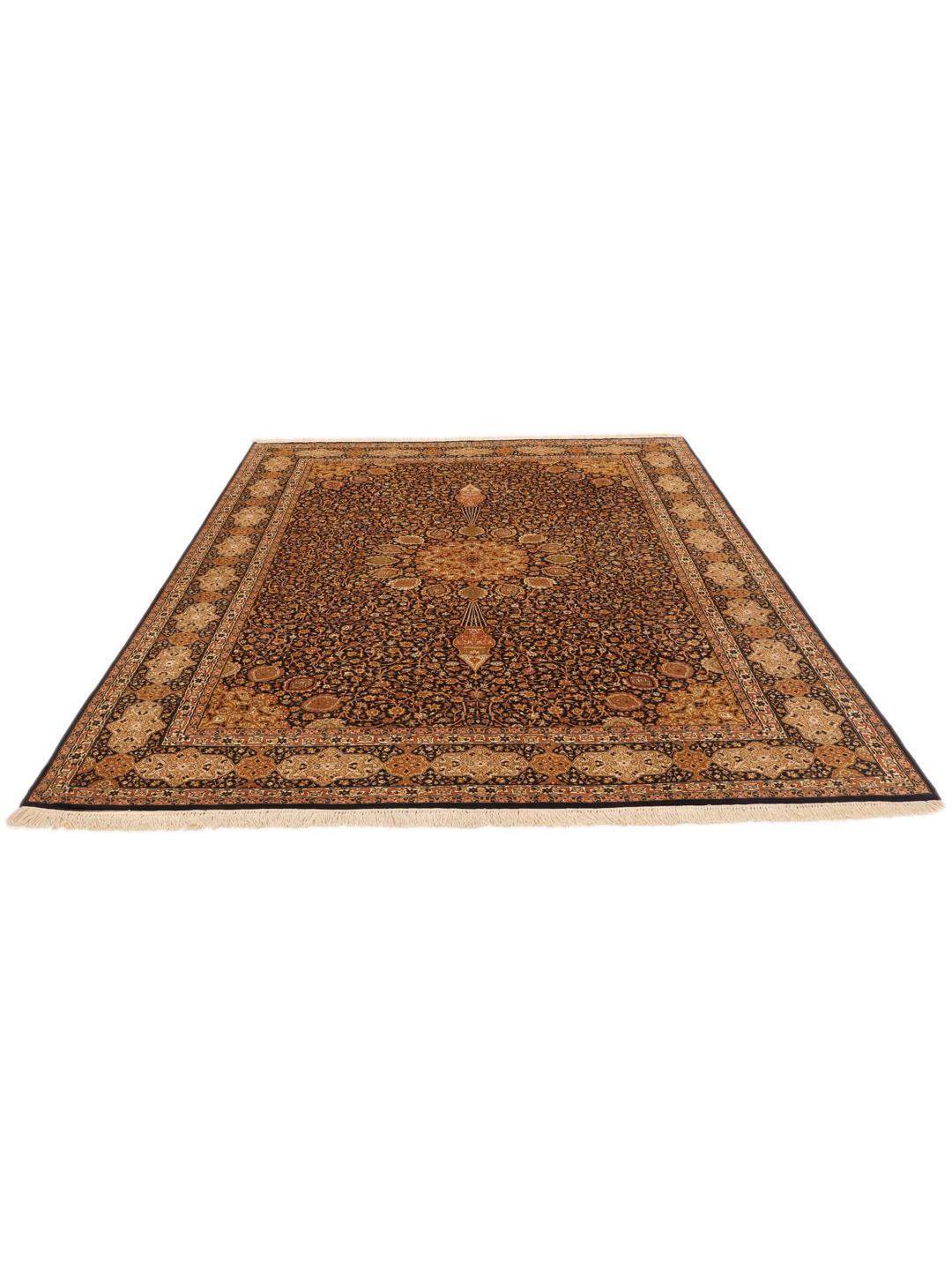
Kashmir rugs are renowned globally for their exceptional artistry, originating from the beautiful valley of Kashmir in India. This region has a deep-rooted history of textile excellence, heavily influenced by Middle Eastern weaving traditions that travelled along trade routes centuries ago. Over time, these influences blended with local Indian motifs to create a distinct style that is celebrated for its grace and complexity.
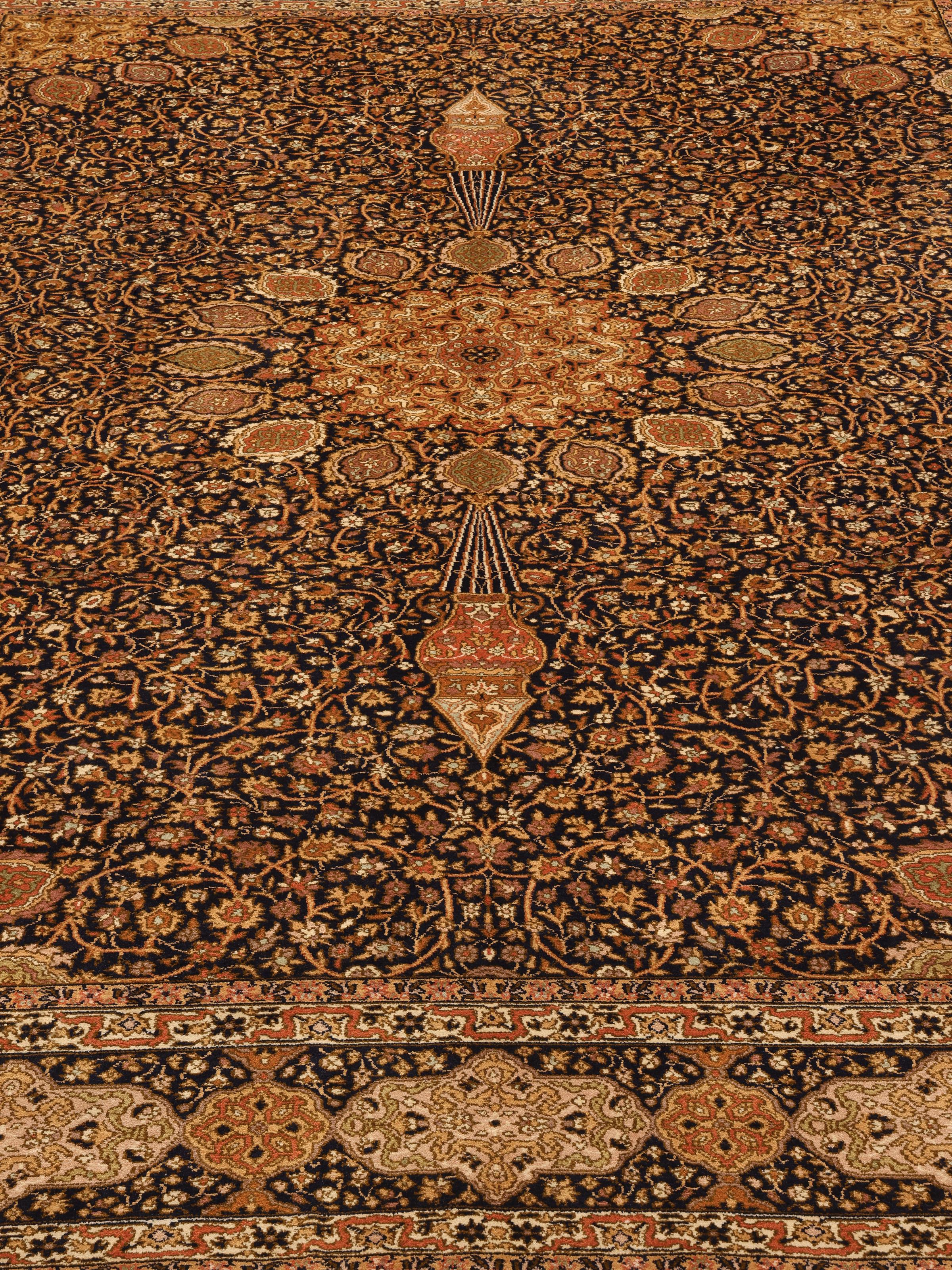
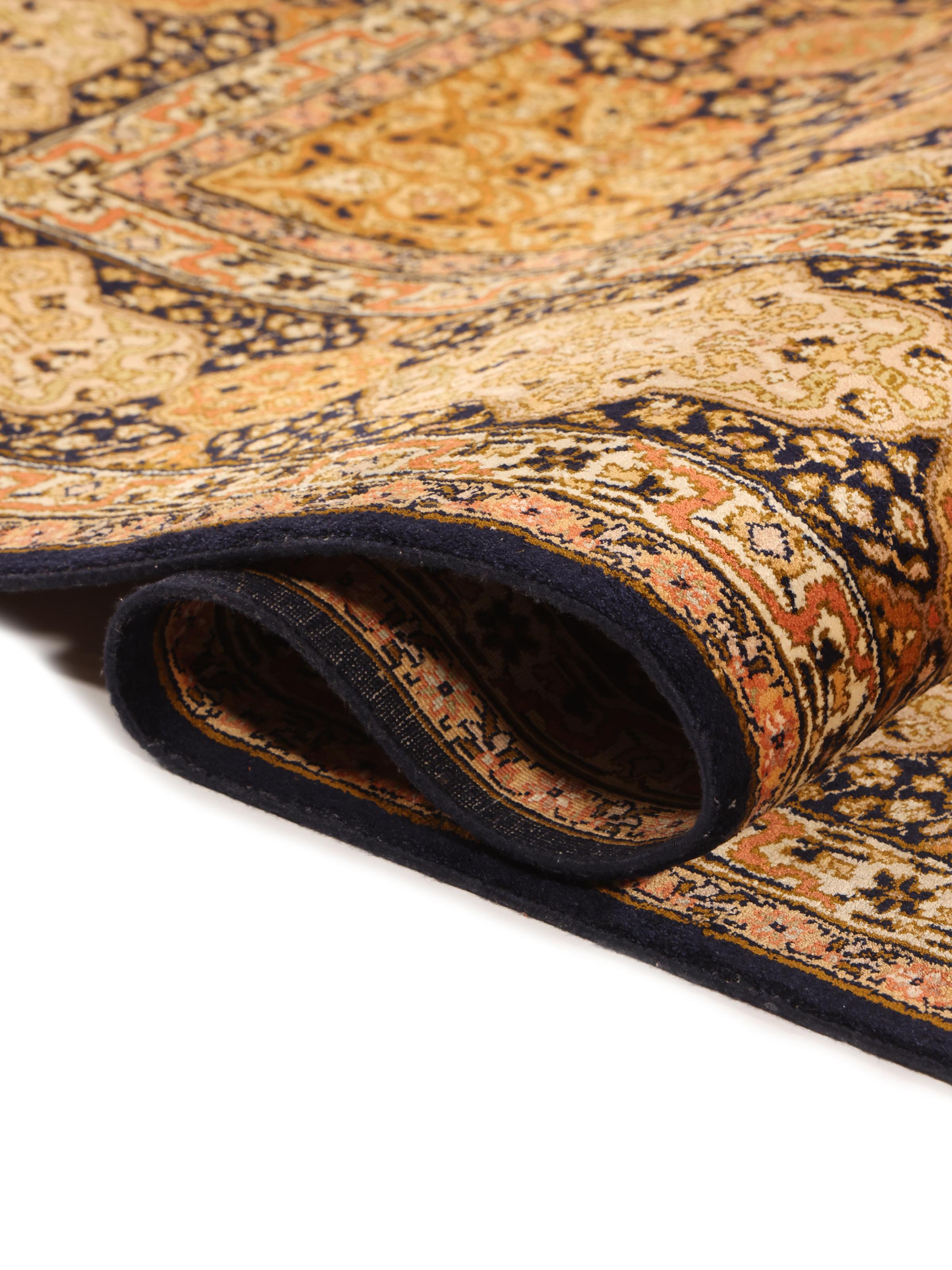
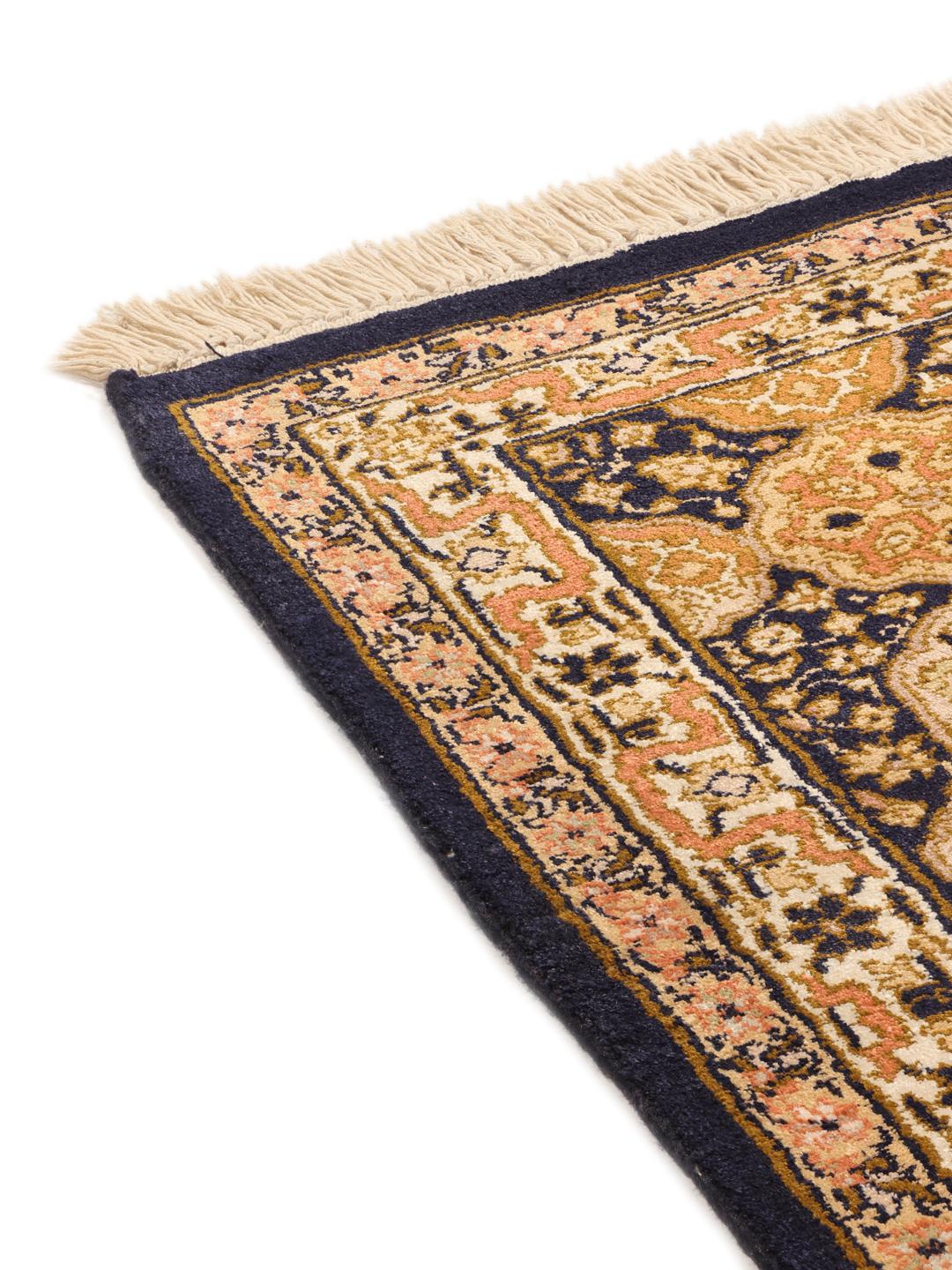
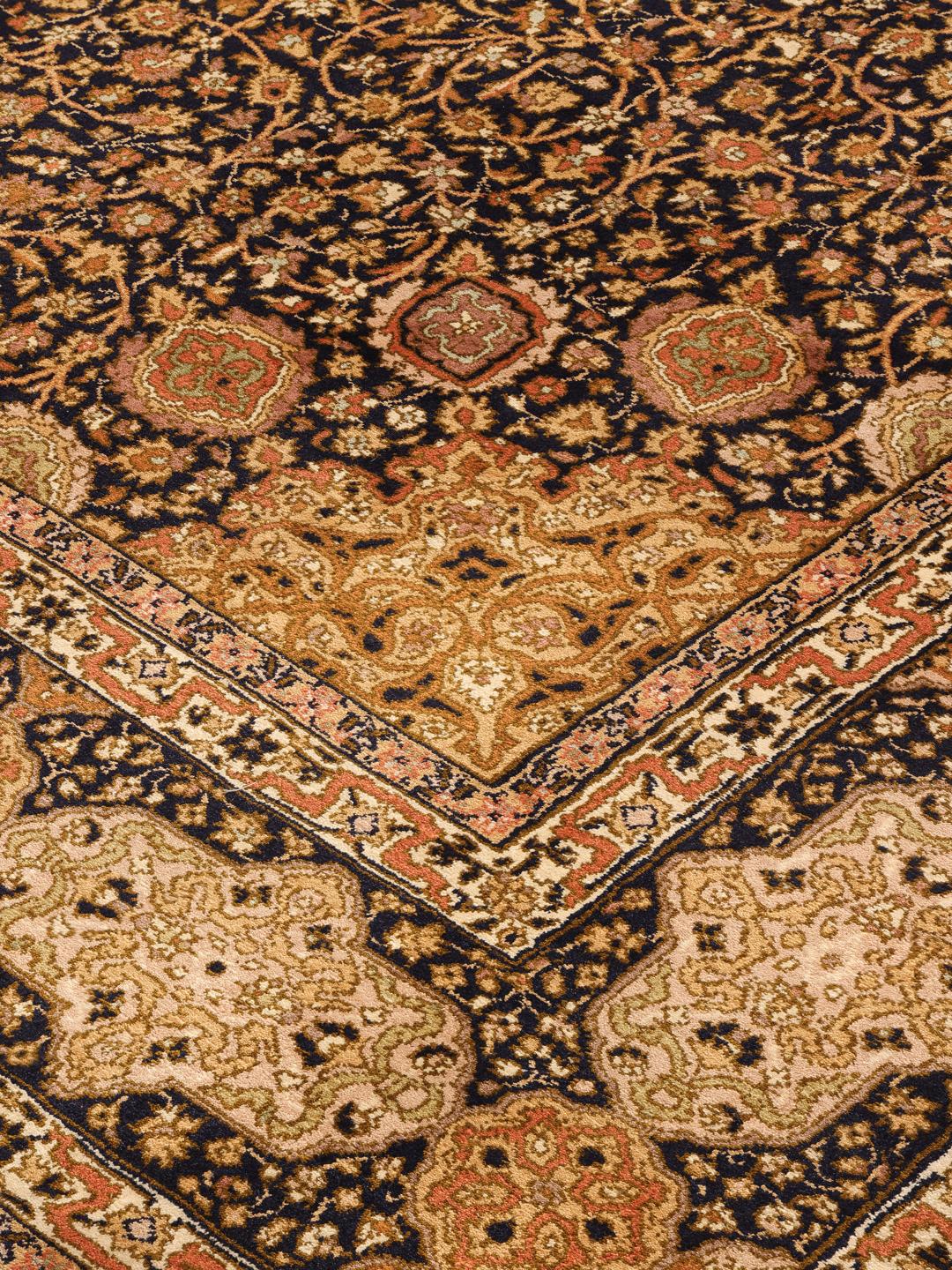
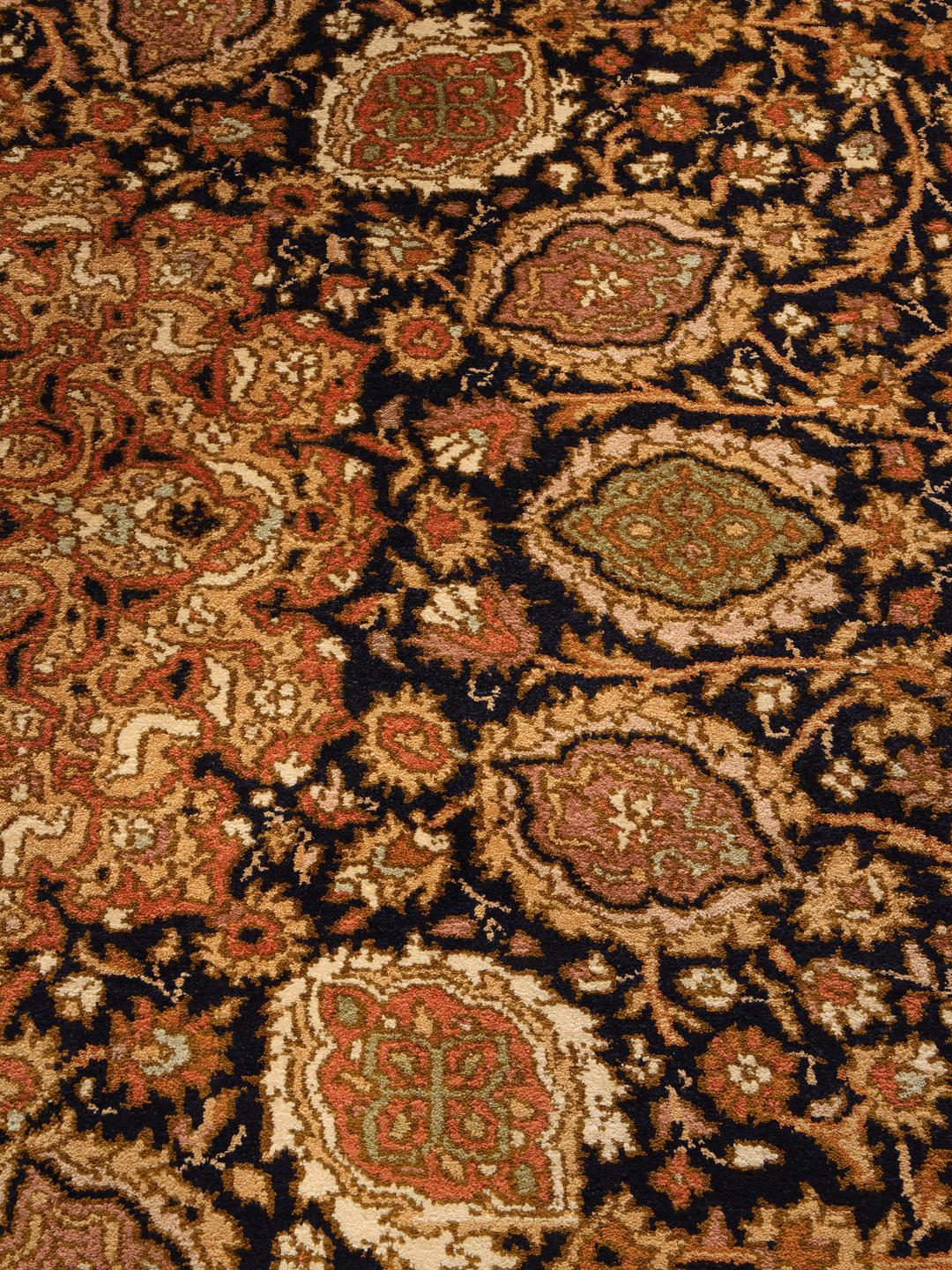
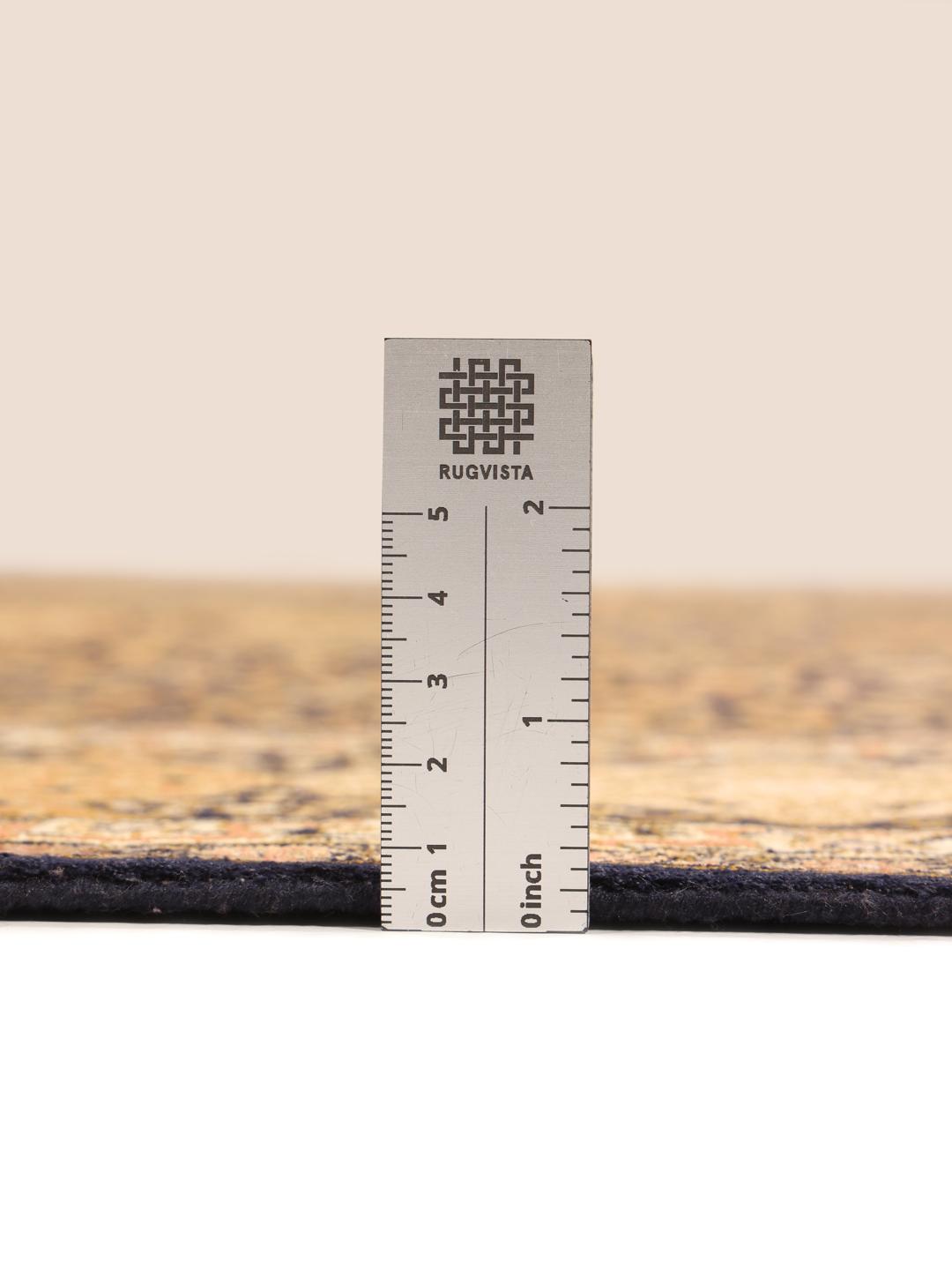
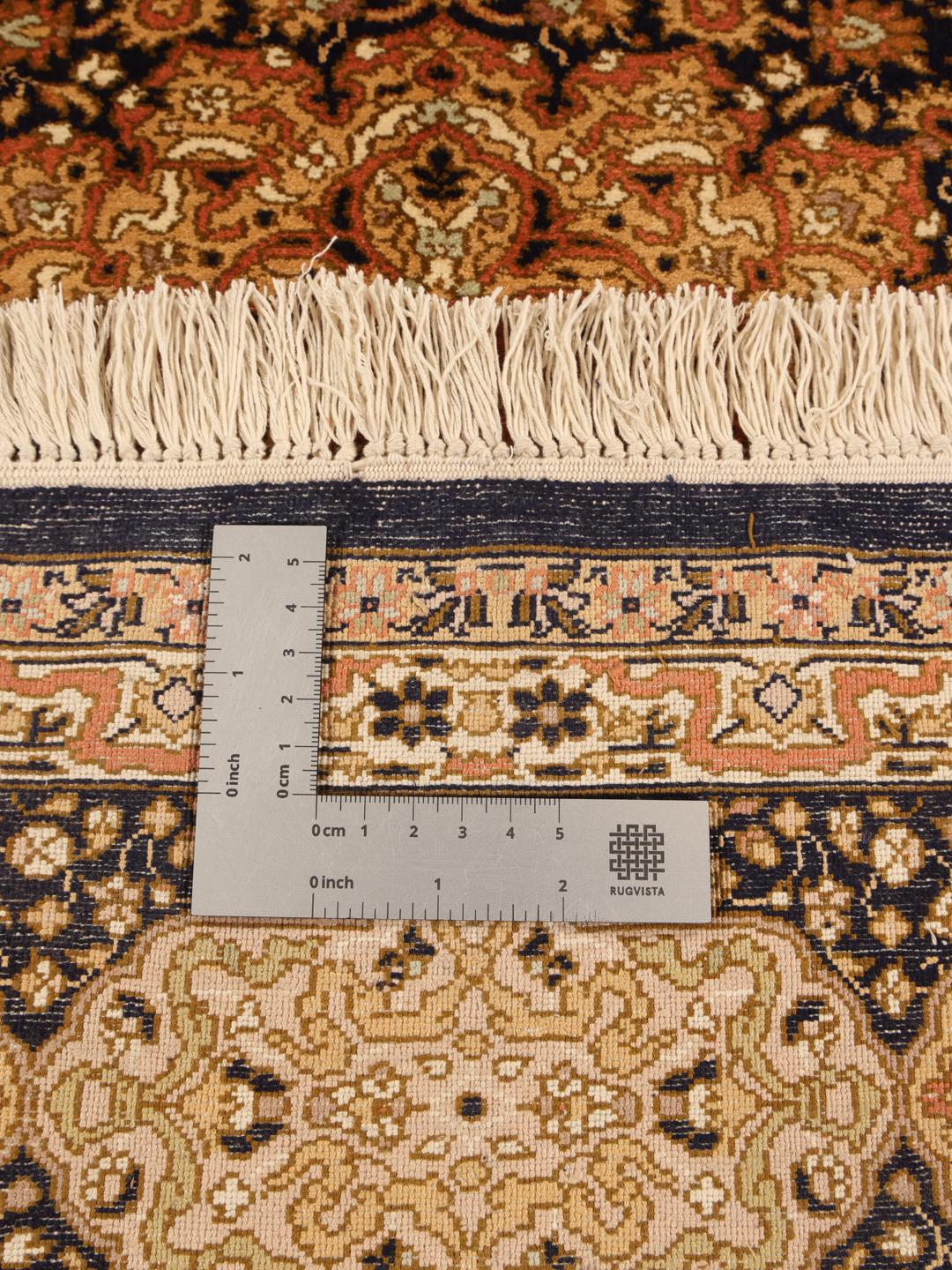
The designation of 24/24 quality refers to a specific technical standard in the weaving process, indicating a high number of knots per square inch. This terminology is a hallmark of the finest Kashmir rugs, where the density of the weave allows for intricate floral and medallion designs that would be impossible to achieve with coarser methods. This density is why these rugs are so highly prized for their durability and sharp, clear patterns.
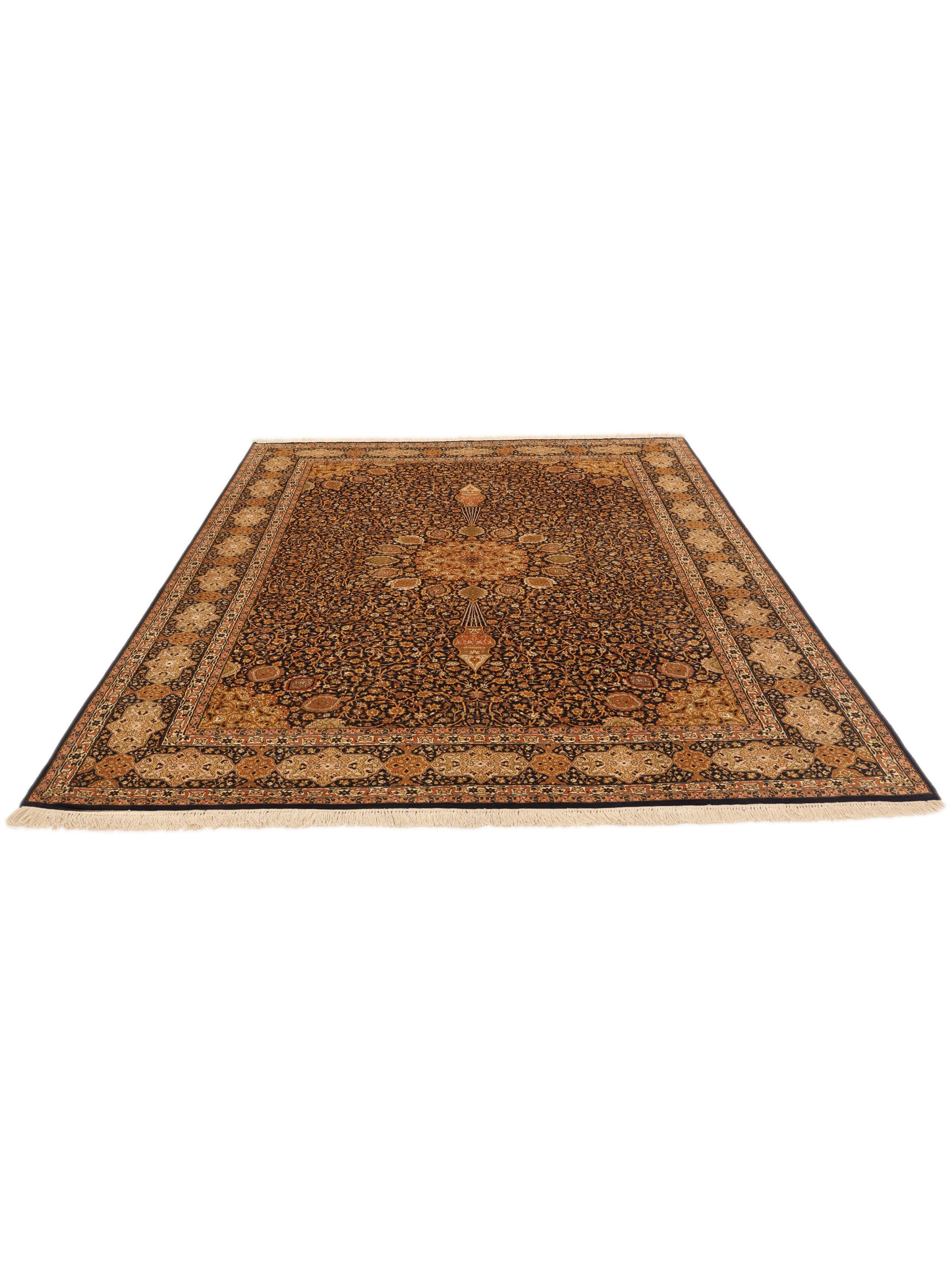
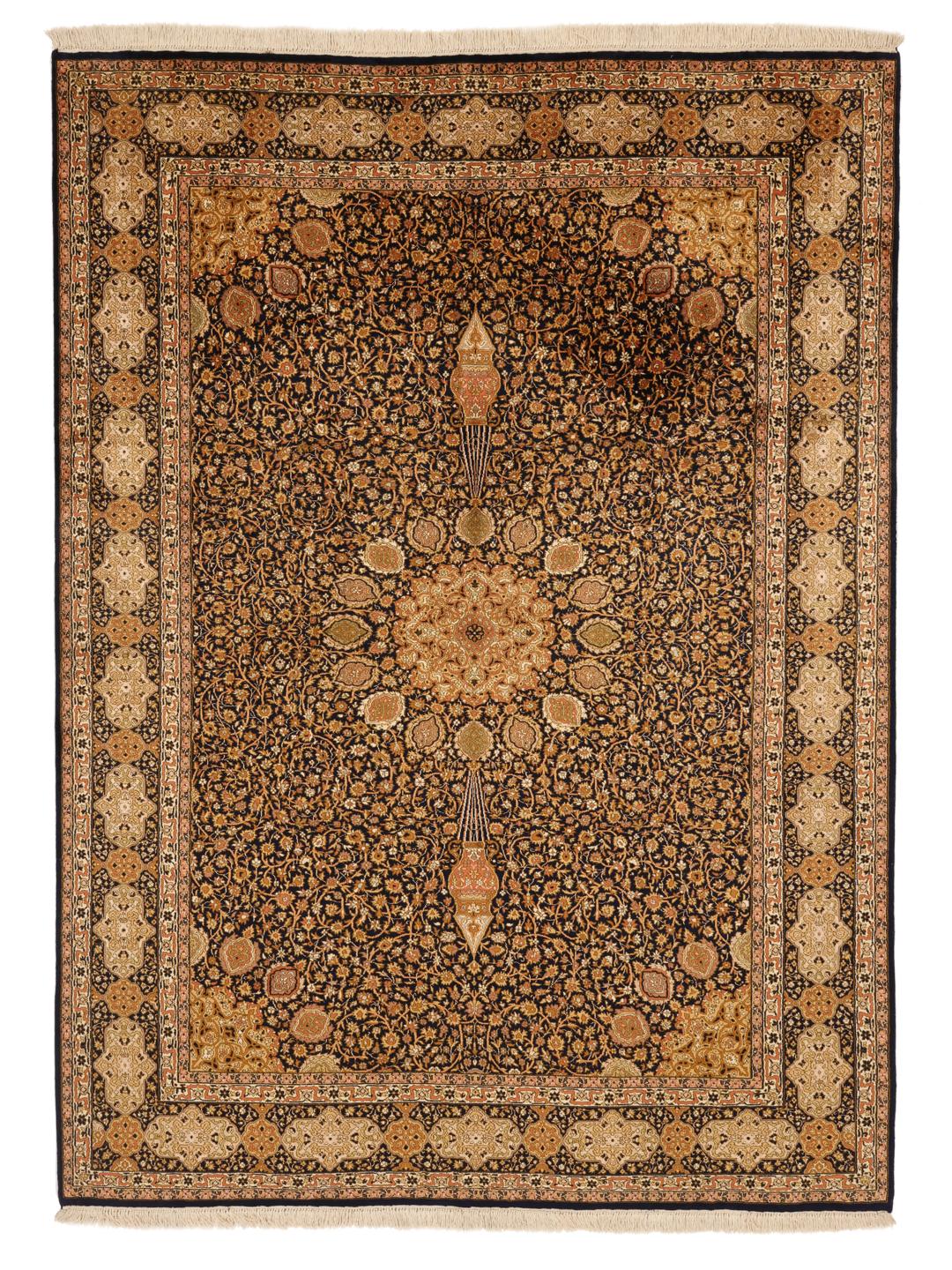
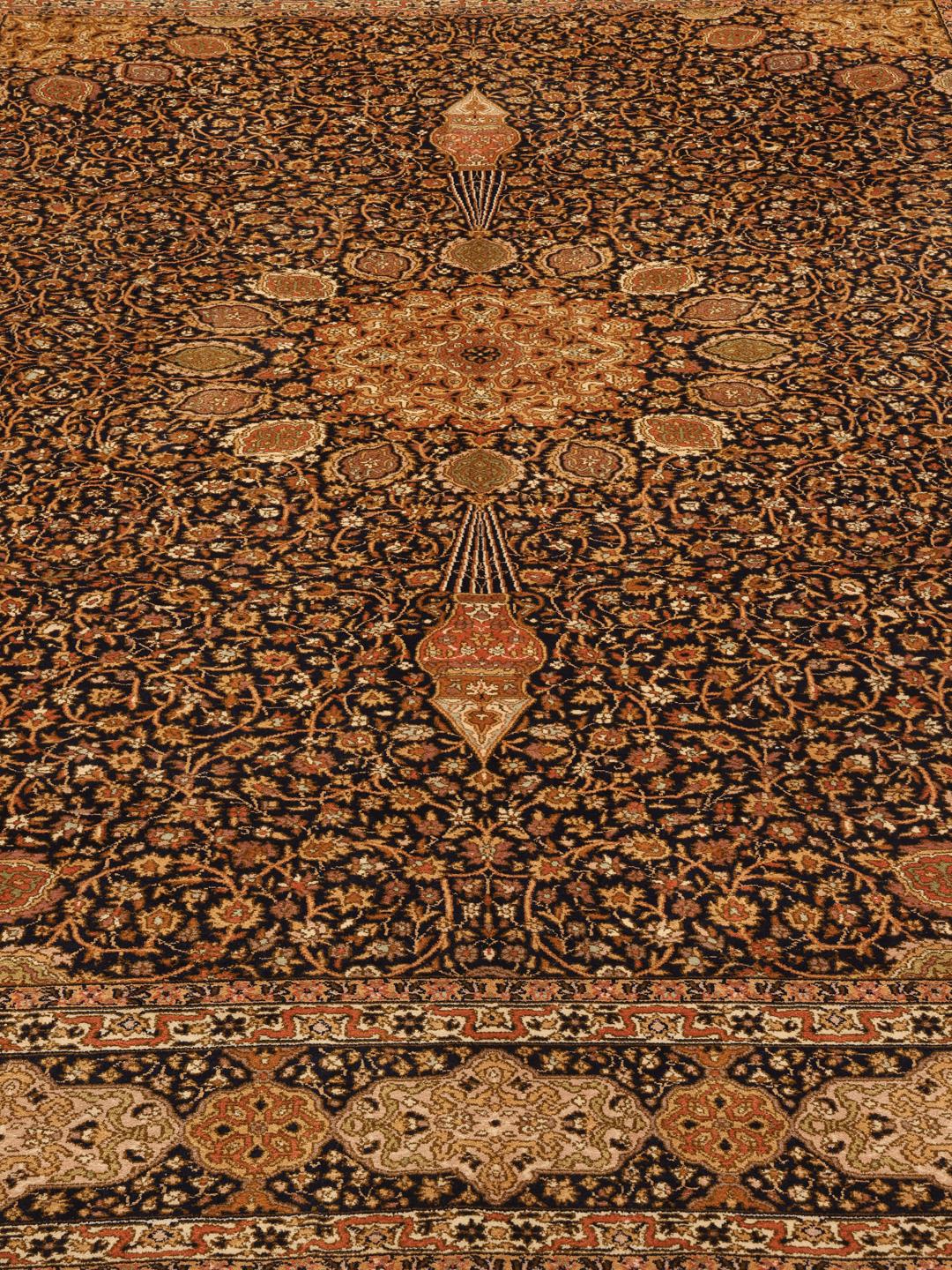
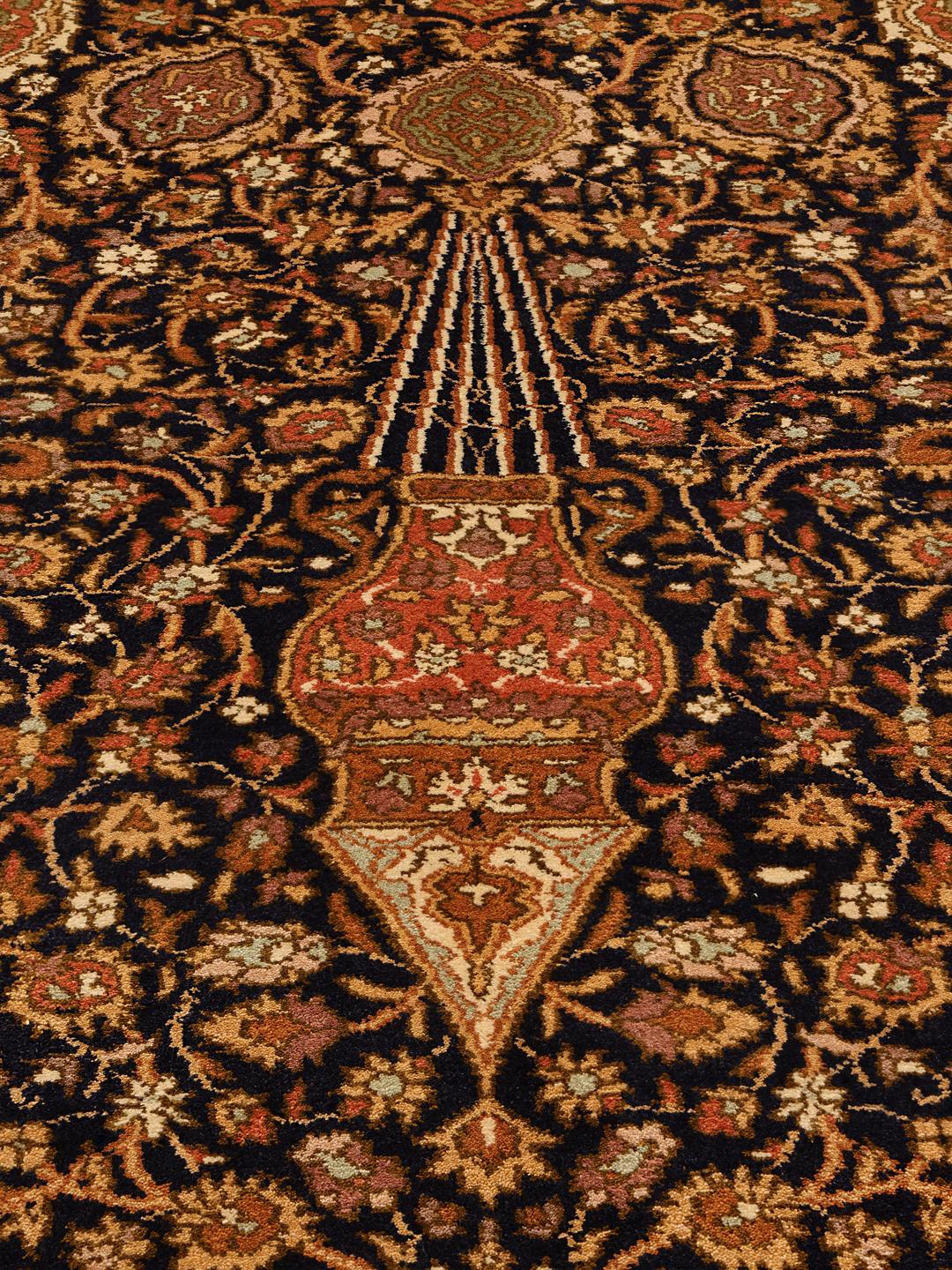
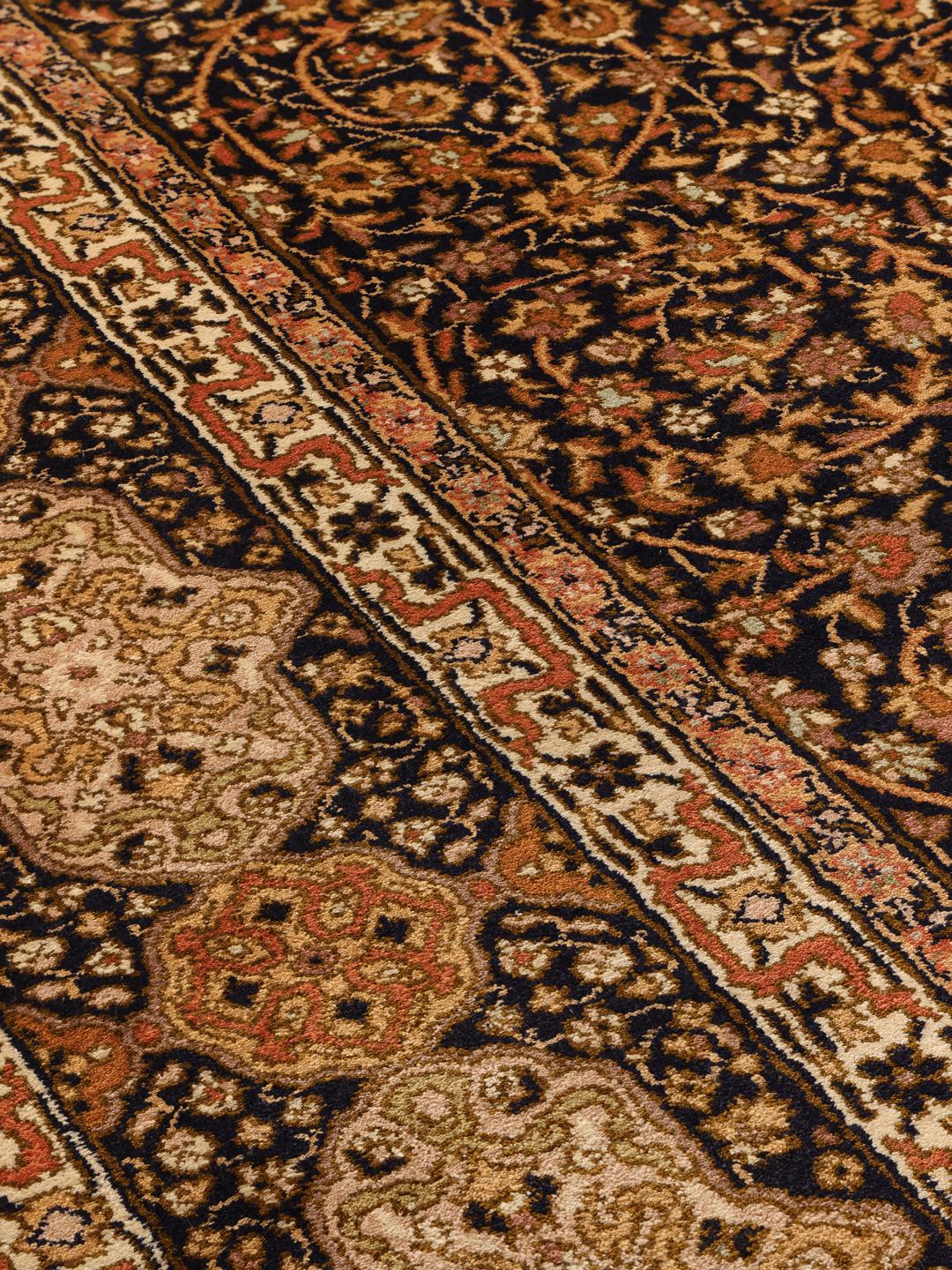
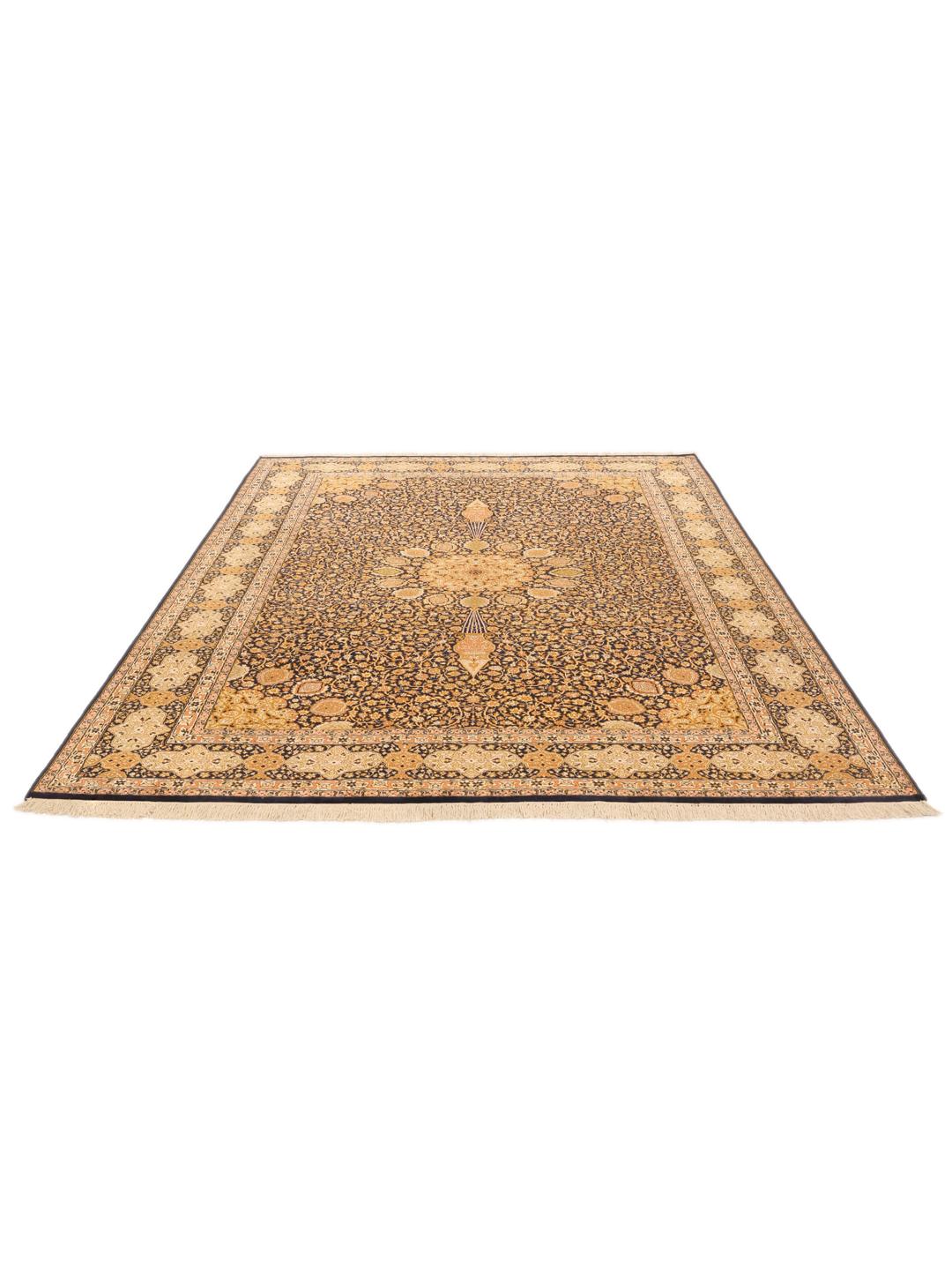
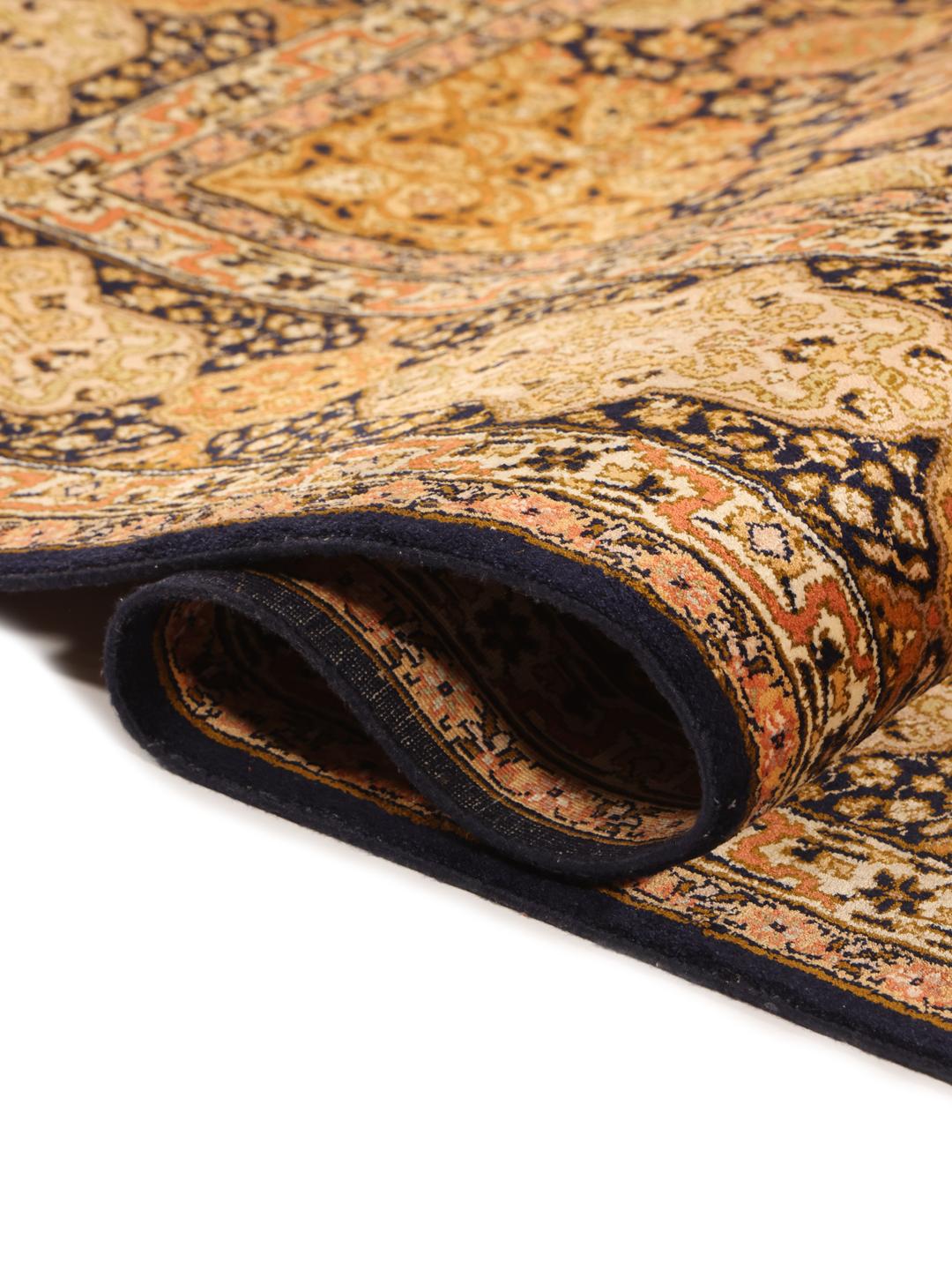
Visually, these rugs are often defined by the 'Tree of Life' or delicate floral patterns, inspired by the lush gardens of the region. The use of a dark, rich field, as seen in this piece, is a classic choice that makes the surrounding floral motifs and central medallion appear to float, creating a sense of depth and movement. These designs are not merely decorative but often carry symbolic meanings rooted in local cultural heritage.
Collecting a hand-knotted Kashmir silk rug is an investment in a storied craft tradition. Because of the time and high level of skill required to produce them, these rugs are seen as symbols of prestige and heritage. Owning one means preserving a piece of cultural history, ensuring that the ancient techniques of the weavers are valued and continued for future generations.