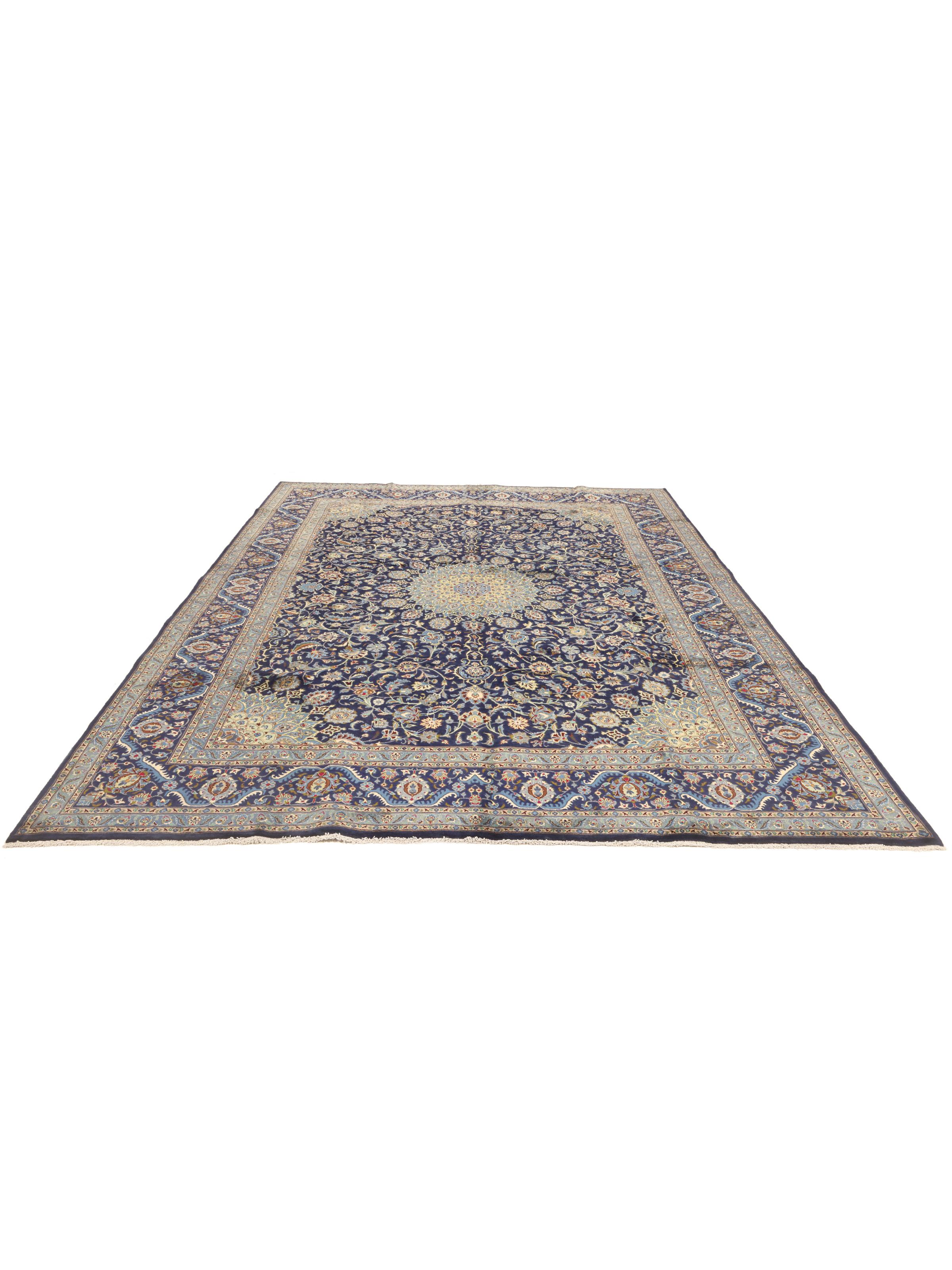
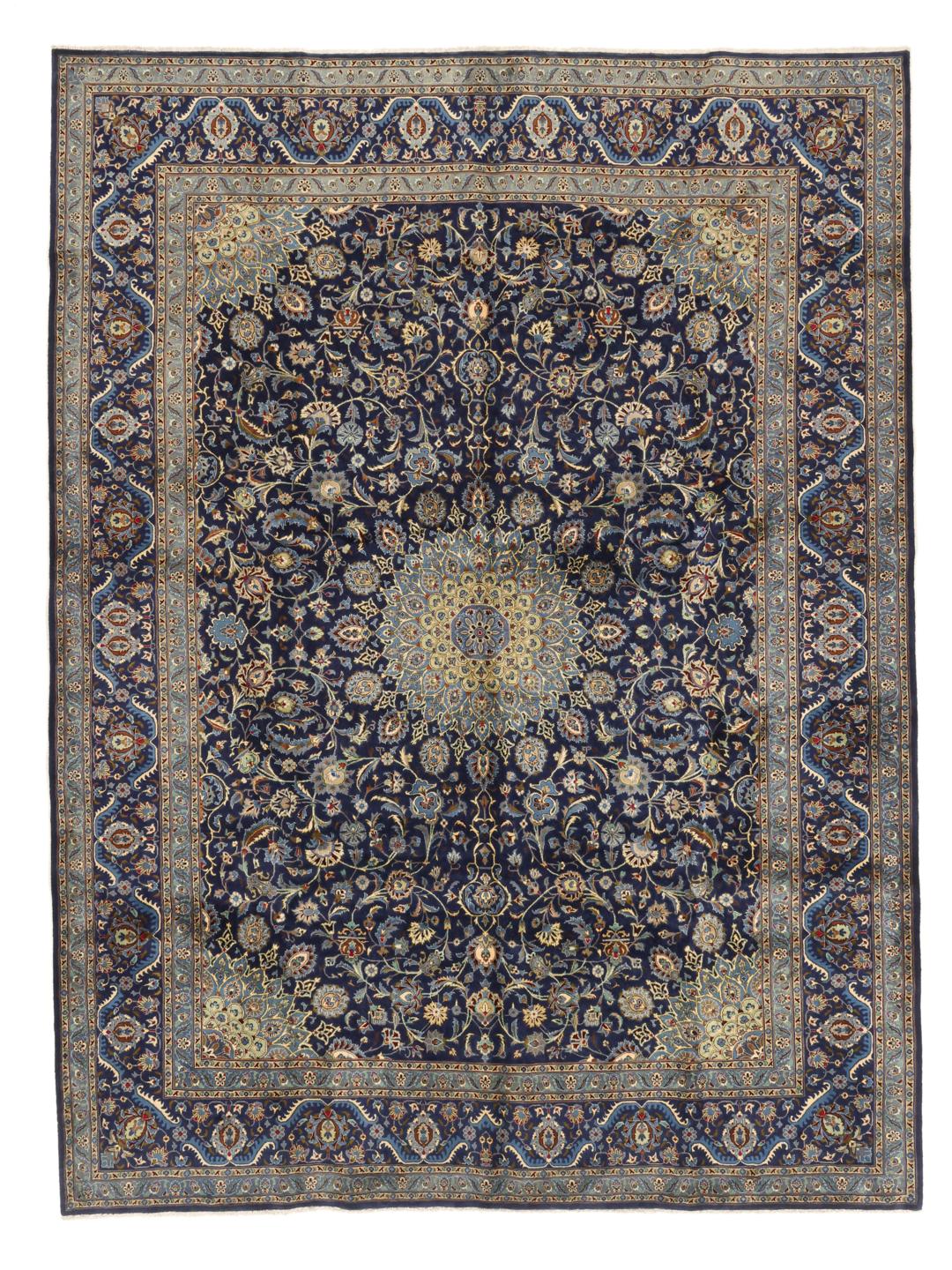
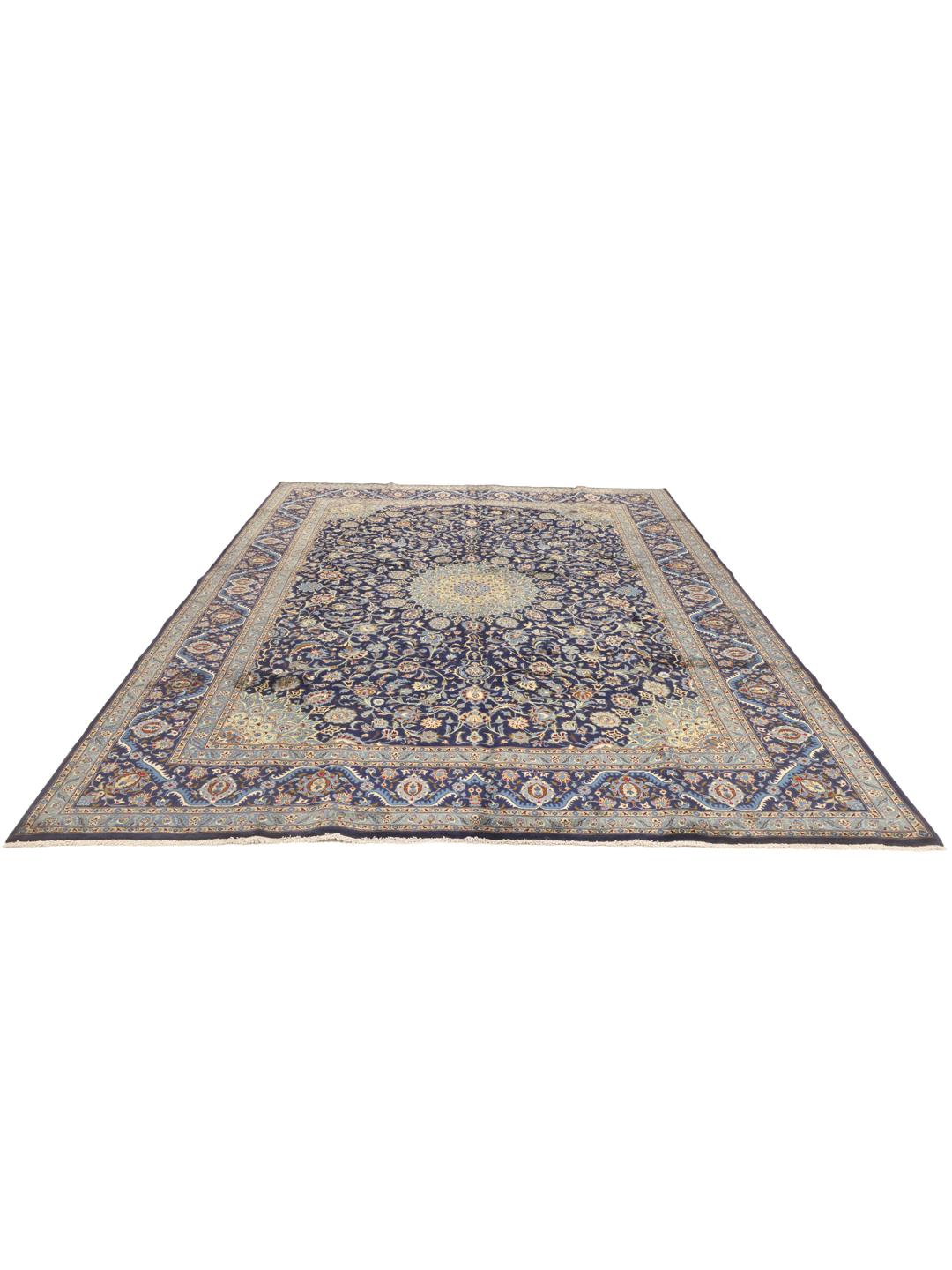
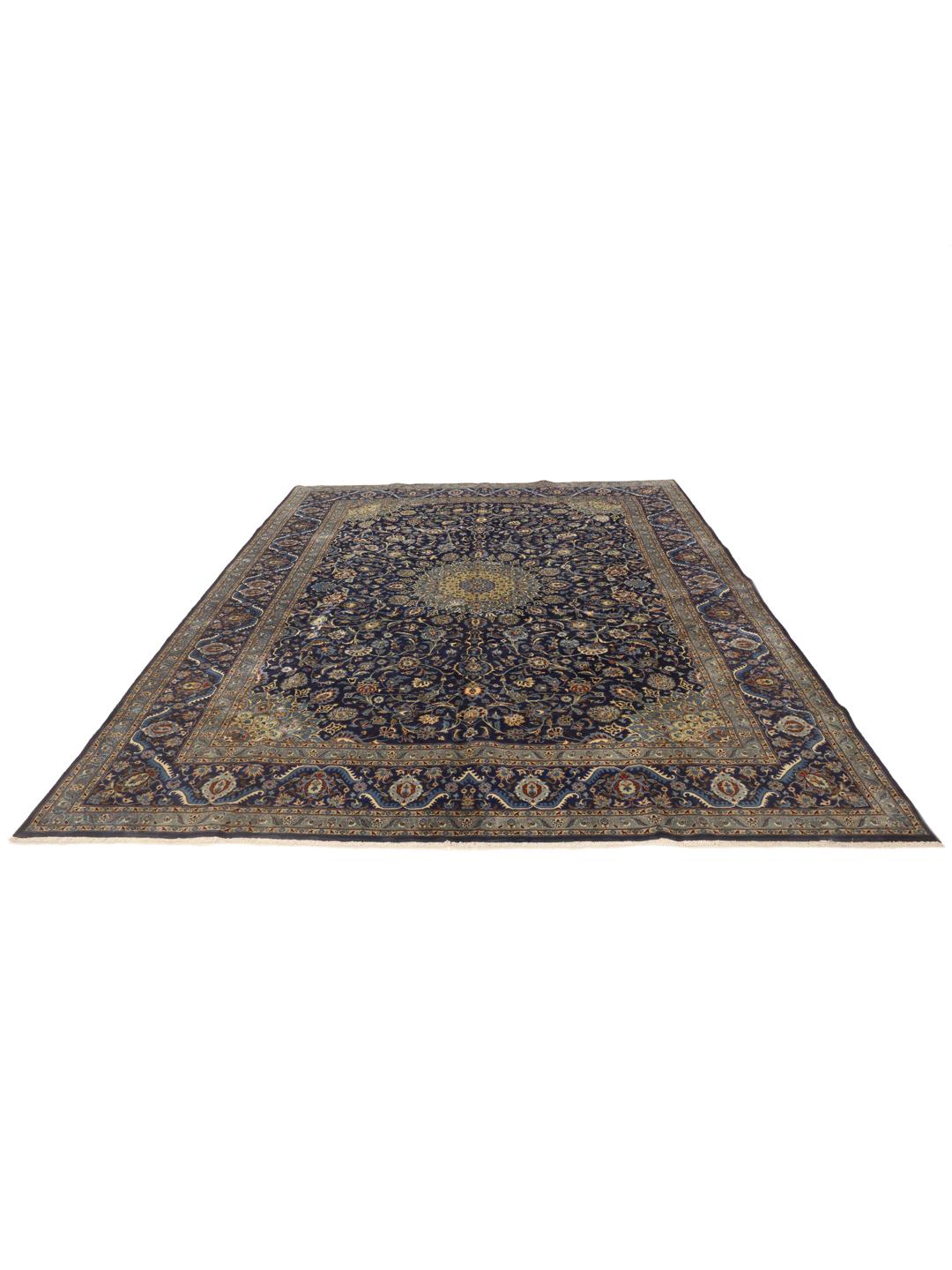
Kashmar rugs originate from the historic city of Kashmar in the Khorasan province of the Middle East. This region has long been celebrated for its contribution to the textile arts, with a tradition of weaving that stretches back centuries. Kashmar itself is known as a centre of culture and trade, and its rugs often reflect this heritage through their grand scales and complex, narrative-driven designs.
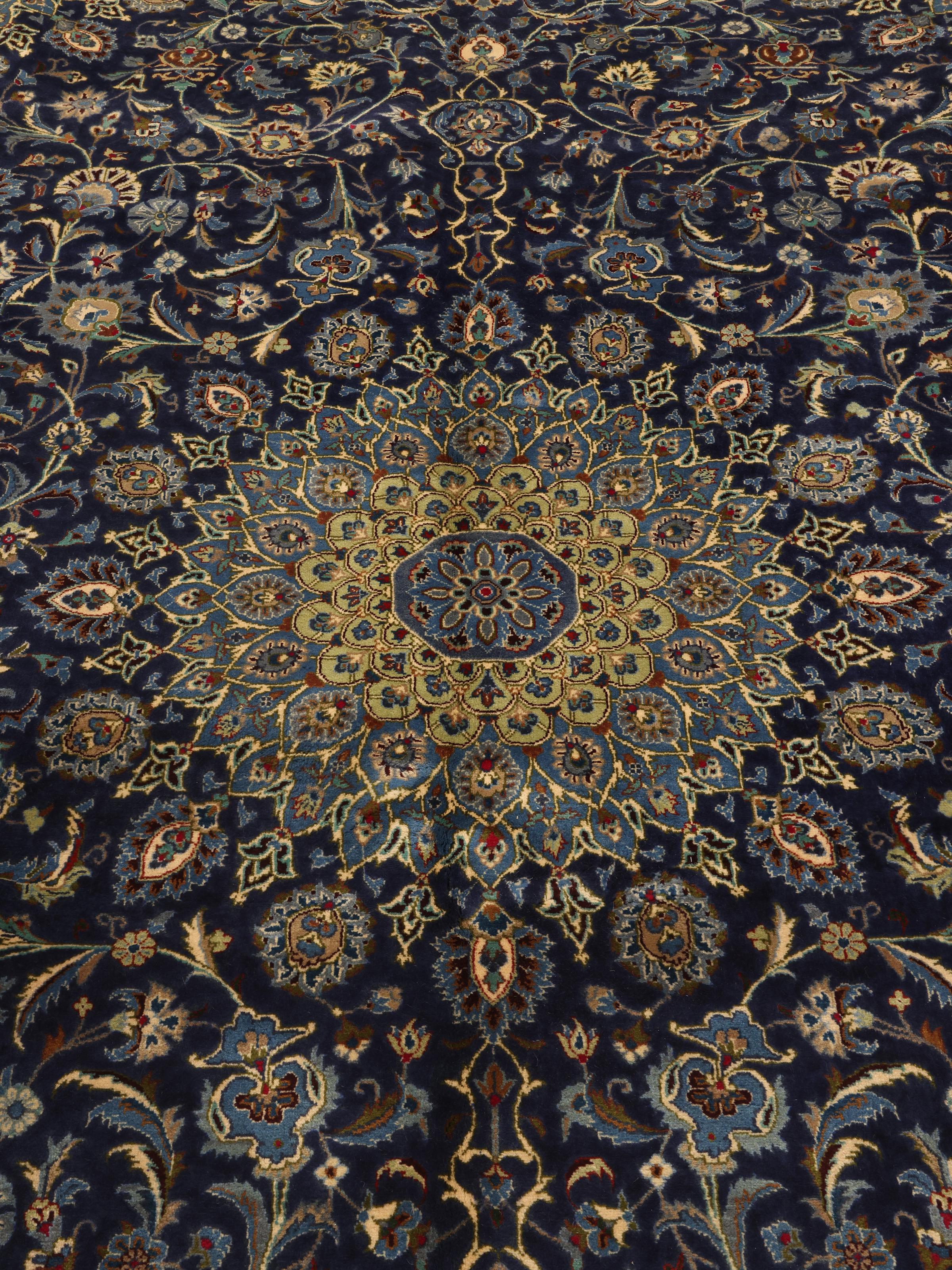
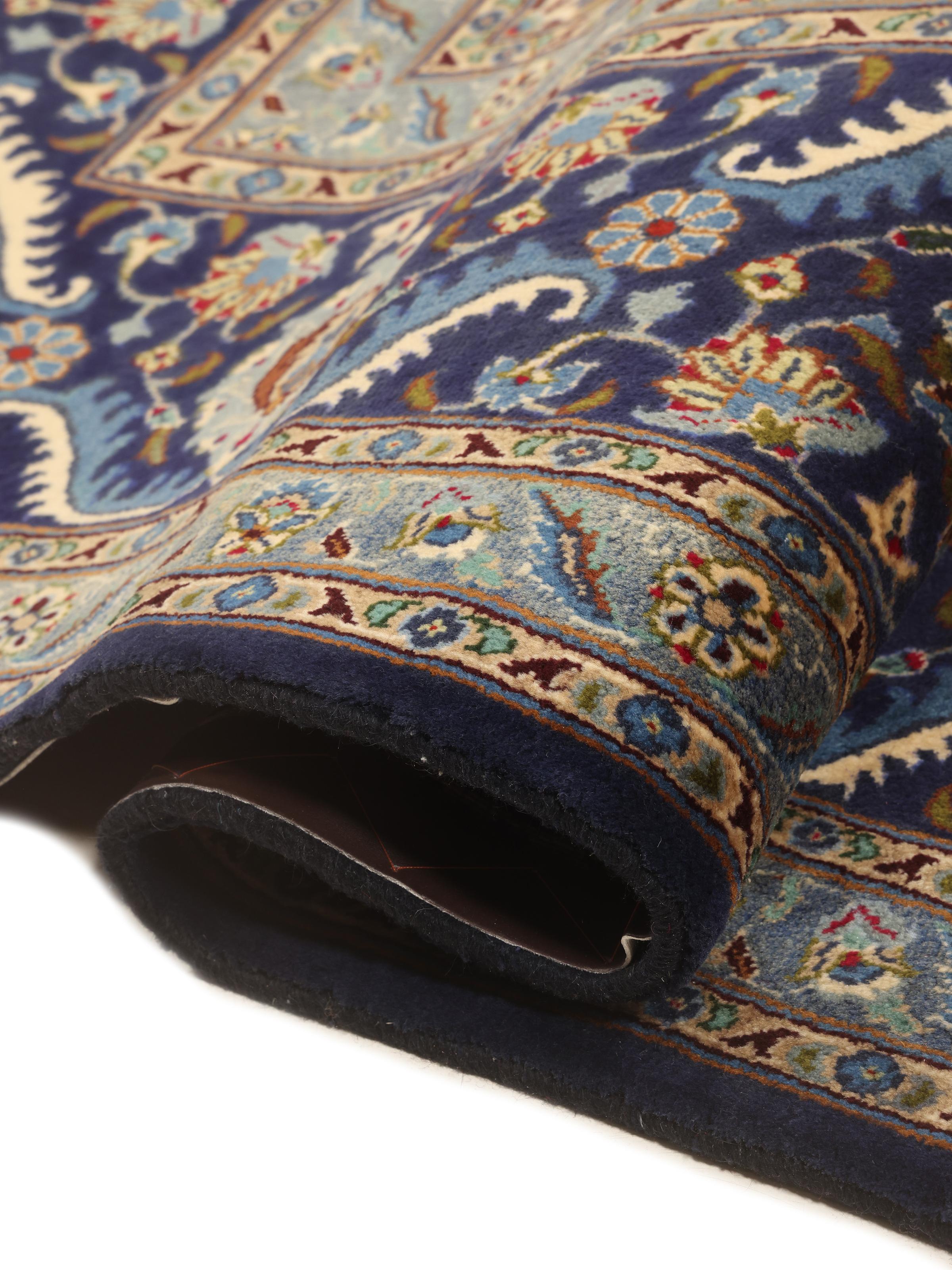
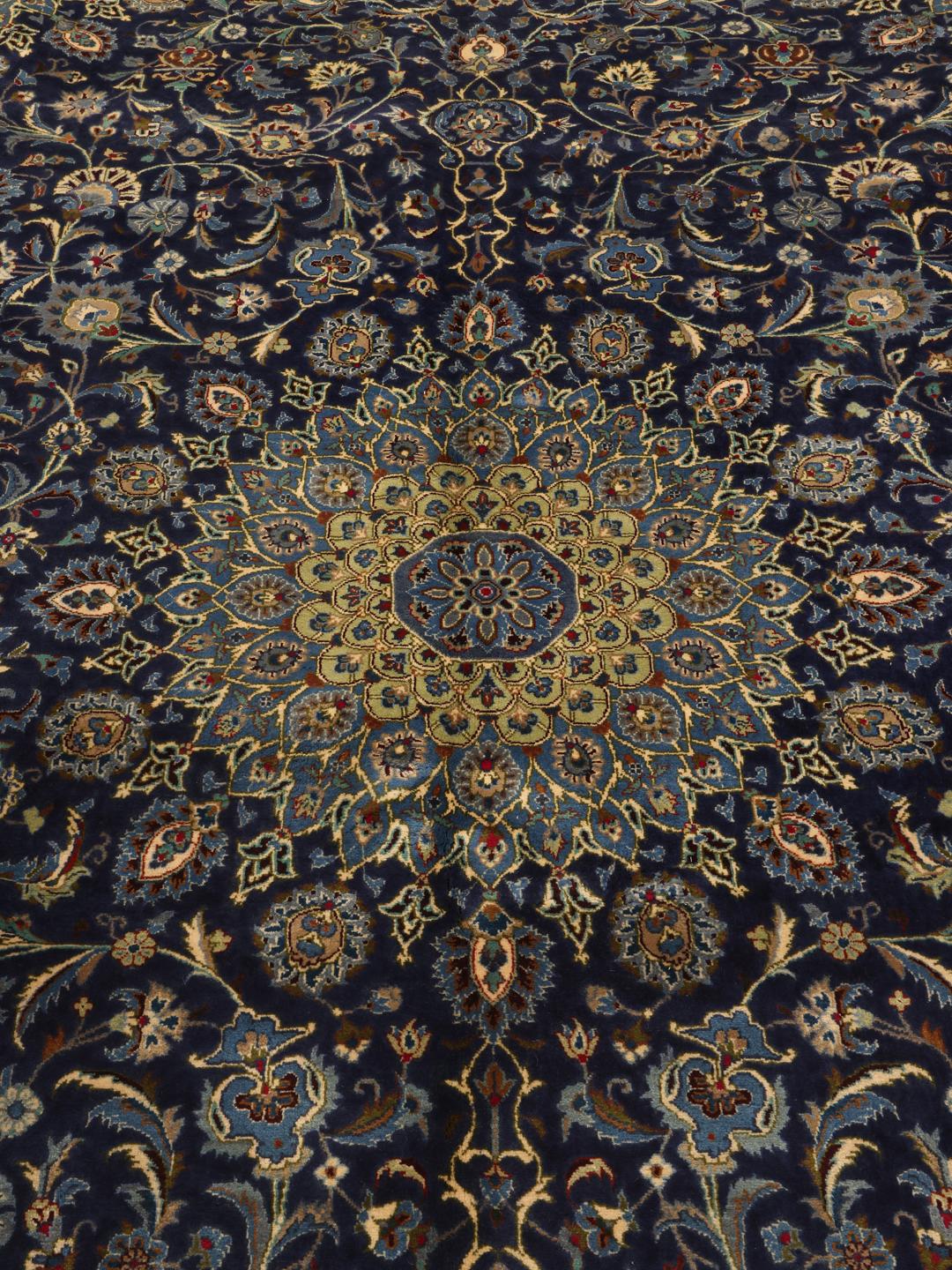
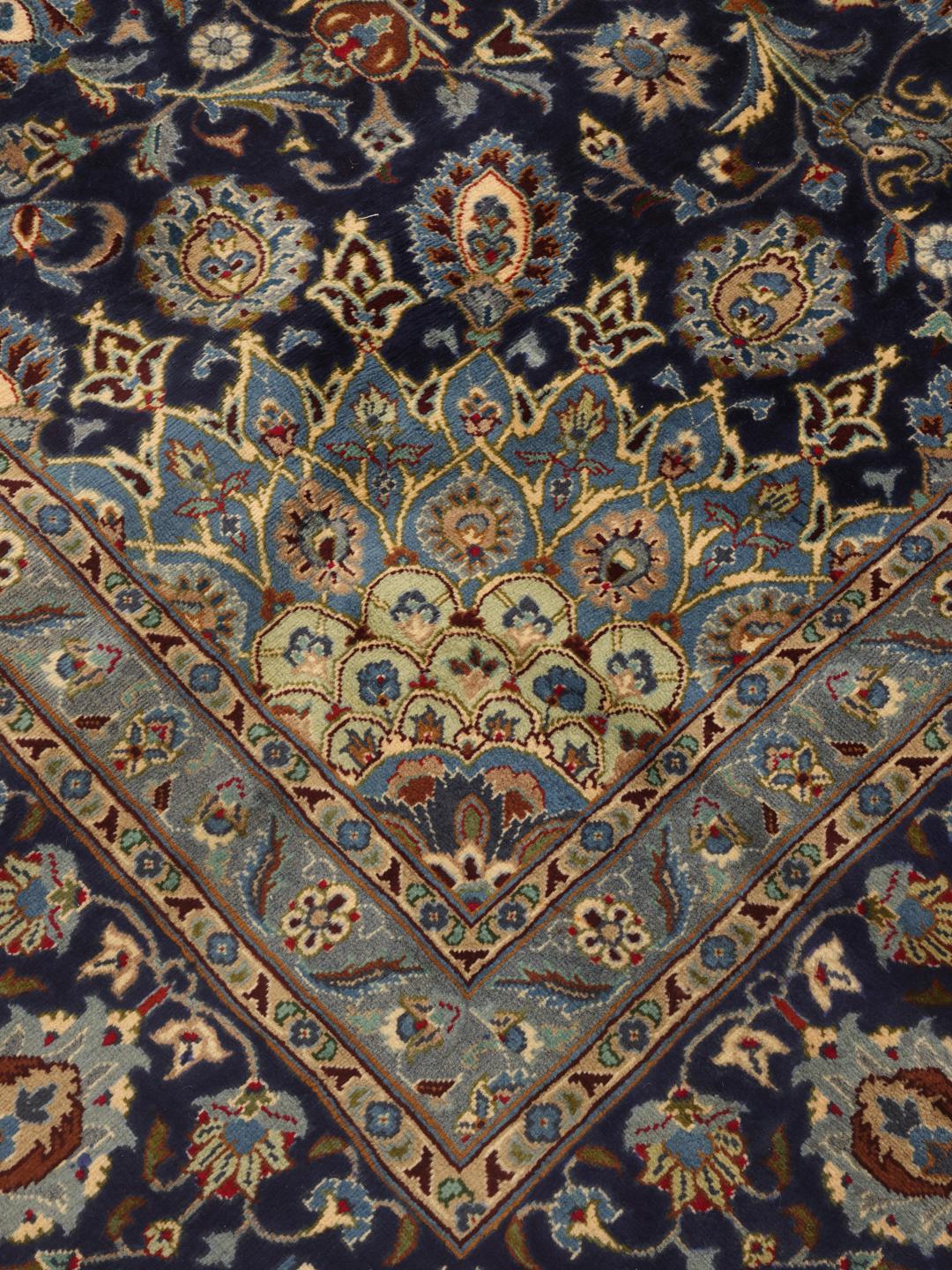
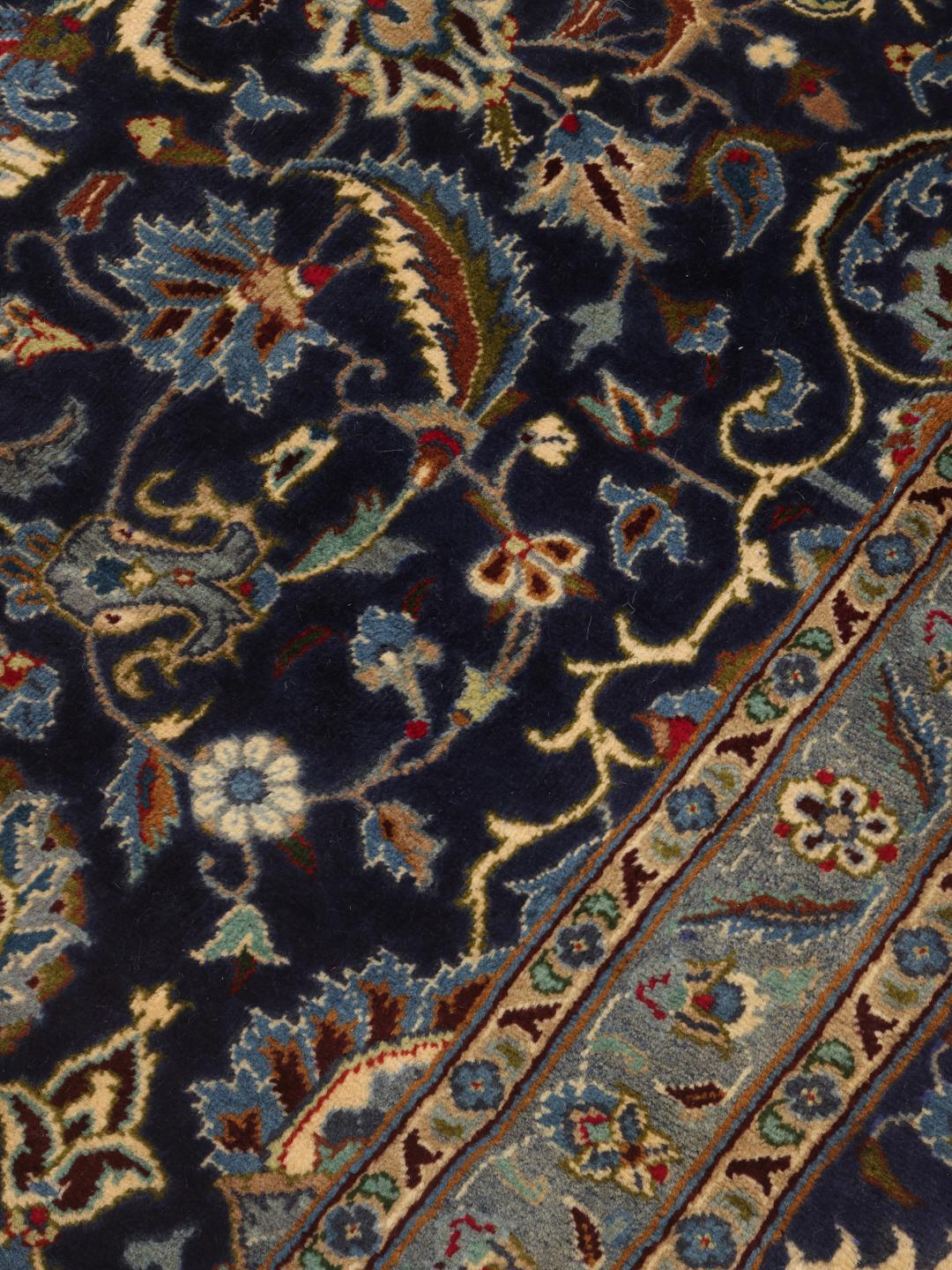
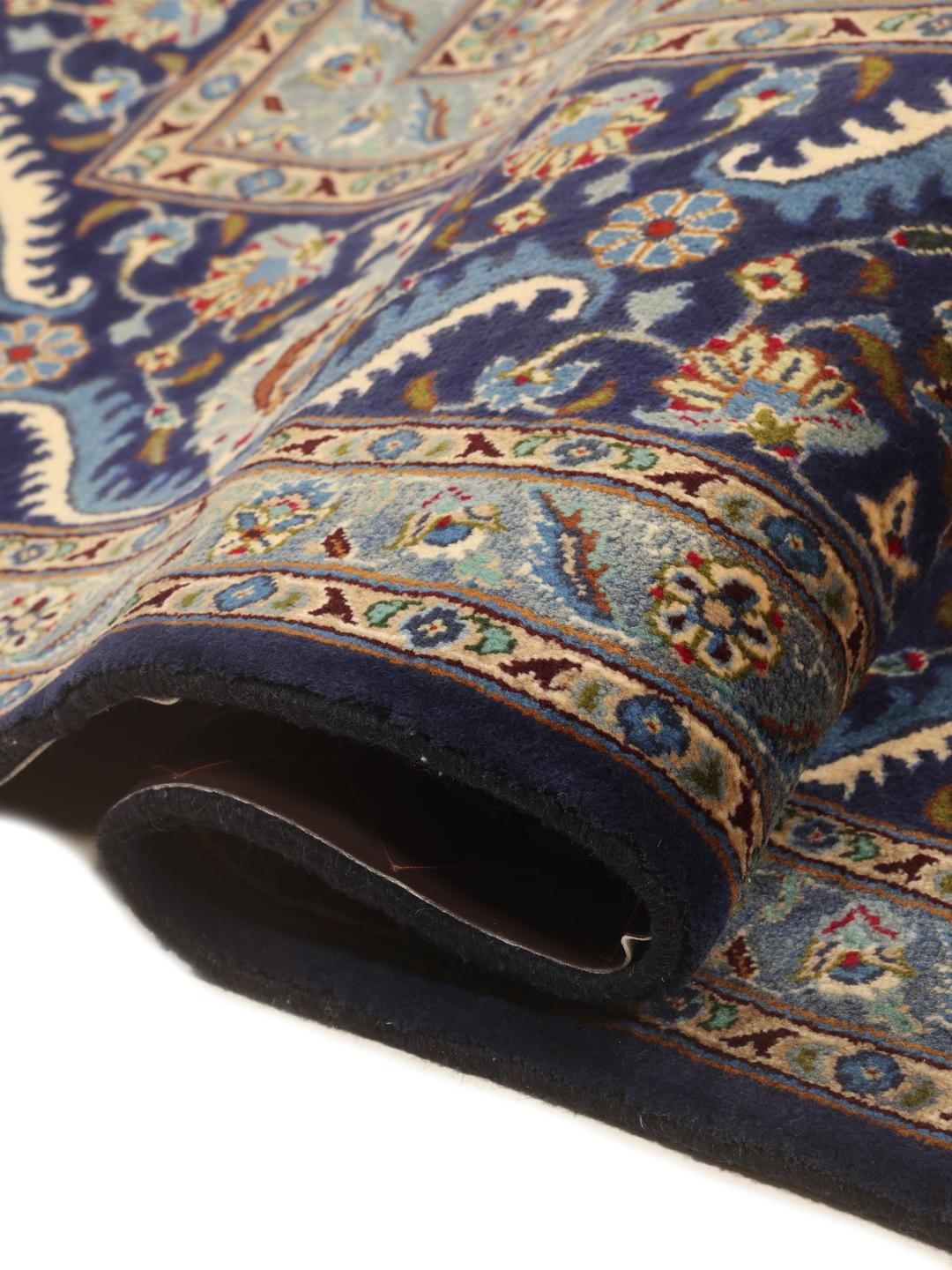
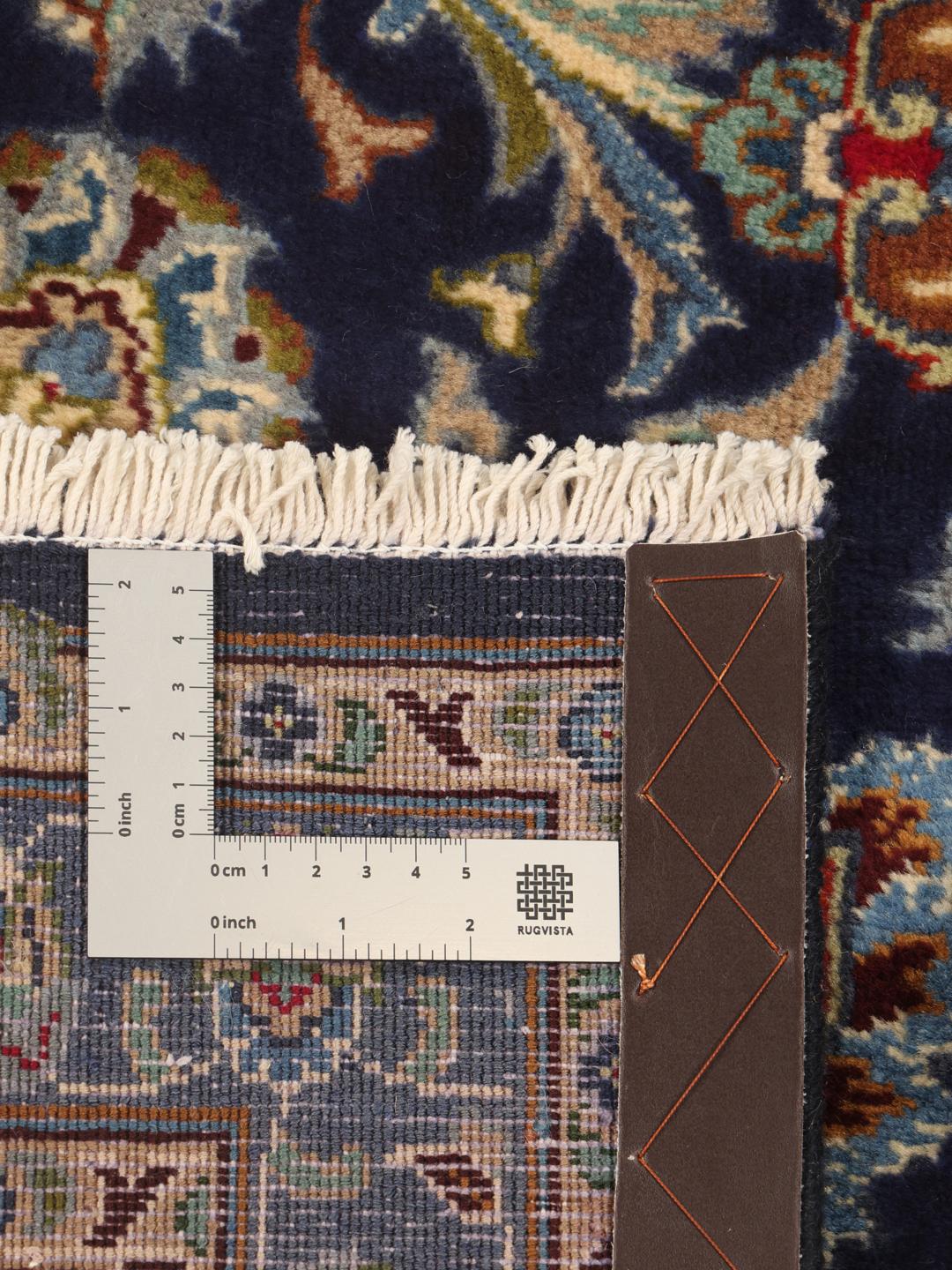
The term 'Fine' in the name refers to the quality of the knotting and the refinement of the wool used. In these rugs, the artisans employ a dense knotting technique that allows for the execution of very delicate floral patterns. This density is essential for achieving the fluidity of the curves and the fine detailing within the borders and the central medallion, which are hallmarks of the Kashmar style.
Design-wise, these rugs are famous for their 'Zir-e-Khaki' or 'under the soil' patterns, which often depict scenes of ancient history, hunting, or elaborate floral bouquets inspired by the gardens of the region. The borders are typically as complex as the field, featuring repeating palmettes and scrolling vines that frame the central composition, creating a cohesive and deeply decorative aesthetic.
Owning a Kashmar rug is an investment in a living tradition. These pieces are highly sought after by collectors who value the combination of regional provenance, complex artistic vision, and the human effort required to bring such a design to life. They are more than floor coverings; they are cultural artefacts that maintain the legacy of Middle Eastern weaving for future generations.