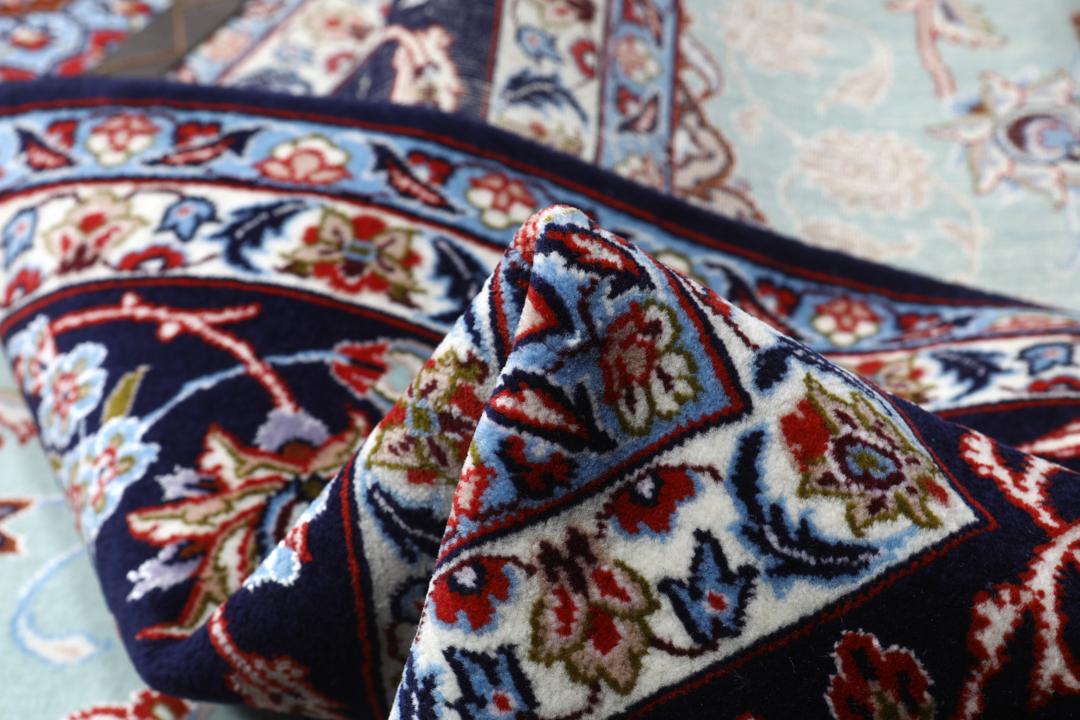
Isfahan rugs are celebrated globally as some of the finest examples of Middle Eastern weaving. Historically, the city of Isfahan was a centre of royal patronage, where master designers and weavers collaborated to create works for palaces and mosques. This tradition of excellence has continued for centuries, with the city remaining a hub for the most refined and technically demanding rug production.
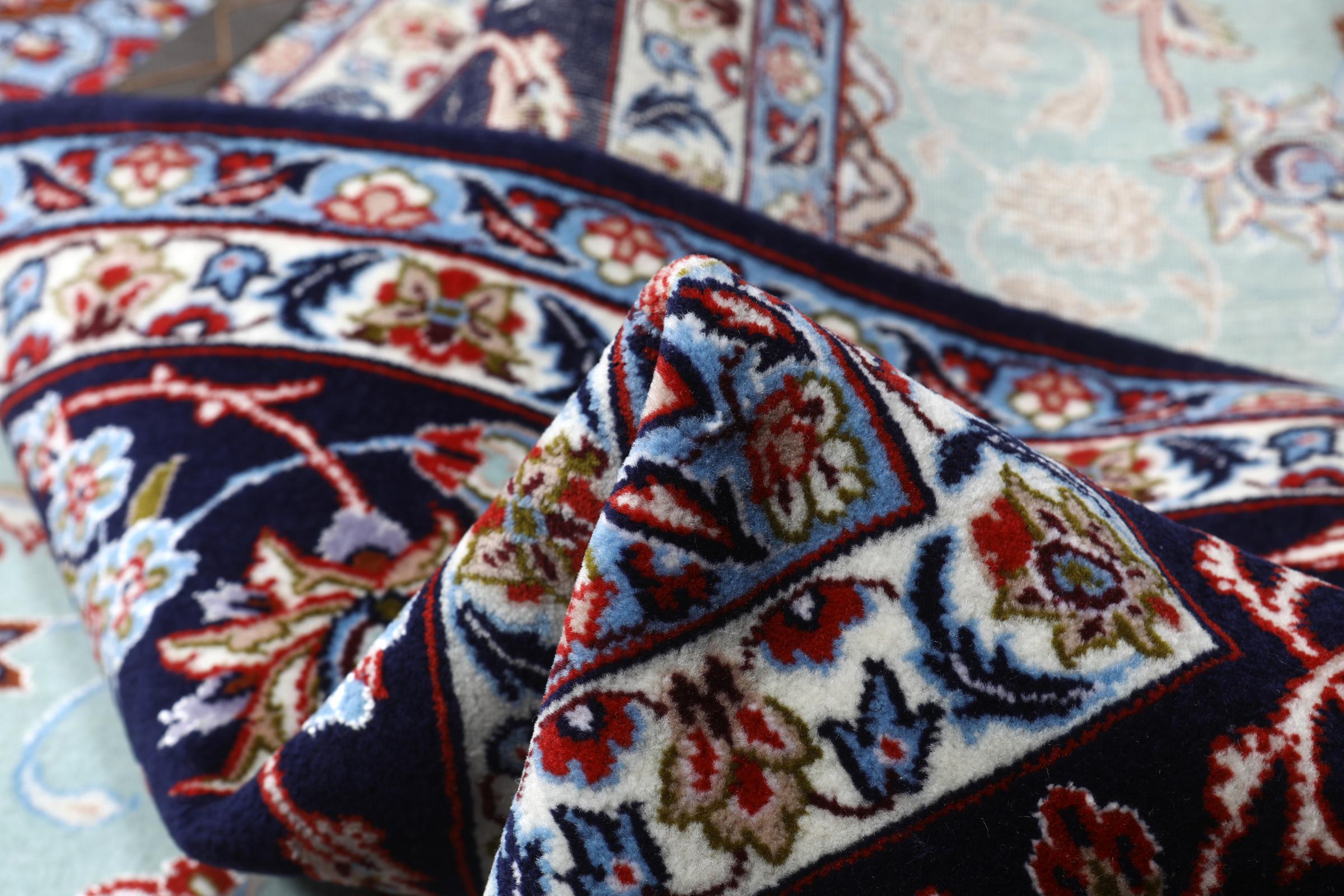
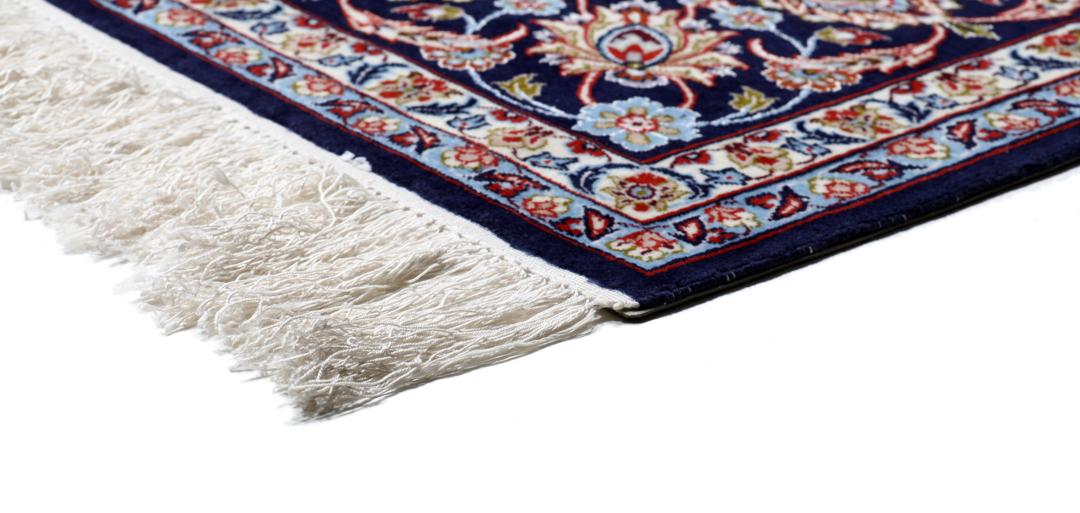
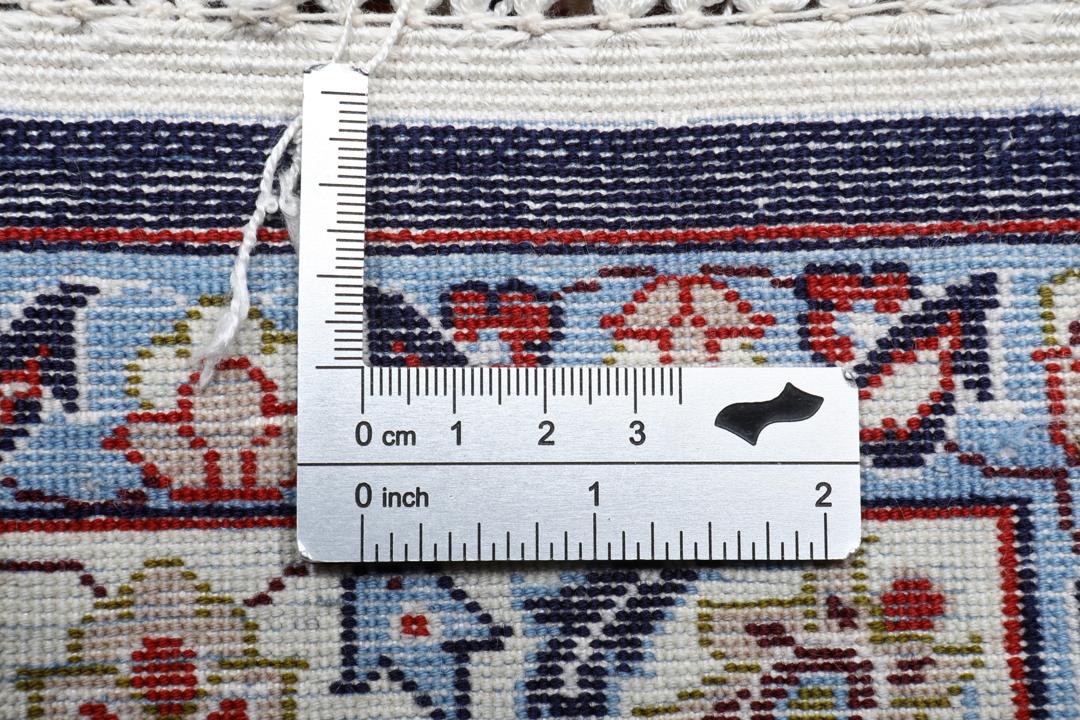
The terminology associated with these rugs often highlights the quality of the foundation. In this piece, the use of silk in the structural foundation provides a level of strength and fineness that allows for the intricate, delicate patterns characteristic of the Isfahan school. This choice of materials is a hallmark of high-end production, ensuring the rug remains stable and retains its shape over generations.
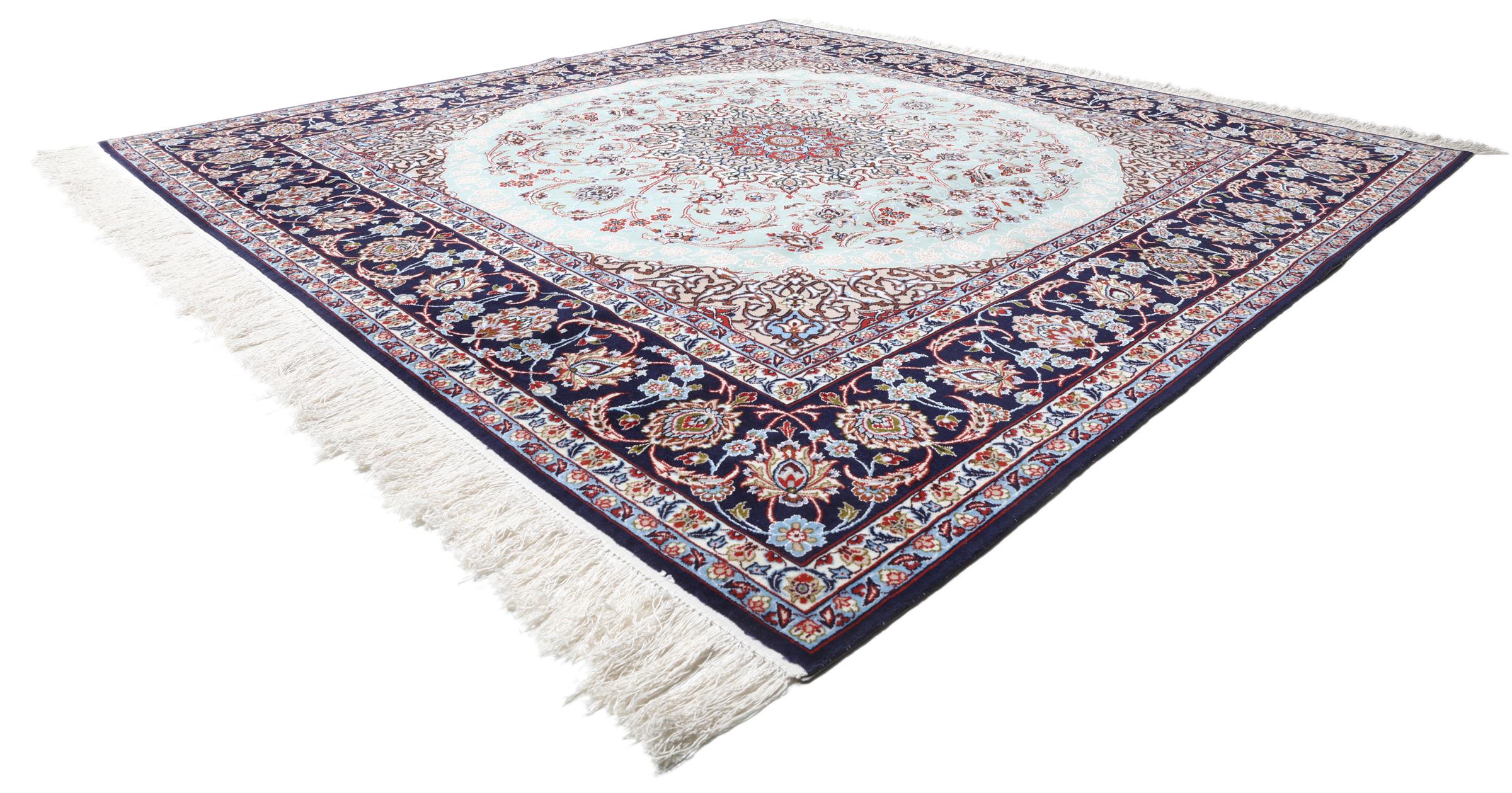
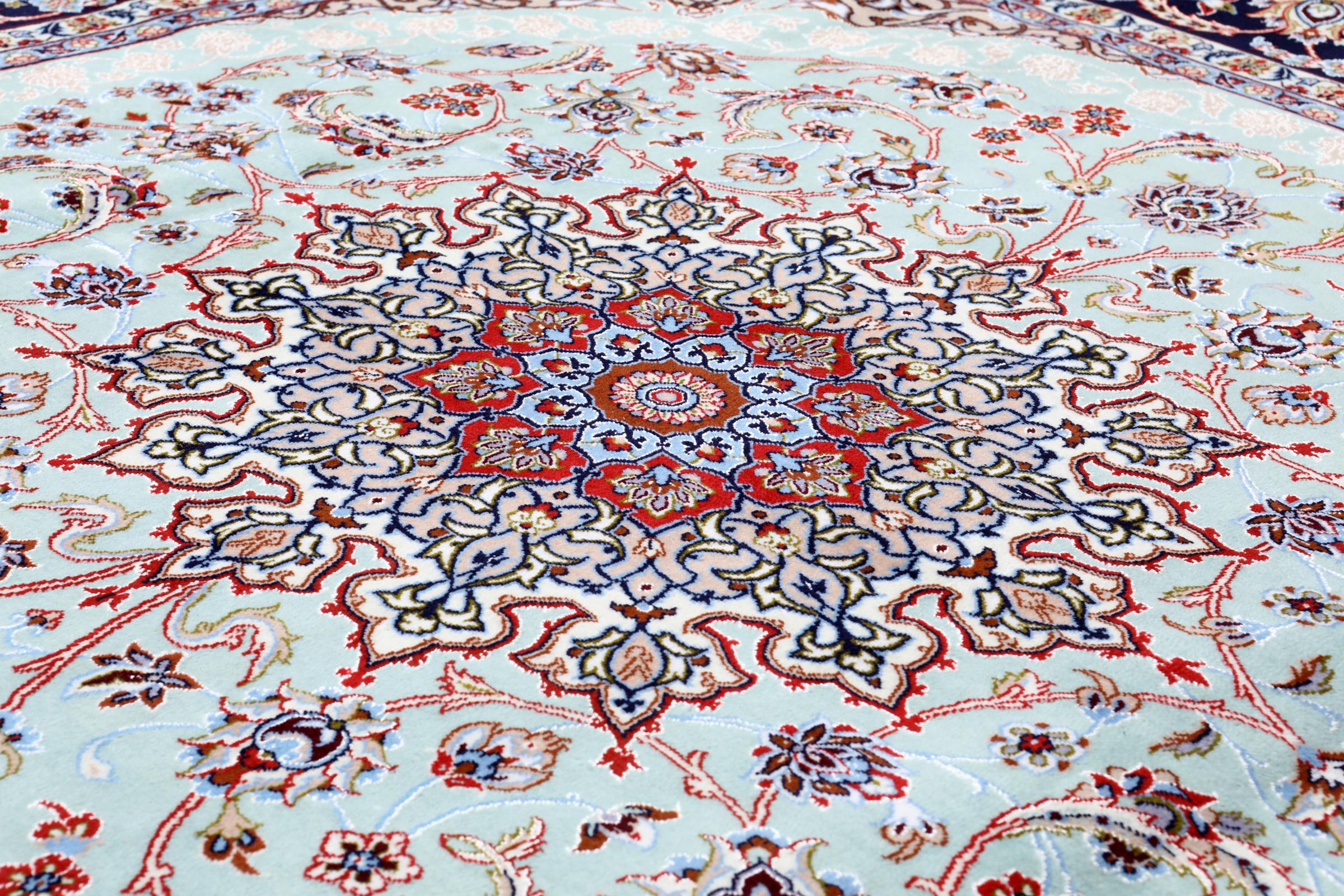
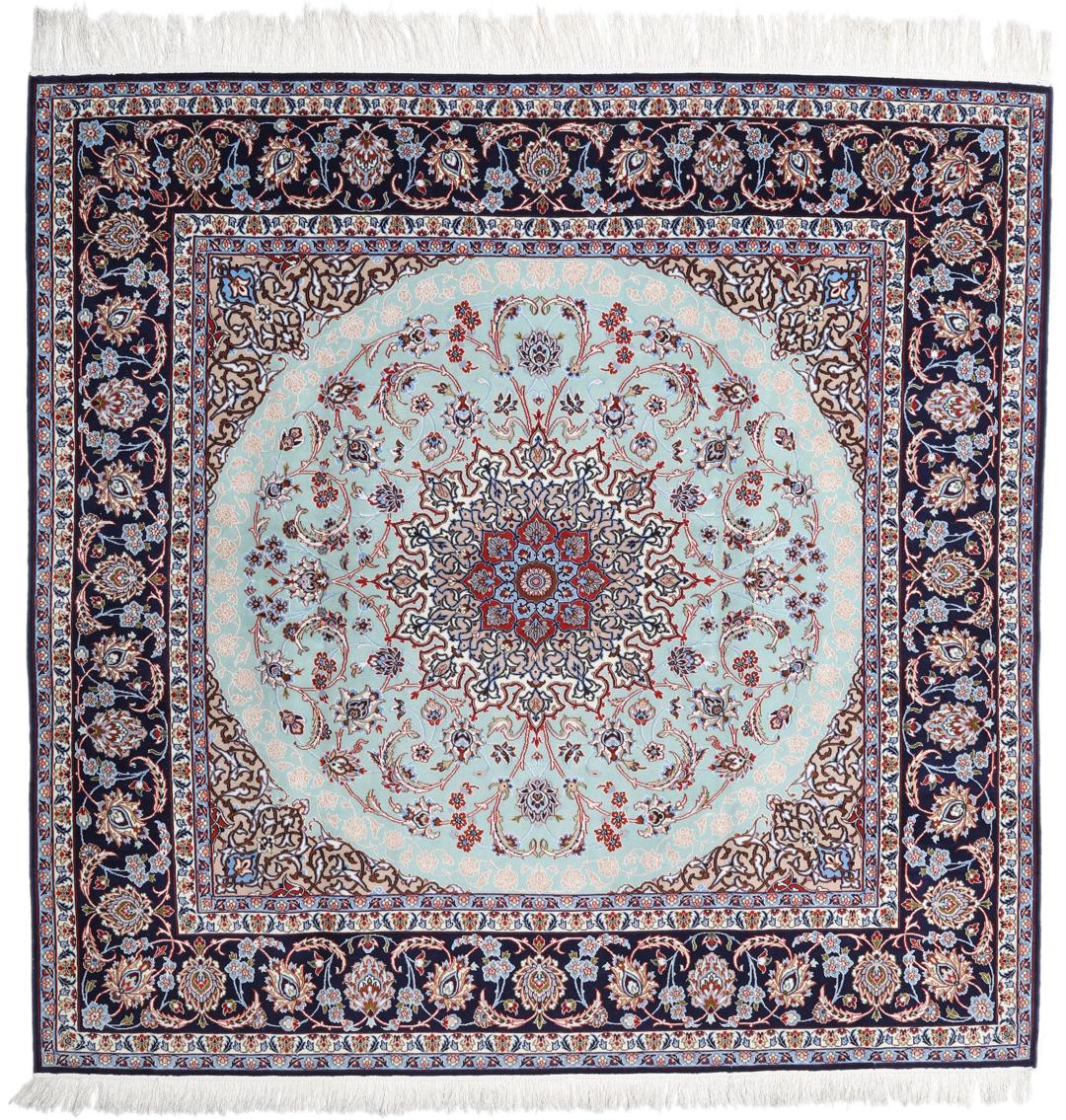
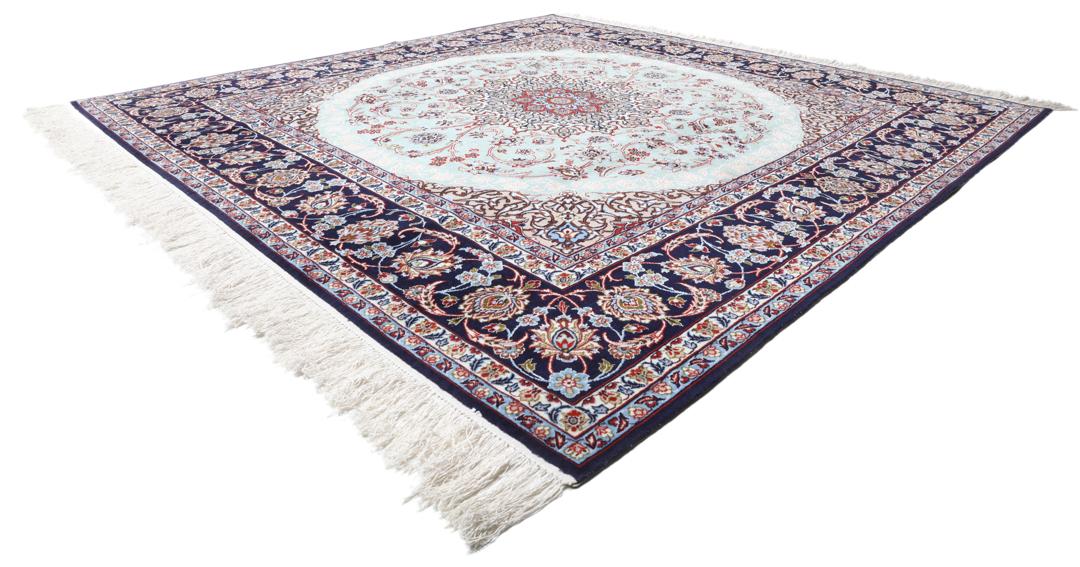
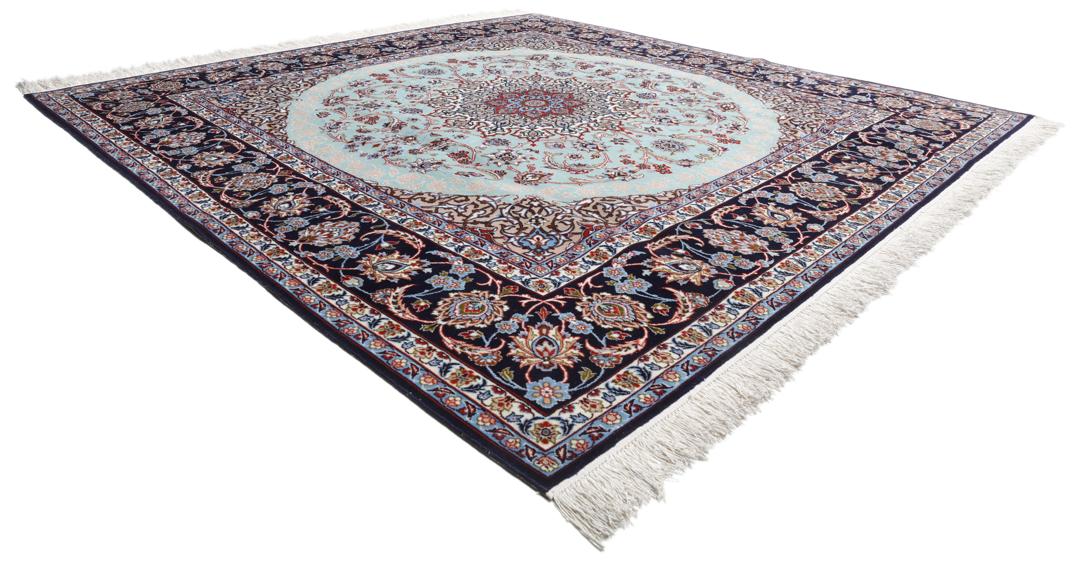
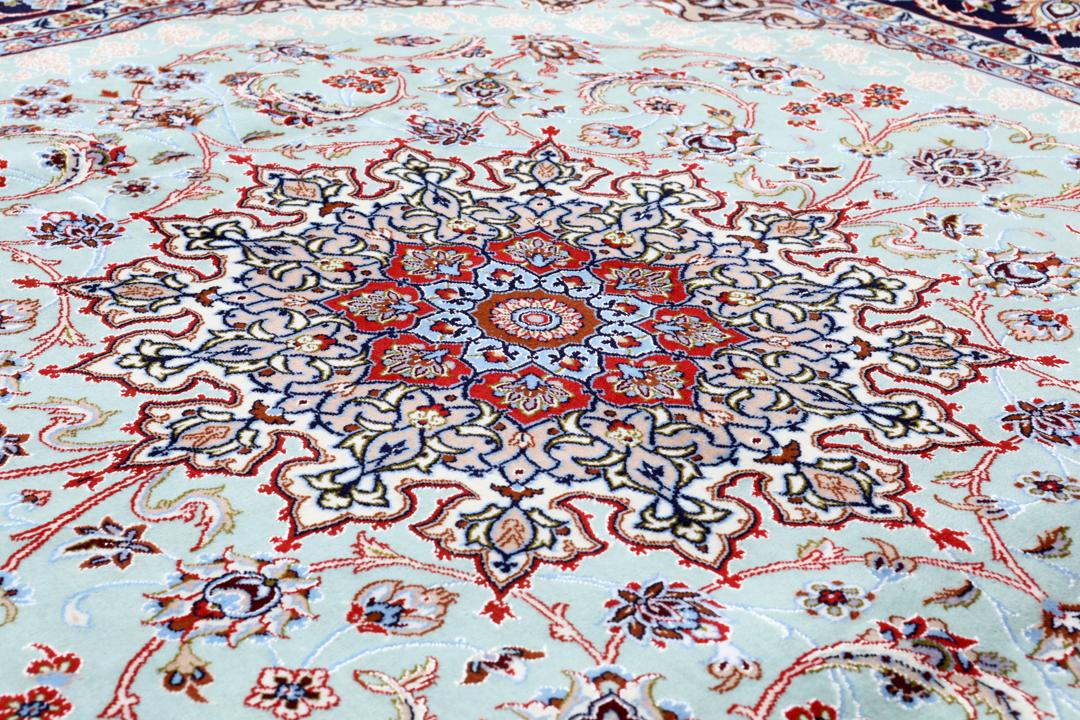
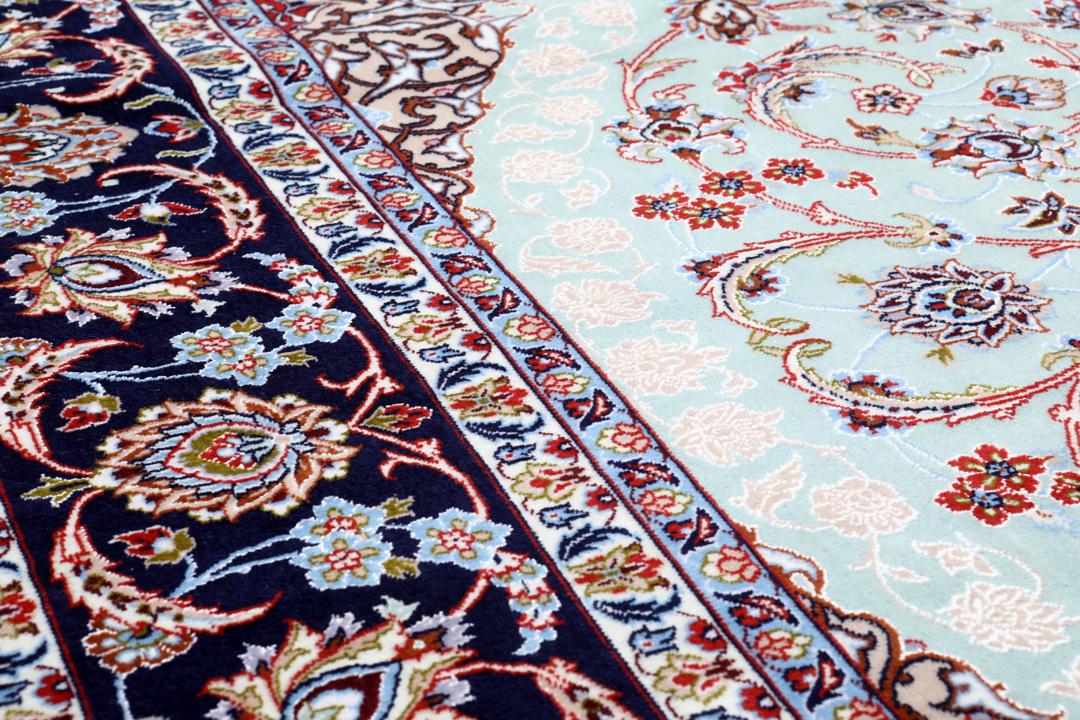
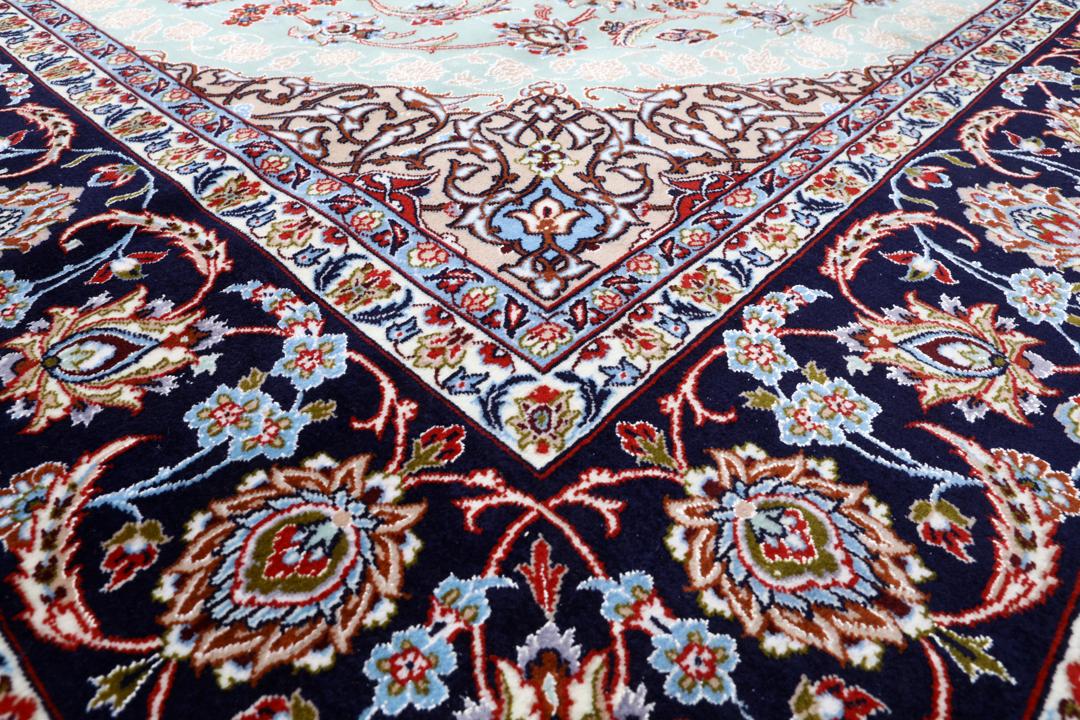
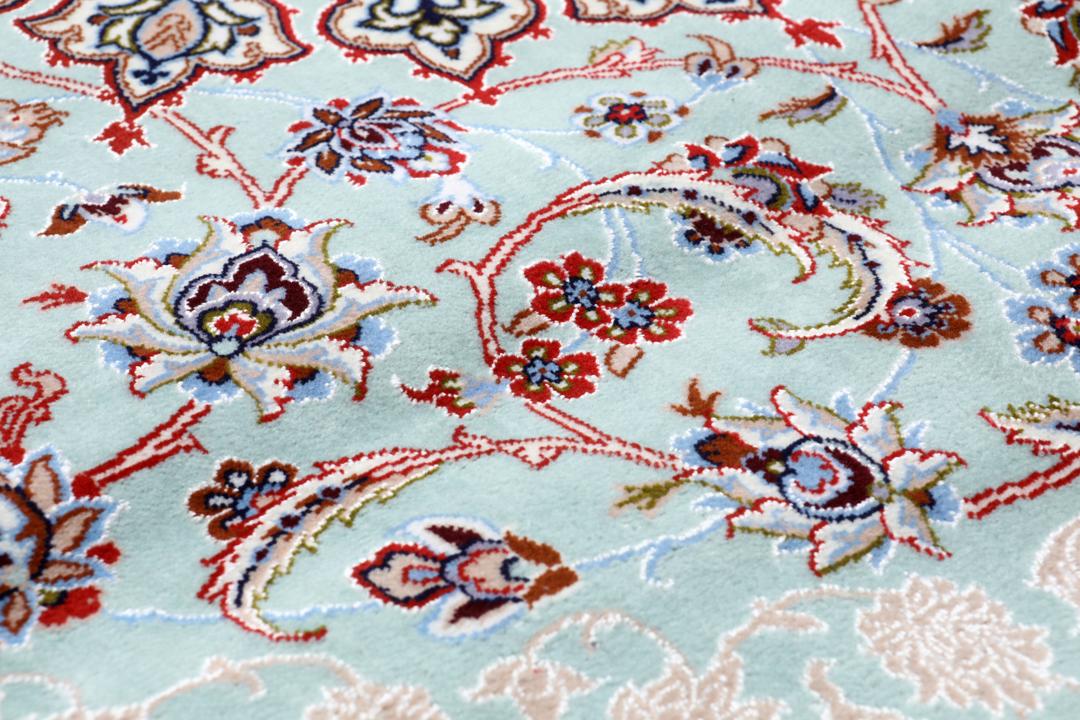
Visually, Isfahan rugs are known for their sophisticated use of space. Typically featuring a central medallion and a field filled with Shah Abbasi floral motifs, scrolling vines, and palmettes, they represent a peak of decorative art. The colour palettes are often harmonious, using soft pastels against deeper, richer tones to create depth and a sense of three-dimensional elegance.
Collectors value these rugs not only for their beauty but for the cultural heritage they represent. To own an Isfahan rug is to possess a piece of history that reflects the pinnacle of human skill and aesthetic vision. They are regarded as heirloom-quality items, sought after for their ability to bring a sense of history and gravitas to any interior setting.