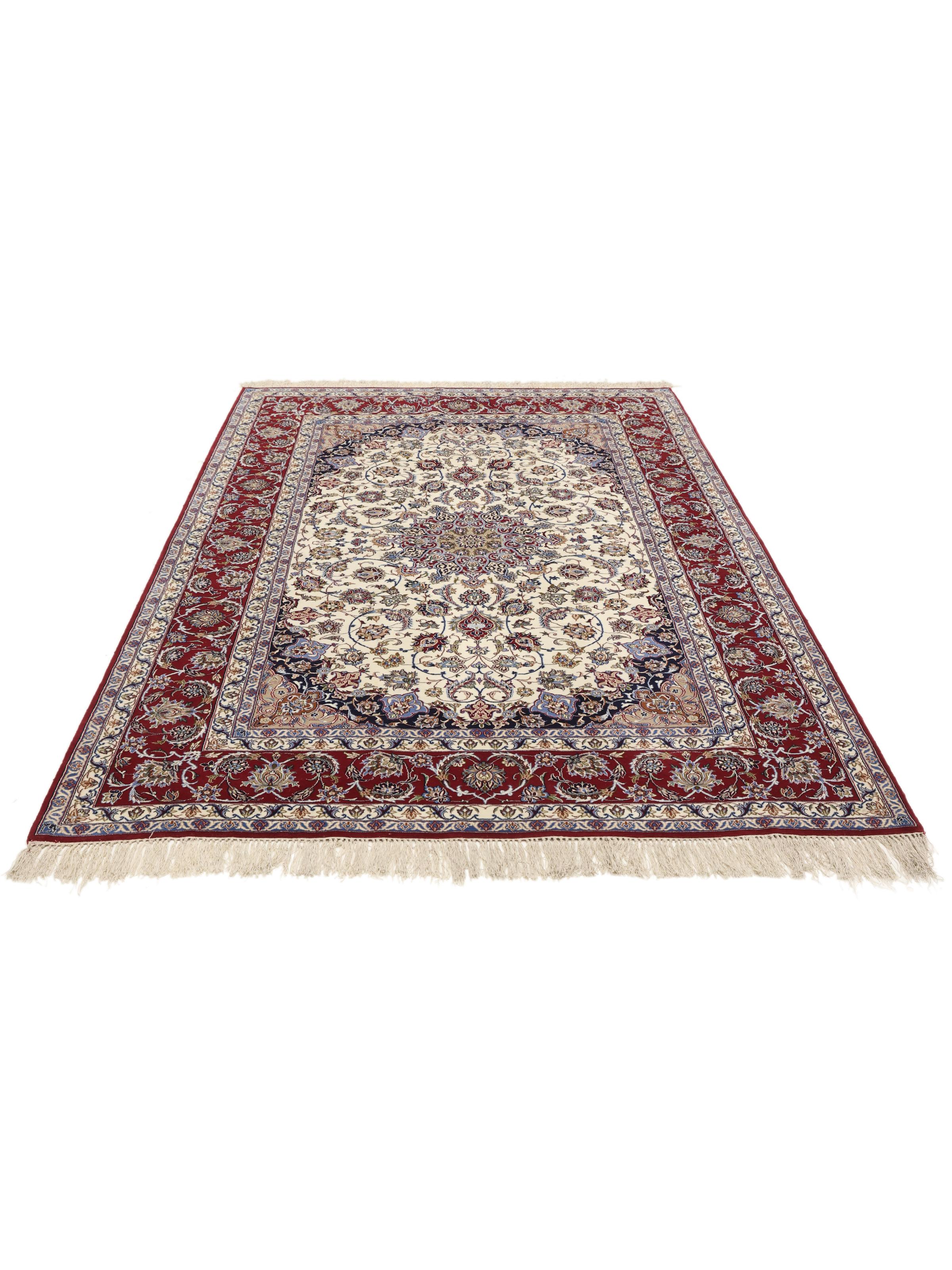
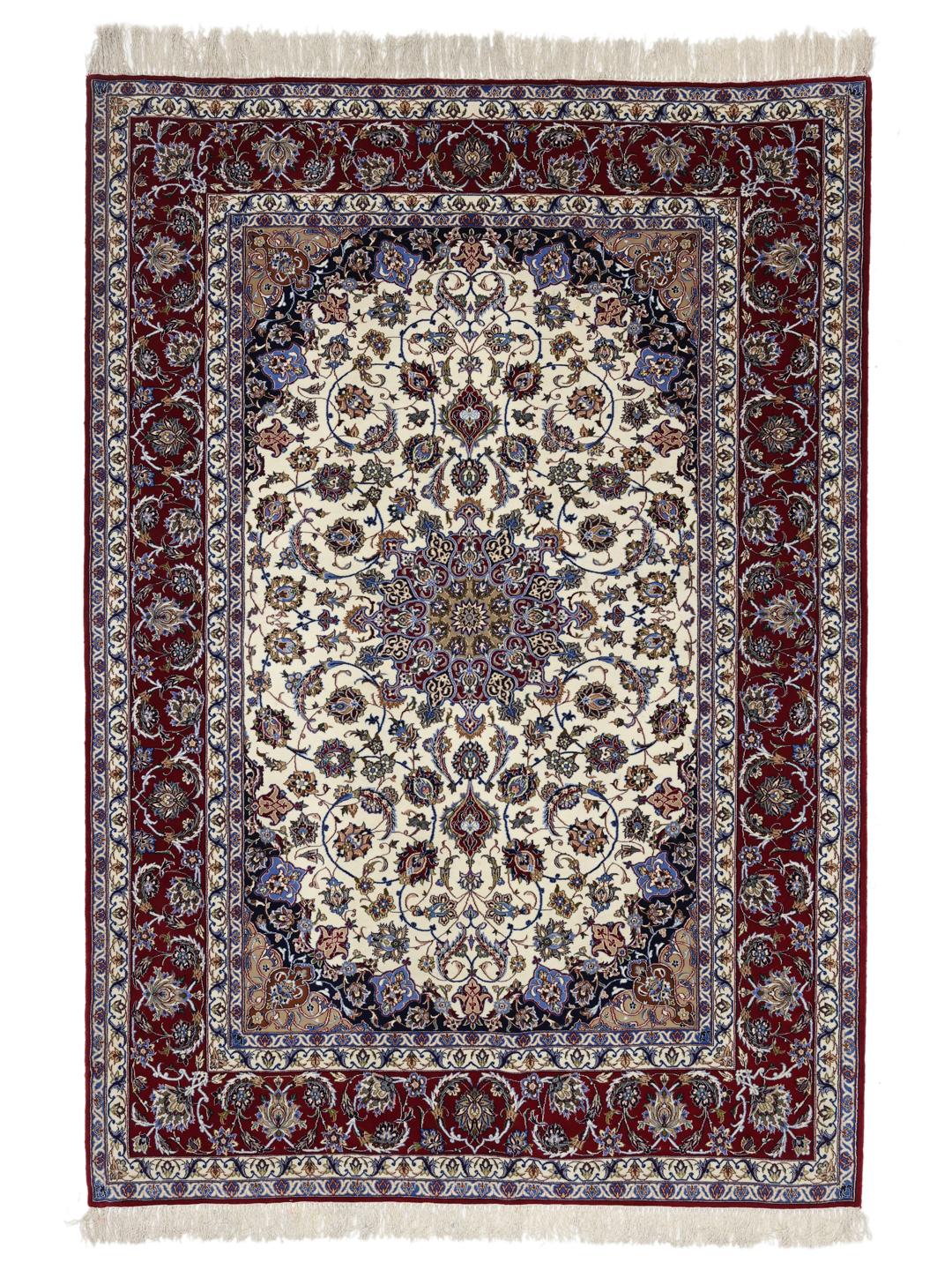
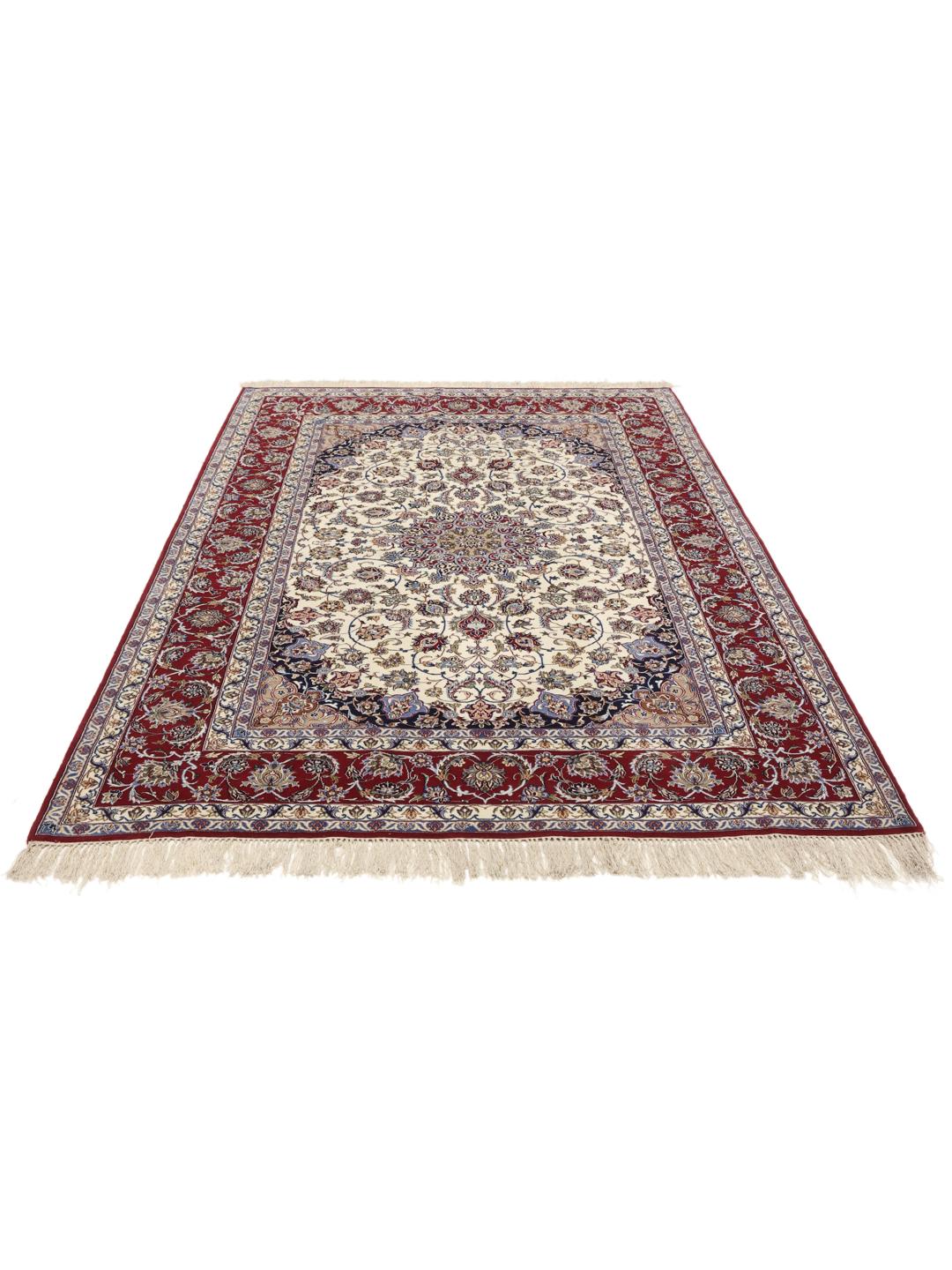
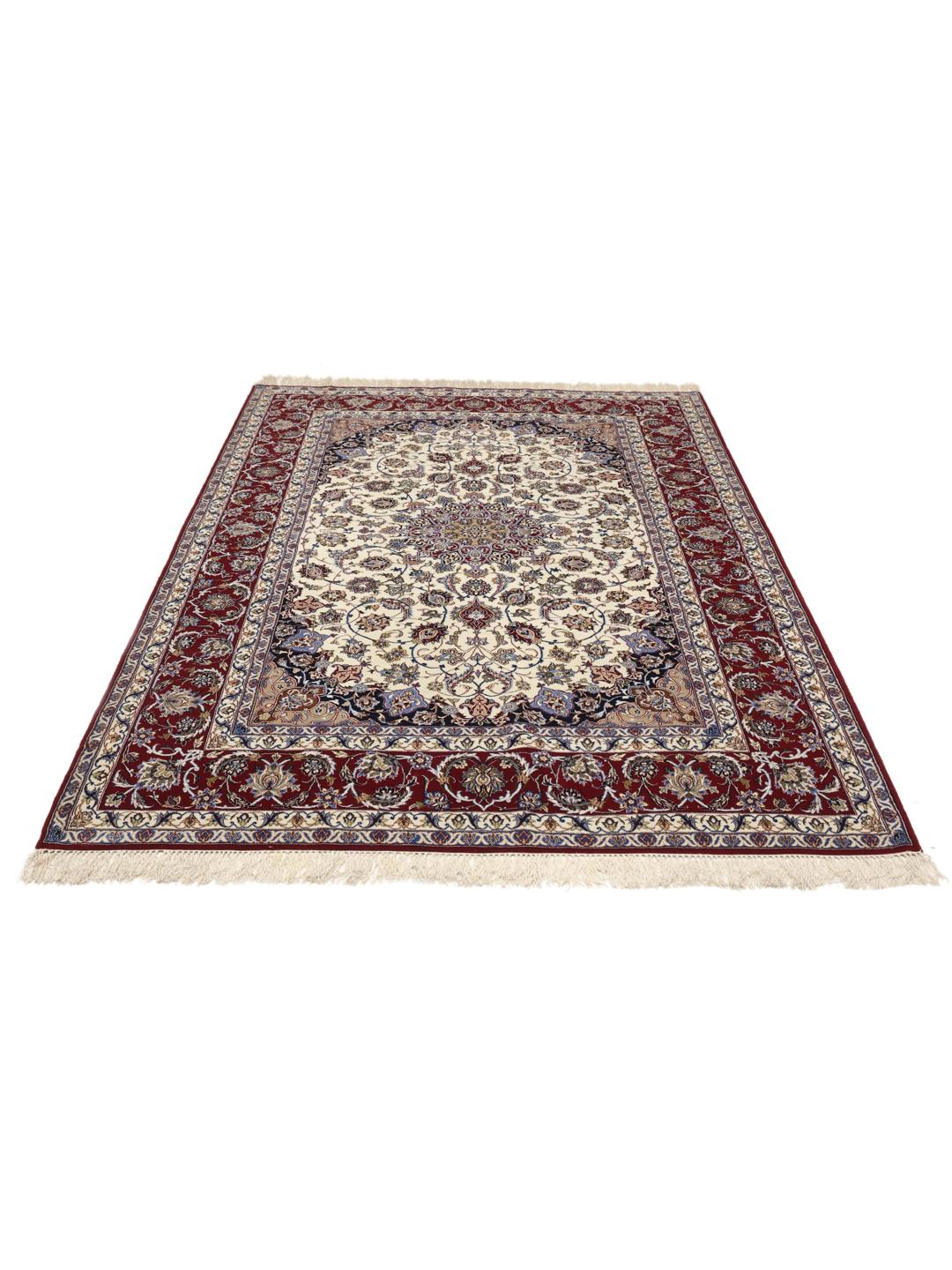
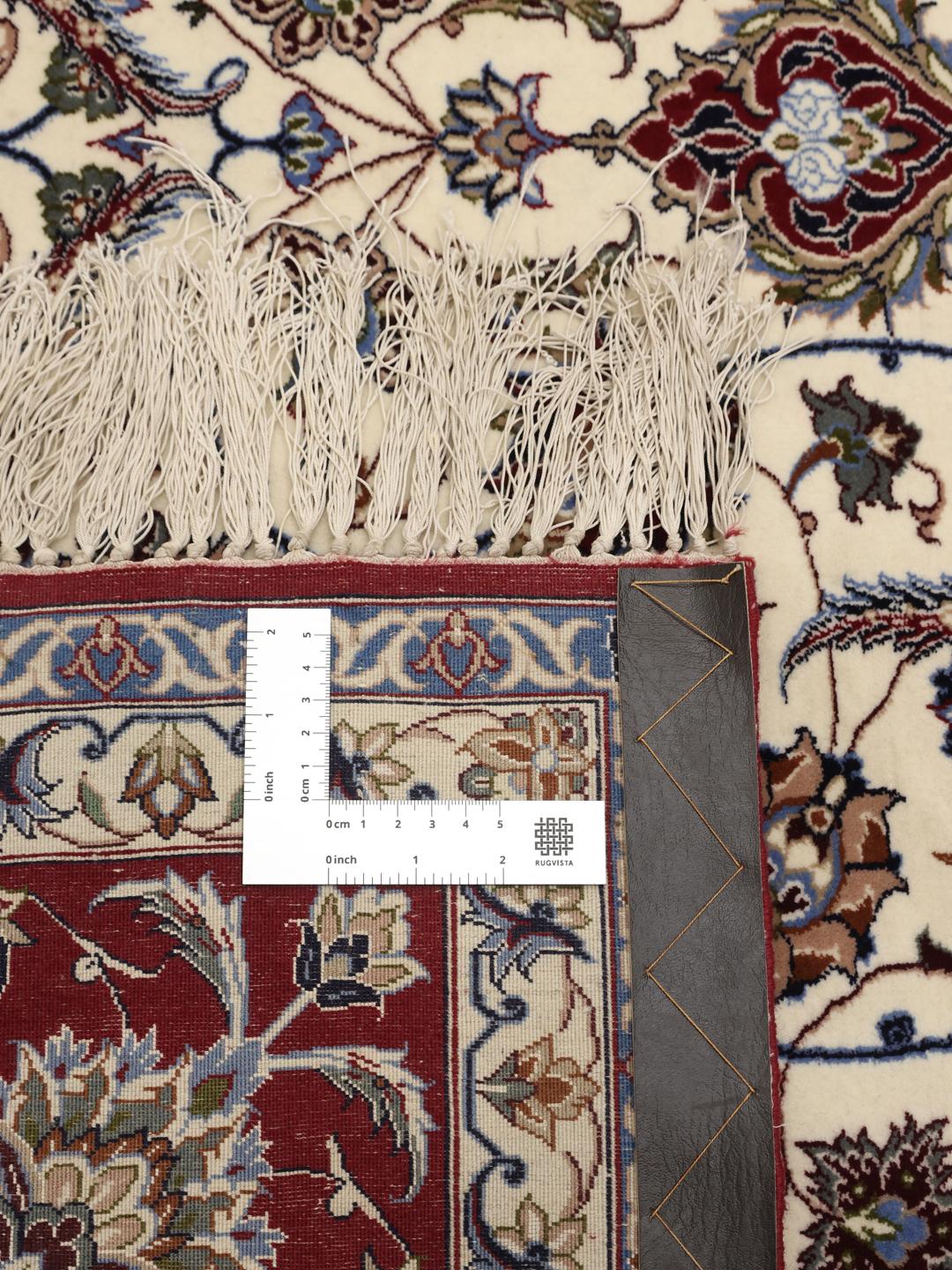
The Isfahan tradition hails from one of the most culturally significant cities in the Middle East, a place where art and craftsmanship have been refined over centuries. Historically, the city has been a hub for the finest weaving, known for its ability to attract master artisans who dedicated their lives to perfecting the art of the rug. This specific tradition is celebrated for its emphasis on balance, harmony, and the use of sophisticated, flowing patterns that often mirror the architectural beauty of the city's famous mosques and gardens.
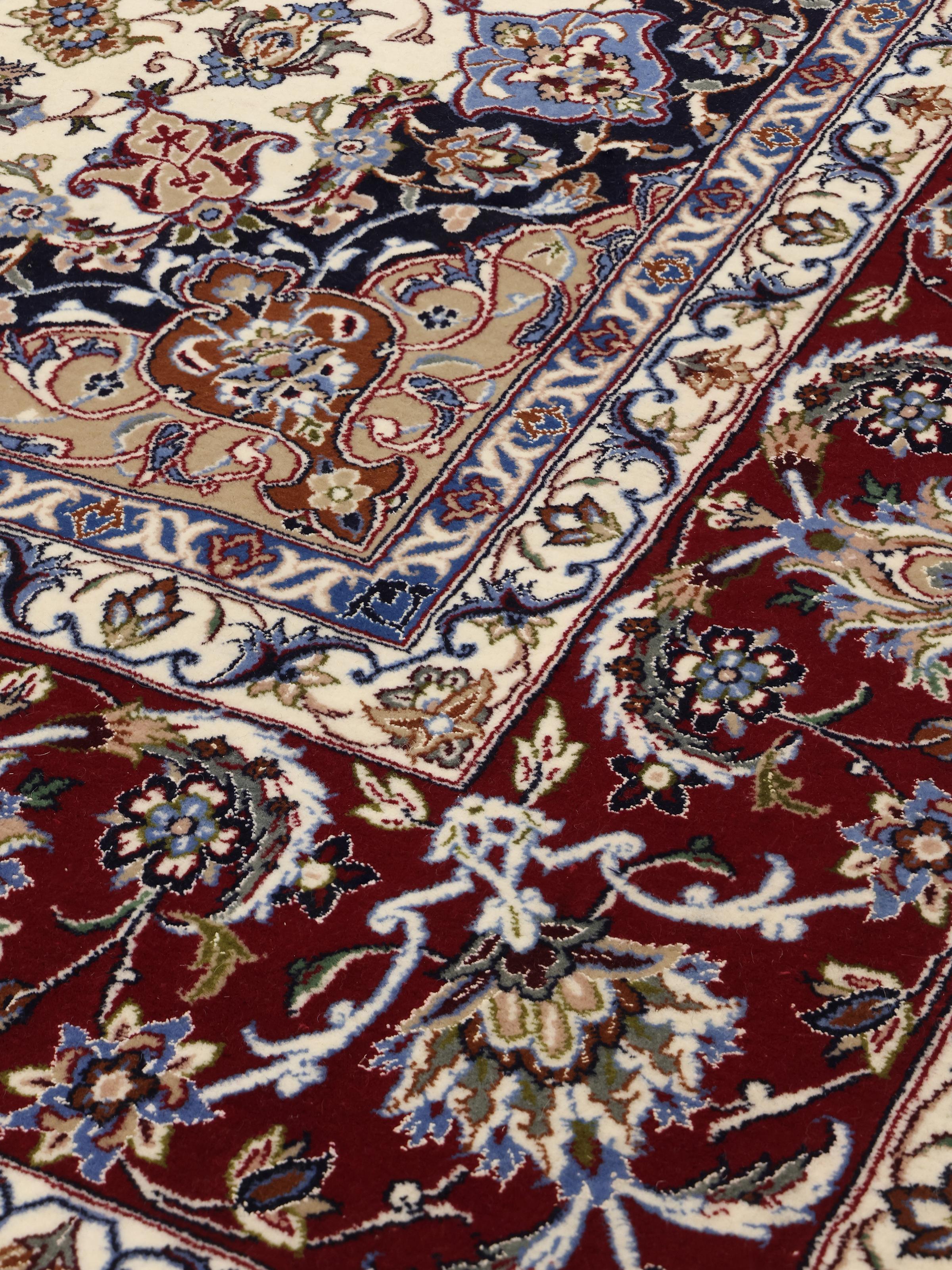
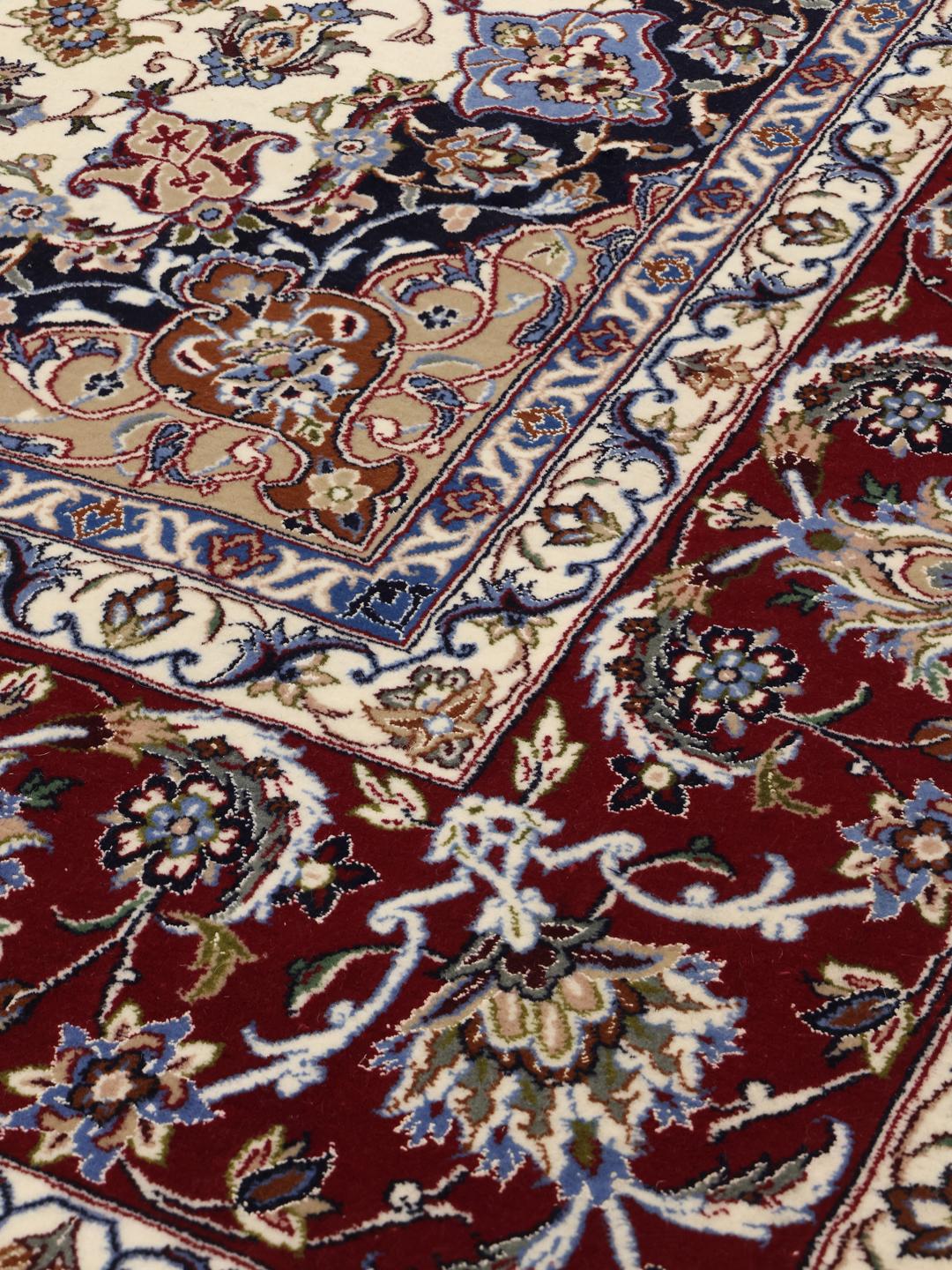
When discussing the quality of these pieces, the term Isfahan signifies a standard of excellence that is recognised globally. These rugs are defined by their incredibly fine construction and the deliberate choice of materials that allow for intricate, painterly designs. The density of the knots is not merely a technical specification but the secret to the rug's ability to hold sharp, detailed motifs that look as clear from a distance as they do up close, ensuring the artistry remains vibrant for decades.
The visual language of an Isfahan rug is distinct, typically centred around a classic medallion motif surrounded by a complex field of scrolling vines, palmettes, and floral sprays. The borders are usually as ornate as the field, featuring repetitive, rhythmic patterns that frame the composition perfectly. While the traditional palette often leans toward deep reds, blues, and ivories, the specific interplay of colours in this piece highlights the masterful way artisans use shade and contrast to create depth.
To own a piece from this tradition is to hold a connection to a deep, historical lineage of skill and cultural expression. These rugs are highly valued by collectors and homeowners alike, not just for their beauty, but for the unwavering patience required to create them. They represent a rare intersection of utility and fine art, serving as a legacy piece that carries the weight of history and the personal touch of the artisan directly into your home.