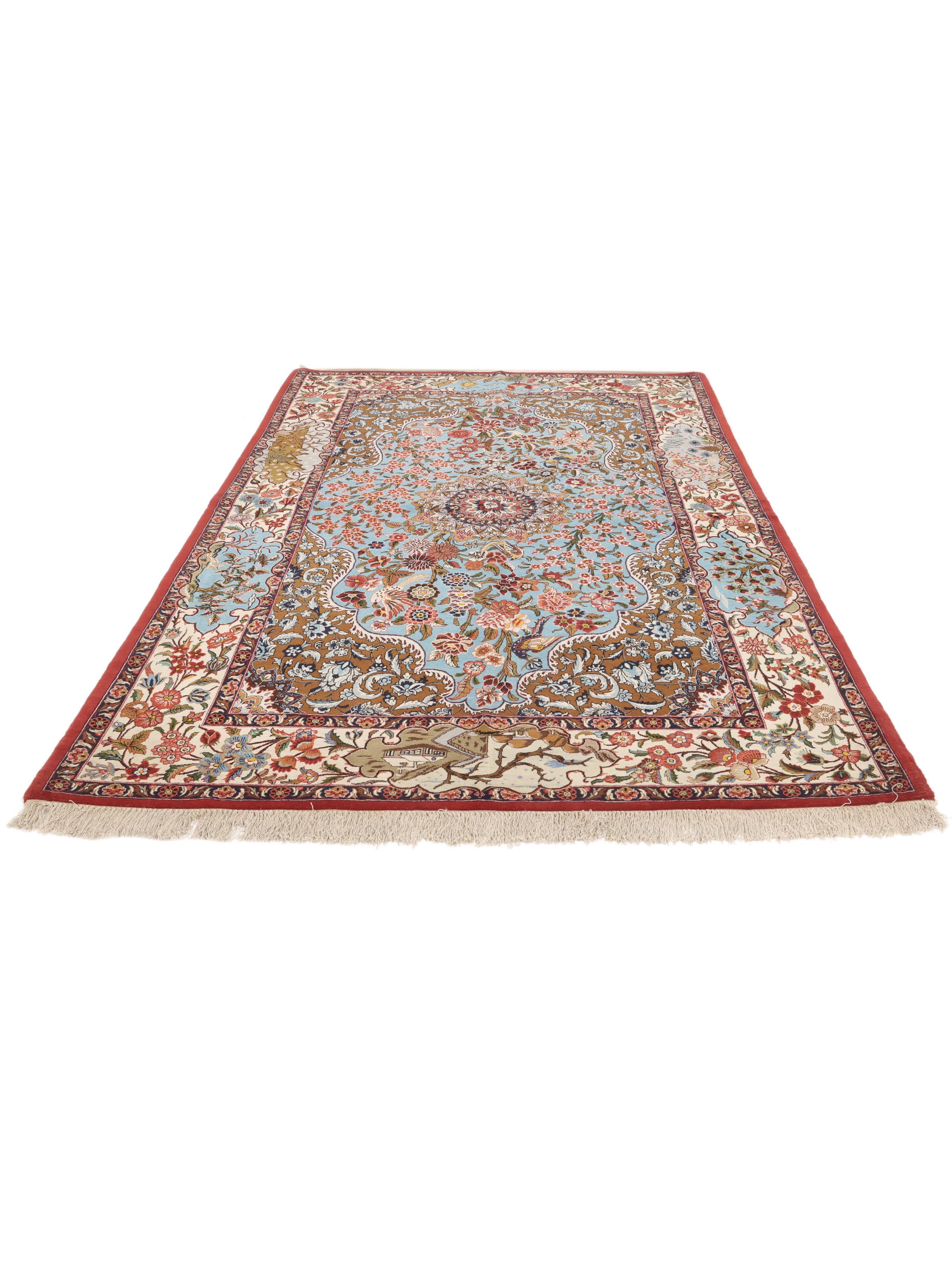
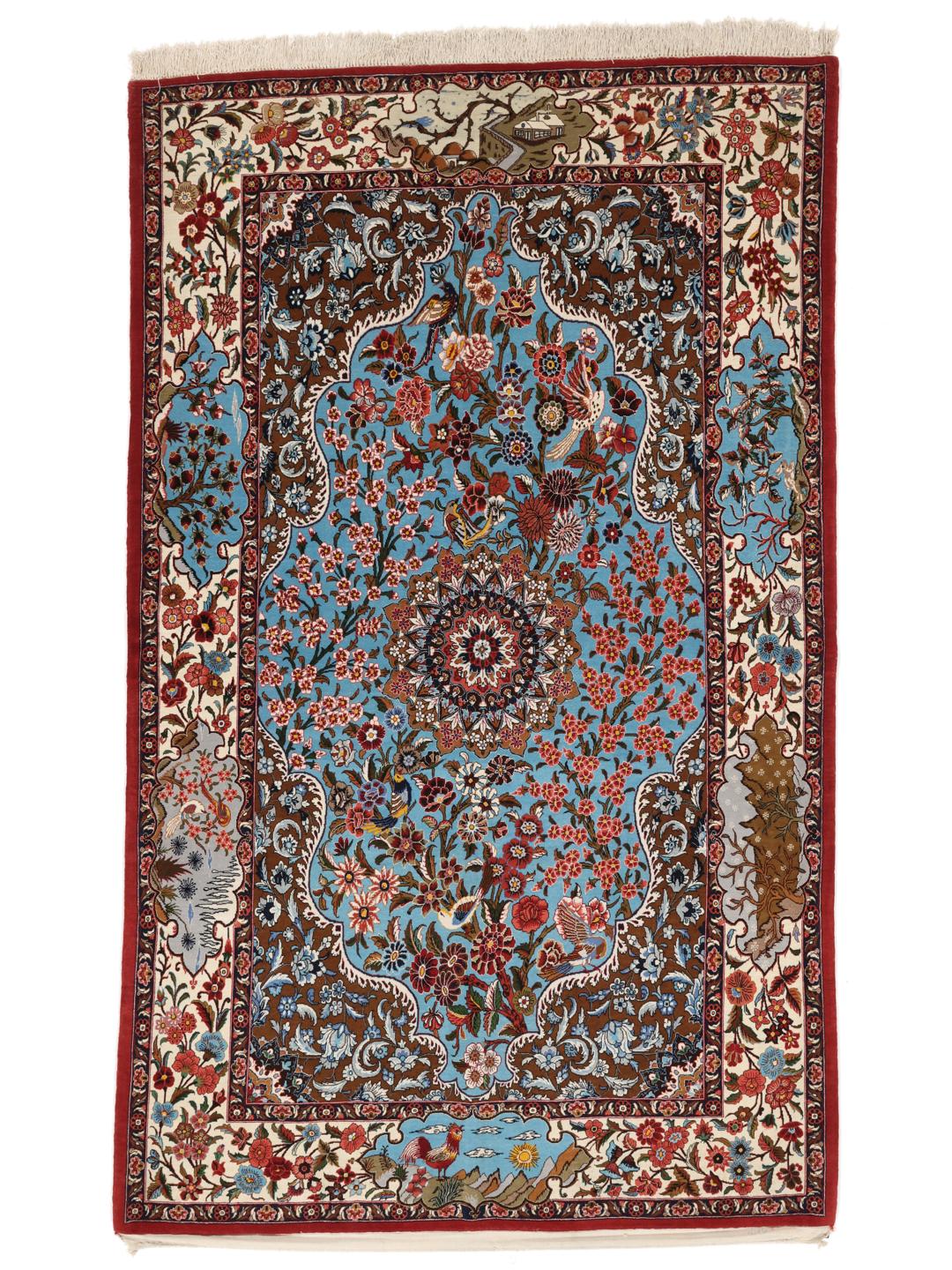
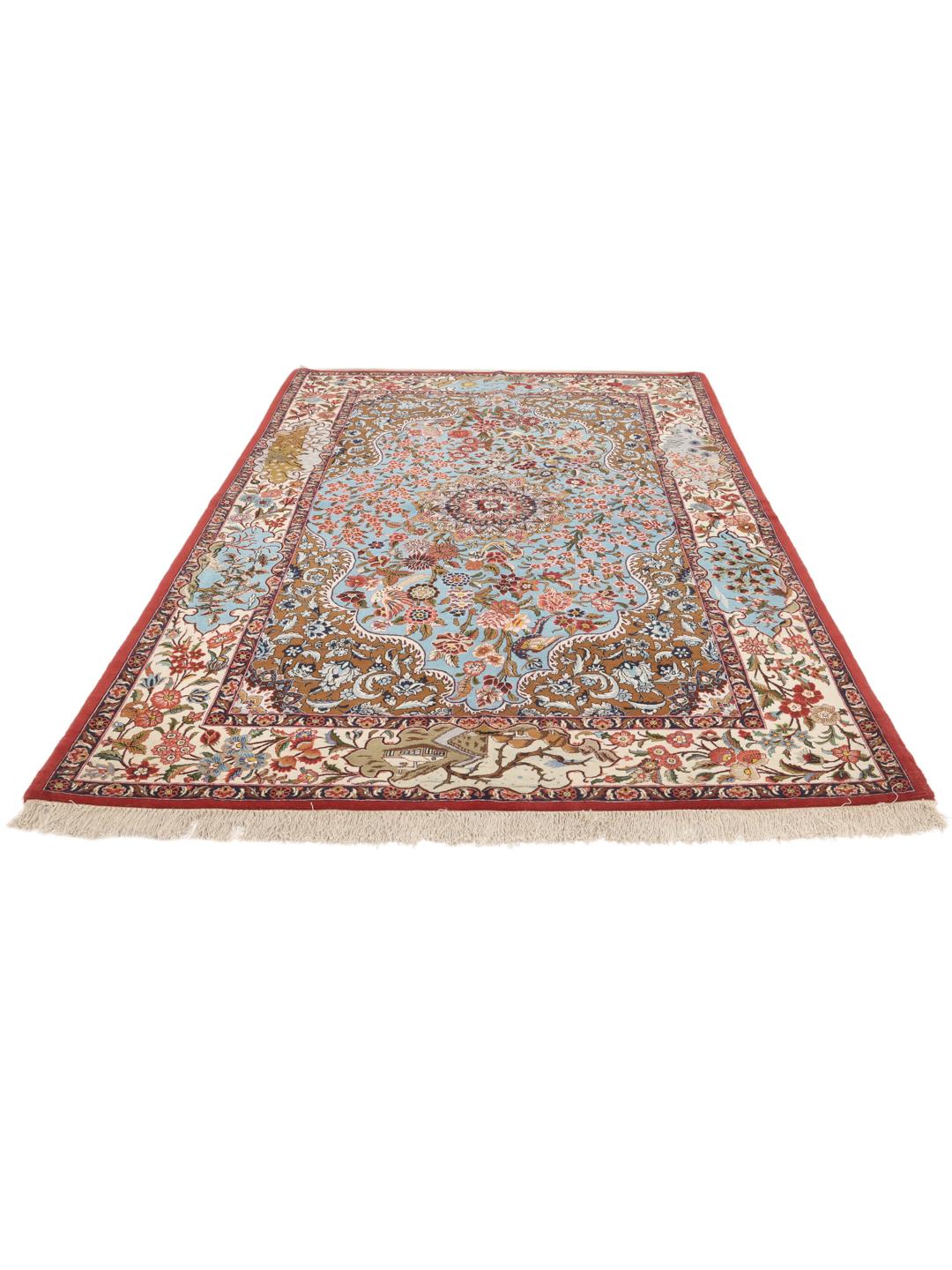
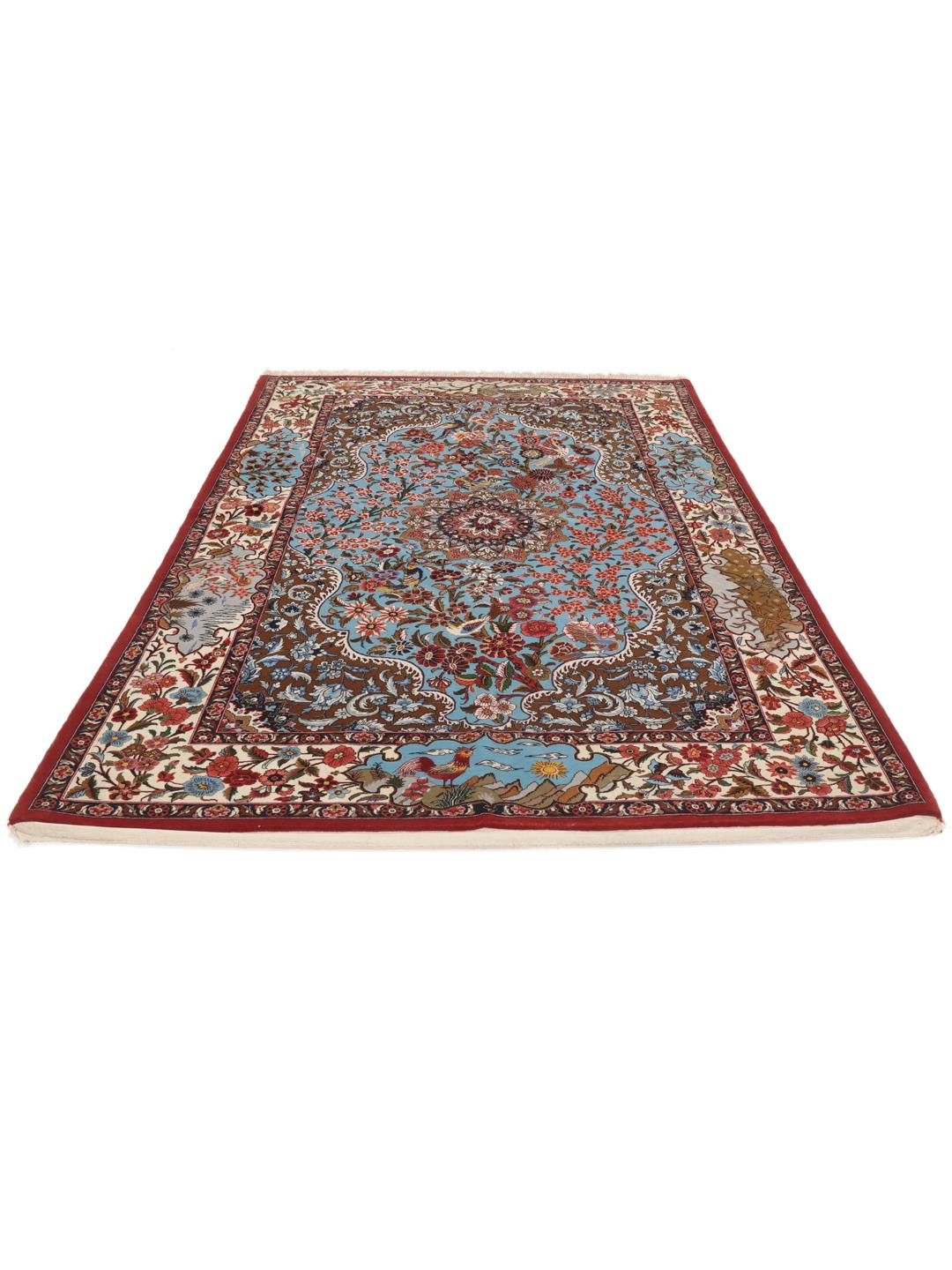
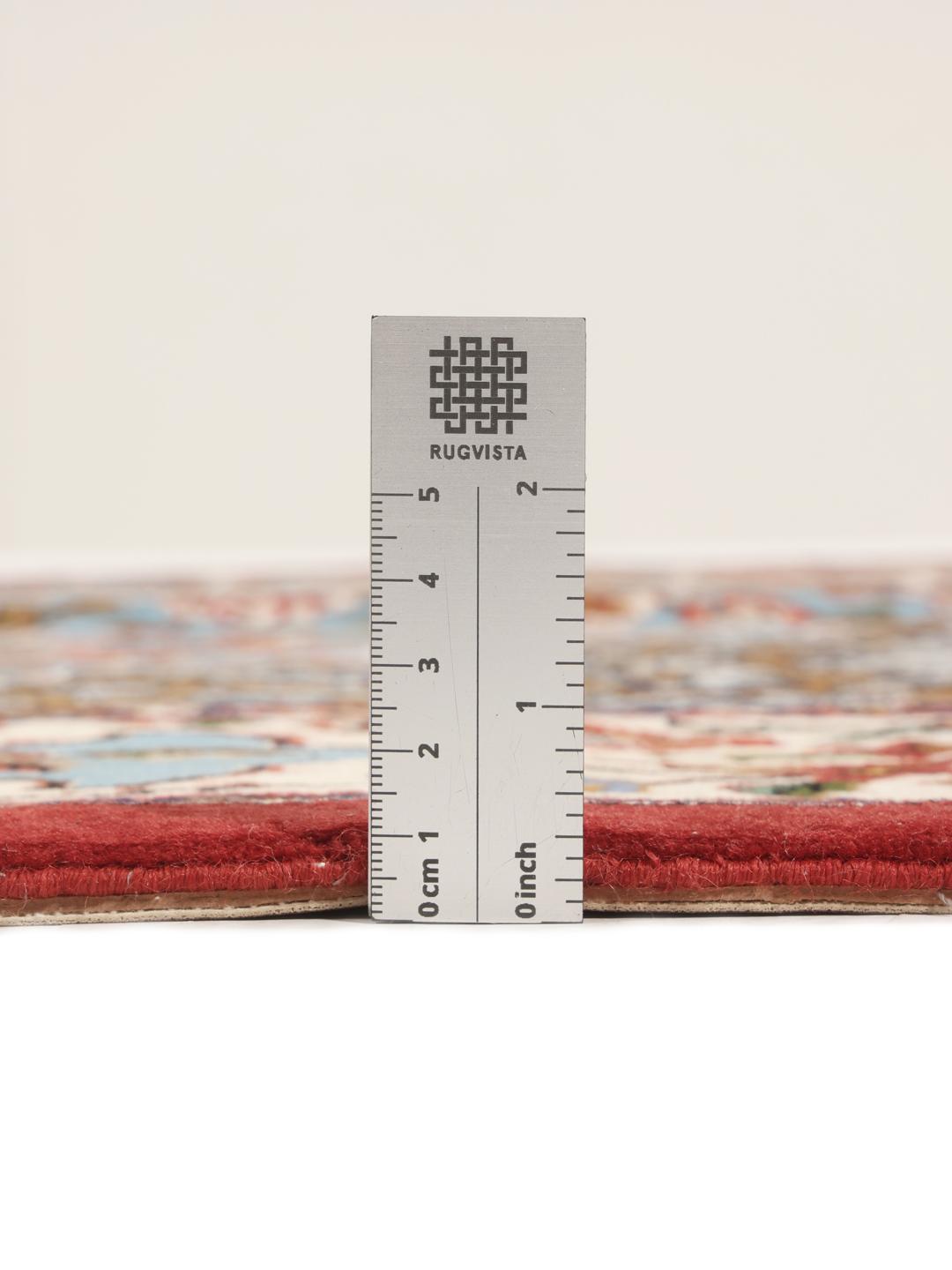
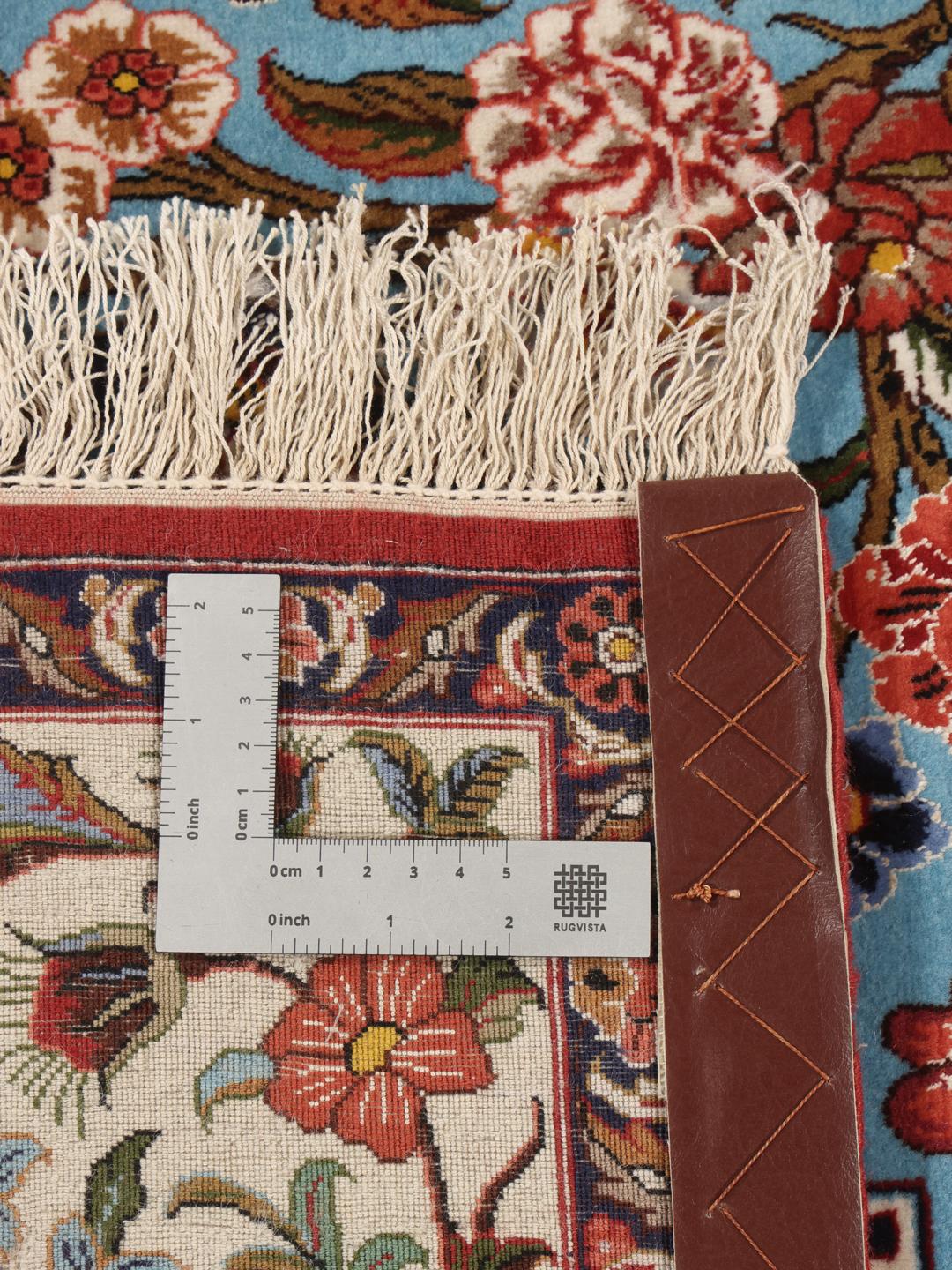
Isfahan rugs are celebrated globally as some of the finest examples of Middle Eastern weaving, originating from the historic city of Isfahan. Known for its rich cultural history and stunning architectural landmarks, the city has long been a centre for the arts, with its rug-weaving tradition evolving over centuries to reach a level of technical and artistic perfection that is widely admired today.
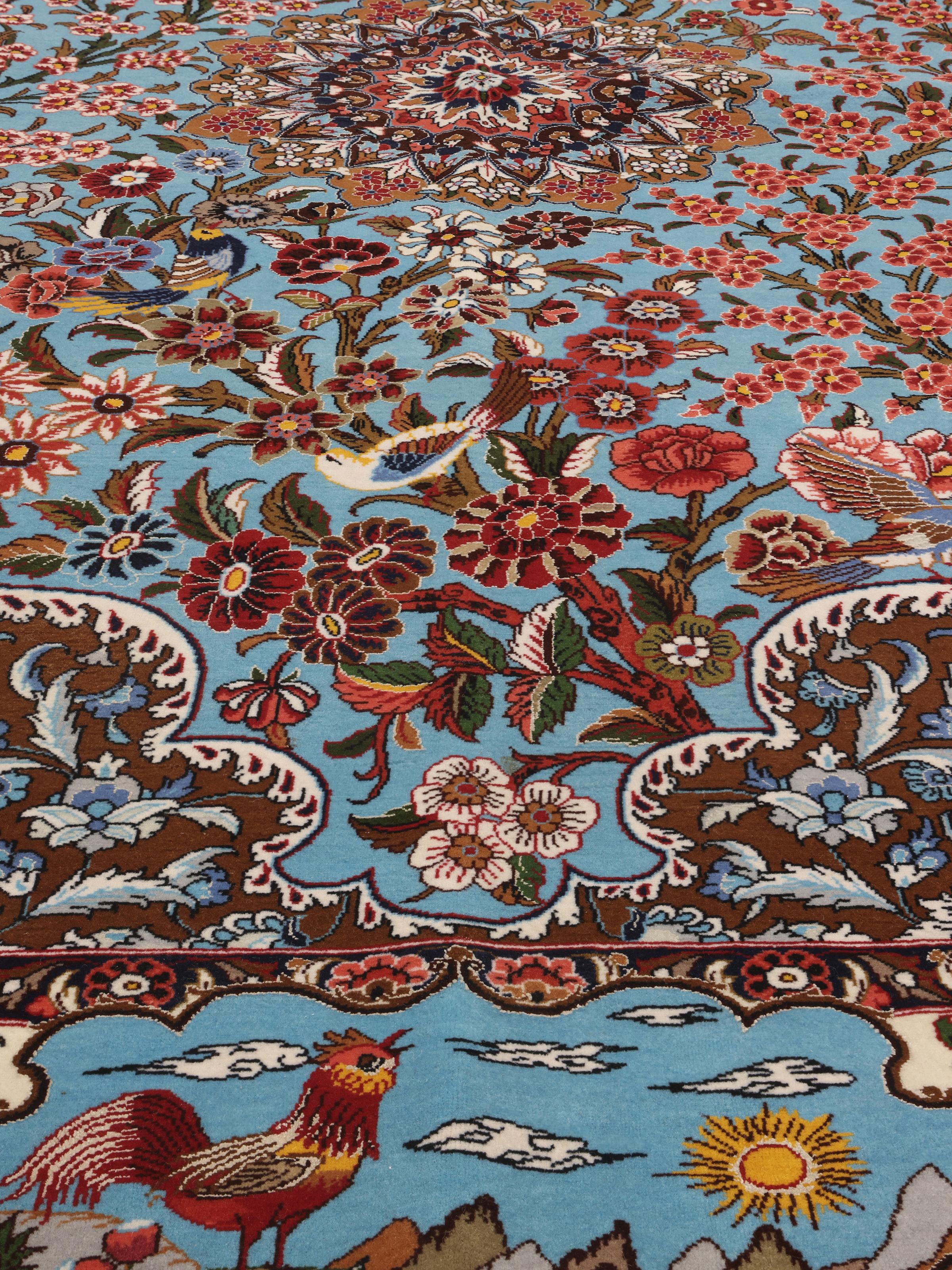
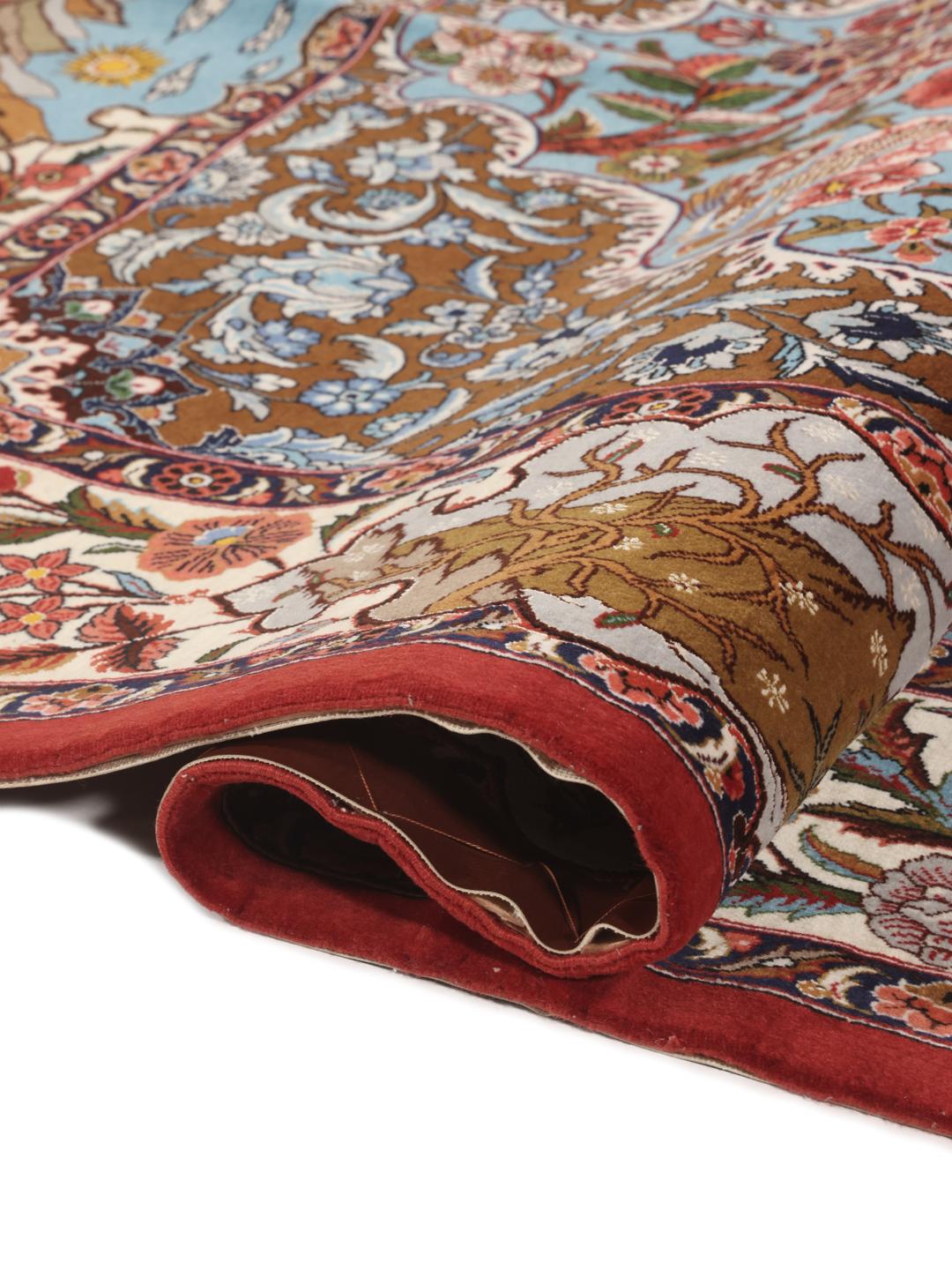
The quality of these rugs is often defined by their incredibly fine construction, which allows for complex, curvilinear designs that would be impossible to achieve with coarser techniques. This level of detail is a defining characteristic of the Isfahan school, where the goal is to create a pictorial, almost painterly effect on the floor. The use of a silk foundation, as seen in this piece, adds a subtle strength and a distinct structural integrity that enhances the longevity of the rug.
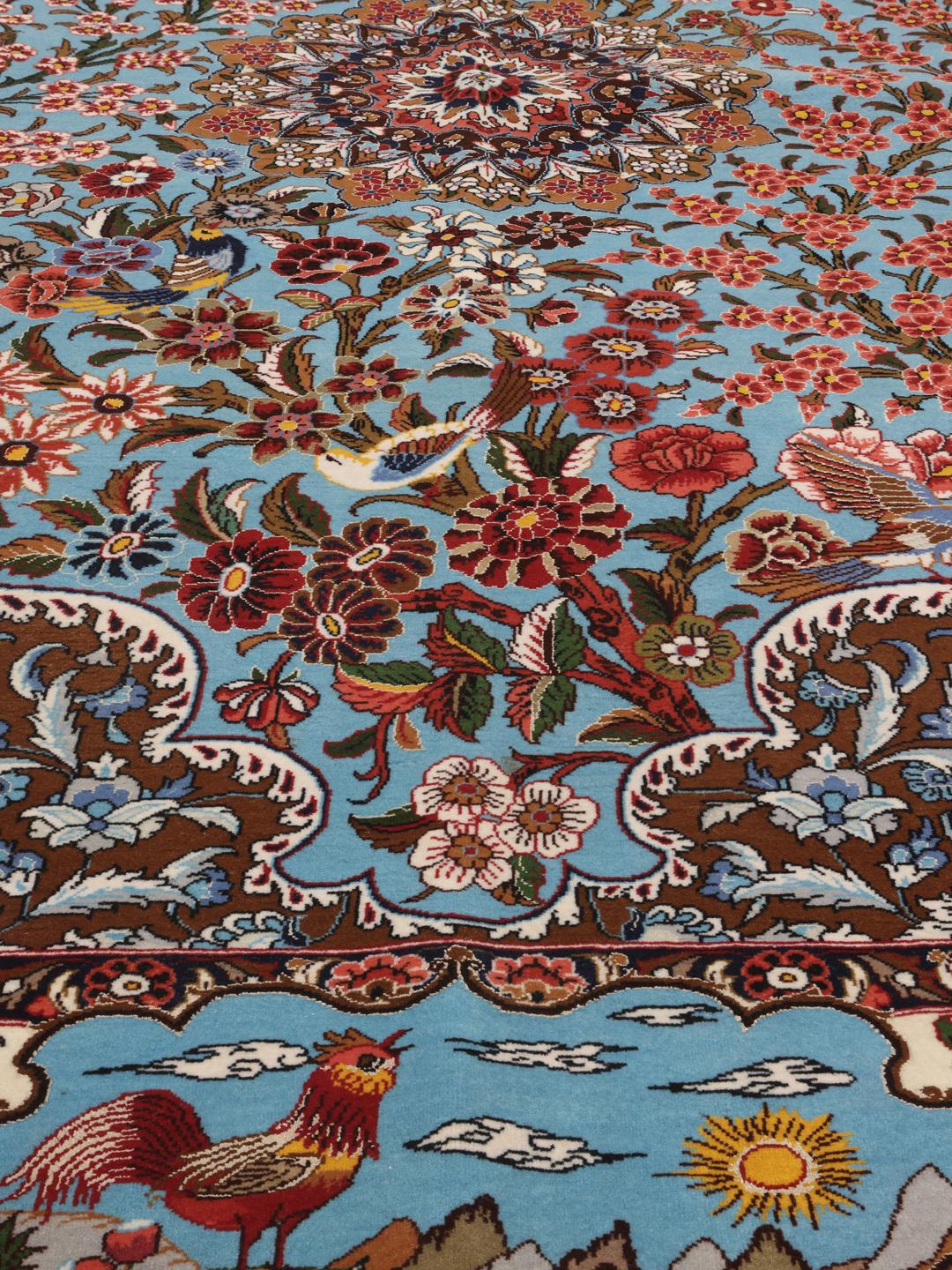
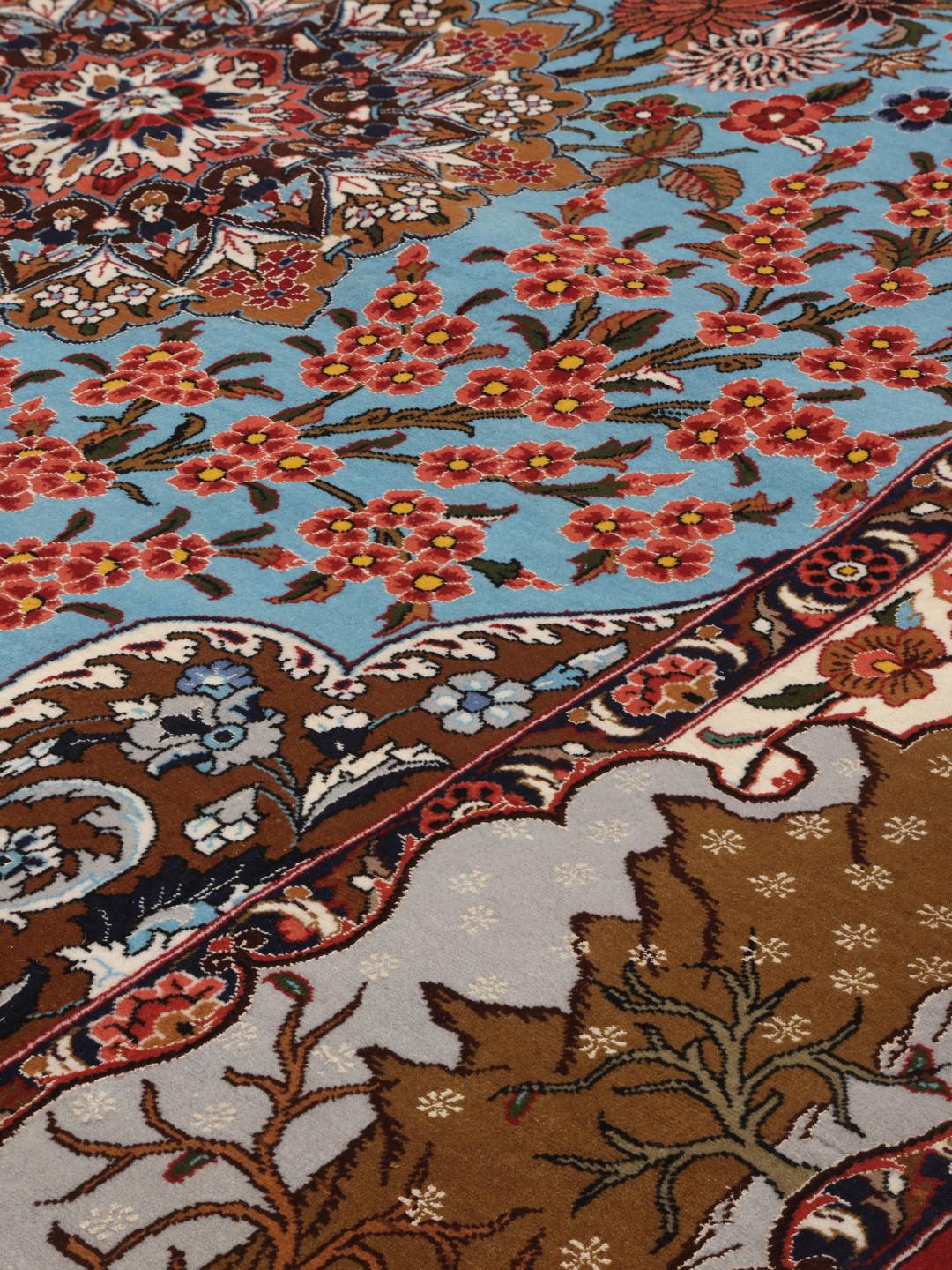
Visually, these rugs are known for their intricate floral compositions, often featuring a central medallion surrounded by a sea of delicate blossoms, vines, and sometimes avian motifs. The border work is equally precise, serving as a frame that contains the vibrant energy of the field. This specific piece stands out for its vivid blue field, a choice that brings a sense of openness and light to the traditional floral arrangements typically associated with this region.
Collecting an Isfahan rug is a way of preserving a legacy of skill and aesthetic refinement. These rugs are not merely functional items; they are cultural artefacts that represent the pinnacle of weaving expertise. Owners of these pieces are custodians of a long-standing tradition, ensuring that the art of the hand-knotted rug continues to be valued and appreciated for its unique contribution to home design and heritage.