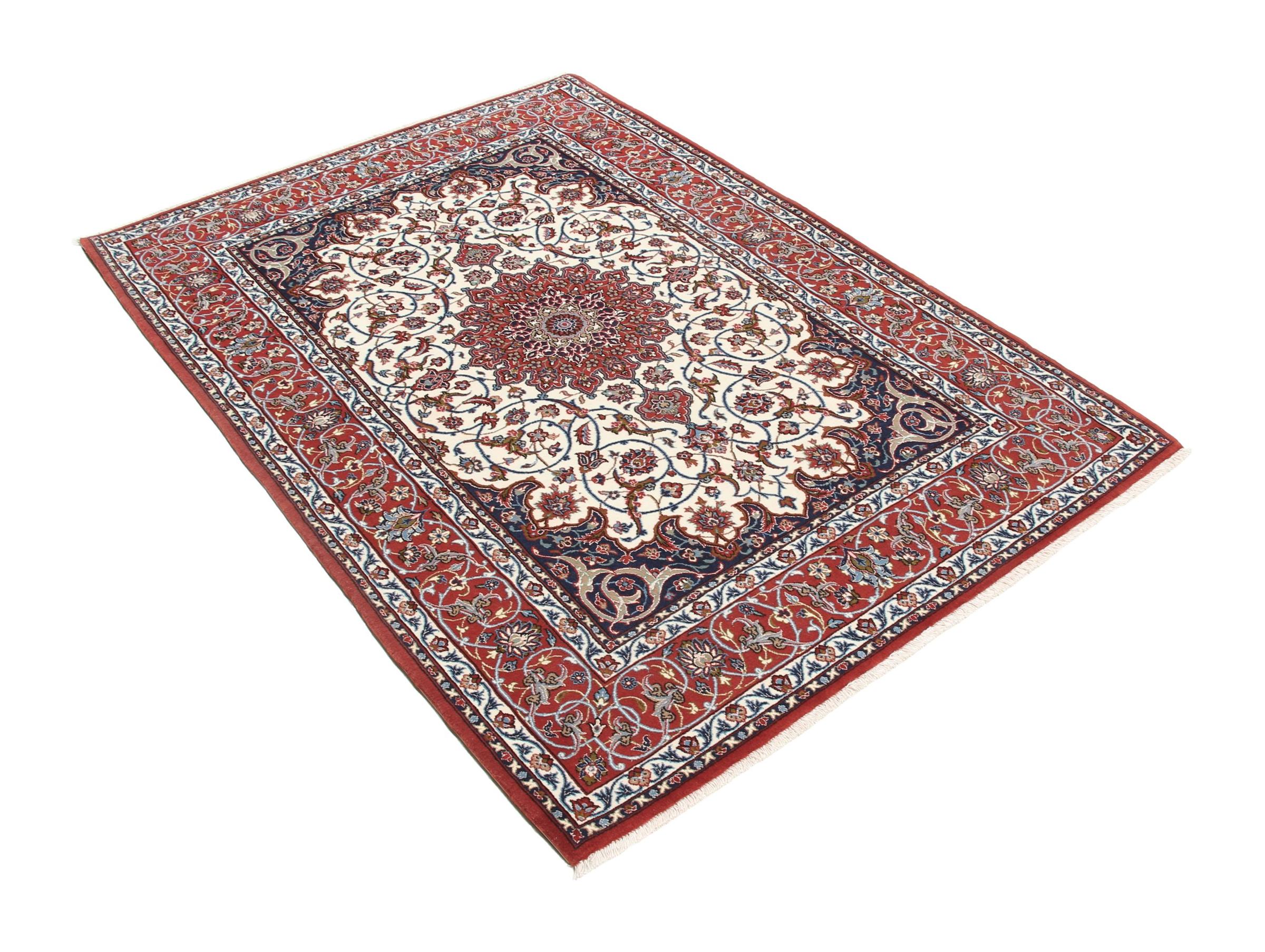
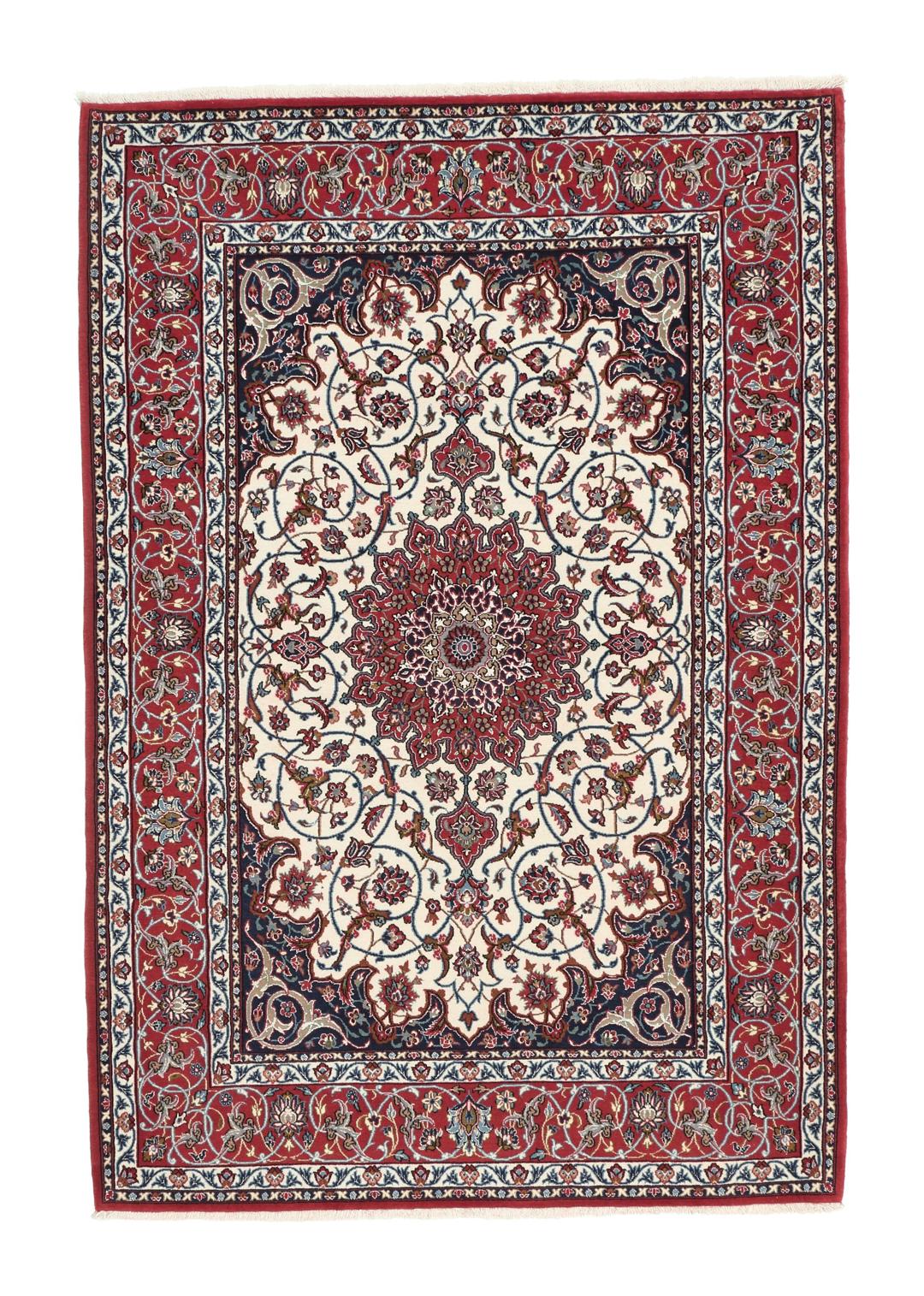
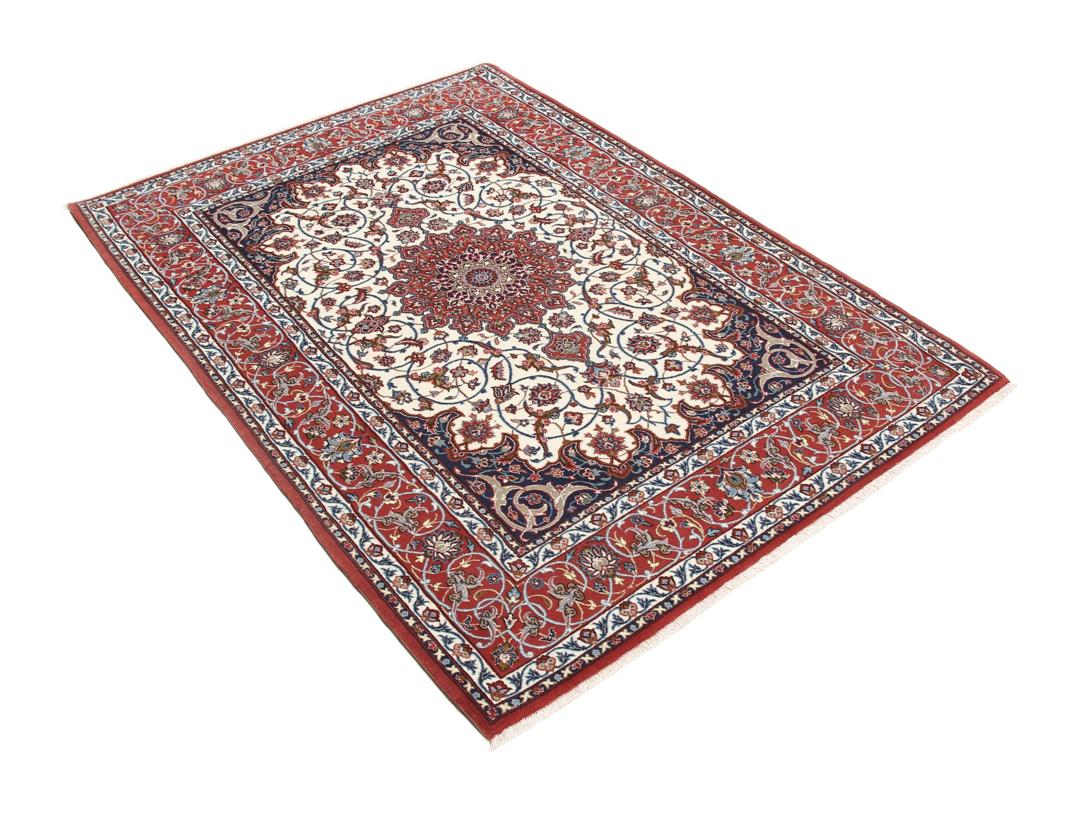
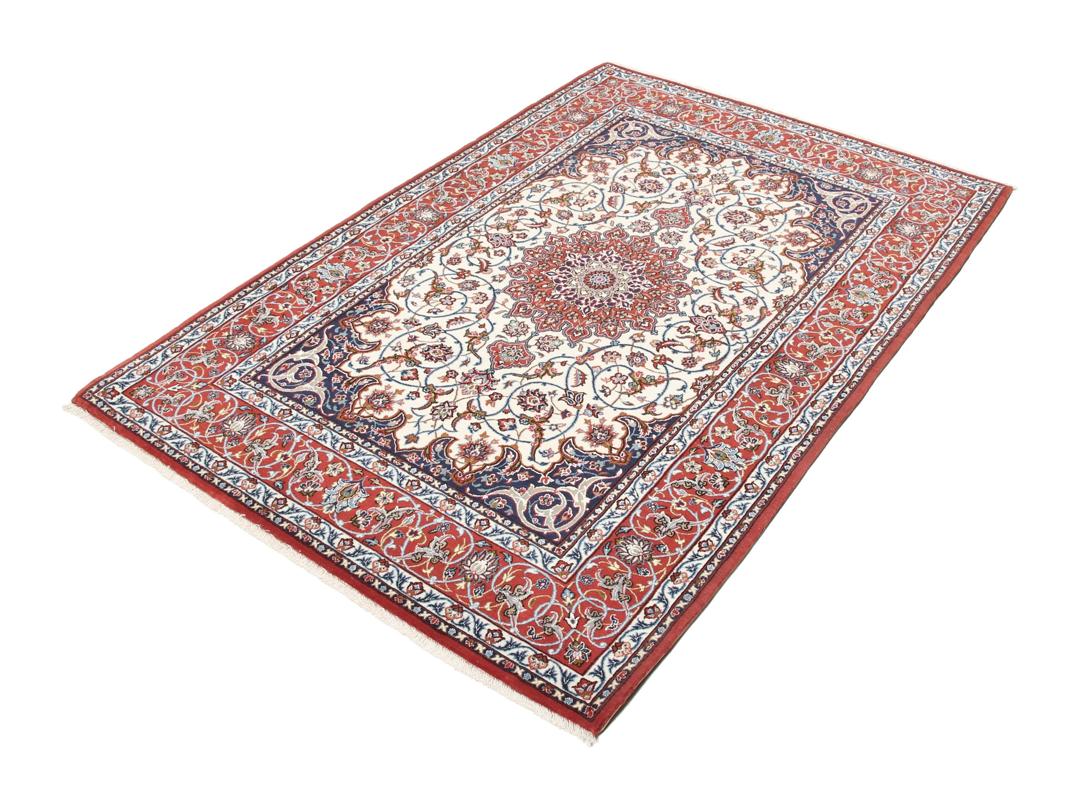
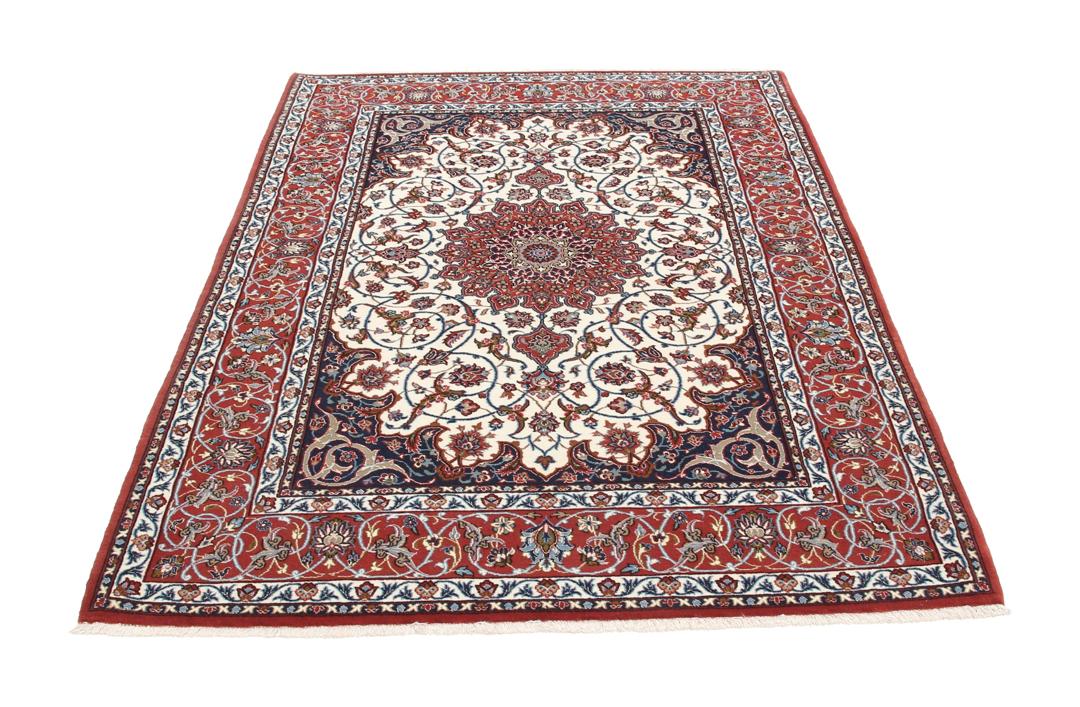
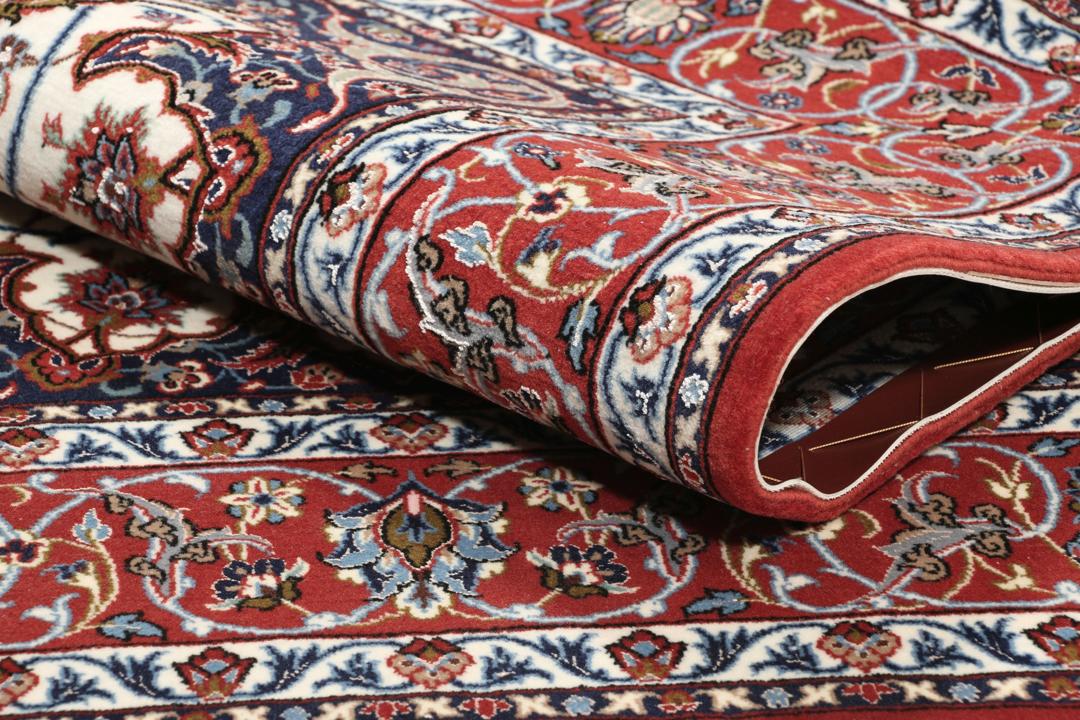
Isfahan rugs originate from the historic city of Isfahan in the Middle East, a location renowned for its long-standing legacy as a centre of artistic and cultural production. For centuries, the workshops in this region have been synonymous with the highest standards of weaving, often drawing inspiration from the grandeur of Safavid-era architecture and miniature paintings. This tradition of excellence has established Isfahan rugs as some of the most sought-after textiles in the world.
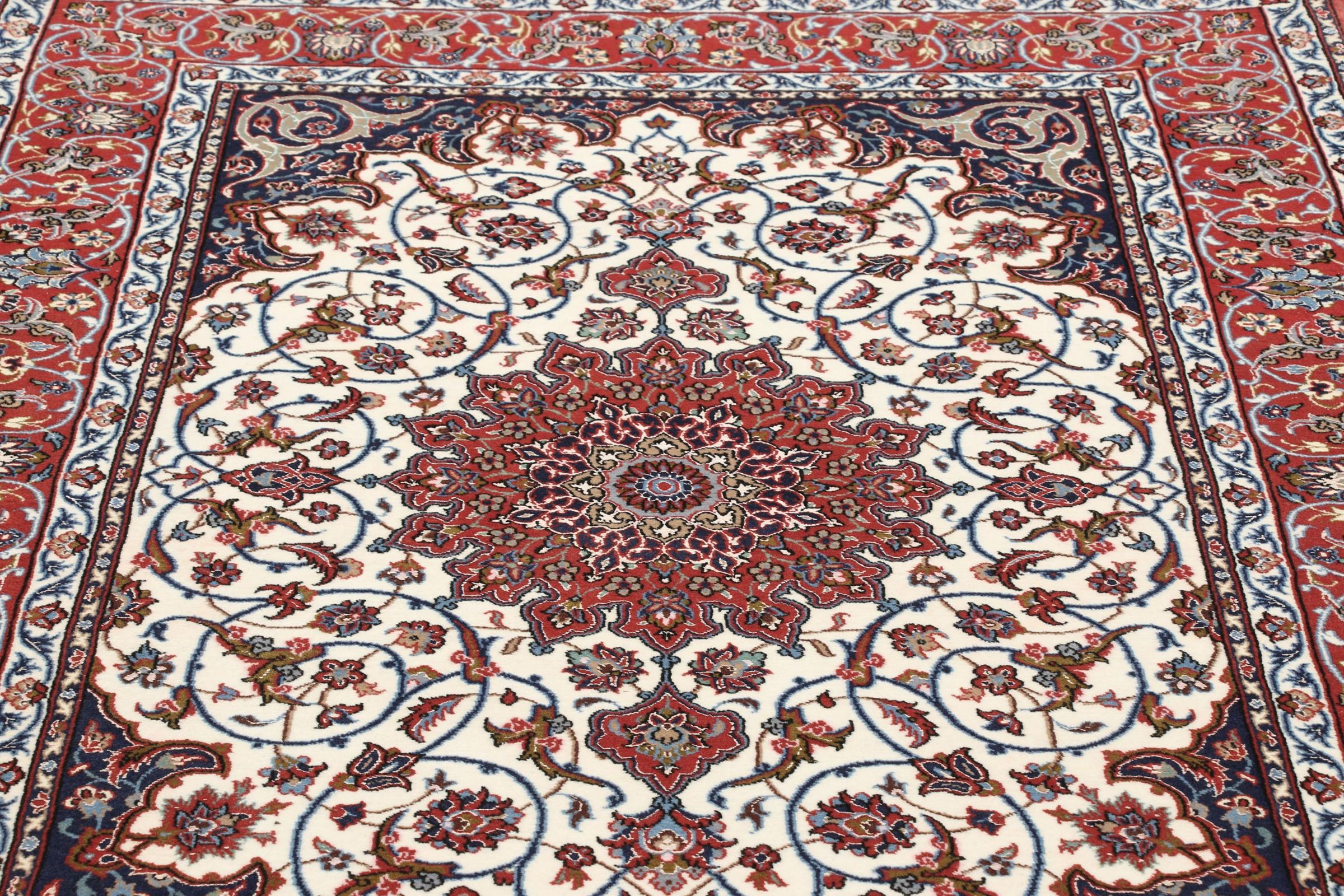
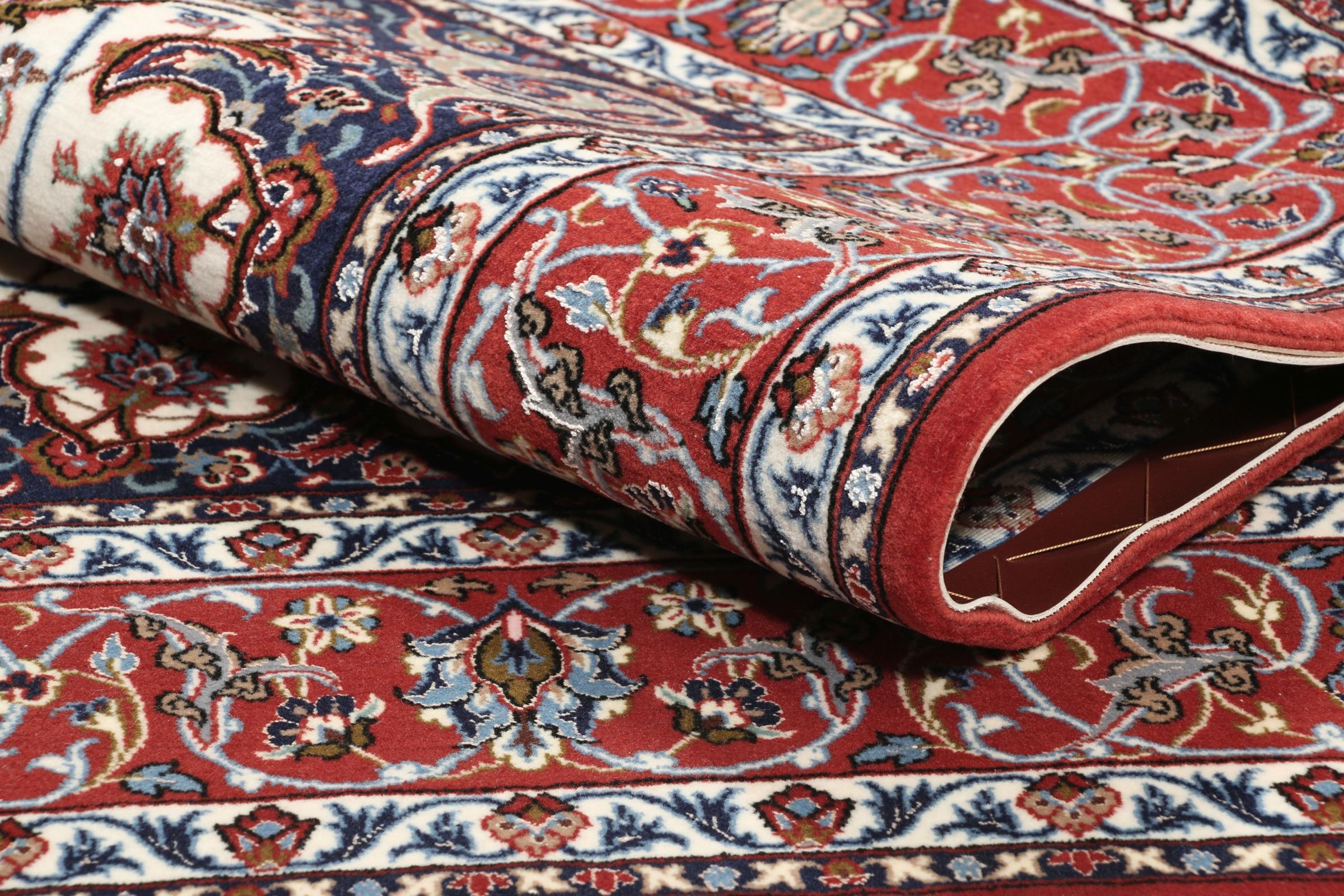
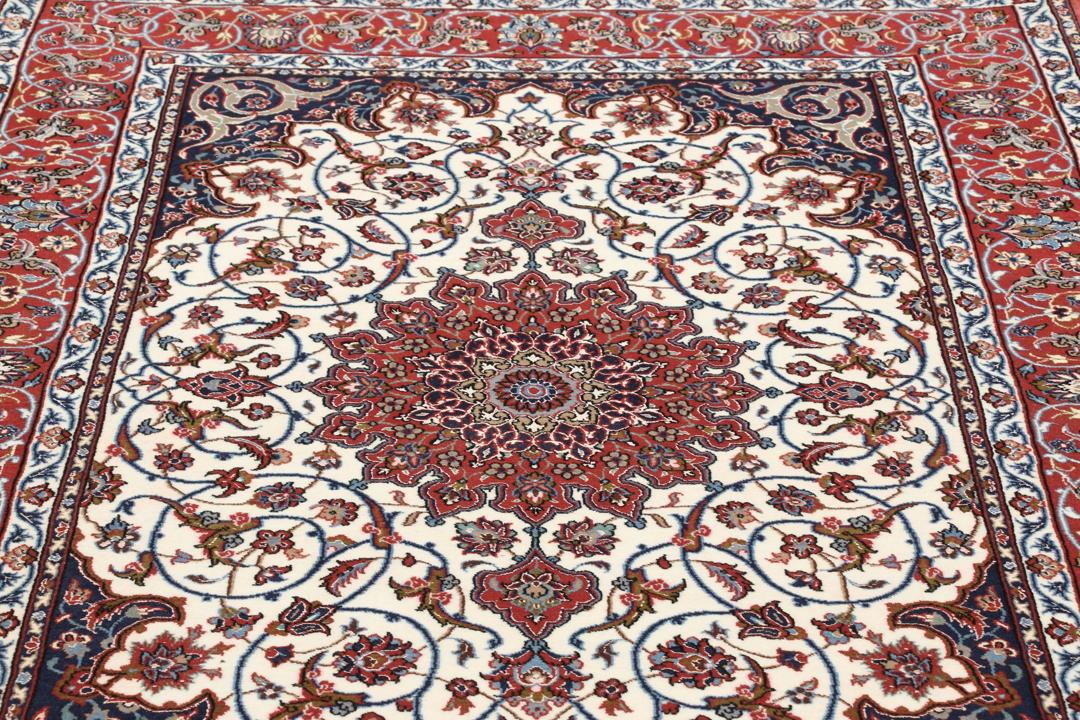
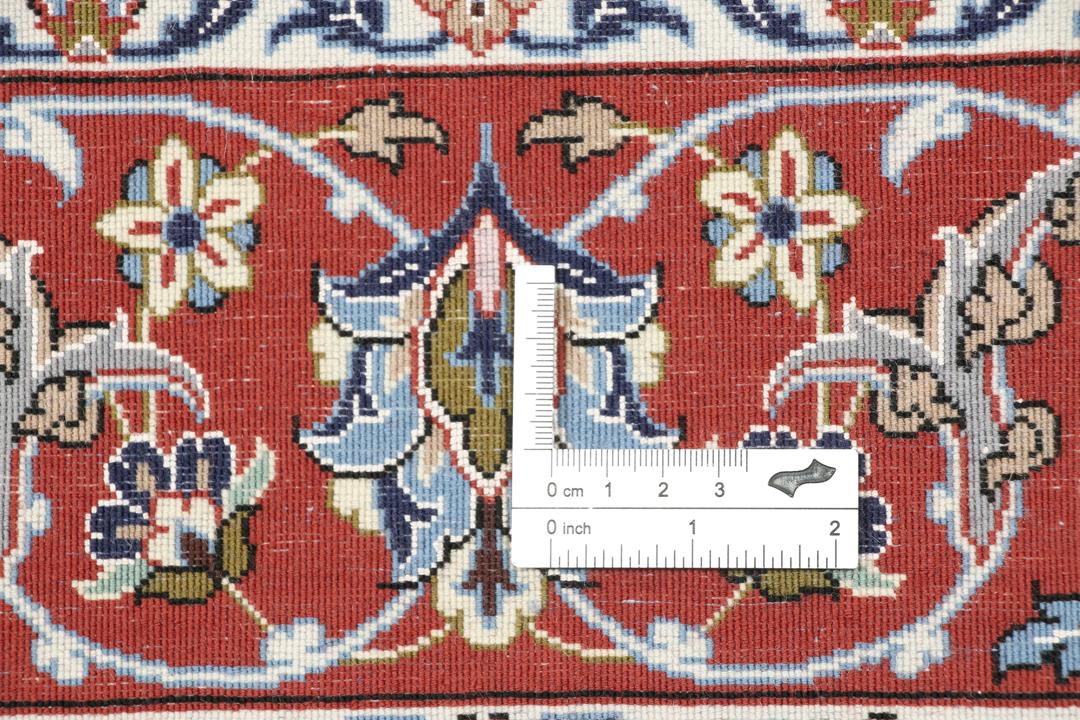
The technical mastery required to produce these rugs is evident in their characteristic fineness and delicate detail. The term 'Silkwarp' refers to the use of silk in the foundation, which provides a level of structural integrity and subtle lustre that allows for finer knotting. This technical choice is significant because it enables the weaver to achieve intricate curves and complex floral designs that would be impossible with coarser materials, ensuring a level of detail that is truly remarkable.
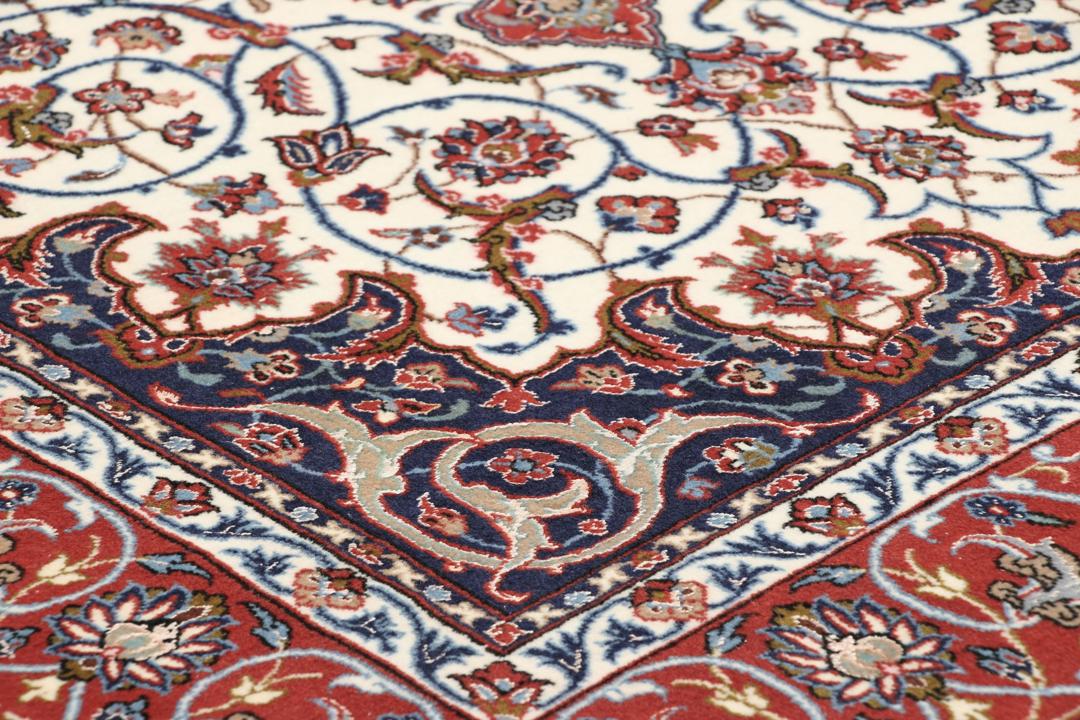
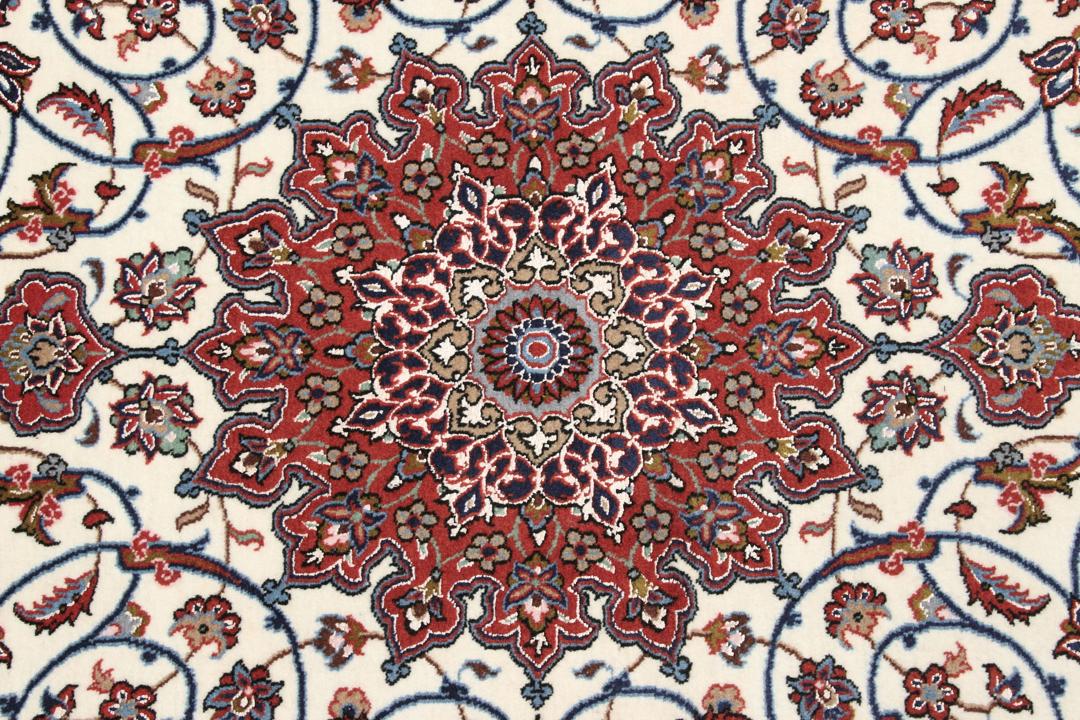
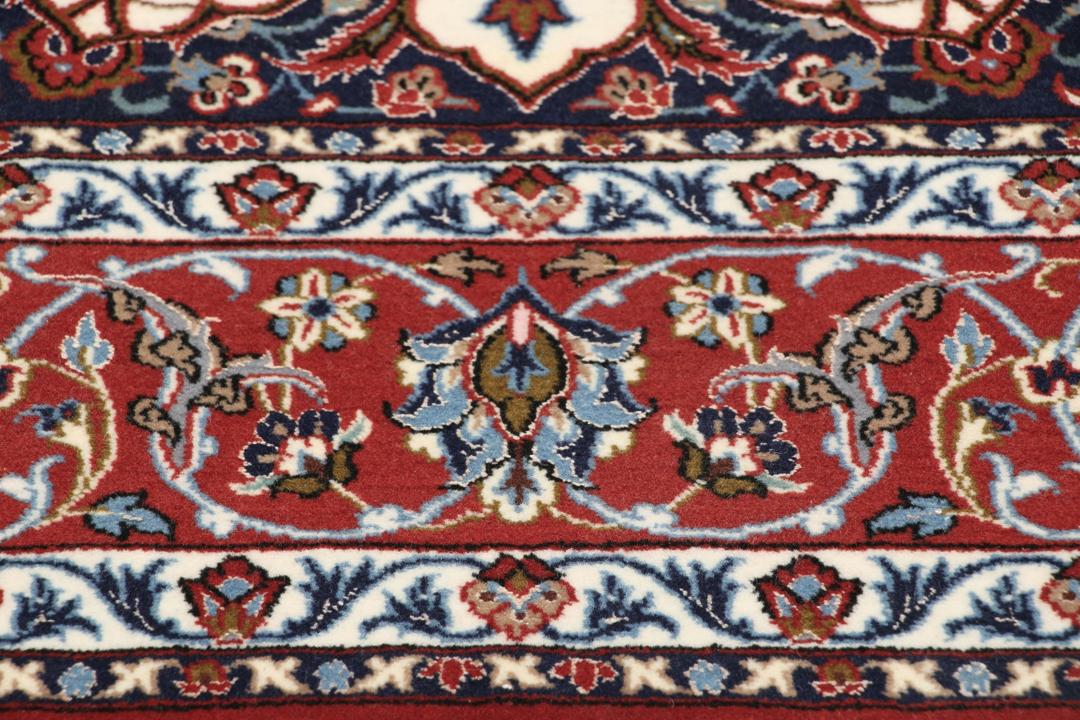
Signature design elements of an Isfahan rug typically include a central medallion, which acts as the focal point of the composition. This is often framed by elaborate scrolling vines, palmettes, and floral sprays that reflect the natural beauty of the region's gardens. The borders are usually composed of multiple, harmoniously balanced bands that frame the field, providing a sense of order and sophistication that defines the classic Isfahan aesthetic.
These rugs are considered significant collector items due to the immense skill and cultural heritage they represent. Owning an Isfahan is not merely about covering a floor, but about preserving a legacy of craftsmanship that has been handed down through generations of master weavers. They are valued for their enduring beauty and the way they elevate any interior, serving as a tangible connection to a rich, artistic past.