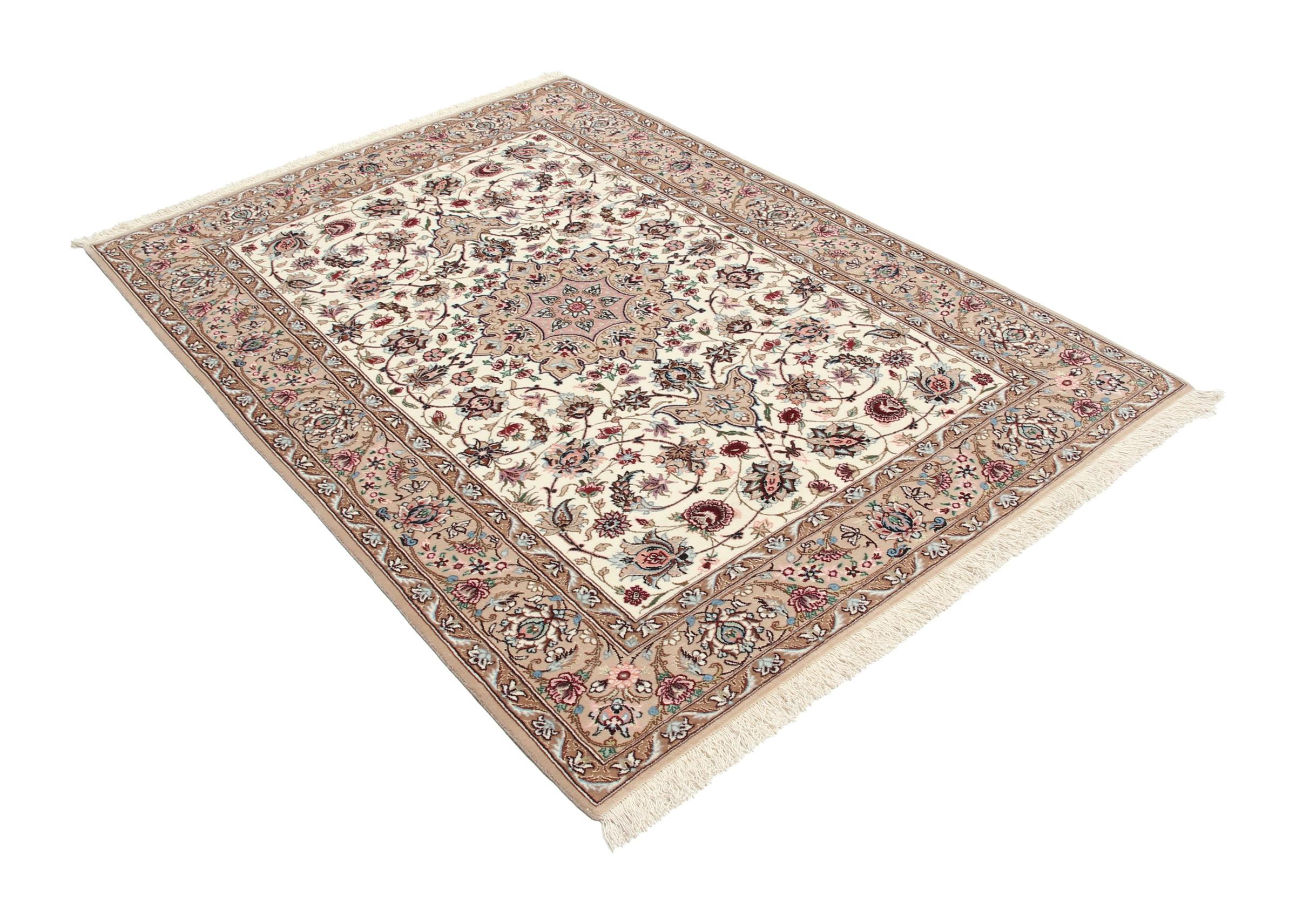
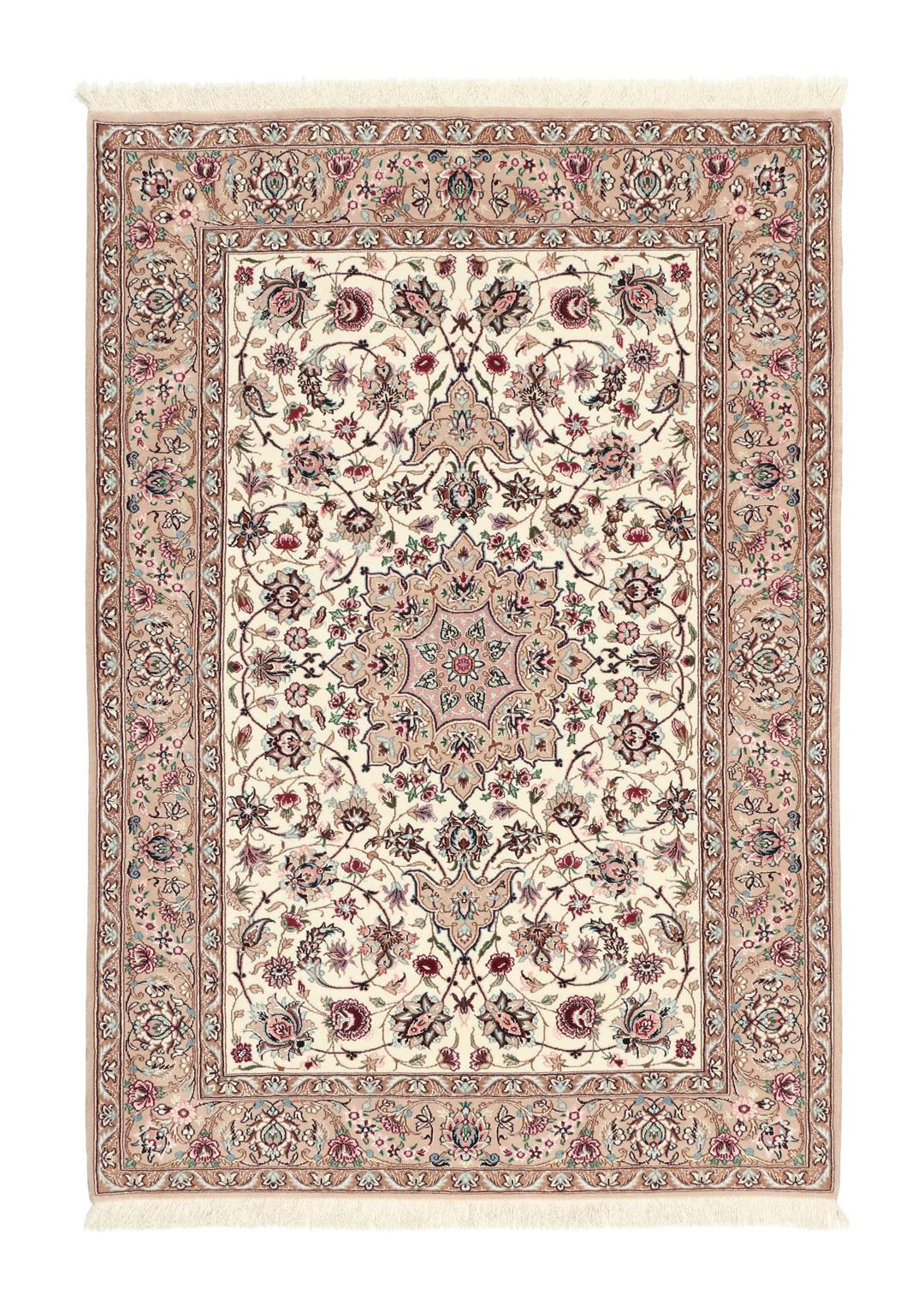
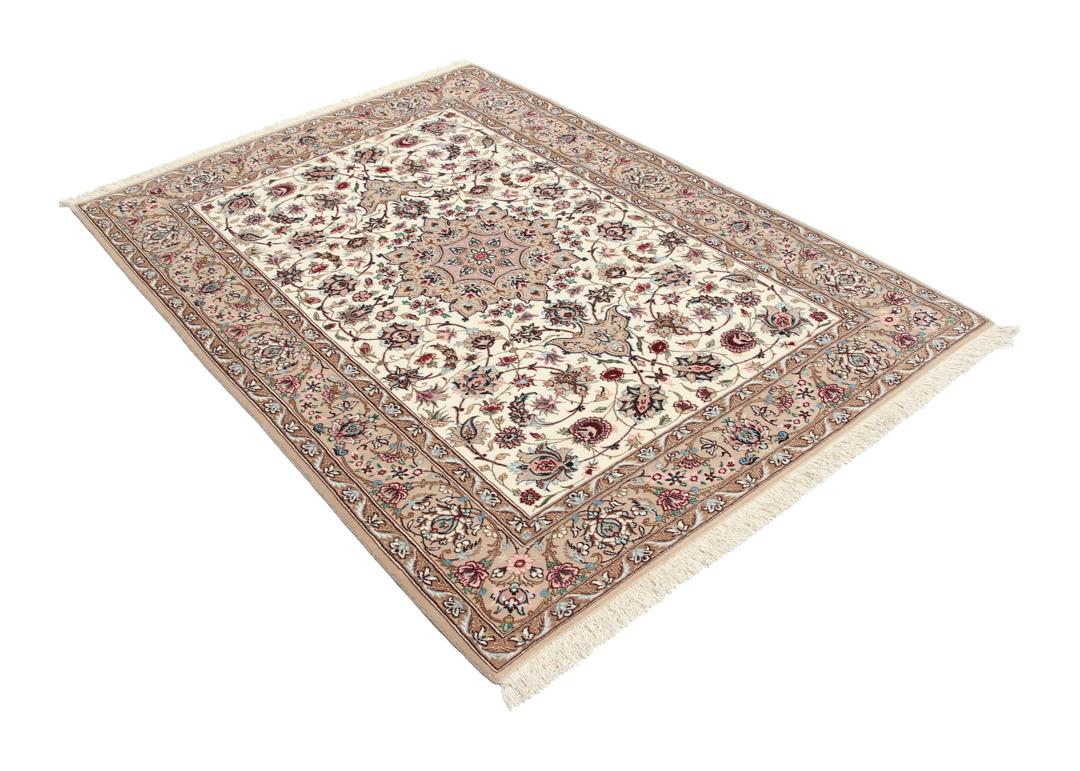
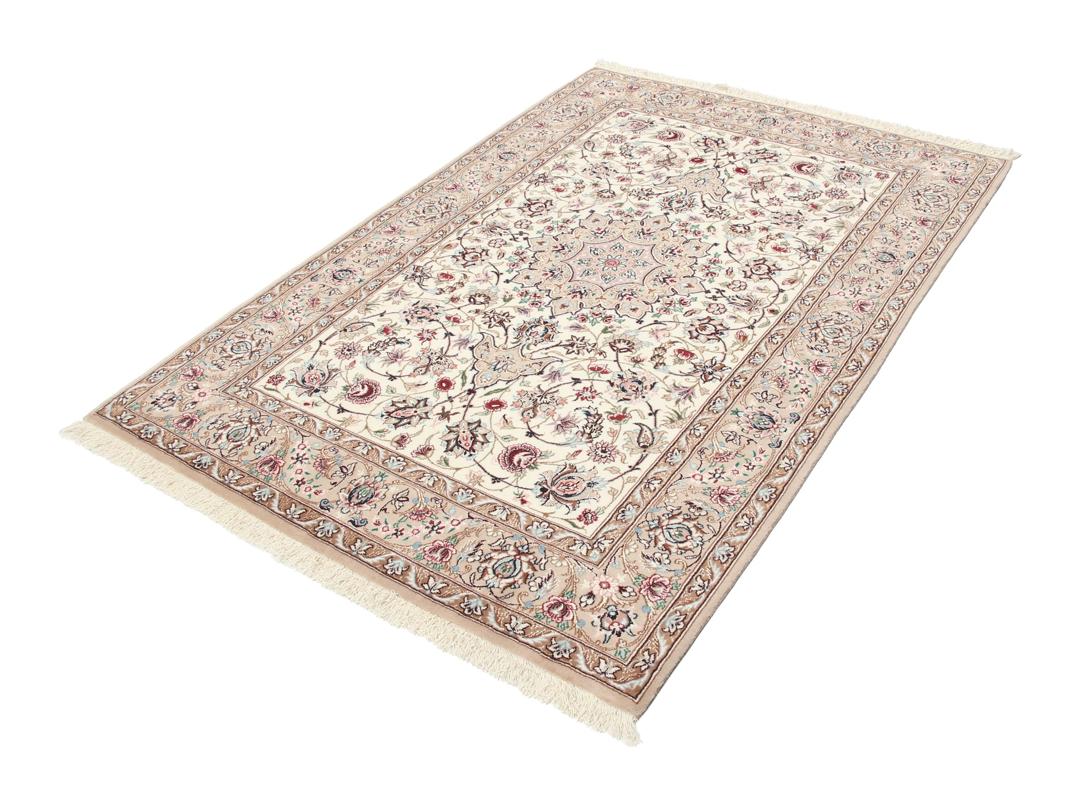
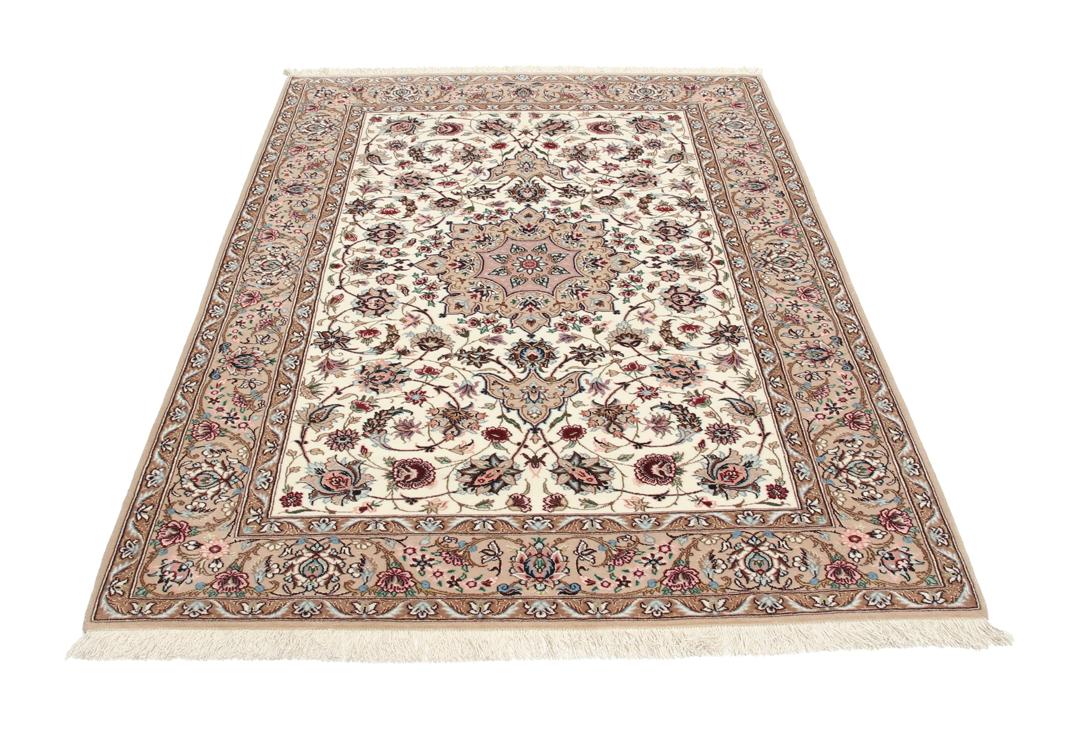
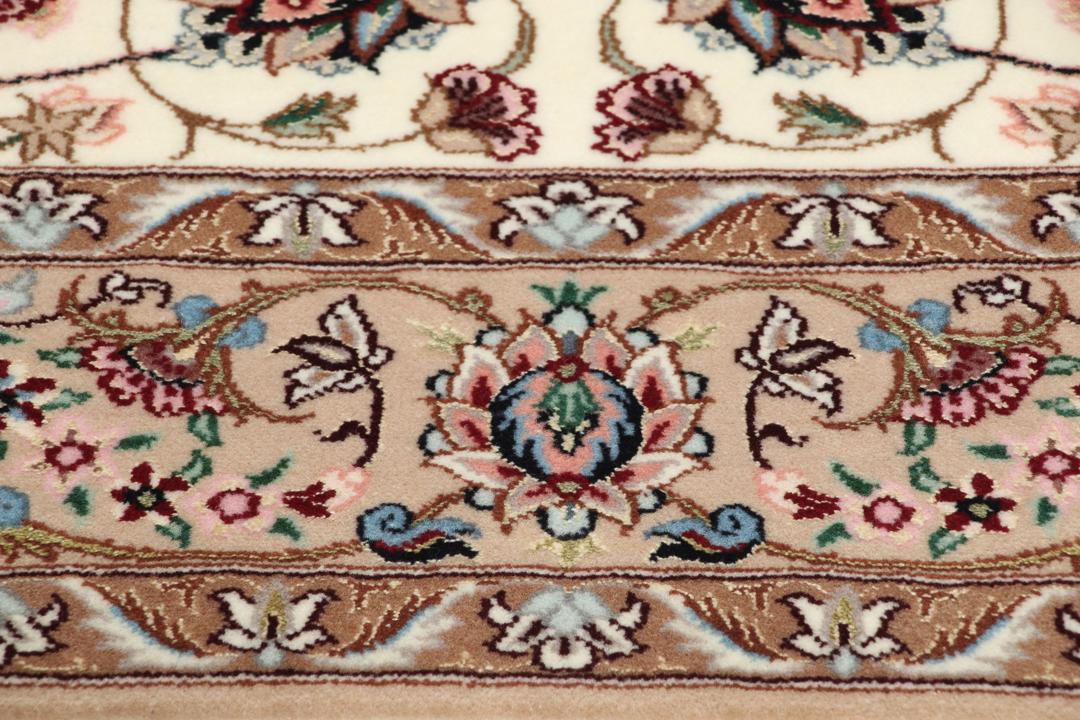
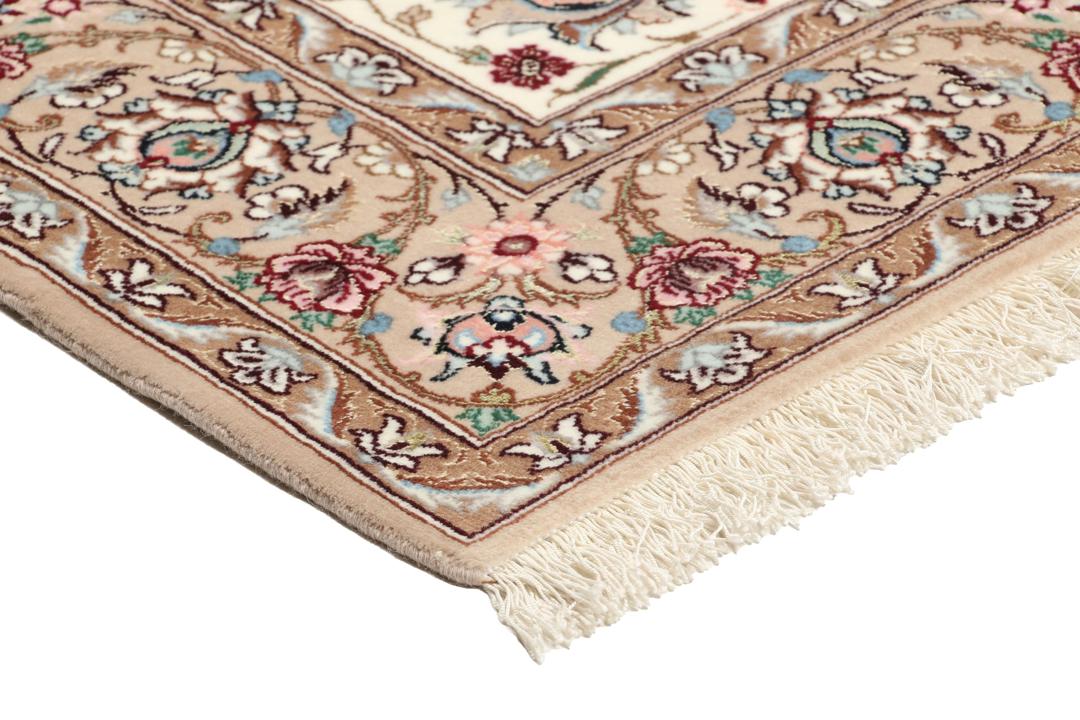
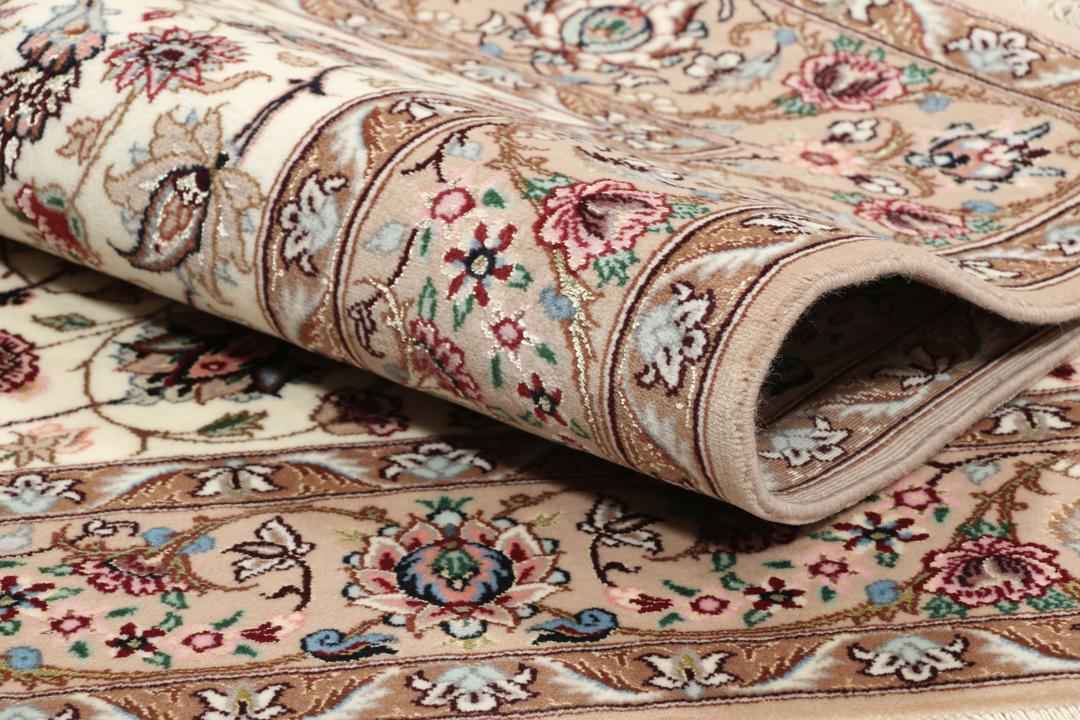
The Isfahan tradition originates from the historic city of Isfahan in the Middle East, a centre of culture and art that flourished under the Safavid dynasty. Rugs from this region are celebrated for their sophisticated designs, which often draw inspiration from the intricate tile work found in local mosques and the lush gardens that define the city's aesthetic history. These rugs represent the pinnacle of weaving tradition, bridging the gap between functional floor coverings and fine art.
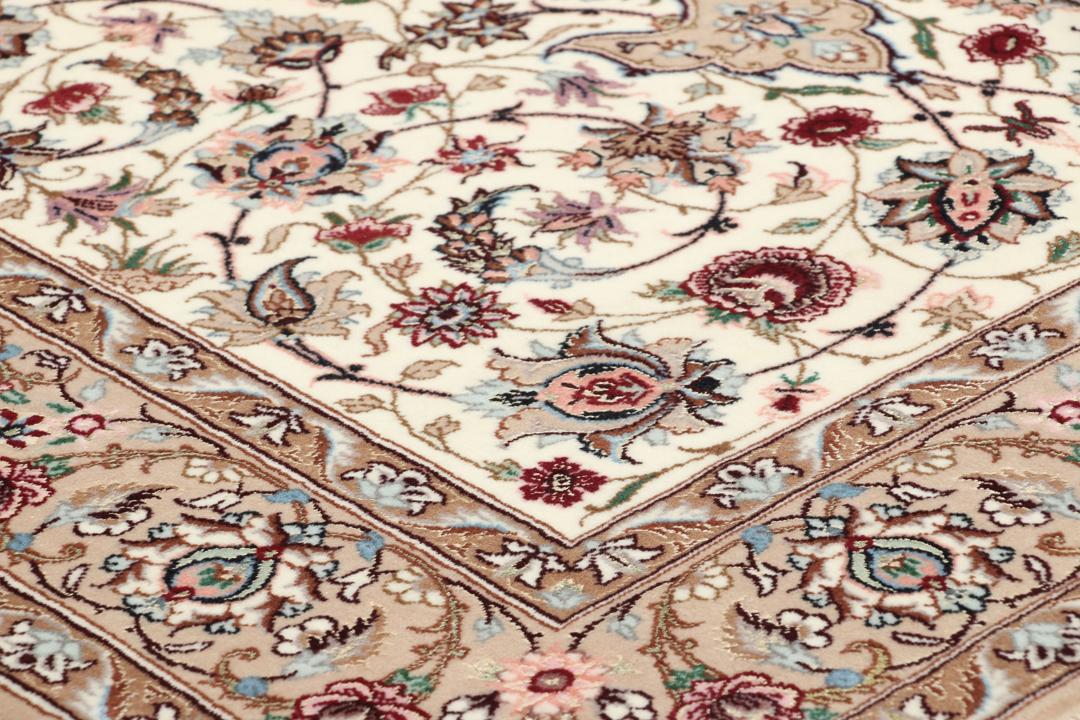
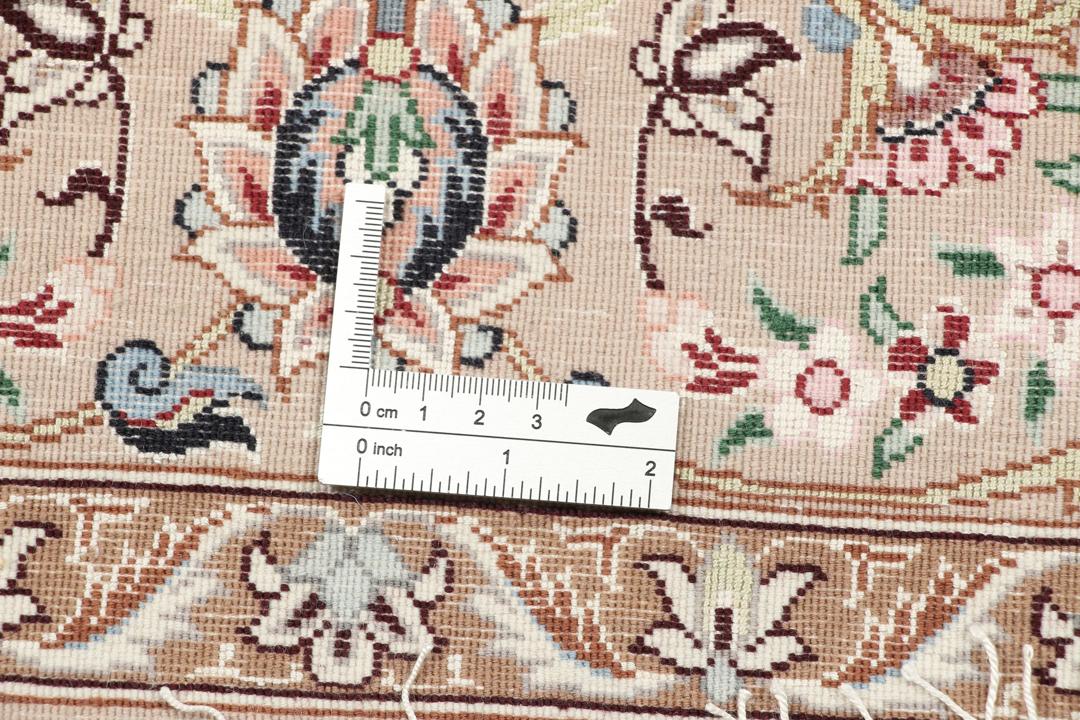
The term 'Silkwarp' refers to the use of silk in the foundation of the rug, which allows for a finer, more precise knotting process. By using silk for the structure, weavers can achieve an incredible level of detail in the patterns, resulting in the sharp, flowing lines that characterise the finest Isfahan pieces. This choice of material not only enhances the visual definition of the motifs but also contributes to the overall strength and longevity of the rug.
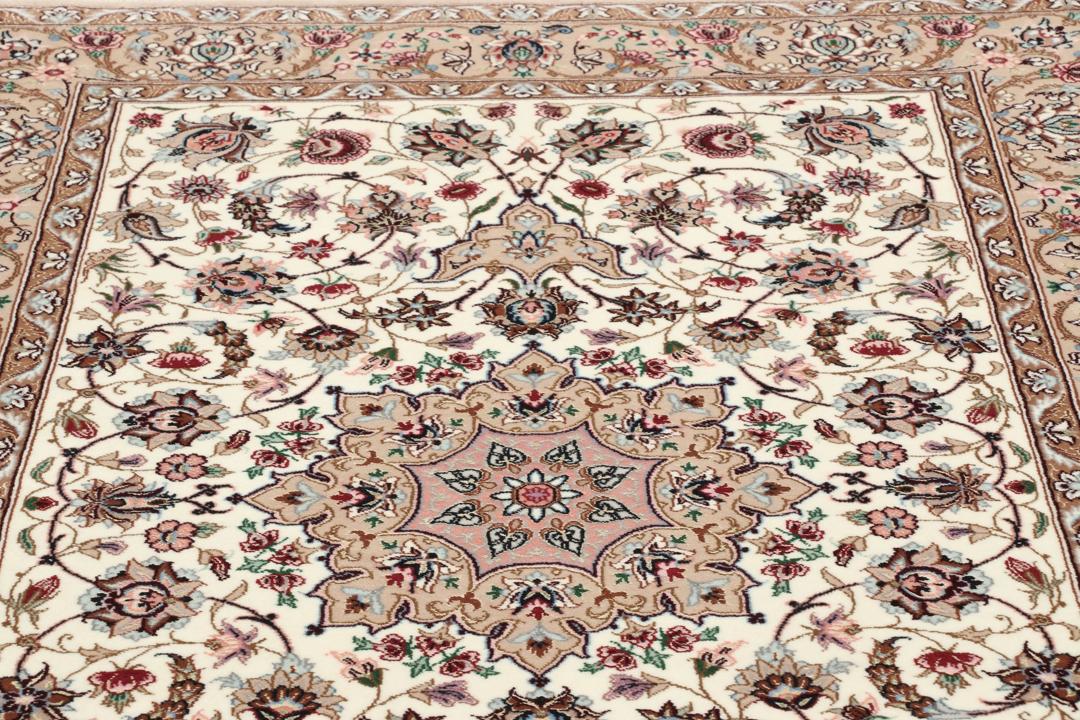
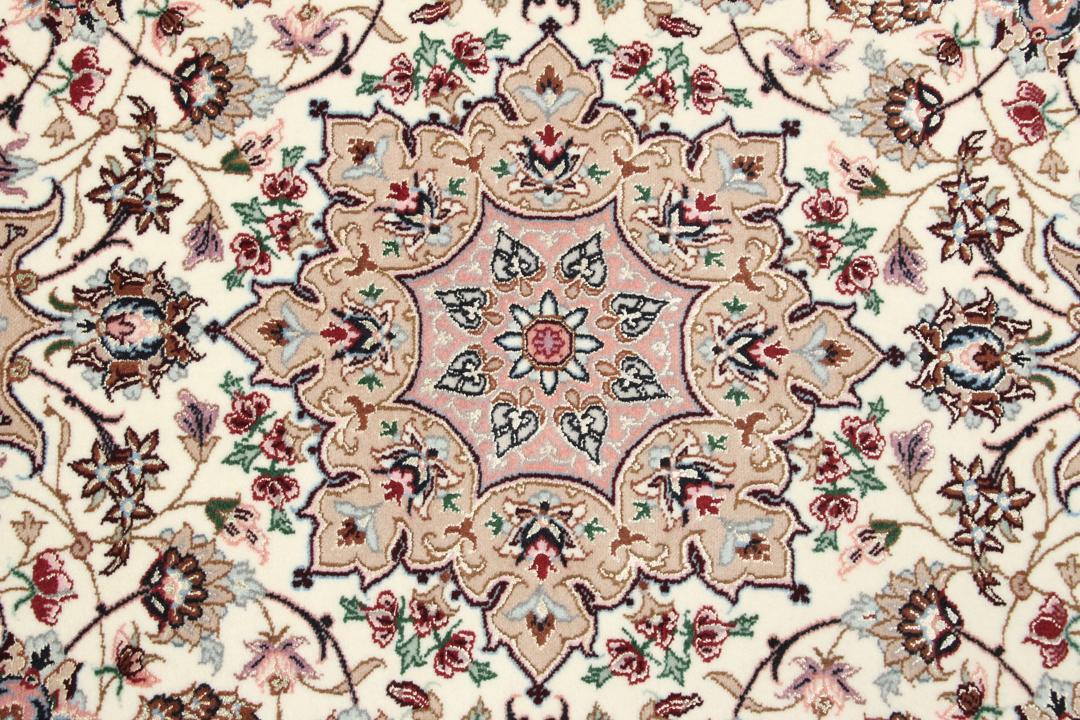
The signature design elements of an Isfahan often include a central medallion surrounded by a sea of delicate floral vines, palmettes, and scrolling leaves. This balanced, symmetrical layout is designed to draw the eye toward the centre, creating a focal point that is both calming and intellectually engaging. The colour palette typically features soft, natural tones that allow the complexity of the floral work to shine without overwhelming the space.
These rugs are highly valued by collectors for their blend of technical mastery and cultural significance. Owning an Isfahan is seen as a commitment to preserving an ancient craft that requires immense patience and specialised skill. Each rug serves as a narrative of the region's artistic evolution, making it a meaningful addition to any home that appreciates the intersection of history, skill, and enduring beauty.