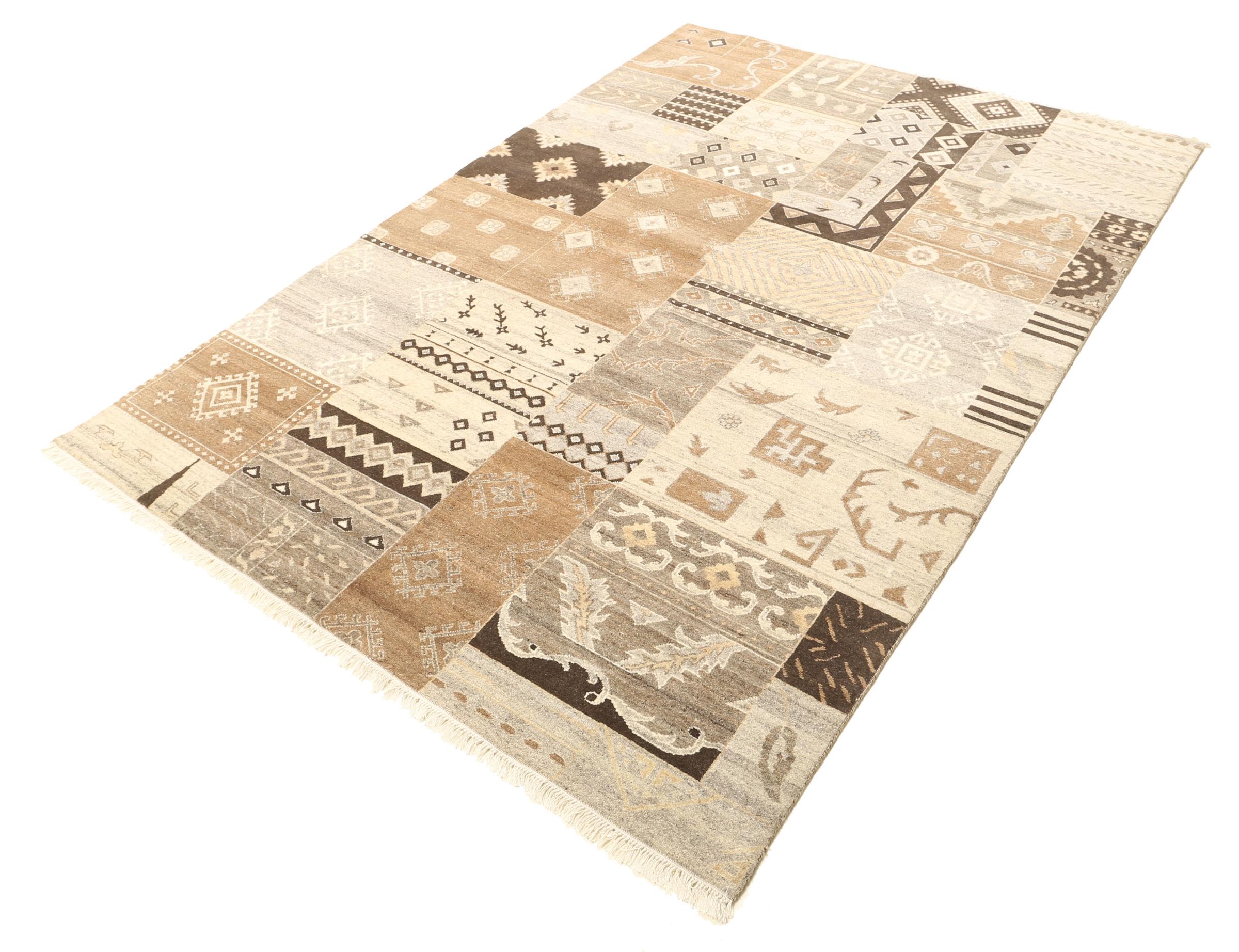
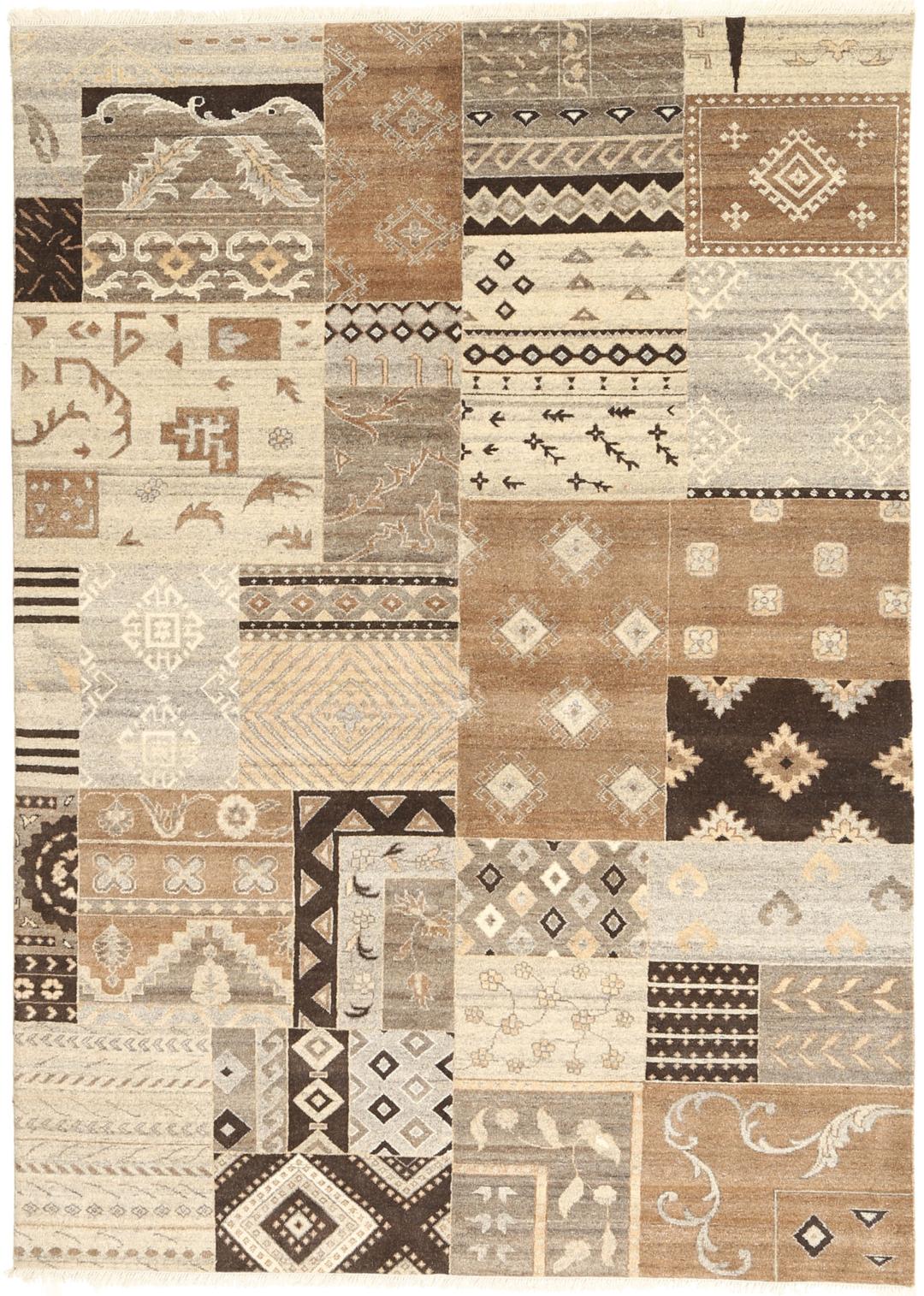
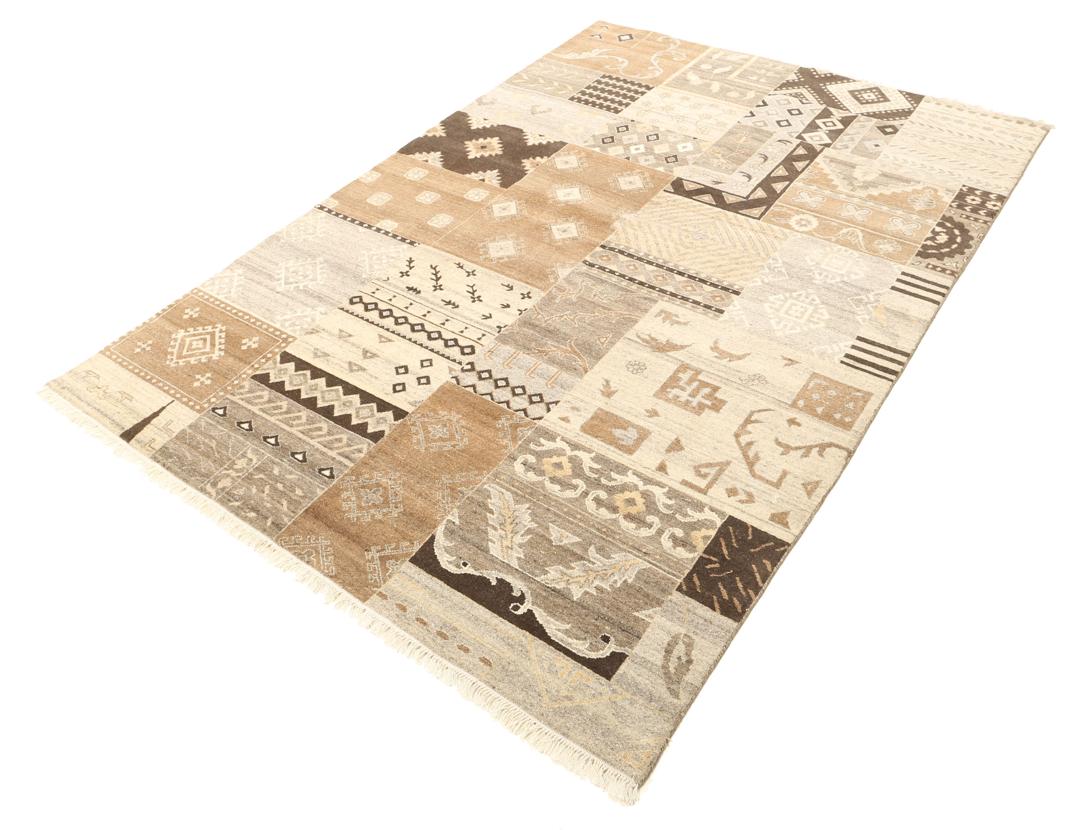
The tradition of patchwork rug making in India is a modern evolution that honours the ancient history of textile artistry in the region. While India has been a global hub for weaving for centuries, the contemporary patchwork movement represents a creative synthesis of various regional styles. By reclaiming and curating diverse design motifs, these rugs celebrate the vast, multi-faceted heritage of Indian weaving, turning disparate elements into a unified, artistic whole.
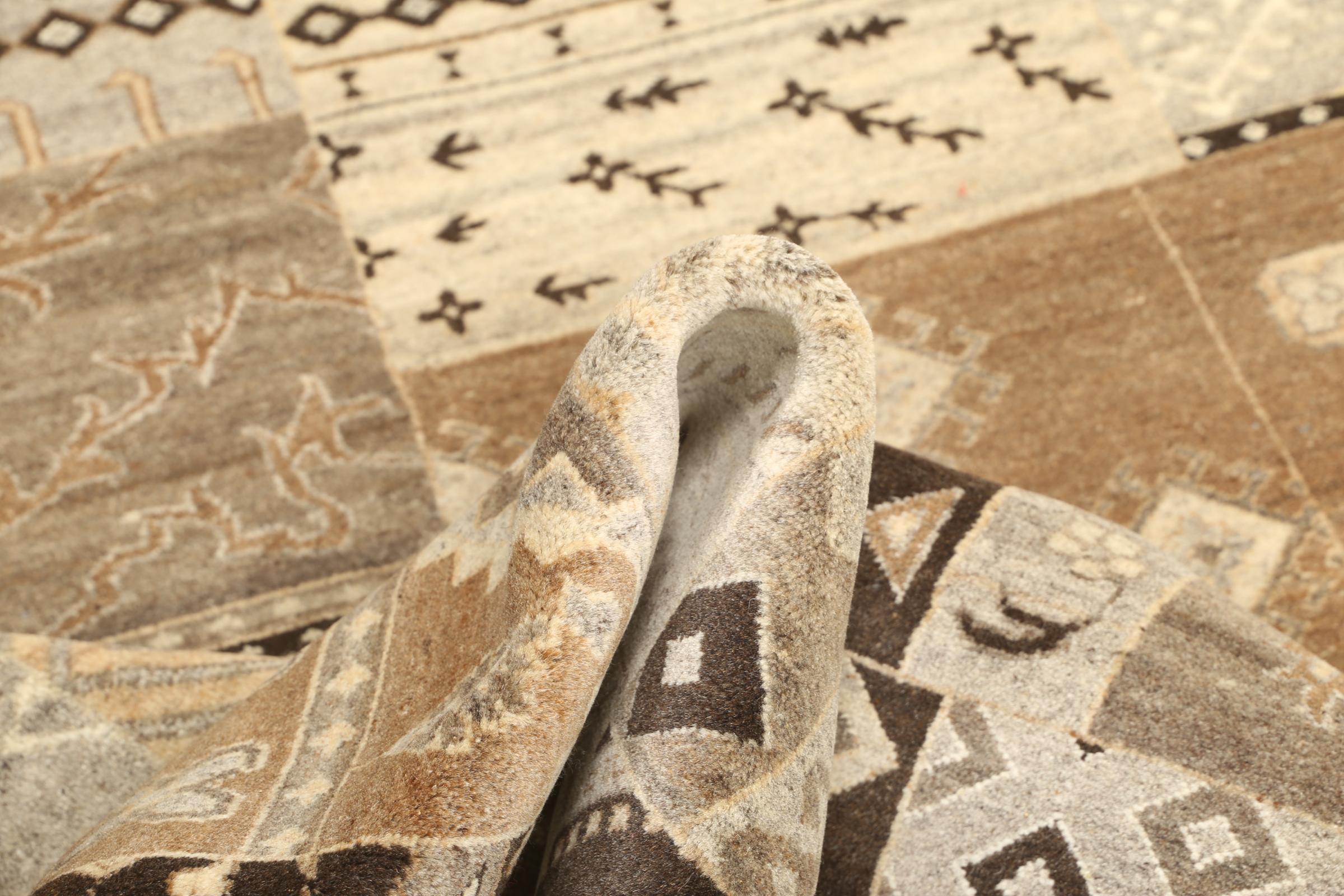
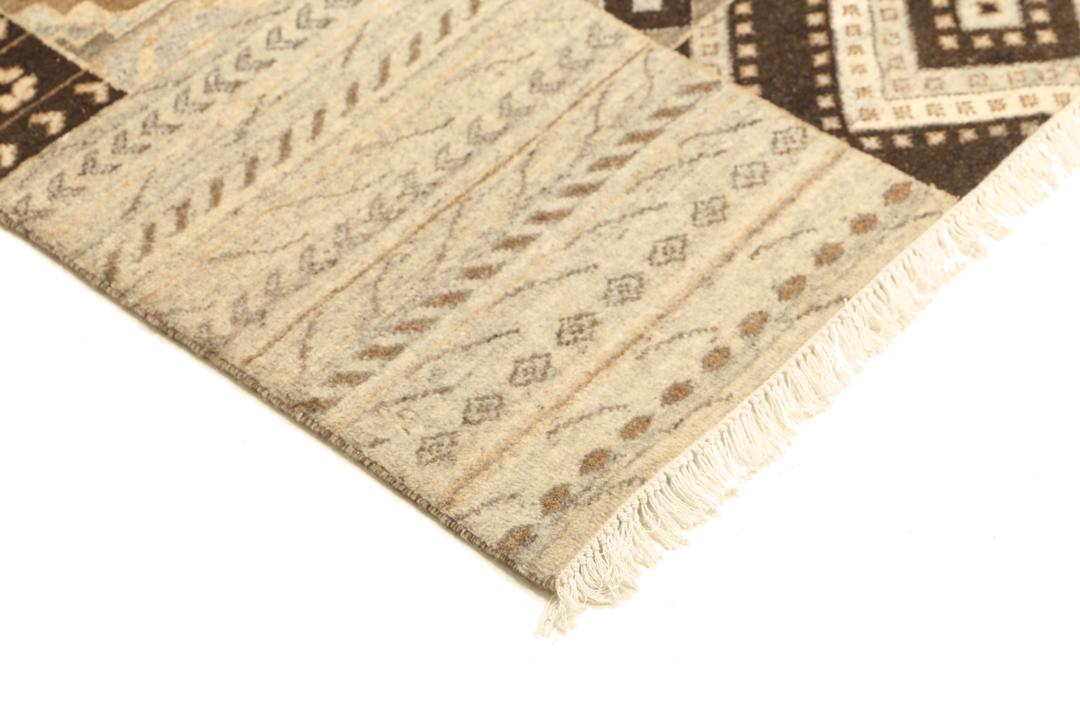
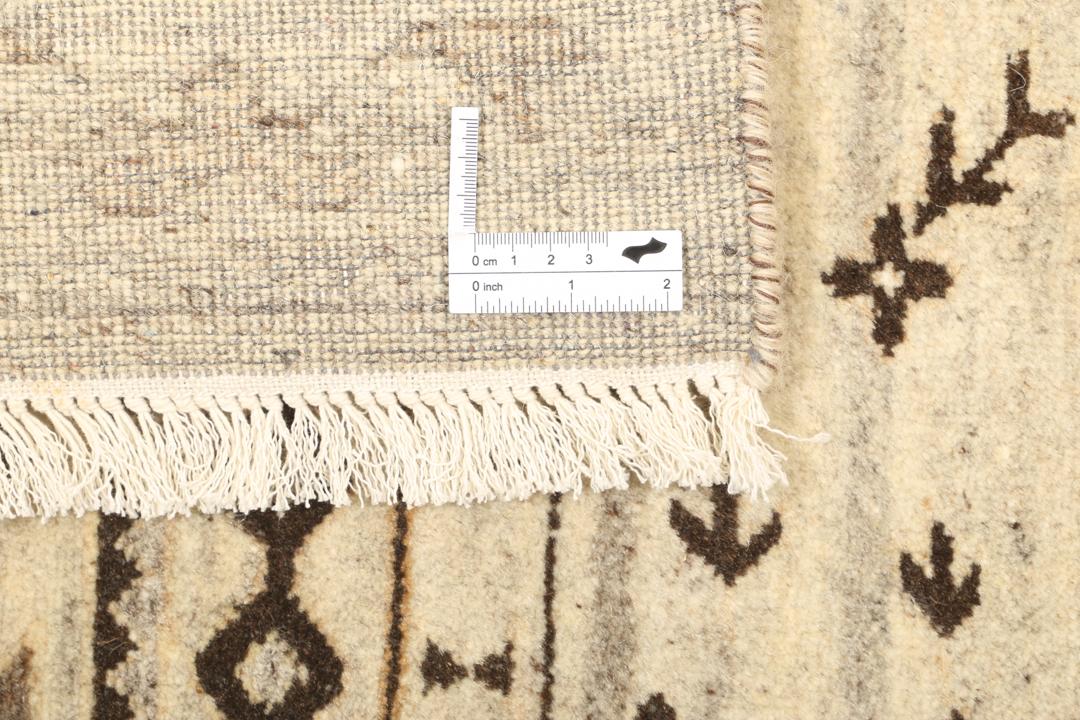
The term hand-knotted refers to the oldest and most respected method of rug construction, where individual strands of wool are tied around the foundation warps by hand. This technique is not merely a method of assembly but a language of quality. A higher knot count, such as the one found in this piece, indicates a more refined and time-consuming process, resulting in a pile that is denser, more lustrous, and significantly more resistant to wear than rugs made with faster, less precise methods.
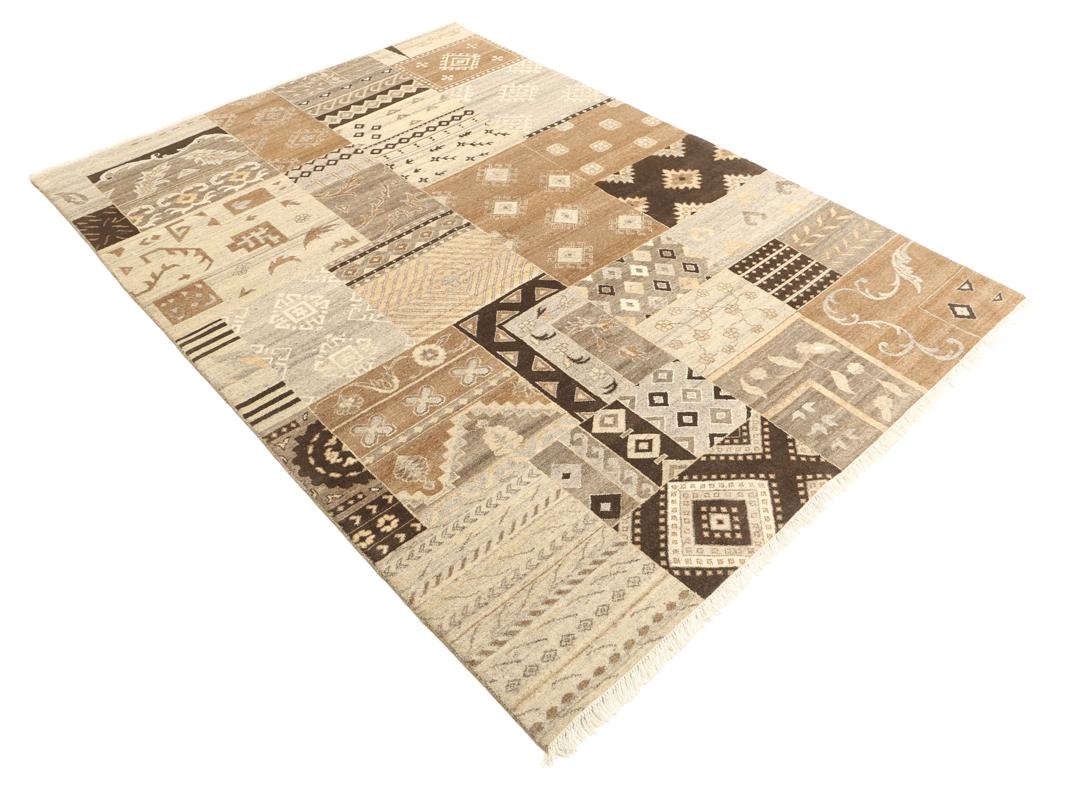
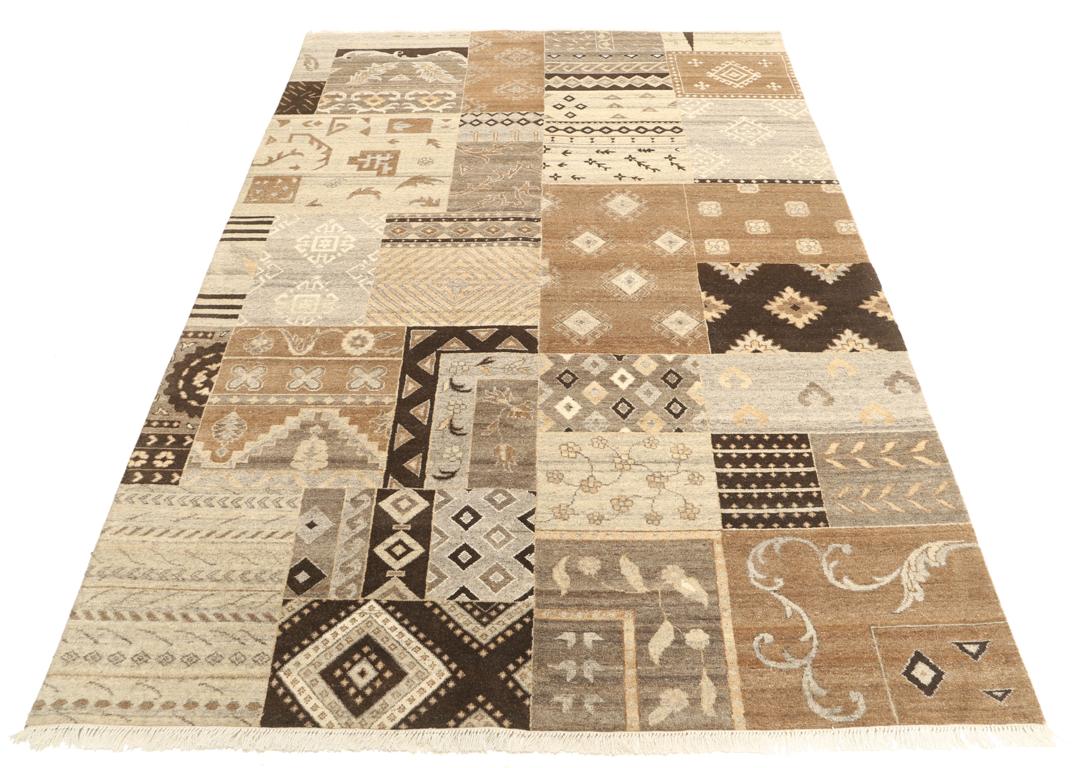
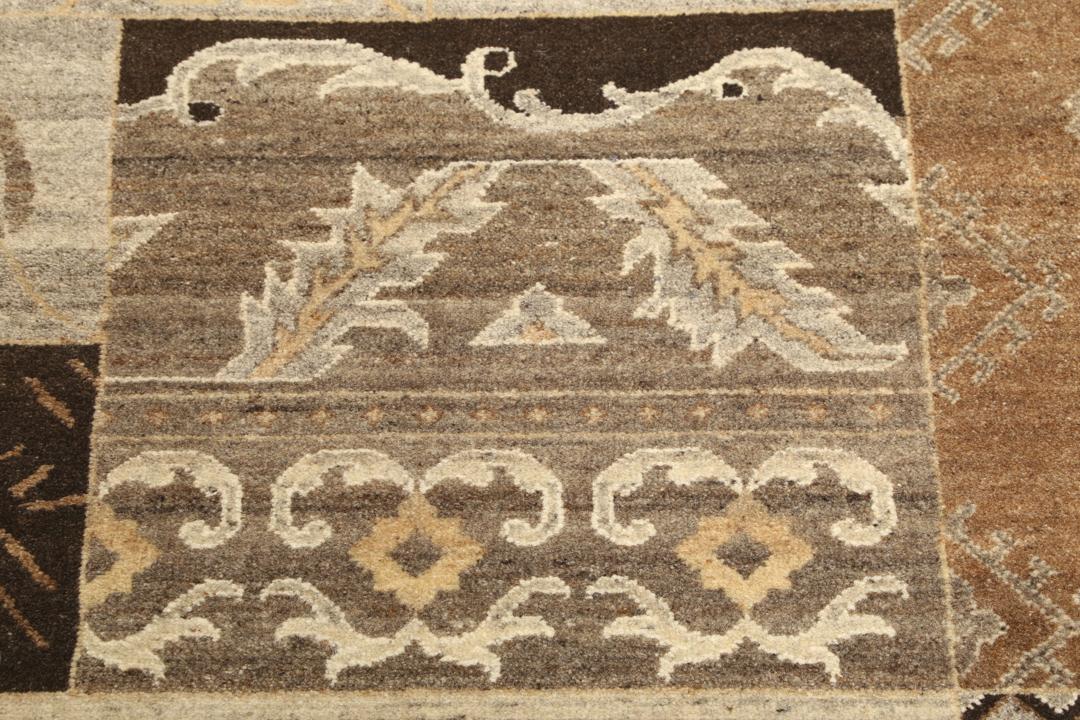
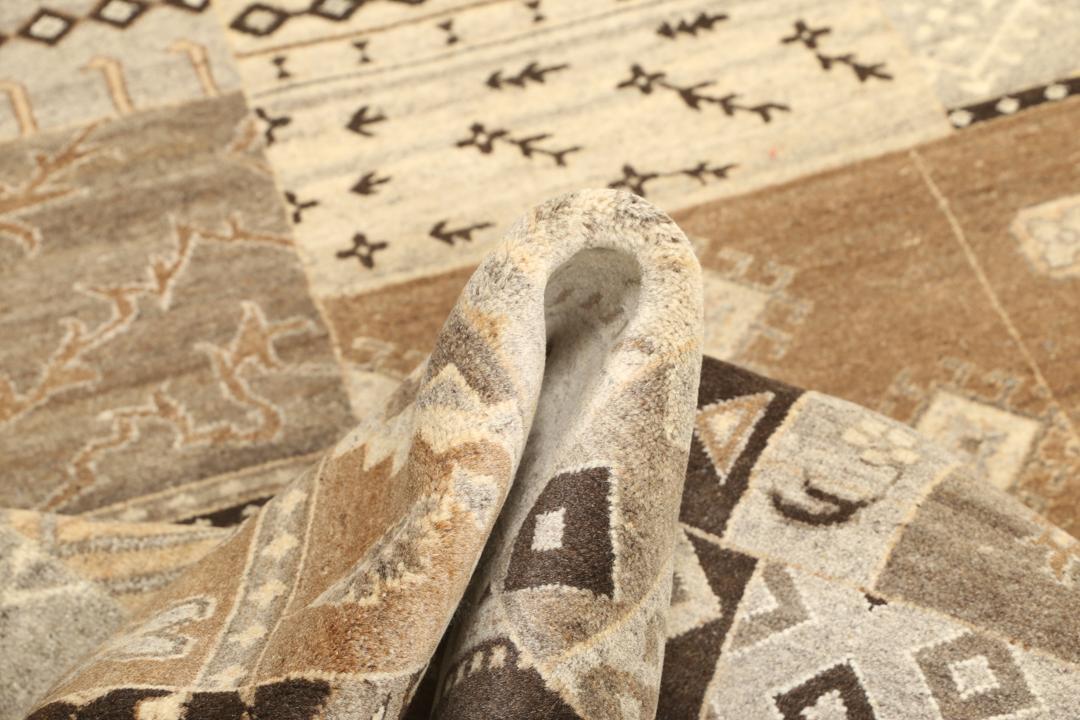
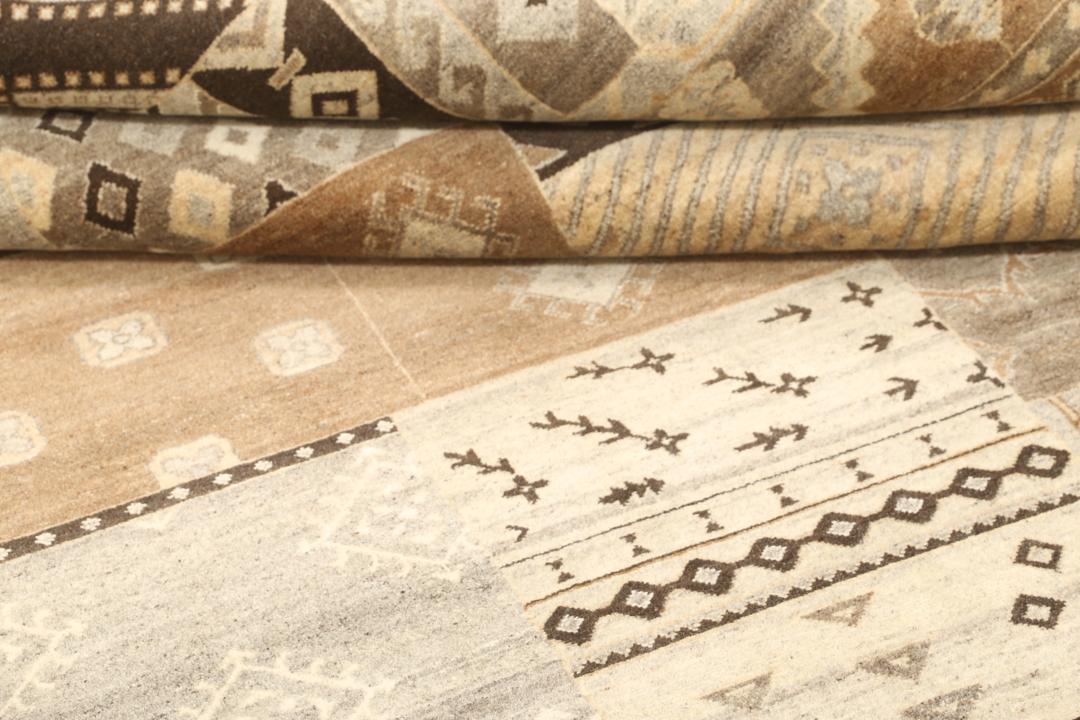
Visually, the Himalaya is defined by its eclectic mix of geometric, floral, and tribal motifs. Traditional rug design often relies on singular, repeating patterns, but this piece breaks that mould by juxtaposing various cultural expressions within a single frame. The use of varied brown and beige tones provides a sophisticated, earthy palette that allows the complexity of the patchwork to shine, creating a look that is both grounded and visually stimulating.
Owning a hand-knotted piece like this is a commitment to the preservation of human skill and cultural heritage. These rugs are collected not only for their beauty but for the narrative they bring into a home. They represent a bridge between the past and the present, offering a piece of history that has been transformed for modern living. By choosing such a rug, you are supporting the continuation of an ancient craft that values patience, detail, and the unique touch of the artisan.