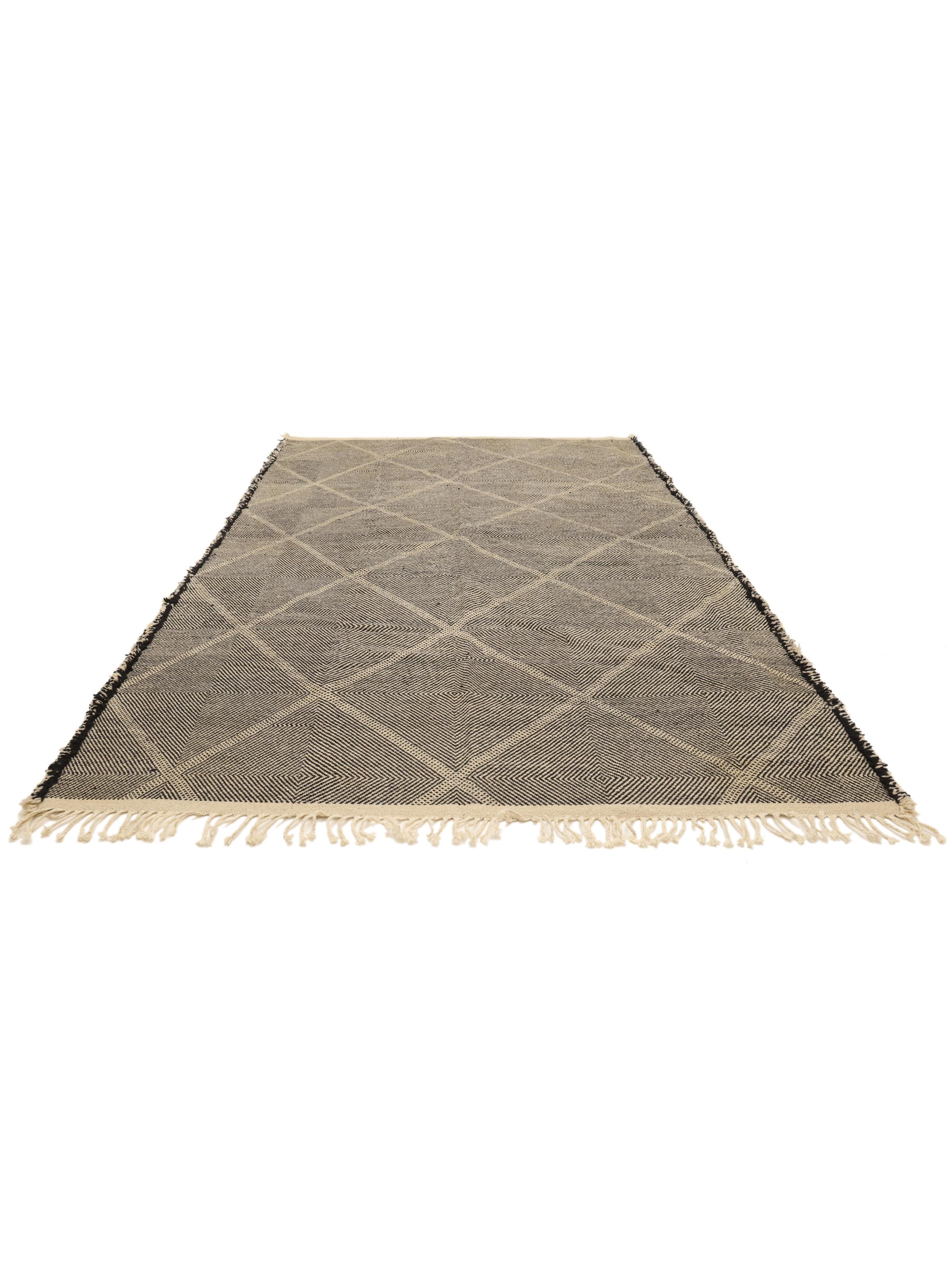
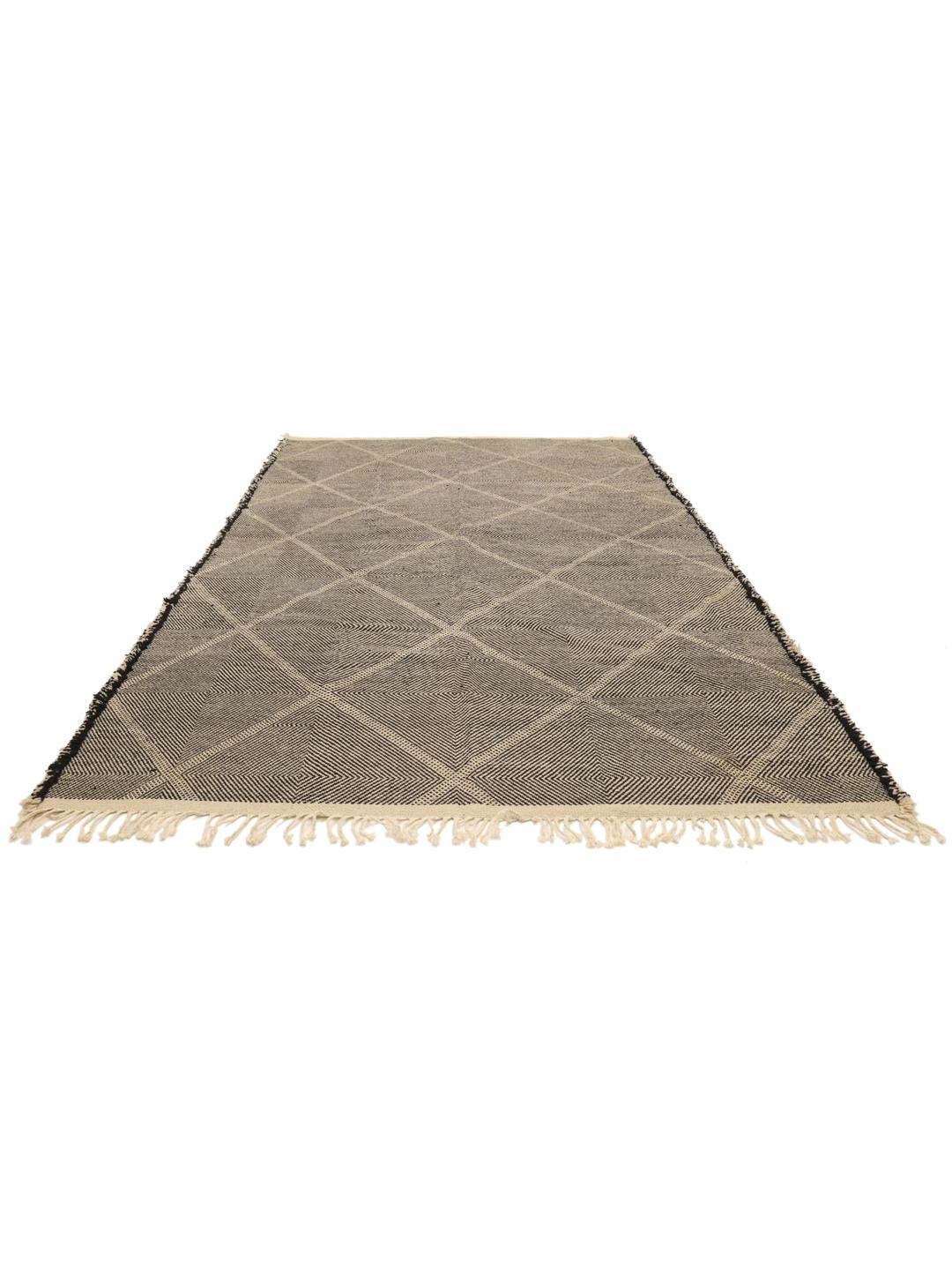
The High Atlas Kelim originates from the mountainous regions of Morocco, where Berber tribes have practised the art of weaving for centuries. These rugs were historically created by women for domestic use, serving as warm bedding, wall hangings, and floor coverings to insulate homes against the harsh climate of the Atlas Mountains. The tradition is deeply rooted in a nomadic lifestyle, reflecting the natural landscapes and the cultural stories of the weavers.
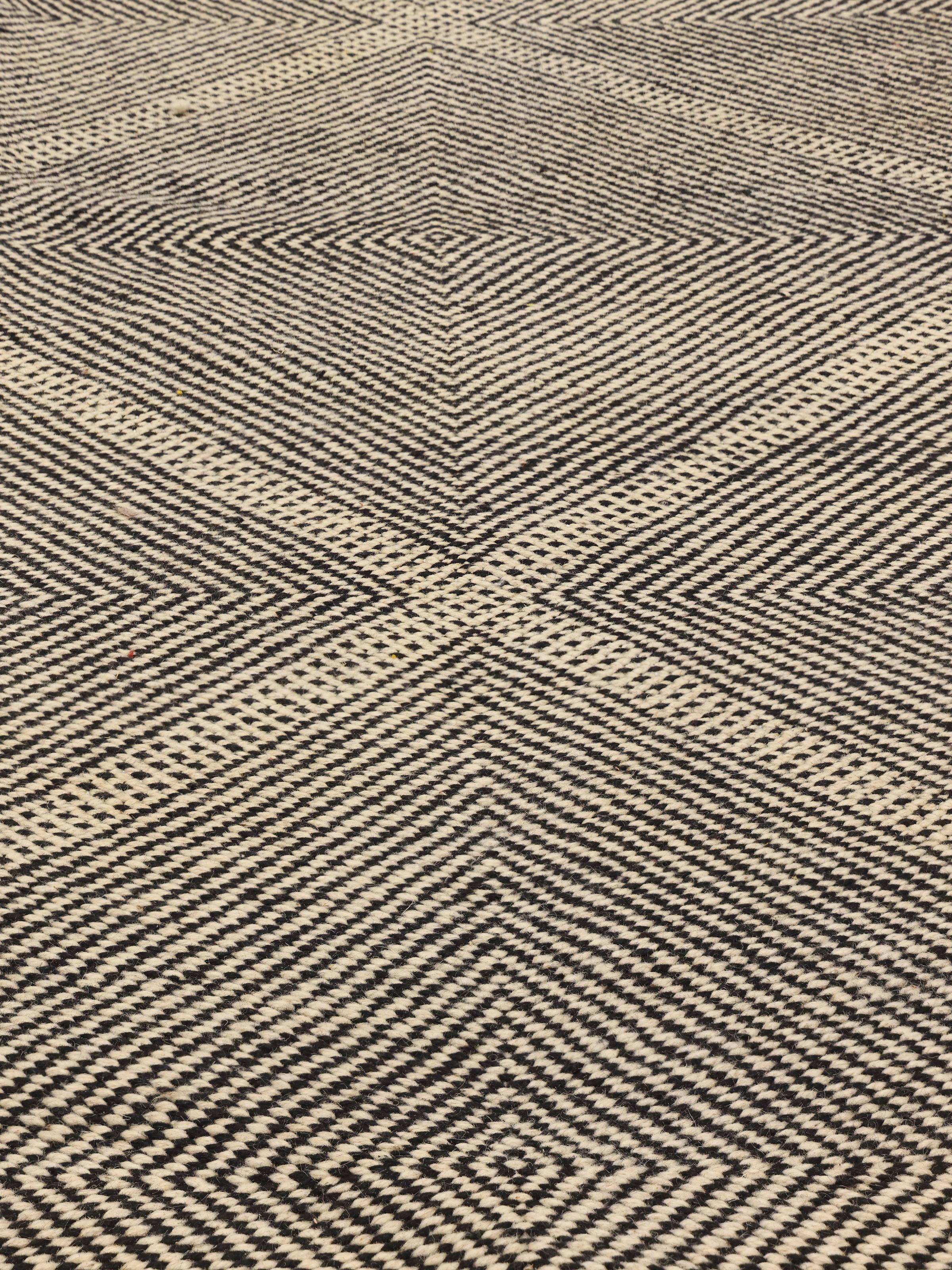
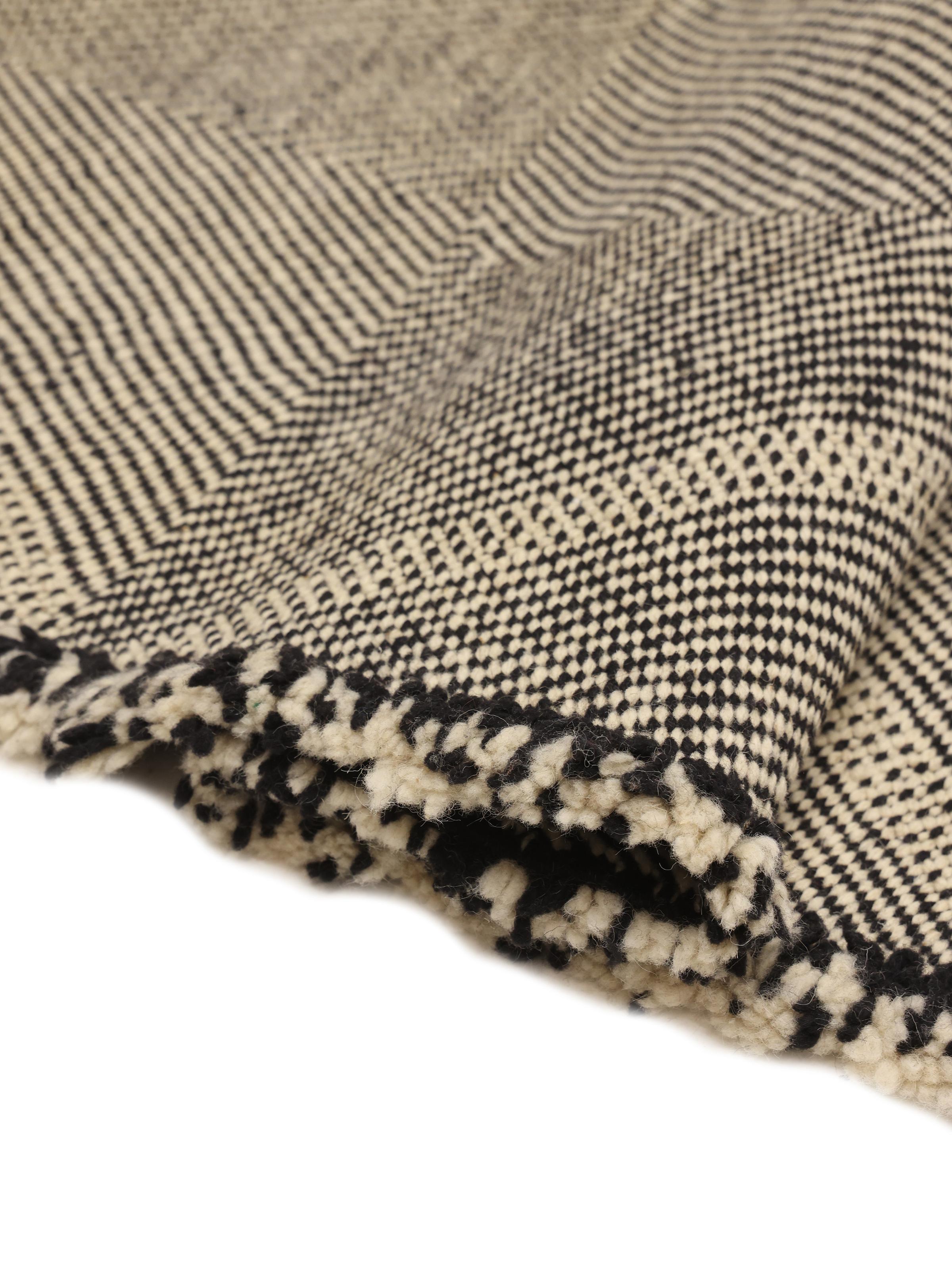
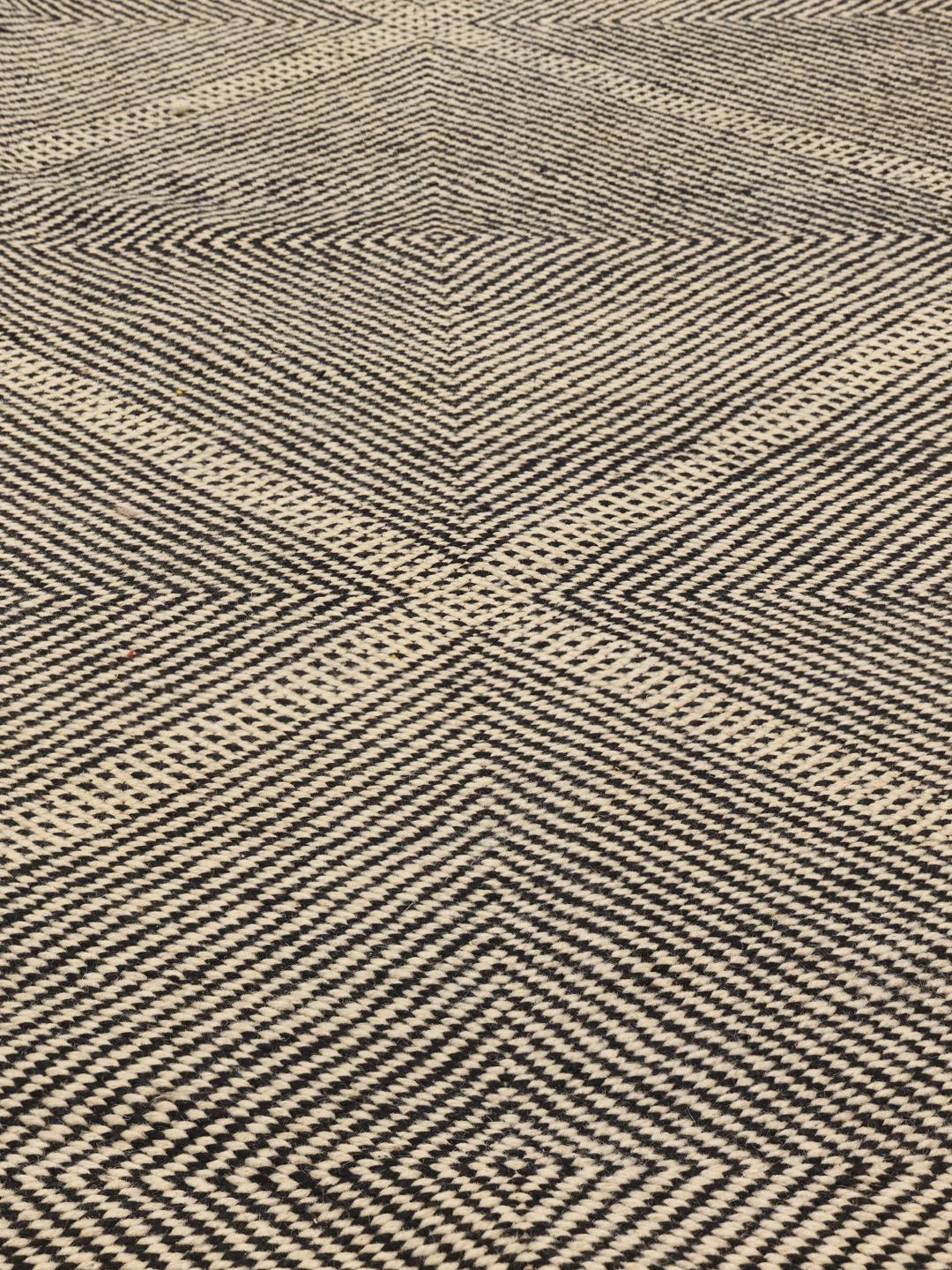
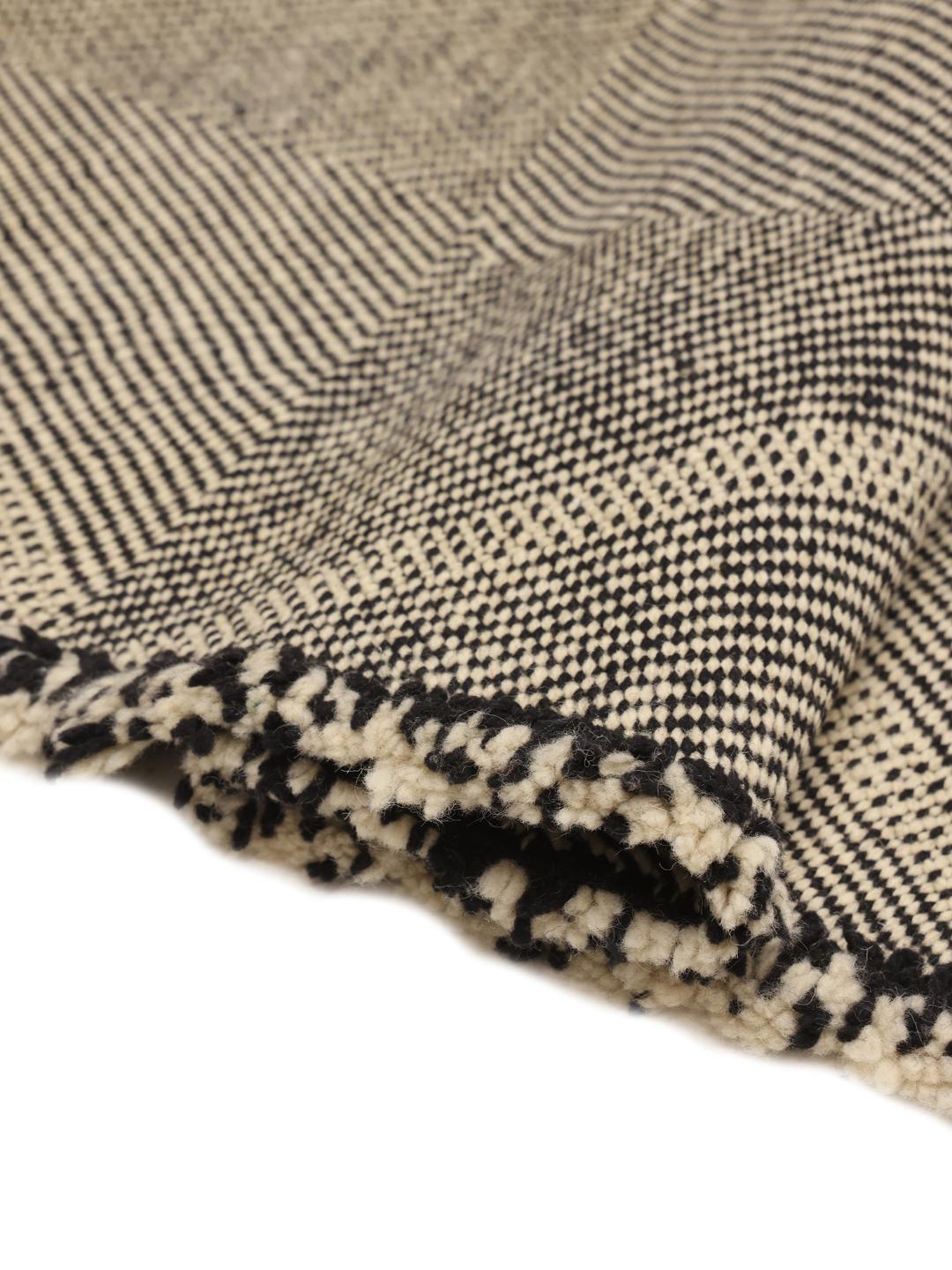
Technically, a Kelim is a flat-woven rug, meaning it lacks the pile found in traditional knotted carpets. This construction technique involves interlacing the warp and weft threads to create a durable, reversible fabric. The lack of pile makes these rugs exceptionally versatile and lightweight, while the specific tension applied during the weaving process determines the rug's overall strength and longevity.
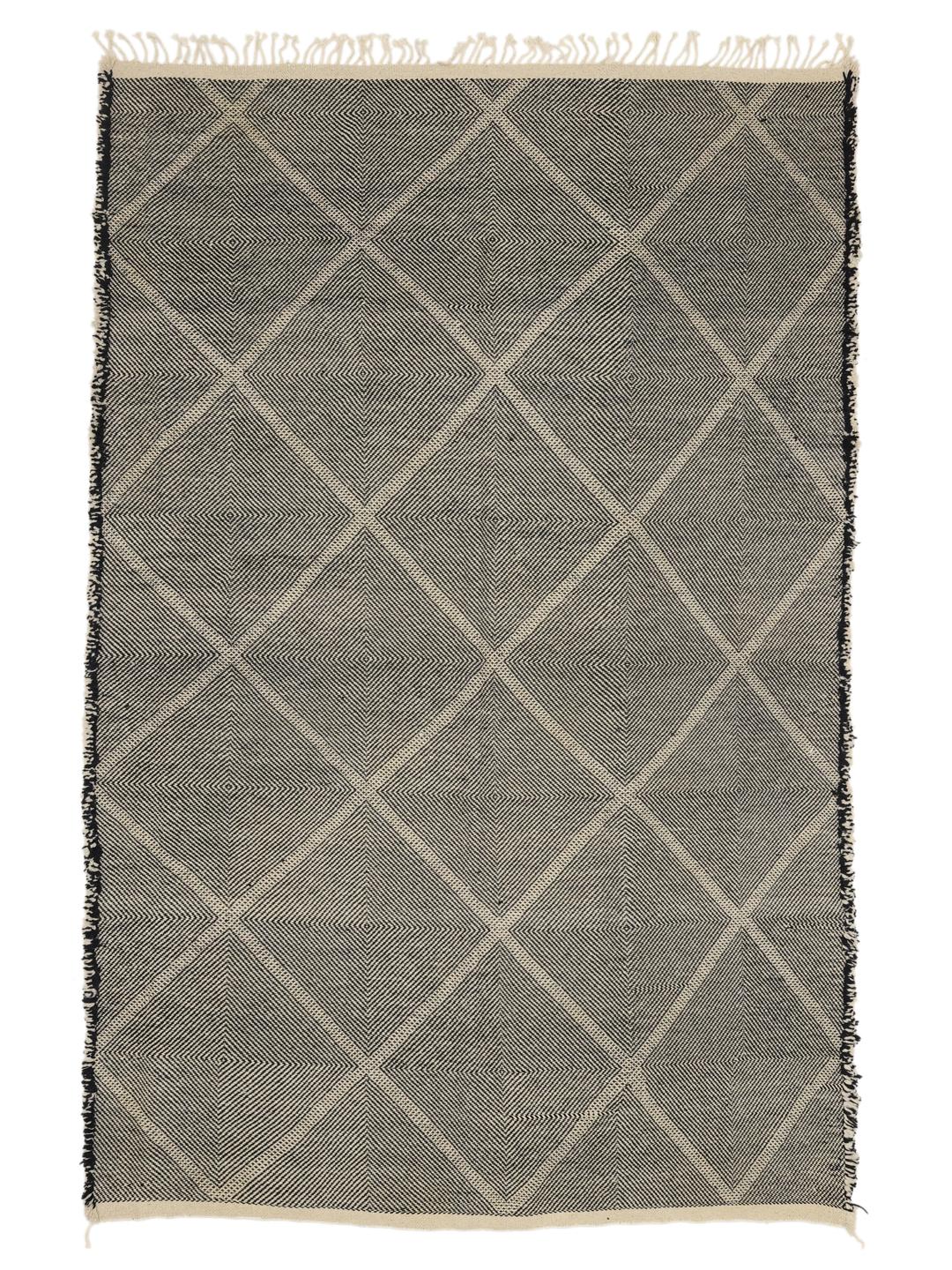
The design language of these rugs is defined by its bold, geometric minimalism. Often featuring diamonds, triangles, and zig-zags, the patterns are not merely decorative but serve as a symbolic language, often representing protection, fertility, or the natural world. The use of high-contrast black and white, as seen in this piece, is a classic aesthetic choice that emphasises the clarity and precision of the geometric motifs.
Today, these rugs are highly valued by collectors for their authentic, unrefined beauty and the human history woven into every thread. Owning a High Atlas Kelim is a way of preserving a piece of cultural heritage. It represents a commitment to slow, intentional craft and a rejection of the disposable nature of modern manufacturing, making it a masterpiece of timeless quality for any home.