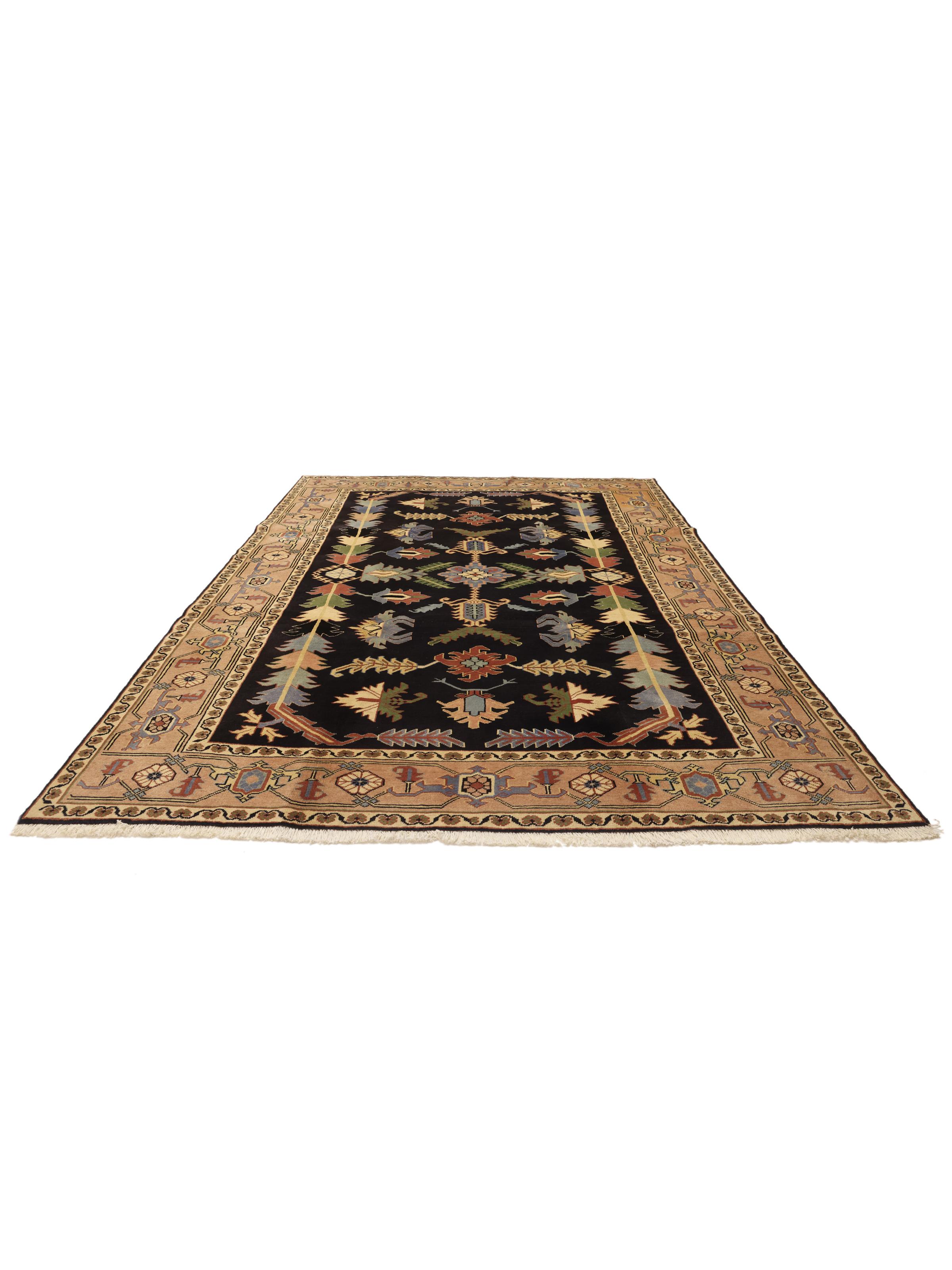
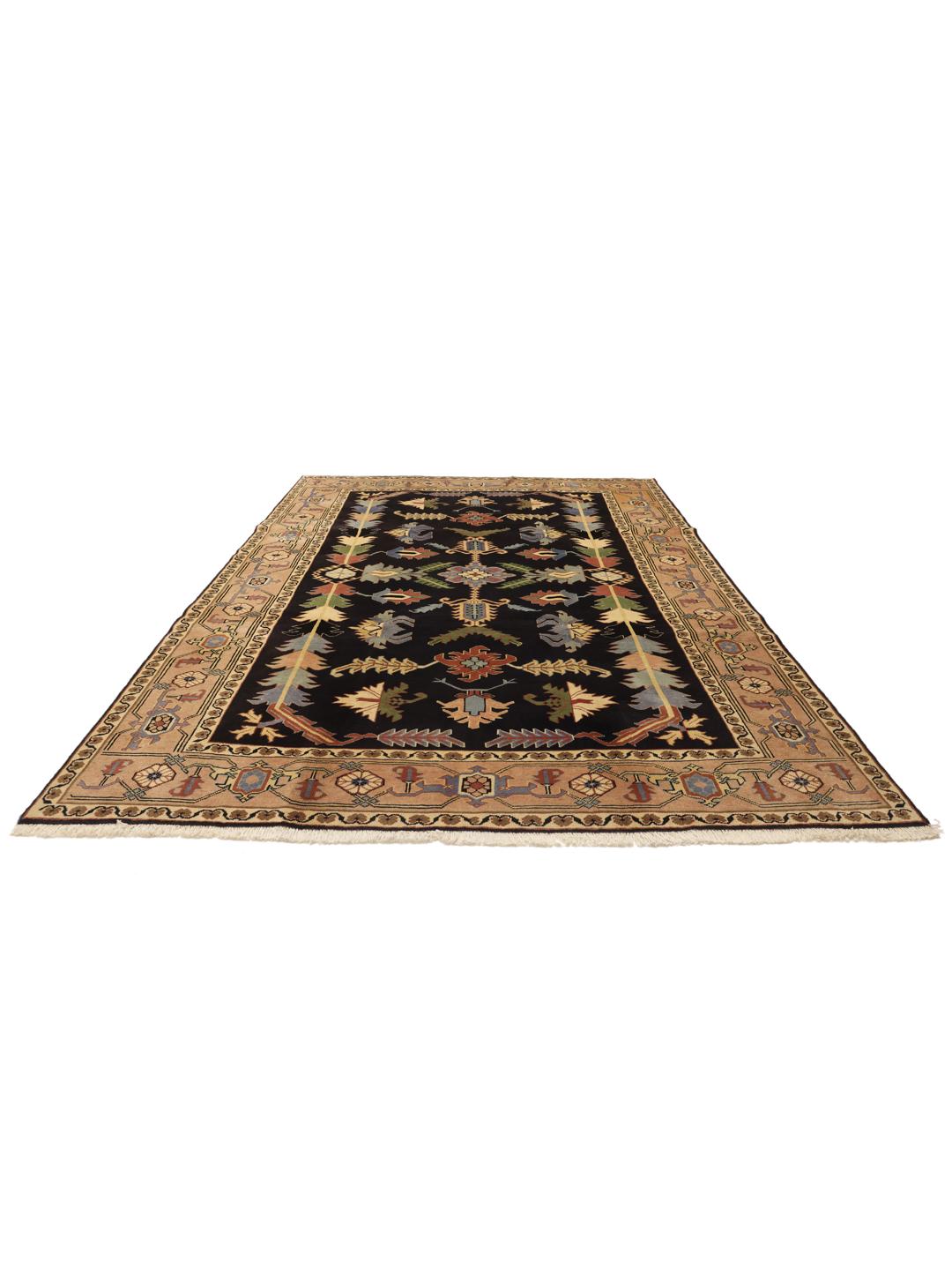
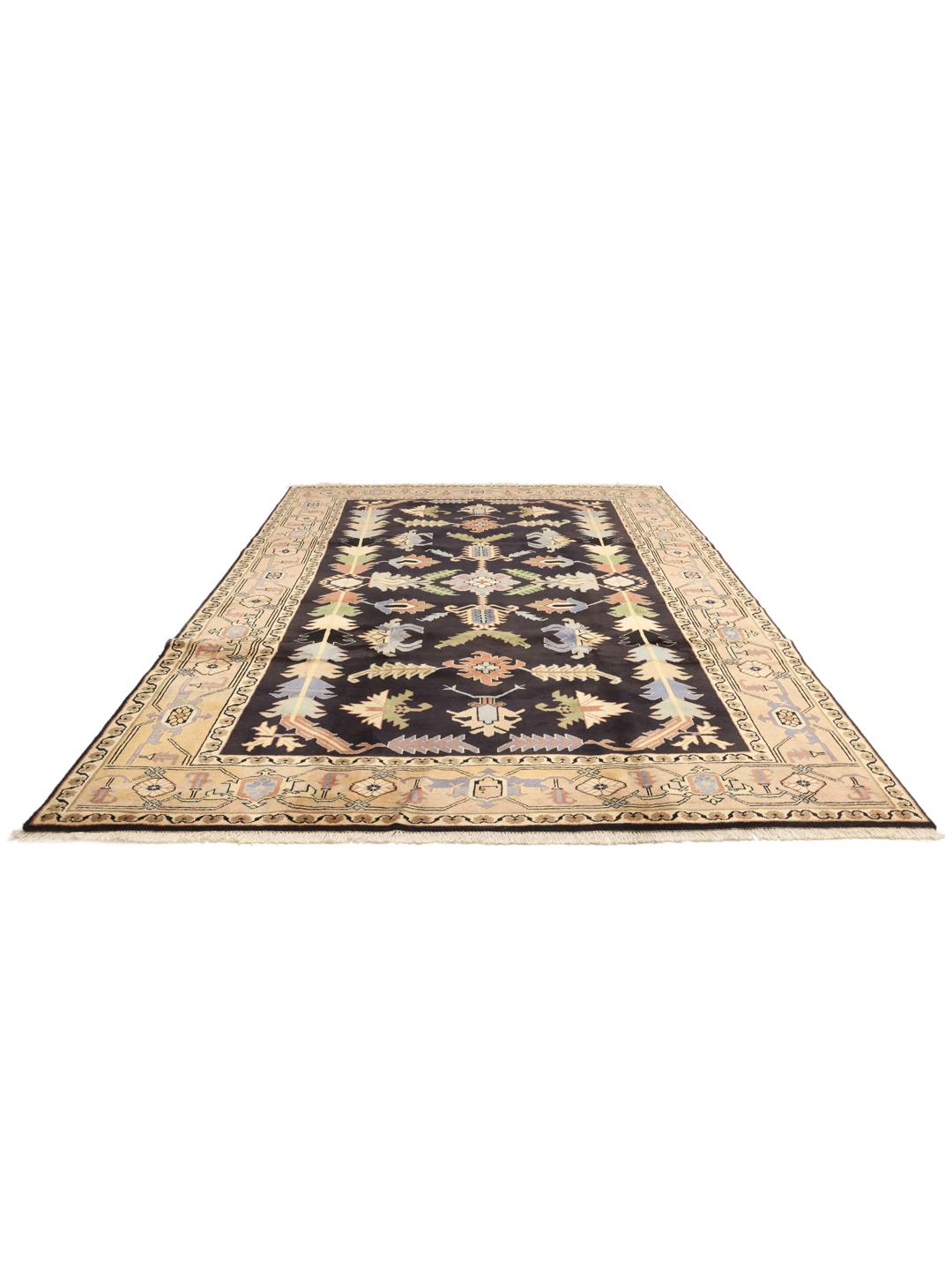
Heriz rugs originate from the rugged, mountainous regions of the Middle East, specifically the area surrounding the town of Heriz. This region is famous for its unique approach to rug making, which has evolved over centuries to reflect the harsh, beautiful landscape and the resilient spirit of the nomadic and village weavers who first developed these styles.
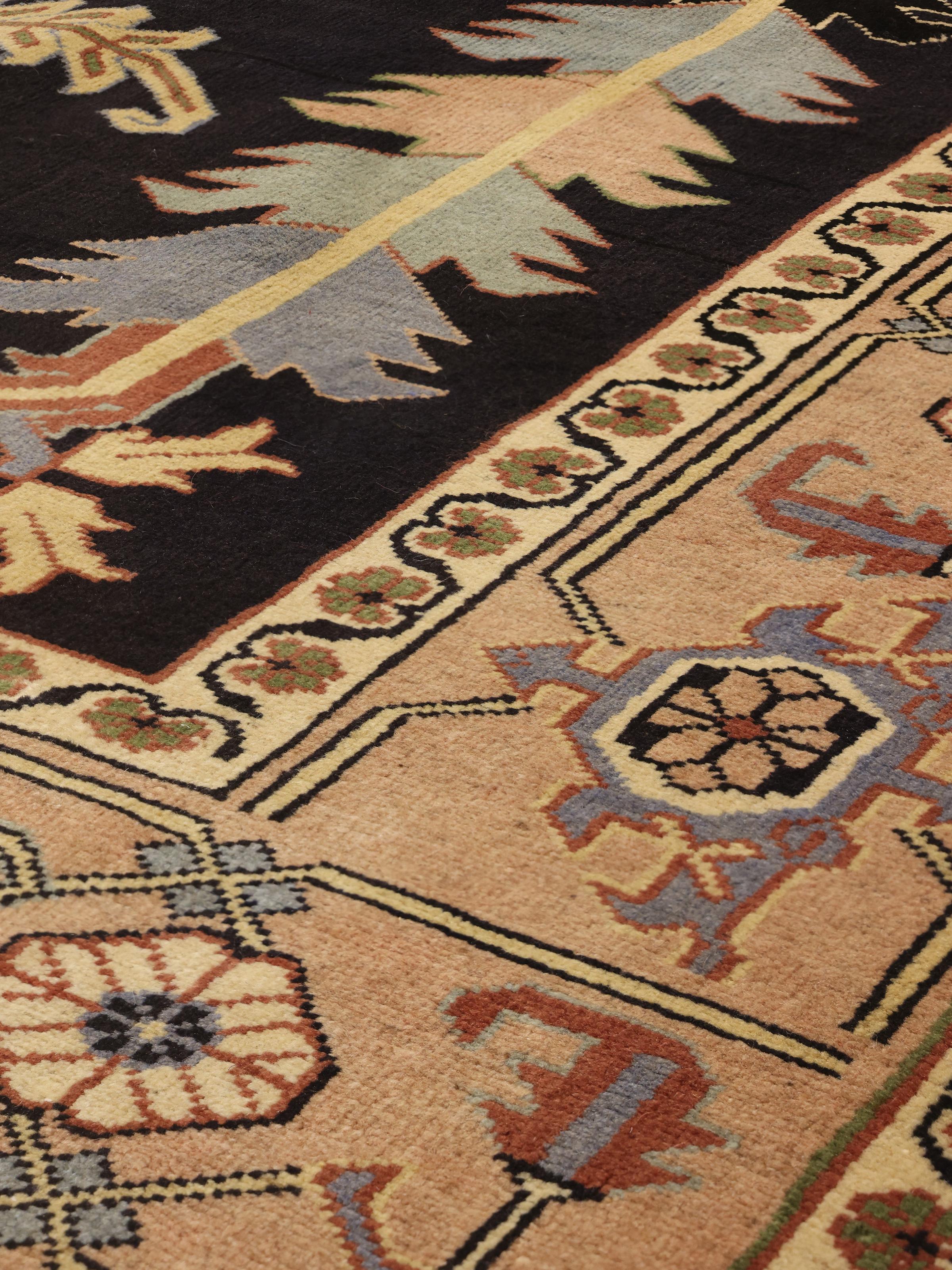
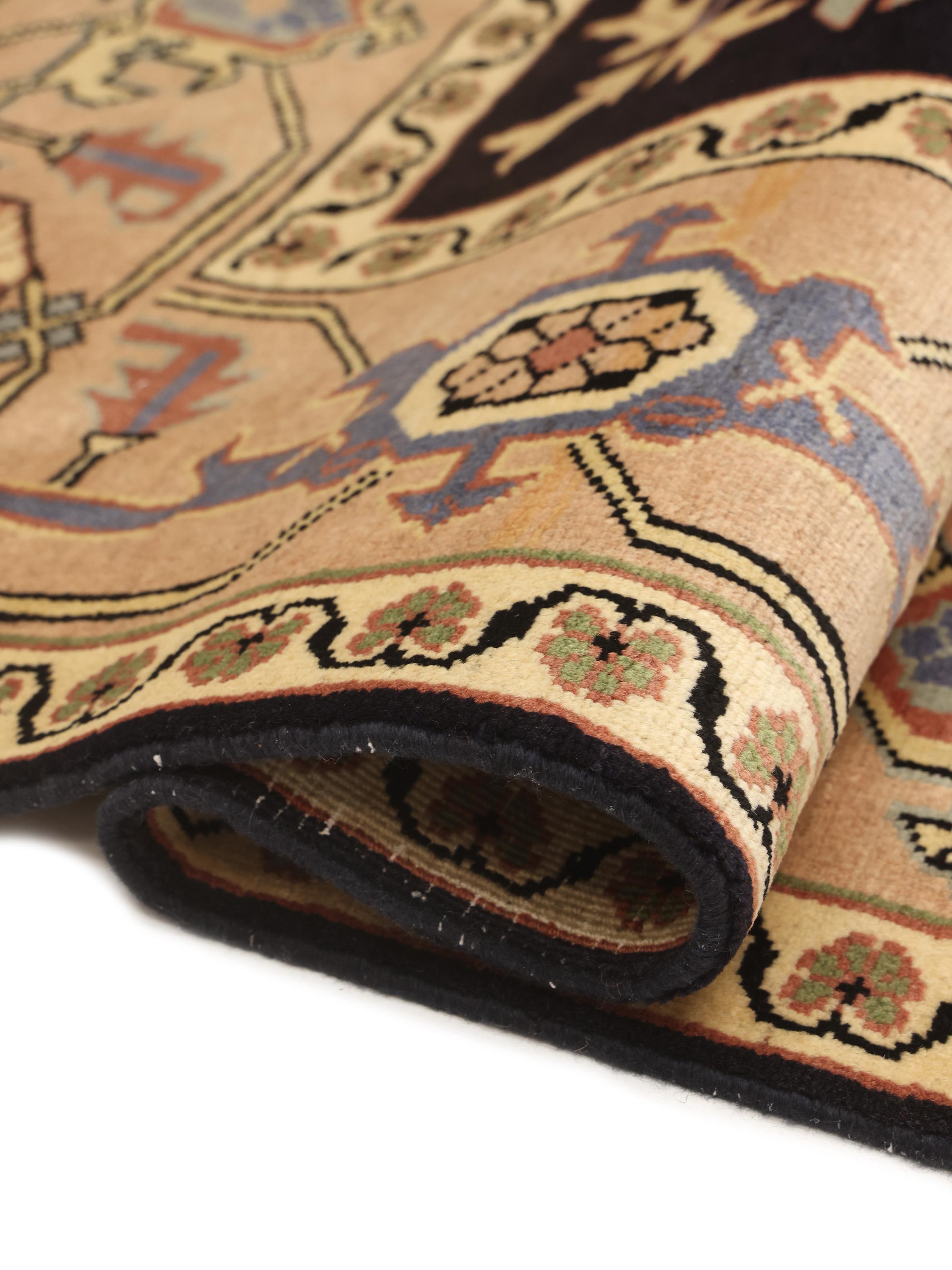
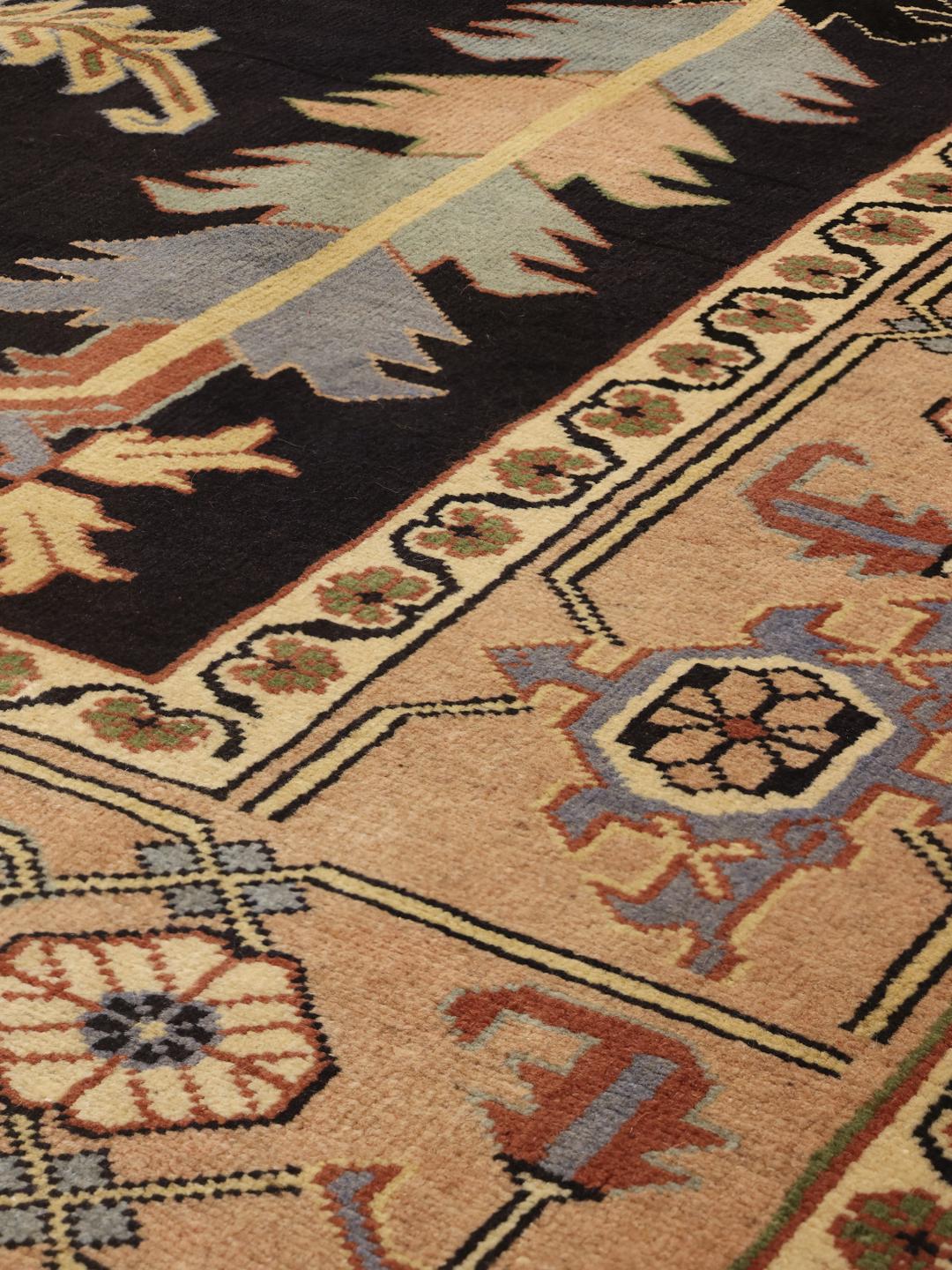
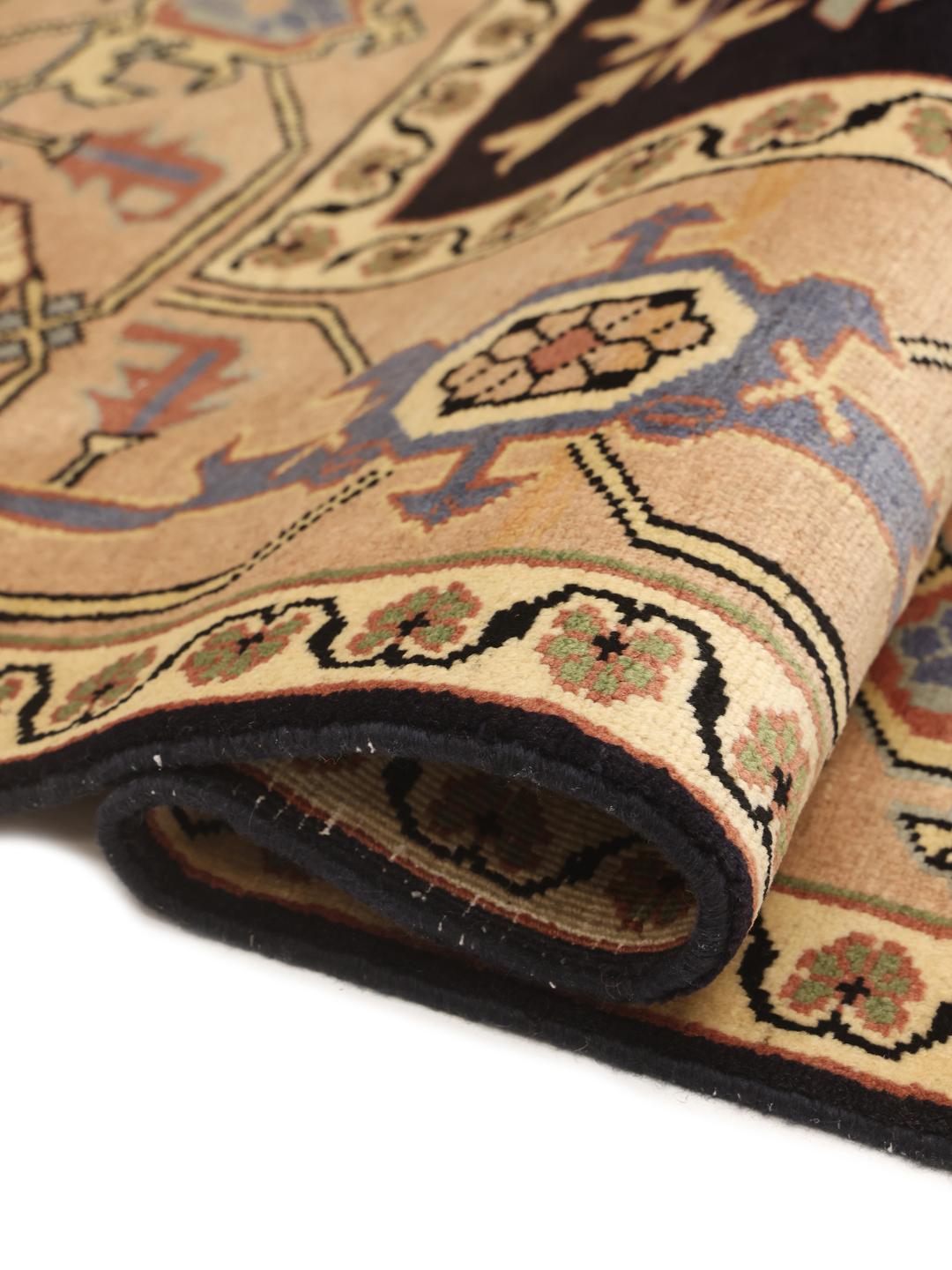
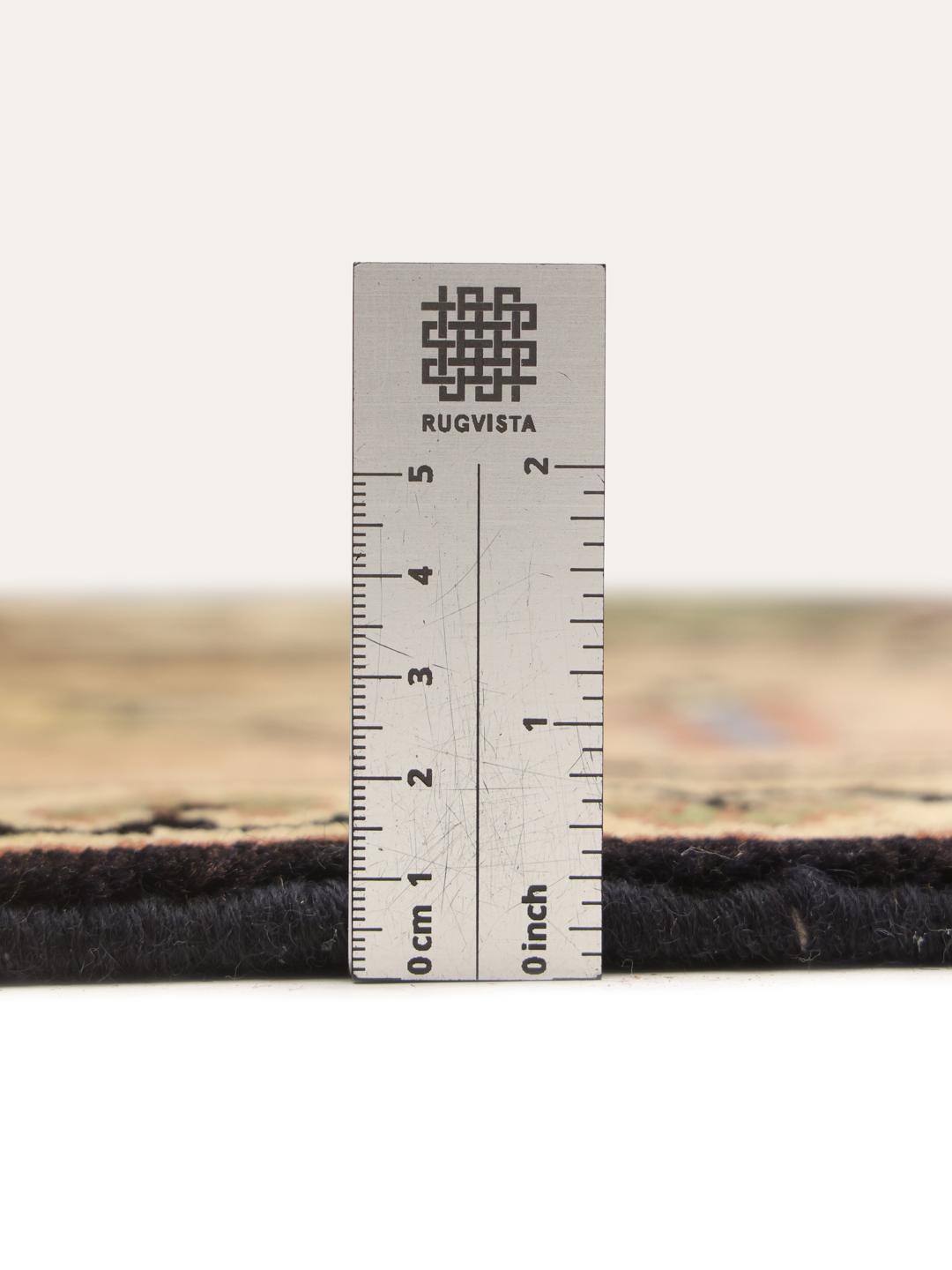
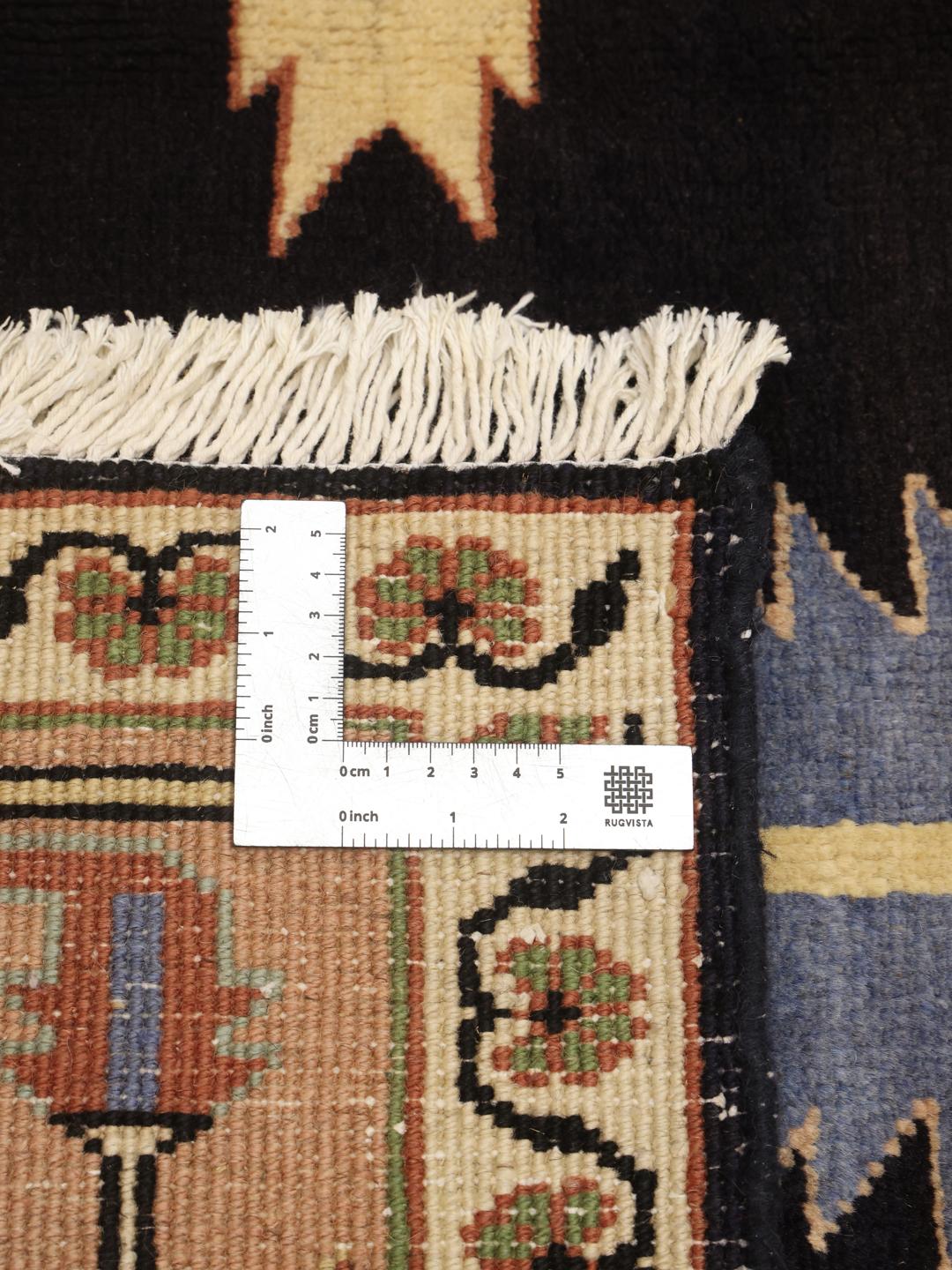
The construction of a Heriz is known for its durability, largely due to the use of a sturdy foundation. These rugs are built to be robust, often featuring a dense pile that provides a warm, protective barrier against cold floors. The term Heriz itself has become synonymous with a specific aesthetic that balances bold, large-scale geometric patterns with a sophisticated, harmonious colour palette.
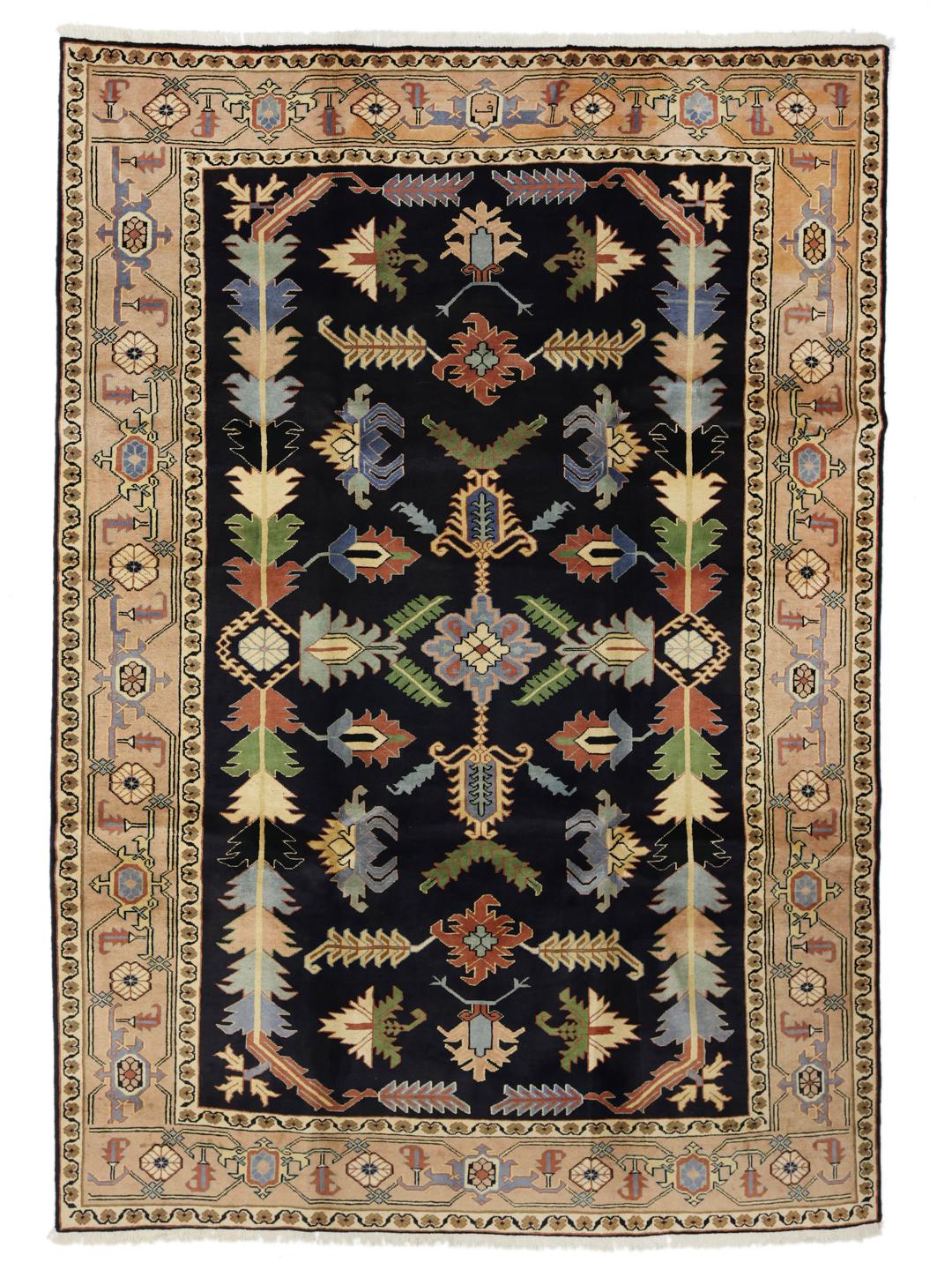
Signature design elements of these rugs include the large, stylized medallion that often dominates the centre, surrounded by angular, geometric floral motifs and jagged, serrated leaves. The borders are typically wide and filled with complex, repetitive patterns that frame the central field. While many rugs from this region follow traditional colour schemes, the use of a deep, dark field is a particularly striking choice that makes the lighter motifs pop with vivid intensity.
Collectors value Heriz rugs for their artistic integrity and the immense skill required to execute such complex geometric layouts without the aid of modern technology. Owning a Heriz is a way to connect with a storied tradition of craftsmanship that prioritises both beauty and long-term utility. It is an investment in a legacy of design, representing a cultural heritage that continues to influence interior aesthetics around the world.